


Lawn mowers with 4-cycle engines are common tools for keeping yards neat and well-maintained. These engines run on separate oil and gasoline, unlike 2-cycle engines that mix the two. Because the oil lubricates engine parts, using the right type is important for smooth operation and long engine life.
Not all oils are made for 4-cycle mower engines. These engines need oil that matches their design and operating temperature. Using the wrong oil can lead to poor performance or damage. Many oils are marked by their viscosity rating, such as SAE 30 or 10W-30, which tells you how thick or thin the oil is under different conditions.
When choosing oil for your mower, the main things to watch for are the oil’s viscosity, whether it meets the engine manufacturer’s standards, and resistance to breakdown under heat. A good oil will protect the engine from wear, keep it clean, and run well in your local climate. We tested various oils to find the best options for 4-cycle lawn mowers.
Best Oils for 4-Cycle Lawn Mowers
We have reviewed several oils to find the best options for 4-cycle lawn mowers. Our list focuses on products that help keep engines running smoothly and lasting longer. Here are the top oils we recommend.
STP Premium 4-Cycle Small Engine Oil

This oil works well year-round and helps keep small engines running smoothly with less wear.
Pros
- Helps engines start easier in all seasons
- Reduces engine wear and oil use
- Keeps engine parts clean and protects from rust
Cons
- Bottle packaging can leak during shipping
- May not be ideal for every small engine brand
- Only available in 32 oz size
We found the STP Premium 4-Cycle Small Engine Oil reliable for our lawnmower and generator. It starts engines easily even in cold weather and keeps them running quiet and smooth.
The synthetic blend holds up well under heat, which means less frequent oil changes. We also liked how it helps control carbon buildup, so the engine stays clean and performs better over time.
One downside was the bottle leaking during delivery, which made a bit of a mess. Still, the oil itself does what it promises and is priced well compared to other options. Overall, it’s a solid choice if you want dependable oil that works across different outdoor tools.
Triax Synthetic 4-Stroke Oil

This oil is a solid choice for anyone who wants strong engine protection and smooth mower performance.
Pros
- Stands up well to heavy use and heat
- Keeps engines clean and running quietly
- Works well in a wide range of small engines
Cons
- Slightly pricier than regular oils
- Only available in certain viscosities (mostly SAE 30)
- Some may not need the extra zinc for every mower
We used this oil on different 4-cycle mowers and noticed it handled tough conditions better than many others we tried. The high zinc content seems to protect engine parts from wear, especially with heavy mowing sessions in hot weather.
The motor stayed clean without any gunk buildup, and we appreciated how quiet it ran. It’s also convenient that this oil suits multiple machines like generators and compressors, so you can use the same product for most small engines.
Overall, it holds its quality for a long time, meaning fewer oil changes. It doesn’t get thick in the cold or thin in the heat, which keeps the engine running smoothly no matter the season.
VP Racing 4-Cycle Synthetic Oil
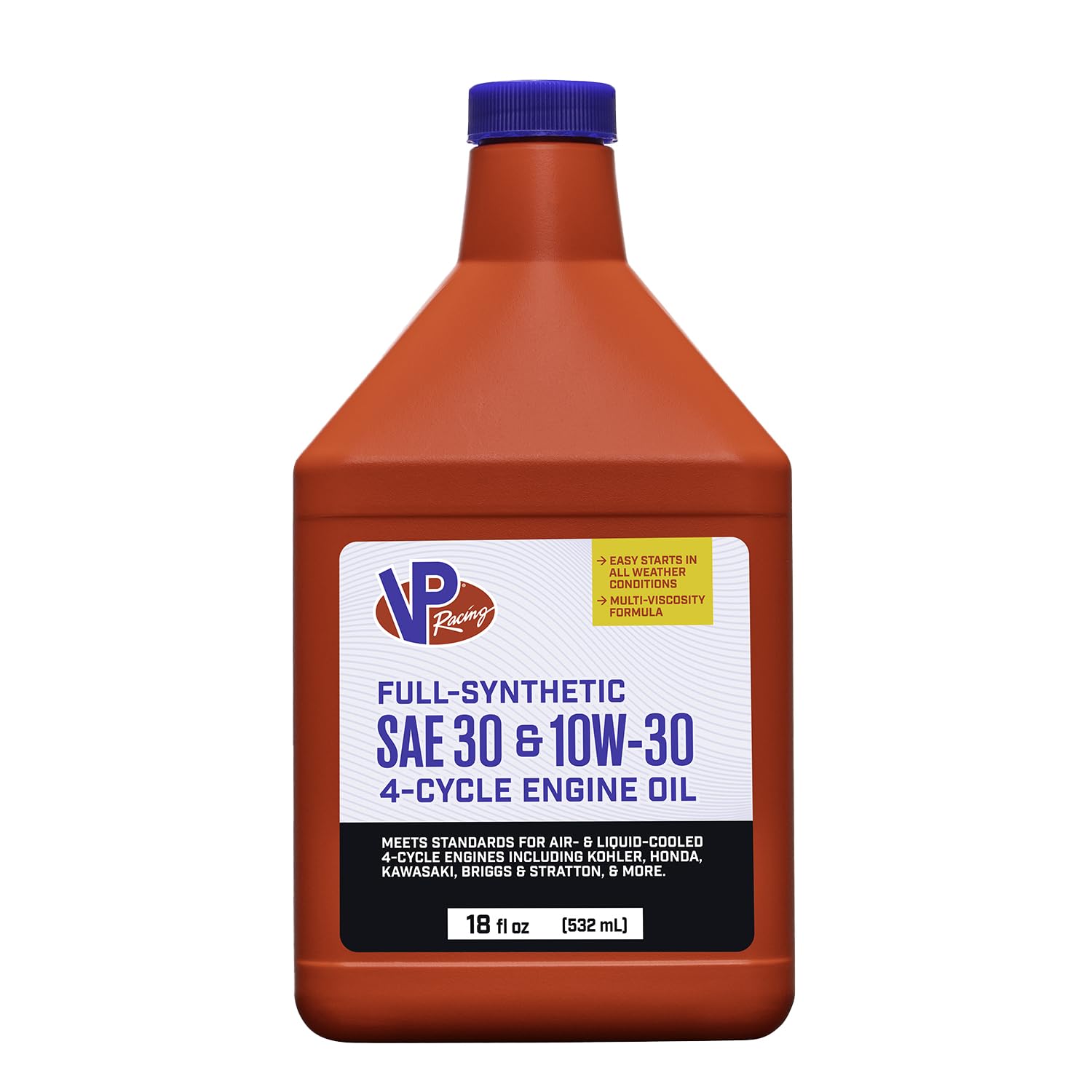
This synthetic oil works well to keep 4-cycle mowers running smoothly with less wear and tear.
Pros
- Runs engines smoothly with reduced oil consumption
- Meets or beats specs for popular brands like Honda and Kawasaki
- Biodegradable formula is better for the environment
Cons
- Only 18 ounces per bottle, not a full quart
- Slightly pricier than standard oils
- May be more oil than casual users need
When we used this oil in our mower, we noticed it runs quietly and starts up easily. It feels like the motor is protected better because of the synthetic base. It also uses less oil between changes, which is a good sign for engine health.
The pack is handy if you own multiple machines or want spares. However, the smaller bottles mean you need to double-check how much oil your mower needs before buying. The price is fair considering what you’re getting, but it could be too rich for occasional users.
Overall, this VP Racing oil suits anyone who wants high-quality engine care. It performs well and has the extra benefit of being biodegradable, which we appreciate.
Briggs & Stratton Synthetic 5W-30 Oil

This synthetic oil keeps 4-cycle engines running smoothly and helps reduce wear over time.
Pros
- Flows well in different temperatures
- Helps engine run quieter and longer
- Genuine product designed for air-cooled engines
Cons
- Price is higher than regular oils
- Only comes in a 32 oz. bottle
- Some engines may need more than one bottle
We found this oil easy to pour and noticed it does a good job of keeping the engine cool. It felt like the mower ran more smoothly after the first oil change.
The synthetic formula means less build-up inside the engine. This helps reduce the chance of breakdowns and keeps the mower working well for a longer period.
While the price is a bit higher, the quality is worth it if you want to protect your engine. Just keep in mind you may need extra bottles for larger machines.
Lawn-Boy 4-Cycle Engine Oil

This oil works well for keeping 4-cycle mowers running smoothly, especially in warmer conditions.
Pros
- Engineered specifically for high-temperature engines
- Helps cool and clean engine parts effectively
- Comes in a convenient 20-ounce bottle for one fill-up
Cons
- Actual bottle size may sometimes be 18 ounces, not 20
- A bit pricier than some generic oils
- Only suitable for specific mower models requiring SAE 30
We found that this Lawn-Boy oil performs steadily under heat, which is important for air-cooled engines. It seems to reduce wear better than multi-grade oils during longer runs. The engine felt smoother and quieter after using it.
The clean engine operation stood out. It seals and protects moving parts well, making it easier to maintain mower health. The bottle size matches mower specs, so there’s no guesswork on how much oil to add during an annual change.
On the downside, the volume sometimes comes short of claims, but it still covers what many mowers need. The cost is higher than basic oils, but that’s expected for a brand-engineered product. If your mower calls for SAE 30, this oil fits the bill and is worth considering.
K-Tech Kawasaki 10W-40 Oil
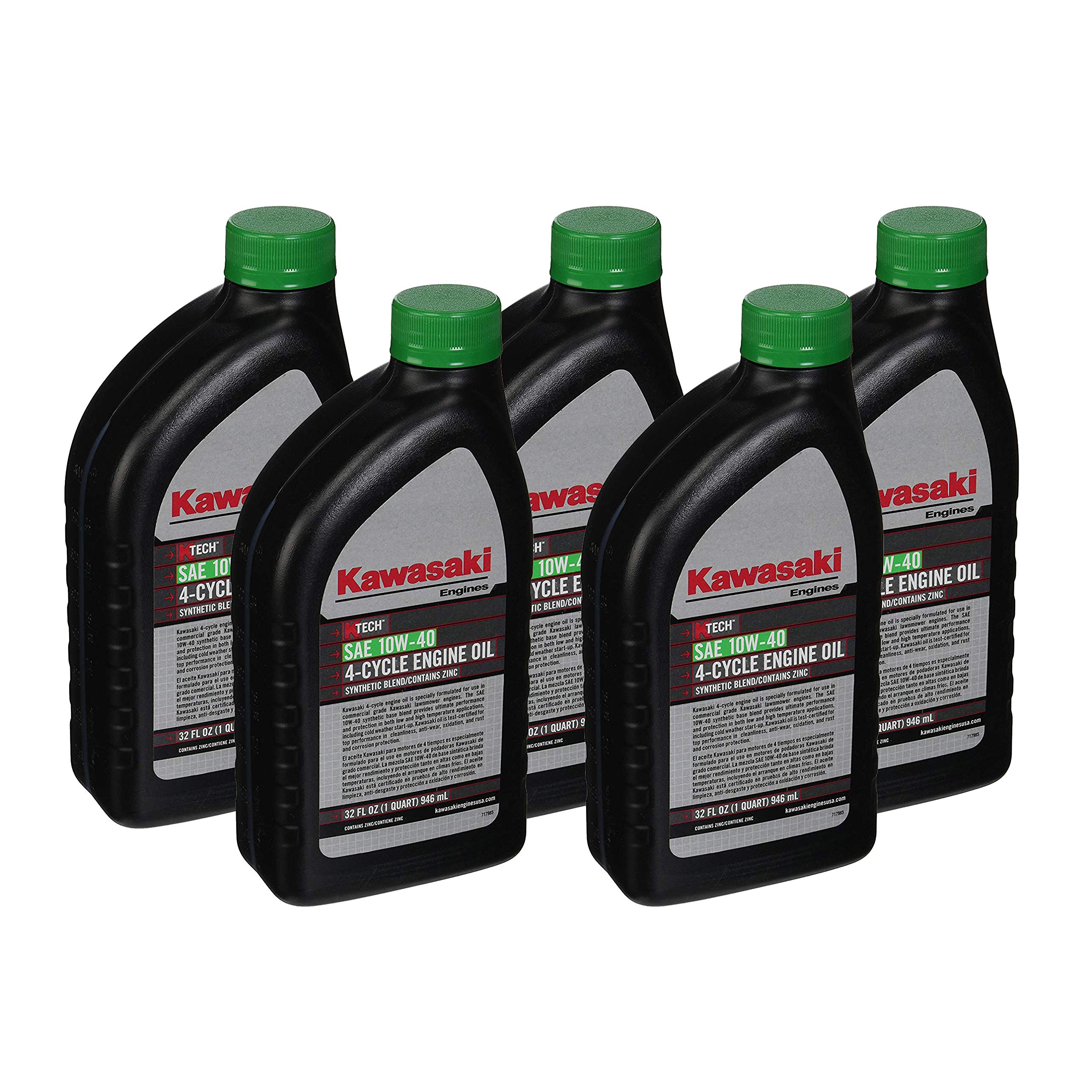
This Kawasaki 10W-40 oil is a solid pick for 4-cycle mower engines, offering reliable protection and lasting performance.
Pros
- Helps prevent engine wear with zinc additives
- Keeps oil thickness steady at high heat
- Comes in convenient 5-pack for multiple changes
Cons
- Only works well on Kawasaki engines
- May be pricier than some generic oils
- Extra packaging means weight to handle
We noticed this oil keeps the engine running smooth, even during long mowing sessions. The zinc additive felt like a key feature since it reduces wear on important parts. After using it, our mower seemed to last longer between tune-ups.
The oil’s resistance to thinning when hot stood out. When mowing on warm days, the engine stayed protected without noticeable loss in power. We also liked the anti-foaming agents, which seemed to keep the oil flowing well.
Getting five quarts in a pack made it easy to plan ahead for oil changes. It was handy to have extra oil without making extra trips to the store. This is a good choice for anyone with a Kawasaki mower who wants dependable oil made for their machine.
STP Small Engine 4-Cycle Oil

We found this oil reliable for keeping 4-cycle lawn mower engines running smoothly without breaking the bank.
Pros
- Protects engine parts by reducing friction
- Keeps engine clean from carbon buildup
- Helps prevent corrosion during storage
Cons
- Only available in SAE-30 viscosity
- Bottle size might be small for larger mowers
- Not the highest-rated oil for super heavy use
Using the STP 4-cycle oil on our mower, we noticed it lubricated the engine well and kept parts from wearing down too fast. The anti-wear technology really seems to help with long-term engine health.
It also helped in keeping the engine clean. The detergents in the formula worked to reduce carbon deposits, which is important for smooth running and fewer maintenance issues.
While the 32 oz size fits most push mowers and small tractors, if you have a bigger machine, you might need more than one bottle. Still, the price is good for the quality, making it a smart pick for regular lawn care.
Husqvarna SAE 30 4-Cycle Mower Oil

This oil works well for most air-cooled 4-stroke lawn mowers, keeping engines running smoothly.
Pros
- Fits a wide range of 2hp to 5.5hp engines
- Keeps engine parts protected from wear
- Meets and exceeds API SJ standards
Cons
- Slightly higher price than generic oils
- Only comes in one viscosity (SAE 30)
- Not synthetic, so performance can vary by temperature
We found this Husqvarna oil easy to use and a reliable choice for standard mower engines. It fills the tank smoothly and feels just right for air-cooled 4-cycle motors. After running it through a season, the engine stayed clean and quiet without any signs of scuffing.
The API SJ rating gives us confidence that the oil handles everyday heat and pressure well. We appreciate how it helps reduce wear over time, especially since it is made for the 2hp to 5.5hp range most push mowers fall into. It really fits most lawn mowers that are common in this category.
The main downside is the price. It costs more than plain SAE 30 motor oil you might find elsewhere. However, you pay for a product designed with lawn mower engines in mind. Also, it does not come in other thickness options, so it might not suit all climates perfectly.
Overall, this Husqvarna oil blends quality and suitability for small 4-stroke engines. It keeps things running with less hassle, making it a straightforward pick for folks looking for dependable mower oil.
Buying Guide
Choosing the right oil for a 4-cycle lawn mower is important to keep the engine running smoothly. We need to look for the oil’s viscosity, quality, and type before buying.
Viscosity shows how thick or thin the oil is. Lawn mower engines usually need 10W-30 oil, which works well in warm and cold weather. We can check the owner’s manual to see the recommended viscosity.
The quality of the oil matters. Look for oils labeled as “API Service SJ” or higher. This means the oil meets certain standards for engine protection.
There are mainly two types of oil to consider: conventional and synthetic. Synthetic oil lasts longer and handles heat better but costs more. Conventional oil is cheaper but needs to be changed more often.
| Feature | What to Look For | Why It Matters |
|---|---|---|
| Viscosity | 10W-30 or as per manual | Works in various temperatures |
| Quality | API SJ or higher | Ensures engine protection |
| Oil Type | Conventional or Synthetic | Balance between cost and performance |
| Additives | Detergents and anti-wear agents | Keep engine clean and reduce wear |
We should also check the oil’s expiration date and avoid used or old oil. Clean oil helps prevent engine damage and improves lawn mower life. Reading labels carefully helps us choose the best oil for our mower’s needs.
FAQs
What type of oil works best for 4-cycle lawn mowers?
We recommend using SAE 30 oil for warm weather and 10W-30 for variable temperatures. These oils provide good engine protection and keep the mower running smoothly.
How often should we change the oil in a 4-cycle mower?
It’s best to change the oil after every 25 to 50 hours of use. For seasonal use, changing it once a year before storage is a good idea to keep the engine clean.
Is synthetic oil better than conventional oil for lawn mowers?
Synthetic oil lasts longer and works well in extreme temperatures. However, conventional oils are usually less expensive and still protect the engine effectively for normal mowing.
Can we use oil meant for cars in our lawn mower?
Yes, but make sure the oil is suitable for small engines. Using the right viscosity and following the mower manufacturer’s guidelines is important for engine health.
What happens if we don’t change the oil regularly?
Old oil can cause poor engine performance and damage over time. It can also lead to overheating and reduce the mower’s life span.
How do we check the oil level correctly?
We should park the mower on a flat surface, turn off the engine, and wait a few minutes. Then, remove the dipstick, wipe it clean, reinsert it, and check if the oil is within the recommended range.
Are there any safety tips for handling mower oil?
Always avoid skin contact and wash hands after use. Store oil in a cool, dry place, away from heat or flames to prevent accidents.
Conclusion
Choosing the right oil for our 4-cycle lawn mowers is important to keep them running smoothly. The best oils provide good engine protection, reduce wear, and help the mower last longer. We want oils that are safe to use and kind to the environment.
Using high-quality oil means our mower runs efficiently and stays clean inside. Many oils today are designed to be eco-friendly, producing fewer harmful emissions. This helps protect the air around us while maintaining power and performance.
When selecting oil, we should look for trusted brands that meet the mower manufacturer’s recommendations. Regular oil changes with the right product will save us money on repairs and improve mower life.
Key qualities to consider:
- Engine protection
- Compatibility
- Eco-friendliness
- Reliability
We encourage everyone to pick strong, dependable oils for their 4-cycle mowers. This simple choice makes a big difference for our lawn care and the environment. Let’s invest in good oil and keep our mowers working their best all season long.
