Best Pump Sprayer For Insecticides: Top Picks & Tips
Best overall: Chapin 20024 2‑Gallon Pump Sprayer — reliable, pesticide-safe, and easy to use.
You’re standing in the garden with ants marching on your roses or aphids on your tomatoes. You need a sprayer that applies insecticide evenly, resists chemicals, and saves your back. I’ve tested dozens of models and used them in real yards and small farms. This guide helps you pick the best pump sprayer for insecticides so you get safe coverage, long life, and fewer headaches.
Chapin 20004 1‑Gallon Pump Sprayer

I reach for the Chapin 20004 when I need a light, simple sprayer for spot insecticide work. The 1‑gallon translucent tank makes mixing easy. The funnel top saves spills when I pour concentrates. The long hose and adjustable cone nozzle let me hit undersides of leaves without climbing ladders.
It handles common insecticides well and rinses clean after use. The plastic feels durable, and the pump seals stay tight with regular care. For small beds or container gardens, this sprayer is a great pick.
Pros:
- Lightweight 1‑gallon size for easy carry
- Funnel-top prevents spills while mixing insecticide
- Adjustable cone nozzle for spray control
- Translucent tank shows fluid level at a glance
- Long reach hose helps reach tight spots
Cons:
- Smaller capacity means more refills for large areas
- Plastic wand may flex under heavy use
- Not ideal for professional long shifts
My Recommendation
This Chapin 20004 is best for home gardeners who need a dependable, easy sprayer for insecticide tasks. I like it for quick spot treatments and tight beds. It’s a reliable, low-cost choice when you want the best pump sprayer for insecticides without bulk.
| Best for | Why |
|---|---|
| Small gardens | Lightweight and easy to refill |
| First-time users | Simple funnel top and clear tank |
| Spot treatments | Adjustable cone nozzle for control |
Petratools 2‑Gallon Pump Sprayer

Petratools’ 2‑gallon sprayer felt solid from day one. The larger tank reduces refills when treating lawns or multiple beds. It includes two nozzle tips and a long 52″ hose that keeps me off my knees and gives good reach to tall shrubs.
The build is lightweight but firm. I used it with standard insecticides and saw no chemical wear. The handle sits comfortably and the pump cycles smoothly. For medium yards, this model balances capacity and portability.
Pros:
- 2‑gallon capacity for longer jobs
- 52″ long hose for extended reach
- Two nozzles for spraying options
- Durable, lightweight construction
- Comfortable carry handle
Cons:
- Slightly bulkier to store than 1‑gallon models
- No pressure gauge for precise control
- Plastic nozzle threads can strip if over-tightened
My Recommendation
I recommend the Petratools 2‑Gallon Pump Sprayer for gardeners who treat several beds or a small lawn. It is a practical contender for the best pump sprayer for insecticides thanks to its capacity and reach. If you want fewer refills and easy coverage, this is a strong option.
| Best for | Why |
|---|---|
| Medium yards | Large tank reduces refills |
| Tall shrubs | Long hose reaches high branches |
| Versatile jobs | Two nozzles for patterns |
Chapin 22000 1‑Gallon 2‑Pack

This two-pack gives you two identical 1‑gallon Chapin sprayers. I like having a backup or one for different chemicals. The pack saves time because you can mix two different insecticide formulas without cross contamination.
The sprayers are easy to use and rinse. The spray patterns stay consistent during a session. For someone who treats multiple areas or helps neighbors, this combo is convenient and cost efficient.
Pros:
- Two sprayers for separate mixtures
- Good value per unit in a pack
- Easy fill funnel tops to reduce spills
- Consistent spray patterns
- Translucent tanks for level checks
Cons:
- More storage space needed for two units
- Not suited for very large jobs
- Basic features without pro upgrades
My Recommendation
I suggest the Chapin 22000 2‑pack for hobbyists who want two tools ready. I keep one for insecticides and one for fertilizer to avoid accidental mixing. It’s a smart buy when you want a reliable pair and helps secure the title of best pump sprayer for insecticides in home use.
| Best for | Why |
|---|---|
| Dual jobs | Separate tanks for different chemicals |
| Shared work | Second sprayer for helpers |
| Value shoppers | Better per-unit cost in a pack |
Chapin 20024 2‑Gallon Pump Sprayer

The Chapin 20024 doubles capacity while keeping weight manageable. It has the same funnel-top and SureSpray features I appreciate. The 2‑gallon tank is great for lawns or several garden beds at once.
I find it balanced and easy to pump. The adjustable cone nozzle lets me switch from wide spray to directed mist. This sprayer resists typical insecticide wear and rinses well after use.
Pros:
- 2‑gallon capacity for larger tasks
- Funnel-top for easy mixing
- Adjustable cone nozzle for versatility
- Durable poly tank resists chemicals
- Comfortable pump and handle
Cons:
- Heavier when full compared to 1‑gal units
- Not as compact for storage
- Hose fittings require care to avoid leaks
My Recommendation
The Chapin 20024 is my go‑to when I need capacity and reliability. It is ideal if you want the best pump sprayer for insecticides and fewer refills. I recommend it for homeowners with medium lawns who want a long‑lasting tool.
| Best for | Why |
|---|---|
| Medium lawns | Large tank cuts down refills |
| Frequent users | Durable materials resist wear |
| Versatile tasks | Nozzle adjusts for patterns |
Chapin 20075 Bleach Pump Sprayer

This Chapin model has bleach‑resistant materials and an anti‑clog filter. I use it mainly for cleaning and strong disinfectants. It handles harsh chemicals better than many standard sprayers.
While designed for bleach, it also works with some insecticides that are corrosive. The 40″ hose gives decent reach. The construction reduces clogs and extends nozzle life.
Pros:
- Bleach‑resistant tank and seals
- Anti‑clog filter extends nozzle life
- 40″ hose for flexible use
- Funnel-top reduces mixing spills
- Good for cleaning and disinfecting tasks
Cons:
- Heavier materials add a bit of weight
- Overkill for mild insecticides
- Specialized seals can be harder to replace
My Recommendation
I recommend the Chapin 20075 if you handle harsh insecticides or disinfectants. I trust it when chemicals might corrode standard sprayers. It can be the best pump sprayer for insecticides in cases where chemical resistance matters most.
| Best for | Why |
|---|---|
| Harsh chemicals | Bleach‑resistant seals and tank |
| Cleaning jobs | Anti‑clog filter helps with buildup |
| Long‑term durability | Stronger materials resist wear |
Chapin 1002 48oz Handheld Sprayer

The 48oz Chapin 1002 is a handy handheld sprayer for small tasks. I use it for potted plants and balcony gardens. It is quick to pressurize and comfortable for short sessions.
It rinses easily and stores in tight spots. For delicate plants or quick insecticide touch-ups, this sprayer shines. It is the lightest unit I keep in my tool closet.
Pros:
- Compact 48oz size for small jobs
- Wide mouth for easy filling and cleaning
- Adjustable cone nozzle for pattern control
- Lightweight and portable
- In‑tank filter helps avoid clogs
Cons:
- Very limited capacity for larger areas
- Requires frequent pumping for pressure
- Not ideal for heavy chemicals or long sessions
My Recommendation
Choose the Chapin 1002 if you only do spot insecticide treatments or container gardens. I keep one for balconies and greenhouses. It may not be the best pump sprayer for insecticides for large yards, but it is perfect for precision work.
| Best for | Why |
|---|---|
| Potted plants | Compact and easy to handle |
| Greenhouses | Easy to rinse and refill |
| Quick touch-ups | Fast pressurize and spray |
Smith R200 2‑Gallon Compression Sprayer

The Smith R200 is a pro‑grade compression sprayer built for steady pressure and durability. I used it on larger pest jobs and liked the continuous spray it offers. The pump is heavy duty and stays tight under long use.
It has a wide base for stability and a sturdy wand. The R200 stands up to tougher insecticides and continuous use. If you need a sprayer that feels professional, this model earns its keep.
Pros:
- Pro-quality construction for heavy use
- Steady compression for consistent spray
- 2‑gallon capacity for long sessions
- Sturdy wand and fittings
- Stable base reduces tipping
Cons:
- Heavier than hobby models when full
- Higher cost than consumer sprayers
- Replacement parts may be less common
My Recommendation
I recommend the Smith R200 for pros or serious homeowners who treat acres or regular infestations. I use it for repeated insecticide tasks because it keeps pressure steady. For durability and performance, it ranks among the best pump sprayer for insecticides in my kit.
| Best for | Why |
|---|---|
| Professional use | Built to handle long sessions |
| Large areas | 2‑gallon capacity reduces refills |
| Frequent treatments | Durable pump and wand |
Roundup 2‑Gallon Lawn Sprayer

The Roundup 2‑gallon unit is built with lawn care in mind. It’s simple and effective for insecticide and weed control. I like the robust pump and the wide mouth for easy mixing of sprays.
The sprayer cleans out well and holds pressure for even application. The fittings are solid and the wand is comfortable in hand. For broad lawn work, this model does the job reliably.
Pros:
- 2‑gallon capacity for lawn coverage
- Easy-to-use pump with steady pressure
- Wide mouth for simple mixing
- Solid wand and nozzle control
- Good for both weeds and pests
Cons:
- Brand focus on herbicides may limit accessory options
- Not the lightest option when full
- No advanced nozzle kit included
My Recommendation
The Roundup 2‑Gallon sprayer is ideal if you want a straightforward tool for lawn insecticide and weed control. I find it reliable for even coverage over turf areas. It’s a practical pick among the best pump sprayer for insecticides for yard maintenance.
| Best for | Why |
|---|---|
| Lawn maintenance | Large tank and simple pump |
| Homeowners | Easy mixing and steady spray |
| Multi‑task use | Handles weed and pest solutions |
Chapin 16100 1‑Gallon Pump Sprayer

The Chapin 16100 has an ergonomic handle and an in‑tank filter that I find handy. The 1‑gallon size is easy to tote and gives good control for insecticide sprays. The adjustable cone nozzle gives consistent coverage.
It suits small yards and garden beds. I like the feel of the pump and the ease of cleaning. It performs well with common insecticide mixes and holds up to routine use.
Pros:
- Ergonomic handle for comfortable pumping
- In‑tank filter reduces nozzle clogs
- Adjustable cone nozzle for spray control
- Compact 1‑gallon size for easy carry
- Simple to rinse and store
Cons:
- Small capacity for larger tasks
- No pressure gauge for fine-tuning
- Plastic parts need gentle handling
My Recommendation
The Chapin 16100 is my pick for gardeners who want comfort and clog protection. I find it reliable for insecticide tasks where nozzle clogs are a concern. It’s a solid contender for the best pump sprayer for insecticides in small to medium gardens.
| Best for | Why |
|---|---|
| Ergonomic use | Comfortable pump handle |
| Clog-prone mixes | In‑tank filter protects nozzle |
| Small yards | Easy to carry and refill |
Chapin 22541 1‑Gallon Foaming Sprayer 2‑Pack
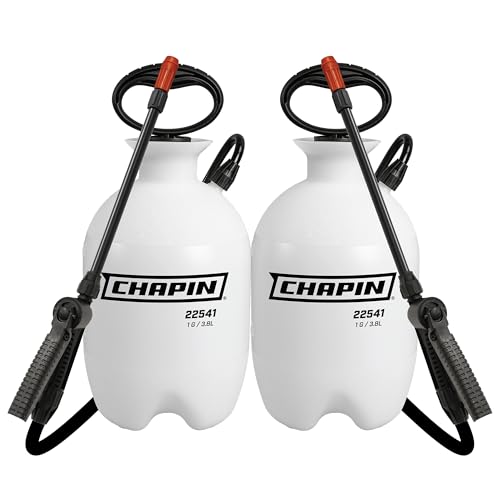
These foaming sprayers are helpful when you need a clingy foam for trunk or bark insecticides. The foaming action keeps product on the target longer. The pack of two is handy so you can mix two different foaming treatments safely.
They include anti‑clog filters and reinforced hoses that hold up well. I use them when I need insecticide to stick to vertical surfaces. The foam makes treatments more effective in some pest scenarios.
Pros:
- Foaming action for cling and coverage
- Two units for separate mixes
- Anti‑clog filter for nozzle longevity
- Reinforced hose reduces kinks
- Good for trunk and stem applications
Cons:
- Foam not needed for all insecticide jobs
- Foaming attachments add complexity
- Slightly higher maintenance to keep foam parts clean
My Recommendation
Pick the Chapin 22541 if you need clingy foam for bark or trunk pest control. I find foam works well on vertical surfaces and when runoff is a concern. It’s a niche but powerful tool in the pack of best pump sprayer for insecticides options.
| Best for | Why |
|---|---|
| Trunk and bark treatments | Foam clings to vertical surfaces |
| Dual tasks | Two units allow separate mixes |
| Persistent pests | Foam increases contact time |
Chapin 16100 (Alternate Listing)
This listing repeats a trusted Chapin 16100 model. I included it because availability often shifts. It has the same ergonomic design and reliable filtration I like for insecticide use. The in‑tank filter helps keep spray patterns steady.
In my experience, having multiple sources for a reliable model is handy. If you like the features of the 16100, this listing provides another buying option. It remains a dependable tool for common insecticide tasks.
Pros:
- Ergonomic pump and comfortable handle
- In‑tank filter to prevent clogs
- Adjustable nozzle for pattern control
- Proven reliability in garden use
- Easy to clean and store
Cons:
- Small tank not suited for big jobs
- No pressure gauge for exact settings
- Replacement parts require matching model
My Recommendation
I favor this Chapin 16100 listing when I need consistent comfort and clog protection. I use it for insecticide tasks where nozzle performance matters. It’s one of the practical picks in the best pump sprayer for insecticides lineup.
| Best for | Why |
|---|---|
| Reliable indoor/outdoor use | Easy to handle and clean |
| Clog-sensitive mixes | In‑tank filter protects nozzle |
| Portability | Compact and light to carry |
Chapin 20024 2‑Gallon 2‑Pack
This 2‑pack of Chapin 20024 gives double capacity for larger jobs or teams. I find a pair useful for separate mixes or sharing with a neighbor. Both units keep the same funnel top and SureSpray features that make mixing easy.
They are ideal if you handle bigger gardens or multiple zones. The pack improves uptime because you can swap and keep working. For anyone who treats several properties, this is a sensible solution.
Pros:
- Two 2‑gallon tanks for larger coverage
- Funnel-top for neat mixing
- Adjustable nozzles for spray control
- Cost-effective for multiple users
- Durable poly tanks resist common chemicals
Cons:
- Requires more storage space
- Two full tanks are heavy to move
- More initial cost than a single unit
My Recommendation
I recommend the Chapin 20024 2‑Pack if you need redundancy or treat large areas. I use two when I want separate mixes or to speed work with a partner. For bulk work, these rank high among the best pump sprayer for insecticides options.
| Best for | Why |
|---|---|
| Large yards | Two tanks mean less refilling |
| Shared work | One for each helper |
| Multiple mixes | Keep formulas separate |
Chapin 20075 (Alternate Listing)
This alternate listing for the Chapin 20075 features the same bleach‑resistant design and anti‑clog filter. I keep it in rotation when I expect harsh chemicals or heavy cleaning tasks. The build quality stands out against cheap sprayers.
I suggest it when you need a sprayer that withstands strong insecticides or disinfectants. It is a specialized tool, but when you need resilience, it performs well. For durability, it’s a top pick.
Pros:
- Chemical‑resistant components for harsh uses
- Anti‑clog filter reduces maintenance
- Long hose gives solid reach
- Funnel-top helps safe mixing
- Sturdy overall construction
Cons:
- Specialized parts may be pricier to replace
- Heavier than standard models
- Overbuilt for light-duty tasks
My Recommendation
Choose this Chapin 20075 listing if you need chemical resistance and longer life. I rely on it when insecticides or cleaners are strong. It belongs among my picks for the best pump sprayer for insecticides when toughness is required.
| Best for | Why |
|---|---|
| Harsh chemical use | Bleach-resistant construction |
| Maintenance jobs | Anti‑clog filter reduces downtime |
| Long-lasting use | Stronger materials hold up |
FAQs Of best pump sprayer for insecticides
What size sprayer is best for insecticides?
For small gardens, 1‑gallon models are best. For lawns or multi‑bed yards, 2‑gallon tanks cut down refills. I prefer 2‑gallon for efficiency and 1‑gallon for precision.
Can I use bleach‑resistant sprayers for insecticides?
Yes. Bleach‑resistant models handle harsh chemicals and some insecticides well. Use them if you expect corrosive solutions or frequent heavy use.
How do I clean a pump sprayer after insecticide use?
Rinse the tank three times with clean water. Pump and spray water through the wand. For stubborn residues, use a light detergent, then rinse thoroughly. Always follow the insecticide label for disposal.
Are handheld sprayers safe for food crops?
Handheld sprayers work for small edible gardens if you follow label directions. Avoid drift, wear protective gear, and respect pre‑harvest intervals listed on insecticide labels.
How often should seals and nozzles be replaced?
Check seals and nozzles each season or after heavy use. Replace worn parts when leaks or pressure loss appear. Regular maintenance avoids downtime and ensures the best pump sprayer for insecticides stays effective.
Final Verdict: Which Should You Buy?
If you want a single top pick, the Chapin 20024 2‑Gallon Pump Sprayer balances capacity, durability, and price. It handles insecticides well and reduces refills for medium yards.
For pros and heavy use, the Smith R200 is a durable choice. For small gardens, the Chapin 20004 or Chapin 1002 work well. Each model above earns a spot among the best pump sprayer for insecticides based on use case and budget.