


Robotic lawn mowers have become a popular tool for maintaining lawns with less effort. These devices work automatically, cutting grass according to a set schedule and saving time for homeowners. They are especially useful for people who want a neat lawn without spending hours mowing.
When it comes to lawns with steep hills, not all robotic mowers perform well. Mowing on slopes requires machines with strong motors and good grip to handle uneven terrain safely and efficiently. Some models are designed specifically for hills, with features that help prevent slipping and ensure even cutting.
The most critical factors to consider when choosing a robotic mower for steep hills are slope capacity, battery life, and blade design. Slope capacity tells you how steep a hill the mower can handle. Battery life is important because steep hills use more power. Blade design affects how well the mower cuts grass on uneven ground. We researched and tested several mowers to find the best ones for managing steep hills effectively.
Best Robotic Lawn Mowers for Steep Hills
We have tested and reviewed robotic lawn mowers that work well on steep hills. Our list focuses on models with strong motors, good traction, and reliable safety features to handle slopes effectively. These mowers can help keep your lawn neat without extra effort.
Mammotion LUBA 2 AWD 5000X
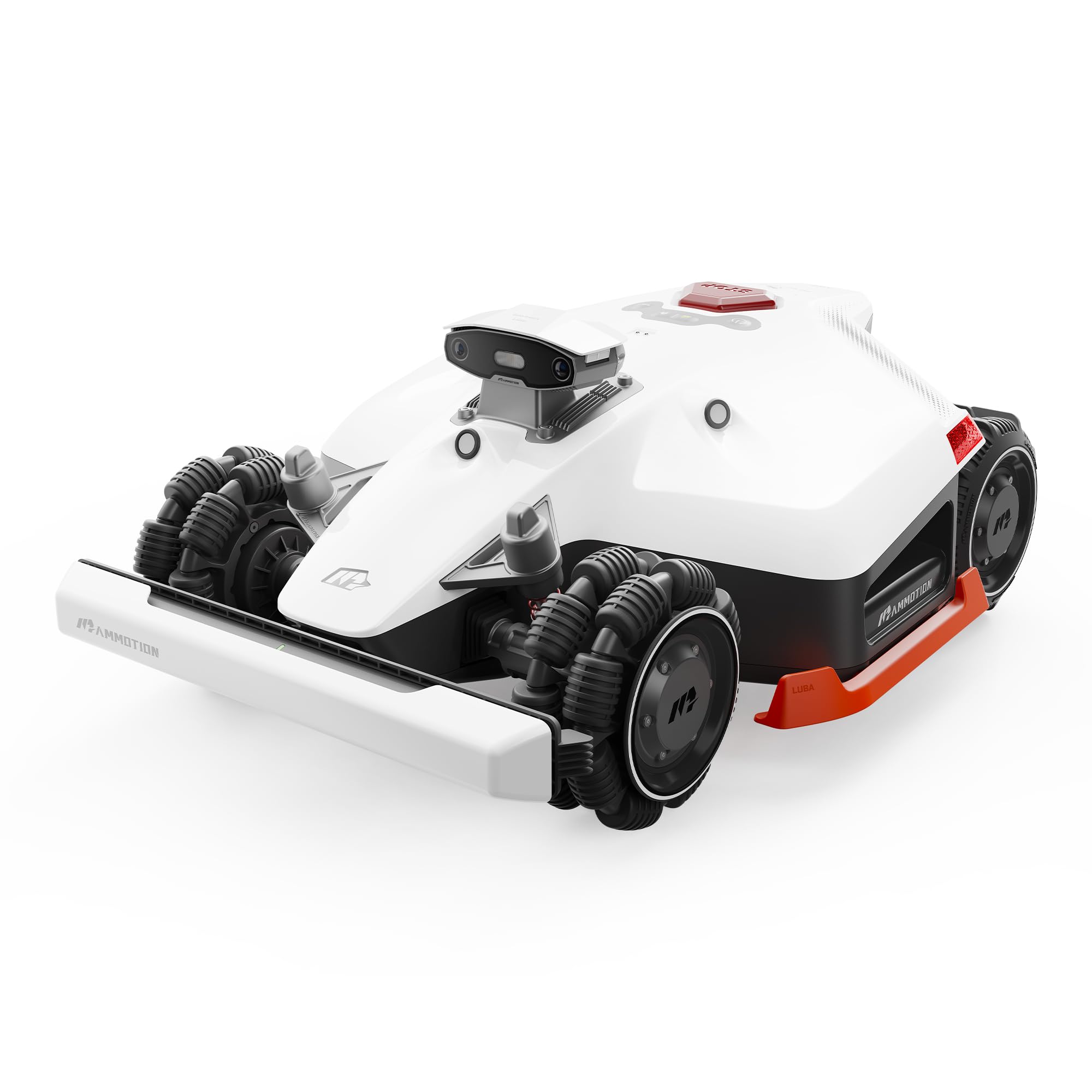
This mower is a solid choice for tackling steep hills thanks to its powerful all-wheel drive and smart navigation features.
Pros
- Handles steep slopes up to 80% without getting stuck
- Maps and mows complex lawns with no perimeter wires needed
- Controls and tracks mowing remotely via app with multiple mowing patterns
Cons
- Setup can be a bit complicated and needs good internet access
- May require occasional manual rescue if stuck on very rough terrain
- Slightly pricey for smaller yards
We found the LUBA 2 AWD to be very reliable on steep and uneven terrain. The four-wheel motors give it enough power to climb sharp slopes that usually stop other mowers. It managed thick grass and potholes better than we expected.
The smart AI vision and RTK GPS helped it navigate shaded areas and tight spots without the need for boundary wires, which saved a lot of installation time. We especially liked how it can remember and mow up to 50 different zones.
Using the Mammotion app, we could watch the mower’s progress and set detailed mowing patterns anywhere. It resumed work perfectly after charging, which kept our lawn tidy without much hassle. However, the setup took some effort, especially to get the internet connectivity stable for the app features.
Overall, this mower fits well if you have a steep yard with tricky landscaping and want a mostly hands-off solution. It’s built tough and smart but does ask for a bit of patience during the first setup.
Neomow X SE by HOOKII
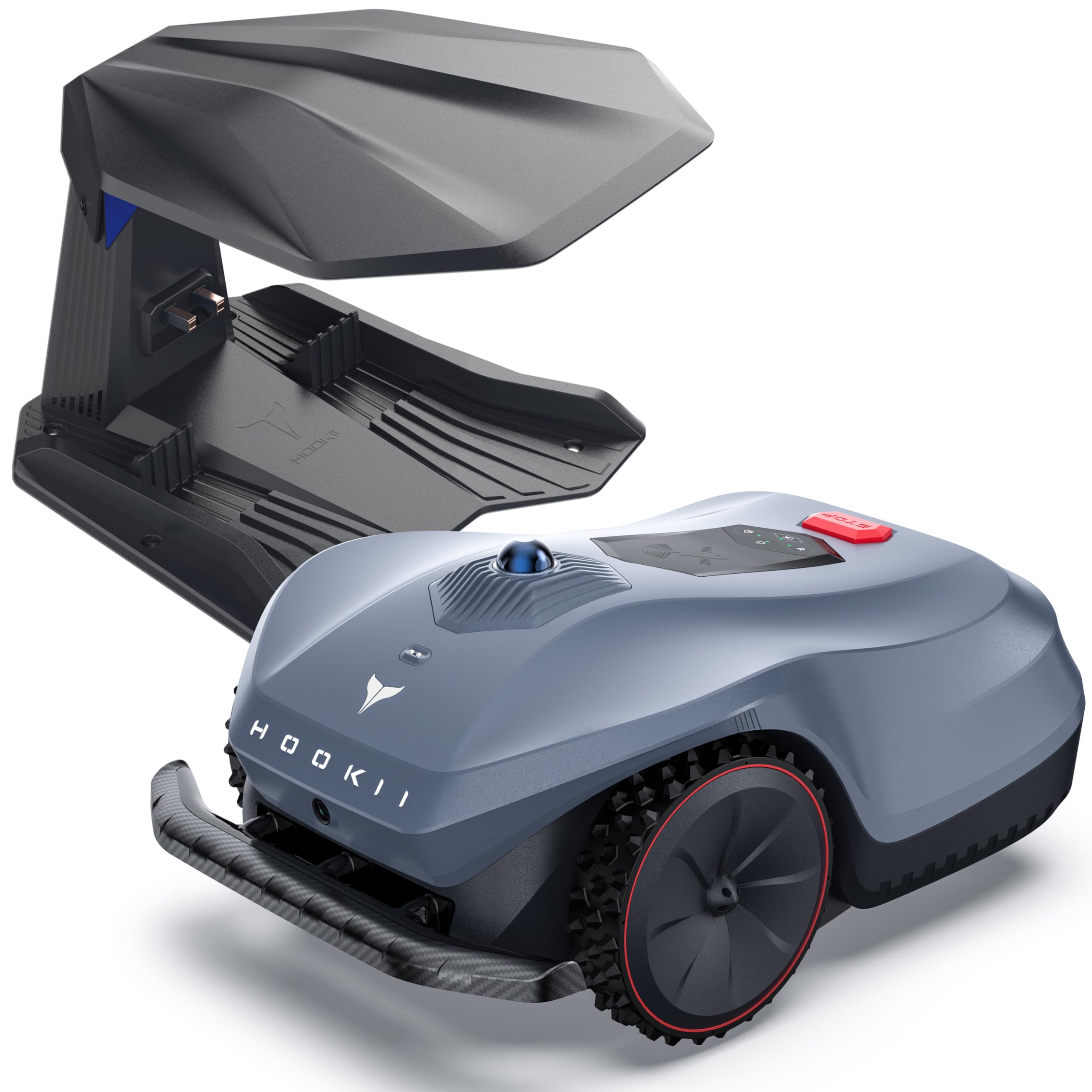
This mower handles steep hills well, thanks to smart sensors and easy setup, making it a solid choice for hillside lawns.
Pros
- Navigates tricky slopes and narrow paths easily
- No boundary wires needed, reducing setup hassle
- Quiet operation and works in low light or at night
Cons
- Battery life limits coverage to medium-sized yards
- App can feel complex at first with many features
- Front wheels struggle with obstacles higher than 1.6 inches
We tested the Neomow X SE on a 0.5-acre yard with several steep areas. The real strength is its 3D LiDAR and vision fusion, which lets it avoid obstacles carefully and mow precisely without extra wire setup. This saved us time and frustration since we didn’t need to dig or place boundary cables.
The mower easily managed slopes and narrow driveways as tight as 2.5 feet. Its floating deck followed the uneven ground closely, giving a clean cut without missing spots. It also paused and resumed mowing perfectly after charging, so it covered the lawn steadily without gaps.
Remote control via the app is handy but has a slight learning curve. We liked setting no-go zones for flower beds and pools, though some features took a bit to get used to. Overall, the quiet motor and night mowing ability made the Neomow less intrusive. It’s a reliable option for hillside yards up to three-quarters of an acre.
BESTMOW Robot Mower
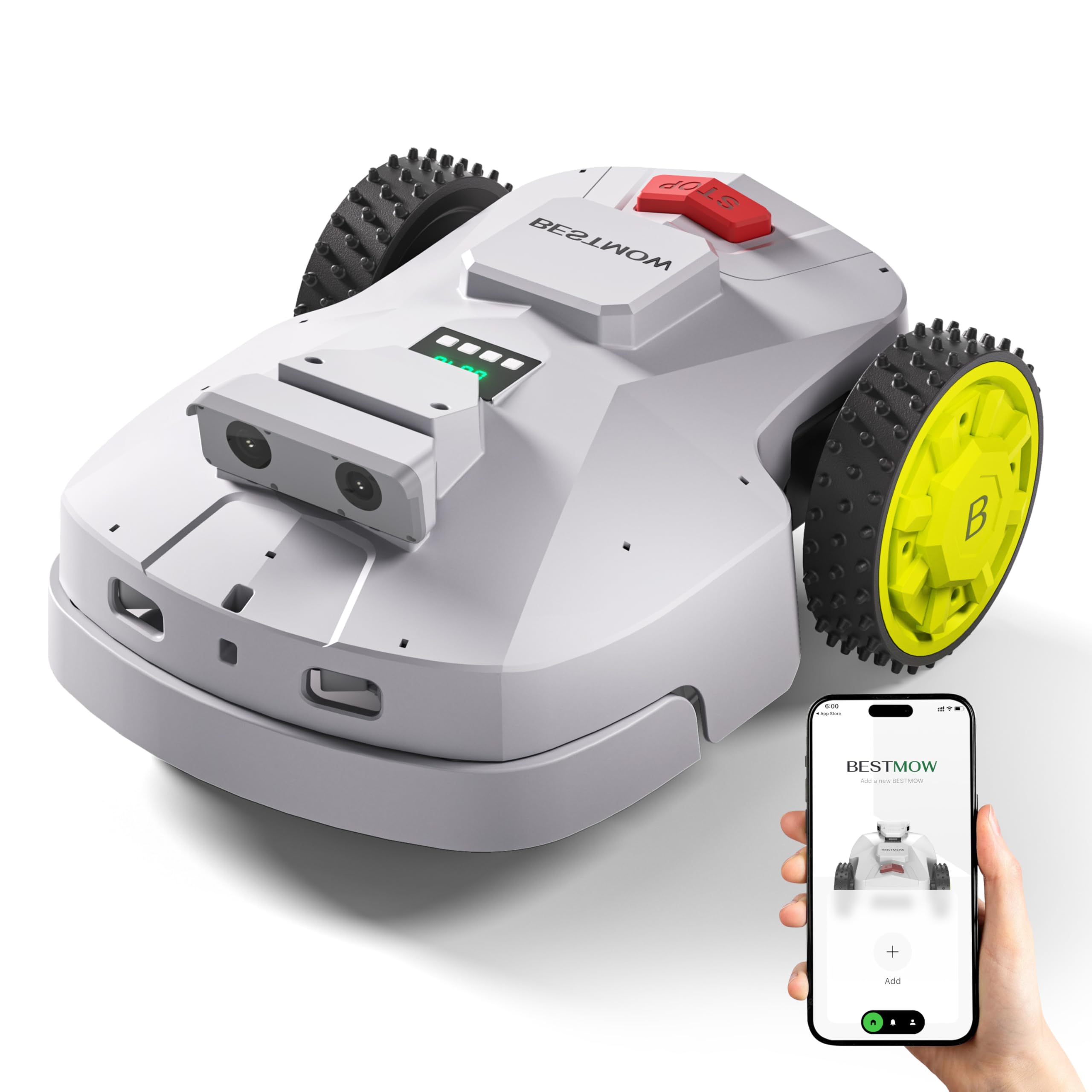
This mower is a solid pick for those who want quiet, smart lawn care on uneven and hilly terrain.
Pros
- Handles hills up to 25-30% with stable performance
- Quiet operation lets us mow anytime without noise issues
- Smart GPS and app control make managing the lawn easy from anywhere
Cons
- Setup can be tricky without good instruction
- Activation code required adds a step before use
- Software limits can make complex yards a little challenging
We found the BESTMOW robot mower reliable on slopes that would normally slow other mowers down. Its GPS mapping keeps it working efficiently, cutting the entire yard without going over the same spots. It’s clear the mower knows its way around hills and obstacles without getting stuck.
The motor is surprisingly quiet, which means we can run it during the day or night without upsetting neighbors or pets. The self-charging feature works well, so the mower handles long jobs by coming back for power when needed and then continuing where it left off.
One downside is the setup process—the instructions were not always clear to us, and the activation code step could confuse first-time users. The app is handy once running, but some software quirks showed up on tricky terrain, so it’s best suited for yards with moderate complexity.
Overall, for anyone with steep hills who wants a quiet, mostly hands-off mow, the BESTMOW stands as a trustworthy helper.
Redkey MGC1000 Robot Lawn Mower
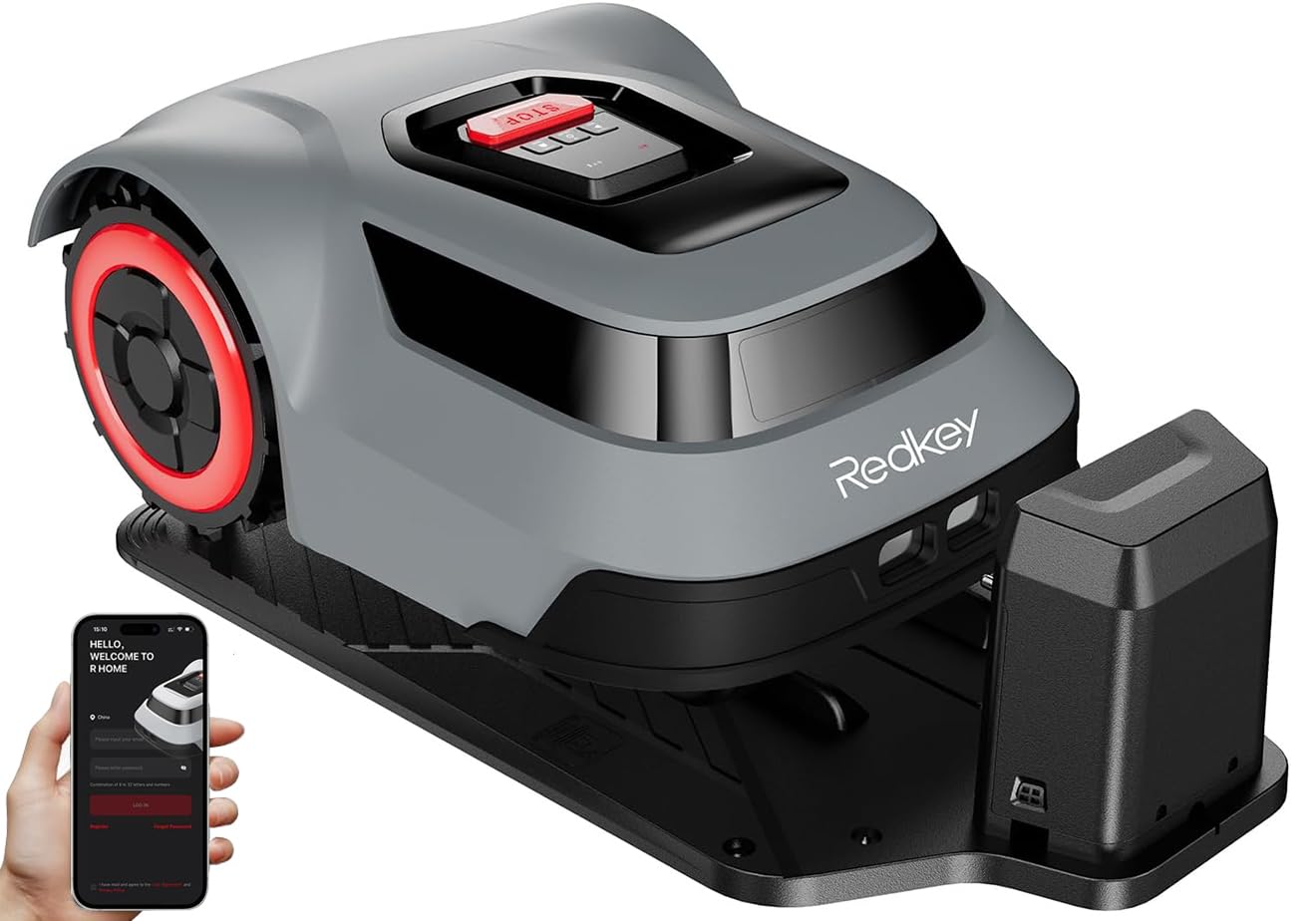
We recommend the Redkey MGC1000 for small yards with steep slopes because it handles hills well and offers smart features like precise mapping.
Pros
- Handles slopes up to 45% easily
- Smart blade adjusts to thick grass automatically
- App lets us track progress and adjust settings anytime
Cons
- Best for small lawns only, not large yards
- Can be tricky to set up the boundary wire
- Battery life is decent but not the longest
The mower did a solid job on our half-acre lot with steep areas. It climbed slopes without slipping and avoided obstacles well. The blade adjusts itself which kept the grass looking even, even when the lawn got thicker.
Using the app was helpful to keep an eye on progress and schedule mowing times. We liked that it returns to charge automatically and gets back to work when ready. Setup took some time because the boundary wire needs careful placement to avoid errors.
This model works best if your lawn is under a quarter-acre. If you want something for a bigger yard, you might find it limits you. Still, for steep small yards, the Redkey MGC1000 is reliable and smart.
YARDCARE V100

The YARDCARE V100 is a solid choice for small lawns on hills, thanks to its smart navigation and smooth obstacle handling.
Pros
- Smart camera system guides mowing precisely
- Handles obstacles and corrects course easily
- Adjustable cutting height fits various grass lengths
Cons
- Best suited for small areas up to 1,600 sq ft
- Needs clear lawn boundaries for best results
- Manual grass trimming may be needed if very tall
We found the visual navigation technology helpful for steady mowing on uneven ground. The high-def camera really aids the robot in recognizing grass and moving efficiently without missing spots. It also senses obstacles well, which means fewer interruptions.
The cutting height adjustments are simple to change with the manual knob, letting us keep the grass at a good length even on slopes. However, the mower performs best if taller grass is trimmed down first, so a quick manual cut beforehand saves time.
Battery life lasts long enough for smaller yards, but larger lawns might require buying an extra battery. Setting up clear boundaries like fences or gravel helps the mower stay on track, as it doesn’t create its own limits. Overall, it works smoothly and quietly for steep hills in compact spaces.
Redkey MGC500 Robot Lawn Mower
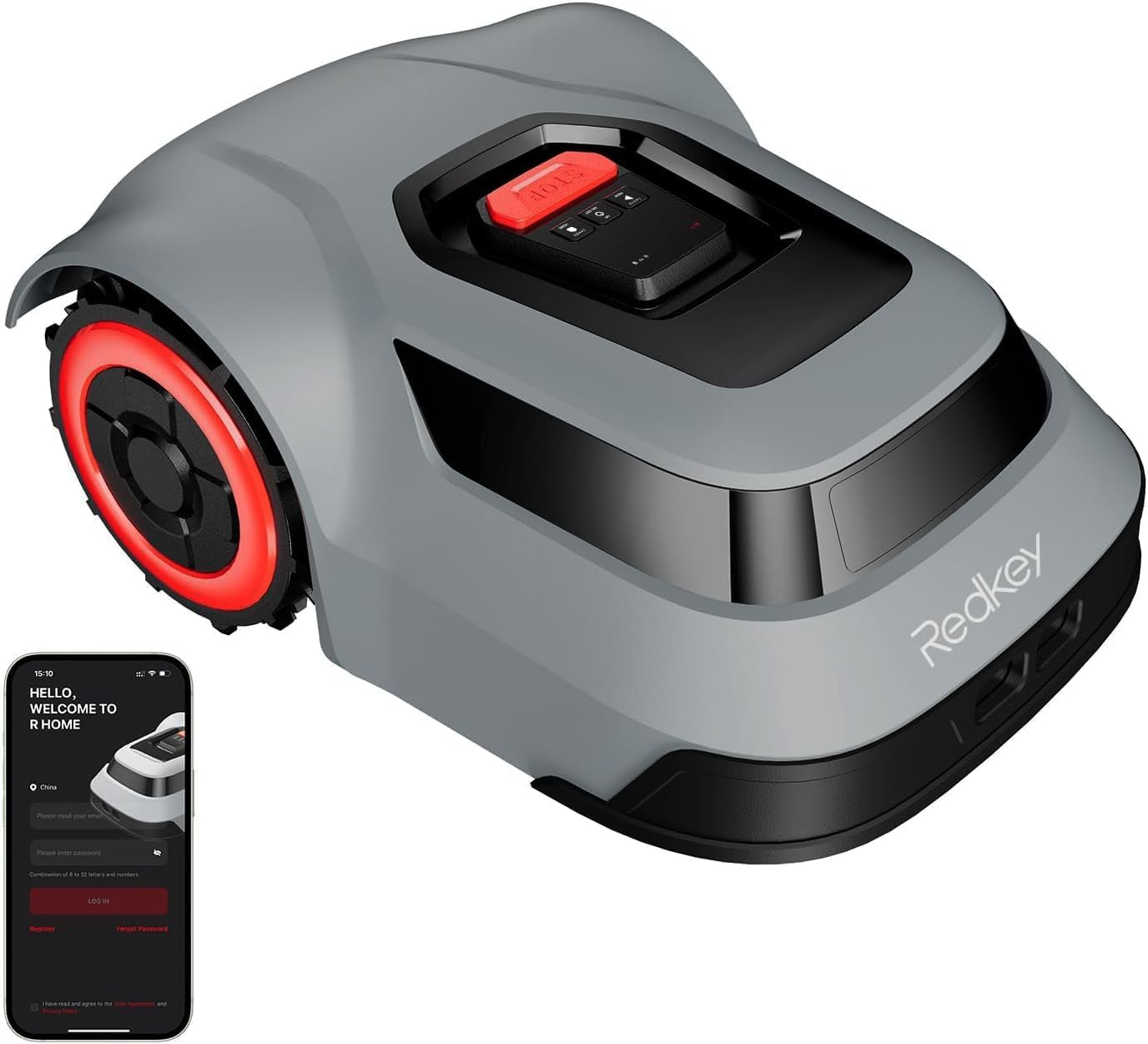
This mower works well for small yards with steep slopes, offering solid features for the price.
Pros
- Handles hills up to 45% grade without slipping
- Smart app control with precise positioning
- Automatically charges and resumes mowing on its own
Cons
- Best for small lawns only, struggles with larger areas
- Setup can be time-consuming and tricky
- Battery life is good but not outstanding
We found the Redkey MGC500 to be strong on slopes, which is rare for robotic mowers in this budget. It easily climbed steep areas and changed direction on obstacles. The automatic charging feature saved us a lot of hassle since it doesn’t need any intervention to recharge and restart.
The smart app allows real-time tracking and adjusts the cutting height, which helped us mow uneven grass more efficiently. However, installing the boundary wire took time and required some patience. In some cases, the wheelbase felt a bit light, making it hard to dock on the charging station perfectly.
This model fits smaller lawns well but wouldn’t be the best pick for big yards. Still, if you have hilly ground around 0.12 acres and want a mower that doesn’t quit on slopes, it’s a practical choice worth considering.
ANTHBOT No Wire Robot Mower
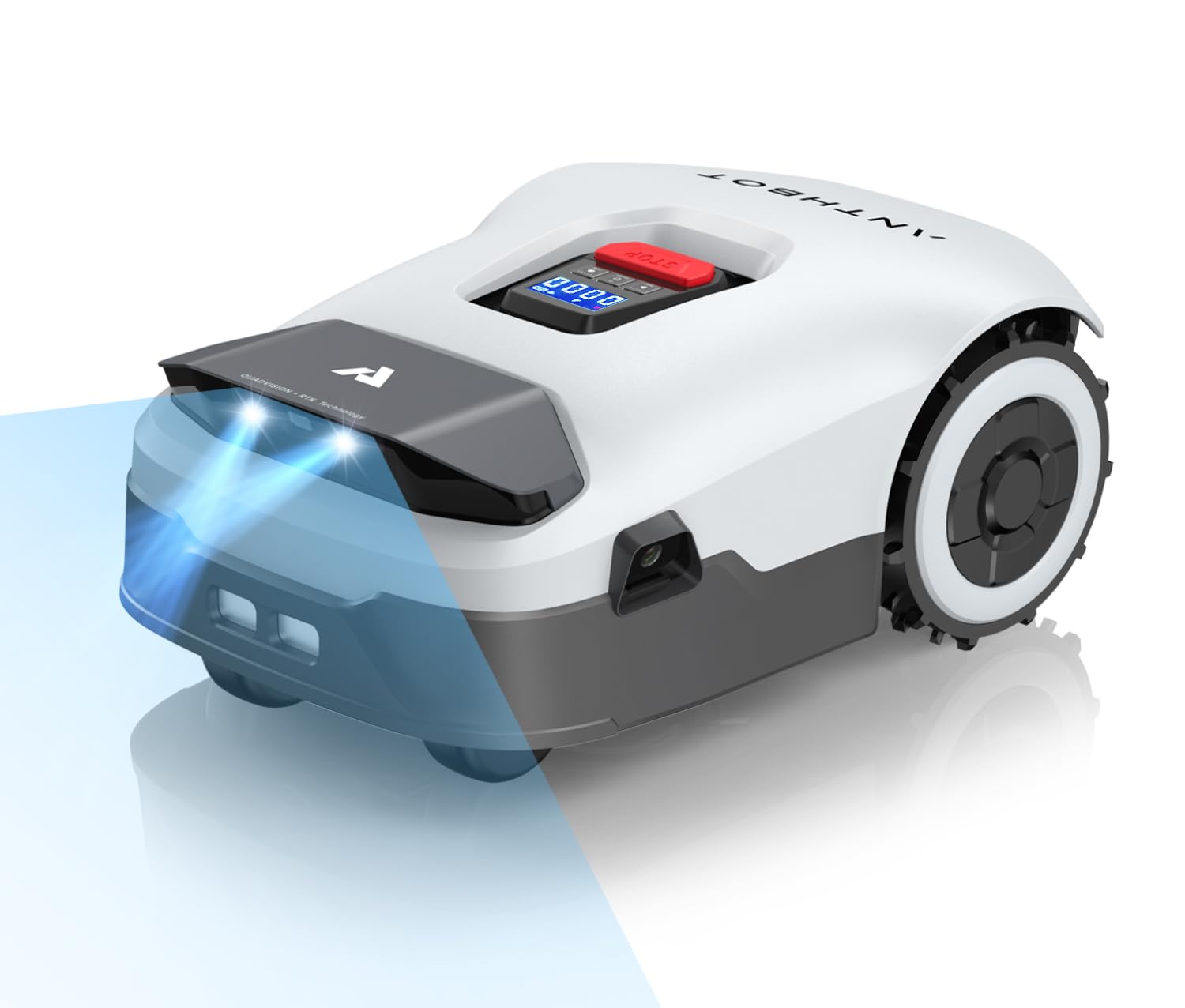
This mower works well on steep hills thanks to smart positioning and no-wire setup that saves time and hassle.
Pros
- Handles slopes with precise GPS and vision positioning
- No need to install perimeter wires, ready to use quickly
- Smart app control with multi-zone mowing and no-go zones
Cons
- WiFi connection can be unstable
- Mapping setup may take some time initially
- Battery life is good but might require charging for larger yards
We found the ANTHBOT mower impressive for hills. Its dual RTK GPS and 4-eye vision make it stay on course even on steep, tricky terrain. This gave us peace of mind on uneven ground where other mowers might slip or miss spots.
The no-wire design was a huge plus. We didn’t waste time installing boundary cables, which often frustrates users and takes days. Just unbox and it starts mapping your lawn automatically.
Its app and multi-zone control made managing different slopes and garden areas easy. No-go zones like around pools kept the mower safe. However, the WiFi connection isn’t always stable, which slowed remote commands at times.
Overall, for hilly yards needing precise, wire-free tech, this robotic mower delivered solid results without major headaches.
ECOVACS GOAT O1000 RTK
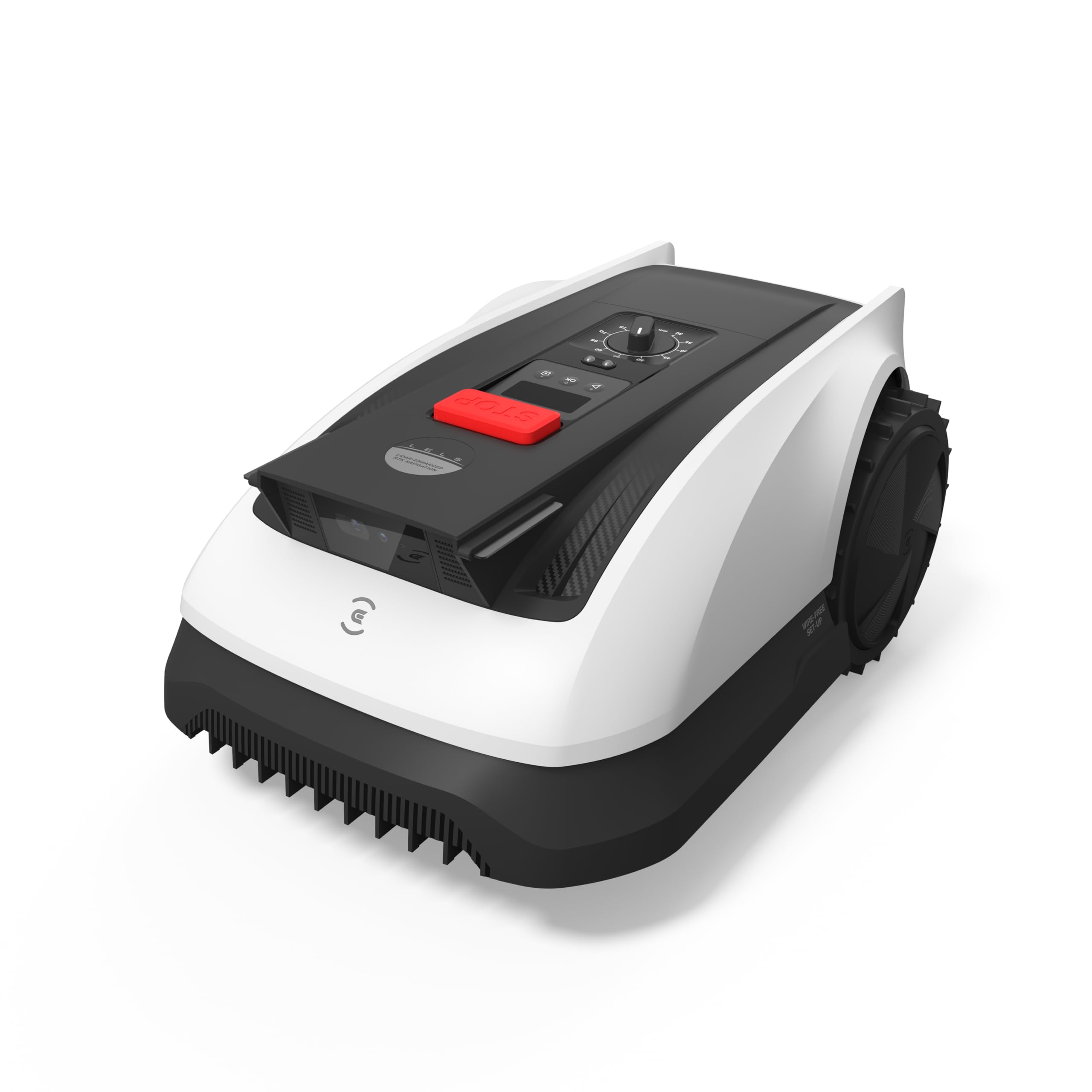
The ECOVACS GOAT O1000 RTK is a solid choice for steep hills thanks to its strong climbing ability and smart obstacle handling.
Pros
- Handles slopes up to 45% easily
- No need for boundary wires with automated lawn mapping
- Avoids pets and objects reliably with 3D sensors
Cons
- Setup app can be a bit complex at first
- Navigation under dense trees is good but not perfect
- Heavier than some other models
We’ve found that the GOAT O1000 climbs steep yards confidently without slipping or losing grip. Its slim design lets it fit through tight spots that would stop larger mowers. The automated mapping saves a lot of time since no wires are needed to mark boundaries.
The mower’s 3D obstacle detection protects pets and garden items well. We felt comfortable letting it run without watching closely. However, the app setup took some patience to customize zones and paths as we preferred.
While the navigation through heavy tree cover is mostly stable, it sometimes hesitates when signals get weak. The weight makes moving it by hand a bit harder but adds to its sturdy feel. Overall, this mower keeps the lawn tidy on steep slopes with minimal fuss.
AirSeekers Mower for Steep Hills
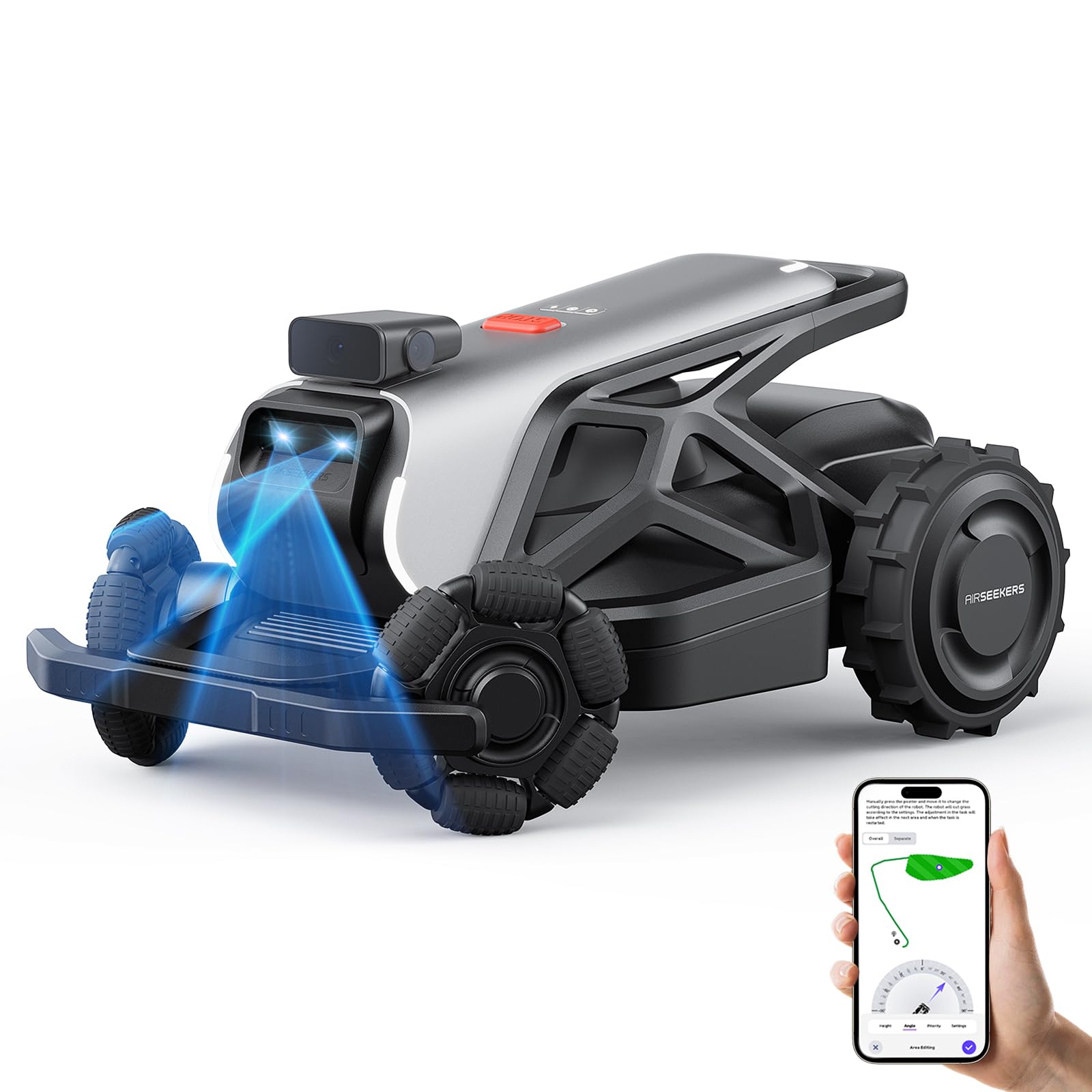
This robotic mower handles steep slopes well but needs patience during setup and occasional maintenance.
Pros
- Handles hills up to 65% slope smoothly
- Smart obstacle detection with AI vision
- Mulches grass finely to promote yard health
Cons
- App setup is tricky and sometimes unreliable
- Some build parts feel fragile, like the blade mount
- Limited mapping range without extra hardware
We found that the AirSeekers mower really tackles steep and uneven terrain better than many others. Its big omni wheels and all-terrain design gave us more confidence on hills, and it rarely got stuck. The mulching system worked well to keep clippings from piling up.
The AI-powered navigation helped avoid obstacles, making mowing less of a hassle. Still, getting the app working was frustrating at times. It took a while to link the mower to the phone and map out the yard boundaries.
Also, we noticed the blade assembly could be more sturdy. After a few uses, one screw loosened, and parts needed tightening. Overall, this model suits those willing to spend a little time tweaking for the payoff of good hillside mowing.
If you stay patient with setup and upkeep, the AirSeekers mower offers solid hillside performance and smart features for moderate to large yards.
Anthbot No Wire Robotic Mower
This robotic mower handles steep hills well and offers high-precision mowing without the hassle of perimeter wires.
Pros
- No perimeter wires—easy to start right away
- Accurate positioning even in tricky GPS areas
- Smart app control with multi-zone management
Cons
- WiFi connection can be unstable sometimes
- Initial setup and mapping takes patience
- Heavier than some other mowers
We tested the Anthbot on a steep, uneven lawn, and its ability to navigate the slopes impressed us. The combination of RTK and 3D vision made its movements smooth and precise where other mowers might struggle.
Without perimeter wires, we saved time during setup and avoided the usual cable tangles. The mower started mowing quickly, and the adaptive cruise control helped cover all zones efficiently.
The app gave us real-time control and let us set no-go zones around obstacles like pools. However, the WiFi connection was a bit shaky, and getting the perfect map took extra time. Overall, if you want a mower that works well on hills and is easy to manage remotely, this one fits the bill.
Buying Guide
When choosing a robotic lawn mower for steep hills, we need to focus on key features. The mower must handle slopes safely and mow efficiently without slipping or getting stuck.
First, look for the maximum slope angle the mower can handle. This is usually given in degrees or percent grade. For steep hills, aim for a mower that can manage at least 25 degrees or about 45% slope.
Next, consider the mower’s traction system. Models with larger wheels or specialized tires offer better grip on hills. Some mowers have sensors that help adjust speed or path to prevent slipping.
Battery life is important too. Steep hills use more power, so a longer battery life means the mower can finish your lawn without needing extra charges. Look for mowers with strong batteries and quick recharge times.
Ease of use matters. We want a mower with simple programming and good boundary wire setup. Some come with smart app control, making it easier to manage mowing schedules.
Here is a quick feature comparison table to guide us:
| Feature | Why It Matters | What to Look For |
|---|---|---|
| Maximum Slope Angle | Ability to handle hills safely | 25 degrees or higher |
| Traction & Tires | Prevent slippage on steep areas | Large or textured wheels |
| Battery Life | Mow entire lawn without recharging | Long-lasting, fast recharge |
| Ease of Use | Simplifies operation and setup | App control, simple programming |
FAQs
Q: Can robotic lawn mowers handle very steep hills?
We recommend mowers designed for slopes up to 35 degrees. Some models handle even steeper hills, but you should check the specifications carefully to match your yard’s steepness.
Q: Are robotic mowers safe to use on uneven or steep terrain?
Yes, most come with safety sensors that stop the blades if the mower tips or lifts. This prevents accidents and protects the machine from damage.
Q: How much lawn area can these mowers cover?
Coverage depends on the model. Some can mow up to 10,000 square feet, while others are better for smaller yards. Always choose a mower that fits your total lawn size.
Q: What kind of maintenance do robotic mowers need?
We should regularly clean the blades and check for wear. Batteries also need to be charged and replaced every few years.
Q: How do robotic mowers compare to manual lawn care on hills?
Robotic mowers save time and effort, especially on slopes. They offer consistent cutting without physical strain, unlike pushing a traditional mower uphill.
Q: Are robotic mowers environmentally friendly?
Yes, most use electric power and produce zero emissions. They also reduce noise compared to gas mowers, which is better for the environment and neighbors.
Q: Can robotic mowers avoid obstacles on steep hills?
Most models have sensors to detect obstacles. However, very rocky or cluttered hills might require some manual clearing first.
Conclusion
Robotic lawn mowers built for steep hills offer an effective way to keep our lawns neat without hard work. They handle slopes safely and consistently, giving us a well-manicured yard even on tricky terrain.
These mowers are also eco-friendly. They use less energy than gas mowers and produce no direct emissions. This helps us reduce our carbon footprint while maintaining our outdoor space.
Choosing a model known for reliability and good performance is important. We want a machine that can work long-term without frequent breakdowns or safety issues. Quality builds and smart features add value and peace of mind.
By investing in the right robotic mower for steep hills, we save time and effort. Our lawn stays healthy, and we enjoy more free moments. It’s a smart choice for those wanting both convenience and eco-conscious care.
Let’s pick a trusted robotic mower and make lawn care easier and safer. Taking this step means better results and less hassle for us in the future.
