


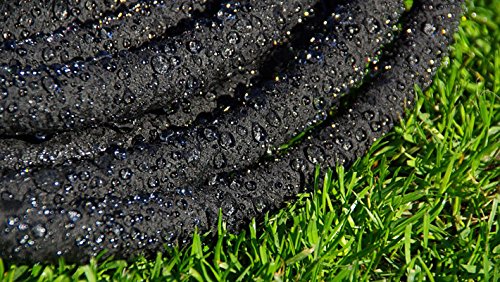
The best soaker hose delivers slow, even watering while saving time, water, and garden effort.
A hot summer garden can look tired even after a quick spray from a regular hose. Water may run off hard soil, splash leaves, or evaporate before roots drink it. I know how frustrating that feels after spending time and money on plants. A soaker hose solves much of this trouble by releasing water along its length. It helps soak the root zone with less waste and fewer muddy paths. In this guide, I compare seven popular options for beds, borders, pots, and large yards.
Rocky Mountain Goods Soaker Hose

The Rocky Mountain Goods Soaker Hose is a strong choice for gardeners who want a traditional round hose. Its heavy-duty rubber body feels more solid than many thin flat hoses. The 50-foot length works well around raised beds, shrubs, flower borders, and small vegetable plots. Reinforced fittings also help the hose handle regular connection and removal.
This hose includes an end cap, so I can close the line or connect another hose when I need more reach. It works best when laid flat on prepared soil or under a light layer of mulch. The dark color blends into many beds and may help it stay less noticeable. As with any soaker hose, I would start with low water pressure and check the wetting pattern before leaving it in place.
Pros:
- Durable rubber construction for repeated garden use
- Reinforced fittings help reduce connection stress
- 50-foot size suits many home gardens
- End cap supports simple hose extension
- Good choice for flower beds and vegetable rows
- Round shape is easy to position around plants
Cons:
- Heavier than a thin flat soaker hose
- May need time to relax after storage
- Water flow can vary with pressure and hose placement
My Recommendation
I recommend this model to homeowners who prefer a sturdy hose that feels familiar in use. It is especially useful for a 50-foot bed, a few shrub lines, or a compact backyard garden. The rubber body gives it a more substantial feel than low-cost fabric-style options. If you want the best soaker hose for everyday garden work and do not need a very long run, this is a dependable starting point.
Its main value comes from the balance of strength, length, and simple fittings. It does not try to be complicated. It simply delivers slow watering along a garden route. Check the current Amazon listing for stock and price before buying, since both can change.
LINCHOC GARDEN 100-Foot Soaker Hose

The LINCHOC GARDEN 100-foot soaker hose targets large beds and wider landscapes. Its 5/8-inch design gives it a familiar garden-hose size while providing a long watering path. I like this length for vegetable rows, landscape borders, and several beds that sit close together. It can reduce the need to move a short hose from one section to another.
The flexible design makes layout easier when the garden has gentle curves. I would still avoid sharp bends, tight knots, and dragging it across rough concrete. A long hose needs even pressure, so I would test it at the far end before covering it with mulch. When planned well, the hose can act like a quiet watering ribbon beneath plants.
Pros:
- 100-foot length covers broad planting areas
- 5/8-inch format fits common garden connections
- Useful for long vegetable rows and borders
- Flexible design helps with curved layouts
- Can reduce repeated hose repositioning
- Supports lower-waste root-zone watering
Cons:
- Long runs may need careful pressure control
- Can be bulky to store after the season
- Not ideal for very small beds or balcony gardens
My Recommendation
This hose is best for gardeners with a wide yard or several connected beds. I would choose it when a 50-foot model leaves plants at the far end dry. It offers useful reach without requiring a complex irrigation timer system. For expansive home landscapes, it may be the best soaker hose when coverage matters more than compact storage.
Measure your beds before ordering. A little extra length helps, but too much hose can create loops and uneven watering. Lay it in a simple path, use a pressure regulator if needed, and watch the first cycle. That setup gives this long hose its best chance to water evenly.
MIXC Thickened 100-Foot Soaker Hose

The MIXC thickened soaker hose is designed for gardeners who want a long hose with a more reinforced feel. Its 100-foot length can reach large beds, shrubs, and rows without frequent moves. The copper joint adds a metal connection point that may feel more secure during repeated use. I see this as a practical option for people who care about fitting strength as much as hose length.
A thick hose can be easier to manage once it is laid out, though it may take more room on a storage reel. The listed water-saving claim is useful as a goal, but real savings depend on soil, pressure, weather, and watering time. I would place the hose near plant roots and use a timer to avoid overwatering. A slow soak is most helpful when it reaches the root zone instead of running down a hard surface.
Pros:
- 100-foot reach suits large garden layouts
- Thickened construction may improve everyday durability
- Copper joint adds a sturdy connection point
- Useful for beds, rows, and shrub borders
- Supports slow watering near plant roots
- Works well with a timer and pressure control
Cons:
- Thicker material can take more storage space
- May feel less nimble in tight planting areas
- Actual water savings vary by setup and soil
My Recommendation
I would choose the MIXC for a larger garden where fittings receive regular handling. The copper joint is a nice detail for users who connect and disconnect hoses often. It is also a good fit for gardeners who want one long run instead of several short sections. Among the options here, it can be the best soaker hose for broad coverage with a reinforced connection point.
Keep the hose straight during the first test. Check for leaks at the joint and confirm that water reaches the far end. If your water pressure is high, reduce it rather than forcing water through the hose. With sensible setup, this model offers useful reach and solid everyday value.
Gilmour 25-Foot Round Soaker Hose

The Gilmour Round Soaker Hose is a compact pick for small beds and short planting lines. At 25 feet, it is easier to place, move, and store than a 100-foot hose. The round 3/8-inch design can fit neatly around a small group of plants. Heavy-duty couplings add confidence at the connection points.
I like this size for a patio border, a short row of tomatoes, or a few rose bushes. It does not create the storage challenge that often comes with extra hose length. It also lets a new gardener learn how soaker watering works without building a large system. For even coverage, place it close to the plants and avoid crossing dry gaps between rows.
Pros:
- Compact 25-foot size is easy to store
- Fits small beds and short planting rows
- Round shape is simple to position
- Heavy-duty couplings support repeated connections
- Good option for patios and small yards
- Simple choice for first-time soaker hose users
Cons:
- Too short for large gardens without extensions
- Smaller diameter may limit total coverage
- May require careful placement around wider beds
My Recommendation
The Gilmour is best for people who need a short, tidy watering tool. I would suggest it for a small home garden, a narrow flower bed, or a renter who lacks much storage space. It is not the strongest choice for a large vegetable plot, but that is not its purpose. If you want the best soaker hose for a compact area, its short length is a real advantage.
This hose is also a sensible gift for a new gardener. It is easy to understand and does not require a large layout plan. Use low pressure, watch the soil, and move it when the bed changes. Its modest size keeps the job simple and the value clear.
Hourleey 100-Foot Flat Soaker Hose

The Hourleey flat soaker hose comes as two 50-foot sections that create a 100-foot system. That split design gives me more layout choices than one long piece. I can use one section in a small bed or connect both for a longer run. Its dual-layer design aims to support leak resistance while keeping the hose flexible.
Flat hoses can sit close to the soil and may be easier to cover with mulch. They also tend to pack down more neatly than bulky round hoses. The linkable design is helpful when a garden grows from one bed into two. I would inspect the connectors before each season and keep the hose away from sharp rocks, digging tools, and vehicle tires.
Pros:
- Two 50-foot sections offer flexible coverage
- Can be used as one 100-foot system
- Flat shape sits neatly near the soil
- Dual-layer design supports everyday garden use
- Easy to store compared with some round hoses
- Useful for changing or expanding bed layouts
Cons:
- Flat hoses can kink if stored carelessly
- Connectors need proper tightening and inspection
- Thin material may need protection from sharp ground
My Recommendation
I recommend Hourleey for gardeners who want options. The two-piece format works well when your beds are separate or when you do not always need the full length. It is a strong candidate for the best soaker hose if flexible layout matters most. The flat profile also makes it useful under a light mulch layer.
Before watering, lay each section straight and flush the line briefly. This can help remove debris and show any weak connection. Do not pull the hose by one fitting, especially when the ground is wet. Treated with care, this set offers useful coverage and good storage flexibility.
Secbulk 200-Foot Flat Soaker Hose

The Secbulk flat soaker hose is made for large gardens and long landscape borders. It includes four 50-foot sections, giving a total length of 200 feet. That setup allows me to water multiple beds or build one long route when the layout permits. For a property with many planting zones, this amount of hose can save a great deal of moving.
The flat, linkable format also makes the system easier to divide into sections. I would not run all 200 feet at once without checking pressure and end coverage. Long systems often need careful planning, and a splitter or separate zones may work better than one continuous line. Use stakes or gentle mulch to hold the hose in place without crushing it.
Pros:
- 200 feet covers extensive garden areas
- Four 50-foot pieces provide layout control
- Sections can serve separate beds
- Flat design stores more neatly than some round hoses
- Helpful for large yards and long borders
- Supports DIY irrigation planning
Cons:
- May be excessive for a small home garden
- Long runs require pressure and flow planning
- Many connections create more points to inspect
- Flat sections can kink when folded too tightly
My Recommendation
Secbulk is best for serious home gardeners, community plots, and large landscape beds. I would choose it when 100 feet is not enough and when separate 50-foot sections would be useful. It may be the best soaker hose for maximum coverage, but only if you are willing to plan the water zones. More hose is helpful only when the water system can support it.
Start with one section and learn the wetting pattern. Then add more sections one at a time. A timer, splitter, and pressure regulator can make a large setup easier to control. If you need broad coverage at a reasonable cost, this set deserves a close look.
Thickened 100-Foot Flat Soaker Hose, 2-Pack

This thickened flat soaker hose two-pack gives gardeners two 100-foot hoses for a total of 200 feet. The separate pieces can water distant beds without forcing every section into one long line. I like that arrangement for a yard with front and back planting areas. It can also provide a spare if one hose needs cleaning or seasonal replacement.
The flat body is easy to place along rows and borders. A thicker build may feel more reassuring than a very light flat hose, though it still needs protection from sharp objects. I would keep each hose on a loose reel or wide coil during storage. Before covering it with mulch, I would run water through it and check the full length for steady seepage.
Pros:
- Two 100-foot hoses provide broad coverage
- Separate hoses work well in different garden zones
- Thickened flat design offers a sturdy feel
- Flat profile fits neatly beside plant rows
- Useful spare hose included in the set
- Good value for larger residential landscapes
Cons:
- Requires plenty of storage space
- Two long hoses may be more than some users need
- Flat material can fold if handled too quickly
- Long sections may need separate watering zones
My Recommendation
I would recommend this two-pack to gardeners who want coverage in more than one area. It is a practical match for a front flower bed plus a backyard vegetable garden. The separate 100-foot hoses offer more control than a single 200-foot line. For that reason, it may be the best soaker hose package for large yards with divided watering zones.
Buy it only after measuring your beds and checking your outdoor faucet setup. Two long hoses need good planning, especially if you run them at the same time. With a splitter and timer, the system can make routine watering much easier. It gives large-property owners a useful mix of reach, flexibility, and backup value.
How to Choose the Best Soaker Hose
Choosing the best soaker hose starts with your garden shape. A short round hose may beat a long model when the bed is small and close to the faucet. A flat hose may work better in a straight vegetable row or beneath light mulch. I always measure the route first, then add only enough length for gentle curves and easy connections.
Length affects water flow, storage, and setup time. A 25-foot hose is simple, while a 200-foot system needs more planning. Long hoses can lose pressure toward the far end, especially when the faucet supplies several devices. If the last section stays dry, divide the system into zones rather than turning the water pressure too high.
Round Versus Flat Soaker Hoses
Round hoses often feel stronger and are easy to bend around shrubs. They can sit well on uneven ground and may resist some folding damage. Flat hoses often store more easily and can sit close to the soil. Neither shape wins every job, so I match the hose to the bed instead of trusting a single design.
A round hose can be a good choice for permanent borders. A flat model can be handy for seasonal rows that change each year. Flat hoses need careful storage because tight folds can block flow. Round hoses need more room and may feel heavy after a long day of moving garden tools.
Hose Length and Garden Size
For a small flower bed, choose a hose that covers the bed without large loops. For a medium vegetable plot, 50 to 100 feet often gives useful reach. Large properties may need several shorter hoses rather than one very long hose. Multiple zones make it easier to give each area the right amount of water.
Do not bury extra hose under mulch just to hide it. Unused loops can receive too much water while the far end receives too little. A clean path creates a better watering pattern. It also makes future digging, planting, and repairs safer.
Material and Fittings
Rubber and thick synthetic materials can handle regular garden work, but no hose lasts forever in harsh sun. UV exposure, freezing weather, sharp stones, and high pressure can shorten hose life. Store the hose in a cool place when the season ends. Drain it before freezing temperatures arrive.
Fittings deserve close attention. A strong hose with a weak connector still creates leaks. Metal or reinforced fittings may feel more secure during repeated use, but I still avoid pulling the hose by its connector. Tighten by hand first, then make only a small adjustment if needed.
Water Pressure and Flow
Soaker hoses usually work best with low or moderate pressure. High pressure can cause leaks, uneven spray, or early damage. I open the faucet slowly and watch how the hose responds. If the hose bulges or sprays instead of gently seeping, I reduce the pressure at once.
Flow also depends on soil and hose position. A hose on compact clay may take longer to show moisture than one on loose soil. A hose under mulch may wet the ground more slowly but lose less water to sun and wind. Test the soil with a finger or small trowel instead of judging only by the surface.
Water-Saving Performance
A soaker hose can use water more wisely than a wide spray because it places moisture near the roots. Still, no hose guarantees a fixed savings amount in every yard. The result depends on hose condition, pressure, weather, soil, and run time. Product claims such as 70 or 80 percent savings should be treated as possible results under certain conditions, not a promise for every garden.
The Environmental Protection Agency encourages efficient outdoor watering and warns against runoff. A timer can help prevent the common mistake of watering for too long. Water early in the day when possible, and adjust the schedule after rain. Good timing often saves as much water as the hose itself.
Best Setup Method
I begin by laying the hose on bare soil. I connect it to a faucet or timer, then open the water slowly. After a few minutes, I check the full length for leaks and look at the soil below the hose. This first test shows whether I need to move a section closer to the roots.
Once the pattern looks right, I use landscape staples or a thin layer of mulch to hold the hose. I never bury the hose deep because digging can damage it. I also leave access to the couplings. A setup that is easy to inspect is easier to maintain.
How Long Should a Soaker Hose Run?
There is no single run time for every garden. Sandy soil may drain quickly, while clay soil may hold water near the surface. A new bed may need a different schedule from an established bed. I start with a short cycle and inspect the soil several inches down.
Deep, less frequent watering often encourages stronger root growth than a shallow daily splash, but plant needs vary. Seedlings and containers may need closer attention. Watch for wilt, standing water, and runoff. Adjust the timer in small steps until the soil feels moist but not soaked.
Common Mistakes to Avoid
The first mistake is using too much pressure. The second is placing the hose far from the roots. Another common problem is connecting too many lengths without checking the far end. I also see gardeners leave hoses in direct sun for months or store them with sharp bends.
Do not assume a wet surface means a wet root zone. Lift a little mulch and check the soil. Do not water on a fixed schedule after heavy rain. A small amount of observation can protect plants and reduce waste better than any product claim.
Best Soaker Hose Comparison Table
| Best for | Why |
|---|---|
| Small beds and patios | Gilmour’s 25-foot round design is compact and easy to store. |
| Large yards and separated zones | Secbulk and the thickened two-pack offer long, flexible coverage. |
| Everyday home gardens | Rocky Mountain Goods balances sturdy construction, useful length, and simple fittings. |
The table gives a quick view, but your garden layout should guide the final choice. I would not buy 200 feet for a 20-foot bed. I would not choose a 25-foot hose when the faucet sits far from the plants. The best soaker hose is the one that matches your soil, route, water pressure, and storage space.
FAQs Of best soaker hose
Are soaker hoses better than regular garden hoses?
Soaker hoses are better for slow root-zone watering. They can reduce splash, runoff, and leaf wetting when used correctly. A regular hose is still better for filling buckets, washing tools, or giving a quick broad spray.
Can I bury a soaker hose under mulch?
Yes, a soaker hose can sit under a light layer of mulch. Test the hose first, then cover it gently. Avoid deep burial, sharp rocks, and areas where you may dig often.
What pressure should I use with a soaker hose?
Use low or moderate pressure and open the faucet slowly. Exact needs vary by hose and water system. If the hose sprays, bulges, or leaks, lower the pressure and inspect the fittings.
How far apart should I place soaker hose lines?
Place lines close enough to overlap the root zones. Sandy soil may need closer lines than clay soil. Test moisture below the surface before fixing the final spacing.
Should I buy a round or flat soaker hose?
Choose round for curved beds and a sturdy feel. Choose flat for straight rows, easy storage, and a low profile. Both can work well when the layout and pressure are right.
Final Verdict: Which Should You Buy?
For most home gardeners, I would start with the Rocky Mountain Goods model. It offers a useful 50-foot length, sturdy rubber, and simple fittings. Large yards should consider Secbulk, while compact beds suit the Gilmour.
The best soaker hose saves effort when you match its length to your garden. Test the flow, use low pressure, and adjust watering to the soil and weather for better results.
