


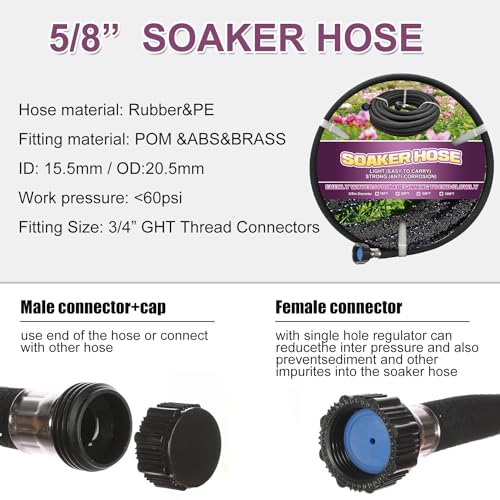
The best soaker hose for flower beds delivers slow, even root-zone watering while saving time, water, and plant health.
A flower bed can look calm on top while its roots stay thirsty below. Hand watering often sprays leaves, wastes water, and leaves dry spots around plants. A good soaker hose fixes that by letting water seep into the soil along the bed. I compared hose shapes, lengths, fittings, flexibility, and likely use cases to help you choose the best soaker hose for flower beds. The right pick depends on your bed size, layout, water pressure, and how often you garden.
Short Rubber Soaker Hose 25 ft

This 25-foot round rubber soaker hose suits small flower beds, narrow borders, and compact garden plots. Its short length makes it easier to place close to plant roots without leaving a large coil at the end. The round body should also feel more familiar to gardeners who prefer a traditional hose shape. For a small bed near a spigot, this design can make watering feel simple and controlled.
I like the practical size for patios and starter gardens. You can lay it in a gentle loop around annuals, shrubs, or a short row of perennials. As with any soaker hose, low water pressure and a short test run help create more even soaking. This is a strong choice when the best soaker hose for flower beds must fit a small space rather than cover a large yard.
Pros:
- Compact 25-foot length suits small beds
- Round rubber design is easy to position
- Works well around plants and short borders
- Simple layout creates less excess hose
- Useful for patio gardens and raised beds
- Heavy-duty style may handle regular garden use
Cons:
- Too short for large or widely spaced beds
- May need an extra connector for long layouts
- Rubber hose can be heavier than flat fabric styles
My Recommendation
I recommend this hose for gardeners who water one small flower bed at a time. It is especially useful near a porch, driveway, greenhouse, or outdoor faucet. The 25-foot size helps avoid the tangles and waste that often come with a much longer hose. If you need the best soaker hose for flower beds in a compact space, this is a practical starting point with a straightforward layout and easy storage.
Hourleey Flat Soaker Hose 100 ft

The Hourleey flat soaker hose comes as two 50-foot sections for a total reach of 100 feet. That split design gives you more control than one very long piece. You can use one section in a small bed or join both sections for a long border. Its flat shape should sit close to the soil, which can help keep the hose from standing above low plants.
This model makes sense for gardeners who maintain several beds or a long planting strip. The listed dual-layer construction and linkable design focus on leak control and flexible setup. I would still flush the hose before the first use and check the connectors under low pressure. For large beds, this may be the best soaker hose for flower beds when reach and layout options matter most.
Pros:
- 100 feet of total watering coverage
- Two 50-foot sections offer flexible setup
- Flat profile can rest neatly on soil
- Linkable design suits long flower borders
- Useful for multiple beds and garden rows
- Dual-layer build is designed to limit leaks
Cons:
- Long hose needs careful storage
- Flat hoses may kink if folded sharply
- Both sections can be more than a small bed needs
My Recommendation
I would choose the Hourleey for a gardener with long beds, several planting zones, or a growing garden that may expand. The two-piece format gives you a useful middle ground between a short hose and a full irrigation system. It is also a good fit when you want to route water along a straight edge. Among these options, it is a strong candidate for the best soaker hose for flower beds with broad coverage and a linkable design.
Flat Soaker Hose 50 ft

A 50-foot flat soaker hose is a useful size for a typical home flower bed. It offers more reach than a short 25-foot hose without becoming difficult to plan. The flat body can blend into mulch and soil when placed correctly. It can also be rolled for storage after the hose drains and dries.
This style is best for a straight bed, a curved border, or a single lawn-and-garden zone. I suggest laying it out in the sun for a short time if it arrives tightly folded, then placing it under mulch for better contact with the soil. Avoid sharp bends because a flat hose may restrict flow when pinched. It is a sensible option for shoppers seeking the best soaker hose for flower beds on a medium-size property.
Pros:
- 50-foot length fits many home beds
- Flat shape can sit under mulch
- Less bulky than some round hoses
- Good reach for one medium planting area
- Simple design is easy for new gardeners
- Water-saving format supports root-level irrigation
Cons:
- Can kink when sharply bent
- May need time to flatten after storage
- Coverage depends on water pressure and placement
My Recommendation
I recommend this 50-foot option for homeowners who want a simple hose for one medium flower bed. It is not oversized, so it should be easier to arrange than a 100-foot model. The flat design also works well when you want to hide the hose beneath mulch. If your garden is neither tiny nor sprawling, this may be the best soaker hose for flower beds because it offers a useful balance of reach, storage, and cost.
Rocky Mountain Goods 50-Foot Soaker Hose

The Rocky Mountain Goods hose uses a heavy-duty rubber style with a 5/8-inch diameter and 50-foot length. It includes an end cap, which lets you close the line or connect another hose when your layout calls for more reach. Reinforced fittings are another helpful detail because connectors often take the most strain during setup. This traditional round format should feel stable when laid along a bed edge.
The brand lists water savings of up to 70 percent, but real results depend on water pressure, soil type, timing, and hose placement. I would run it early in the morning and water the soil rather than the leaves. The round body may hold its shape well around shrubs and curves. For gardeners who value sturdy fittings and future expansion, this is a strong contender for the best soaker hose for flower beds.
Pros:
- Heavy-duty rubber construction
- 50-foot length suits many home gardens
- Reinforced fittings support repeated connection
- End cap helps close or extend the line
- Round shape works around curves and shrubs
- Root-level watering can reduce leaf wetting
Cons:
- Heavier than many flat hoses
- May cost more than basic flat designs
- Rubber can be less easy to hide in fine mulch
My Recommendation
I would select this hose for gardeners who want a more traditional, sturdy round design. It fits medium flower beds and gives you the option to extend the system later. The reinforced fittings and included end cap add useful value for regular use. If durability matters more than the lightest weight, this is one of the better choices for the best soaker hose for flower beds.
Thickened Flat Soaker Hose 100 ft

This product includes two 100-foot flat soaker hoses, giving gardeners a large amount of reach for a broad landscape. The thickened flat design aims to balance coverage with a low profile. Such a package can serve several beds, a long hedge, or a large vegetable and flower garden. It may also let you keep separate watering zones instead of dragging one hose around the yard.
Large hose sets need a little planning before installation. Measure each bed, keep the runs fairly straight, and use a pressure regulator if your tap pushes water too hard. I would test each section before covering it with mulch so you can spot a poor connection early. For extensive gardens, this could be the best soaker hose for flower beds when total coverage is the main need.
Pros:
- Large package supports extensive coverage
- Two hoses can serve separate watering zones
- Flat profile may disappear under mulch
- Useful for long borders and many beds
- Thickened construction is designed for added strength
- Helps reduce the need to move a hose by hand
Cons:
- Too much hose for a small garden
- Requires more storage space
- Flat sections can kink if handled roughly
My Recommendation
This set is best for gardeners with a large yard, several flower beds, or a planned irrigation layout. It offers room to grow and makes it easier to create separate watering zones. I would not buy it for one small border because unused hose can become a storage burden. For large properties, it may be the best soaker hose for flower beds because the two-hose package gives excellent reach and flexibility.
Hlinker 100-Foot Flat Soaker Hose

The Hlinker system includes two 50-foot sections and stakes to help hold the hose in place. Those stakes can be useful on slopes, around curves, or in beds where the hose tends to shift. The linkable format lets you use one section alone or connect both for a longer run. Its flat, dual-layer design is intended for drip-style watering close to the soil.
I see this as a good fit for gardeners who want more control over hose placement. Stakes can keep the line near the root zone instead of letting it slide toward a path. The listed water-saving claim reaches up to 88 percent, though actual savings vary with soil, pressure, plant needs, and run time. If neat installation is important, this is a serious option for the best soaker hose for flower beds.
Pros:
- Includes stakes for improved hose placement
- Two 50-foot sections offer layout choices
- Linkable design supports longer beds
- Flat body can blend into mulch
- Useful on curves and mild slopes
- Dual-layer design is intended to reduce leaks
Cons:
- Stakes add setup time
- May require extra care around sharp corners
- Long runs still need proper water pressure
My Recommendation
I recommend the Hlinker for gardeners who dislike hoses that wander out of place. The included stakes give it an edge in beds with curves, loose mulch, or mild slopes. It also works well for anyone building a simple DIY watering system. For tidy, root-focused watering, this may be the best soaker hose for flower beds among the flat models, especially when secure placement matters.
LINCHOC GARDEN 15-Foot Soaker Hose

The LINCHOC GARDEN hose is a short 15-foot model designed for small raised beds and patio containers. Its compact reach works well where a standard 50-foot hose would leave a bulky coil. The 5/8-inch format and flexible design should make it easy to route around a few plants. A short hose can also help new gardeners learn how long a bed needs before they buy a larger system.
This model is a natural fit for balcony gardens, container groups, and small raised beds near a faucet. I would place it close to the root zone and cover it lightly if the design of the bed allows. Since the hose is short, it may provide more predictable coverage in a small area than an oversized line. For compact spaces, it could be the best soaker hose for flower beds because it wastes little material or storage room.
Pros:
- Compact 15-foot length saves space
- Well suited to raised beds and containers
- Easy to carry and reposition
- Flexible design fits small planting layouts
- Useful near patios and balconies
- Root-targeted watering helps avoid wet foliage
Cons:
- Not suitable for large flower beds
- May need several pieces for multiple zones
- Short length limits placement away from the spigot
My Recommendation
I recommend this hose for apartment gardeners, patio growers, and anyone with a small raised bed. It is easy to store and unlikely to overwhelm a compact planting space. It also makes sense for a single container row close to the tap. If you need the best soaker hose for flower beds in a small urban garden, this short model deserves close attention.
Naicet 100-Foot Round Soaker Hose

The Naicet model is a 100-foot, 1/2-inch round soaker hose made for gardens and flower beds. Its long, continuous shape can follow a winding border or reach several planting areas. A round hose often feels easier to bend around shrubs than a flat hose, though it may be more visible before mulch covers it. The long length can reduce the need to connect several short pieces.
I would choose this design for a garden with curved beds and a nearby water source. Lay it in broad loops rather than tight circles, and let water move slowly into the soil. Long hoses can lose pressure toward the far end, so test the full run before relying on it during hot weather. For broad, curved layouts, this may be the best soaker hose for flower beds if you prefer one round line.
Pros:
- 100-foot reach covers broad planting areas
- Round body follows curved bed edges
- One long hose can reduce connector needs
- Useful for several connected planting zones
- Easy to reposition compared with fixed irrigation
- Suitable for gardens and flower beds
Cons:
- Long length can be heavy to store
- Far-end flow may vary with low pressure
- Round body may show more than a flat hose
My Recommendation
The Naicet is best for gardeners with long, curved beds who prefer a round hose. It offers generous reach without requiring several separate sections. I would pair it with a timer and a pressure check for more consistent watering. If your layout winds around shrubs or follows a natural border, this is a strong candidate for the best soaker hose for flower beds.
How I Choose a Soaker Hose for Flower Beds
A soaker hose is not simply a hose with holes. Its value comes from how well it places water near plant roots. I look at length, hose shape, fitting quality, flexibility, flow, and ease of storage. I also consider whether the hose suits a small bed, a long border, raised beds, or several garden zones.
Length matters first. A 15-foot hose can be perfect for containers, while a 100-foot hose may suit a large landscape. Too much hose creates loops, kinks, and storage problems. Too little hose forces extra connectors or leaves plants dry.
Shape also changes how a hose behaves. Round rubber hoses often feel sturdy and follow curves well. Flat hoses can hide under mulch and store in a smaller space, but they need careful handling around bends. I prefer a hose that matches the bed rather than one that looks impressive on the package.
Fittings deserve close attention. A leaking connector can waste water and reduce flow before water reaches the far end. Reinforced ends, end caps, and compatible couplers can make daily use easier. Before covering any hose, I run it for a few minutes and inspect every connection.
Water pressure affects performance. A soaker hose usually works best with slow flow, not a fully open tap. High pressure may cause uneven spray or stress the hose, while very low pressure may leave the far end too dry. A pressure regulator can help, but gardeners should follow the product instructions and test the actual result in their own soil.
How to Use the Best Soaker Hose for Flower Beds
Start with clean, level soil. Remove sharp stones, sticks, and broken stems that might press into the hose. Place the line near the plant root zone, but do not wrap it tightly against plant crowns or tree trunks. Leave a little space for growth and air movement.
Turn the water on slowly. Let the hose fill before judging its performance. Watch for water movement across the bed, not only near the faucet. Soil should feel moist several inches down after watering, but it should not remain muddy or flooded.
A simple soil test works well. Push a finger or small trowel into the soil near a plant. If the surface looks wet but the soil below stays dry, increase the run time rather than the pressure. If water pools, shorten the run time and check drainage.
Mulch can improve results. A two- to three-inch layer of suitable mulch helps slow evaporation and protects the hose from direct sun. Keep mulch away from plant crowns and avoid burying connections so you can inspect them. I also mark the hose path before planting annuals to prevent accidental cuts from a trowel.
Morning watering is often a smart choice. It gives the soil time to absorb moisture before the hottest part of the day. It also avoids keeping plants wet overnight. Local weather, soil type, plant type, and drought rules should guide the final schedule.
Round Versus Flat Soaker Hoses
Round soaker hoses often feel more rugged and flexible. They can follow curves and sit around shrubs without needing many sharp folds. They may, however, take more room to store and remain visible until mulch covers them.
Flat soaker hoses can lie close to the ground. That low profile helps them blend into mulch and makes them useful for straight rows. They can kink if folded or twisted, so I recommend laying them out gently and avoiding tight turns.
Neither shape wins every garden. A round hose often suits winding borders and beds with shrubs. A flat hose may suit straight rows, raised beds, and neat mulch paths. The best soaker hose for flower beds is the one that delivers even moisture without forcing sharp bends.
Water-Saving Tips for Flower Beds
Use a timer when possible. A timer helps prevent the common mistake of turning on a hose and forgetting it. Set a short cycle first, then check the soil before adding more time. Plants need steady moisture, not a daily flood.
Group plants with similar water needs. Lavender, native plants, and many drought-tolerant perennials may need less water than annual flowers. A single hose zone can work better when plants have similar needs. Separate thirsty plants from plants that prefer dry soil.
Fix leaks quickly. A small leak near the faucet can lower flow through the whole hose. Replace worn washers and tighten fittings by hand before using tools. Too much force can damage plastic threads.
Use mulch and improve soil. Organic matter can help some soils hold moisture, while mulch reduces surface evaporation. Heavy clay may need better drainage, and very sandy soil may need shorter, more frequent cycles. A soaker hose cannot solve poor soil on its own.
Follow local watering rules. Water restrictions may limit days or times, especially during drought. A water-saving hose can help, but responsible scheduling matters just as much. The United States Environmental Protection Agency and university extension guidance both support watering at the root zone and avoiding unnecessary runoff.
Best For Comparison Table
| Best for | Why |
|---|---|
| Small beds and patio containers | A short 15- or 25-foot hose creates less waste, clutter, and storage trouble. |
| Medium home flower beds | A 50-foot flat or round hose offers useful reach without excessive bulk. |
| Large gardens and long borders | A 100-foot linkable or multi-section set covers more area and supports separate zones. |
Common Buying Mistakes to Avoid
Buying by length alone is a common mistake. A long hose may look like a bargain, but it can create poor flow, hard storage, and extra kinks. Measure the bed first, then add only enough length to reach the faucet and make gentle turns.
Ignoring the connector is another problem. A good hose can still perform poorly when the washer is missing or the fitting leaks. Check the connection before every long watering cycle, especially after moving the hose.
Many gardeners also turn the water on too fast. Soaker hoses need time to fill and release water. A slow start gives the hose a chance to wet evenly and reduces pressure on the fittings.
Leaving the hose in harsh sun can shorten its useful life. When the season ends, drain it, coil it loosely, and store it out of direct sunlight. Do not drag it across rough concrete if you can carry it instead.
Finally, do not assume every dark patch means even watering. Soil can look damp near one section while staying dry near another. Test several points in the bed during the first few uses. That small check can save plants from hidden drought stress.
FAQs Of best soaker hose for flower beds
What length soaker hose is best for a flower bed?
Measure the bed and choose a hose that reaches the full area with gentle curves. A 15- or 25-foot model suits small beds, while 50 feet works for many home borders. Large gardens may need 100 feet split into separate sections.
Should I put a soaker hose under mulch?
Yes, a light layer of mulch can reduce evaporation and help hide the hose. Test the hose first, then cover it lightly. Keep connectors visible when possible, and do not bury the hose so deeply that water cannot reach the root zone.
How long should I run a soaker hose?
There is no single time for every garden. Start with about 20 to 30 minutes, then check the soil several inches below the surface. Adjust the time for soil, weather, plant needs, hose length, and water pressure.
Can I connect two soaker hoses?
Many models allow connection, but you should check the product design first. Long connected runs may lose pressure at the far end. Test the full system before depending on it during hot or dry weather.
Do soaker hoses save water?
They can reduce waste by sending water near the soil instead of spraying paths and leaves. Actual savings depend on run time, pressure, leaks, soil, and placement. A timer, mulch, and regular soil checks can improve results.
Final Verdict: Which Should You Buy?
For most large flower beds, I favor the Hourleey 100-foot flat soaker hose because its two 50-foot sections offer flexible coverage. Small spaces are better served by the LINCHOC or 25-foot rubber model.
The best soaker hose for flower beds is the one that matches your bed size and soil. Measure first, water slowly, and check the roots for even moisture.
