Ethanol free gas is often a good fuel option for lawn mowers because it reduces moisture-related fuel problems and can improve storage stability, especially for equipment used seasonally.
Across the United States, many homeowners store lawn mowers for weeks or months between mowing seasons, making fuel quality an important part of small engine maintenance. Ethanol free gas, also called non ethanol gasoline, is commonly used by lawn mower owners who want to reduce potential issues linked with ethanol-blended fuel during storage.
Most modern lawn mowers can operate on gasoline containing ethanol within the limits specified by the engine manufacturer, but ethanol free fuel may offer practical advantages for seasonal equipment. It can help limit water absorption and fuel separation concerns when gasoline sits unused for extended periods. The right choice depends on your mower model, fuel availability, cost, and how often you use your equipment.
Ethanol free gas is gasoline that does not contain ethanol, an alcohol-based fuel additive commonly blended into gasoline in the United States. Many fuel stations sell ethanol-free gasoline as recreational fuel or small engine fuel, although availability varies by state and region.
Most gasoline sold at American fuel stations contains some ethanol, commonly E10, which means it contains up to 10% ethanol. Ethanol is added to gasoline for fuel supply and emissions-related reasons, but it also changes how gasoline behaves during storage and inside small engines.
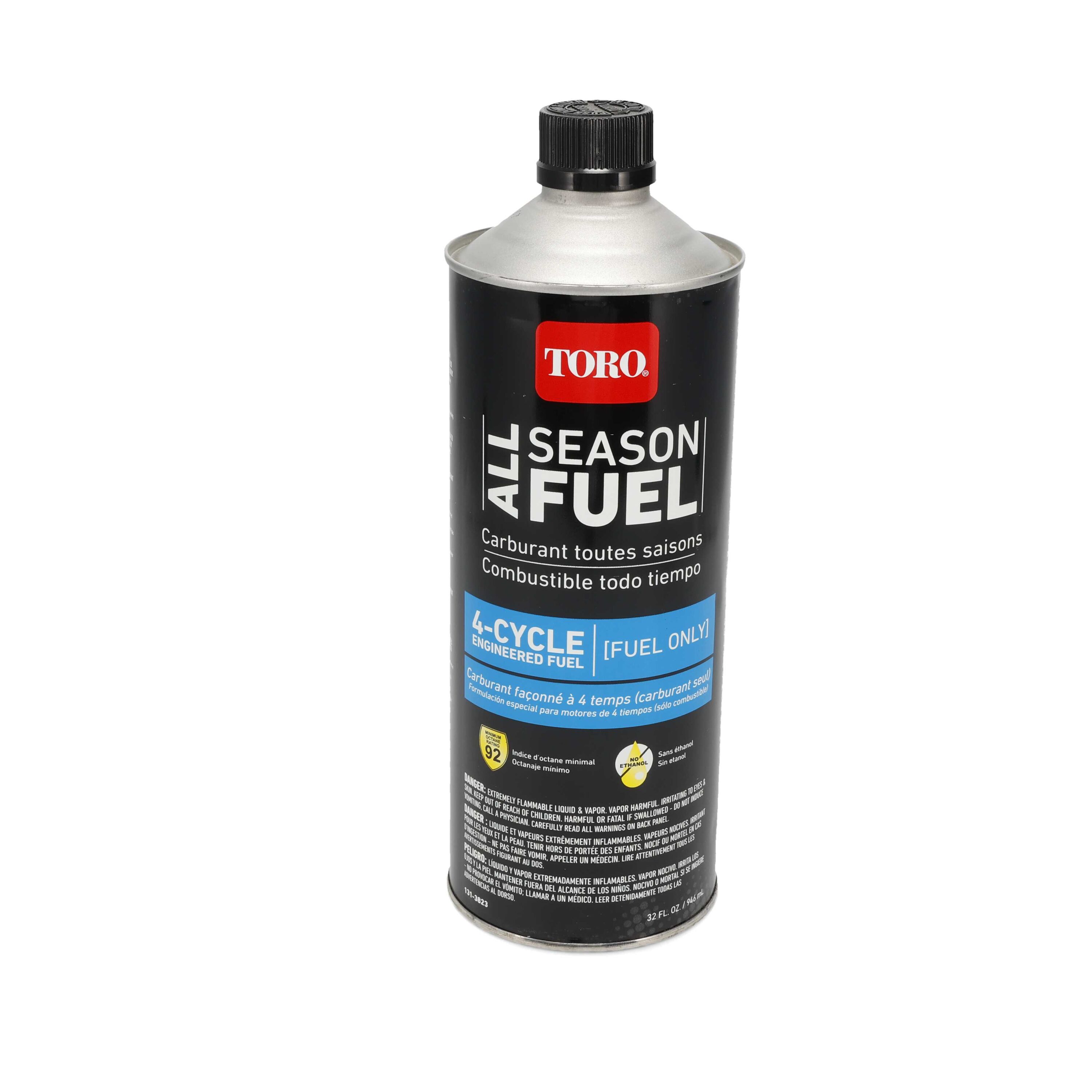
Source: millerfortexas.com
No ethanol content
Ethanol free gasoline does not include ethanol, reducing concerns related to ethanol absorbing moisture from the air.
Common small engine use
Many outdoor power equipment owners use non ethanol fuel for lawn mowers, generators, trimmers, and other seasonal equipment.
How Ethanol Affects Small Engines
Ethanol can attract moisture because it is hygroscopic, meaning it absorbs water from the environment. When fuel containing ethanol is stored for long periods, water absorption and fuel degradation can contribute to starting problems or poor engine performance.
These concerns are more common in equipment that sits unused for extended periods rather than lawn mowers that are refueled frequently and operated regularly.
Storage concerns
Old ethanol-blended fuel can contribute to deposits, fuel system issues, or difficult starting after long storage periods.
Is Ethanol Free Gas Better for a Lawn Mower?
Ethanol free gas can be better for certain lawn mower situations, especially when the mower is stored for several weeks or months. It is not automatically required for every lawn mower, and many engines are designed to operate properly on approved ethanol blends.
The main advantage of ethanol free fuel is improved storage behavior rather than increased mowing power. A properly maintained mower using fresh E10 gasoline may perform well, while a poorly stored mower can experience problems regardless of fuel type.
Homeowners who store their lawn mower during winter or between mowing seasons may benefit from using ethanol free fuel.
Not always necessary
A mower used frequently may not require non ethanol fuel if the owner’s manual approves ethanol-blended gasoline.
Ethanol Free Gas vs E10 Gasoline
Both fuels can work in many lawn mowers, but they have different characteristics. Ethanol free gasoline generally costs more and may be harder to find, while E10 gasoline is widely available at fuel stations throughout the United States.
Ethanol free gasoline
Better suited for long storage periods and equipment where fuel stability is a priority.
E10 gasoline
Commonly available and acceptable for many modern lawn mower engines when recommended by the manufacturer.
When Should You Use Ethanol Free Gas in a Lawn Mower?
Ethanol free gas is most useful when fuel storage time is a concern. If you mow frequently and use fresh gasoline regularly, the benefits may be less noticeable.
Consider non ethanol gasoline if your mower is used only occasionally, stored through winter, or used in a location with high humidity where fuel storage conditions can be challenging.
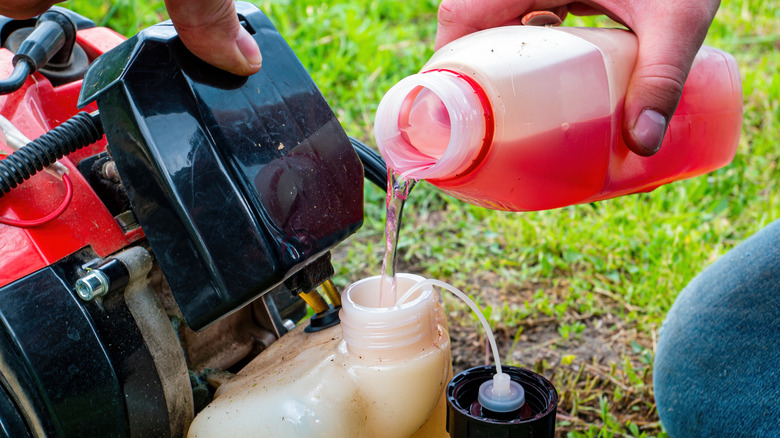
Source: i.ytimg.com
Long storage periods
Use ethanol free fuel before storing equipment for extended periods when possible.
Rarely used equipment
Seasonal lawn equipment may benefit from more stable fuel during inactive months.
Small engine protection
Non ethanol fuel may help reduce some fuel-related storage problems when combined with proper maintenance.
How to Store Ethanol Free Gas Properly
Even ethanol free gasoline should not be stored indefinitely. Gasoline loses quality over time, so proper storage practices remain important.
Store fuel in an approved gasoline container, keep it sealed, and follow the storage recommendations provided by your mower manufacturer.
Use fresh fuel
Avoid keeping old gasoline for longer than recommended because fuel quality decreases over time.
Common Mistakes When Using Lawn Mower Fuel
Many lawn mower fuel problems come from incorrect storage, contaminated gasoline, or using fuel that does not match the engine manufacturer’s requirements.
Choosing ethanol free gas does not replace regular maintenance. Air filters, spark plugs, oil changes, and fuel system care still affect mower performance.
Source: m.media-amazon.com
Using old gasoline
Fuel that has been sitting too long can cause starting and performance issues.
Ignoring the owner’s manual
Always follow the fuel recommendations provided for your specific lawn mower engine.
Poor fuel storage
Leaving fuel containers open or exposed to heat can reduce fuel quality.
Signs Your Lawn Mower Fuel May Be Causing Problems
Fuel-related issues often appear as difficulty starting, uneven engine operation, reduced power, or repeated stalling. Before replacing parts, check fuel age, fuel quality, and whether the correct gasoline type is being used.
Hard starting
Old or degraded fuel may make the engine difficult to start.
Poor fuel quality can contribute to inconsistent engine performance.
Frequently Asked Questions
Q
Can I put ethanol free gas in any lawn mower?
Many lawn mowers can run on ethanol free gasoline, but you should always check the owner’s manual for your specific engine requirements before changing fuel types.
Q
Is ethanol free gas worth the extra cost for a lawn mower?
It may be worth the additional cost for homeowners who store lawn mowers for long periods or want to reduce ethanol-related storage concerns. For frequent mowing, the benefit may be smaller.
Q
Can I mix ethanol free gas with regular gasoline?
Ethanol free gasoline can generally be mixed with regular gasoline because both are gasoline-based fuels, but using fresh fuel that matches the manufacturer’s recommendation is the best practice.
Q
Does ethanol free gas increase lawn mower power?
Ethanol free gas is not designed to significantly increase mower power. Its main advantage is fuel stability and reduced moisture-related concerns during storage.
Q
Where can I buy ethanol free gas for a lawn mower?
Availability depends on your location. Some gas stations sell ethanol free gasoline, and some retailers offer packaged small engine fuel designed for outdoor power equipment.
✦ Wrapping Up
Conclusion
Ethanol free gas can be a practical fuel choice for lawn mower owners who want better storage stability and fewer concerns associated with ethanol-blended gasoline. It is especially useful for equipment that sits unused for long periods.
However, ethanol free gasoline is not the only factor that determines mower performance. Fresh fuel, proper storage, regular maintenance, and following the engine manufacturer’s instructions are equally important.
💡 Key Takeaway
Check your lawn mower manual, consider how often you use your equipment, and choose the fuel type that best matches your storage habits and maintenance routine.
Keeping a well-manicured lawn has always been a mark of pride for homeowners, but in 2025, maintaining your lawn mower properly has become even more essential. As mowers continue to evolve with new technologies and eco-friendly designs, the need for reliable replacement parts grows right alongside them. Whether you own a gas-powered push mower, a…
A lawn isn’t just a patch of green—it’s an expression of care, patience, and pride. When you step outside on a sunny morning and feel the cool grass under your feet, you know it’s worth every bit of effort. Taking care of your lawn properly in 2026 means understanding the changes in climate, new eco-friendly…
Learn where to put gas in a lawn mower, how to identify the fuel tank, refill it safely, avoid common mistakes, and troubleshoot fuel-related problems.
Maintaining a pristine lawn isn’t just about cutting grass—it’s also about keeping your mower in top shape. One often-overlooked part that can drastically impact performance is the rear flap. A damaged or missing rear flap, also called a trailing shield, can turn a simple mowing session into a messy chore, scattering grass clippings, dirt, and…
Learn how to identify bad gas in a lawn mower, understand the symptoms, remove contaminated fuel, and prevent future engine problems with practical troubleshooting steps.
If your lawn mower has started leaving behind uneven patches, torn grass tips, or ragged edges, chances are it’s time for a Briggs Stratton lawn mower blade replacement. Many homeowners underestimate how much a single blade impacts lawn health. A dull or damaged blade doesn’t slice grass cleanly—it rips it apart. This creates brown tips,…