
How Heavy Is A Push Lawn Mower: Average Weight Guide
Introduction
A push lawn mower in the United States usually weighs 30 to 90 pounds. Most standard gas push mowers weigh about 55 to 75 pounds, while cordless electric models often weigh 35 to 65 pounds without a battery. Large steel-deck or self-propelled mowers can weigh 70 to 100 pounds or more.
The exact weight depends on the mower deck, motor, battery, frame, grass bag, and drive system. A mower may also feel heavier when you lift it into a truck, carry it up steps, or move it with a full collection bag.
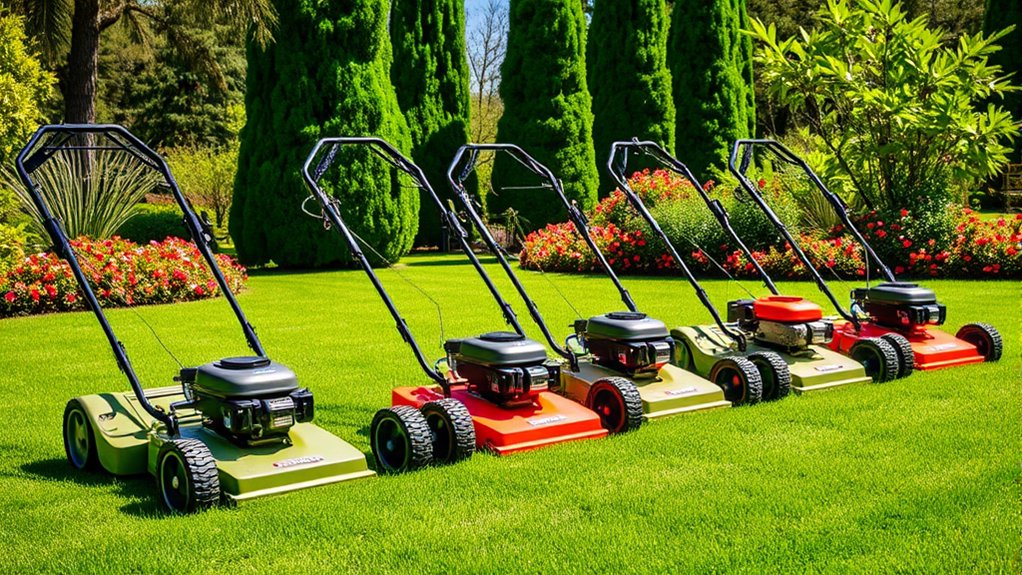
Typical Push Lawn Mower Weight by Type
The mower type gives you the best quick estimate. The table below shows common weights for walk-behind mowers sold in the United States.
| Mower type | Typical weight | What affects the weight |
|---|---|---|
| Small corded electric mower | 25–45 lb | Plastic deck and small motor |
| Battery push mower | 35–65 lb | Battery size, deck, and motor |
| Gas push mower | 50–80 lb | Steel deck, engine, fuel, and wheels |
| Self-propelled gas mower | 65–100 lb | Drive system and heavier transmission |
| Self-propelled battery mower | 55–90 lb | Battery, drive motor, and deck |
| Wide-deck or commercial walk-behind mower | 80–150+ lb | Larger deck and stronger frame |
These are useful planning ranges, not fixed industry standards. A 21-inch mower may weigh much less or much more than another 21-inch mower.
For example, manufacturer specifications show how much models can vary:
- The EGO Power+ LM2114 battery mower is listed at about 55.6 pounds without the battery by EGO.
- The Toro Recycler 22-inch push mower is listed at about 65 pounds by Toro.
- Some large self-propelled mowers weigh close to or above 90 pounds, depending on the engine, deck, and drive system.
Always check the product manual or the manufacturer’s specification page for the exact model. Retailer listings may show shipping weight instead of the mower’s operating weight.

What Is the Average Weight of a Push Mower?
A typical non-self-propelled push mower weighs about 50 to 70 pounds. Gas models often sit near the upper end of that range. Battery mowers can be lighter, but their listed weight may exclude the battery.
The phrase “push mower” can cause confusion. It may describe either:
- A manual push mower, which you physically move across the lawn.
- A walk-behind mower, which may be powered but does not propel itself.
- A self-propelled mower, which uses a drive system to move forward.
A manual reel mower may weigh only 15 to 40 pounds. A powered push mower is much heavier because it has an engine or electric motor, a cutting deck, wheels, and safety equipment.
A practical estimate for a common U.S. homeowner is:
- Small electric mower: about 30–45 pounds
- Battery mower with battery installed: about 45–70 pounds
- Gas push mower with fuel: about 60–85 pounds
- Self-propelled mower: about 70–100 pounds
The weight listed on a box may not include fuel, oil, the grass bag, or the battery. Those parts can change the lifting weight by several pounds.
Why Do Some Push Mowers Weigh More Than Others?
The main weight differences come from the deck, power system, drive parts, and materials.
Mower deck
The deck surrounds the blade and protects the operator from debris. Steel decks are strong but tend to weigh more than plastic or composite decks.
A stamped steel deck may add durability and stiffness. A molded polymer deck may reduce weight and resist rust. Neither material alone proves that one mower will last longer, because deck design, storage, impact, and maintenance also matter.
Engine or electric motor
Gas engines include a crankcase, fuel tank, muffler, air filter, and other metal parts. These components make a gas mower heavier than many small electric models.
Battery mowers have an electric motor and battery pack. The mower itself may be light, but the battery can add several pounds. Larger batteries often provide more runtime, but they also increase total carry weight.
Self-propel drive system
A self-propelled mower contains extra parts such as:
- Drive motor or transmission
- Gear system
- Drive axle
- Control cable or electronic controls
- Additional brackets and hardware
These parts make self-propelled models heavier than similar push-only mowers. They can also make a mower easier to use on slopes or large lawns because the motor helps move the machine.
Deck width
A 21- or 22-inch deck is common for residential walk-behind mowers. A wider deck needs more material and may require a larger engine or motor.
A wider deck can cut more grass per pass, but it may be harder to carry through a narrow gate or store in a small shed.
Grass bag and accessories
A grass catcher adds weight even when empty. Wet grass can add much more weight during mowing.
Side-discharge attachments, mulch plugs, spare batteries, and oversized wheels can also affect the total weight. Check whether the manufacturer lists the mower with or without these parts.

Push Mower Weight by Fuel or Power Source
Gas push mowers
Gas push mowers commonly weigh 50 to 80 pounds before fuel and grass clippings. Heavy steel decks and four-stroke engines often place them near the top of the range.
Gas models may suit people who need long mowing sessions without charging batteries. However, they need fuel, oil checks, air-filter service, spark-plug service, and seasonal storage.
A full fuel tank usually adds only a few pounds, but the mower can feel harder to lift because the weight is concentrated around the engine.
Battery push mowers
Battery push mowers often weigh 35 to 65 pounds without the battery. The complete operating weight may be closer to 45 to 75 pounds.
Battery weight varies by voltage and capacity. A compact battery may weigh about 5 pounds, while a high-capacity pack can weigh more.
When comparing models, look for both numbers:
- Tool-only weight: mower without battery
- Operating weight: mower with the battery and normal attachments
The operating weight is the better number for carrying and loading. Some manufacturers list both values. Others list only the tool-only weight.
Corded electric mowers
Corded electric mowers often weigh 25 to 45 pounds. They may be easy to lift because they do not have a gas engine or battery pack.
Their main limitation is the power cord. The cord must reach the entire mowing area, and it must remain clear of the blade. Follow the mower manual and use outdoor-rated equipment with appropriate ground-fault protection where required.
Manual reel mowers
Manual reel mowers commonly weigh 15 to 40 pounds. They use a rotating reel powered by the user’s walking motion.
They work best on short, regularly cut grass and relatively level lawns. Tall or wet grass can make a reel mower difficult to push, even though the mower itself is light.
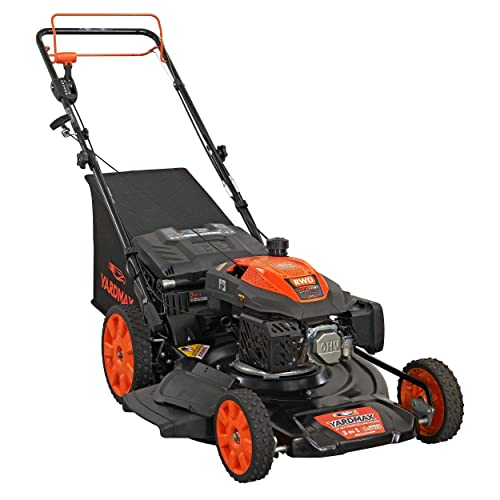
How Much Does a 21-Inch Push Mower Weigh?
A 21-inch push mower usually weighs 45 to 75 pounds, although some models fall outside that range.
A 21-inch deck does not tell you the full weight. Two mowers with the same cutting width may differ because one has:
- A steel deck instead of a polymer deck
- A larger engine
- A battery included in the listed weight
- A self-propel transmission
- Larger wheels
- A heavier grass bag
- A reinforced frame
A 21-inch gas push mower with a steel deck may weigh around 60 to 75 pounds. A battery model with a lightweight deck may weigh around 40 to 60 pounds before the battery.
For transport, use the manufacturer’s full operating weight rather than estimating from the deck size.
How to Calculate the Weight You Need to Lift
Use this simple calculation:
Total lifting weight = mower weight + battery or fuel + attached accessories + grass clippings
For a hypothetical example:
- Mower without battery: 52 lb
- Battery: 8 lb
- Grass bag: 3 lb
- Clippings: 5 lb
Total temporary lifting weight: 68 lb
The mower may be advertised as a 52-pound model, but you could handle 68 pounds when it is ready to store.
For easier loading, remove the battery and empty the grass bag first. If the mower has a removable bag, take it off before lifting. Do not lift a mower with the blade running, and never place hands near the blade to remove packed grass.

Is a Heavy Push Mower Better?
A heavier mower is not automatically better. Weight can improve stability, but it can also make transport and turning harder.
Possible benefits of a heavier mower
A heavier mower may:
- Stay planted on uneven ground
- Feel more stable in thick grass
- Use a stronger steel deck
- Have larger wheels or a larger engine
- Resist bouncing on rough areas
Possible drawbacks of a heavier mower
A heavy mower may:
- Be difficult to lift into an SUV or pickup truck
- Require more effort to turn
- Be harder to use on slopes if it is not self-propelled
- Take more space to store
- Be unsafe for one person to carry
For a small, flat yard, a lighter mower may be easier to handle. For a large lawn with thick grass, stability and cutting power may matter more than minimum weight.
The best choice depends on the job. Choose the lightest mower that still has enough cutting width, runtime, and power for your lawn.
How to Move a Heavy Push Mower Safely
Use the mower’s wheels whenever possible. Rolling is safer and easier than carrying.
Before moving a powered mower:
- Turn off the engine or release the electric controls.
- Wait until the blade stops completely.
- Disconnect the spark-plug wire on a gas mower if the manual directs you to do so.
- Remove the battery from a battery mower before transport.
- Empty the grass bag.
- Use the built-in handle or approved lifting points.
- Ask for help if the mower is too heavy to control alone.
When loading a mower into a vehicle, use a ramp rated for the mower’s weight. Keep the ramp straight, dry, and firmly secured. Do not ride or stand below a mower that is being pushed up a ramp.
Follow the owner’s manual before tipping a gas mower. Turning it the wrong way can allow oil or fuel to enter the air filter, muffler, or cylinder. Never work under the deck unless the mower is fully shut down and made safe according to the manual.

What Weight Is Best for Your Yard?
Use your lawn size, terrain, storage area, and lifting needs to choose a suitable weight.
| Yard condition | Practical weight target | Why |
|---|---|---|
| Small, flat yard | 25–50 lb | Easy to turn and store |
| Small yard with stairs | 25–45 lb | Lower lifting demand |
| Medium flat yard | 40–70 lb | Good balance of power and handling |
| Large yard | 55–90 lb | More power and runtime may help |
| Sloped yard | 55–90 lb self-propelled | Drive assistance can reduce pushing effort |
| Uneven or thick grass | 60–100 lb | Stability and power may be useful |
These targets are starting points, not rules. A person who can roll a 90-pound mower may still struggle to lift it into a truck. A 45-pound mower may be difficult on a steep slope if it has small wheels and no drive system.
If you have limited lifting strength, focus on:
- Low operating weight
- Large rear wheels
- A folding handle
- Easy battery removal
- A nearby storage location
- A ramp or loading aid
- Self-propel drive for slopes
Remember that self-propelled does not mean self-loading. You may still need to lift the mower for transport or storage.

Common Mistakes When Comparing Mower Weight
Comparing shipping weight with product weight
Shipping weight includes packaging and may be several pounds higher. Product weight may exclude the battery or accessories.
Look for terms such as “unit weight,” “tool-only weight,” “operating weight,” and “shipping weight.”
Ignoring the battery
A cordless mower listed at 45 pounds may weigh more when the battery is installed. Check the battery’s separate specification when possible.
Treating all steel decks as equally heavy
Steel thickness, deck shape, reinforcement, and engine size all affect weight. The word “steel” alone does not provide a complete comparison.
Forgetting wet grass
A full grass bag can make a mower much harder to move. Empty the bag often, especially after mowing damp grass.
Assuming lighter always means easier
A light mower is easier to carry, but it may bounce more on uneven ground or struggle in tall grass. Wheel size, balance, handle position, and drive assistance also affect handling.
Frequently Asked Questions
How heavy is a gas push lawn mower?
Most gas push lawn mowers weigh about 50 to 80 pounds before fuel and grass clippings. Steel-deck models and larger engines may weigh more.
How heavy is a battery-powered push mower?
Many battery push mowers weigh about 35 to 65 pounds without the battery. With the battery installed, a common total is about 45 to 75 pounds.
Are electric push mowers lighter than gas mowers?
Often, yes. Small electric mowers usually weigh less than gas models because they do not have a fuel engine, muffler, fuel tank, or other engine parts. A large battery or heavy electric deck can reduce that difference.
How heavy is a self-propelled lawn mower?
A self-propelled mower commonly weighs 65 to 100 pounds. The drive motor or transmission adds weight, but the self-propel system can reduce the effort needed to move the mower across the lawn.
Can one person lift a push lawn mower?
Some lightweight mowers can be lifted by one person, but a 70- to 100-pound mower may require two people or a ramp. Use safe lifting methods, keep the blade fully stopped, and follow the manufacturer’s transport instructions.
Conclusion
A typical push lawn mower weighs 50 to 70 pounds, but the full range is much wider. Small corded and battery models may weigh less than 45 pounds. Gas, steel-deck, and self-propelled mowers may weigh 70 pounds or more.
For the most accurate answer, check the exact model’s operating weight. Include the battery, fuel, grass bag, and clippings when planning to carry or load the mower. If lifting is a concern, choose a lighter model, remove accessories before moving it, and use a secure ramp instead of lifting whenever possible.


