Top 10 Organic Fertilizer For 2026: Best Choices
The top 10 organic fertilizer for 2026 includes balanced feeds, bloom boosters, vegetable formulas, and trusted granular options.
If your plants look pale, grow slowly, or produce few flowers, poor feeding may be the cause. I selected these fertilizers for different garden needs, from raised beds and vegetables to lawns, flowers, shrubs, and indoor plants. One key point matters: not every product below carries the same organic claim. Some are natural or organic-focused, while others are conventional all-purpose fertilizers. Always check the current label, NPK ratio, and certification before buying.
See the differences between my top picks at a glance.
| Product | Type | NPK or Focus | Best For | Size | Buy |
|---|---|---|---|---|---|
| Southern Ag All Purpose | Granular | 10-10-10 | Mixed garden use | 5 lb | View on Amazon |
| ASTEVORA Plant Food | Liquid | 10-10-10 | Indoor and outdoor plants | 8 oz | View on Amazon |
| E.B. Stone Ultra Bloom | Organic-focused granular | 0-10-10 | Flowers and blooms | 4 lb | View on Amazon |
| Down to Earth Vegetable Garden | Organic granular | 4-4-4 | Vegetables and raised beds | 5 lb | View on Amazon |
| USA-Made All Purpose | Granular | 10-10-10 plus iron | Lawns and gardens | Listed product size | View on Amazon |
| Slow-Release 10-10-10 | Granular | 10-10-10 | Longer feeding cycles | 1/2 quart | View on Amazon |
| GroMaster All Purpose | Granular | 10-10-10 | Vegetable gardens | 5 lb | View on Amazon |
| USA-Made Tomato Formula | Granular | 5-10-10 plus iron | Tomatoes and vegetables | Listed product size | View on Amazon |
| Liquid Tomato and Bloom Feed | Liquid | 5-10-10 | Containers and flowers | 8 oz | View on Amazon |
| Jobe’s Organics All Purpose | Organic granular | Check current label | Whole-yard feeding | 16 lb | View on Amazon |
Southern Ag All Purpose 10-10-10
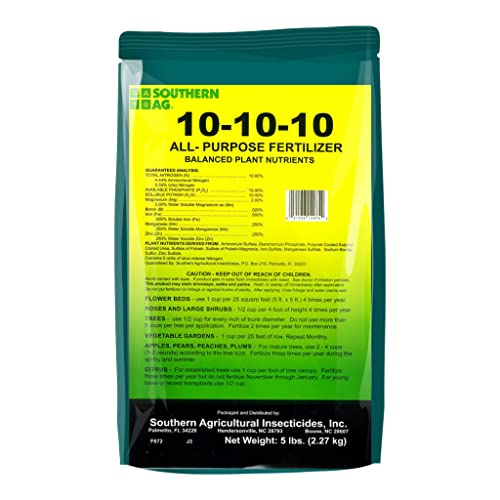
Southern Ag All Purpose Granular Fertilizer uses a balanced 10-10-10 analysis. The first number represents nitrogen, the second represents phosphate, and the third represents potash. This even ratio suits many general garden tasks. It can help support leaf growth, roots, and overall plant strength when the soil needs a broad feed.
I like this option for gardeners who want one simple product for mixed plantings. Granules work well around established plants because they release nutrients after watering and soil contact. Still, this product should not be treated as certified organic unless the current package says so. Test your soil first, then follow the label rate to avoid excess nutrients.
Pros:
- Balanced 10-10-10 formula
- Useful for many garden plants
- Granular form is simple to spread
- Works well for mixed beds
- Five-pound size suits small and medium gardens
Cons:
- Not automatically certified organic
- Balanced feed may not suit every soil test
- Granules need water to move into the root zone
What Amazon Buyers Are Saying
Buyer feedback for balanced granular fertilizers often centers on easy use, broad plant coverage, and good results in garden beds. Some shoppers prefer the clean, simple NPK label. Common concerns include confusion about application rates and the need to water after spreading. Gardeners also point out that a general fertilizer cannot replace a soil test or fix every nutrient problem.
My Recommendation
I recommend Southern Ag for a gardener who needs a basic all-purpose feed and understands that “all purpose” does not mean “best for every plant.” It offers practical value for mixed beds, but organic gardeners should confirm the label before purchase.
ASTEVORA 10-10-10 Liquid Plant Food

ASTEVORA combines a liquid 10-10-10 fertilizer with seaweed, kelp, and iron. Its liquid form makes it useful for indoor plants, patio pots, vegetables, and flowers. Liquid feeds mix with water and spread quickly through the growing medium. The added ingredients may appeal to gardeners who want more than a basic NPK blend.
This product is a strong choice when you prefer measured feeding over spreading dry granules. It also works well for plants in containers, where nutrients can wash out with frequent watering. I would use care with dosage because liquid fertilizer can cause root stress when mixed too strong. The current product label should guide dilution and frequency.
Pros:
- Liquid form mixes easily with water
- Balanced 10-10-10 nutrient ratio
- Includes seaweed and kelp ingredients
- Contains iron according to the product listing
- Suitable for indoor and outdoor use
Cons:
- Small eight-ounce size may not cover large gardens
- Requires careful measuring
- Organic certification should be confirmed on the label
What Amazon Buyers Are Saying
Feedback on liquid plant food commonly praises fast mixing and the ability to feed container plants with a watering can. Buyers also tend to like products that work across indoor and outdoor spaces. The main complaints with this type of product involve small bottles, unclear dilution steps, or accidental overfeeding. Results vary when light, water, and potting mix are poor.
My Recommendation
ASTEVORA is worth considering for container growers who want a liquid, balanced feed with kelp and iron. I would not choose it for large beds unless the cost per application remains reasonable. It earns strong marks for convenience, but organic status needs label confirmation.
E.B. Stone Organics Ultra Bloom

E.B. Stone Organics Ultra Bloom uses a 0-10-10 formula. It contains no listed nitrogen in the first number, while phosphorus and potassium form the main nutrient focus. That profile makes it more suited to bloom support than leafy growth. It can fit a feeding plan for flowering plants when the soil and plant already have enough nitrogen.
I would use this product with roses, flowering annuals, and other bloom-focused plants only when the label and soil conditions support it. More fertilizer is not always better, and phosphorus should not be added without a reason. The organic-focused branding is useful, but gardeners should still review the package for approved ingredients and directions. This is a specialty feed, not a complete choice for every garden.
Pros:
- Purpose-built 0-10-10 bloom formula
- Organic-focused product positioning
- Useful when nitrogen should remain low
- Four-pound size suits flower beds
- Fits seasonal bloom-feeding plans
Cons:
- Not a complete fertilizer for all plant stages
- Low or absent nitrogen may limit leafy plants
- Extra phosphorus may be unnecessary in some soils
What Amazon Buyers Are Saying
Shoppers who seek bloom boosters usually value a clear low-nitrogen formula and a product made for flowers. Some buyers report interest in using it during the flowering stage. The most important limitation is also clear in the feedback: a bloom booster cannot solve poor light, watering mistakes, pests, or an unsuitable soil pH. Results depend on the plant and timing.
My Recommendation
I recommend E.B. Stone Ultra Bloom for experienced gardeners who want a targeted bloom product. It is not my first pick for new gardeners or general vegetable feeding. Use it only after checking soil needs and plant instructions.
Down to Earth Vegetable Garden 4-4-4

Down to Earth Vegetable Garden fertilizer is made for vegetables, herbs, greens, and raised beds. Its 4-4-4 analysis offers a balanced nutrient ratio at a lower concentration than many 10-10-10 products. The product is listed as an all-natural fertilizer for garden use. That makes it a natural fit for growers who want a soil-focused product for edible crops.
I like this formula for gardeners who build soil and feed plants at the same time. Dry organic fertilizers often work more slowly than liquid feeds, so they suit planned bed preparation and regular maintenance. Mix it into the soil as directed, or apply it around established plants without touching the stems. Do not assume organic means risk-free; excess nutrients can still harm plants and waterways.
Pros:
- Designed for vegetables and herbs
- Useful for raised beds
- Balanced 4-4-4 analysis
- All-natural product positioning
- Suitable for planned soil feeding
Cons:
- May act more slowly than liquid fertilizer
- Requires soil mixing or watering
- Five-pound size may not cover many large beds
What Amazon Buyers Are Saying
Buyers often look for this type of fertilizer because it targets food gardens and raised beds. Common positive themes include the simple application method and the vegetable-specific focus. Some gardeners note that organic granules need time, moisture, and active soil life before plants show a clear response. That slower action can disappoint shoppers who expect overnight growth.
My Recommendation
This is my top pick for vegetable gardeners who want an organic-focused granular feed. It offers a sensible balance for many edible crops and raised beds. I would pair it with compost, a soil test, and steady watering for the best result.
USA-Made All Purpose 10-10-10

This all-purpose fertilizer uses a 10-10-10 analysis and includes 2% iron plus micronutrients, according to the product listing. It targets flower gardens, fruit and vegetable gardens, trees, and lawns. The balanced formula gives gardeners a broad starting point for plants that need all three major nutrients. Iron may support greener foliage where iron availability is low.
I see this as a general garden product rather than a true organic fertilizer. The “Made in USA” detail may matter to shoppers who prefer domestic production, but it does not by itself prove organic certification. Use it only where the label permits, and avoid applying it near waterways or at excessive rates. A soil test can show whether added iron or phosphorus makes sense.
Pros:
- Balanced 10-10-10 analysis
- Includes listed iron and micronutrients
- Broad use across lawns and gardens
- Useful for trees, flowers, and vegetables
- Made-in-USA product positioning
Cons:
- Not confirmed as organic from the title alone
- Broad formula may not match a specific soil test
- Product size should be checked before ordering
What Amazon Buyers Are Saying
Customers shopping for all-purpose fertilizer tend to value a wide use range and a clear 10-10-10 label. The added iron also attracts gardeners who want support for pale foliage. Common concerns include overuse and uncertainty about the right rate for different plants. Buyers should treat the product listing as a starting point and follow the current package directions.
My Recommendation
I recommend this product for gardeners who want a conventional, broad-use fertilizer with iron. I do not rank it as a leading organic choice without certification proof. It can still be useful, but organic shoppers should choose a clearly labeled organic product instead.
Slow-Release 10-10-10 Plant Fertilizer

This slow-release 10-10-10 fertilizer targets vegetables, tomatoes, shrubs, roses, flowers, fruit trees, and figs. Its main appeal is the promise of a steadier nutrient supply than a quick liquid feed. A balanced ratio supports general plant growth when the soil lacks several major nutrients. The small half-quart package fits trial use, containers, and small planting areas.
I would choose it for gardeners who often forget repeat feeding. Slow-release products can reduce the number of applications, but the exact release time depends on moisture, temperature, soil, and the product coating. The listing does not make it an organic product, so verify that point before buying. Apply carefully around roots and keep granules away from direct stem contact.
Pros:
- Slow-release feeding approach
- Balanced 10-10-10 formula
- Works with many plant types
- Useful for small gardens and containers
- May reduce frequent feeding tasks
Cons:
- Small package limits coverage
- Release speed changes with conditions
- Organic status is not clear from the title
What Amazon Buyers Are Saying
Shoppers who choose slow-release fertilizer usually want less frequent application and steady plant care. Many appreciate a product that can support mixed plantings without repeated liquid mixing. The main concern is timing, since gardeners may not see fast results. Some also want clearer coverage details for larger beds.
My Recommendation
This is a practical pick for small spaces and busy gardeners. I would buy it for convenience, not for organic certification. Check the coverage rate before checkout because the half-quart size may cost more per application in a large garden.
GroMaster All Purpose 10-10-10

GroMaster All Purpose Plant Food uses a 10-10-10 analysis and includes slow-release nitrogen, based on the product title. It is designed for vegetable gardens and mixed plantings. Nitrogen supports leaf and stem growth, while phosphorus and potassium support roots, flowers, and general plant function. The five-pound bag offers a useful middle ground for home gardeners.
I like the slow-release nitrogen feature for beds that need steady growth without a sharp nutrient surge. Still, gardeners should avoid assuming that slow-release nitrogen makes the entire product organic. Check the full ingredient panel and certification statement. This fertilizer makes the most sense when a soil test shows a need for balanced feeding rather than a single missing nutrient.
Pros:
- Balanced 10-10-10 analysis
- Includes slow-release nitrogen
- Designed for vegetable gardens
- Works with mixed plantings
- Five-pound bag suits home use
Cons:
- Organic certification is not confirmed by the title
- May not suit soil with high phosphorus
- Slow-release results vary by weather and moisture
What Amazon Buyers Are Saying
Buyers interested in GroMaster tend to focus on the balanced formula and slow-release nitrogen. Those features appeal to gardeners who want steady growth with less risk of a quick feed spike. As with similar products, some customers want clearer instructions for different crops. Others find that poor soil, low light, or uneven watering limits the visible result.
My Recommendation
GroMaster is worth considering for mixed vegetable beds that need balanced nutrition. It offers a useful feature set at a familiar five-pound size. I would rank it below a clearly certified organic formula for organic gardening, but it remains a practical general fertilizer.
USA-Made 5-10-10 Tomato Fertilizer

This tomato and vegetable fertilizer uses a 5-10-10 analysis and includes 2% iron plus micronutrients, according to the listing. The lower nitrogen level may suit gardeners who want to support fruiting without pushing excessive leaf growth. The higher middle and final numbers place more focus on phosphorus and potassium. It is made for flower gardens and edible crops.
I would use this formula after plants establish strong roots and begin setting flowers or fruit, provided the label supports that timing. It is not a complete answer to tomato problems, since sun, water, disease control, and pollination matter just as much. The product title does not establish organic certification. Buyers who follow organic methods should confirm all ingredients before use on food crops.
Pros:
- Lower-nitrogen 5-10-10 ratio
- Made for tomatoes and vegetables
- Includes listed iron and micronutrients
- Useful during flowering and fruiting stages
- Made-in-USA product positioning
Cons:
- May not suit early leafy growth
- Not confirmed as organic from the title
- Extra phosphorus may not be needed in every soil
What Amazon Buyers Are Saying
Tomato fertilizer buyers often value a lower-nitrogen formula and a product aimed at fruiting plants. Gardeners also like the listed iron and micronutrients. Common concerns include applying too much or expecting fertilizer to solve blossom-end rot, which often relates to inconsistent water movement. A balanced care plan remains essential.
My Recommendation
I recommend this product for gardeners who want a targeted tomato and vegetable feed with a 5-10-10 profile. It can be useful during the flowering stage, but I would not use it by habit. Test the soil and confirm the label before feeding edible crops.
Liquid 5-10-10 Tomato and Bloom Feed

This concentrated liquid fertilizer uses a 5-10-10 formula for vegetables, tomatoes, flowers, garden beds, and pots. The low-nitrogen profile may help gardeners focus on roots, blooms, and fruiting after early growth. Liquid fertilizer is easy to apply with a watering can when diluted as directed. The eight-ounce bottle suits small gardens and container collections.
This is a convenient choice for people who want a fast and measured feeding routine. I would use a clean measuring tool and never guess the dilution. Liquid nutrients can reach roots quickly, so overfeeding can cause more harm than slow granular feeding. The title does not confirm organic certification, so read the ingredient panel if organic gardening is your goal.
Pros:
- Low-nitrogen 5-10-10 formula
- Useful for tomatoes and flowers
- Works in garden beds and pots
- Concentrated liquid stores easily
- Fast and simple to mix
Cons:
- Small bottle may not suit large gardens
- Requires accurate dilution
- Organic status needs confirmation
What Amazon Buyers Are Saying
Liquid fertilizer shoppers often like the quick mixing process and the ability to feed a few pots without opening a large bag. The 5-10-10 ratio also attracts gardeners who want a bloom and fruit focus. Common concerns include bottle size and the need to measure carefully. Results depend on plant health, light, soil, and watering habits.
My Recommendation
I recommend this liquid feed for patios, containers, and small tomato gardens. It is convenient and targeted, but it may cost more per use than a larger granular bag. Choose it when easy application matters more than bulk value.
Jobe’s Organics All Purpose Fertilizer

Jobe’s Organics Granular All Purpose Fertilizer is made for vegetables, flowers, shrubs, trees, and other plants. The 16-pound bag makes it one of the strongest value choices for gardeners who feed many beds. The product carries an organic-focused name, but buyers should check the current package for the exact NPK analysis, ingredients, and certification details. Those details can change by formulation and market.
I like the large size for whole-yard care and repeat seasonal use. Granules are easy to store and spread, and they fit a planned soil-feeding routine. Organic granular products often depend on soil moisture and microbial activity, so I would not expect instant results. Apply only at the label rate and keep the product away from children, pets, and water sources.
Pros:
- Organic-focused product line
- Large 16-pound bag
- Works across flowers and vegetables
- Suitable for shrubs and trees
- Good fit for larger home gardens
Cons:
- Exact NPK should be checked on the current label
- Granules may act slower than liquid feeds
- Large bag may be too much for apartment growers
What Amazon Buyers Are Saying
Jobe’s Organics attracts buyers who want a familiar brand and a large bag for broad garden use. Feedback often focuses on coverage, simple application, and the convenience of feeding many plant types with one product. Some gardeners mention the normal tradeoff of organic granules: results may take time. Odor, storage, and application rate can also matter in small spaces.
My Recommendation
Jobe’s Organics is my best overall choice for gardeners who want an organic-focused product for many plants. The large bag offers strong value for medium and large gardens. Check the current label before use, especially if you need a specific NPK ratio or formal organic certification.
How to Choose the Top 10 Organic Fertilizer for 2026
Choosing the top 10 organic fertilizer for 2026 starts with your soil, crop, and feeding style. A product that works well for tomatoes may not suit a lawn or a flowering shrub. I use the steps below to compare fertilizer claims with real garden needs.
1. Match the NPK Ratio to the Plant
Read the three numbers on the front of the package. Nitrogen supports leaves and stems. Phosphate supports root growth and flowering. Potash supports overall plant function and stress response. A 4-4-4 or 10-10-10 formula gives a broad balance, while 0-10-10 and 5-10-10 formulas focus more on blooms, roots, or fruiting.
Do not choose a high number just because it looks stronger. The right formula depends on your soil test and plant stage. Too much fertilizer can burn roots, cause weak growth, or send nutrients into runoff. For food crops, confirm that the label allows the intended use.
2. Check Organic Claims and Ingredients
The word “organic” can mean different things in product marketing. Look for clear language about natural ingredients, approved inputs, or certification. A product made in the United States is not automatically organic. A fertilizer with kelp, composted materials, or minerals may still need a full label review.
For the top 10 organic fertilizer for 2026, I give more weight to clear ingredient lists than to broad claims. Check the product label, not only the online title. Also follow local rules for fertilizer use, especially near streams, lakes, and storm drains.
3. Compare Granules, Liquids, and Long-Term Value
Granular fertilizer usually works well for garden beds and larger areas. It is easy to store and often costs less per application. Liquid fertilizer suits containers and gardeners who want quick mixing. It also requires careful measuring, since a strong mix can damage roots.
Slow-release products can reduce repeat feeding, but weather and moisture affect their speed. Compare the package size with the stated coverage. A small bottle may look cheap but cost more across a season. For larger gardens, a 16-pound organic bag may offer better value than several small liquid bottles.
Final Verdict: Which Should You Buy?
For most organic gardeners, I recommend Down to Earth Vegetable Garden 4-4-4 or Jobe’s Organics. Choose Down to Earth for raised beds and edible crops. Choose Jobe’s for broader whole-yard use.
The top 10 organic fertilizer for 2026 includes options for flowers, tomatoes, containers, and mixed gardens. Check the label, test your soil, and feed at the correct rate.
FAQs Of top 10 organic fertilizer for 2026
What is the best organic fertilizer for vegetable gardens?
Down to Earth Vegetable Garden 4-4-4 is a strong choice for vegetables, herbs, greens, and raised beds. Always confirm the current label before use.
Is 10-10-10 fertilizer organic?
Not always. The 10-10-10 ratio describes nutrient content, not the source of the ingredients. Check the package for organic certification and approved inputs.
Which fertilizer is best for tomatoes and flowers?
A 5-10-10 formula may suit tomatoes and flowering plants when the soil needs lower nitrogen and more phosphorus or potassium. Follow the label and avoid excess feeding.
Should I use liquid or granular organic fertilizer?
Use liquid fertilizer for quick, measured feeding in pots and small gardens. Choose granular fertilizer for raised beds, larger areas, and slower soil feeding.
How often should I apply organic fertilizer?
Application timing depends on the product, plant, soil, and season. Follow the package directions instead of using a fixed schedule.