


The best soil moisture meters make watering easier, prevent root damage, and help plants grow with less guesswork.
Have you ever watered a plant, then wondered if the soil was still wet below the surface? I have, and that small doubt can lead to overwatering, weak roots, fungus, or a wilted plant. The best soil moisture meters solve this problem with a quick soil check. They help indoor plant owners, gardeners, and lawn users read moisture near the roots instead of judging by the surface alone. Some models also test light, pH, temperature, or other soil conditions. This guide covers simple analog meters, long probes, digital testers, and multi-function tools for different plant care needs.
XLUX Plant Soil Moisture Meter
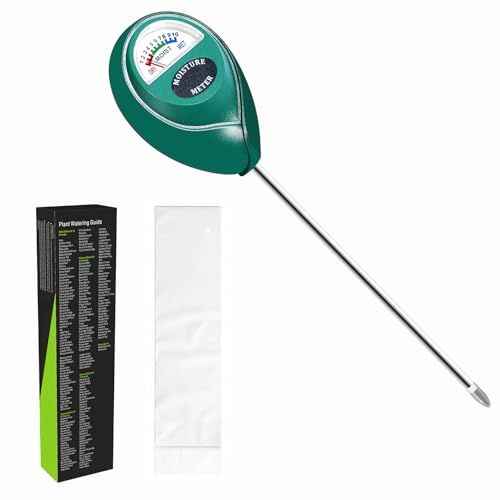
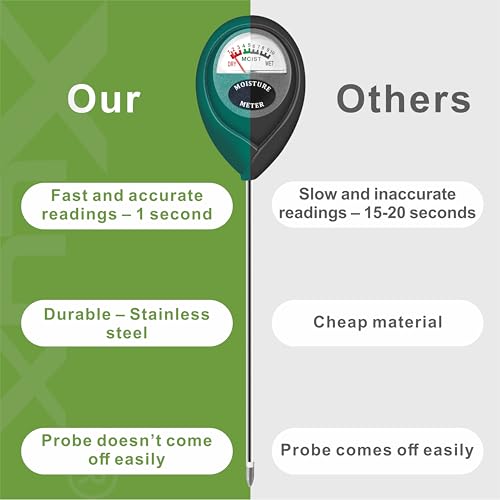
The XLUX Plant Soil Moisture Meter is a simple analog tool for checking soil moisture in indoor pots, outdoor planters, raised beds, and garden soil. It uses a battery-free design, so there is no screen to charge and no battery compartment to maintain. I like this type of meter for quick checks because it gives an instant reading as soon as the probe enters the soil. It feels more like a small hand tool than an electronic device.
The moisture scale is easy to read, which helps new plant owners build a better watering routine. The probe can also reach below the dry top layer and show what is happening closer to the roots. It does not test pH, light, or fertilizer, but that keeps the task clear. For many people, this focused design is what makes it one of the best soil moisture meters for basic plant care.
Pros:
- Battery-free operation saves time and money
- Simple analog display is quick to read
- Useful for houseplants, garden beds, and containers
- Helps prevent watering by guesswork
- Lightweight design is easy to move from pot to pot
- No buttons or settings to learn
Cons:
- It measures moisture only
- It does not provide a digital number
- The probe needs careful use in hard or rocky soil
XLUX Long Probe Soil Moisture Meter

The XLUX Long Probe Plant Soil Moisture Meter is made for deeper pots and plants with roots below the top few inches of soil. Its longer probe helps you check moisture closer to the root zone without digging into the pot. That can be helpful with tall planters, large houseplants, hanging containers, and outdoor pots. Like the standard XLUX meter, it works without batteries.
I find a long probe useful when the soil surface looks dry but the lower mix may still hold water. It can also reduce the need to bend down or move soil around large plants. The analog meter keeps the process fast and quiet. If your plants sit in deep containers, this model is a strong choice among the best soil moisture meters for reaching hidden moisture.
Pros:
- Long probe reaches deeper soil layers
- Battery-free design needs no charging
- Works well with large pots and tall planters
- Simple scale supports fast plant checks
- Useful for indoor and outdoor containers
- Helps compare moisture at different depths
Cons:
- Long probes need careful handling
- It does not measure soil pH or light
- Hard, compact soil may resist insertion
YAMRON 4-in-1 Digital Soil Meter

The YAMRON 4-in-1 Digital Soil Meter is aimed at gardeners who want more than a moisture reading. Its digital format is designed to help check several common plant conditions, such as soil moisture, light, and other readings supported by the model. A digital screen can be easier to read than a small analog needle, especially in low light. It also gives the tool a more modern feel for users who like clear numbers.
This type of tester can help you compare different pots or garden spots. For example, you may find that one plant receives enough light but stays too wet, while another dries out quickly. I still recommend treating readings as guidance rather than absolute lab results. With sensible use, the YAMRON is one of the best soil moisture meters for plant owners who want several checks in one compact tool.
Pros:
- Digital display is clear and easy to check
- Multi-function design supports broader plant care
- Useful for indoor plants and outdoor gardens
- Can help compare light and moisture conditions
- Reduces the need to carry several basic tools
- Good fit for users who prefer digital readings
Cons:
- Digital functions may require batteries
- More settings can take time to learn
- Readings can vary with soil type and probe placement
Buladeke 7-in-1 Digital Soil Tester
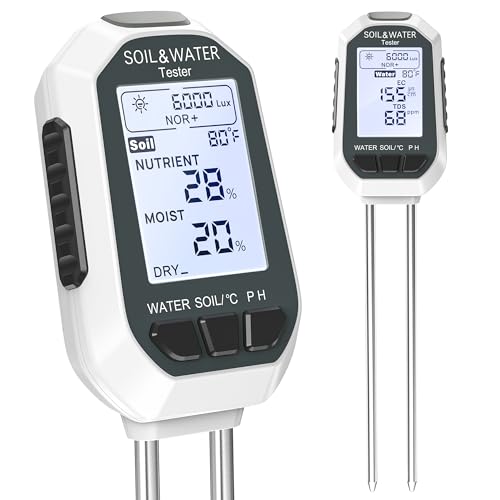
The Buladeke 7-in-1 Digital Soil Tester is for gardeners who want a broad view of soil and plant conditions. A multi-test kit can support checks for moisture, light, pH, temperature, and other functions listed by the manufacturer. This makes it more versatile than a moisture-only gauge. It may suit people who grow vegetables, herbs, flowers, and houseplants with different care needs.
I see this kind of tester as a handy first-step tool for spotting patterns. A pH reading may encourage you to investigate a plant that struggles, while a moisture reading can show whether watering habits need to change. Still, no small home meter replaces a proper soil lab test when exact soil analysis matters. Among the best soil moisture meters, this one stands out for users who value many features in one device.
Pros:
- Offers several soil and plant checks in one tool
- Digital screen is simple to view
- Useful for mixed plant collections
- Can support watering and light decisions
- Helpful for gardeners who are learning soil care
- May reduce the need for separate testing tools
Cons:
- More features may feel excessive for one houseplant
- Digital operation may need battery replacement
- Home readings are not a substitute for lab testing
Dr.meter Plant Soil Moisture Gauge
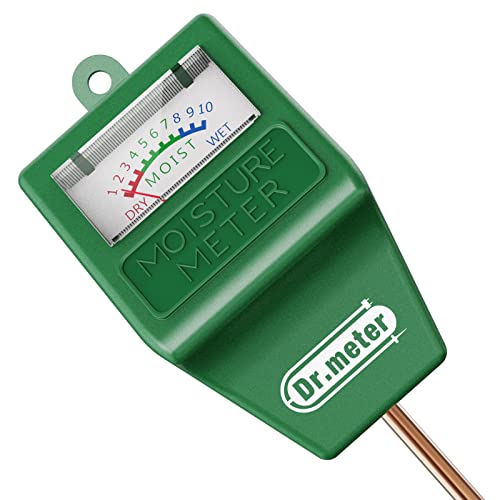
The Dr.meter Soil Moisture Meter is a plant water gauge built around a simple moisture check. It suits people who want to know when a plant needs water without managing a complex menu. The analog-style approach gives a quick visual result and works for many common containers. It is especially useful for new plant owners who are still learning how fast each pot dries.
A moisture gauge cannot tell you every detail about a plant, but it can act as a helpful reminder. I would check the meter in more than one spot when a pot is wide, then compare the reading with the plant’s leaves and the pot’s drainage. This avoids relying on a single reading. For everyday plant care, the Dr.meter is one of the best soil moisture meters for simple, low-stress watering checks.
Pros:
- Focused design is easy for beginners
- Quickly checks moisture in potting soil
- Does not require a complicated setup
- Useful for houseplants and small planters
- Supports a more consistent watering schedule
- Lightweight and easy to store
Cons:
- Limited to moisture testing
- Analog readings are less exact than a lab test
- Probe care is needed after use
XLUX Two-Pack Long Probe Meters

The XLUX 2 Pack Long Probe Plant Soil Moisture Meter gives you two battery-free meters for checking more than one plant at a time. The long probes are useful in deep pots, window boxes, and outdoor containers where the top soil may not show the true moisture level. Having two gauges can save repeated trips between plants. It can also help a couple, family, or gardening group share the same basic tool.
I like a two-pack for a home with many plants because one meter can stay near indoor pots while the other moves to the patio or garden. The design remains simple, with no charging cable or digital menu. You can check a plant, wipe the probe, and move on. This set is a practical entry in the best soil moisture meters list for plant owners who want coverage and value.
Pros:
- Two meters offer better coverage around the home
- Long probes reach below the surface
- Battery-free design keeps use simple
- Useful for indoor and outdoor plant care
- Good choice for homes with many containers
- Allows side-by-side moisture checks
Cons:
- Both meters measure moisture only
- Two tools need storage space
- Probe readings can differ with placement
XLUX Orange Two-Pack Soil Meters

The XLUX Orange 2 Pack Soil Moisture Meter combines a bright color with a basic moisture-testing design. The orange finish may make the meters easier to spot among garden tools, plant shelves, and storage bins. The pair is suited to lawns, garden beds, indoor pots, and outdoor planters. Because the meters do not depend on batteries, they are ready whenever a plant looks thirsty.
This set makes sense for gardeners who prefer a visual gauge instead of a screen. I would use one meter in a houseplant area and keep the second near outdoor containers. The bright color also lowers the chance of leaving one behind in a green garden bed. It is one of the best soil moisture meters for users who want two simple tools with a noticeable design.
Pros:
- Two-pack supports more plant locations
- Bright orange color is easy to find
- Battery-free use keeps maintenance low
- Works for lawn, garden, and container checks
- Simple analog display suits quick decisions
- Useful for beginners and casual gardeners
Cons:
- It does not test pH or light
- Bright color may not suit every user
- Hard soil can make probe placement difficult
SONKIR 3-in-1 Soil pH Meter

The SONKIR MS02 3-in-1 Soil pH Meter checks soil moisture, light, and pH in one compact gardening tool. That combination can help users look beyond watering when a plant grows slowly or shows pale leaves. It is designed for indoor plants, lawns, gardens, farms, and outdoor beds. The analog format keeps the tool easy to use without a digital menu.
pH is important because it affects how easily plants can access nutrients. However, home pH meters work best as a general guide, not as a replacement for a professional soil analysis. I recommend testing moist soil in several places and following the care needs of the plant. For gardeners who want moisture plus two useful extra checks, this SONKIR model belongs among the best soil moisture meters to consider.
Pros:
- Checks moisture, light, and soil pH
- Useful across lawns, farms, beds, and pots
- Analog controls keep operation simple
- Helps connect plant symptoms with soil conditions
- No need to carry three separate basic tools
- Good choice for curious home gardeners
Cons:
- pH readings may need careful interpretation
- It does not offer a digital display
- Probe placement and soil texture affect results
How to Choose the Best Soil Moisture Meter
Choosing a soil moisture meter is easier when you start with your plants. A small collection of houseplants may need only a basic analog gauge. A large garden may benefit from a long probe or a two-pack. If you like tracking soil conditions, a digital multi-function model may offer more useful information.
I look at five main points before recommending a meter: reading style, probe length, functions, power source, and ease of use. No single tool wins for every gardener. The best soil moisture meters are the ones that match your soil, pot size, plant type, and comfort level.
Analog or Digital Readings?
Analog meters use a needle or marked scale. They are fast, quiet, and often battery-free. This makes them good for people who want a simple answer: dry, moist, or wet. They also work well for routine checks when you do not need a detailed number.
Digital meters show readings on a screen. Some people find numbers easier to compare over time. A digital model may also include extra modes for light, pH, or temperature. The trade-off is that it may need batteries and more careful setup.
Why Probe Length Matters
A short probe may work well in small nursery pots and shallow planters. A long probe can reach deeper soil in large containers. This matters because the top inch of soil can dry while the lower root zone remains wet.
Do not force any probe into packed soil, roots, stones, or hard clay. That can bend the probe or harm the plant. If the soil is firm, make a small opening first or test a softer area near the edge of the pot.
Moisture Meter Accuracy
Most home meters give a useful estimate rather than a scientific measurement. Soil texture, salts, fertilizer, roots, and probe depth can affect the reading. A reading in peat-based potting mix may not behave like a reading in sandy garden soil.
I suggest using the meter as one part of a simple routine. Check the reading, feel a small amount of soil when suitable, inspect the leaves, and consider the plant’s normal care needs. If all signs point to dry soil, water slowly and allow excess water to drain.
How to Use a Soil Moisture Meter Correctly
First, insert the clean probe into the soil near the root zone. Avoid placing it directly against the pot wall, since that spot may dry or collect water differently. Wait a moment for the reading to settle. Then remove the probe and wipe it before testing another plant.
For a wide pot, test two or three spots. Roots do not always spread evenly, and one area may hold more water than another. If the readings vary, use the average along with the plant’s appearance. This method gives a better picture than testing only the top surface.
How Often Should You Test?
Test more often when you change a plant’s location, pot, or soil mix. New plants may need checks while you learn how quickly their containers dry. Seasonal changes also matter. Indoor heat can dry pots faster, while cool weather may slow evaporation.
Once you understand a plant’s pattern, you may need the meter less often. It becomes a training tool rather than a permanent crutch. I still check occasionally after heavy rain, a heat wave, or a change in the plant’s light.
Common Soil Moisture Meter Mistakes
The most common mistake is watering on a fixed schedule without checking the soil. A plant may need water every few days in one room and much less in another. A second mistake is reading only the surface. Roots often sit deeper, so surface dryness does not always mean the plant needs water.
Another mistake is leaving a probe in the soil for long periods. Most simple meters work best during a short test. Clean the probe after use, and do not use it to pry through hard ground. Good care helps your meter remain useful for many seasons.
Using Moisture Readings With Different Plants
Succulents and cacti often prefer a longer dry period between watering. Tropical plants may prefer more even moisture, but that does not mean their roots should sit in standing water. Herbs and vegetables can vary by weather, pot size, and growth stage.
Use the plant’s care needs as the final guide. A meter can show soil moisture, but it cannot identify every cause of yellow leaves or slow growth. Drainage, light, pests, temperature, and fertilizer also affect plant health.
Battery-Free Versus Battery-Powered Models
Battery-free meters are easy to grab and use. They do not need charging, and they often have fewer parts that can fail. They are a good choice for simple plant checks and for gardeners who prefer low-maintenance tools.
Battery-powered meters may offer a brighter display and more functions. They can be useful when you want digital readings or several soil tests in one unit. Before buying, check whether the battery comes included and whether the display is easy to read in your normal growing space.
Care and Cleaning Tips
Wipe the probe after every use. Soil left on the metal can affect later readings and may spread disease between plants. A soft cloth is usually enough for routine cleaning. Avoid soaking the display or handle unless the product instructions clearly allow it.
Store the meter in a dry place. Do not use the probe as a digging tool. These small habits protect the sensor and help the best soil moisture meters deliver more consistent results.
Best for
| Best for | Why |
|---|---|
| Basic houseplant care | A battery-free analog meter gives quick moisture checks with little setup. |
| Deep pots and many containers | A long probe or two-pack reaches lower soil and covers more plants. |
| Full soil troubleshooting | A digital multi-function meter can also check light, pH, or other conditions. |
My Recommendation
For most home plant owners, I recommend the standard XLUX Plant Soil Moisture Meter because it keeps the job simple. It is battery-free, quick to read, and suitable for common indoor and outdoor plants. Choose the XLUX long-probe model if you use deep pots. The two-packs make more sense when you care for many plants or want one meter in separate locations.
Choose the YAMRON or Buladeke if digital readings and extra functions matter to you. Pick the SONKIR if soil pH and light are important parts of your gardening routine. The Dr.meter is a practical basic option, while the orange XLUX pair adds visibility and value. All of these best soil moisture meters can help, but correct probe placement and sensible watering still matter most.
FAQs Of best soil moisture meters
Are soil moisture meters worth buying?
Yes. A meter can show moisture below the surface and reduce guesswork. It is especially helpful for new plant owners, deep pots, and plants with different watering needs.
Do soil moisture meters need batteries?
Some do and some do not. Analog models such as many XLUX designs use a battery-free system. Digital meters usually need batteries for the display and extra functions.
Can a moisture meter replace a finger test?
A meter adds useful information, but it should not be the only check. Use the reading with the plant’s care guide, soil feel, drainage, and leaf condition.
How deep should I insert a soil moisture meter?
Insert it near the root zone, not only at the surface. The right depth depends on the pot and plant. Never force the probe through hard soil or roots.
Can these meters measure lawn or garden soil?
Many can. Check the product instructions, then test several areas because soil moisture can change across a lawn or garden bed.
Final Verdict: Which Should You Buy?
The XLUX Plant Soil Moisture Meter is my top pick for simple, reliable plant checks. Choose a long-probe or two-pack model for deep pots and many plants. Pick a digital YAMRON, Buladeke, or SONKIR when you want extra readings.
The best soil moisture meters make watering calmer and more informed. Use one with good drainage, clean the probe, and let your plant’s needs guide the final choice.
