
Lawn Mower Blade Won’t Engage: Quick Fixes
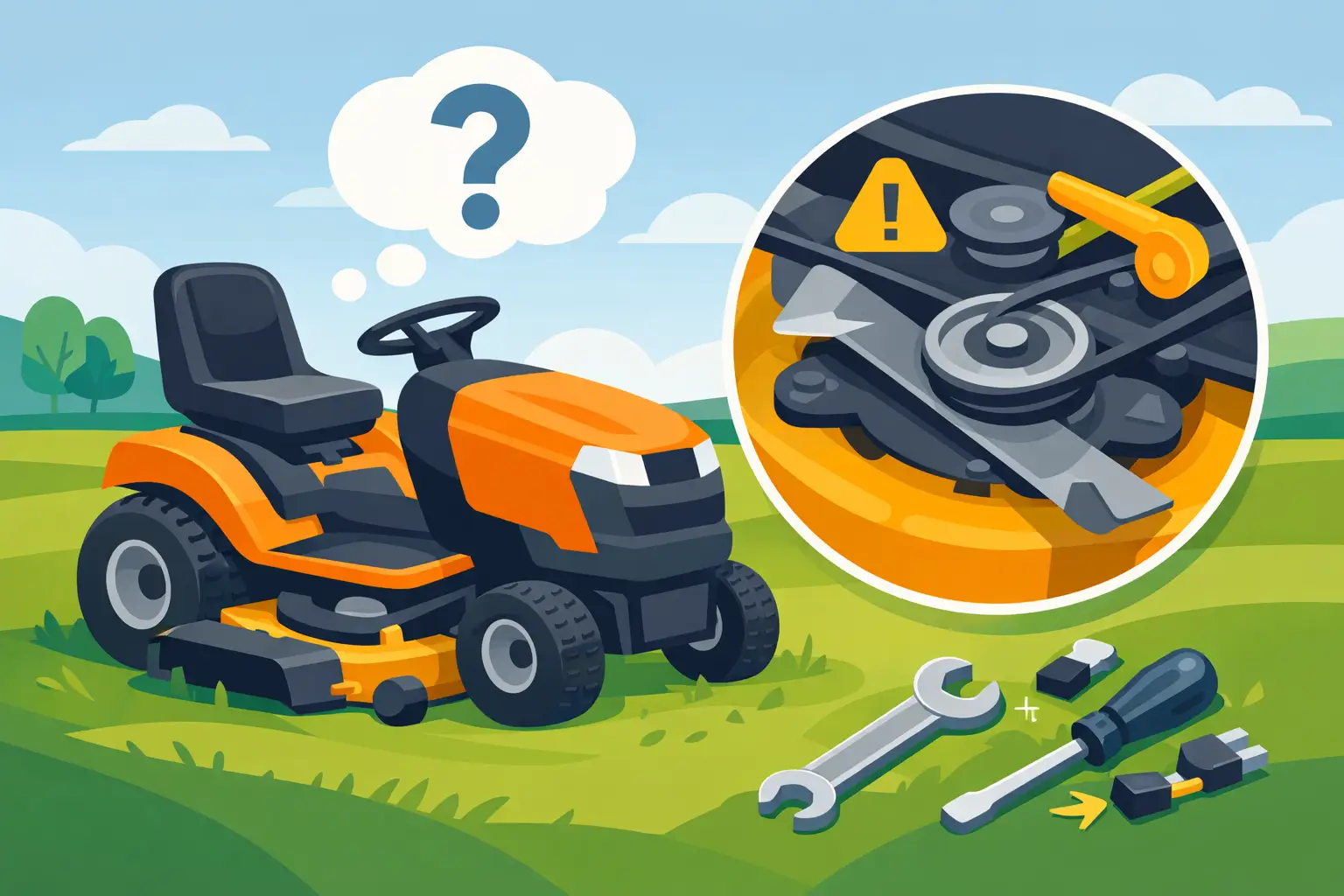
A lawn mower blade won't engage when the PTO system, safety switch, belt, clutch, or control linkage cannot turn it on.
A lawn mower blade won't engage at the worst time, especially when tall grass is waiting and rain is near. The good news is that most causes are easy to find with a safe, step-by-step check. This guide explains what to inspect, what each symptom means, and when a repair needs professional help.
Start With Safety
Before diagnosing why a lawn mower blade won't engage, park the mower on level ground. Turn off the engine, remove the key, set the parking brake, and disconnect the spark plug wire on a gas mower.
For an electric mower, remove the battery or unplug the power source. Never place your hands near the blade, belt, pulley, or electric clutch while the engine can start.
Use gloves when handling the deck, but do not wear loose clothing. A blade can hold stored energy, and a belt may move suddenly if a spring or cable releases.

How the Blade Engagement System Works
The blade system differs by mower type, but the basic process is similar. A control sends power or movement to the cutting deck. That action turns the blades through a belt, clutch, pulley, or mechanical linkage.
Most riding mowers use one of these systems:
• Manual engagement lever: A lever tightens the deck belt through a spring-loaded arm.
• Electric PTO clutch: A switch sends power to a clutch mounted below the engine crankshaft.
• Mechanical PTO system: A rod, cable, or lever connects the operator control to the deck.
• Battery or electric motor system: A control board or safety switch allows power to reach the blade motor.
When a lawn mower blade won't engage, the trouble may be electrical, mechanical, or related to an operator safety feature. Understanding this system helps you avoid replacing good parts.

Common Reasons a Lawn Mower Blade Won’t Engage
The PTO switch is faulty
The power takeoff, or PTO, switch controls the blade system on many riding mowers. If the switch fails, the mower may run normally while the blades remain still.
A worn switch can feel loose, stick in one position, or fail only after the mower gets hot. Look for melted plastic, dark terminals, or loose wires near the switch.
Do not bypass the PTO switch. It is part of the mower’s safety system, and a temporary bypass can allow the blades to run when they should stop.
A safety switch is blocking engagement
Seat switches, brake switches, reverse switches, and deck switches can stop the blades from turning. This can happen even when the mower starts and drives correctly.
Common triggers include:
• The operator is not sitting fully on the seat.
• The parking brake is not set during startup.
• The mower is in reverse when the system does not allow blade operation.
• The deck is raised or not fully locked into position.
• A wire or connector has come loose.
If the blades stopped after you hit a bump, inspect the wiring and connectors. Vibration can pull a weak connector apart.
The deck belt is broken or loose
A broken mower deck belt is one of the most common reasons a lawn mower blade won't engage. You may hear the PTO switch click, but the blades do not move.
Turn off the engine and inspect the belt from above and below the deck. A damaged belt may show:
• Cracks across the ribs
• Frayed edges
• Missing chunks
• Burn marks
• A shiny, glazed surface
• Excessive slack
A loose belt may also point to a weak idler spring, worn pulley, or bent belt guide. Replacing only the belt may not solve the problem if another part caused the belt to loosen.
The PTO clutch has failed
An electric PTO clutch uses a coil, bearing, and friction plate. When it receives power, it locks the blade drive to the engine pulley.
If the clutch fails, the engine may sound normal, but the blades will not spin. You may hear a click without movement, or you may hear no click at all.
A technician can test the clutch with a multimeter and inspect the air gap. The correct resistance and air gap vary by mower model, so use the service manual for exact values.
The blade control cable is stretched or damaged
Some walk-behind mowers use a bail bar and cable to engage the blade. If the cable stretches, bends, or breaks, pulling the control may not move the blade brake or clutch correctly.
Check whether the cable moves smoothly. If the handle feels unusually loose, the cable may have come out of its bracket or lost tension.
Do not tie the control open. The blade brake must stop the blade when you release the handle.
A pulley or spindle is seized
A seized spindle can prevent the belt from turning. Rust, dried grass, poor lubrication, or a damaged bearing may cause the problem.
With the engine off and the spark plug disconnected, rotate each blade by hand while wearing gloves. The blade should turn with steady resistance. A rough, grinding, or locked spindle needs repair.
Never assume the belt is the only problem. A seized spindle can quickly destroy a new belt.
Grass or debris is blocking the deck
Wet grass can pack around the blade, spindle, or belt. A small stick can also wedge between a pulley and the belt.
Clean the deck only after the mower is fully off and safe. Use a scraper or brush instead of your bare hands. If the deck is clogged often, mow dry grass and avoid cutting more than one-third of the grass height at once.

Troubleshooting a Lawn Mower Blade That Won’t Engage
Follow these steps in order. This method starts with simple checks and reduces the risk of replacing parts you do not need.
1. Confirm the control position
Make sure the PTO lever or switch is in the correct position. On some mowers, the lever must move firmly through a full range.
Check that the deck is set low enough for the mower system to allow engagement. Some models will not engage the blades when the deck is raised fully.
2. Listen for the engagement sound
Start the mower only when you can do so safely and follow the owner’s manual. Move the PTO control briefly and listen.
A clear click often means the switch and clutch receive power. No click may point to a fuse, wiring problem, safety switch, or failed PTO switch.
A loud squeal may indicate belt slip. A grinding sound may suggest a damaged pulley, spindle, or clutch bearing.
3. Inspect the belt
Turn the mower off before touching the deck. Look for correct belt routing, broken sections, and signs of rubbing.
Use the belt diagram printed on the mower deck or shown in the owner’s manual. An incorrectly routed belt may appear intact but will not drive the blades correctly.
4. Check the idler arm and springs
The idler pulley keeps the belt tight. Move the arm carefully by hand with the engine off.
The arm should move smoothly and return to position. A weak spring, bent arm, or seized pulley can keep the belt from tightening.
5. Examine wires and connectors
Look near the PTO switch, clutch, fuse, battery, and safety switches. Search for loose plugs, damaged insulation, corrosion, or wires trapped against the frame.
A small amount of corrosion can increase electrical resistance. Clean terminals with an approved electrical contact cleaner, then reconnect them firmly.
6. Test the battery and charging system
An electric PTO clutch needs adequate voltage. A weak battery may start the engine but fail to engage the clutch.
Check the battery voltage with a multimeter if you have one. The exact reading depends on the system, but a 12-volt battery should normally show about 12.6 volts when fully charged and at rest.
If the battery repeatedly goes weak, test the charging system. Replacing the battery without finding the charging fault may only delay the same problem.
7. Test the PTO clutch and switches
Electrical testing should follow the mower’s wiring diagram. Check for voltage at the PTO clutch when the switch is engaged.
If voltage reaches the clutch but it does not engage, the clutch may be defective. If voltage does not reach the clutch, trace the circuit through the switch, fuse, safety switches, and connectors.

Symptoms That Help Find the Fault
The mower’s behavior often provides a useful clue. Think of it as the machine telling you where the problem lives.
• The engine runs, but there is no click: Check the PTO switch, fuse, wiring, safety switches, or battery.
• You hear a click, but the blades stay still: Inspect the belt, clutch, pulleys, and spindles.
• The blades engage, then stop: Look for a weak battery, overheating clutch, loose connector, or belt that slips under load.
• The belt squeals: Check belt tension, pulley alignment, deck debris, and spindle bearings.
• The blades vibrate badly: Stop mowing and inspect bent blades, damaged spindles, loose hardware, and deck damage.
• The blades engage only when the seat is moved: Inspect the seat safety switch and its wiring.
• The mower stops when the blades are engaged: A heavy load, seized spindle, shorted clutch, or weak engine may be involved.
In my mower repair experience, the most common mistake is replacing the belt before checking the idler pulley. A new belt cannot fix a pulley that barely turns.

Fixes You Can Safely Make
Some repairs are reasonable for a careful owner. Others require special tools or electrical knowledge.
Replacing a deck belt
Use the exact belt size and type listed for your mower. Take a photo of the old routing before removal, and compare it with the official diagram.
Release spring tension slowly. Install the belt around each pulley, then confirm that it sits inside every belt guide.
After installation, rotate the deck by hand. The belt should track smoothly without jumping off the pulley.
Replacing a PTO switch
Disconnect the battery or power source first. Take a photo of the wire positions before removing the old switch.
Install the replacement made for your model. A switch that looks similar may have different terminal positions or ratings.
Cleaning a deck
Remove the deck if the manual recommends it. Scrape away packed grass, then inspect the blade brake, belt, pulleys, and spindle areas.
Avoid spraying high-pressure water at bearings, electrical connectors, or the engine. Moisture can create a new problem while you are fixing the old one.
Replacing a blade spindle
A spindle repair may require socket tools, a pulley holder, and a torque wrench. Use the manufacturer’s torque settings when tightening blade bolts and pulley hardware.
If the spindle housing is bent or the bearing seat is damaged, replacing the complete spindle assembly may be safer than replacing one bearing.

When to Call a Professional
Stop troubleshooting and seek professional service when you find serious electrical or mechanical damage.
Professional help is wise when:
• The PTO clutch has no clear test result.
• The wiring is melted or burned.
• The deck has a bent frame.
• A spindle is locked or badly damaged.
• The blade brake does not stop the blade.
• You smell burning insulation.
• The mower repeatedly blows a fuse.
• You are unsure how to secure the blade during repair.
A qualified technician can test the circuit under load and check clutch alignment, belt tension, and spindle condition. This often costs less than repeated guesses and damaged replacement parts.
:max_bytes(150000):strip_icc()/JohnDeere.mower-d4f6a4236eec4242b3be5b9c8f5ac081.jpg)
How to Prevent Future Blade Problems
Regular care can prevent many cases where a lawn mower blade won't engage. You do not need a large toolbox or a full afternoon.
Use this simple routine:
• Clean grass from the deck after mowing.
• Inspect the belt at the start of each mowing season.
• Keep the battery charged and terminals clean.
• Grease serviceable spindle and pulley points as directed.
• Avoid mowing wet, tangled, or extremely tall grass.
• Stop at once when you hear squealing, grinding, or heavy vibration.
• Replace bent blades instead of trying to straighten them.
• Store the mower under cover and protect it from standing water.
Manufacturers and safety organizations consistently advise using the operator’s manual for service intervals, blade checks, and safety procedures. Mower designs vary, so a general tip should never replace model-specific instructions.

Mistakes to Avoid
The first mistake is testing the blade system with the engine running and your hands near the deck. Always shut down, remove the key, and disconnect the spark plug or battery before inspection.
The second mistake is bypassing safety switches. A mower may seem to work after a bypass, but the blade could remain active when you leave the seat or lose control.
The third mistake is installing the wrong belt. Two belts may look alike but have different lengths, widths, or materials. Use the model number to order the correct part.
The fourth mistake is ignoring vibration. Vibration is not normal after a blade or belt repair. It can damage the deck, spindle, and engine if you continue mowing.
Frequently Asked Questions About a Lawn Mower Blade Won’t Engage
Why won't my riding mower blade engage?
A riding mower blade may not engage because of a bad PTO switch, weak battery, failed safety switch, broken belt, or faulty electric clutch. Check the controls, belt, wiring, and battery only after making the mower safe.
Can a bad battery stop the mower blades from engaging?
Yes. An electric PTO clutch needs enough voltage to work, even if the battery still starts the engine. Test the battery and charging system before replacing the clutch.
Why does the PTO click but the blades do not turn?
A click usually means the clutch receives a signal, but the drive system may still have a broken belt, seized pulley, damaged spindle, or failed clutch. Inspect the belt and rotate the pulleys by hand with the engine off.
Can I mow with a loose deck belt?
No. A loose belt can slip, overheat, or come off while the blades are turning. Find the cause of the slack, such as a worn belt, weak spring, damaged idler, or misaligned pulley.
How do I know if the PTO clutch is bad?
A PTO clutch may be bad when it receives the correct voltage but does not engage, or when it makes grinding noises and overheats. Testing requires a multimeter and the specifications for your mower model.
Why do my mower blades engage and then stop?
This may happen because of a weak battery, loose wiring, overheating clutch, slipping belt, or spindle that binds under load. Stop using the mower until you identify the cause.
Is it safe to bypass the seat safety switch?
No. Bypassing a seat safety switch can allow the blades to keep turning if you fall off or lose control. Repair the switch or wiring instead of defeating the safety system.
Conclusion
A lawn mower blade won't engage because one part of the control, safety, electrical, belt, or spindle system is stopping the drive. Start with safe checks, listen for the PTO sound, inspect the belt and pulleys, and test electrical parts with the correct mower specifications.
Do not bypass safety switches or continue mowing through grinding, burning smells, or strong vibration. With a careful inspection, many repairs are simple, and a professional can handle faults that require deeper electrical or mechanical testing. Use this guide with your mower manual, and share your mower model and symptoms in the comments if you need help narrowing down the fault.