How To Check Lawn Mower Oil Level: Easy Guide
Check your lawn mower oil level on level ground with a cool engine and a clean dipstick before every few mowing sessions.
Knowing how to check lawn mower oil level is one of the simplest ways to protect your engine. The process takes only a few minutes, yet it can prevent overheating, poor performance, costly repairs, and early engine wear. This guide explains the right method for push mowers, riding mowers, and most four-stroke engines, along with common mistakes and useful care tips.
Why checking lawn mower oil matters
Engine oil reduces friction between moving parts. It also helps carry heat away from the piston, crankshaft, and other internal parts. When the oil level is too low, these parts may rub together and create excess heat.
Too much oil can also cause trouble. The crankshaft may whip the oil into foam, which reduces lubrication. Extra oil can also leak into the air filter, muffler, or combustion chamber.
Regular oil checks help you:
• Reduce engine wear
• Spot oil leaks early
• Prevent overheating
• Improve starting and engine performance
• Extend the life of the mower
• Know when an oil change may be needed
Most mower makers advise checking the oil before use or at regular service intervals. A quick check is especially wise before mowing tall, wet, or thick grass because these conditions place more load on the engine.
What you need before checking the oil
You do not need many tools to check lawn mower oil level. Gather a clean rag and the correct engine oil if the level is low.
You may also need a small funnel. A funnel makes it easier to add oil without spilling it onto the engine or mower deck.
Prepare these items:
• Clean cloth or paper towel
• Correct replacement oil
• Small funnel
• Flat, stable work area
• Work gloves, if desired
The correct oil type depends on the engine and outdoor temperature. Many four-stroke lawn mower engines use SAE 30 oil in warm weather, while some allow 10W-30 or synthetic oil. Always check the owner’s manual or the label near the oil fill tube before adding oil.
Do not use motor oil meant for a two-stroke fuel mixture unless the manual specifically says to do so. Two-stroke and four-stroke engines use oil in different ways.

How to check lawn mower oil level step by step
The steps below work for most walk-behind mowers with a dipstick. Riding mowers often use a similar process, but the oil fill location may differ.
1. Park the mower on level ground
Move the mower to a flat surface such as a driveway, garage floor, or level section of lawn. A slope can make the oil look higher or lower than it really is.
If you are using a riding mower, place the transmission in park and set the parking brake. Turn off the engine and remove the key.
2. Turn off the engine and let it cool
Stop the engine and wait several minutes before checking the oil. A cool engine lowers the risk of burns and gives the oil time to drain back into the crankcase.
Some manufacturers recommend checking oil when the engine is warm but not hot. Follow your mower manual if it gives different instructions. The key point is to use the same method each time for a consistent reading.
3. Find the oil fill cap
Look for a cap marked “Oil,” “Engine Oil,” or an oil-can symbol. On a push mower, it is often on the side or near the top of the engine.
The cap may have a dipstick attached to it. If there is no dipstick, the oil level may be checked at the bottom edge of the fill opening.
4. Clean the area around the cap
Wipe dirt and grass from around the oil cap before removing it. This small step keeps debris from falling into the crankcase.
Grass clippings can act like sand inside an engine. Keeping the fill area clean is one of the easiest ways to protect the oil system.
5. Remove and wipe the dipstick
Unscrew the cap and pull out the dipstick. Wipe it fully clean with a lint-free cloth.
This is an important part of how to check lawn mower oil level. A dirty dipstick can smear oil along the markings and create a false reading.
6. Reinsert the dipstick correctly
Put the clean dipstick back into the tube. On many mowers, you must screw the cap all the way in before removing it again. On other models, the dipstick only needs to rest in the opening.
Check the owner’s manual for your exact design. The wrong insertion method can make the reading look too high or too low.
7. Read the oil mark
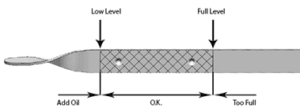
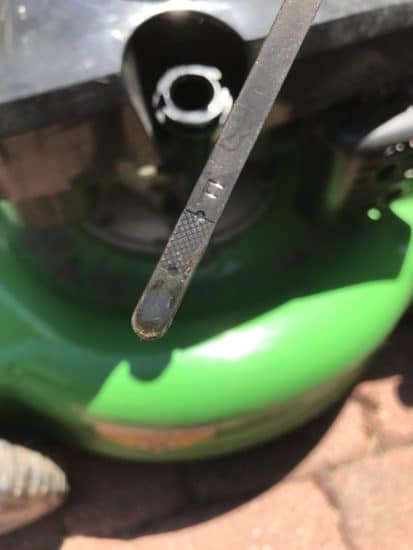
Remove the dipstick again and hold it level. Look for two marks, holes, or lines labeled “Add” and “Full.”
The oil should sit between these marks. Ideally, it should be near the full mark without going above it.
8. Add oil slowly if needed
If the level is near or below the add mark, pour in a small amount of the correct oil. Add about 2 ounces at a time, then wait briefly and check again.
Small additions are safer than pouring in a large amount. Many small mower engines hold less than one quart, so a little extra oil can raise the level quickly.
9. Secure the cap and clean any spills
When the level is correct, tighten the cap firmly by hand. Wipe away any spilled oil before starting the mower.
Oil on a hot engine can smoke and may create a fire risk. Clean spills from the deck and surrounding parts before mowing.

How to check lawn mower oil level without a dipstick
Some mower engines do not have a dipstick. Instead, they use a threaded or unthreaded oil fill hole.
To check this type of engine:
-
Park the mower on level ground.
-
Turn off the engine and let it cool.
-
Clean around the oil fill opening.
-
Remove the oil cap.
-
Look inside the opening.
-
The oil should usually reach the bottom edge of the fill hole.
Do not assume this method applies to every mower. Some engines use a specific fill mark or sight window. The manual is the best guide when the design is unclear.
If the oil is below the opening, add a small amount of the correct oil. Stop when the oil reaches the proper level. Do not fill it to the top of the tube.

How to check oil on a riding lawn mower
The basic process is similar, but riding mowers may have a larger engine and a harder-to-reach oil cap. Park the mower on a flat surface and allow the engine to cool before you begin.
Many riding mower dipsticks have clear “Full” and “Add” marks. Some models require the dipstick to be fully threaded into the tube before taking a reading. Others require the dipstick to sit on top of the tube without being threaded.
Before checking, make sure:
• The mower is in park
• The parking brake is set
• The blades are disengaged
• The key is removed
• The engine is cool enough to touch safely
When you check lawn mower oil level on a riding mower, avoid leaning over moving parts or reaching near the muffler. If the mower has recently run, hot metal may remain dangerous for several minutes.

How much oil should a lawn mower have?
The correct oil amount depends on the engine model. A small push mower may need roughly 15 to 20 ounces, while a riding mower may need 48 ounces or more.
These numbers are general examples, not exact fill amounts. Use the owner’s manual for the correct capacity. The oil level on the dipstick matters more than an estimated volume.
Never pour in a full bottle just because the engine looks low. Add oil in small amounts and check the dipstick after each addition.
A mower that loses oil often may have a worn seal, loose drain plug, damaged gasket, or other problem. Adding oil can protect the engine for a short time, but it does not fix the leak.

What type of oil should you use?
The right oil depends on the engine design and outdoor temperature. Common choices include SAE 30, 10W-30, and synthetic 10W-30.
SAE 30 is often used in warm summer weather. Multi-grade oils such as 10W-30 may work across a wider temperature range. Synthetic oil may offer good flow in cold weather and strong performance at high temperatures, but it must be approved for the engine.
Check these details in the manual:
• Oil viscosity
• Required service rating
• Oil capacity
• Temperature range
• Whether synthetic oil is allowed
Many modern small engines use oil that meets current gasoline engine service standards. Still, the manufacturer’s instructions take priority. Using the wrong oil may affect starting, lubrication, or warranty coverage.
Common mistakes when checking mower oil
Learning how to check lawn mower oil level is easy, but small errors can lead to a wrong reading or engine damage.
Checking on a slope
A tilted mower can make the oil appear higher on one side of the crankcase. Always use a flat surface.
Reading a dirty dipstick
Oil smeared along the stick can hide the real level. Wipe it clean and check it again.
Forgetting to reinsert the dipstick
Some dipsticks must be screwed in for an accurate reading. Others should only rest in the tube. Follow the manual.
Adding too much oil
Overfilling is not safer than running slightly low. Extra oil can cause smoke, leaks, poor running, and internal damage.
Using the wrong oil
Do not guess based on the oil used in your car. Small engines may require a different viscosity.
Checking immediately after shutdown
Hot oil can give an inconsistent reading, and hot engine parts can burn your hand. Wait for the engine to cool as directed.
Ignoring dark oil
Dark oil is not always dangerous, but thick, gritty, or fuel-smelling oil may need attention. Oil color alone does not tell the whole story.
How often should you check lawn mower oil?
For many homeowners, checking the oil before each mowing session is a good habit. At minimum, check it before every few hours of use and before mowing a large area.
Check more often when:
• The mower is old
• The engine uses oil between changes
• You see oil on the deck
• The mower runs on steep slopes
• You mow thick or wet grass
• The engine becomes unusually hot
• The mower produces blue smoke
A quick oil check takes less time than finding a damaged engine. I have found that the best routine is to check the oil when refueling or cleaning the mower. Linking the tasks together makes it easier to remember.
Signs your mower may have an oil problem
The oil level is only one part of engine care. Watch for other warning signs that may point to low oil, dirty oil, or an oil leak.
Possible signs include:
• Blue or gray smoke
• Loud knocking or tapping
• A burning oil smell
• Frequent engine shutdown
• Hard starting
• Uneven engine speed
• Oil around the crankcase
• A dipstick that reads low after every use
Stop using the mower if it makes a sharp knocking sound or loses oil quickly. Continuing to run it may turn a small repair into a major engine failure.
Blue smoke can also come from overfilling, mowing on a steep slope, or tipping the mower the wrong way during cleaning. If the smoke continues after the oil level is corrected, have the engine inspected.
Personal lessons from checking mower oil
One mistake I have seen often is adding oil without wiping the dipstick first. The old oil smear makes the level look full, so the owner adds more. When the engine runs, it smokes because the crankcase is overfilled.
Another useful lesson is to keep a small bottle of the correct oil with the mower supplies. It is much easier to add the right oil when it is already nearby than to guess at a gas station or hardware store.
I also recommend marking the date of each oil change on a small piece of tape near the engine. This simple habit helps you track maintenance, especially when several people use the mower.
Think of the dipstick as the engine’s fuel gauge. It does not tell you everything about engine health, but it gives you an important warning before a small problem becomes expensive.
Oil level checks and mower maintenance
Checking the oil should be part of a larger maintenance routine. A clean air filter, sharp blade, and fresh spark plug also help the engine work efficiently.
A basic care schedule may include:
• Check the oil before use
• Clean grass from the deck after mowing
• Inspect the air filter regularly
• Sharpen or replace the blade when needed
• Change the oil at the manufacturer’s interval
• Replace the spark plug as recommended
• Store the mower in a dry place
Always disconnect the spark plug wire before working near the blade on a push mower. For a riding mower, remove the key and follow the safety instructions in the manual.
Good maintenance is like brushing your teeth. A few minutes often prevents a much bigger problem later.
Frequently asked questions about how to check lawn mower oil level
Should I check lawn mower oil when the engine is hot or cold?
Most mowers should be checked with the engine off and cool on level ground. Some manuals recommend checking after the engine warms briefly, so follow the instructions for your specific model.
Do I screw the dipstick in when checking the oil?
It depends on the engine. Some dipsticks must be fully threaded into the tube, while others should rest on the opening. Check the markings or owner’s manual before taking the reading.
What happens if I overfill my lawn mower with oil?
Overfilling can cause smoke, oil leaks, rough running, and damage to engine parts. Drain or remove the extra oil until the level reaches the full mark.
Can I use car oil in a lawn mower?
Some car oils may be suitable, but only if they match the mower manufacturer’s viscosity and service requirements. Do not use an oil type that the manual does not approve.
How often should I check my lawn mower oil?
Check it before every use when possible, or at least every few hours of operation. Check more often if the mower is old, leaks oil, or works under heavy loads.
Why does my mower lose oil without visible leaks?
Oil may burn inside the engine, especially if the engine has worn piston rings or valve seals. Blue smoke, an oily air filter, or a low dipstick reading can support this diagnosis.
Can low oil stop a lawn mower from starting?
Yes. Some mowers have a low-oil safety system that prevents starting when the level is too low. Low oil can also cause engine damage or poor operation.
Conclusion
Learning how to check lawn mower oil level takes only a few minutes, but it protects some of the mower’s most important parts. Park on level ground, let the engine cool, clean the dipstick, read the markings, and add the correct oil slowly when needed.
Avoid overfilling, use the oil listed in the manual, and investigate leaks or smoke instead of ignoring them. Make this simple check part of your regular mowing routine, then explore your mower’s maintenance schedule or share your own care tips in the comments.