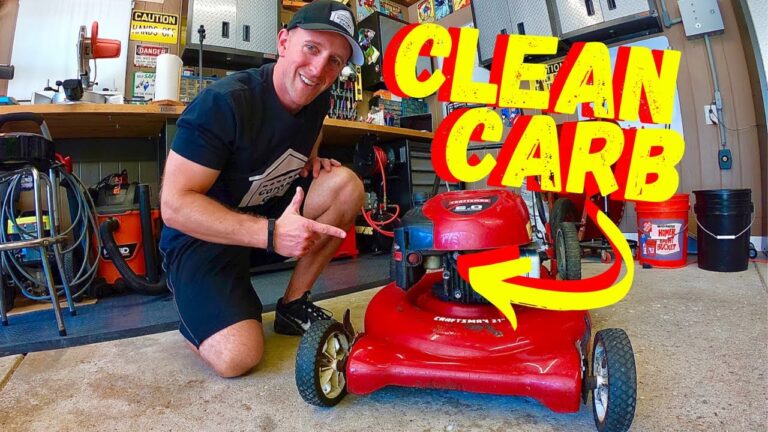
Lawn Mower Carburetor Cleaning Without Removing: Fast Fix
You can clean a lawn mower carburetor without removing it by using spray cleaner, a soft brush, and careful fuel-system checks.
A dirty carburetor can make a mower hard to start, cause surging, or make the engine stall after a few minutes. In my experience, lawn mower carburetor cleaning without removing the carburetor works well when the dirt is light or moderate. This guide explains the safest method, the tools you need, common mistakes, and the signs that deeper cleaning is required.
What a Lawn Mower Carburetor Does
A carburetor mixes gasoline with air before the mixture enters the engine. The engine needs the right balance of both to run smoothly.
Inside the carburetor, small passages and jets control fuel flow. Even a small amount of old fuel, dust, grass, or varnish can block these passages. The result may be hard starting, poor power, engine surging, or stalling.
A carburetor usually becomes dirty because of:
• Old gasoline left in the tank or bowl
• Fuel that contains water or sediment
• A clogged air filter
• Dust entering through a damaged filter
• Long storage without fuel stabilizer
• Ethanol fuel that absorbs moisture over time
• Grass clippings and dirt around the air intake
Lawn mower carburetor cleaning without removing the unit focuses on the air intake, throttle area, fuel bowl, and accessible passages. It can restore normal operation when the contamination is not severe.
When Cleaning Without Removing the Carburetor Makes Sense
This method is useful when the mower starts but runs poorly. It is also a good first step when the engine has been stored for a season.
Try lawn mower carburetor cleaning without removing it if you notice:
• The engine starts only with starting spray
• The mower surges while running
• The engine stalls when you engage the blade
• The mower runs for a few minutes and then dies
• The engine has weak power under load
• The mower has been stored with old fuel
• The engine runs better with the choke partly closed
A partly closed choke adds more fuel to the air mixture. If the engine runs better this way, the carburetor may not be delivering enough fuel through its normal passages.
This method is less useful when the carburetor is badly blocked, the float is stuck, or the gaskets are damaged. In those cases, removing the carburetor may be the proper repair.
Tools and Supplies You Will Need
Gather everything before you begin. Good preparation makes lawn mower carburetor cleaning without removing faster and safer.
You may need:
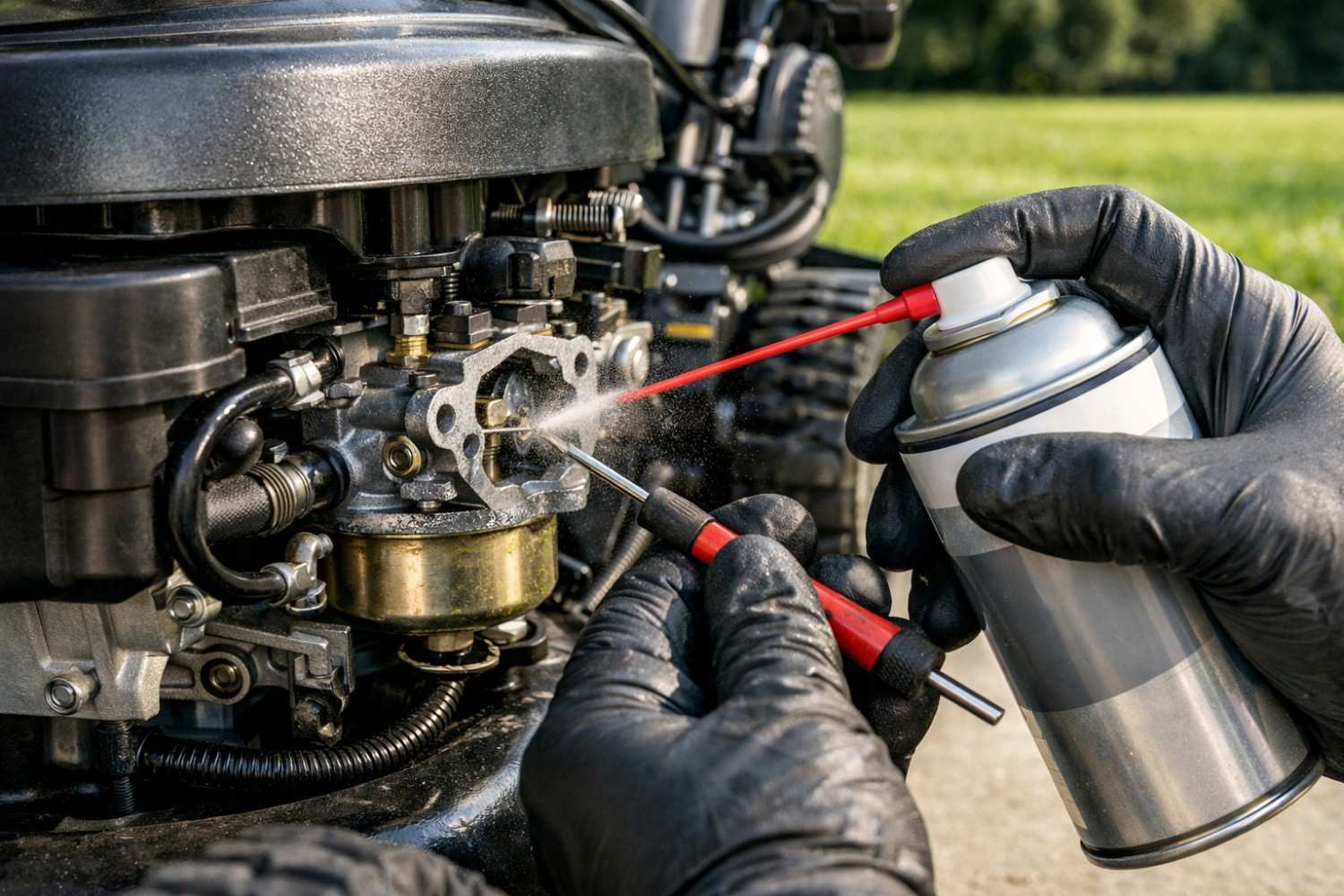
• Carburetor cleaner made for small engines
• A clean shop rag
• Safety glasses
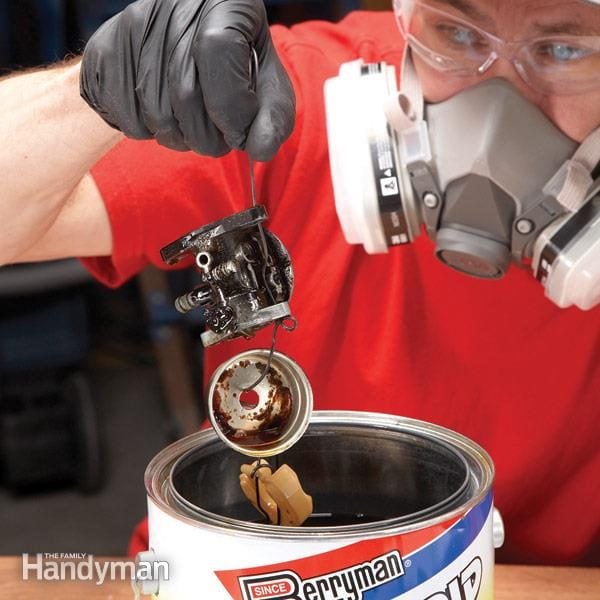
• Chemical-resistant gloves
• A small soft-bristle brush
• A can of compressed air
• A screwdriver or nut driver
• A fuel-safe drain pan
• Fresh gasoline
• Fuel stabilizer
• A replacement air filter if the old one is dirty
• A small flashlight
• A wooden toothpick or nylon cleaning tool
Do not use steel wire to clean small carburetor jets. It can enlarge a precisely sized opening and change the fuel mixture. A wooden toothpick or soft nylon tool is much safer.
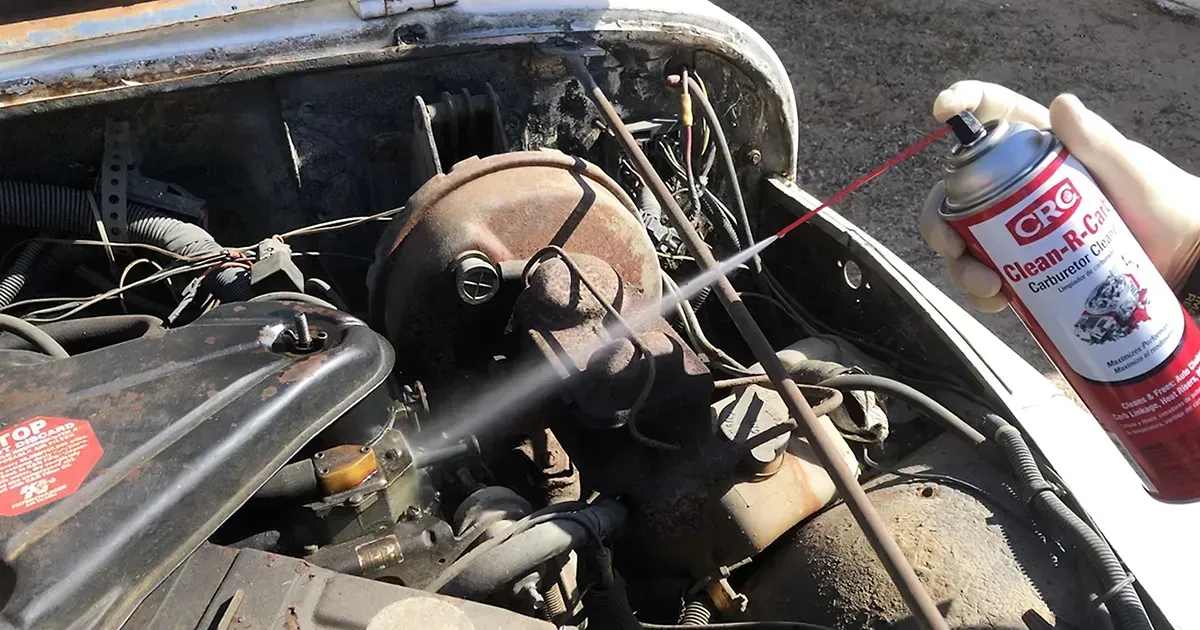
Use carburetor cleaner outdoors or in a well-ventilated space. Keep the product away from sparks, cigarettes, hot engine parts, and open flames.
Safety Steps Before You Start
Gasoline vapors can ignite easily. Take a few minutes to make the work area safe.
-
Move the mower outdoors onto a flat surface.
-
Turn the engine off and let it cool fully.
-
Disconnect the spark plug wire and place it away from the spark plug.
-
Turn off the fuel valve if the mower has one.
-
If there is no fuel valve, clamp the fuel line with a proper fuel-line clamp.
-
Keep a fire extinguisher rated for flammable liquids nearby.
-
Do not tip a gasoline mower onto its side unless the owner’s manual allows it.
Disconnecting the spark plug wire prevents accidental starting. It also protects you if the blade or crankshaft moves while you work.
Never spray cleaner into a hot engine. Many carburetor cleaners are highly flammable, and a backfire can ignite the vapor.
How to Clean a Lawn Mower Carburetor Without Removing It
The following process works for many common push mowers and walk-behind mowers. Mower designs vary, so check the owner’s manual before removing covers or fuel-system parts.
1. Clean the Outside First
Brush loose grass and dirt away from the engine. Pay special attention to the area around the air filter housing and carburetor.
Wipe the outside with a dry rag. If dirt falls into an open intake, it can create a new problem during cleaning.
Do not flood the outside of the engine with water. Moisture near the carburetor, ignition coil, or electrical connections can cause starting trouble.
2. Remove the Air Filter
Take off the air filter cover and remove the filter. This exposes the carburetor throat or air intake.
Inspect the filter:
• Replace a paper filter that is dark, oily, wet, or clogged
• Wash a foam filter in warm soapy water if the manual allows it
• Let a washable foam filter dry fully before adding the recommended oil
• Never reinstall a torn or badly damaged filter
A clogged air filter can look like a carburetor problem. The engine may receive too little air and run rich, which means it receives too much fuel for the available air.
3. Inspect the Throttle and Choke Linkages
Use a flashlight to inspect the small metal rods and springs near the carburetor. These parts control the throttle and choke.
Move the control lever slowly. It should move without binding. Grass, rust, or dried fuel can stop the choke plate from opening fully.
Do not bend the rods or stretch the springs. Take a photo before touching anything so you can compare the original position if a linkage comes loose.
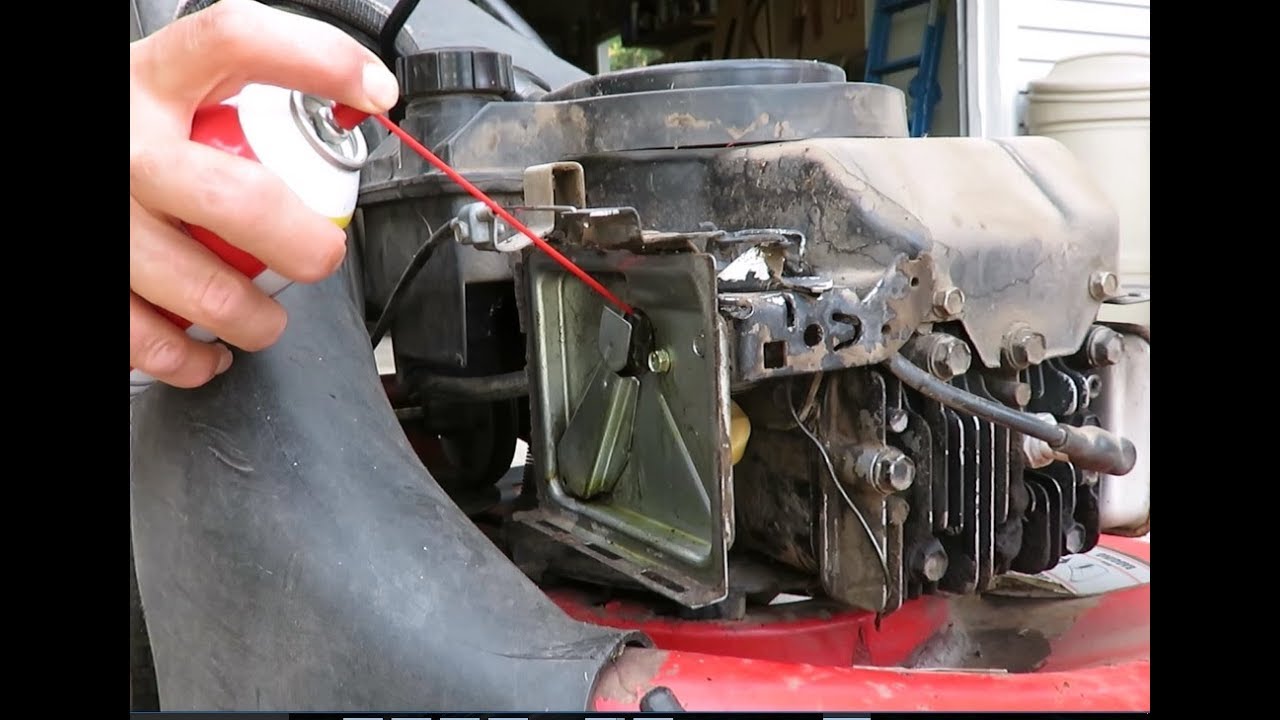
4. Spray Cleaner Into the Carburetor Throat
With the air filter removed, locate the carburetor throat. This is the opening where air enters the carburetor.
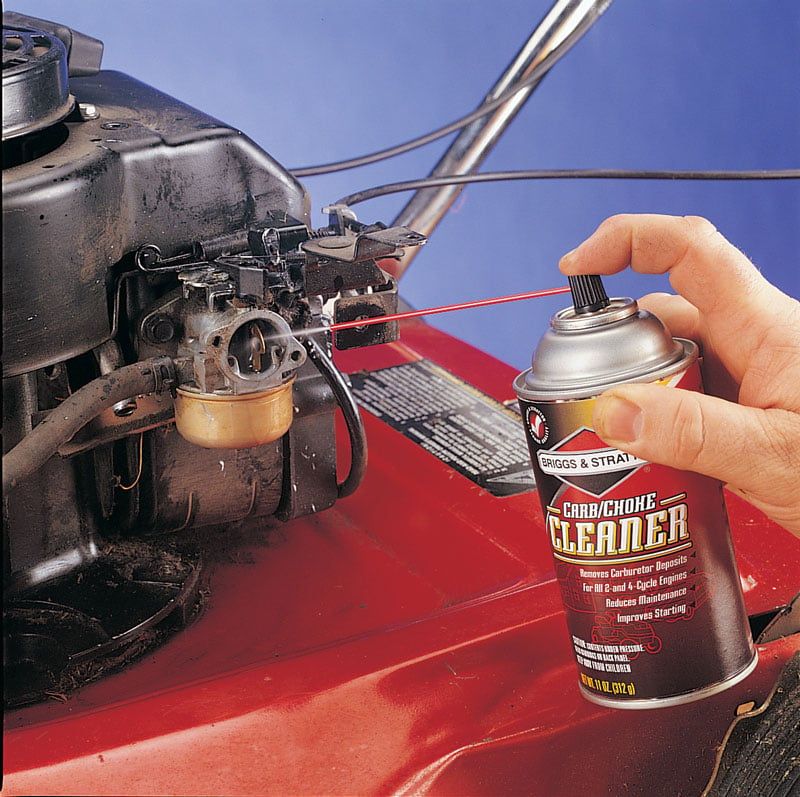
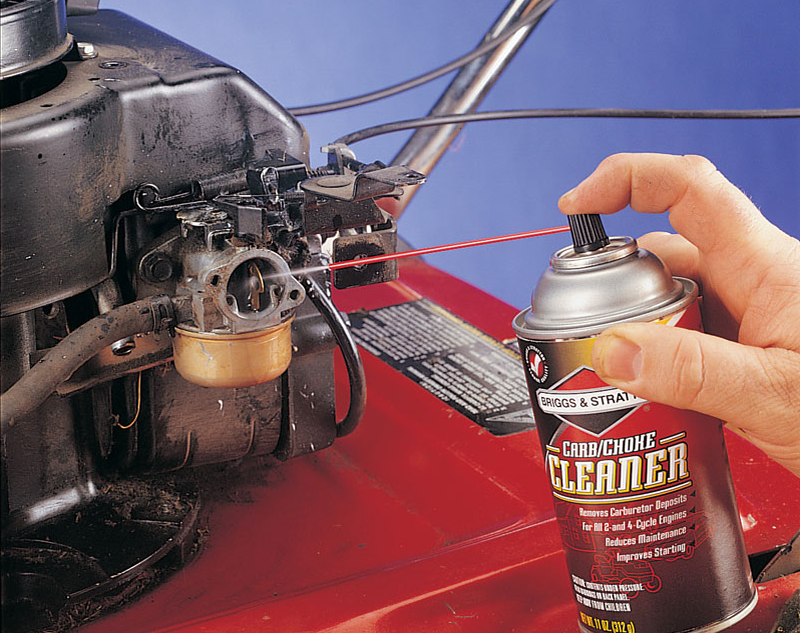
Spray a short burst of carburetor cleaner into the throat. Avoid soaking the area. Excess cleaner can wash oil from the cylinder wall or collect near the ignition system.
Open and close the throttle plate by hand if it is safe to do so. Spray lightly around the plate and shaft. Use a soft brush to loosen gum and dirt.
For lawn mower carburetor cleaning without removing, short bursts work better than one long spray. The goal is to dissolve deposits while keeping liquid under control.
5. Clean the Choke Plate and Air Passage
The choke plate is usually near the air inlet. It may have a narrow metal flap that closes when the engine is cold.
Spray cleaner onto a rag or soft brush instead of spraying heavily into the housing. Wipe both sides of the plate and the nearby bore.
A sticky choke can cause black smoke, rough running, and plug fouling. It can also make the mower appear to have a fuel-delivery fault.
6. Clean the Fuel Bowl Area if Accessible
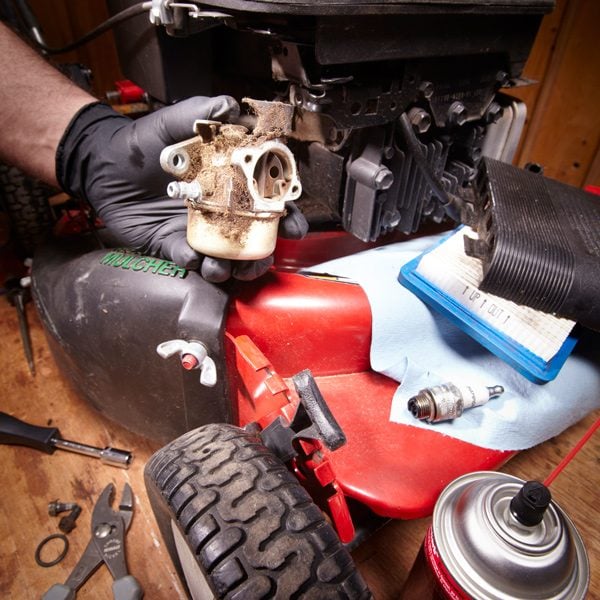
Many small engines have a metal or plastic fuel bowl at the bottom of the carburetor. If the design allows it, place a drain pan underneath and remove the bowl bolt or drain plug.
Keep track of the gasket and any small washer. Do not lose them.
Drain the old fuel and inspect it. Gasoline that looks dark, cloudy, or contains water should not go back into the mower.
Spray cleaner into the exposed bowl area and wipe away residue. Use compressed air to clear the visible openings. Do not force tools into tiny jets.
Some mower carburetors have a bowl nut that also acts as a main jet. If you remove it, make sure every small hole is clean and open before reinstalling it. If you are unsure, stop and follow the mower’s service manual.
7. Check the Fuel Line and Fuel Filter
A clean carburetor cannot work properly if fuel cannot reach it.
Inspect the fuel line for:
• Cracks
• Soft or swollen sections
• Kinks
• Loose clamps
• Leaks
• Dirt inside the line
If the mower has an inline fuel filter, check whether it looks blocked. Replace it if the filter is dirty or if the manual lists it as a service item.
Avoid blowing into a fuel line with your mouth. Use a hand pump or replace the line if it is blocked.
8. Use Compressed Air Carefully
Compressed air can clear loose debris from accessible passages. Use low pressure and wear safety glasses.
Do not aim high-pressure air directly into a float or delicate diaphragm. It can damage the part or force dirt deeper into the carburetor.
Compressed air is useful after spraying cleaner, but it cannot repair a stuck float, broken gasket, or badly varnished jet.
9. Reassemble the Parts
Replace the fuel bowl, gasket, air filter, and air filter cover. Make sure the gasket sits flat.
Reconnect the fuel line if you removed it. Check for leaks before starting the engine.
A loose air filter cover can let unfiltered dirt enter the engine. A pinched gasket can cause an air leak and create unstable engine speed.
10. Add Fresh Fuel and Test the Mower
Use fresh gasoline that matches the fuel type listed in the owner’s manual. Adding fuel stabilizer can help when the mower will sit for more than a few weeks.
Reconnect the spark plug wire. Start the mower outdoors and let it run at idle for a few minutes.
Watch and listen for:
• Smooth idle
• Steady engine speed
• No fuel leaks
• No heavy black smoke
• No strong fuel smell
• Normal response when the throttle changes
The first start after cleaning may take a few extra pulls. This happens because the fuel system may need time to refill.
What to Do If the Mower Still Runs Poorly
Lawn mower carburetor cleaning without removing the unit does not solve every fuel problem. If the mower still surges or stalls, check the simple causes first.
Inspect the spark plug. A wet or heavily carboned plug may show that the engine is receiving too much fuel. A clean, properly gapped plug is important for reliable ignition.
Check the air filter again. If it is restricted, the engine may continue to run rich even after the carburetor is clean.
Also inspect the fuel cap vent. A blocked vent can create a vacuum in the tank. To test this, carefully loosen the cap after the engine begins to stall. If the engine improves, the cap may need replacement.
The problem may also involve:
• A dirty main jet
• A stuck float
• A damaged needle valve
• A leaking bowl gasket
• A cracked intake gasket
• A faulty ignition coil
• Incorrect governor adjustment
• Low compression
• Water in the fuel
Do not adjust the governor spring unless you know the correct setting. An incorrect governor adjustment can make the engine overspeed and create a serious safety risk.
Common Mistakes to Avoid
Many mower problems become worse because the cleaning method is too aggressive. Gentle cleaning is usually more effective.
Avoid these mistakes:
• Spraying carburetor cleaner into a hot engine
• Using brake cleaner when the product is not approved for the job
• Poking jets with a steel needle
• Using starting fluid as a permanent solution
• Reusing stale gasoline
• Losing the bowl gasket or washer
• Forgetting to reconnect the spark plug wire
• Running the mower without the air filter
• Spraying cleaner near a spark or ignition source
• Tilting the mower and allowing oil to enter the air filter
Starting fluid can help diagnose a fuel-delivery problem, but it does not clean the carburetor or fix the cause. Frequent use can make an engine start harshly and may damage some small-engine components.
One mistake I often see is replacing the spark plug before checking the air filter and old fuel. Those parts are easy to inspect, and they often cause symptoms that look like carburetor trouble.

How Often Should You Clean the Carburetor?
There is no single schedule for every mower. Use the mower’s service manual as the main guide.
A basic inspection is wise at the start of each mowing season. You should also check the carburetor when the mower has been stored for several months.
Preventive habits help more than frequent deep cleaning:
• Use fresh fuel
• Add stabilizer before storage
• Run the engine long enough to move treated fuel through the system
• Keep the air filter clean
• Clean grass and dirt from the engine after mowing
• Store the mower in a dry, covered place
• Drain the fuel when the manual recommends it
If you use the mower every week and keep fresh fuel in it, you may need little more than seasonal inspection. If the mower sits all winter with untreated fuel, deposits can form much faster.
Benefits and Limits of Cleaning Without Removal
The main benefit of lawn mower carburetor cleaning without removing the carburetor is convenience. You save time and reduce the chance of disconnecting linkages, fuel lines, or gaskets incorrectly.
Other benefits include:
• Lower repair cost
• Less risk of losing small parts
• Faster troubleshooting
• No need to disturb the governor system
• A useful first step before deeper service
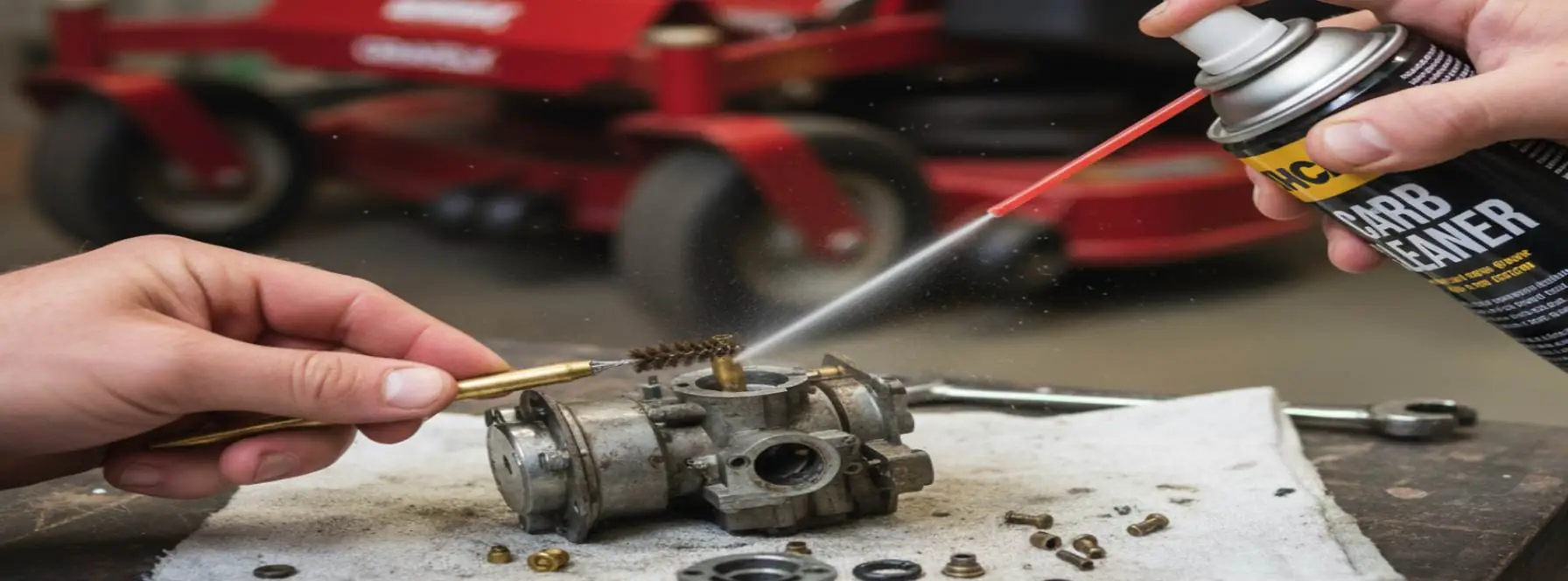
However, this method has clear limits. Spray cleaner cannot reach every internal passage. It may not remove thick varnish inside a jet, repair a torn diaphragm, or free a badly stuck float.
Think of this process as cleaning a clogged sink from above. It may clear the blockage, but a deep obstruction still requires access to the parts below.
When You Should Remove or Replace the Carburetor
Professional or deeper service may be needed when the mower has severe symptoms.
Consider removing the carburetor or seeking repair help if:
• Fuel leaks continuously from the bowl
• The engine floods after every start
• The float is stuck
• The carburetor gasket is damaged
• The main jet remains blocked
• The mower only runs with constant starting spray
• The engine still surges after fresh fuel and cleaning
• The carburetor body is cracked
• The repair kit costs nearly as much as a replacement carburetor
Many replacement carburetors for common engines are affordable. Still, confirm the engine model and carburetor number before ordering. Similar-looking parts may have different linkages, jet sizes, or mounting patterns.
If the engine is valuable or the problem is uncertain, a small-engine technician can test fuel flow, ignition, compression, and governor operation. That diagnosis can prevent you from replacing good parts.
A Practical Maintenance Plan
A simple maintenance plan can prevent most carburetor problems.
Before mowing:
• Check the fuel level
• Look for leaks
• Inspect the air filter
• Confirm that the blade area is clear
• Make sure the controls move freely
After mowing:
• Brush grass away from the engine
• Store the mower under cover
• Avoid leaving fuel in the tank for long periods
• Check for loose covers or damaged fuel lines
Before seasonal storage:
-
Read the storage instructions in the owner’s manual.
-
Add stabilizer if the manual recommends it.
-
Run treated fuel through the engine.
-
Drain the fuel system if required.
-
Clean the mower deck and engine exterior.
-
Store the mower in a dry, ventilated area away from ignition sources.
Fresh fuel and a clean air filter often prevent the need for lawn mower carburetor cleaning without removing. A few minutes of care can save an afternoon of troubleshooting later.
Frequently Asked Questions
Can I clean a lawn mower carburetor without removing the air filter?
You can spray cleaner through some openings, but removing the air filter gives you better access and a clearer view. Always reinstall the filter before running the mower for normal use.
How long does lawn mower carburetor cleaning without removing take?
A light cleaning usually takes 20 to 40 minutes. The total time depends on access, fuel-bowl design, air-filter condition, and how much dirt or varnish is present.
Can carburetor cleaner damage a lawn mower engine?
It can cause problems if you use too much, spray it near a hot surface, or use it in a way the product label does not allow. Use short bursts, work outdoors, and follow the cleaner’s safety instructions.
Why does my mower run better with the choke on?
A mower that runs better with the choke on may have restricted fuel flow, a dirty jet, an air leak, or a partially blocked passage. The choke adds fuel and can temporarily hide the underlying problem.
Should I use fresh gasoline after cleaning the carburetor?
Yes. Old or contaminated gasoline can quickly undo your cleaning work. Drain questionable fuel and refill the mower with fresh fuel that matches the manufacturer’s requirements.
Can I use WD-40 instead of carburetor cleaner?
WD-40 is not a substitute for a proper carburetor cleaner. It may help loosen some residue, but it is not designed to dissolve fuel varnish and clean carburetor passages in the same way.
When should I call a small-engine professional?
Seek professional help if fuel leaks, the engine overspeeds, the mower remains unsafe to operate, or cleaning does not solve the problem. A technician can test the carburetor along with ignition, compression, and governor systems.
Conclusion
Lawn mower carburetor cleaning without removing the carburetor is a practical first repair for hard starting, surging, and rough running. Clean the air intake, inspect the choke and throttle, use short bursts of carburetor cleaner, check the fuel bowl and lines, and finish with fresh fuel.
Work slowly, protect your eyes and hands, and never use metal tools inside small jets. If the mower still fails after careful cleaning, the issue may require a deeper carburetor service or a broader engine diagnosis.
Try these steps during your next mower tune-up, and share your results or questions with other lawn-care readers.