Lawn Mower Fuel Line Replacement: Easy DIY Repair Guide
Replacing a cracked fuel line can restore fuel flow, prevent leaks, and help your lawn mower start safely.
A lawn mower fuel line replacement is a simple repair when you use the right hose, follow the correct routing, and control fuel spills. This guide explains how to inspect, remove, size, install, and test a new fuel line with safe, practical steps based on common mower designs and repair experience.

What a lawn mower fuel line does
The fuel line carries gasoline from the fuel tank to the carburetor. Some mowers also have a fuel filter, shutoff valve, primer bulb, or fuel pump along the line.
Think of the fuel line as the mower’s small fuel highway. If the hose cracks, pinches, clogs, or becomes soft, fuel may not reach the carburetor at the right rate. The engine may then start poorly, surge, stall, or fail to run.
A lawn mower fuel line replacement can solve problems such as:
• Fuel leaking under the mower
• A strong gasoline smell
• Hard starting
• An engine that starts and then dies
• A dry carburetor bowl
• Poor engine power
• A cracked or swollen rubber hose
Most fuel lines are made from fuel resistant rubber or plastic. Ordinary tubing is not a safe substitute because gasoline can soften it, cause leaks, or make it fail without much warning.
Signs you need a lawn mower fuel line replacement
A damaged fuel line does not always create a large puddle. Small cracks can let air into the fuel system while allowing very little fuel to leak out.
Look for these signs:
• Wet spots near the fuel tank, carburetor, or fuel filter
• A gasoline smell after the mower sits
• Dampness on the hose or around its fittings
• Cracks near the hose ends
• A hose that feels soft, swollen, brittle, or sticky
• A fuel line that has collapsed or flattened
• Air bubbles moving through a clear fuel line
• Fuel starvation during mowing
• A hose that pulls loose from a fitting
On older mowers, the rubber may look fine on the outside but still be weak inside. Flex the hose gently with the engine off and the tank nearly empty. If it feels brittle or shows surface cracking, replacing it is usually wiser than waiting for a failure.
A lawn mower fuel line replacement is also smart when installing a new fuel filter. Old hoses often break when you remove them from aged filter nipples.
Safety steps before replacing the fuel line
Gasoline is highly flammable. Work outdoors or in a well ventilated area, away from cigarettes, flames, heaters, pilot lights, and electrical sparks.
Before starting a lawn mower fuel line replacement:
-
Turn the engine off and let it cool fully.
-
Disconnect the spark plug wire and keep it away from the spark plug.
-
Close the fuel shutoff valve, if the mower has one.
-
Drain the fuel tank into an approved gasoline container if needed.
-
Clean dirt from the tank outlet and carburetor area.
-
Wear safety glasses and fuel resistant gloves.
-
Keep an approved fire extinguisher nearby.
-
Use a clean tray or container to catch fuel.
Do not drain gasoline into soil, a storm drain, or household trash. Store removed fuel in a labeled, approved container and follow local disposal rules.
Never smoke while working on a fuel system. Even a small gasoline vapor cloud can ignite quickly.
Tools and parts you may need
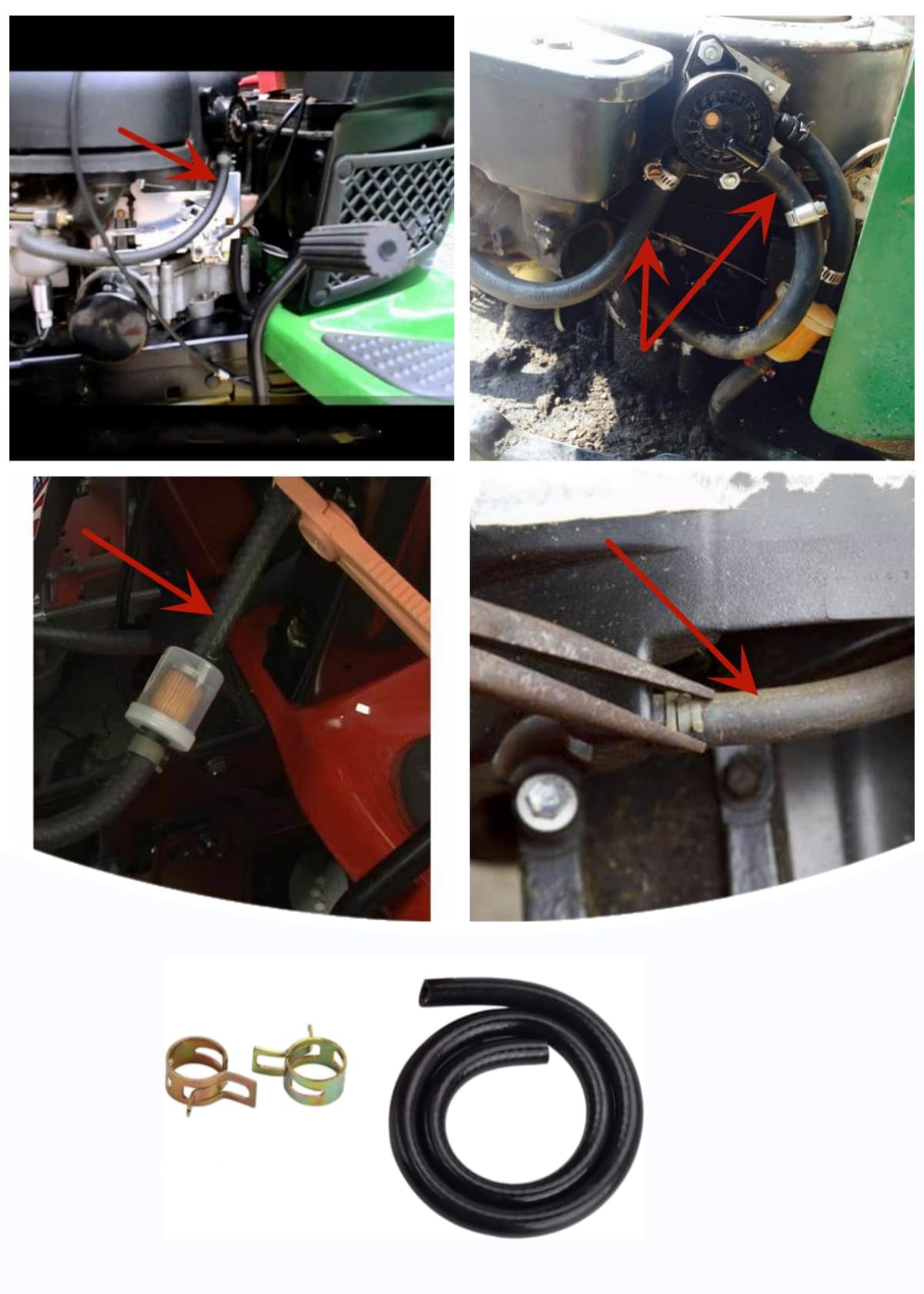
The exact parts depend on the mower model and engine. Check the engine manual or the model number before buying anything.
Common tools include:
• Needle nose pliers
• Regular pliers
• Side cutters
• A small flat screwdriver
• A clean fuel container
• Shop towels
• A flashlight
• Hose clamps or spring clips
• A fuel line removal tool, if needed
Common replacement parts include:
• Fuel resistant fuel hose
• A matching fuel filter
• New hose clamps
• A replacement shutoff valve, if damaged
• A new primer bulb, if the bulb connects to the fuel line
Fuel line size matters. Common small engine hose sizes include 1/8 inch, 3/16 inch, and 1/4 inch inside diameter, but you should confirm the size for your engine. A hose that is too loose may leak. A hose that is too tight may split or restrict fuel flow.
Do not choose hose by outside diameter alone. The inside diameter must fit the tank outlet, filter, carburetor nipple, and any other fittings.
How to inspect the fuel system
Before cutting the old hose, take a clear photo of the entire fuel path. This small step can prevent a frustrating mistake during reassembly.
Trace the line from the fuel tank to the carburetor. Note the direction of the fuel filter arrow. If the mower has a fuel pump, note which port connects to the tank and which port connects to the carburetor.
Check these areas:
• Tank outlet for cracks or dirt
• Hose ends for splits
• Fuel filter for blockage
• Clamps for rust or weak tension
• Carburetor nipple for damage
• Shutoff valve for seepage
• Primer bulb for cracks
• Fuel pump for loose connections
If the line looks clean but the engine still has poor fuel flow, the tank outlet or carburetor inlet may be clogged. A new hose will not fix a blocked fitting.
Lawn mower fuel line replacement: step by step
1. Empty or control the fuel
The safest method is to run the tank nearly empty before the repair. If fuel remains, drain it into an approved container using a hand fuel siphon or by carefully disconnecting the old line over a container.
Do not use your mouth to siphon gasoline. It can enter your lungs or digestive system and cause serious harm.
2. Disconnect the spark plug wire
Pull the spark plug boot from the spark plug. Keep the boot away from the plug so the engine cannot start while you work.
For added safety, remove the battery cable on an electric start mower if the design allows it.
3. Locate the old fuel line
Find the hose between the fuel tank and carburetor. Some designs use one continuous hose. Others include a filter, shutoff valve, fuel pump, or primer bulb.
Take photos before removal. Mark each connection with masking tape if the routing is hard to follow.
4. Remove the clamps
Move spring clamps away from the fittings with pliers. For screw clamps, loosen the screw without damaging the nearby plastic fitting.
Do not twist hard on a plastic carburetor nipple. It can snap off and turn a quick repair into a carburetor replacement.
5. Remove the old hose
Twist the hose gently to break its grip. Pull it from the fitting with pliers, gripping the hose rather than the plastic nipple.
If the hose is stuck, cut it lengthwise with a sharp utility knife. Keep the blade pointed away from your hand and the fitting. Do not cut deeply into a plastic outlet.
6. Measure the replacement hose
Use the old hose as a length guide, but do not copy a bad bend or unsafe route. The new hose should reach each fitting without stretching, rubbing, or forming a sharp bend.
Cut the hose cleanly with side cutters or a hose cutter. A slanted cut may not seal well on a small fitting.
7. Install the new line
Push the new hose fully onto each fitting. If the hose is stiff, warm the end in hot water for a short time, then dry it before installation.
Never use an open flame to soften fuel hose. A small amount of clean engine oil can help the hose slide onto a fitting, but avoid products that can damage rubber.
8. Reinstall clamps and filters
Place each clamp behind the raised section of the fitting. The clamp should press the hose firmly without cutting into it.
If you install a new fuel filter, follow the arrow on its body. The arrow normally points from the fuel tank toward the carburetor.
9. Route the hose correctly
Keep the line away from:
• The muffler
• Cylinder fins
• Flywheel
• Blade mechanism
• Sharp metal edges
• Moving belts
• Hot exhaust shields
Use the original clips when possible. A loose fuel line can rub through or touch a hot surface.
10. Add fuel and inspect
Add a small amount of fresh gasoline. Open the fuel valve if equipped and watch every connection.
Wait several minutes before starting the mower. If you see wetness, smell strong fuel, or notice a drip, stop and correct the connection.
11. Start and test the mower
Reconnect the spark plug wire. Start the engine outdoors and let it run for a few minutes.
Check for leaks while the engine runs and again after you shut it off. Move the throttle through its normal range and confirm that the engine does not stall from restricted fuel flow.
This complete process is the core of a safe lawn mower fuel line replacement.

How to choose the right replacement fuel line
The best hose matches the mower’s fuel type, fitting size, temperature needs, and routing space.
Choose a hose labeled for gasoline or small engine fuel systems. Ethanol blended gasoline can be hard on unsuitable rubber, especially when a mower sits for long periods. A fuel line rated for modern gasoline helps reduce swelling and early cracking.
Check these specifications:
• Correct inside diameter
• Fuel compatibility
• Temperature rating
• Flexibility
• Wall thickness
• Resistance to cracking
Avoid clear household vinyl tubing unless the manufacturer specifically approves it for gasoline. It may look convenient, but it can harden, kink, or fail under engine heat.
A universal small engine fuel line may work on many machines, but the engine manufacturer’s part is the safest choice when the original design is unusual.
Common mistakes to avoid
A lawn mower fuel line replacement is easy to rush. Most problems come from small errors rather than difficult tools.
Avoid these mistakes:
• Using a hose that is not rated for gasoline
• Installing the fuel filter backward
• Leaving out the clamps
• Making the hose too short
• Letting the hose touch the muffler
• Routing the line near the blade or belt
• Pulling on a plastic carburetor fitting
• Reusing cracked clamps
• Failing to check for leaks
• Starting the engine indoors
• Mixing up fuel pump ports
• Pouring old gasoline back into the tank
One mistake I have seen often is cutting the replacement hose to the exact length of the old one without checking its path. The old hose may have stretched, sagged, or taken an unsafe route. It is better to copy the connection points while creating a smooth, protected path.
Another common mistake is assuming a fuel smell means the carburetor is faulty. A tiny hose crack can create the same symptom and is faster and cheaper to inspect first.
Fuel line problems that a new hose will not fix
A new hose cannot solve every fuel delivery problem. If the mower still will not run, inspect the rest of the system.
Possible causes include:
• Blocked fuel tank vent
• Clogged fuel filter
• Dirty carburetor jet
• Stuck carburetor float
• Failed fuel pump
• Damaged primer bulb
• Blocked tank outlet
• Old or contaminated gasoline
• Incorrect carburetor adjustment
• Faulty ignition system
To test basic fuel flow, disconnect the line at the carburetor and place the end in a safe container. With the fuel valve open, fuel should flow steadily on gravity fed systems. Do not perform this test near a hot engine, and do not use it as a substitute for proper diagnosis on a fuel pump system.
If fuel flows well to the carburetor but the engine does not run, the carburetor or ignition system may need attention.
How much does lawn mower fuel line replacement cost?
A do-it-yourself lawn mower fuel line replacement often costs about $5 to $25 for hose, clamps, and a basic filter. Specialty hoses, fuel pumps, or model specific parts may cost more.
A repair shop may charge for inspection, labor, and additional parts. The final cost depends on access, mower design, and whether the carburetor or fuel tank also needs cleaning.
Doing the repair yourself can save money, but safety matters more than cost. If fuel continues to leak, a fitting is broken, or you cannot identify the correct hose, professional service is the better option.
How to prevent future fuel line damage
Good fuel care helps protect the hose and the entire fuel system.
Use these habits:
• Store gasoline in an approved container
• Use fresh fuel whenever possible
• Follow the engine maker’s guidance on fuel stabilizer
• Avoid storing the mower with a nearly full tank for long periods
• Inspect the line at the start of each mowing season
• Replace a clogged fuel filter promptly
• Keep the tank area free from dirt
• Store the mower in a cool, dry place
• Never leave a fuel leak unattended
Fuel stabilizer can slow fuel aging, but it cannot repair damaged hose or remove heavy contamination. If gasoline smells sour or looks cloudy, dispose of it properly instead of putting it into the mower.
Manufacturers commonly recommend seasonal inspection of fuel system parts. The exact service interval varies, so the owner’s manual should guide your maintenance schedule.

When to call a professional
Call a qualified repair technician if the mower has a persistent fuel leak, a broken tank fitting, a damaged carburetor nipple, or fuel near the muffler.
Professional help is also wise when:
• The mower uses a complex fuel pump system
• The tank is difficult to remove
• The hose routing is unclear
• The engine floods repeatedly
• The fuel leak returns after replacement
• You smell fuel but cannot find the source
• You are not comfortable working with gasoline
A technician can pressure test or inspect the fuel system without guessing. This is especially important on commercial mowers, riding mowers, and machines with enclosed tanks.
Frequently asked questions about lawn mower fuel line replacement
How often should I replace a lawn mower fuel line?
Replace it when it becomes cracked, brittle, swollen, soft, or leaky. Many owners inspect the hose each season because age, heat, and gasoline can shorten its useful life.
Can I use any rubber hose for a lawn mower fuel line replacement?
No. Use hose that is specifically rated for gasoline and small engine use. General rubber or vinyl tubing may soften, swell, kink, or leak.
What size fuel line does a lawn mower use?
Many small engines use 1/8 inch, 3/16 inch, or 1/4 inch inside diameter hose. Confirm the size by checking the engine manual, measuring the old hose, or matching the tank and carburetor fittings.
Do I need clamps when replacing the fuel line?
Yes, clamps help prevent leaks and keep the hose secure. Use clamps designed for small fuel lines, and place them correctly behind the raised section of each fitting.
Why does my mower still not start after a lawn mower fuel line replacement?
The fuel filter, tank outlet, carburetor, primer bulb, fuel pump, or ignition system may have another fault. Check fuel flow and confirm that the new hose is not kinked or routed near a hot engine part.
Can I replace the fuel line without draining the gas tank?
You can sometimes pinch or clamp the line, but draining the tank is safer and cleaner. Less fuel also reduces spills and makes it easier to inspect the tank outlet.
Should the arrow on the fuel filter point toward the engine?
Usually, yes. The arrow normally shows fuel flow from the tank toward the carburetor, but confirm the direction in the filter or engine instructions.
Conclusion
A lawn mower fuel line replacement can be a quick and affordable repair when the hose is correctly sized, safely routed, and rated for gasoline. Work with a cool engine, control the fuel, protect plastic fittings, install secure clamps, and test every connection before mowing.
Inspect the fuel line before the next mowing season, especially if you notice a gasoline smell or hard starting. With the right hose and a careful approach, you can restore reliable fuel flow and keep your mower working safely. Share your repair experience or explore your mower manual for model specific maintenance guidance.