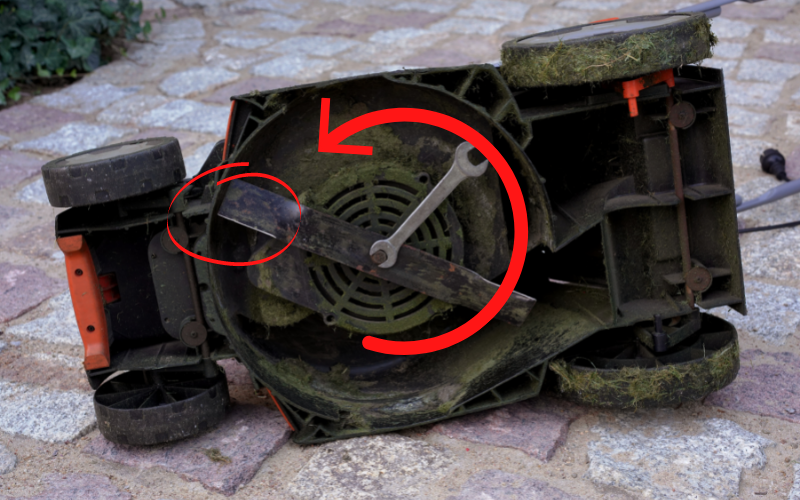
You can tell a mower blade is upside down when the cutting edge faces upward instead of downward, the grass tears instead of cuts cleanly, the mower vibrates more than usual, or the blade’s stamped markings face the wrong direction.
Across the United States, homeowners commonly remove and reinstall lawn mower blades during spring maintenance, sharpening, or replacement. A frequent mistake during this process is installing the blade upside down. When the blade is reversed, the mower may still start and run, but it usually will not cut grass correctly and can create unnecessary stress on the mower.
The easiest way to identify the correct blade position is to inspect the cutting edge, the raised sail or curved portion of the blade, and any labels or markings stamped into the metal. The sharp cutting edge should face the direction of rotation and point downward toward the grass when the blade is installed under the mower deck.
How to Tell If Your Mower Blade Is Installed Upside Down
The fastest way to know if a mower blade is upside down is to look at the blade’s cutting edge. The sharp beveled edge should face downward toward the ground. If the sharp edge is facing upward toward the mower deck, the blade is installed incorrectly.
A mower blade is designed with a specific shape that creates lift and cutting action. The flat side and cutting edge work together with the blade rotation to slice grass efficiently. Reversing the blade changes how it contacts the grass and can prevent proper cutting.
Source: storage.googleapis.com
Check the cutting edge
The sharp edge should be underneath the blade and angled downward. A dull-looking edge facing the grass usually indicates the blade is upside down.
Look for blade markings
Many mower blades include words such as ‘Bottom,’ ‘Grass Side,’ or arrows showing the correct installation direction. These markings should normally face the ground or be visible according to the manufacturer’s instructions.
Inspect the curved sail
The raised curved section of the blade normally faces upward toward the mower deck because it helps create airflow under the deck.
The Difference Between the Cutting Edge and the Back Edge
A mower blade has a sharp cutting edge and a thicker back edge. The cutting edge slices grass while the heavier rear portion supports airflow and blade strength. If the blade is reversed, the thicker edge may contact the grass first, resulting in poor cutting performance.
Correct position
Sharp edge points downward, curved sail points upward, and the blade rotates to cut grass from below.
Incorrect position
Sharp edge points upward, curved sail points downward, and the mower may move grass without cutting it properly.
Common Signs Your Lawn Mower Blade May Be Upside Down
An upside-down mower blade usually creates noticeable changes in mowing performance. The mower may still operate normally, but the quality of the cut often becomes worse.
Source: lawngearguide.com
Grass looks torn or ragged
A reversed blade may fail to slice grass cleanly, leaving shredded or uneven-looking blades of grass.
The mower leaves uncut patches
Incorrect blade orientation can reduce cutting efficiency and leave strips of taller grass behind.
Excessive vibration occurs
A poorly installed blade, including one mounted incorrectly, can contribute to vibration. A damaged or unbalanced blade can cause similar symptoms.
The mower sounds different
Changes in airflow under the deck can alter the mower’s sound during operation.
Do Not Assume Poor Cutting Always Means an Upside-Down Blade
Poor mowing results can also come from a dull blade, incorrect mowing height, wet grass, a clogged mower deck, or a damaged blade. Check the blade orientation first because it is a simple and common installation issue, but inspect other causes if the problem continues.
Dull blade symptom
A dull blade can tear grass even when installed correctly.
Bent blade symptom
A bent blade can create vibration and uneven cutting even with the correct orientation.
How to Check and Fix a Mower Blade Installed Upside Down
If you suspect your mower blade is upside down, turn off the mower completely and inspect the blade before attempting to reinstall it. Safety should come before any adjustment because mower blades can move unexpectedly if the machine is not properly disabled.
Source: stevessmallenginesaloon.com
Step 1: Disconnect power
For gas mowers, disconnect the spark plug wire. For electric or battery-powered mowers, remove the battery or disconnect the power source according to the owner’s manual.
Step 2: Secure the mower
Place the mower on a stable surface and prevent accidental movement before accessing the blade.
Step 3: Inspect blade direction
Confirm that the cutting edge faces downward and the raised sail faces upward.
Step 4: Reinstall correctly
Install the blade according to the mower manufacturer’s instructions and tighten the blade bolt to the recommended specification.
How to Know You Installed the Blade Correctly
After installation, the blade should sit securely with no visible wobble. The mower should produce a cleaner cut, and the blade should rotate smoothly when the mower is operating.
Correct grass cutting
The mower should cut grass evenly instead of bending or tearing the blades.
Normal operation
The mower should not develop unusual vibration caused by installation problems.
Mistakes to Avoid When Installing a Lawn Mower Blade
Installing a mower blade is a straightforward maintenance task, but several mistakes can reduce mower performance or create safety risks.
Source: www.aol.com
Installing by memory alone
Blade shapes vary between mower models, so always verify the correct orientation instead of relying only on how the old blade looked.
Ignoring blade markings
Manufacturers often include directional labels or stamped indicators that help identify the correct side.
Working without disconnecting power
Never inspect or remove a blade while the mower can accidentally start.
Overlooking blade damage
A cracked, bent, or severely worn blade should be replaced rather than simply reinstalled.
When You Should Replace Instead of Reinstall
A blade that is bent, cracked, deeply damaged, or excessively worn may not be safe to continue using. Correct orientation cannot fix structural damage that affects balance or strength.
Replace damaged blades
Structural damage can increase the risk of failure during operation.
Sharpen usable blades
A blade that is only dull may be sharpened if it remains in good condition.
Frequently Asked Questions
Q
What happens if a mower blade is upside down?
An upside-down mower blade usually cuts poorly because the cutting edge is not positioned correctly. It may tear grass, leave uneven patches, and change airflow under the mower deck.
Q
Which side of a mower blade faces up?
The side with the raised curved sail usually faces upward toward the mower deck. The sharp cutting edge should face downward toward the grass.
Q
Can a mower blade be installed backward but still work?
A mower may start and run with a backward blade installation, but cutting performance is usually reduced. The blade should always be installed according to the mower manufacturer’s instructions.
Q
Why is my mower vibrating after changing the blade?
Vibration after blade replacement can result from an upside-down blade, loose blade hardware, an unbalanced blade, or a bent blade. Check installation and blade condition before continuing use.
Q
Do all lawn mower blades install the same way?
Many mower blades follow the same basic principle, with the cutting edge facing downward, but blade designs vary. Always confirm the correct orientation for your specific mower model.
✦ Wrapping Up
Conclusion
Knowing how to tell if a mower blade is upside down can help you avoid poor cutting results and unnecessary mower problems. The main signs are an upward-facing cutting edge, poor grass cutting, unusual vibration, and incorrect blade markings.
Before mowing, always verify that the sharp edge faces downward, the raised sail faces upward, and the blade is securely installed. If the mower still performs poorly after correcting the blade position, inspect for dullness, damage, or other maintenance issues.
💡 Key Takeaway
Before using your mower after blade installation, check the blade orientation: sharp edge down, raised sail up, secure bolt tight, and power disconnected during inspection.
Affiliate Disclosure: As an Amazon Associate, we may earn a small commission on qualifying purchases made through links in this article — at no extra cost to you. When your lawn mower blades will not engage, it feels like the whole mowing day is wasted before it even starts. You pull the lever, flip the…
Nothing ruins a weekend lawn care plan faster than a Toro lawn mower that refuses to start because the pull string snapped or jammed. One small rope, and your reliable mower becomes a heavy garden ornament. If you’ve ever yanked the handle only to feel it give way or fail to retract, you know the…
Losing your lawn mower key is one of those frustrating moments that can instantly derail your weekend plans. You’ve got a bright morning, a fresh cup of coffee, and your backyard calling—but your mower just sits there, silent. Unlike your car or house key, which we treat with care, the mower key is often an…
If you’ve ever tried pushing your Troy-Bilt lawn mower across uneven ground and felt it drag, pull, or lose traction, chances are your front tires are worn out. Over time, those small but mighty tires take a beating — from gravel driveways, thick grass, and even curb bumps. That wear doesn’t just affect how your…
It’s a bright Saturday morning, the grass is waving at you, and your trusty DeWalt gas mower sits waiting. You pull the cord—nothing. You press the electric start—silence. That sinking feeling in your stomach grows. You’re not alone; “DeWalt Gas Lawn Mower Not Starting” is one of the most common issues homeowners face during mowing…