


The best raised garden bed size is usually 4 feet wide, 6 to 8 feet long, and 12 to 24 inches deep.
Many gardeners start with a bed that looks perfect online, then find it is too wide to reach, too shallow for root crops, or too large for a small patio. I have found that the best raised garden bed size depends on your plants, reach, yard space, and watering routine. The products below cover deep metal beds, narrow beds, and easy-to-reach elevated planters, so you can choose a setup that fits your real gardening needs.
Best Choice 6x3x2ft Gray Metal Bed
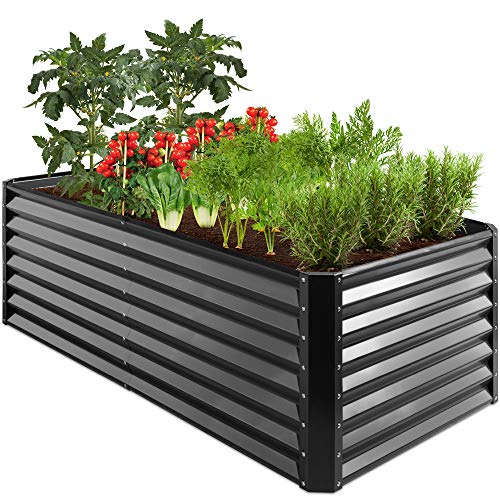
This 6-by-3-foot metal bed gives gardeners a deep planting space without taking over an entire yard. Its 2-foot height suits crops with longer roots, such as carrots, beets, onions, and many tomato varieties. The gray finish has a clean look that works beside a fence, shed, or patio. I also like the wide shape for planting several crop rows in one place.
The 269-gallon capacity gives you room for a rich soil blend, but it also means you need a plan for filling it. A narrow path around the bed makes every side easier to reach. The listed non-toxic material is a useful feature for vegetable growers who want a clear planting area. Based on its size, this is a strong choice for a permanent garden spot rather than a small balcony.
Pros:
- Deep 24-inch planting space for larger root systems
- Large 6-by-3-foot growing area for mixed crops
- Metal construction resists rot and insect damage
- Non-toxic material suits food and flower gardening
- High capacity supports many plants in one bed
- Gray color blends well with most outdoor spaces
Cons:
- Needs a large amount of soil or compost to fill
- Wide footprint may not suit a small patio
- Two-foot walls may make watering from one side harder
My Recommendation
I recommend this bed for homeowners who want a deep, long-term vegetable garden. Its 6x3x2-foot format is close to the best raised garden bed size for gardeners who can walk around all four sides. It works especially well for tomatoes, peppers, herbs, greens, and root crops. If you want one large bed instead of several small boxes, this model offers useful growing space and a sturdy metal design.
Rakukiri 5-Foot Oval Galvanized Bed

The Rakukiri oval bed offers a softer shape than a standard square or rectangle. Its 5-foot length gives you room for flowers, herbs, lettuce, or compact vegetables. Galvanized metal helps the planter handle outdoor moisture better than untreated wood. The silver finish also reflects a simple, modern style that can fit in a front garden.
This bed is a good middle ground for gardeners who want more space than a small box but less bulk than a 6-by-3-foot bed. The oval ends reduce sharp corners, which can help in busy walkways. I would place it where all sides remain easy to reach. Before planting, I would confirm the included hardware and prepare level ground for the best result.
Pros:
- Oval design adds visual appeal to the garden
- Galvanized metal resists rot and outdoor wear
- Five-foot length provides useful planting room
- Good size for herbs, flowers, greens, and compact crops
- Rounded ends reduce harsh corners near paths
- Recycled material supports a more resource-conscious choice
Cons:
- Oval shape can make row spacing less exact
- May not provide enough depth for large root crops
- Metal can warm in strong summer sun
My Recommendation
This Rakukiri planter suits gardeners who want a neat focal point with moderate capacity. It can be the best raised garden bed size for a small lawn, courtyard, or entry garden where appearance matters. I would choose it for herbs, annual flowers, salad greens, and smaller vegetables. It is less suitable for gardeners who need a very deep box or a strict grid of long planting rows.
Best Choice 34x18x30in Wood Planter

This elevated wood planter measures 34 by 18 inches and stands about 30 inches tall. That raised working height can reduce bending for older gardeners, people with limited mobility, or anyone who prefers container gardening. Its smaller footprint fits many patios, balconies, decks, and entry areas. The included bed liner helps keep soil inside the box.
The 150-pound capacity calls for careful soil selection and placement. I would put it on a firm, level surface before filling it, since wet soil becomes heavy. This size will not replace a full vegetable plot, but it can grow herbs, lettuce, flowers, and a few compact vegetables. It also gives children a comfortable height for learning how plants grow.
Pros:
- Elevated height makes planting easier on the back
- Fits patios, balconies, decks, and small yards
- Wood adds a warm, traditional garden look
- Included liner helps contain the growing mix
- Useful size for herbs, greens, and flowers
- Accessible design works well for children
Cons:
- Limited capacity compared with full-size ground beds
- Wood needs more care than galvanized metal
- Requires a strong, level surface for safe use
My Recommendation
I recommend this elevated planter for apartment gardeners, seniors, children, and anyone who dislikes kneeling. The 34×18-inch footprint may be the best raised garden bed size for a balcony or compact patio. Its 30-inch height makes daily care simple, while the liner keeps the setup tidy. Choose it when access matters more than planting a large harvest.
Best Choice 6x3x2ft Black Metal Bed

This black version uses the same useful 6-by-3-by-2-foot layout as the larger deep metal format. The 24-inch wall gives roots plenty of room and helps separate the growing mix from poor native soil. Its black color creates a bold contrast with green leaves and bright flowers. I see this as a practical choice for gardeners who want a large bed with a clean outline.
The deep design can help gardeners build a controlled soil environment, but drainage still matters. I would place the bed on ground that does not stay wet after rain. Use a quality mix rather than filling the entire box with heavy garden soil. Because the bed is wide, plan paths before assembly so you can reach the center without stepping into the soil.
Pros:
- Deep profile supports many vegetable root systems
- Large surface area suits family-size planting
- Metal will not rot like untreated timber
- Black finish gives the garden a strong modern look
- Useful for vegetables, herbs, and flowers
- Deep soil area can improve root space and moisture control
Cons:
- Black metal may absorb extra heat in hot climates
- Large volume increases the initial soil cost
- Not ideal where gardeners cannot walk around the bed
My Recommendation
This bed is best for serious home growers who want one deep, roomy planting area. Its 6x3x2-foot dimensions are close to the best raised garden bed size for a backyard vegetable garden. I would use it for tomatoes, cucumbers with support, peppers, greens, and root crops. Select the black finish if you like a bold look and can provide regular summer watering.
Land Guard 48x24x32in Elevated Bed

The Land Guard elevated bed measures 48 by 24 inches and stands 32 inches high. That height puts the soil near waist level for many users, so it can make planting and harvesting much easier. The galvanized metal body gives it a durable outdoor structure. Drainage holes help excess water leave the planter after rain or watering.
A listed 700-pound capacity is important because wet soil adds serious weight. I would position this bed before filling it and use a stable surface that can support the load. The 2-foot width is also practical because most gardeners can reach the center from either side. It offers more room than a small balcony box while staying easier to manage than a wide ground bed.
Pros:
- 32-inch height reduces bending and kneeling
- 48×24-inch layout provides a useful growing area
- Galvanized metal handles outdoor moisture well
- Drainage holes support healthier root conditions
- 700-pound capacity allows a substantial soil load
- Two-foot width keeps the center within easy reach
Cons:
- Needs a strong surface because wet soil is heavy
- Elevated legs may limit the space for deep-root crops
- Costs more to fill than a small planter
My Recommendation
I recommend this model for gardeners who want a comfortable working height without giving up useful planting space. Its 48x24x32-inch format may be the best raised garden bed size for accessible backyard or patio gardening. It suits salad greens, herbs, flowers, strawberries, and compact vegetables. I would choose it over a ground bed when bending is painful or mobility is limited.
zunatu 10x2x1ft Two-Pack Bed
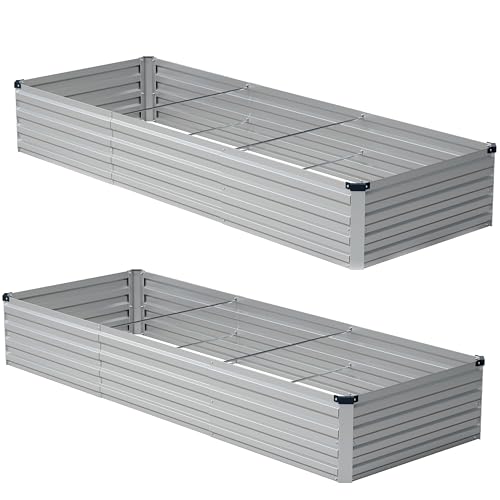
This two-pack gives you two long, narrow beds, each measuring 10 by 2 by 1 foot. The 2-foot width is easy to reach from either side, which follows a key rule for raised bed planning. The long shape works well beside a fence, along a walkway, or in a narrow side yard. You can use one bed for vegetables and the other for flowers or herbs.
The 1-foot depth suits many shallow and medium-rooted crops, including lettuce, spinach, radishes, herbs, and some peppers. It may not provide enough depth for large carrots or deep-rooted plants unless your soil below remains loose. Two separate beds also make crop rotation and planting schedules easier. I would leave enough space between them for a wheelbarrow or comfortable walking.
Pros:
- Two beds create flexible garden layout options
- Two-foot width makes the center easy to reach
- Ten-foot length supports long planting rows
- Excellent fit for narrow yards and fence lines
- Galvanized metal resists rot and decay
- Separate beds simplify crop planning and rotation
Cons:
- One-foot depth limits deep-rooted crop choices
- Long beds need careful leveling during setup
- Two beds still require a large total footprint
My Recommendation
This two-pack is a smart choice for gardeners who value reach and layout control. For many narrow yards, the 10x2x1-foot format is the best raised garden bed size because it offers length without creating a hard-to-reach center. I would plant greens, herbs, onions, radishes, and flowers in these beds. It is also useful for gardeners who want to separate crops rather than place everything in one large box.
Best Choice 6x3x2ft Sage Green Bed

The sage green version brings a softer garden color to the same deep 6-by-3-by-2-foot format. It gives you a broad planting area and enough depth for many common vegetable roots. The muted finish looks less stark than black or bright metal. For gardeners who care about both function and appearance, this bed can blend into a flower border.
Its large interior can support a productive mix of vegetables, but good soil planning remains essential. I would fill it in layers only when those layers suit the crop and drainage needs; a consistent, high-quality growing mix is the safer choice for most plants. Install it near a water source because deep beds can dry out during hot weather. The broad top also leaves room for trellises, supports, or row covers.
Pros:
- Deep 24-inch profile supports varied planting
- Large area works for vegetables and flowers
- Sage green finish blends with natural landscapes
- Metal body avoids common wood rot concerns
- Room for supports and companion planting
- Non-toxic material is useful for edible gardens
Cons:
- Large soil requirement raises setup cost
- Wide design needs access from more than one side
- May need extra watering during hot, dry weather
My Recommendation
I would choose this sage green bed for a productive backyard garden that should also look polished. Its 6x3x2-foot layout is a strong example of the best raised garden bed size for deep mixed planting. It suits gardeners who want tomatoes, peppers, herbs, leafy greens, and flowers together. The color is the main appeal over the other finishes, while the depth and footprint provide the real growing value.
Best Choice 72x24x30in Wood Bed

This elevated wood bed measures 72 by 24 inches and stands 30 inches high. Its long, narrow shape gives you a generous planting run while keeping the center easy to reach. The divider panel can separate herbs from flowers or cool-season crops from warm-season plants. Six legs and a listed 300-pound capacity add useful support for a full planter.
The 2-foot width follows a practical access rule: you can reach the center from either side without stepping into the bed. The elevated design helps keep daily care at a comfortable height. I would check the surface and assembly before adding wet soil, then avoid moving the planter after filling. This model needs more space than a small balcony box, but it can replace a low garden bed in many patios.
Pros:
- Long 72-inch layout provides generous planting room
- Two-foot width makes plants easy to reach
- 30-inch height reduces bending during garden care
- Divider panel supports organized crop sections
- Six legs help distribute the planter load
- Natural wood suits decks, patios, and yards
Cons:
- Requires more floor space than a compact planter
- Wood needs protection from long-term moisture
- 300-pound capacity limits very heavy soil mixes
My Recommendation
This is one of my favorite formats for gardeners who want elevated access and a productive footprint. The 72x24x30-inch layout can be the best raised garden bed size for a patio garden, especially when a long wall or railing is available. I would use the divider for herbs, lettuce, flowers, and compact vegetables. It is a strong option for people who want comfort without choosing a very small container.
How to Choose the Best Raised Garden Bed Size
The best raised garden bed size starts with reach. A bed should look full of promise, not like a small island you must climb into. For most people, a width of 3 to 4 feet works well when they can reach from both sides. If you can access only one side, keep the width close to 2 feet.
Length depends on your yard, budget, and crop plan. A 4-foot bed is simple for a small garden, while a 6- to 8-foot bed gives more room for rows. Long beds such as the 10-foot zunatu models suit fence lines, but they need a level base. Measure the site first, then leave a clear path for watering, pruning, and harvesting.
Choose depth by crop type
Depth matters as much as length and width. A 6- to 8-inch bed works for many herbs and salad greens when the soil below drains well. A 12-inch bed gives more room for common vegetables. A 18- to 24-inch bed is better for deep roots, poor native soil, or gardeners who want a more complete soil environment.
Tomatoes, carrots, parsnips, and some shrubs need more root space than lettuce or radishes. Still, a deep box does not guarantee healthy plants. Water, drainage, light, soil texture, and plant spacing all matter. I always match the bed depth to the crop list before I buy.
Ground bed or elevated bed?
Ground beds usually offer more growing volume for less money. They also allow plant roots to move into the soil below if conditions are suitable. Elevated beds cost more and hold less soil, but they can make gardening far easier on knees and backs. They also work well where pavement, poor soil, or limited space blocks a traditional garden.
For accessibility, a height of about 30 to 32 inches can be comfortable for many users. Yet every gardener has a different reach. I suggest sitting or standing beside the planned bed and measuring the height that feels natural. The right bed should bring the garden closer to you.
Material and heat
Galvanized metal resists rot and often has a long outdoor life. It can heat up in full sun, especially in dark colors, so mulch and steady watering help. Wood has a warm look and can suit a deck or patio, but it needs protection from constant moisture. Avoid unknown treatments when growing food, and follow the product maker’s material information.
Food-safe soil is also important. The EPA and university extension programs commonly advise gardeners to test questionable soil and avoid contaminated fill near roads or old buildings. I prefer a clean, reputable growing mix for raised beds. Good soil is the bed’s engine; the frame only holds it in place.
Drainage and placement
Place a raised bed where it receives the light your crops need. Most vegetables perform best with several hours of direct sun, though leafy greens can tolerate less. Do not place a large bed beneath a dense tree unless you want to compete with roots and shade. Keep a hose or rain barrel nearby to make watering easier.
Drainage is vital. A bed that stays wet can cause root problems even when it looks attractive. Elevated planters should have clear drainage holes, and ground beds should sit on soil that does not hold standing water. Level the base before assembly so the frame rests evenly.
Soil volume and cost
A larger bed needs much more soil than many first-time buyers expect. A 6x3x2-foot bed holds about 36 cubic feet before settling, which is a major amount of growing mix. Check bag volume and calculate the total before ordering. Buying bulk soil may cost less when local delivery is available.
Do not fill a raised bed with only compost. Compost supports fertility, but plants also need structure, air, and drainage. A balanced raised-bed mix often combines topsoil, compost, and a material that improves texture. Follow local extension advice for your climate and crop needs.
Best For Comparison
| Best for | Why |
|---|---|
| Large backyard harvest | The 6x3x2-foot metal beds offer deep soil and broad planting space. |
| Small spaces and narrow yards | The 2-foot-wide beds stay easy to reach and fit along walls or paths. |
| Low-bend gardening | The 30- to 32-inch elevated beds bring plants to a more comfortable height. |
FAQs Of best raised garden bed size
What is the best raised garden bed size for most people?
A 4-foot-wide bed that is 6 to 8 feet long works well for many home gardens. Keep it 12 to 24 inches deep, based on the crops you plan to grow. Make sure you can reach the center from both sides.
Is a 2-foot-wide raised bed enough?
Yes. A 2-foot-wide bed is excellent when you can access both sides or only have a narrow space. It is also easier to plant, weed, and harvest than a wider bed. The 10x2x1-foot beds in this guide use this practical shape.
How deep should a raised garden bed be?
Use about 8 to 12 inches for herbs, greens, and many small vegetables. Choose 18 to 24 inches for deeper roots or poor soil below. Always check the needs of your chosen crops.
Are metal raised garden beds safe for vegetables?
Many metal beds are designed for garden use, but always check the listed material and finish. Choose products that clearly state suitable materials, and use clean soil from a trusted source. Good drainage and proper watering remain essential.
Should a raised garden bed have a bottom?
Ground beds usually do not need a bottom if the soil drains well. Elevated planters need a supported base or liner system that holds soil while allowing water to drain. Do not block drainage holes.
Final Verdict: Which Should You Buy?
For the best mix of depth, space, and strength, I would choose the 6x3x2-foot Best Choice Products metal bed. For small spaces, choose the zunatu 2-foot-wide beds. For easier access, the Land Guard elevated bed stands out.
The best raised garden bed size matches your reach, crops, and site. Measure first, plan drainage, and choose a bed you can tend with ease.
