


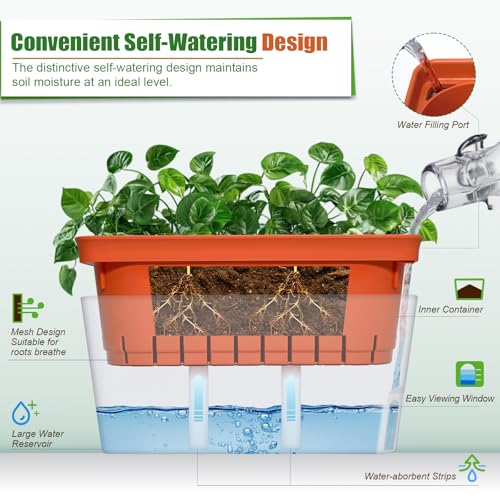
The best self watering planters for vegetables save water, reduce stress, and help plants grow when life gets busy.
Have you ever watered a tomato plant in the morning, only to find its soil dry by dinner? I have, and that is why self-watering planters can feel like a small safety net for home gardeners. They hold extra water below the soil and let roots take up moisture as needed. This guide reviews the best self watering planters for vegetables for windowsills, patios, balconies, and small yards. I looked at size, drainage, access, support, ease of use, and the types of vegetables each planter can handle.
OurWarm Windowsill Herb Planter Set
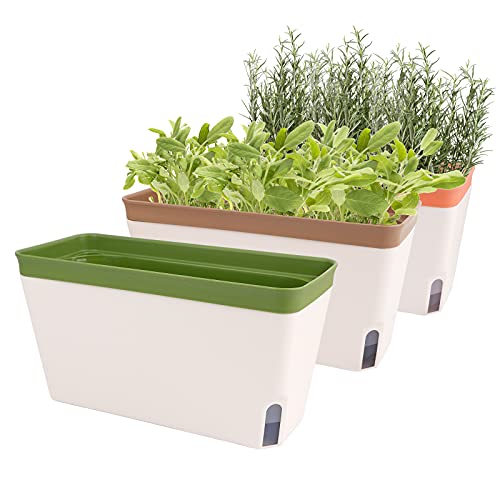
The OurWarm set includes three compact planters made for a sunny windowsill, shelf, or narrow counter. Each pot has a water reservoir and a visual water level window, so I can check moisture without poking the soil. The clean plastic design looks neat indoors and does not add much weight to a ledge. Its size suits herbs, leafy greens, small peppers, and compact vegetable starts.
I like this set for gardeners who want simple care without a large outdoor box. The reservoir helps slow down moisture loss between waterings, but it does not replace regular checks during hot weather. I would use these pots for basil, chives, parsley, lettuce, baby spinach, and dwarf pepper plants. For the best results, I would place them near strong light and keep the water level within the marked range.
Pros:
- Three matching pots make it easy to grow several plants
- Water level window gives a quick moisture check
- Compact shape fits most windowsills and small shelves
- Useful for herbs, greens, and small vegetable plants
- Light plastic is easy to move when light changes
- Clean style works well in kitchens and home offices
Cons:
- Small reservoirs need more frequent filling in hot rooms
- Not large enough for full-size tomatoes or large root crops
- Indoor plants still need careful light and airflow control
My Recommendation
I recommend the OurWarm set to apartment gardeners, cooks, and beginners who want fresh herbs and small vegetables close at hand. The water window is especially helpful for anyone who tends to overwater or forget to water. These are not deep containers for large crops, but they are among the best self watering planters for vegetables when space is limited. The three-pot format also gives good value for a small indoor garden, subject to current Amazon availability.
Vugosson Seven-Pack Window Planters

The Vugosson collection gives you seven pots in several sizes, including small and larger rectangular planters. That range is useful when one size does not fit every crop. I can use the smaller pots for seedlings or herbs and reserve the longer boxes for lettuce, green onions, radishes, or shallow-rooted greens. Drainage holes and saucers help manage excess water on a table or sill.
This set works well for people who want to spread plants across several rooms, shelves, or balcony rails. The rectangular form uses space better than many round pots, especially when growing rows of salad greens. I would still measure my window before ordering because the largest boxes need a stable, wide surface. The self-watering design supports steady moisture, but I would empty standing water if drainage becomes slow or the weather turns cool.
Pros:
- Seven pieces support a wider mix of plants
- Several sizes suit seedlings, herbs, and mature greens
- Rectangular boxes make efficient use of narrow spaces
- Drainage holes help protect roots from excess water
- Saucers help keep desks, shelves, and sills cleaner
- Good choice for succession planting and small harvests
Cons:
- The set may feel bulky for a very small windowsill
- Small pots have limited room for large vegetable roots
- More pieces mean more cleaning and water checks
My Recommendation
I would choose Vugosson for a beginner who wants variety rather than one large planter. It is a practical fit for lettuce, herbs, baby carrots, radishes, and green onions, with the larger boxes handling more soil than the smallest pots. Among the best self watering planters for vegetables, this set stands out for flexible sizing and quantity. It offers strong value for indoor gardeners, balcony growers, and anyone who wants to start several crops at the same time.
Oliz Eight-Piece Window Box Set

The Oliz set includes eight white rectangular pots with drainage holes and trays. Its uniform look can turn a plain sill, patio shelf, or balcony into a tidy mini garden. The 17-inch format gives leafy vegetables and herbs more horizontal room than tiny individual pots. I would consider it for lettuce, arugula, spinach, cilantro, basil, and compact green onions.
Good drainage matters in vegetable containers because wet roots can be as harmful as dry soil. These planters let extra water move out through the holes, while the trays catch drips and protect the surface below. I would use a light, well-drained potting mix and avoid filling the trays so high that the soil stays soaked. Although the product is marketed for indoor and outdoor use, I would check wind, sun, and surface strength before placing all eight outside.
Pros:
- Eight matching planters create a coordinated garden layout
- Long shape gives greens more planting space
- Drainage holes help reduce the risk of soggy soil
- Included trays protect indoor surfaces from runoff
- Useful for grouping herbs and salad crops
- White color can reflect some heat in bright locations
Cons:
- White plastic may show soil marks more easily
- The set takes up considerable space when fully planted
- It is better for shallow crops than deep-rooted vegetables
My Recommendation
Oliz is best for gardeners who care about neat design and want several matching containers. I would place these boxes on a sunny patio, balcony shelf, or wide kitchen window. They are among the best self watering planters for vegetables for salad crops and herbs, but I would not use them as the only home for full-size tomatoes, squash, or large carrots. If you want a clean, organized container garden with separate trays, this eight-piece set has strong everyday appeal.
GYMHILL Elevated Self-Watering Garden Bed

The GYMHILL raised bed lifts the growing area about 33.66 inches off the ground. That height can make planting, pruning, and harvesting easier for people who dislike kneeling or bending. The resin box includes a lower storage shelf and a water system with a drain plug and water monitor. Its larger footprint gives vegetables more root space than a windowsill pot.
I see this as a strong option for patios, decks, porches, and small yards. It can hold herbs, lettuce, peppers, strawberries, and many compact vegetable varieties. The elevated design may also reduce contact with some ground pests, although it does not create a pest-proof garden. I would place it on a level surface, fill it with quality container mix, and use the drain feature to prevent water buildup after heavy rain.
Pros:
- Raised height reduces bending and kneeling
- Larger growing area suits many vegetables and herbs
- Water monitor makes reservoir checks easier
- Drain plug helps release excess water
- Lower shelf provides useful storage for tools and supplies
- Resin construction is suited to outdoor use
Cons:
- It needs more soil and setup time than small planters
- The large frame may be too big for narrow balconies
- Heavy planting makes the bed difficult to move
My Recommendation
I recommend the GYMHILL bed to older gardeners, people with limited mobility, and families who want a small raised vegetable garden. It offers a comfortable working height and enough space for a useful harvest. In my view, it is one of the best self watering planters for vegetables when comfort and outdoor capacity matter more than portability. The shelf and water monitor add practical value, while the drain plug gives better control during wet weather.
Two-Piece Self-Watering Tomato Planter Set
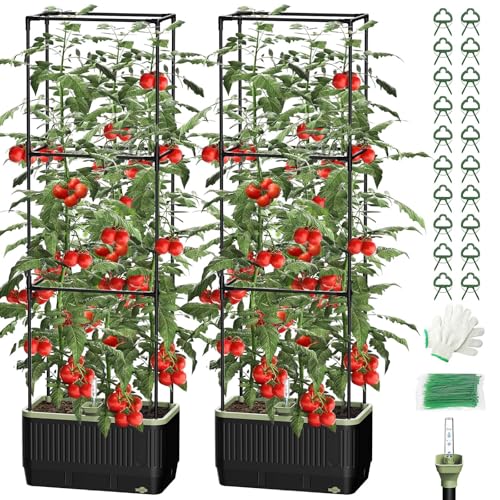
This two-piece set targets one of the most popular container crops: tomatoes. Each planter includes a trellis to guide stems upward and help keep the plant more organized. The vertical support can also help keep fruit off the ground and improve access for pruning and picking. I would use these for patio tomatoes, cherry tomatoes, dwarf peppers, cucumbers, or other plants that benefit from support.
A trellis does not remove the need for care. Tomato plants still need strong light, steady feeding, airflow, and a container large enough for their roots. I would tie young stems loosely to the support and check the water reservoir often during hot summer days. The two-planter format is useful if I want one plant for early harvests and another for a different variety.
Pros:
- Includes two planters for more than one crop
- Trellises support climbing and upright growth
- Helpful for patio tomatoes and compact cucumbers
- Keeps supported stems and fruit more organized
- Good choice for small outdoor growing spaces
- Vertical design can save floor space
Cons:
- Large tomato plants may outgrow the included support
- Wind can make a tall planter less stable
- Needs regular feeding because tomatoes are heavy feeders
My Recommendation
This set is best for balcony growers, patio gardeners, and anyone who wants to grow tomatoes without building a separate cage. It gives climbing plants a clear path and saves room by using vertical space. I would rank it among the best self watering planters for vegetables for cherry tomatoes and other compact varieties. It is a good buy when you want two supported plants, but I would anchor the planters well in exposed locations.
Garden Elements Elevated Raised Garden Bed

The Garden Elements bed measures about 29.5 by 15 inches and raises the growing area above the ground. Its standout feature is the ventilated grow dome, which can help protect seedlings from cool air and create a more controlled start. The bed is useful for herbs, leafy greens, seedlings, and compact vegetables. Its brown finish also gives it a softer look than many plain plastic garden boxes.
I would use the dome during seed starting or cool spring weather, then open or remove it as plants grow. Ventilation matters because warm, closed air can invite disease and weak growth. The self-watering base can help keep young plants from drying out, but I would still inspect the soil and dome each day. This design is especially useful for gardeners who want to begin crops indoors or extend the growing season on a protected porch.
Pros:
- Elevated design is easier to reach than ground beds
- Ventilated dome supports seed starting
- Useful for herbs, greens, and young vegetable plants
- Compact footprint suits patios and porches
- Self-watering feature helps maintain steady moisture
- Brown finish blends well with outdoor spaces
Cons:
- Growing space is limited for mature large crops
- Dome height may restrict taller plants
- Requires attention to ventilation on warm sunny days
My Recommendation
I recommend this bed to new gardeners, seed starters, and anyone who wants a small protected growing space. The ventilated dome makes it more useful than a basic planter during the early stage of growth. It belongs on a shortlist of the best self watering planters for vegetables for seedlings, herbs, and cool-season greens. The compact size and raised height offer good value for a porch, balcony, or indoor growing area near a bright window.
71-Inch Self-Watering Tomato Bed With Trellis

This raised garden bed combines a self-watering planter with a tall 71-inch trellis. That design gives climbing vegetables a strong vertical route while keeping the planting area in one compact unit. It can suit tomatoes, cucumbers, peas, beans, and other plants that need support. The long trellis may also make pruning and harvesting easier because the vines stay more visible.
I would place this planter where it can receive full sun and where the trellis will not block a walkway. Tall plants catch wind, so a level surface and careful placement are important. The reservoir can reduce daily watering work, but a full crop still uses water quickly in hot conditions. I would choose compact or semi-determinate tomato types unless the product instructions support larger varieties.
Pros:
- Tall trellis supports climbing vegetable growth
- Self-watering base can reduce watering frequency
- Useful for tomatoes, peas, beans, and cucumbers
- Vertical design saves space in small gardens
- Raised bed makes plants easier to reach
- One unit combines the box and plant support
Cons:
- Tall trellis needs a sheltered and stable location
- Large crops may need extra tying and support
- Assembly can take longer than a simple pot
My Recommendation
This is my pick for gardeners who want to grow climbing vegetables in a small footprint. It is especially suited to patio tomatoes, cucumbers, beans, and peas, where a tall support can make a real difference. Among the best self watering planters for vegetables, it offers one of the most useful combinations of root space and vertical growing room. I would buy it for a sunny patio or compact yard, provided I have a safe place for the tall trellis.
Best Features at a Glance
| Best for | Why |
|---|---|
| Indoor herbs and leafy greens | OurWarm, Vugosson, and Oliz offer compact sizes, trays, or water checks for windowsills and shelves. |
| Comfortable outdoor gardening | GYMHILL and Garden Elements raise the soil and make planting easier on the back and knees. |
| Tomatoes and climbing vegetables | The two-piece tomato set and 71-inch trellis bed provide vertical support and better plant control. |
How I Choose the Best Self Watering Planters for Vegetables
A self-watering planter is not simply a pot with water hidden underneath. The best design balances a reservoir, a wicking system, drainage, soil depth, and access for plant care. If one part is poor, the planter may stay too wet or dry out too fast. I look at the whole growing system, not just the word “self-watering” on the package.
Reservoir Size and Water Access
A larger reservoir usually gives a longer break between refills, but it also adds weight. Small indoor pots may need water every few days in warm, dry rooms. Larger outdoor beds can last longer, yet mature tomato plants may empty them quickly. I prefer a visible water indicator or an easy refill point because guesswork can lead to root problems.
Drainage Matters
Vegetable roots need air as well as water. A container with no way to release excess water can create a wet, heavy root zone. Look for drainage holes, an overflow path, or a drain plug. I also use a potting mix made for containers instead of heavy garden soil, which can compress and slow drainage.
Plant Size and Root Depth
Small pots work well for herbs, lettuce, spinach, and baby greens. Tomatoes, peppers, cucumbers, and eggplants need more room and often need strong support. Root vegetables also need enough depth for the crop you choose. Before planting, I match the mature plant size to the container size rather than judging by the seedling.
Location and Light
Self-watering cannot fix poor light. Most fruiting vegetables need several hours of direct sun each day, while leafy greens can tolerate less. A bright window may work for herbs and salad crops but not for a heavy tomato harvest. I place outdoor planters where they receive the light the crop needs and where rain will not flood the reservoir.
Build and Stability
Plastic planters are light and easy to move, but a tall trellis can act like a sail in strong wind. Raised beds need a flat base. Window boxes need a shelf that can hold the planter, soil, and water. I always check the total weight before placing a full container on a balcony or narrow ledge.
How Self-Watering Planters Work
Most self-watering planters separate the growing soil from a lower water reservoir. A wick, perforated basket, or capillary column moves moisture upward into the soil. The roots then draw water as the plant needs it. This can create a steadier moisture level than watering from the top once a day.
The system does not water every plant perfectly. Very young seedlings may have shallow roots that cannot reach the wet zone. Freshly planted containers often need top watering until the roots grow down. Once the plant is established, the reservoir can do more of the daily work.
I still check each planter with my finger or a simple moisture meter. A water gauge can show the reservoir level, but it does not always show the moisture near the roots. If the soil smells sour, feels constantly wet, or shows mold, I reduce watering and improve airflow. If leaves wilt while the reservoir is full, I check for blocked wicks, poor drainage, root damage, or excessive heat.
Best Vegetables for Self-Watering Planters
Leafy greens are among the easiest crops for self-watering containers. Lettuce, spinach, kale, arugula, and Swiss chard like even moisture and can grow in modest soil depth. I sow small batches every few weeks for a steady supply instead of planting the whole container at once.
Herbs also perform well. Basil, parsley, cilantro, chives, and mint can grow in small pots, though mint should stay alone because it spreads quickly. Keep basil in strong light and avoid letting its leaves remain wet for long periods. Harvesting often encourages fresh growth.
Compact peppers and patio tomatoes can thrive in larger containers with strong light. Choose dwarf, determinate, or patio varieties when the planter has limited space. Add a stake or trellis early, before the roots fill the container. Fruit-bearing plants also need regular fertilizer because watering can move nutrients through the soil.
Radishes and green onions are good choices for window boxes. Baby carrots can work in deeper containers with loose soil. Beans, peas, and cucumbers need support, so I prefer a planter with a trellis or a nearby frame. Avoid placing large squash or full-size pumpkins in small self-watering pots because their roots and vines need far more space.
How to Use a Self-Watering Vegetable Planter
Start by reading the product instructions. Some planters need the reservoir filled before planting, while others use a separate insert or wick. I make sure every part sits correctly before adding soil. A loose or blocked wick can change how the whole system works.
Use fresh container mix. A blend with peat or coco coir, compost, and perlite can hold moisture while allowing air to reach the roots. Do not pack the mix down hard. Fill the container to the suggested level, leaving a little space at the top for watering and mulch.
Water from above during the first week or two. This helps settle the soil and encourages new roots to grow through the moist zone. Once the plant is established, fill the reservoir as directed. Do not keep topping it up without checking the soil and drain area.
Feed vegetables on a regular schedule. Self-watering systems can carry nutrients away faster than hand watering, especially when the reservoir overflows. Use a fertilizer made for container vegetables and follow its label. More fertilizer does not mean more food; too much can burn roots and harm the plant.
Turn indoor planters every few days so plants grow evenly toward the light. Remove yellow leaves and inspect the stems for pests. For outdoor planters, check for wind damage, blocked drains, and standing water after storms. Small checks prevent big problems.
Common Mistakes to Avoid
Overfilling the Reservoir
More water is not always better. If the water level stays high for too long, roots may lose access to air. Fill to the marked line when one is provided. If there is no gauge, follow the care instructions and let the reservoir drop before refilling.
Using Heavy Garden Soil
Garden soil can become dense inside a container. It may block drainage and reduce air around the roots. Use a quality potting mix designed for containers. This one change can improve growth more than many expensive add-ons.
Ignoring Sun Needs
A self-watering pot cannot replace sunlight. Lettuce may grow with less light, but tomatoes and peppers need strong sun to flower and fruit. If a plant grows tall, pale, or weak, move it to a brighter spot before adding more fertilizer.
Planting Too Many Vegetables
It is tempting to fill every inch of a planter. Crowded plants compete for water, nutrients, and air. Follow spacing guidance on the seed packet. A smaller harvest from healthy plants is better than many weak plants fighting for room.
Forgetting Winter Care
In cold areas, water can freeze and expand inside a reservoir. This may crack some plastic parts. Move small planters indoors when possible and empty outdoor units before hard freezes if the instructions advise it. Clean and dry them before storage.
Indoor Versus Outdoor Self-Watering Planters
Indoor planters should have a clear way to prevent spills. A tray, sealed base, or careful placement protects floors and furniture. They also need enough light, which may mean using a grow light during short winter days. I prefer smaller units indoors because they are easier to lift, clean, and rotate.
Outdoor planters can hold more soil and larger vegetables, but they face sun, wind, rain, and temperature changes. A reservoir may fill from rainfall, so an overflow or drain feature is important. Outdoor boxes also need stronger support when they include a tall trellis.
Balcony gardeners should check building rules and weight limits. Wet soil is heavy, and a large planter can become much heavier after rain. Place the container near a wall or rail only when it is safe and stable. The best self watering planters for vegetables are useful only when the location can support them.
Care Tips for Better Vegetable Harvests
Check water levels at least twice a week at first. After I learn how quickly a planter dries, I can adjust the schedule. Hot sun, dry wind, and mature plants increase water use. Young plants and cool weather may need much less.
Keep leaves above the soil surface. Burying stems too deeply can cause rot for some crops. Add a thin layer of clean mulch to slow evaporation, but keep mulch away from the main stem. This helps the soil stay moist without staying sealed and wet.
Harvest often. Pick leafy greens from the outside, remove ripe tomatoes, and cut herbs above a leaf pair. Regular harvesting can keep plants productive. It also lets me spot pests, disease, or nutrient problems early.
Clean the reservoir between growing cycles. Empty old water, remove roots and debris, and rinse the parts. A soft brush can clear mineral buildup. Clean equipment gives the next crop a better start and helps prevent blocked wicks.
FAQs Of best self watering planters for vegetables
Are self-watering planters good for growing vegetables?
Yes. They work well for vegetables that prefer steady moisture, such as lettuce, spinach, herbs, peppers, and compact tomatoes. Choose a container with enough soil depth, drainage, and support for the crop.
How often do I fill a self-watering planter?
It depends on the reservoir size, plant size, temperature, and sun. Check the water level several times each week. In hot weather, a mature tomato may need water much more often than a small herb.
Can I grow tomatoes in a self-watering planter?
Yes, but use a large planter and a suitable tomato variety. Patio and determinate tomatoes are often easier than huge vining types. Add a stake or trellis and provide strong sunlight, fertilizer, and good airflow.
Do self-watering planters cause root rot?
They can if the soil stays soaked or the drainage system is blocked. Use a light potting mix, keep the reservoir at the correct level, and make sure excess water can leave the planter.
Can self-watering planters stay outside in the rain?
Many can, but rain may fill the reservoir faster than the plant uses it. Use the drain or overflow feature when needed. Move or protect lightweight planters during strong wind and freezing weather.
Final Verdict: Which Should You Buy?
For most vegetable growers, the GYMHILL elevated bed offers the best balance of space, comfort, and water control. Choose OurWarm or Vugosson for indoor herbs and greens, or the 71-inch planter for climbing crops.
The best self watering planters for vegetables make care easier, but light, soil, feeding, and drainage still matter. Choose the planter that fits your crop, space, and daily routine for a healthier harvest.
