The best way to sharpen push mower blades is to remove the blade, clean it, sharpen the cutting edge at the original angle using a file, grinder, or sharpening tool, then balance and reinstall it correctly.
Across American lawns, push mowers remain a common choice for maintaining residential grass areas from small suburban yards to larger properties. A dull mower blade can tear grass instead of cutting it cleanly, leaving uneven growth, brown tips, and extra stress on the mower engine.
Sharpening push mower blades is a straightforward maintenance task when done correctly. The process requires safe preparation, the right sharpening method, proper blade balance, and careful reinstallation. This guide explains how homeowners can restore a mower blade’s cutting performance while avoiding common mistakes that can damage the blade or create safety risks.
What You Need Before Sharpening a Push Mower Blade
Before starting, gather the correct tools and prepare a safe workspace. The exact equipment depends on the sharpening method you choose, but most homeowners can complete the task with basic hand tools.
A push mower blade should be inspected before sharpening. Minor dullness and small nicks can usually be corrected, but deep cracks, major bends, or heavy corrosion may require blade replacement instead of sharpening.
Source: toolsofficial.com
Safety equipment
Use work gloves and eye protection to prevent injuries from sharp edges, metal particles, or debris.
Basic tools
Common options include a socket wrench, file, sharpening stone, angle grinder, vise, and a blade balancer.
Cleaning supplies
A wire brush or scraper helps remove grass buildup and dirt before inspection and sharpening.
How Often Should Push Mower Blades Be Sharpened
Most residential push mower blades need sharpening about once or twice per mowing season, although frequency depends on lawn size, mowing conditions, and contact with dirt, rocks, or other debris.
Heavy use
Large lawns or frequent mowing may require more frequent blade maintenance.
Rough conditions
Lawns with sandy soil or hidden debris can dull blades faster.
How to Sharpen Push Mower Blades Step by Step
The safest and most effective sharpening process starts by removing the blade from the mower. This allows you to inspect the entire blade, sharpen evenly, and check balance before reinstalling it.
Follow the original factory bevel angle while sharpening. Removing too much metal or changing the angle can weaken the blade and reduce cutting performance.
Source: theartofdoingstuff.com
Step 1: Prepare the mower
Turn off the mower, disconnect the spark plug wire on gas models, and place the mower securely on its side with the air filter and carburetor facing upward when applicable.
Step 2: Remove the blade
Use the correct socket wrench to loosen the blade bolt while preventing the blade from turning.
Step 3: Clean the blade
Remove grass buildup and inspect for cracks, bends, or damage.
Step 4: Sharpen the cutting edge
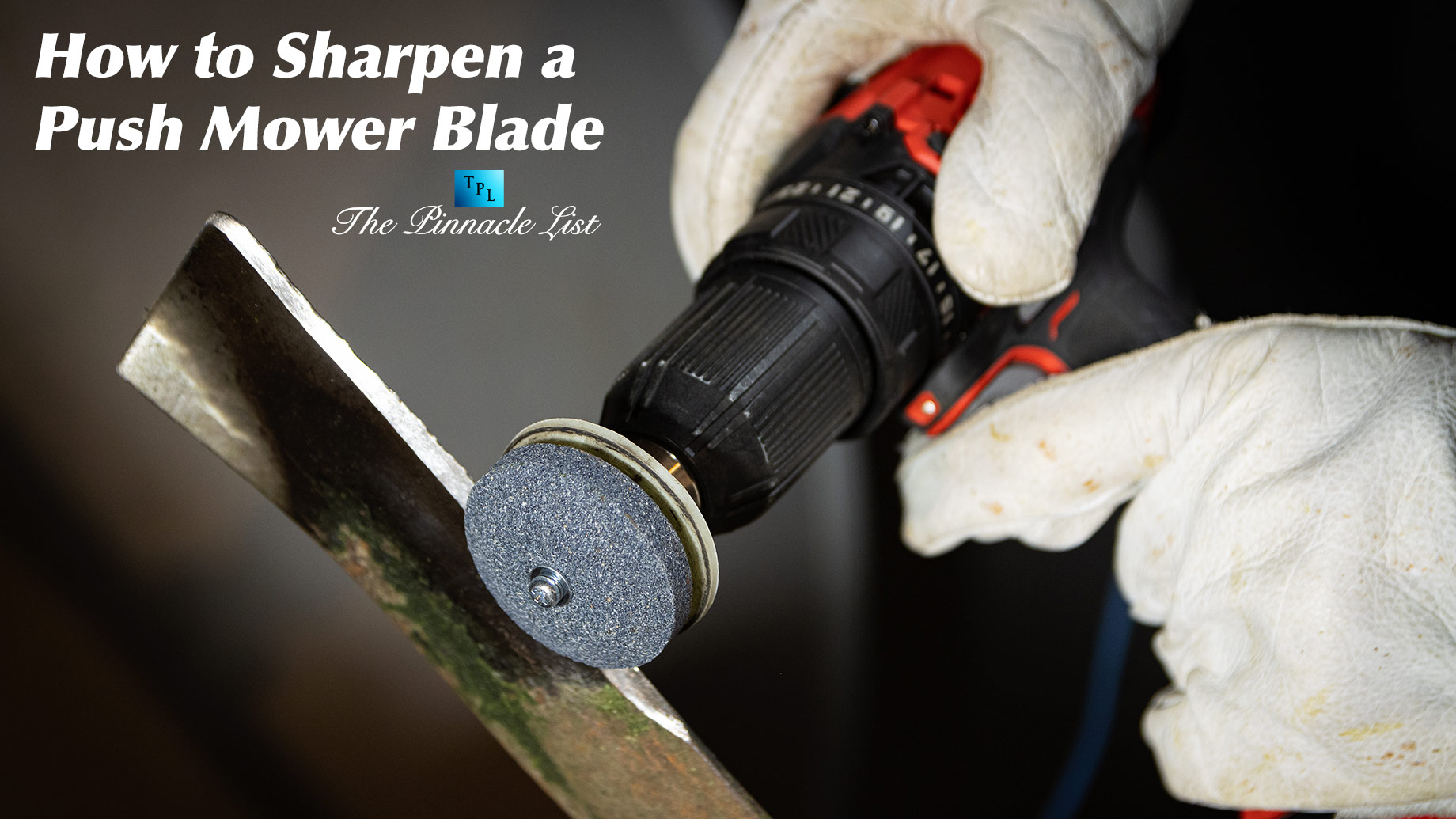
Use a file, grinder, or sharpening tool to sharpen the existing bevel with smooth passes along the cutting edge.
Step 5: Balance the blade
Place the blade on a balancer or a horizontal support point. Remove small amounts of metal from the heavier side until the blade sits evenly.
Step 6: Reinstall the blade
Install the blade in the correct orientation and tighten the bolt securely according to the mower manufacturer’s specifications.
A properly sharpened mower blade should have a clean, consistent edge without excessive sharpness like a knife. The goal is a durable cutting edge that can withstand contact with grass and normal lawn conditions.
Clean grass cut
The mower should cut grass evenly instead of shredding or tearing the tips.
Even edge appearance
The bevel should look uniform from one end of the cutting edge to the other.
Choosing the Right Method to Sharpen Push Mower Blades
Different sharpening methods work for different tools, skill levels, and blade conditions. A hand file provides more control, while powered tools remove material faster but require careful handling.
The best method is the one that maintains the blade’s original shape while removing only enough metal to restore a clean edge.
Source: gardenilo.com
File sharpening
A file is affordable and gives homeowners better control over the sharpening angle.
Angle grinder sharpening
A grinder is faster but can remove too much metal if used aggressively.
Blade sharpening kits
Kits can simplify the process by providing guides that help maintain consistent angles.
Push Mower Blade Sharpening Mistakes to Avoid
Many sharpening problems happen because the blade is modified too aggressively or installed incorrectly after maintenance.
Over-sharpening
Removing excessive material can weaken the blade and shorten its useful life.
Skipping balance checks
An unbalanced blade can cause vibration and unnecessary mower wear.
Installing the blade upside down
A reversed blade will not cut correctly and may affect mowing performance.
Signs Your Push Mower Blade Needs Sharpening or Replacement
A mower blade usually shows clear signs when maintenance is needed. Identifying these symptoms early helps prevent poor mowing results and unnecessary strain on the machine.
Ragged or brown grass tips often indicate that the blade is dull rather than cutting cleanly.
Uneven mowing height
A damaged or unbalanced blade may leave inconsistent cutting patterns.
Excessive vibration
Vibration can indicate imbalance, bending, or blade damage that requires inspection.
When You Should Replace Instead of Sharpen
Sharpening is not a repair method for every blade problem. A replacement blade is usually safer when structural damage affects the metal.
Cracks
Cracked blades should not be returned to service because sharpening cannot restore structural strength.
Severe bending
A badly bent blade may remain unsafe even after attempts to straighten it.
Frequently Asked Questions About Sharpening Push Mower Blades
Understanding common maintenance questions helps homeowners sharpen blades correctly and avoid unnecessary damage.
Source: YouTube > Surf and Turf Chronicles
Frequently Asked Questions
Q
Can I sharpen a push mower blade without removing it?
Some sharpening tools can be used while the blade remains attached, but removing the blade is generally safer because it allows proper inspection, sharpening control, and balancing.
Q
What angle should I sharpen a push mower blade?
Sharpen the blade using the same bevel angle created by the manufacturer. The exact angle varies by blade design, so preserving the existing edge is usually the safest approach.
Q
How do I know if my mower blade is too damaged to sharpen?
Replace the blade if it has cracks, major bends, missing pieces, or excessive wear that prevents maintaining a strong cutting edge.
Q
Can a dull mower blade damage grass?
Yes. A dull blade can tear grass blades instead of making clean cuts, which may leave ragged tips and a less healthy appearance.
Q
How long does it take to sharpen a push mower blade?
For many homeowners, the complete process takes about 30 minutes to an hour depending on the blade condition, tools used, and experience level.
✦ Wrapping Up
Conclusion
Sharpening push mower blades is a practical maintenance task that improves cutting quality and helps maintain a healthier-looking lawn. The key steps are safe preparation, controlled sharpening, proper balance checking, and correct installation.
Regular blade inspection allows homeowners to identify dullness early and decide whether sharpening is enough or whether replacement is the safer option.
💡 Key Takeaway
Inspect your push mower blade regularly, sharpen it when cutting performance declines, and always prioritize safety before performing maintenance.
Learn what E10 gas is for a lawn mower, whether it is safe to use, how ethanol affects small engines, and the best fuel practices for lawn mower maintenance.
Learn how to sharpen lawn mower blades with a file using simple tools and safe techniques. This guide explains preparation, filing steps, blade checks, mistakes, and maintenance tips.
If your lawn has started to look more ragged than refreshed after mowing, the culprit might not be your mower—it’s probably the blade. A dull or damaged mower blade tears grass instead of cutting it cleanly, leaving brown tips and uneven patches that make even the best lawns look unhealthy. That’s why understanding lawn mower…
Learn how to sharpen lawn mower blades without removing them using safe methods, the right tools, preparation steps, and tips for better cutting performance.
When your lawn mower backfires and will not start, it can turn a peaceful Saturday morning into a frustrating ordeal. You pull the starter cord again and again, only to hear that sharp pop! instead of the familiar hum of the engine. It’s one of those moments that can leave even seasoned homeowners scratching their…
When you’re ready to mow your lawn and your lawn mower blades are not engaging, it can be one of the most frustrating moments of the week. You’ve planned your afternoon, the sun’s shining, the grass is tall, and then—nothing. The engine roars, but the blades refuse to spin. That feeling of confusion is universal…