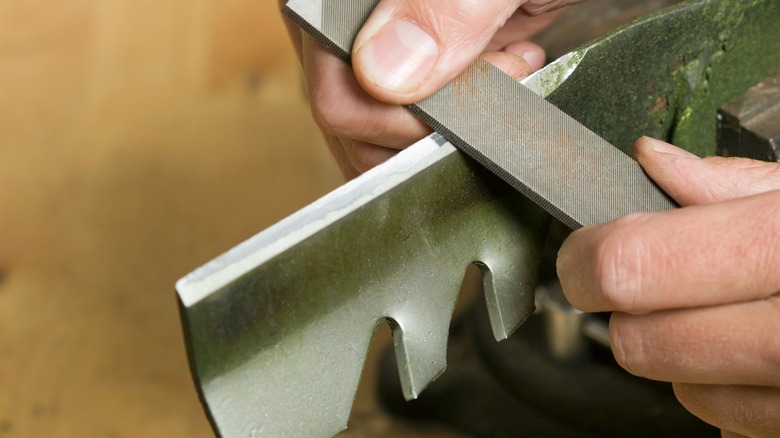
You can sharpen lawn mower blades with a file by removing the blade, securing it safely, and filing along the original cutting edge at the correct angle until the edge becomes smooth and sharp.
In the United States, many homeowners maintain their lawns throughout the growing season, and a dull mower blade is one of the most common reasons grass can look torn, uneven, or unhealthy after cutting. Sharpening the blade with a file is an affordable maintenance method that does not require powered sharpening equipment.
A hand file works best when a mower blade only needs routine sharpening rather than major repair. The process requires patience, proper safety steps, and attention to the blade’s original bevel. A sharp cutting edge helps the mower cut grass cleanly while reducing unnecessary strain on the engine and mower components.
What You Need Before Sharpening a Lawn Mower Blade With a File
Before starting, gather the correct tools and prepare a safe workspace. A flat metal file, such as a mill bastard file, is commonly used for sharpening mower blades by hand because it removes steel gradually and gives good control.
The blade should be removed from the mower whenever possible. Working on a removed blade makes it easier to inspect damage, maintain the correct angle, and avoid accidental contact with moving mower parts.
Source: i.ytimg.com
Tools
Use a metal file, work gloves, safety glasses, a wrench or socket set, a clamp or vise, and a block of wood if needed to stabilize the mower.
Safety preparation
For gas mowers, disconnect the spark plug wire before handling the blade. For electric or battery mowers, remove the battery or disconnect power.
Inspect the Blade Condition First
Check the mower blade for cracks, deep bends, missing pieces, or severe rust before sharpening. A file can restore a dull edge, but it cannot safely repair structural damage.
Replace instead of sharpening
A blade with cracks, major dents, or excessive metal loss should be replaced rather than reshaped.
How to Sharpen Lawn Mower Blades With a File Step by Step
The main goal is to restore the blade’s original cutting edge without removing excessive metal. A mower blade does not need to be razor sharp; a clean, consistent edge is enough for effective grass cutting.
Source: i.ytimg.com
Step 1: Remove the mower blade
Disconnect the mower from its power source, tip the mower safely if required, and remove the blade bolt using the correct wrench or socket.
Step 2: Secure the blade
Place the blade in a vise or clamp it securely so it cannot move while filing.
Step 3: Match the original bevel
Position the file against the existing angled cutting edge. Keep the same angle throughout the sharpening process.
Step 4: File in one direction
Push the file across the blade edge in smooth strokes. Avoid back-and-forth rubbing because it can reduce filing effectiveness.
Step 5: Repeat on the other side
Sharpen the opposite cutting edge using the same number of strokes and the same angle to maintain balance.
A properly sharpened mower blade has a clean, even edge without large nicks or rough sections. It should feel sharp to the touch visually, but it does not need to have a knife-like edge.
Signs of success
The cutting edge looks uniform, the blade has fewer rough spots, and grass should be cut more cleanly during mowing.
How to Check Blade Balance After Filing
Removing metal from one side of a mower blade can make it unbalanced. An unbalanced blade may create vibration, unusual noise, or extra stress on the mower spindle.
Source: i.ytimg.com
Balance test
Hang the blade on a nail, screwdriver shaft, or blade balancer. If one side drops lower, remove a small amount of metal from the heavier side.
Reinstall correctly
Install the blade in the same orientation it was removed. The cutting edges must face the correct direction when the mower operates.
Common Signs of an Unbalanced Blade
If the mower vibrates strongly after sharpening, stop using it and inspect the blade installation and balance before continuing.
Possible causes
Uneven filing, incorrect installation, bent blades, or damaged mower components can contribute to vibration.
Mistakes to Avoid When Sharpening With a File
Hand sharpening is simple, but incorrect technique can shorten blade life or create mowing problems. Avoid removing too much metal or changing the blade design.
Source: urbanorganicyield.com
Using the wrong angle
Changing the factory bevel can reduce cutting performance and make future sharpening more difficult.
Over-sharpening
A very thin edge may wear quickly or become damaged when it contacts small rocks or hard debris.
A file is practical for routine maintenance, but heavily damaged blades may require professional repair evaluation or replacement. Grinding tools can remove metal faster, but they also require more control to avoid overheating or uneven sharpening.
Choose another method
Consider another sharpening method when the blade has large chips, severe dullness, or damage that requires significant reshaping.
How Often Should You Sharpen a Lawn Mower Blade With a File?
Most homeowners sharpen mower blades when cutting performance declines rather than following a fixed schedule. Frequency depends on mowing conditions, lawn size, grass type, and contact with dirt or debris.
Source: i0.wp.com
Typical maintenance timing
Many residential mowers need blade sharpening several times during the mowing season, especially when used frequently.
Heavy-use conditions
Lawns with sandy soil, sticks, or frequent mowing may require more frequent inspection and sharpening.
Signs Your Blade Needs Sharpening
A mower blade usually needs attention when grass tips appear torn, mowing requires more passes, or the lawn looks uneven after cutting.
Grass appearance
A clean cut leaves grass blades trimmed evenly, while dull blades often leave ragged or brown-looking tips.
Frequently Asked Questions
Q
Can you sharpen a lawn mower blade with a regular file?
Yes, a suitable metal file can sharpen a lawn mower blade if the blade is only dull and does not have serious damage. A coarse file usually removes material more effectively than a small fine file.
Q
What angle should you file a lawn mower blade?
File the blade at the same angle as the existing cutting bevel. The exact angle varies by blade design, so matching the original edge is more important than creating a new angle.
Q
Do I need to remove the lawn mower blade before filing it?
Removing the blade is recommended because it improves safety, visibility, and control. It also allows you to inspect and balance the blade after sharpening.
Q
How long does it take to sharpen a mower blade with a file?
The time depends on blade condition and filing skill. A lightly dull blade may only require a short session, while a damaged edge may take longer or need replacement.
Q
Can a dull mower blade damage grass?
Yes, dull blades can tear grass instead of making clean cuts. Torn grass may appear brown at the tips and can make the lawn look less healthy.
✦ Wrapping Up
Conclusion
Sharpening lawn mower blades with a file is a practical maintenance task for homeowners who want a simple, controlled way to restore a dull cutting edge. The process depends on safe preparation, maintaining the original bevel, and checking blade balance afterward.
A properly maintained blade helps a mower cut grass more efficiently and can improve the appearance of a lawn. Regular inspection also helps identify when sharpening is enough and when replacing the blade is the safer option.
💡 Key Takeaway
Remove the blade safely, file along the existing cutting edge, check the balance, and reinstall it correctly before mowing again.
Learn how many acres can a robot mower mow, what affects coverage, and how to choose the right model for your lawn. Get practical answers before buying.
Maintaining your lawn mower might not be the most glamorous chore, but it’s essential if you want a pristine, well-manicured lawn. One of the most overlooked components of a Honda mower is the belt. A worn, cracked, or broken belt can lead to uneven cutting, poor blade engagement, and even added stress on your mower’s…
When you’re ready to mow your lawn and the pull cord suddenly snaps, the frustration is real. A broken or frayed lawn mower replacement string can turn a simple job into a tedious repair session. It’s one of those small parts that often goes unnoticed—until it fails. Over time, exposure to heat, UV rays, and…
If your Ryobi lawn mower will not start, you’re not alone. Many homeowners face this frustrating issue when they’re ready to tackle an overgrown yard, only to hear silence instead of the hum of the motor. Whether you own a Ryobi 40V cordless mower, an 18V compact model, a corded electric unit, or a gas-powered…
If you’ve ever tried mowing your lawn and your mower sputtered, refused to start, or coughed out clouds of smoke, chances are the carburetor is the culprit. The Honda Lawn Mower Carburetor Replacement process might sound intimidating, but in reality, it’s one of the most rewarding repairs a homeowner can learn. Think of your mower’s…