
How Big Of A Yard Can A Robot Mower Cut: Size Guide
A robot mower can cut anywhere from about ¼ acre to more than 1 acre, depending on the model. Some commercial-grade machines can manage several acres. The right answer depends on the mower’s rated cutting area, daily run time, battery system, lawn shape, slopes, and boundary setup.
For reference:
- ¼ acre = 10,890 square feet
- ½ acre = 21,780 square feet
- 1 acre = 43,560 square feet
- 2 acres = 87,120 square feet
A mower rated for ½ acre may work well on a simple ½-acre lawn. It may struggle on a ½-acre property split into narrow strips, steep slopes, and small sections connected by tight paths.
The key is to measure the mowable grass area, not the total size of the property.
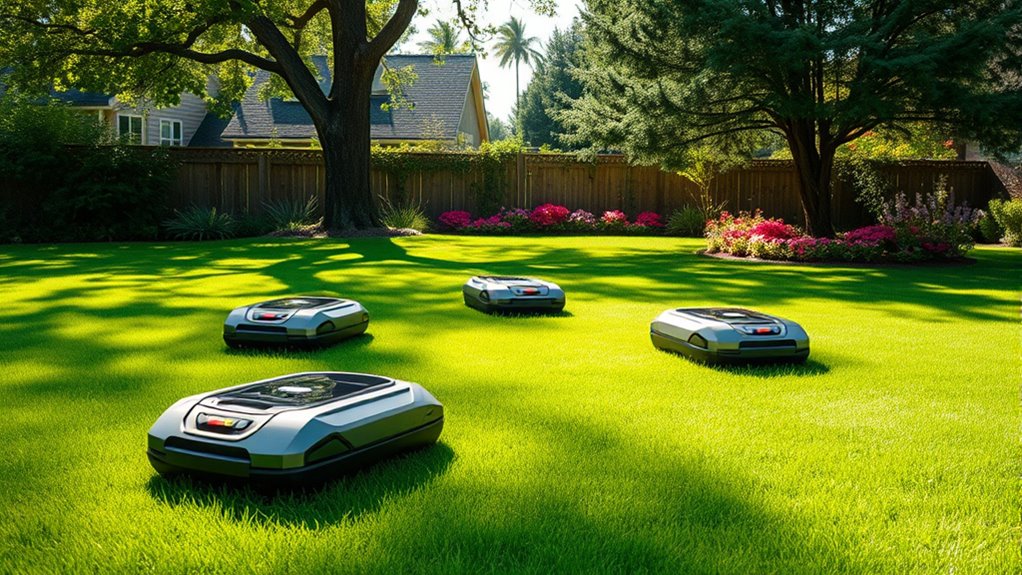
Robot Mower Yard Size Ratings Explained
A robot mower’s yard-size rating is the maximum grass area the manufacturer expects it to maintain under stated conditions. It is not always the same as the area the mower can cut in one battery charge.
Most robot mowers return to a charging station when the battery gets low. They recharge, then continue the mowing schedule. This allows a smaller mower to maintain a larger lawn over time.
Manufacturers often base their ratings on factors such as:
- Daily mowing hours
- Battery charging time
- Cutting width
- Travel speed
- Weather conditions
- Lawn shape
- Slope limits
- Number of mowing zones
- Boundary wire or navigation quality
A model rated for ¾ acre may take several days to maintain a difficult lawn. That can be normal. Robot mowers usually cut small amounts of grass on a regular schedule rather than removing a large amount at once.
Rated area versus one-day cutting area
These terms are easy to confuse:
- Rated area: The total area the mower is designed to maintain.
- Cutting time: How long the mower can run before it needs to charge.
- Daily capacity: How much area it can cover within your selected schedule.
- Mowing zone: A separate grass area programmed into the mower.
A mower may cover its rated area by working every day. It may not finish the entire yard during a single outing.
For example, a mower with a ½-acre rating may mow for an hour, charge for a while, and go back out later. Over a full day, it may complete enough cycles to maintain the full area.
Typical Robot Mower Capacity by Yard Size
The following ranges are general planning categories. Always check the exact model specification before buying.
| Yard size | Recommended mower rating | Best fit |
|---|---|---|
| Up to ¼ acre | ¼ acre or more | Small, open lawns |
| ¼ to ½ acre | ½ acre or more | Typical suburban yards |
| ½ to ¾ acre | ¾ acre or more | Larger lawns with few obstacles |
| ¾ to 1 acre | 1 acre or more | Large, mostly connected lawns |
| 1 to 2 acres | 1.25 to 2 acres or more | High-capacity residential models |
| More than 2 acres | Commercial or large-property model | Large open grounds |
These are not strict product classes. Model ratings vary by brand and design.
A mower designed for a compact city lawn may have a smaller battery and cutting width. A larger model may run longer, recharge faster, or support several charging stations. Some products also use multiple robots to cover a larger property.
A practical capacity rule
Choose a mower whose rated area is at least equal to your mowable lawn area. For a complex lawn, consider a buffer of about 20% to 30%.
This buffer is a planning rule, not a universal manufacturer requirement. It can help when your lawn has:
- Many trees or garden beds
- Narrow paths
- Steep areas
- Wet soil
- Several mowing zones
- Frequent shade
- Poor wireless coverage
- A short mowing schedule
For instance, a 0.6-acre lawn with many obstacles may be a better match for a mower rated at 0.75 or 1 acre.
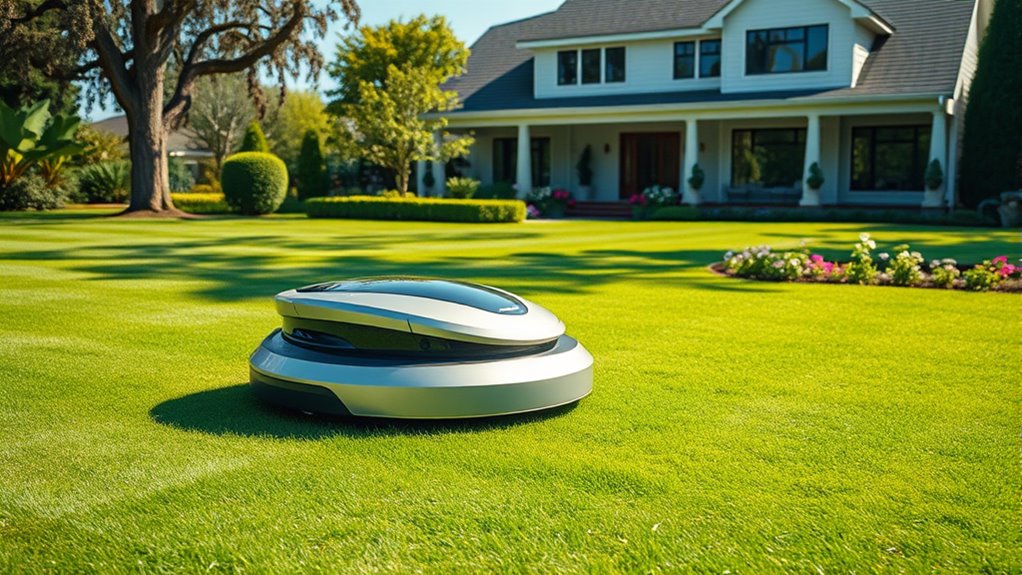
How to Calculate the Area a Robot Mower Must Cover
Measure only the grass that the robot mower will cut. Exclude the house, driveway, patio, pool, garden beds, wooded areas, and other surfaces the mower cannot use.
Step 1: Measure each grass section
For a simple rectangle, use:
Length × width = square feet
Example:
- Grass area: 180 feet long
- Grass area: 100 feet wide
- Total area: 18,000 square feet
Step 2: Convert square feet to acres
Use this formula:
Square feet ÷ 43,560 = acres
Using the example:
18,000 ÷ 43,560 = about 0.41 acre
A mower rated for at least 0.41 acre could meet the basic area requirement. A larger rating may be wiser if the property has slopes, narrow passages, or several zones.
Step 3: Add separate areas
If the grass has several sections, measure each section and add the totals.
Example:
- Front lawn: 7,000 square feet
- Back lawn: 10,000 square feet
- Side strip: 2,000 square feet
- Total: 19,000 square feet
- Total in acres: about 0.44 acre
The mower must support the combined area if it can travel between the sections. If it cannot travel between them, check whether the model supports separate zones or manual relocation.
Step 4: Check the mowing schedule
A mower may have enough rated capacity but still need a long schedule on a difficult lawn. Check whether the model can operate during the hours you want.
Some neighborhoods restrict outdoor equipment at night. Local noise rules, homeowners association rules, pets, and security concerns may limit the useful mowing window.
What Reduces a Robot Mower’s Effective Yard Size?
A robot mower can cover less area in practice when the lawn creates extra travel, poor traction, or navigation problems.
Slopes
Slope ratings differ by model. A mower may handle a gentle slope but lose traction on wet grass or loose soil. The manufacturer may list the maximum slope in degrees or a percentage.
Do not compare these units without converting them. A 30% grade is not the same as a 30-degree slope.
The mower’s ability also depends on:
- Grass moisture
- Tire tread
- Soil condition
- Slope direction
- Drainage
- Surface changes
- The length of the slope
For safety, follow the exact slope limit in the owner’s manual. Do not rely on a general claim that all robot mowers can handle hills.
Narrow passages
A narrow side yard can slow the mower or prevent it from entering a zone. Check the mower’s minimum passage width. The required width may include clearance for boundary wire, walls, fences, and other objects.
A path that looks wide enough for the mower may not provide enough room for reliable navigation.
Separate lawn zones
Some yards have grass areas that are not connected. A mower may support multiple zones, but the setup differs by model.
Possible methods include:
- A connected passage between zones
- A programmed secondary zone
- Manual placement in a separate area
- Multiple charging stations
- A second mower
If you must carry the mower between areas, the process is less automatic. The product may still work, but its rated area does not mean it can independently travel across every part of the property.
Trees, beds, and obstacles
Obstacles do not always reduce the total grass area, but they can increase travel time. The mower must move around each object instead of following a simple path.
Common obstacles include:
- Tree trunks
- Play sets
- Raised garden beds
- Outdoor furniture
- Decorative rocks
- Dog areas
- Temporary pools
- Low branches
Keep the lawn clear of objects that can block, lift, or damage the mower.
Poor satellite or wireless coverage
Wire-free mowers may use GPS, RTK, cellular service, Wi-Fi, or other navigation systems. Trees, buildings, walls, and tall structures can affect signal quality.
A wire-free mower may require a clear view of the sky or a properly placed reference antenna. The exact requirements depend on the navigation system.
A boundary-wire mower does not depend on GPS for its main boundary. However, its wire must be installed correctly and remain intact.

Boundary Wire and Wire-Free Robot Mowers
The boundary system affects how well a mower uses a large yard.
Boundary-wire models
Boundary-wire mowers use a low-voltage wire around the mowing area. The wire tells the mower where it may travel.
Advantages include:
- Predictable lawn limits
- No satellite signal requirement
- Good control around beds and ponds
- Reliable use under trees
Limitations include:
- Installation time
- Possible wire breaks
- Careful planning around paths and zones
- The need to protect the wire from damage
The wire must follow the manufacturer’s installation rules. Poor spacing can cause the mower to cross a boundary or miss grass near an edge.
Wire-free models
Wire-free models may use GPS, RTK, cameras, sensors, or a mix of systems. They can reduce installation work, but setup still matters.
Potential issues include:
- Weak satellite signal
- Reference-station placement
- Cellular or Wi-Fi limits
- Map errors
- Tall obstructions
- Poor edge detection
- Need for app updates or service plans
Wire-free does not mean setup-free. Walk the full property before purchase and check whether the mower can map each zone.
How Long Does a Robot Mower Take to Cut a Yard?
A robot mower may take several hours or several days to maintain a large yard. That is different from a traditional mower, which usually cuts the full lawn in one session.
The main factors are:
- Total grass area
- Mowing width
- Battery run time
- Charging speed
- Travel speed
- Number of obstacles
- Slope and traction
- Scheduled operating hours
- Rain delays
- Number of zones
A wider cutting deck can cover more ground per pass. A larger battery can extend each mowing cycle. A fast charger can reduce the time between cycles.
Still, capacity numbers from different brands are not perfectly comparable. One manufacturer may assume a long daily schedule. Another may use different weather or efficiency assumptions.
Treat the published rating as a starting point. Read the product manual or technical specification for the exact operating conditions.
Choosing the Right Robot Mower for Your Yard
Match the mower to the lawn’s real conditions, not just its acreage.
For a lawn under ¼ acre
A compact model may be enough if the lawn is:
- Mostly flat
- One connected area
- Free of complex obstacles
- Easy to map
- Within the mower’s passage limits
A smaller mower may cost less and use less power. It may also take longer to cover the same lawn.
For a lawn between ¼ and ½ acre
Look for:
- A rating above the measured grass area
- Good edge performance
- Support for narrow passages
- A schedule that fits local rules
- Adequate slope handling
This size range includes many American suburban lawns. The shape of the lawn often matters more than the property’s total acreage.
For a lawn between ½ and 1 acre
Prioritize:
- A higher-capacity battery
- Strong traction
- Multiple-zone support
- Reliable boundary navigation
- A suitable charging station location
- Weather and rain controls
- Easy access to replacement blades
A model rated exactly at your measured area may work, but it may have little reserve for obstacles or missed mowing days.
For more than 1 acre
Check whether the mower is intended for residential or commercial use. A large property may require:
- A commercial-grade mower
- Multiple robots
- Multiple charging stations
- Extra boundary wire
- Professional installation
- More frequent maintenance
Do not assume that a model with a large acreage claim will handle rough fields, tall weeds, or unmanaged grass. Most robot mowers are designed to maintain regularly cut turf. They are not brush cutters.
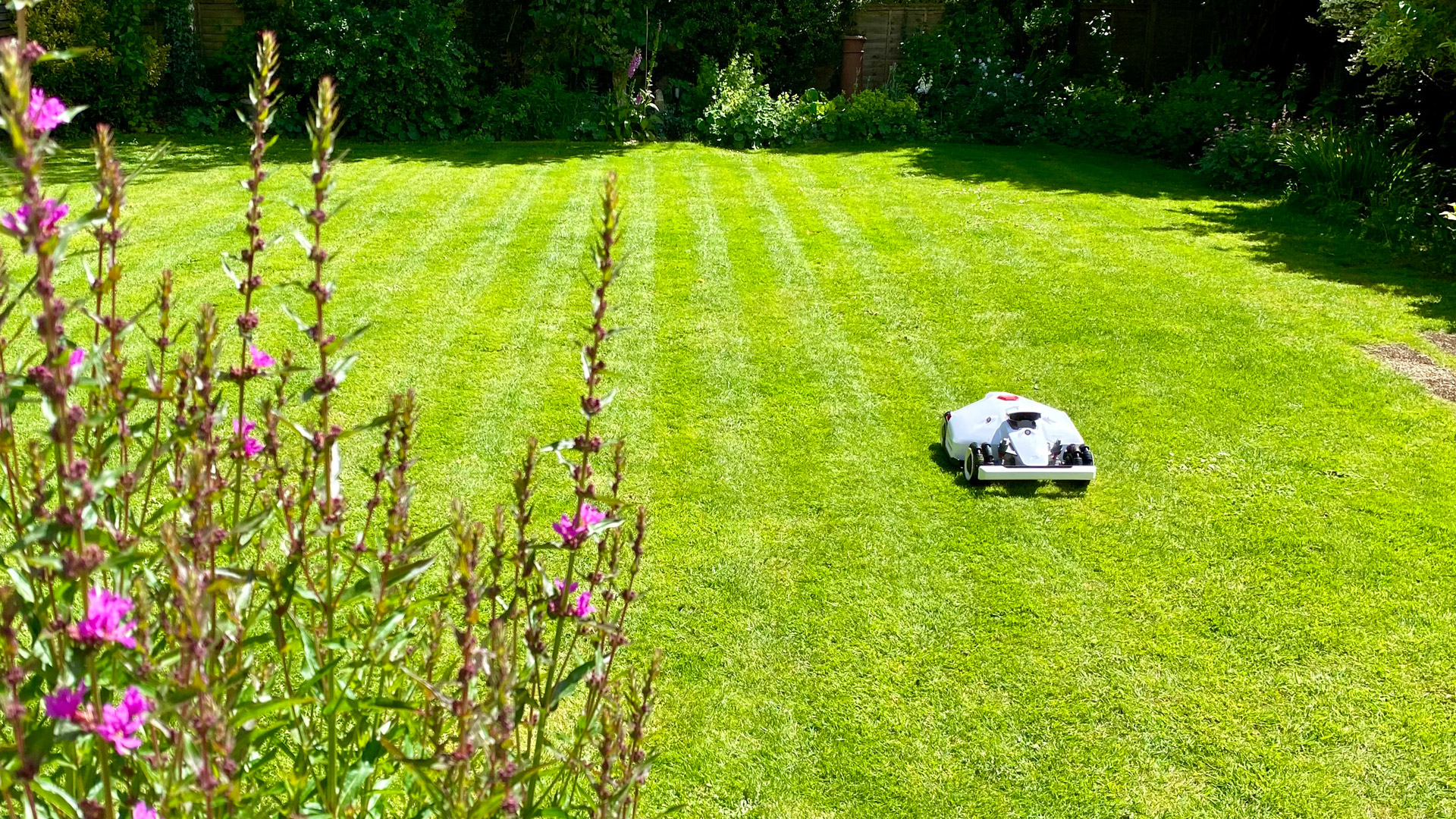
Common Mistakes That Make a Yard Seem Too Large
Many capacity problems come from setup rather than the mower’s rated area.
Buying based on property size
A 1-acre property may contain only 0.35 acre of grass. A ½-acre property may have nearly ½ acre of difficult lawn.
Measure the grass first.
Choosing the exact rated area
A mower rated for 0.5 acre may be a poor choice for a complex 0.5-acre lawn. Add capacity when the yard has hills, zones, wet areas, or many obstacles.
Ignoring the mowing schedule
If the mower can only operate for a few hours each day, it may not maintain the full rated area. Check the total available operating time.
Placing the charging station poorly
The station should sit on a stable, reasonably level surface with enough clearance. It should also be easy for the mower to reach from the main lawn.
Follow the installation instructions for the exact model. A poor station location can cause failed docking and lost mowing time.
Leaving toys and cords on the lawn
Small objects can stop the mower or damage its blades. Remove toys, hoses, cords, tools, and pet waste before operation.
Expecting it to cut tall grass
Robot mowers work best when they trim a small amount often. If the lawn has become tall, mow it down with a conventional mower first. Then start the robot mower at the recommended cutting height.
Failing to plan for pet safety
A robot mower can injure pets, wildlife, or people who touch its moving blades. Use the mower only as the manual permits. Keep children and animals away during setup, maintenance, and troubleshooting.
Turn off the mower and follow the manual before reaching under the deck or removing blocked grass.
What to Check Before Buying a Robot Mower
Use this checklist:
- Measure the actual grass area.
- Convert the result to acres or square feet.
- Check the mower’s rated area.
- Add a planning margin for difficult terrain.
- Confirm the maximum slope.
- Measure narrow passages.
- Count separate mowing zones.
- Choose boundary wire or wire-free navigation.
- Check cellular, Wi-Fi, GPS, or RTK needs.
- Confirm the charging station requirements.
- Review local quiet-hour rules.
- Check blade, battery, and wire replacement costs.
- Confirm the warranty and service options.
- Plan how to secure the mower from theft.
- Read the safety instructions before installation.
The best model is not always the one with the largest acreage claim. It is the one that fits the lawn’s area, shape, terrain, and available mowing time.
FAQs About Robot Mower Yard Capacity
Can a robot mower cut a one-acre yard?
Yes, some robot mowers are designed for one acre or more. The yard should also meet the model’s slope, passage, zone, and navigation limits. A complex one-acre lawn may need a larger-capacity model or more than one mower.
Can a robot mower handle half an acre?
Many models can handle half an acre. Choose one rated for at least 0.5 acre, then consider extra capacity for hills, narrow sections, and obstacles.
Can one robot mower cut two separate yards?
Sometimes. The mower must support multiple zones, and the zones must be reachable or manually serviced. If the areas are on different properties or have no safe connection, you may need two mowers.
Can a robot mower cut grass on a hill?
Some can handle slopes, but the limit varies by model. Wet grass, loose soil, and side-hill travel can reduce traction. Check the manufacturer’s slope rating and keep people and pets away during operation.
Does a robot mower cut the whole yard every day?
Not always. It may work in short cycles, return to charge, and continue later. The mower’s job is to maintain the lawn over its schedule, not necessarily to finish every section in one day.
Conclusion: Match the Mower to the Mowable Area
Most residential robot mowers can handle about ¼ to 1 acre, while larger models can cover more. Measure the grass area, not the full property. Then compare that number with the mower’s rated capacity, slope limit, zone support, and daily operating schedule.
For a simple lawn, a mower rated close to the measured area may work. For a yard with hills, trees, narrow paths, or separate zones, choose extra capacity. Before purchasing, verify the exact model’s specifications and installation requirements from the manufacturer’s current documentation.


