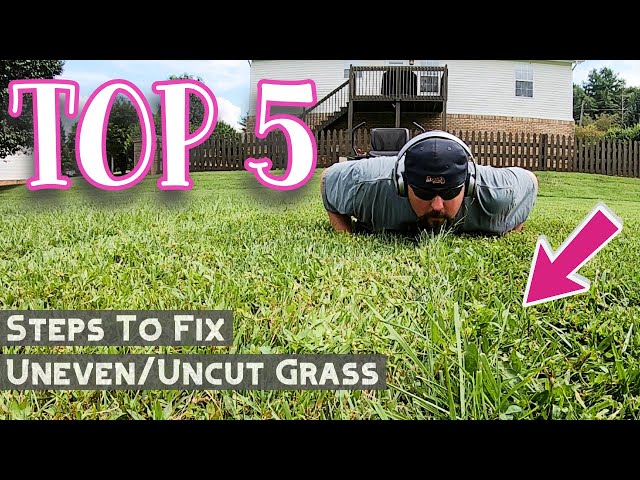
You can tell a lawn mower blade is dull when it tears grass instead of making clean cuts, leaves uneven patches, creates brown or ragged grass tips, or shows visible damage like rounded edges and nicks.
Across the United States, homeowners often notice lawn problems after mowing but do not realize the mower blade may be the cause. A sharp blade is essential for a healthy-looking lawn because it cuts grass cleanly instead of ripping and bruising the blades.
The easiest way to identify a dull lawn mower blade is to inspect the quality of the cut, look at the blade edge when the mower is turned off safely, and pay attention to changes in mower performance. A dull blade does not always stop a mower from working, but it can reduce cutting quality and put extra stress on the grass and machine.
The most reliable sign of a dull mower blade is poor cutting performance. Instead of slicing through grass, a worn blade pulls, tears, or bends grass blades. This damage can make a lawn look unhealthy even when watering and fertilizing are adequate.
Several visible and performance-related clues can help you determine whether your mower blade has lost its cutting ability.
Source: metalfixes.com
Ragged grass tips
A dull blade tears the top of grass blades, leaving a shredded appearance instead of a smooth cut.
Brown or yellow grass after mowing
Damaged grass tips can dry out and create a brown appearance across the lawn.
Uneven cutting results
A worn blade may leave taller strips of grass because it no longer cuts consistently.
More mowing effort
A dull blade can require more passes because it does not remove grass efficiently.
Check the Grass After Mowing
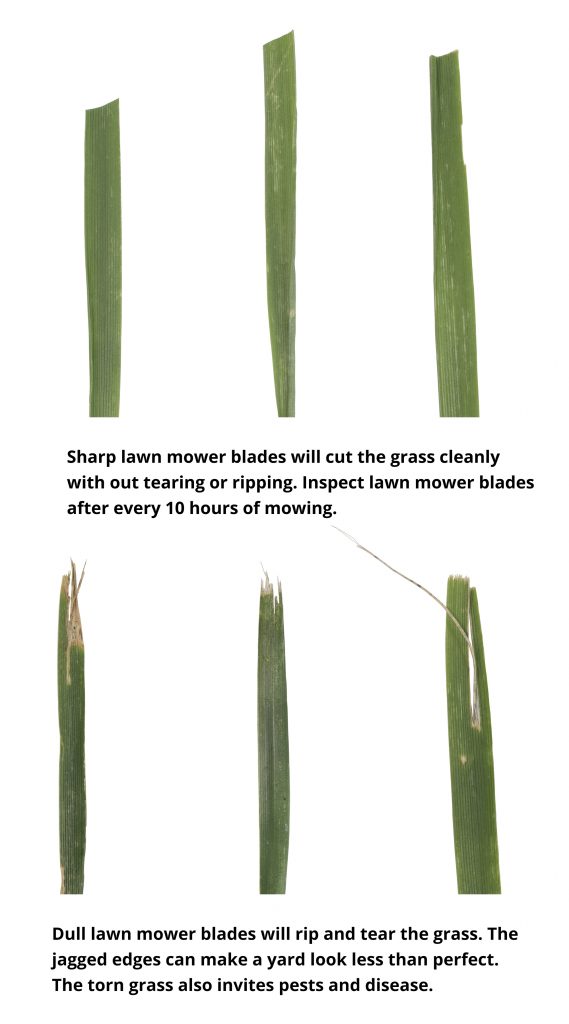
The grass itself provides one of the best indicators of blade condition. After mowing, examine several freshly cut areas. Healthy cuts should appear clean and even, while dull blades often leave frayed ends that look damaged when viewed closely.
Healthy cut appearance
Grass ends look clean and maintain their natural green color.
Dull blade appearance
Grass ends look torn, split, or discolored within a short time after mowing.
How to Inspect a Lawn Mower Blade Safely
A visual inspection can confirm whether a blade is dull or damaged, but safety must come first. Never place your hands near the blade while the mower is connected to power or fuel systems are active.
Before checking the blade, turn off the mower completely and prevent accidental starting.
Source: averdyn.com
Disconnect the mower
For electric mowers, remove the battery or unplug the mower. For gas mowers, disconnect the spark plug wire before inspection.
Tilt safely
Follow the mower manufacturer’s instructions when tipping the mower to access the blade.
Inspect the cutting edge
Look for a rounded edge, chips, dents, cracks, or excessive wear along the blade.
What a Sharp and Dull Blade Looks Like
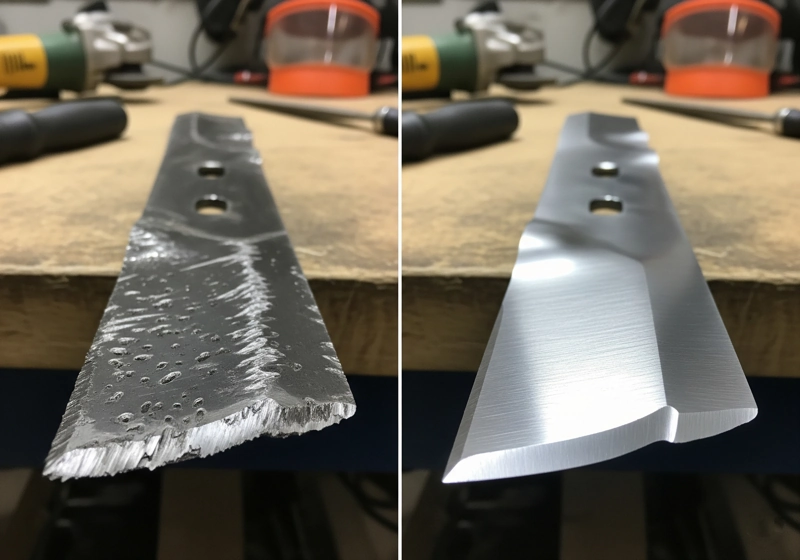
A sharp mower blade typically has a defined cutting edge similar to a sturdy knife edge, while a dull blade often appears rounded or worn. The blade does not need to be razor sharp, but it should have a clear cutting surface capable of slicing grass.
Sharp blade
Has a clean, consistent edge without major damage.
Dull blade
Has a rounded edge, visible wear, or damaged sections that reduce cutting ability.
Most homeowners should inspect their mower blade regularly during the mowing season because wear depends on lawn size, mowing frequency, and the type of terrain being cut.
A blade that frequently hits dirt, rocks, sticks, or other hard objects can become dull faster than one used only on clean grass.
Source: pediamower.com
Small residential lawns
Periodic inspection during the mowing season may be enough if the mower operates under normal conditions.
Large lawns or frequent mowing
More frequent checks may be needed because longer operating time increases wear.
Rough terrain
Areas with debris or uneven ground can damage blades more quickly.
Factors That Make Blades Wear Faster
Blade wear is influenced by how and where a mower is used. A mower operating in challenging conditions may need attention sooner than one used on a smooth residential lawn.
Contact with hard objects
Rocks and branches can chip or bend the cutting edge.
Wet grass mowing
Wet conditions can increase cutting resistance and leave more stress on the mower system.
Should You Sharpen or Replace a Dull Lawn Mower Blade?
A dull blade with normal wear can often be sharpened, but a damaged blade may need replacement. The correct choice depends on the condition of the metal and whether the blade remains structurally safe.
Sharpening restores the cutting edge, while replacement is usually necessary when cracks, severe bends, or major material loss are present.
Source: dryerenthusiast.com
Sharpen the blade when
The blade is intact but the cutting edge has become rounded or worn.
Replace the blade when
The blade has cracks, serious bends, or damage that affects balance and safety.
Many mowing problems continue because homeowners focus on mower settings instead of checking the blade condition. A dull blade can affect lawn appearance even when the mower height and engine are working correctly.
Ignoring grass damage
Continuing to mow with torn grass can reduce lawn appearance and increase stress on the turf.
Sharpening without balancing
Removing too much material from one side can create imbalance and vibration.
Troubleshooting: If Your Mower Still Cuts Poorly After Sharpening
If sharpening does not improve mowing results, the blade may not be the only problem. Other mower settings and operating conditions can affect cutting performance.
Check the most common causes before assuming the blade is the issue.
Source: dryerenthusiast.com
Incorrect mowing height
Cutting grass too short can create stress and poor appearance even with a sharp blade.
Clogged mower deck
Grass buildup can interfere with proper cutting and discharge.
Damaged blade balance
An unbalanced blade can cause vibration and uneven cutting.
Frequently Asked Questions
Q
Can you tell if a mower blade is dull without removing it?
Yes. You can often identify a dull blade by checking the grass after mowing for ragged cuts, brown tips, and uneven results. A closer blade inspection provides a more reliable answer.
Q
What happens if you mow with a dull lawn mower blade?
A dull blade tears grass instead of cutting it cleanly. This can leave the lawn looking damaged and may increase stress on the turf.
Q
How sharp should a lawn mower blade be?
A mower blade should have a clean cutting edge but does not need to be razor sharp. It should be sharp enough to slice grass efficiently while maintaining durability.
Q
How do I know if my mower blade needs sharpening or replacement?
If the blade only has normal wear and a rounded edge, sharpening may restore performance. If it has cracks, severe bends, or major damage, replacement is usually safer.
Q
Why does my lawn look brown after mowing?
Brown grass tips after mowing are often caused by torn grass from a dull blade, although other factors such as mowing height, watering, and lawn health can also contribute.
✦ Wrapping Up
Conclusion
Learning how to tell if a lawn mower blade is dull helps homeowners maintain cleaner cuts and healthier-looking grass. The strongest indicators are ragged grass tips, uneven mowing results, visible blade wear, and reduced cutting performance.
Regular blade inspections, safe handling practices, and proper maintenance can help prevent unnecessary lawn damage and keep a mower operating effectively throughout the season.
💡 Key Takeaway
Inspect your mower blade when you notice torn grass or uneven cuts, and sharpen or replace the blade based on its actual condition rather than appearance alone.
Nothing ruins a sunny weekend faster than when your lawn mower starts but does not stay running. You pull the cord, the engine fires up, you think it’s ready—then it coughs, sputters, and dies. It’s frustrating, especially when your grass looks like a mini jungle and all you want is a clean, even cut. The…
When your Toro electric start lawn mower refuses to start, it’s easy to think the engine has failed or that something complex is wrong. But in most cases, the culprit is much simpler—the battery. The battery is the heart of your mower’s electric start system, and when it begins to fade, your reliable weekend mower…
Learn how many gallons of gas a lawn mower holds, including push mowers, riding mowers, and zero-turn models. Understand fuel tank sizes, usage rates, and safe refilling tips.