
How Often To Cut Grass With A Robot Mower: Ideal Plan
A robot mower should usually cut your lawn every day or every other day during active growth. It removes only a small amount of grass each time, so the lawn stays at a steady height. In most U.S. yards, this works better than cutting once a week with a standard mower.
The right schedule depends on grass type, weather, lawn height, mower capacity, and local rules. During hot, dry weather, you may need fewer mowing sessions. During spring growth, the mower may need to run more often.
The best rule is simple: set the robot mower to cut often, but never remove more than one-third of the grass blade at once.

How Often Should a Robot Mower Run?
For most lawns, run a robot mower five to seven days per week during fast growth. A schedule of one to three hours per day often works, but the exact runtime depends on the mower and lawn size.
Robot mowers use a different method from riding or push mowers. They trim small pieces from the grass instead of cutting a large amount at one time. These small clippings fall into the lawn and break down quickly.
Use this starting schedule:
| Lawn condition | Suggested mowing frequency |
|---|---|
| Fast spring growth | Daily |
| Normal summer growth | Every day or every other day |
| Slow fall growth | Two to four times per week |
| Drought or heat stress | Reduce or pause |
| Newly seeded lawn | Follow seed and mower guidance |
| Wet or muddy lawn | Wait until the surface dries |
These are starting points, not fixed rules. Check the lawn after one week. If the grass looks too tall, increase the schedule. If the lawn shows stress or the soil stays wet, reduce the mowing time.
A robot mower may return to its charging station several times in one day. That is normal. The important measure is not how many trips it makes. The key measure is whether it keeps the grass at the target height.
A simple calculation
Suppose a robot mower covers 500 square feet per hour. Your lawn has 2,000 square feet of mowable area. One full mowing cycle would require about four hours of cutting time.
If the mower runs for two hours each day, it may need two days to cover the full lawn. If it runs for four hours each day, it can cover the lawn about once per day.
This estimate does not include charging time, narrow paths, slopes, rain delays, or areas the mower cannot reach. Use the mower maker’s coverage rating as a guide, then adjust it for your yard.
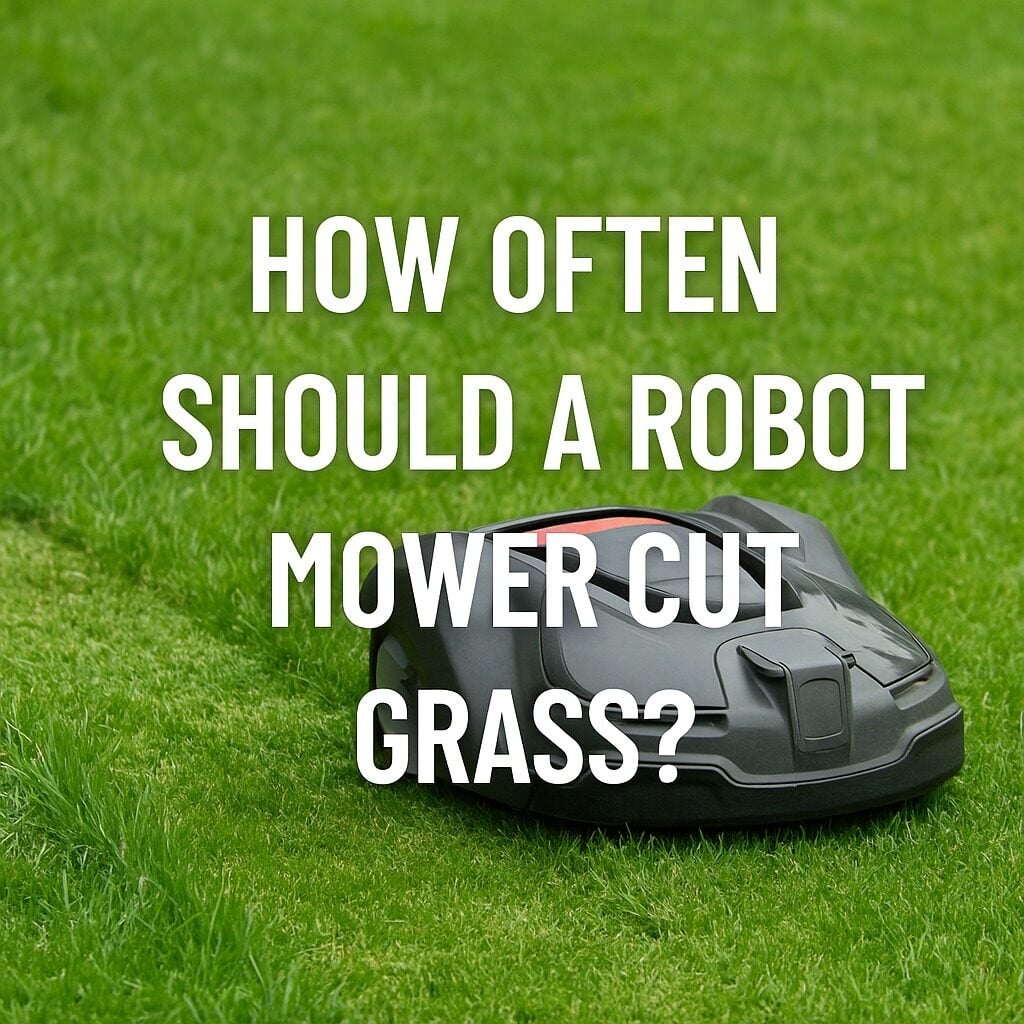
Why Robot Mowers Cut More Often Than Regular Mowers
Robot mowers work best with frequent light cuts. A standard mower often removes a large amount of grass once a week. A robot mower removes only the newest growth.
Frequent cutting can offer several benefits:
- It keeps the lawn at a more even height.
- It leaves smaller clippings.
- It reduces the need to collect grass.
- It prevents the lawn from becoming overgrown between cuts.
- It may reduce the shock caused by a large, sudden cut.
Grass clippings can return nutrients to the lawn when they are small and spread across the surface. This practice is called grasscycling. It works best when the lawn is mowed often and the clippings do not form thick piles.
Frequent mowing does not mean the mower should run without limits. Grass needs time to recover from heat, drought, disease, and heavy foot traffic. A robot mower should support healthy growth, not force the lawn to stay short when conditions are poor.
The one-third rule
Many U.S. university extension services advise removing no more than one-third of the grass blade during a mowing session. Cutting more can stress the plant and leave large clumps on the lawn.
For example:
- If your target height is 3 inches, do not let the grass grow far above 4 inches before cutting.
- If the grass reaches 4.5 inches, raise the mower or use a gradual reduction.
- If the lawn is very tall, do not expect a small robot mower to correct it in one pass.
A robot mower avoids this problem when it runs regularly. Since it cuts small amounts, the lawn rarely becomes tall enough to require a harsh cut.

How to Set the Best Robot Mower Schedule
Set the cutting height first, then choose the number of mowing days. The schedule should follow the lawn’s growth rate, not a fixed calendar alone.
1. Choose a suitable cutting height
The best height depends on the grass type and season. Common U.S. lawn grasses need different treatment.
| Grass group | Common mowing approach |
|---|---|
| Kentucky bluegrass | Keep moderately tall, especially in heat |
| Tall fescue | Use a higher setting and avoid severe scalping |
| Perennial ryegrass | Keep steady and avoid large cuts |
| Bermudagrass | Usually tolerates a shorter cut |
| Zoysiagrass | Often needs a medium to short setting |
| St. Augustinegrass | Use a higher setting than many warm-season grasses |
| Centipedegrass | Keep at a moderate height and avoid overcutting |
These groups include many cultivars with different needs. Check guidance from your state university extension service if you are unsure of the grass in your yard.
As a broad starting point, many cool-season lawns perform well around 2.5 to 4 inches. Many warm-season lawns are maintained lower, often around 1 to 2.5 inches. The correct height can vary by grass type, shade, season, and local climate.
Do not lower the robot mower to create a very short lawn unless the grass type and mower support that setting. A lawn that is too short can lose shade over its soil and become more vulnerable to heat, weeds, and drought.
2. Start with every other day
Every-other-day mowing is a useful starting point for a new schedule. Watch the lawn for seven to ten days.
Increase mowing to daily when:
- The grass grows visibly between sessions.
- The mower leaves tall strips.
- The lawn reaches the upper end of your target height.
- Spring rain causes rapid growth.
Reduce mowing when:
- The grass is not growing.
- The lawn turns gray, brown, or wilted.
- The soil becomes soft or muddy.
- The mower leaves ruts.
- The weather is very hot or dry.
3. Set mowing windows
Program the mower to run when the lawn is dry and people are less likely to use the yard. Midday can be a poor choice during extreme heat. Early morning may also be unsuitable if the grass is covered with dew.
A good mowing window is often late morning or afternoon after the surface dries. Local noise rules may limit early or late operation. Check city, county, and neighborhood requirements before setting overnight schedules.
4. Keep rest periods during stress
Pause or shorten the schedule during severe heat, drought, flooding, or disease. Grass that is already under stress may not recover well from repeated mowing.
If the lawn is dormant because of drought, mowing may not be needed. Do not water only to keep the mower running. Follow local water rules and use the lawn’s condition as the guide.

How Weather and Grass Type Change the Schedule
Weather is often the biggest factor in robot mower frequency. Warm temperatures, rain, and fertilizer can speed up growth. Heat without water can slow growth and damage the lawn.
Spring
Spring often brings the fastest growth in much of the United States. Begin with frequent mowing before the grass becomes tall. Daily mowing may be necessary during periods of rain and mild temperatures.
Avoid cutting wet grass. Wet blades can bend under the mower, clog the cutting system, and leave uneven patches. Wet soil can also develop tracks.
Summer
Summer schedules vary by region. In the Pacific Northwest, regular rain may support steady growth. In the Southeast, warm-season grass may grow quickly during humid weather. In the Southwest, heat and water limits may slow or stop growth.
During heat or drought:
- Raise the cutting height if your grass type allows it.
- Reduce mowing frequency.
- Avoid mowing during the hottest part of the day.
- Pause the mower if the lawn is dormant.
- Resume regular mowing only after growth returns.
Fall
Cool-season grasses may grow strongly in early fall. The mower may still need to run every day or every other day. Growth usually slows later in the season.
Keep mowing while the grass is actively growing. Do not leave the lawn unusually tall before winter, but avoid cutting it too short. Remove heavy leaf layers so the mower can reach the grass and the lawn can receive light.
Winter
In cold regions, the lawn may stop growing. Store the mower or use its winter mode if the manufacturer provides one. In warmer areas, the mower may still operate during winter if the grass remains active.
Never assume the calendar alone determines the schedule. A warm winter in Florida is different from a frozen winter in Minnesota.

How Long Should a Robot Mower Run Each Day?
The required runtime depends on lawn area, mower capacity, layout, and charging speed. A small, open lawn may need only a few hours of mowing per day. A large or complex lawn may require much longer.
Use this basic estimate:
Daily mowing time = lawn area ÷ practical mowing rate
The mower’s listed coverage rating may assume an open lawn and ideal conditions. Real yards often include:
- Narrow passages
- Slopes
- Trees and garden beds
- Separate lawn sections
- No-go zones
- Frequent charging
- Rain delays
- Slow travel near boundaries
If the mower cannot cover the entire lawn within the chosen schedule, the grass may become uneven. Increase the daily operating window, reduce the target area, or choose equipment designed for the lawn’s size.
Signs that the runtime is too short
Your schedule may be too short if:
- Some areas grow taller than others.
- The mower never reaches distant zones.
- The lawn looks striped by height rather than color.
- The mower spends most of its time charging.
- The grass is regularly above the target height.
Signs that the runtime is too long
The schedule may be too long if:
- The mower leaves repeated tracks.
- The soil becomes compacted or muddy.
- The grass shows torn tips.
- The lawn develops worn paths.
- The mower runs when people or pets use the yard.
- The cutting system needs unusually frequent cleaning.
A robot mower should not need to cover every inch every day. It needs enough total cutting time to control growth evenly.

Should a Robot Mower Run Every Day?
A robot mower can run every day if the grass is actively growing and the lawn is dry. Daily mowing is common during spring growth because each session removes only a small amount.
Daily mowing is not always better. It can be unnecessary when growth is slow, and it may add traffic to soft soil. The correct question is whether the lawn needs another light cut.
Use daily mowing when:
- Growth is rapid.
- The mower has enough time to cover the full lawn.
- The grass is dry.
- The soil is firm.
- The mower does not create tracks.
- Local rules allow the operating hours.
Use every-other-day mowing when:
- Growth is moderate.
- The lawn stays within the target height.
- The mower can cover the full area in fewer sessions.
- You want to reduce traffic.
Use fewer sessions when:
- The grass is dormant.
- Drought limits growth.
- The soil is saturated.
- The lawn shows stress.
- The mower is cutting cleanly but the grass is not growing.

When Not to Use a Robot Mower
Do not run a robot mower when the lawn or surroundings create a clear safety problem. A mower should remain under normal operating conditions set by its manufacturer.
Pause mowing when:
- Children or pets are in the mowing area.
- The grass is wet and slippery.
- The soil is soft enough to form ruts.
- Lightning or severe weather is present.
- The lawn has fallen branches, toys, hoses, or stones.
- The mower blade or housing needs service.
- The mower has a fault that the manual does not resolve.
Many robot mowers have safety systems such as lift detection, tilt detection, boundary controls, and object sensors. These features reduce risk, but they do not replace supervision and yard checks.
Before each mowing period, remove objects that could damage the blade or become projectiles. Keep people and pets away from the mower when it is operating. Follow the exact instructions for blade changes, cleaning, charging, and storage.
If the mower repeatedly stops, crosses a boundary, damages grass, or makes unusual noise, stop the schedule and inspect the issue. Contact the manufacturer or a qualified repair provider if the problem involves wiring, batteries, charging parts, or safety controls.
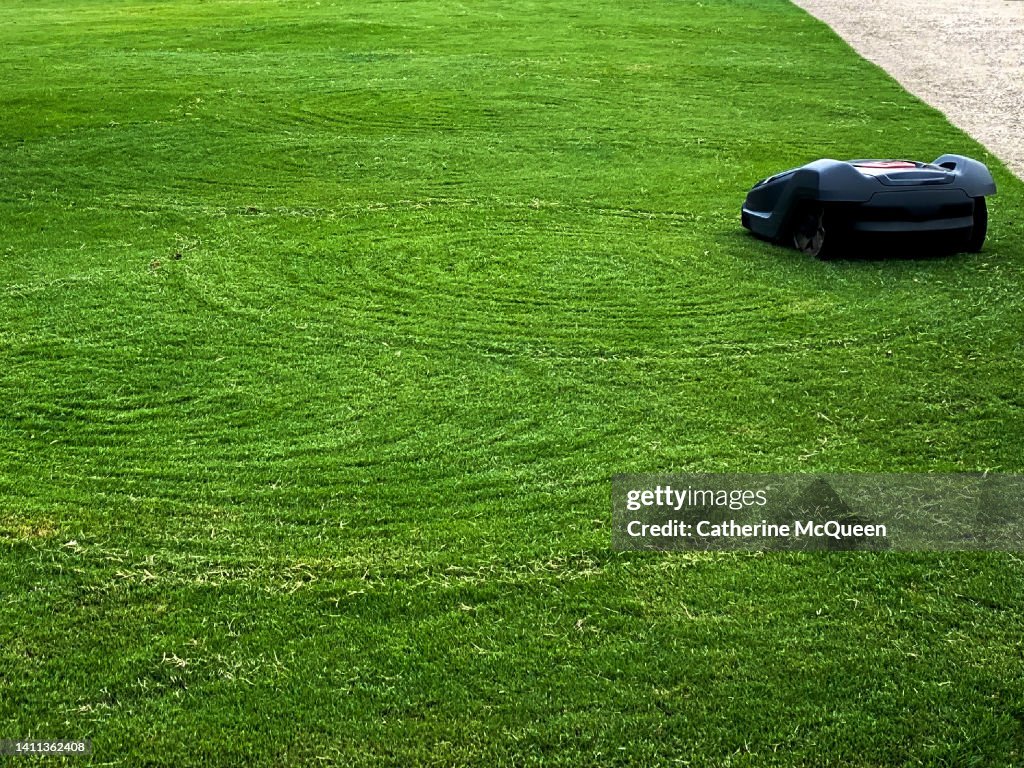
Common Robot Mower Scheduling Problems
Most scheduling problems come from using a fixed routine when the lawn’s growth has changed.
The grass is too tall
Possible causes:
- The mower runs too few hours.
- The lawn area is larger than the mower’s practical capacity.
- Growth increased after rain or fertilizer.
- The mower cannot reach part of the lawn.
- The cutting height is too high for the available schedule.
What to do:
- Measure or estimate the mowable area.
- Check the mower’s coverage rating.
- Confirm that all zones receive mowing time.
- Increase the schedule gradually.
- Cut tall grass with a conventional mower if the robot is not designed for heavy overgrowth.
- Return to frequent light mowing once the lawn reaches the target height.
The lawn has brown or torn tips
Possible causes:
- Dull blades
- Damaged blades
- Mowing wet grass
- Cutting too low
- Mowing during heat stress
- Debris in the cutting deck
Replace or sharpen blades according to the manufacturer’s instructions. Robot mower blades are often small and may need more frequent replacement than homeowners expect, especially in yards with sand, sticks, or hidden objects.
The mower leaves tracks
Possible causes:
- The mower follows the same route too often.
- The soil is wet.
- The yard has a narrow entry path.
- The schedule is too long.
- The mower lacks route variation.
Wait for firmer soil, reduce operation during wet periods, and use route or zone settings if available. If one narrow path receives heavy traffic, inspect it for compaction and wear.
The mower runs but the lawn still looks uneven
Check the cutting height, blade condition, boundary layout, and zone settings. Also inspect areas beneath trees, beside fences, and near garden edges. Robot mowers may not reach every blade along a boundary without a separate trimming step.
No robot mower eliminates all lawn work. Most yards still need occasional edging, trimming, leaf removal, and spot mowing.

Robot Mower Frequency by Lawn Size
The lawn’s size affects runtime more than it affects mowing frequency. A large lawn may still need daily mowing, but the mower must have enough daily capacity to cover it.
| Lawn size | Practical starting plan |
|---|---|
| Small lawn | Every day or every other day |
| Medium lawn | Daily during fast growth; every other day during moderate growth |
| Large lawn | Daily operation may be needed to cover all zones |
| Divided lawn | Use zone schedules and confirm each area is reached |
| Sloped or complex lawn | Allow extra time and inspect for missed patches |
These categories are broad. Check the model’s rated area and reduce expectations for complex layouts. A mower rated for a certain area may need more time when the yard has many obstacles or narrow corridors.
Separate lawn zones
Some yards have front and back lawns connected by a narrow path. Others have areas separated by a driveway or walkway. A robot mower may need a guide wire, app-based zone control, or manual relocation, depending on the model.
If the mower cannot travel between zones, schedule each zone separately. Make sure the mower can safely enter and leave each area. Do not create a route that crosses a public sidewalk or road unless the system is specifically designed and approved for it.

Key Takeaways
- Run a robot mower daily or every other day during active growth.
- Reduce mowing during drought, heat stress, slow growth, and wet conditions.
- Keep the mower from removing more than one-third of the grass blade.
- Set the cutting height for your grass type and local climate.
- Use the mower’s coverage rating as a starting point, not a guarantee.
- Check for tall patches, tracks, torn tips, and missed zones each week.
- Keep people, pets, debris, and wet soil away from mowing operations.
- Plan for occasional edging, trimming, leaf removal, and blade service.
Frequently Asked Questions
Can a robot mower cut grass every day?
Yes. Daily mowing is suitable when the grass is growing fast, the lawn is dry, and the mower can cover the full area. Daily operation is not needed when the grass is dormant or under drought stress.
Is it better to run a robot mower at night?
Night mowing may reduce contact with people, but it can disturb neighbors and may cut wet grass. Check local noise rules and the mower’s manual. A dry daytime schedule is often easier on the lawn.
Can a robot mower cut wet grass?
Some models can operate in light moisture, but wet mowing can cause uneven cuts, clogging, slipping, and soil damage. Check the manual and avoid operation when the lawn is saturated or the soil is soft.
How often should robot mower blades be changed?
Blade life depends on use, grass area, soil, sand, and debris. Inspect blades regularly and replace them when they are dull, bent, damaged, or leaving torn tips. Follow the model’s service instructions.
Should I use a robot mower after fertilizing?
Follow the fertilizer label and water-in instructions first. Avoid mowing while fertilizer granules remain on the surface if the mower could spread them unevenly or pick them up. Do not use extra mowing to compensate for excessive fertilizer.
Does a robot mower eliminate the need for a regular mower?
Usually, no. A standard mower may still help with tall spring growth, neglected areas, steep sections, wet grass, leaf cleanup, and occasional recovery cuts. A string trimmer or edger may also be needed along walls, fences, and garden beds.
Conclusion
For most U.S. lawns, set a robot mower to run every day or every other day while grass is actively growing. Adjust the schedule for grass type, rainfall, heat, drought, soil condition, and lawn size.
Start with every-other-day mowing, inspect the lawn for one week, and then fine-tune the schedule. Increase mowing during fast growth. Reduce or pause it when the lawn is stressed or the soil is wet.
The best schedule is the one that keeps grass near its target height without torn tips, muddy tracks, missed zones, or unnecessary wear.


