
How To Choose A Zero Turn Mower: Smart Buying Guide
The best zero-turn mower for a U.S. property depends on lawn size, slope, gate width, terrain, storage, and your budget—not just engine power or deck size. Start by measuring the area you mow, checking the steepest slopes, and comparing each mower’s deck, controls, safety limits, service support, and total cost.
A zero-turn mower can cut around trees, beds, fences, and other obstacles with less turning space than a lawn tractor. But it may be a poor choice for steep hills, rough ground, narrow gates, or owners who need strong towing ability.
This guide explains how to choose a zero-turn mower for residential or light commercial use in the United States.

1. Measure Your Property Before You Shop
Measure the mowing area, the narrowest access point, and the steepest slope before comparing models. These three measurements remove many unsuitable mowers from your list.
Calculate the mowing area
You do not need a perfect survey. A rough area estimate is enough for an initial choice.
For a simple rectangular lawn:
Length × width = mowing area
For an irregular property, divide the lawn into rectangles and add the results.
Example:
- Area A: 150 feet × 100 feet = 15,000 square feet
- Area B: 80 feet × 60 feet = 4,800 square feet
- Total: 19,800 square feet
One acre equals 43,560 square feet. The example above covers about 0.45 acre.
The stated cutting width is not the same as real mowing output. Trees, hills, overlap, turns, wet grass, and obstacles reduce actual productivity. Use the manufacturer’s stated acres-per-hour figure only as a comparison, not as a promise.
Measure gates and storage areas
Measure the narrowest gate, shed door, trailer ramp, and path to your storage area. Include the mower’s full width with the discharge chute in its normal position.
A mower with a 54-inch deck may not fit through a 55-inch opening. The deck may be narrower than the mower’s full operating width.
Also check:
- Door height
- Door width
- Trailer width and ramp rating
- Turning room inside the shed
- Space to remove the grass chute or deck
- Clearance around fuel cans and chargers
Check the steepest slopes
Slope is one of the most important safety limits. A zero-turn mower may lose traction or become difficult to control on a slope, especially when the surface is wet, loose, or uneven.
Do not guess the slope by sight. Use a slope gauge, a phone app as a rough guide, or a simple measurement:
Slope percentage = vertical rise ÷ horizontal distance × 100
A 3-foot rise over 20 feet equals a 15% slope. That is not the same as a 15-degree slope.
Many residential mower manuals set limits near 15 degrees, but limits vary by model and by the direction of travel. Some models have lower limits. The owner’s manual for the exact mower controls the decision.
Never treat a slope limit as a target. A mower rated for a certain slope may still be unsafe when the grass is wet, the soil is loose, or the ground has holes.

2. Choose the Right Mower Type
Choose between a residential, prosumer, or commercial zero-turn mower based on annual use, mowing conditions, service needs, and expected ownership length.
Residential zero-turn mowers
Residential models are designed for routine home lawn care. They often cost less and may have lighter frames, smaller engines, simpler seats, and shorter warranty terms than commercial machines.
They can fit well when you:
- Mow one or two properties
- Use the mower for a limited number of hours each week
- Have a fairly smooth lawn
- Want faster mowing than a lawn tractor provides
- Can perform basic maintenance
A residential mower may not be the best fit for rough land, frequent hauling, steep terrain, or many weekly mowing hours.
Prosumer and commercial zero-turn mowers
Prosumer models sit between residential and commercial equipment. They may offer stronger frames, better suspension, larger fuel tanks, or upgraded transmissions.
Commercial mowers are built for longer and more frequent use. They often include:
- Welded steel frames
- More durable spindle assemblies
- Larger drive tires
- Higher-grade hydraulic systems
- Commercial engines
- More seat and control adjustments
- Better access to service parts
Commercial does not always mean faster or safer on every lawn. A heavy mower can damage soft soil and may be harder to transport or store.
Stand-on, lawn tractor, and walk-behind alternatives
A zero-turn mower is not the only option.
A lawn tractor may be better when you need:
- A front-mounted snow blade
- Strong towing ability
- A comfortable forward-facing driving position
- Use on more open and gently sloped land
A stand-on mower can improve visibility and reduce seat time, but it may feel less comfortable for long work sessions.
A wide walk-behind mower may suit smaller yards, narrow passages, or areas where a riding mower cannot safely operate.
The key trade-off is simple: zero-turn mowers are strong at fast obstacle work, but they are not automatically best for hills, towing, or rough ground.
3. Select the Correct Deck Size
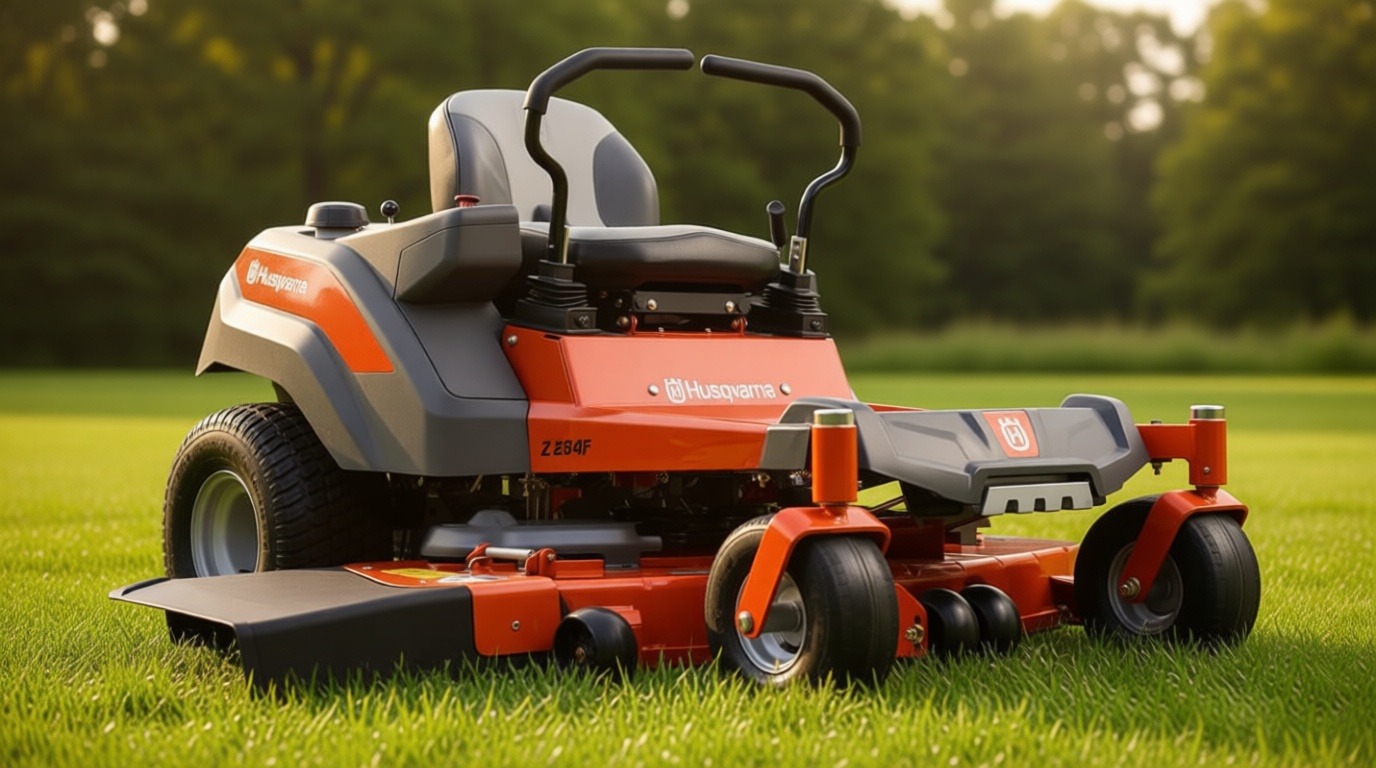
Choose a deck that fits your lawn layout and access points. A larger deck can reduce mowing time in open areas, while a smaller deck turns and fits better around obstacles.
Common residential deck sizes include:
| Deck width | Often suits | Main limitation |
|---|---|---|
| 34–42 inches | Small lawns and narrow gates | Slower on open land |
| 46–54 inches | Many suburban yards | May not fit tight gates |
| 60 inches or more | Large, open lawns | Needs more room and may scalp uneven ground |
These are general categories, not fixed rules.
Larger decks
A large deck can cover more grass in each pass. It works best on:
- Open lawns
- Broad side yards
- Smooth ground
- Properties with few trees or beds
A large deck may perform poorly in tight spaces. It can also bridge dips and leave uncut strips or scalp high spots when the ground is uneven.
Smaller decks
A smaller deck can move around trees, posts, beds, and narrow areas with less backing and repositioning.
Choose a smaller deck when:
- Your gate is narrow
- The lawn has many obstacles
- The ground is uneven
- The property has narrow side passages
- Storage space is limited
Deck construction and adjustment
Look for a deck that allows easy height adjustment and cleaning. A fabricated deck usually uses welded steel. A stamped deck is formed from one sheet of steel.
Neither construction type alone proves cutting quality. Check the deck thickness, spindle design, belt access, anti-scalp wheels, discharge design, and parts support.
A deck with several height settings helps you adapt to seasonal grass growth. Follow the mower manual and local turf guidance rather than cutting too low.
4. Compare Engine Power and Fuel or Battery Systems
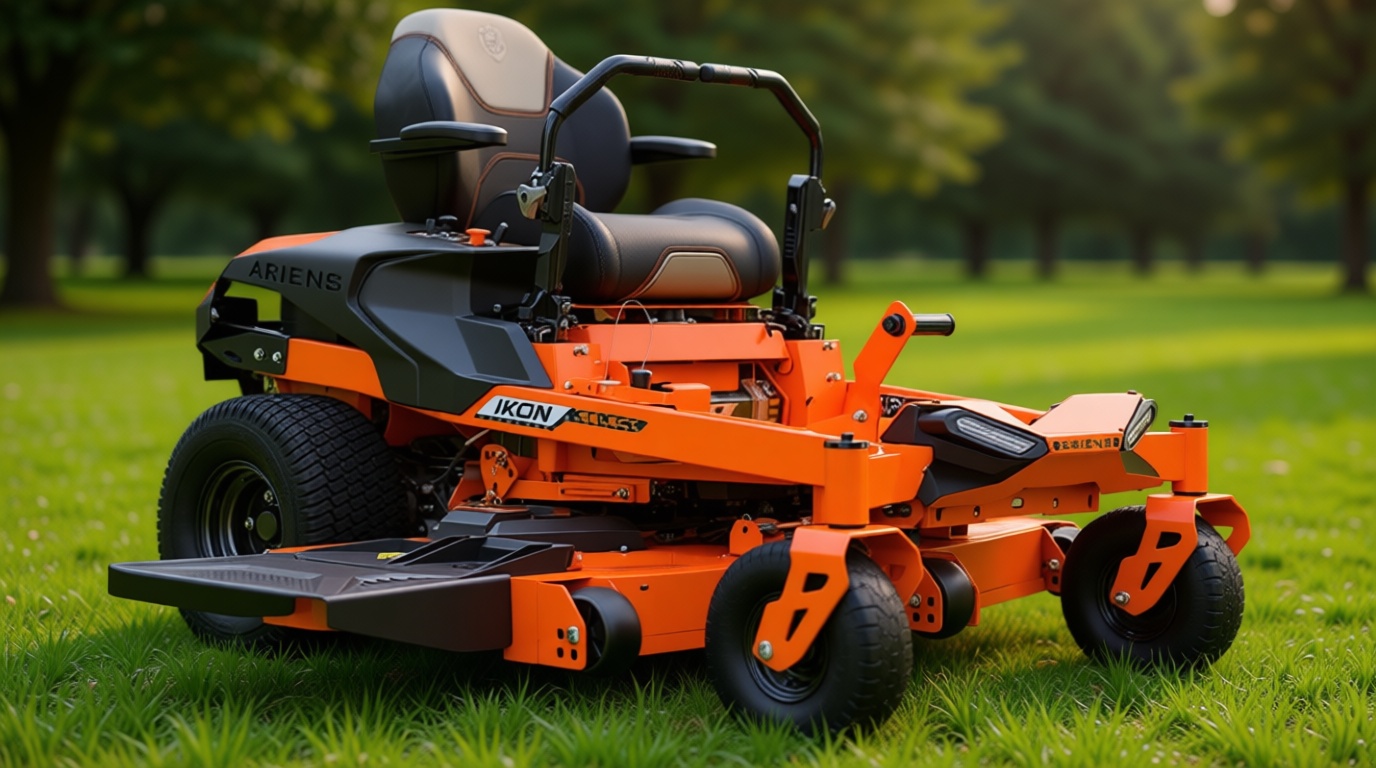
Compare the complete power system, not engine horsepower alone. Engine size, transmission, deck width, blade speed, fuel capacity, battery capacity, and terrain all affect real mowing performance.
Gas engine considerations
Gas zero-turn mowers remain common in the United States. Important details include:
- Engine displacement
- Rated horsepower or gross horsepower
- Fuel tank size
- Fuel type
- Oil-change interval
- Air-filter design
- Cold-start behavior
- Local service access
A larger engine can help with a wide deck, tall grass, hills within the mower’s approved limit, or frequent heavy use. It does not make an unsafe slope safe.
Horsepower ratings are not always directly comparable. Manufacturers may use different rating standards, engine versions, or test conditions. Treat horsepower as one data point rather than the final measure of cutting ability.
Battery-electric considerations
Battery zero-turn mowers can reduce engine noise, exhaust at the operator position, and routine engine maintenance. They still need blade, tire, deck, belt, and electrical-system care.
Check:
- Total battery capacity in kilowatt-hours, if listed
- Number of batteries
- Charger type and charging time
- Required outlet
- Replacement-battery cost
- Rated runtime conditions
- Performance in tall or wet grass
- Battery and charger warranty
- Whether batteries are included
Runtime claims depend on grass height, moisture, blade speed, terrain, operator habits, and deck width. Ask whether the stated runtime means continuous mowing time or total operating time with pauses.
A battery mower may fit a homeowner who can charge between mowing sessions. It may not fit a large property if one charge does not cover the full job and spare batteries are expensive or unavailable.
Fuel and energy cost
A simple fuel estimate is:
Fuel cost per mowing = gallons used × local price per gallon
For electric models:
Electricity cost per charge = battery capacity in kilowatt-hours × local electricity rate
These are estimates. Charging losses, partial charging, fuel waste, and changing mowing conditions affect the result.

5. Evaluate the Transmission and Drive System
Choose a mower with a drive system that matches the terrain and hours of use. The transmission affects control, hill behavior, durability, repair cost, and smoothness.
Most zero-turn mowers use two independent drive systems. Each side can move at a different speed, allowing the mower to turn within its own length.
Important features include:
- Hydrostatic drive
- Pump and motor design
- Serviceable or sealed components
- Drive-tire size
- Parking-brake design
- Forward and reverse control
- Manufacturer’s slope guidance
A stronger-looking transmission does not remove the need to follow the manual. Traction depends on tire tread, weight balance, surface condition, slope direction, and operator control.
Why zero-turn control feels different
A zero-turn mower commonly uses two lap bars. Push both bars forward to travel forward. Pull both back to reverse. Move one bar more than the other to turn.
This control system is precise, but it takes practice. New operators should begin on a flat, dry, open area. Learn forward movement, reverse movement, gentle turns, sharp turns, and stopping before mowing near trees or slopes.
Avoid rapid steering changes on hills. Follow the exact operating instructions for the model.

6. Check Comfort and Operator Fit
A mower that feels uncomfortable can make a short mowing job feel long. Test the seat, controls, foot platform, and visibility before buying.
Look for:
- Adjustable seat position
- Seat suspension
- Armrests
- Control-bar adjustment
- Footrest space
- Easy-to-reach height controls
- Low vibration
- Clear sight lines
- Simple parking brake operation
Sit on the mower with your normal shoes. Make sure you can fully press the control bars, reach the deck-lift pedal, and see the front deck edges.
A suspension seat can reduce harsh movement on rough ground, but it cannot correct unsafe terrain. Extra comfort also does not justify using a mower beyond its slope or operating limits.
Consider noise as well. Gas mowers produce engine and exhaust noise. Battery models are often quieter at the mower, but blade noise and tire noise remain. Hearing protection is still sensible when the sound level is high or mowing lasts for a long time.

7. Review Cutting Quality and Grass Handling
A mower should leave an even cut without repeated passes, uncut strips, or heavy clumps under normal conditions. Deck design, blade condition, tire pressure, ground speed, and grass moisture all affect the result.
Check whether the mower offers:
- Side discharge
- Mulching capability
- Bagging compatibility
- A wash-port design, if provided
- Easy blade access
- Anti-scalp wheels
- Deck leveling adjustments
- Replacement blades that are easy to obtain
Side discharge
Side discharge is fast and works well when clippings can remain on the lawn. Keep discharged material away from roads, people, pets, windows, and water.
Mulching
Mulching can return small clippings to the lawn. It works best when grass is dry and not excessively tall. A mulching kit may require different blades, baffles, or a plug.
Bagging
Bagging helps when the lawn must look clean or when heavy clippings need removal. It adds cost, weight, emptying work, and storage needs.
Do not judge a mower only by its maximum travel speed. A high ground speed can reduce cut quality if the deck cannot process the grass quickly.
8. Match the Mower to Hills and Uneven Ground
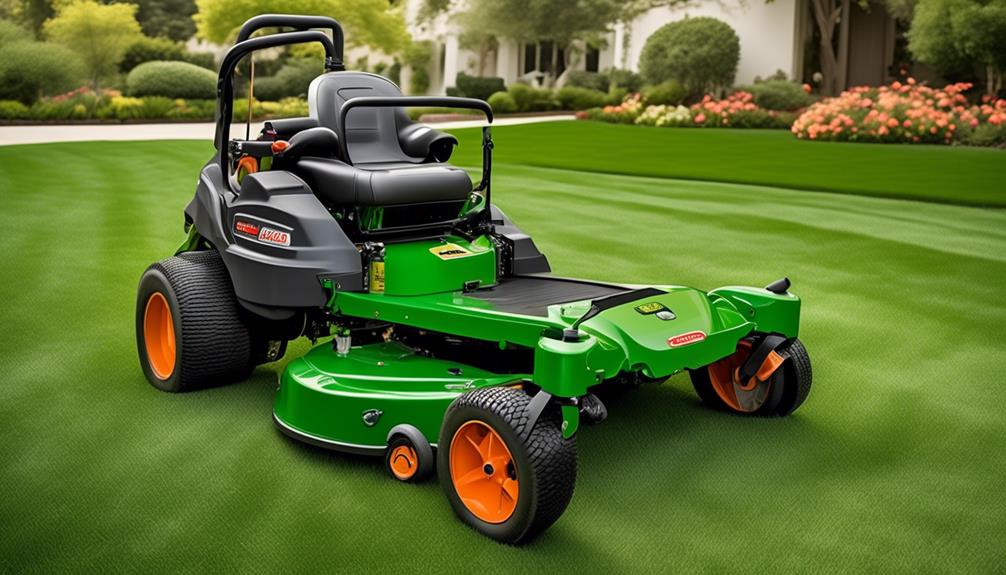
For sloped or rough property, safety and traction matter more than mowing speed. A zero-turn mower may be difficult to control when turning across a slope, traveling on wet grass, or crossing holes and raised roots.
Before purchase:
- Read the exact owner’s manual.
- Find the maximum slope and direction-of-travel rules.
- Inspect the land for holes, drop-offs, loose soil, and hidden objects.
- Decide whether the mower can avoid the risky areas.
- Consider a different mower type if the safe mowing area is too small.
Do not use a riding mower near an unprotected drop-off, retaining wall, pond edge, or ditch unless the manufacturer gives clear guidance and the area remains within safe operating limits.
Never carry passengers unless the mower is specifically designed for them. Keep children and bystanders away from the mowing area. Stop the blades before crossing gravel, sidewalks, roads, or other surfaces that can throw objects.
For steep or irregular land, a professional mowing service may be safer than buying a faster machine.

9. Compare Maintenance, Repairs, and Dealer Support
The purchase price is only part of the cost. Compare routine service, wear parts, repair access, and local support before choosing a mower.
Routine maintenance
Gas models may need:
- Engine oil and filter service
- Air-filter replacement
- Spark-plug service
- Fuel-system care
- Battery charging or replacement
- Greasing at listed points
Gas and battery models may both need:
- Blade sharpening or replacement
- Deck cleaning
- Belt inspection
- Tire-pressure checks
- Spindle inspection
- Fastener checks
- Battery or cable inspection
- Cleaning after use
Use the maintenance schedule in the manual. Do not rely on a generic schedule if the manufacturer lists different intervals.
Dealer and parts support
Ask the dealer:
- How long common parts usually take to arrive
- Who performs warranty repairs
- Whether local technicians service the model
- Whether the engine and mower have separate warranties
- Whether batteries and chargers have separate coverage
- What labor the warranty covers
- Whether mobile service is available
A lower purchase price can become expensive if the mower is difficult to repair or parts are hard to find.
Warranty limitations
Read exclusions for:
- Commercial use
- Rental use
- Neglected maintenance
- Fuel problems
- Wear parts
- Batteries
- Belts
- Blades
- Tires
- Damage from slopes, impacts, or improper use
Keep receipts and maintenance records. They can help with warranty claims and resale.

10. Build a Total-Cost Comparison
Compare total ownership cost over the years you expect to keep the mower. A useful estimate includes purchase, maintenance, energy, storage, and likely repairs.
A simple model is:
Total ownership cost = purchase price + maintenance + fuel or electricity + repairs − resale value
For a gas mower, include oil, filters, fuel, and spark plugs. For a battery mower, include electricity and possible battery replacement. Do not assume a battery will last for a fixed number of years unless the manufacturer gives that information for the specific battery and use conditions.
Example comparison
This is a hypothetical calculation, not a price claim:
| Cost item | Gas mower | Battery mower |
|---|---|---|
| Purchase price | $4,000 | $5,500 |
| Energy over ownership period | $1,200 | $450 |
| Routine maintenance | $900 | $500 |
| Possible battery replacement | Not applicable | $1,500 |
| Estimated resale value | −$1,200 | −$1,500 |
The battery mower has a higher starting price, but the result changes greatly if a battery replacement is not needed. Local prices and actual use control the outcome.
Treat online price lists as temporary. Check the current price, included equipment, delivery fee, assembly fee, and sales tax before deciding.

11. Use This Zero-Turn Mower Buying Checklist
Use this checklist during a dealer visit or before placing an online order.
Property fit
- Lawn area measured
- Narrowest gate measured
- Storage space measured
- Steepest slope checked
- Rough areas and drop-offs identified
- Wet or soft areas considered
Mower fit
- Deck width fits the property
- Deck height adjusts easily
- Engine or battery system fits the mowing time
- Transmission matches expected use
- Tires suit the ground
- Seat and controls fit the operator
- Discharge, mulch, or bagging needs are covered
Ownership fit
- Local service is available
- Replacement parts are easy to obtain
- Warranty terms are understood
- Maintenance schedule is acceptable
- Fuel or charging plan is practical
- Storage and winter care are possible
- Total cost fits the budget
Test-drive questions
On a flat, dry test area, check whether you can:
- Start and stop smoothly
- Drive straight
- Reverse without confusion
- Make a gentle turn
- Reach every control
- See the deck edges
- Engage and disengage the blades safely
- Park and set the brake correctly
Do not test the mower on a slope unless the dealer provides a safe, approved area and instructions.

Common Zero-Turn Mower Buying Mistakes
Buying the widest deck that fits the budget
A wide deck may save time in an open field but create problems at gates, around trees, and on uneven ground. Choose the deck for the whole property, not the largest open section.
Choosing by horsepower alone
Power does not show the mower’s slope limit, deck quality, transmission strength, comfort, or service support. Compare the full machine.
Ignoring the owner’s manual
The manual contains model-specific rules for slopes, transport, maintenance, fuel, charging, and safe operation. Read it before purchase when possible.
Assuming electric runtime equals mowing acreage
Runtime changes with grass height, moisture, speed, terrain, and blade settings. Ask how the runtime was measured and whether the battery and charger are included.
Skipping the gate measurement
A mower can be a poor purchase if it cannot reach the lawn. Measure the full mower width, not only the advertised deck width.
Using a zero-turn mower like a small tractor
Many zero-turn mowers are not designed for heavy towing, snow removal, front attachments, or steep hillside work. Check the manual before adding a trailer or attachment.
Forgetting transport
A riding mower needs a suitable trailer, ramp, tie-down points, and a vehicle that can tow the loaded weight. Secure the mower according to the manufacturer’s transport instructions.

Frequently Asked Questions
What size zero-turn mower is best for one acre?
A mower with a deck around 46 to 54 inches often fits a one-acre residential lawn, but the best size depends on obstacles, gates, slope, and lawn shape. A smaller deck may work better when the property has many trees or narrow areas.
Is a zero-turn mower safe on hills?
It can be safe only within the limits in the exact owner’s manual and when the surface and operating conditions are suitable. Many models have slope limits near 15 degrees, but this is not universal. Avoid wet grass, sharp turns, drop-offs, and conditions that reduce traction.
Are battery zero-turn mowers worth it?
They may be worth considering when you value lower routine engine maintenance, less engine noise, and home charging. Compare usable runtime, charging time, battery replacement cost, warranty coverage, and the size of your mowing area before buying.
What is the difference between a fabricated and stamped mower deck?
A fabricated deck is generally made from welded steel sections. A stamped deck is formed from sheet steel. Construction can affect weight, repairability, and cost, but deck design, blade setup, leveling, and maintenance also affect cut quality.
How long can a zero-turn mower last?
Service life varies with build quality, mowing hours, terrain, maintenance, storage, and repairs. A lightly used and well-maintained residential mower may last much longer than one used daily on rough land. Ask about service intervals and parts support rather than relying on a single year estimate.
Can a zero-turn mower pull a trailer?
Some models allow limited towing, while others restrict or prohibit it. Use only the hitch, load, speed, and attachment limits listed in the exact manual. Never assume that a factory hitch means the mower can safely pull a heavy load.

Conclusion: Choose for the Property, Not the Advertisement
To choose a zero-turn mower, measure the lawn and access points first. Then match the deck size, drive system, power source, slope limits, comfort features, maintenance needs, and service support to the property.
For an open, fairly level suburban lawn, a mid-size residential zero-turn mower may offer a practical balance of speed and cost. For rough or frequent use, a stronger prosumer or commercial model may make sense. For steep, wet, or irregular ground, another mower type—or professional service—may be the safer choice.
The next step is to write down your lawn size, narrowest gate width, steepest slope, expected mowing time, and storage limits. Take that list to the mower manual or dealer and reject any model that fails one of those basic conditions.
Sources and Further Reading
- U.S. Consumer Product Safety Commission: Riding Mower Safety
- U.S. Consumer Product Safety Commission: Lawn Mower Safety
- U.S. Environmental Protection Agency: Small Engines
- OSHA: Landscaping and Horticultural Services Safety
- American National Standards Institute: Outdoor Power Equipment Standards
- Manufacturer owner’s manuals for the exact mower model, engine, battery, charger, and attachments being considered


