
How Much Is A Roomba Lawn Mower: 2026 Price Guide
Introduction
There is no official Roomba lawn mower sold in the United States. Roomba is iRobot’s brand for robot vacuums and mops. The similar product for grass is called a robotic lawn mower or robot lawn mower.
In the U.S., a robotic lawn mower usually costs $800 to $5,000. Most home models cost about $1,200 to $3,000 before tax and setup. Extra costs may include boundary wire, GPS service, replacement blades, a charging station, and professional installation.
If you are searching for a “Roomba lawn mower,” you most likely want a robot that cuts grass without a person pushing it.

Quick Answer: How Much Does a Robot Lawn Mower Cost?
A robot lawn mower costs about $800 to $5,000 in the United States, depending on its cutting area, navigation system, terrain rating, and features.
| Robot mower type | Typical U.S. price | Best for |
|---|---|---|
| Basic wired model | $800–$1,500 | Small, simple lawns |
| Mid-range model | $1,500–$2,500 | Medium suburban yards |
| Wire-free model | $1,500–$3,500 | Lawns where setup must be simple |
| Premium all-terrain model | $3,000–$5,000+ | Large, sloped, or complex lawns |
| Professional installation | $200–$1,000+ | Boundary setup and system testing |
These are general market ranges, not a fixed price list. Prices change by model, retailer, sales event, region, and included accessories.
The total cost can be higher than the mower price. A realistic budget is often:
- Small lawn: $900–$1,700
- Medium lawn: $1,500–$3,000
- Large or sloped lawn: $2,500–$5,500 or more
Why “Roomba Lawn Mower” Is Not the Correct Product Name
Roomba is a product line from iRobot. It is designed to clean indoor floors. It does not refer to a general class of outdoor robots.
The outdoor equivalent is usually called a:
- Robotic lawn mower
- Robot lawn mower
- Autonomous lawn mower
- Smart lawn mower
- Automatic grass mower
Some shoppers also search for iRobot lawn mower, Roomba grass cutter, or automatic lawn mower robot. These terms describe the same general product category, but they do not mean that iRobot makes a lawn mower.
As of the information available for this guide, you should not assume that a product marketed as a “Roomba mower” is made by iRobot. Check the brand, model number, warranty, and U.S. support page before paying.

Robot Lawn Mower Price Ranges in the United States
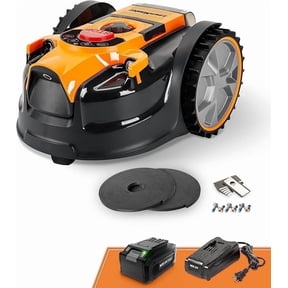
Basic robotic lawn mowers: $800 to $1,500
Basic models often use a perimeter wire. The wire marks the area where the mower can operate. You may need to bury or pin the wire around the lawn, flower beds, trees, and other areas to avoid.
These mowers are a good fit for:
- Small or medium lawns
- Mostly flat yards
- Simple lawn shapes
- Buyers who want the lowest entry price
A lower price often means fewer advanced features. The mower may have a smaller battery, a lower slope rating, less precise navigation, and fewer smart controls.
Mid-range robot mowers: $1,500 to $2,500
Mid-range models may offer stronger motors, larger cutting areas, rain sensors, mobile apps, theft alerts, and better navigation.
Some still need a boundary wire. Others use GPS, radio beacons, cameras, or other systems to reduce the need for wire.
This range often suits a typical U.S. suburban lawn. It can handle more complex layouts than a basic model, but you still need to check slope limits and yard size.
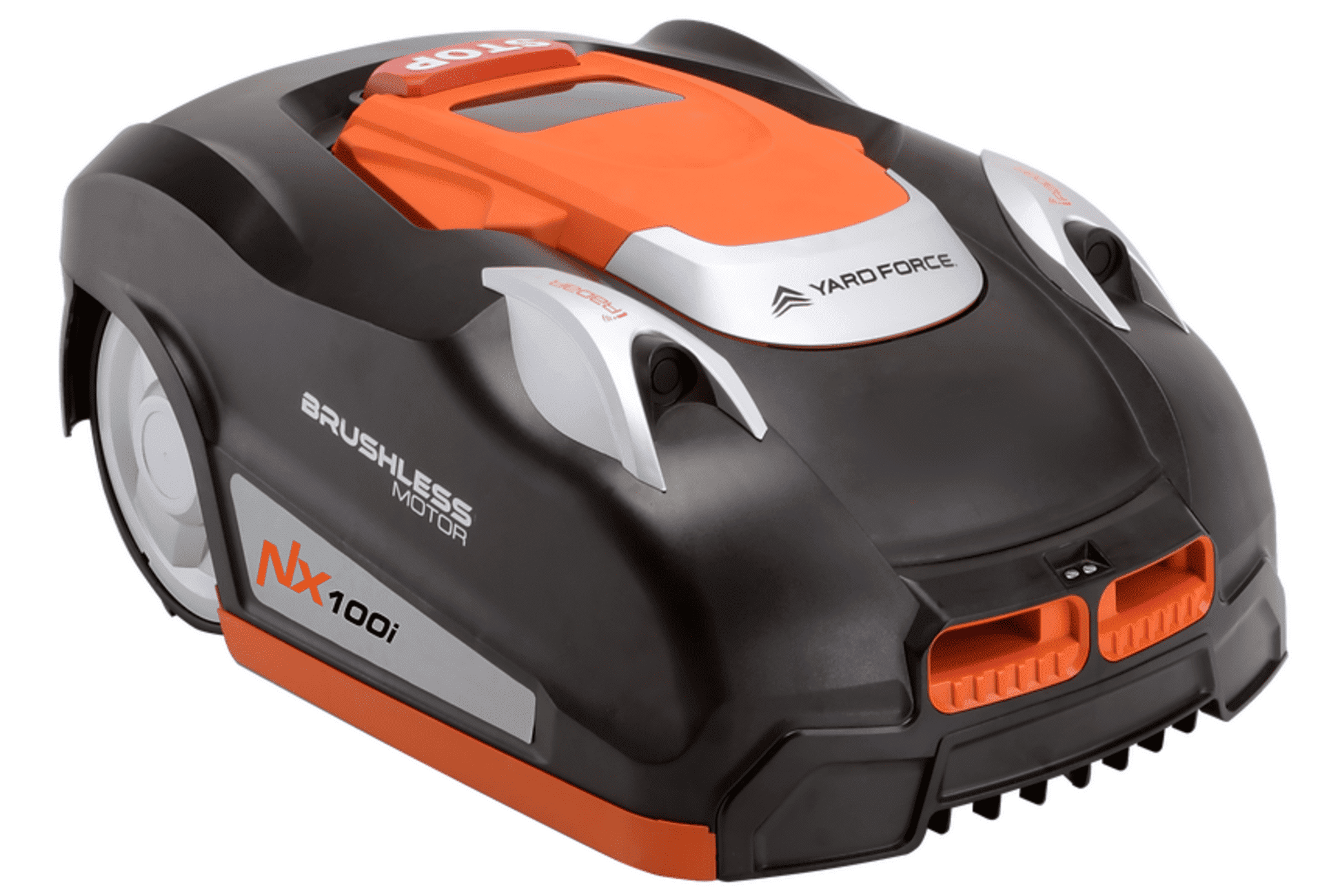
Premium robot mowers: $2,500 to $5,000 or more
Premium models are built for larger yards, steep sections, rough terrain, or more advanced mapping.
Common features may include:
- Wire-free boundary setup
- Satellite or GPS-assisted navigation
- Multiple lawn zones
- Stronger traction
- Wider cutting paths
- Automatic charging
- Remote control through an app
- Obstacle detection
- Anti-theft alerts
A higher price does not guarantee better results on every lawn. A premium mower can still struggle with poor satellite visibility, deep holes, tall weeds, loose soil, or narrow paths.
Commercial and large-property models: $5,000 and up
Large estates, sports fields, parks, and commercial sites may need a commercial robotic mower. These systems can cost much more than residential products.
They may also require:
- Site planning
- Commercial support
- Multiple charging stations
- Fleet management software
- Professional installation
- Regular service
Most homeowners do not need this class of equipment.

What Affects the Price of a Robotic Lawn Mower?
The main price drivers are lawn size, navigation, slope, cutting performance, and installation.
Lawn size
Manufacturers rate mowers by the area they can cut. The rating is not always the same as the size of your property.
For example, a 0.25-acre property may contain a house, driveway, patio, garden, and trees. The actual grass area may be much smaller.
Measure the grass, not the whole lot. Also leave some reserve capacity. A mower rated for exactly your lawn may need to run for long periods and may have less time to recover from wet weather.
Boundary wire or wire-free navigation
A wire-guided mower can cost less, but installation takes time. You must place the wire around the cutting area and create islands around hazards.
Wire-free models may use:
- GPS or global navigation satellites
- Real-time kinematic positioning
- Radio reference stations
- Cameras
- Computer vision
- App-based digital maps
Wire-free systems can reduce physical setup. However, they may cost more and may need a clear view of the sky, a stable signal, or a paid data service.
Slope and traction
A flat lawn is easier to mow than a sloped lawn. Check the manufacturer’s maximum slope rating before you buy.
A mower may move on a slope but still fail to cut well there. Wet grass can also reduce traction. For steep yards, look for the slope rating in degrees or percent and compare it with your actual yard.
Cutting width and battery size
A wider cutting deck can reduce mowing time. A larger battery can help the mower cover more ground before charging.
These features often raise the price. They may not matter much on a small lawn, where the mower can run several short cycles each week.
Smart features
App control is common in this category. Higher-priced models may add:
- Lawn maps
- Zone control
- Mowing schedules
- Weather changes
- Remote start and stop
- Error alerts
- Location tracking
- Theft alarms
Smart features are useful only if the mower has a reliable connection and the app remains supported.
Installation
Installation may be free if you do it yourself. Professional installation can cost about $200 to $1,000 or more, based on the yard layout, wire length, number of zones, and local labor rates.
Ask whether the quote includes:
- Boundary wire
- Wire stakes
- Charging station setup
- App setup
- Zone mapping
- Testing
- Training
- Future service

Examples of Robot Mower Prices by Brand
Prices change often, so treat the ranges below as planning figures rather than permanent prices. Check the manufacturer and authorized U.S. retailers for the current price of a specific model.
| Brand or product family | Common U.S. price range | Main setup style |
|---|---|---|
| Worx Landroid | About $900–$2,000 | Often boundary wire |
| Husqvarna Automower | About $1,300–$5,000+ | Wire or specialty navigation, depending on model |
| Segway Navimow | About $1,000–$3,000+ | Many models focus on wire-free navigation |
| Mammotion LUBA | About $2,000–$4,500+ | Wire-free navigation on many models |
| EcoFlow Blade | About $2,000–$3,500+ | Advanced mapping and automated features |
| Sunseeker robotic mowers | About $1,000–$3,000+ | Model-dependent navigation |
The exact package matters. One listing may include a reference station or extra boundary equipment, while another may sell it separately.
A product page may also show a discounted price, a mower-only price, or a bundle price. Compare the full package before deciding.
The Real Cost of Owning a Robot Lawn Mower
The purchase price is only part of the budget. A simple ownership estimate looks like this:
Total first-year cost = mower + installation + accessories + service or subscription fees
For example, consider this hypothetical purchase:
- Robot mower: $1,800
- DIY boundary supplies: $100
- Extra blades: $30
- Protective garage: $150
- Installation: $0
- First-year subscription: $0
Estimated first-year total: $2,080
A different setup may look like this:
- Robot mower: $2,500
- Professional installation: $600
- GPS or cellular service: $120
- Spare blades: $40
- Winter storage cover: $150
Estimated first-year total: $3,410
These are examples, not quotes. Read the product terms carefully because service plans and accessories differ.
Common ongoing costs
Plan for some recurring costs:
- Replacement blades
- Boundary wire repairs
- Battery replacement after several years
- Tires or wheel parts
- Charging-station repairs
- Cellular or navigation subscriptions
- Winter storage
- Professional maintenance
Robot mowers usually need less labor than a standard mower, but they are not maintenance-free.
Electricity use
A robot mower uses electricity when it charges. The cost depends on battery size, mowing schedule, local electric rates, and how often the mower returns to its station.
For many homes, charging cost is not the largest ownership expense. Repairs, batteries, installation, and replacement parts can matter more.
Is a Robot Lawn Mower Cheaper Than Hiring a Lawn Service?
A robot mower can cost less than lawn service over several years, but the answer depends on your yard and local rates.
Suppose a lawn service costs $60 per visit and comes 25 times each season:
- $60 × 25 visits = $1,500 per season
A $2,000 robot mower could match that cost in a little over one season before repairs and setup. But this calculation is only a starting point.
A lawn service may also include trimming, edging, blowing, and leaf work. A robot mower usually cuts grass only. You may still need a string trimmer and blower.
A robot mower may be financially attractive when:
- The lawn has a simple shape
- You plan to stay in the home for several years
- You do not need frequent edging
- The mower can handle the grass and slope
- You are willing to maintain the robot
Hiring a service may be better when:
- The lawn is very small
- The yard has many obstacles
- You rent the home
- You need full lawn care
- The property has steep or uneven ground
- You do not want to manage a robot
How to Choose the Right Price Level
Start with the lawn, not the brand. A few basic measurements can prevent an expensive mistake.
Step 1: Measure the grass area
Estimate the total grass area. Exclude buildings, driveways, patios, and garden beds.
If the grass is divided into separate areas, measure each zone. Some mowers handle separate zones well. Others need a connected path or manual relocation.
Step 2: Check the slope
Walk the lawn and identify steep sections. Use the mower’s published slope rating, not a guess based on appearance.
If your yard is wet, rough, or slippery, choose a model with more traction than the minimum rating suggests.
Step 3: Identify hazards
Look for:
- Tree roots
- Drainage holes
- Pond edges
- Garden borders
- Toys
- Pet waste
- Loose gravel
- Low branches
- Steps and drop-offs
A robot mower may detect some objects, but detection is not a replacement for safe yard preparation.
Step 4: Decide whether you want boundary wire
Boundary wire can lower the purchase price. It can also produce a clear, reliable boundary when installed well.
Wire-free navigation can save setup time. It may cost more and may depend on signal conditions.
Step 5: Compare the complete price
Include the mower, station, boundary kit, reference station, subscription, installation, garage, and spare parts.
The cheapest listing is not always the cheapest working system.
Safety and Setup Limits to Know
A robotic lawn mower is not a toy. Follow the manual and local rules.
Keep children and pets away while the mower is operating, especially during the first setup period. Remove toys, hoses, sticks, and other objects from the lawn.
Do not mow over animal waste. It can spread contamination across the lawn and damage the mower.
Before working under the mower, turn it off and follow the manufacturer’s instructions for removing the battery or preventing movement. Do not lift or service a moving mower.
Use the charging station only as directed. Protect electrical connections from water when the manual requires it. Contact a qualified electrician if the installation needs new outdoor wiring or a modified electrical circuit.
Do not rely on a robot mower to protect a pond, retaining wall, public sidewalk, or steep drop. Use a physical barrier when the manufacturer requires one.
Common Buying Mistakes
Buying for the whole property instead of the grass area
A half-acre lot may have only a small lawn. Measure the cutting area first.
Choosing the cheapest mower for a complex yard
A low-cost model may work well on a flat rectangle. It may struggle with narrow passages, several zones, or steep slopes.
Assuming wire-free means setup-free
Wire-free models still need mapping, charging-station placement, signal checks, and boundary testing.
Ignoring service coverage
A mower is a long-term electronic device that works outdoors. Check repair centers, warranty terms, parts access, and customer support in the United States.
Forgetting winter storage
Freezing temperatures and wet storage can shorten battery life or damage electronics. Follow the model’s storage instructions.
Treating obstacle detection as perfect
Cameras and sensors can miss small, dark, thin, or low objects. Clear the lawn before each scheduled mowing cycle.
Best Budget for Different U.S. Lawns
| Lawn situation | Suggested budget | What to prioritize |
|---|---|---|
| Small, flat lawn | $900–$1,500 | Simple setup and low maintenance |
| Medium suburban lawn | $1,500–$2,500 | Area rating, app, reliable navigation |
| Large lawn | $2,500–$4,000 | Battery, charging speed, zone support |
| Sloped lawn | $2,000–$5,000+ | Traction and verified slope rating |
| Complex lawn | $2,000–$4,500+ | Mapping, obstacle handling, multiple zones |
| Rental home | Usually not ideal | Portability and payback period |
The best value is usually the least expensive mower that safely fits the lawn with spare capacity. Buying a model that is too small can lead to long run times, missed areas, and poor results.
Frequently Asked Questions
Does iRobot make a Roomba lawn mower?
No official iRobot Roomba lawn mower is generally available in the U.S. Roomba refers to iRobot’s indoor robot vacuum and mop products. Outdoor grass-cutting robots are sold by other brands under names such as robotic lawn mower or autonomous mower.
What is the cheapest robot lawn mower in the U.S.?
Entry-level models often start near $800 to $1,000, but prices vary. A low-priced mower may need boundary wire and may support only a smaller or flatter lawn. Include setup materials and possible installation in your budget.
Are robot lawn mowers worth the money?
They can be worth the cost for owners who want regular grass cutting with less manual work. They are less attractive when the yard is very small, very steep, highly divided, or full of obstacles. Compare the full cost with local lawn-service prices.
Do robot lawn mowers need Wi-Fi?
Not always. Some models use Wi-Fi for app control, while others use Bluetooth, cellular service, GPS, radio systems, or no remote connection. Check the exact model because remote features may require a subscription.
Do robot lawn mowers work in rain?
Some models can operate in light rain, while others return to the charging station when rain is detected. Wet grass can reduce traction and cutting quality. Follow the manufacturer’s weather guidance.
How long do robot lawn mowers last?
Service life depends on weather exposure, mowing hours, battery care, maintenance, and parts support. Blades and batteries are replaceable on many models. Before buying, check the price and availability of those parts.
Final Recommendation
For most U.S. homeowners, a realistic starting budget for a robotic lawn mower is $1,500 to $3,000. Choose a model below that range only when the lawn is small, flat, and simple. Consider $3,000 or more for large, steep, or complex yards.
Do not search only for a “Roomba lawn mower.” Search for a robotic lawn mower, then compare the cutting area, slope rating, navigation method, installation cost, warranty, and replacement parts. The right mower is the one that fits your lawn’s limits, not simply the one with the lowest sticker price.


