How Long Does A Push Mower Last: Lifespan Tips
A push mower can last about 8 to 10 years with regular care, but its real service life may range from 5 to 15 years. A simple reel mower may last even longer because it has few parts. A gas push mower can run for a decade or more when you change the oil, sharpen the blade, clean the air filter, and store it well. A battery mower may last 5 to 10 years, with the battery often needing replacement before the mower itself.
The right answer depends on more than the brand name. Yard size, grass type, slope, climate, mowing habits, storage, and repair costs all matter. A small, flat yard may place little stress on a mower. A large lot with thick grass, hills, wet soil, and tree roots can wear out the same mower much sooner.
This guide explains how long push mowers last, what parts fail first, how to extend mower life, and when repair no longer makes financial sense. It also covers gas, electric, battery, reel, and self-propelled mowers so first-time homeowners, experienced DIY users, and gift buyers can make a sound choice.

Quick answer: How long does a push mower last?
A push mower lasts about 8 to 10 years on average. A well-maintained gas mower may reach 10 to 15 years, while a battery mower often lasts 5 to 10 years because its lithium-ion battery has a limited charge cycle life. Cheap machines used on rough or wet lawns may last only 3 to 6 years. Regular cleaning, blade care, dry storage, and timely repairs make the biggest difference.

The best way to estimate mower life is to look at hours of use, not only age. A mower used for 30 minutes each week on a small lawn faces far less wear than one used for several hours on a large, hilly property.
A typical push mower may serve you for the following periods:
| Mower type | Common service life |
|---|---|
| Reel mower | 10–20 years |
| Gas push mower | 8–15 years |
| Corded electric mower | 8–12 years |
| Battery push mower | 5–10 years |
| Self-propelled gas mower | 7–12 years |
These are broad ranges, not promises. A mower with a steel deck, strong wheels, and available replacement parts may outlast a lighter model with a thin plastic deck. Battery quality, charging habits, and brand support also affect electric mower life.
What determines a mower’s lifespan?
Mower life depends on use, care, design, and storage. The engine or motor is only one part of the picture. Wheels, cables, belts, blade adapters, batteries, handles, and the mower deck can all decide when a machine becomes too costly to keep.

Yard size and mowing hours
A small yard creates less wear. A lot under about 5,000 square feet may take 20 to 40 minutes to mow with a 19- to 21-inch deck. A half-acre lawn may require much longer and may be too demanding for a basic push mower.
Repeated long mowing sessions heat the engine and place more load on the blade. Self-propelled mowers also wear their drive belts and gear systems when used on large lawns or slopes.
| Yard size | Mower fit | expected effect on wear |
|---|---|---|
| Under 5,000 square feet | Reel, corded, or battery push mower | Low wear when grass is maintained |
| 5,000–15,000 square feet | Gas or battery push mower | Moderate wear |
| Over 15,000 square feet | Strong gas, self-propelled, or riding mower | High wear for a basic push mower |
Measure the lawn before buying. Do not count the driveway, patio, house, or garden beds. Also measure gates and storage doors. A mower that fits the lawn but cannot pass through the gate is not a useful gift.
Grass type and mowing height
Dense turfgrass creates more blade resistance than thin, dry grass. Cool-season grasses such as Kentucky bluegrass and tall fescue can produce heavy clippings during fast spring growth. Warm-season grasses such as Bermuda grass may form a dense mat that needs a sharp blade and frequent mowing.
Mowing too low can stress both grass and mower. It may cause scalping, where the blade removes too much of the leaf and hits uneven soil. A higher mowing height often reduces engine load and protects the turfgrass root system.
Never remove more than about one-third of the grass blade at one time. If the lawn is very tall, raise the deck, mow slowly, and make a second pass later.
Terrain and obstacles
Hills, roots, stones, curbs, and rough ground shorten mower life. Blade impacts can bend the crankshaft, damage the blade adapter, or crack the deck. Slopes also make a basic push mower harder to control.
A self-propelled mower can help on moderate slopes, but it does not remove the risk. Walk across a slope rather than straight up or down when the owner’s manual permits it. Never mow wet grass on a slope. The ground may be slippery, and the mower can lose traction.
Climate and weather
Hot weather can increase engine heat. Cold weather can cause hard starting in gas mowers, especially when old fuel thickens or the battery weakens. Humid air and rain can lead to rust under the deck, inside cables, and around fasteners.
Wet grass also clumps under the deck. Those clumps block airflow and make the engine work harder. Let the grass dry when possible, and clean the underside after mowing.
Storage conditions
A mower stored in a dry garage may last years longer than one left outside under a tarp. A tarp can trap moisture if air cannot move around the machine. A shed is suitable if it stays dry and does not expose the mower to extreme heat or standing water.
Store gas equipment away from flames, pilot lights, and living areas. Keep fuel in an approved container and follow local rules. For battery equipment, protect the battery from extreme heat and freezing temperatures unless the manual says otherwise.
Which mower parts wear out first?
Blades, belts, wheels, cables, air filters, spark plugs, and batteries usually wear out before the main body of the mower. Many of these parts are inexpensive and replaceable. A worn part does not always mean the whole mower has reached the end of its life.

| Part | Typical problem | Replace or service when |
|---|---|---|
| Mower blade | Dull, bent, cracked, or badly rusted | It tears grass or has impact damage |
| Spark plug | Hard starting or weak running | It is fouled, worn, or due for service |
| Air filter | Restricted airflow | It is dirty, damaged, or clogged |
| Drive belt | Slipping or squealing | It cracks, stretches, or fails to propel |
| Battery pack | Short runtime or shutdowns | It no longer holds useful charge |
| Wheels | Wobble or poor height control | Bearings, hubs, or tires are damaged |
Takeaways are simple. Replace normal wear parts before judging the mower itself. Stop using the mower if the blade is cracked, the crankshaft is bent, or the deck has a dangerous break.
Mower blades
The blade is the mower’s cutting tool. A dull blade tears grass instead of making a clean cut. Torn tips may turn brown and can make the lawn look rough.
Inspect the blade at least twice during the mowing season. Sharpen it when it feels dull or when the grass tips look ragged. Many homeowners sharpen once or twice per season, but sandy soil, sticks, and frequent mowing may require more often.
Always balance a sharpened blade. An unbalanced blade can cause vibration and damage the crankshaft. Confirm the blade type, length, center-hole pattern, and part number before ordering.
Spark plugs and air filters
Gas mowers need clean air and a strong spark. A dirty air filter limits airflow. A worn spark plug can cause hard starts, uneven running, or repeated stalling.
Service intervals vary by engine. Check the owner’s manual rather than guessing. Foam filters may be washable, while paper filters usually need replacement. Use the correct spark plug gap and part number.
Belts, cables, and wheels
Self-propelled mowers have more moving parts than standard push mowers. A drive belt can stretch or crack. A control cable can rust or bind. Plastic wheel gears may wear down after years of use.
These repairs are often reasonable for a good mower. They may not be worth the cost on a very old machine with a rusty deck, poor compression, and several other failing parts.
Batteries
Battery mowers have two main components: the mower and the battery pack. The mower may remain sound after the battery loses capacity. Replacement batteries can be expensive, so check availability and price before buying.
A battery measured in amp-hours, or Ah, describes its stored electrical capacity. A higher Ah battery may run longer, but it can also cost more and weigh more. Voltage must match the mower platform. Never assume batteries from different brands will fit.
Gas, electric, battery, and reel mower life compared
The main difference between mower types is where wear occurs. Gas mowers wear engines, fuel systems, filters, and spark plugs. Battery mowers avoid fuel service but eventually need a battery. Reel mowers have little mechanical complexity but need sharp blades and suitable grass.

Gas push mowers
Gas mowers remain useful for medium and larger lawns, thick grass, and places without convenient charging. A 140- to 190-cubic-centimeter engine is common in walk-behind mowers, but exact engine size varies by model.
A gas mower can last 10 years or more when serviced. It also has more maintenance. Oil changes, fuel storage, spark plugs, air filters, and carburetor care all matter.
Gas is a good fit for homeowners who mow large areas or need long, uninterrupted run time. It may not suit a senior who finds pull-starting difficult, a renter with limited fuel storage, or a neighborhood with gas-equipment restrictions.
Battery push mowers
Battery mowers are often quieter and easier to start. Push-button starting can help seniors and first-time users. They also avoid gasoline spills and routine oil changes.
A typical battery system may use 18, 36, 40, 56, or 80 volts, depending on the brand. Runtime depends on battery capacity, grass height, blade speed, temperature, and mowing conditions. Always check the manufacturer’s stated runtime and whether the kit includes a battery and charger.
Battery mowers suit small to medium yards, noise-sensitive neighborhoods, and users who want less engine maintenance. They may disappoint on large lots if the user needs multiple batteries or long charging times.
Corded electric mowers
Corded mowers can run as long as electricity is available. They are often light and simple. The limitation is the extension cord, which can snag on trees, landscaping, or fences.
Use only an outdoor-rated extension cord with the correct gauge and length. Keep the cord behind you and away from the blade. Corded models suit small, open yards near a safe outdoor outlet. They are poor choices for large or complex lawns.
Reel mowers
A reel mower uses spinning cylinder blades rather than a powered engine or motor. It is quiet, light, and simple. It works best on short, fairly smooth grass.
Reel mowers are a good fit for small, flat yards and users who enjoy quiet lawn care. They are less suitable for tall grass, weeds, uneven soil, thick leaves, and large lawns. Reel blades need periodic adjustment and sharpening.
Self-propelled mowers
A self-propelled mower moves under its own power. The user walks behind it and controls direction and speed. This can reduce effort on slopes or larger yards.
The tradeoff is extra weight, cost, noise, and parts. Drive systems, belts, cables, and transmissions can fail. A self-propelled mower is useful for hilly lawns or people who find pushing difficult. It may be unnecessary for a small, flat yard.
A practical maintenance schedule
A simple maintenance schedule can add years to mower life. The key is to perform small tasks before dirt, rust, and heat turn them into major repairs.

| Timing | Gas mower task | Battery or reel mower task |
|---|---|---|
| Before each use | Check fuel, oil, blade, guards, and debris | Check blade, guard, battery, and controls |
| After each use | Brush off grass and let the deck dry | Remove clippings and inspect the deck |
| Every 20–25 hours | Inspect blade, filter, wheels, and cables | Inspect blade, wheels, cables, and housing |
| Once per season | Change oil and service the spark plug as directed | Sharpen blade and inspect battery condition |
| Before storage | Stabilize or drain fuel as directed | Clean, dry, and store battery correctly |
The exact schedule depends on the manual. Commercial or heavy use may call for more frequent service. Keep a note in your phone or on a workshop card so maintenance does not depend on memory.
Before every mowing session
Walk the lawn first. Remove stones, sticks, toys, wire, and pet waste. A blade can throw debris at high speed, and impacts can damage the mower.
Check that the blade guard, discharge chute, handle, and wheels are secure. For a gas mower, check the oil level on level ground. For a battery mower, inspect the battery and contacts for damage.
Wear safety glasses, hearing protection, closed-toe shoes, and work gloves when handling the blade. Keep children and pets away from the mowing area.
After each use
Turn off the mower and wait for all moving parts to stop. Disconnect the spark plug wire on a gas mower or remove the battery from an electric mower before cleaning or servicing.
Brush away grass from the deck, wheels, and cooling vents. Do not spray water into the engine, battery compartment, controls, or electrical connections. Let the mower dry before storing it.
During the mowing season
Sharpen or replace the blade when needed. Check tire pressure if the mower uses inflatable tires. Inspect the handle bolts, height-adjustment levers, and discharge chute.
For gas models, use fresh fuel and the correct oil grade listed in the manual. Fuel stabilizer can help during storage, but it cannot rescue severely stale fuel. Do not mix fuel types or oil grades unless the engine maker permits it.
End-of-season storage
Gas mower storage requires special care. Follow the manual’s instructions for draining fuel or adding stabilizer. Run the engine only as directed, and never store fuel in an unapproved container.
Clean and dry the deck. Touch up small paint chips on a steel deck to slow rust. Store the mower upright only if the manual allows that position.
For battery mowers, remove the battery and store it in a dry location at the charge level recommended by the manufacturer. Do not leave lithium-ion batteries in a hot car, damp shed, or freezing outdoor space.
Tools and supplies that help a mower last
You do not need a full repair shop to maintain a push mower. A small set of safe tools can handle many routine jobs. Use the owner’s manual for torque values and special procedures.

| Tool or supply | Main use | Who needs it |
|---|---|---|
| Safety glasses and gloves | Protect eyes and hands | Every mower owner |
| Spark plug socket | Remove and install spark plugs | Gas mower owners |
| Blade removal block | Hold the blade safely | Anyone servicing blades |
| File or blade sharpener | Restore a cutting edge | Gas and reel mower owners |
| Oil drain pan | Catch used engine oil | Gas mower owners |
| Battery storage case | Protect a battery from heat and moisture | Battery mower owners |
A torque wrench is helpful when installing a blade, but do not guess if the manual gives a required torque. The wrong tightness can cause vibration or make future service unsafe.
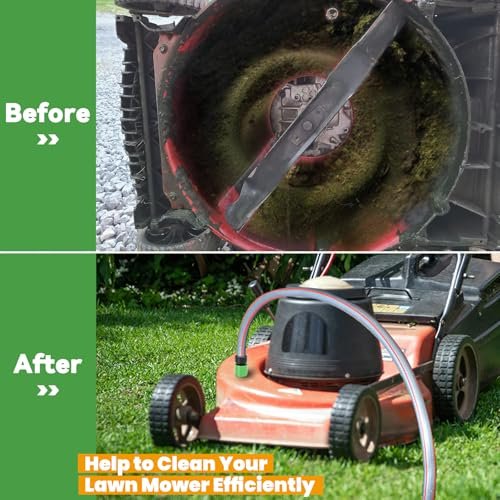
Cleaning the deck
Grass stuck under the deck blocks airflow and holds moisture. Scrape buildup with a plastic or wooden tool after removing the spark plug wire or battery.
Never place your hand near the blade. Do not tip a gas mower in a way that sends oil into the air filter or muffler. The manual will show the safe direction for tipping.
Sharpening the blade
Remove the blade only after disconnecting the spark plug wire or battery. Mark the top side before removal so it goes back in the correct direction.
Clamp the blade firmly. File or grind the cutting edge while keeping the original angle. Remove equal amounts from both ends, then check balance on a nail or blade balancer.
Replace a blade that is cracked, deeply bent, or badly worn. Sharpening cannot make a damaged blade safe.
Signs it is time to replace a push mower
A mower should be replaced when safety, reliability, or repair cost becomes a serious concern. Age alone is not enough. A clean 12-year-old mower may be a better choice than a neglected 4-year-old model.
Look for these warning signs:
- The mower has a cracked or badly rusted deck.
- The crankshaft is bent after a blade impact.
- The engine has very low compression or severe oil smoke.
- The handle, safety bar, or blade brake does not work correctly.
- Replacement parts are no longer available.
- Repair estimates approach the cost of a suitable replacement.
- The mower repeatedly stalls after basic service.
- A battery costs nearly as much as a new mower.
A bent crankshaft often causes strong vibration. Stop using the mower until a repair professional checks it. Vibration can damage the engine and create a safety hazard.
Repair versus replacement
Minor repairs usually make sense. A blade, spark plug, air filter, wheel, cable, or belt can restore useful service at a modest cost. Major engine work, deck replacement, or a failed battery may change the calculation.
Compare the repair cost with the price of a mower that fits your yard. Also consider future parts, warranty coverage, local service, and your own time. A cheap mower that needs frequent repairs may cost more over several seasons.
A simple value test
Ask three questions:
- Is the deck sound and safe?
- Are replacement parts easy to find?
- Can the mower complete the job without repeated failure?
If the answer is yes to all three, repair may be sensible. If the deck, engine, drive system, and battery all show trouble, replacement is often the better use of money.
How to choose a durable mower for your yard
The most durable mower is the one that matches the lawn. A small mower forced to handle tall grass on a large hill may fail early. A heavy gas mower used on a tiny flat yard may create needless work.
Best mower for a small yard
For a yard under about 5,000 square feet, consider a reel mower, corded mower, or compact battery mower. A 16- to 19-inch cutting deck is easy to store and can fit narrow gates.
Choose a reel mower if the lawn is flat, smooth, and regularly cut. Choose a battery model if you want push-button starting and less noise. Choose a corded mower only if the outlet and cord path are practical.
Best mower for a medium yard
A 19- to 21-inch gas or battery mower suits many medium lawns. Look for a cutting-height range that matches your grass. A grass catcher can help near patios, but mulching may return fine clippings to the lawn when conditions are suitable.
Mulching means the mower cuts clippings into small pieces and returns them to the turf. Side discharge sends clippings out of the deck. Bagging collects them for removal. Each method has a place.
Best mower for hills
A self-propelled mower may help on moderate slopes. Look for good wheel traction, simple speed control, and a handle that feels secure. Rear-wheel drive can offer useful traction, but exact performance depends on the design and terrain.
Do not assume self-propelled means safe on every hill. Read the slope guidance in the manual. For steep, rough, or large properties, a professional service or suitable riding mower may be safer.
Best mower for seniors
Seniors often benefit from a lighter mower, easy height controls, simple starting, and a handle that does not require a tight grip. Battery models can remove pull-start effort. A small deck can reduce weight and storage difficulty.
A self-propelled mower may help on a larger or sloped lawn, but it also adds controls and weight. A family member buying a mower as a gift should ask about yard size, storage space, strength, hearing sensitivity, and comfort with charging or fuel.
Best mower for experienced DIY users
DIY users may value a steel deck, accessible service points, a common engine, and replacement parts that local stores carry. A mower with a removable blade adapter, standard spark plug, and clear manual can be easier to maintain.
Check the actual parts list before buying. Confirm the deck width, blade number, battery platform, voltage, charger, and grass-catcher fit. Product pages and manuals can change, so verify current information.
Common mistakes that shorten mower life
Most early mower failures come from a few repeated mistakes. Avoiding them costs little and protects both the mower and the lawn.
Mowing wet grass
Wet clippings stick under the deck and can clog the discharge path. The mower may need more power, and wheels can slip on slopes. Wet grass also increases the chance of ruts and uneven cuts.
Wait until the lawn is dry enough to mow safely. Never mow wet grass on a slope.
Cutting too much at once
Very tall grass overloads the blade and engine. It also creates heavy clumps that shade the turf. Raise the deck and take two passes if needed.
Mow often enough that you remove no more than one-third of the blade. This is easier on the mower and the turfgrass.
Ignoring unusual vibration
Vibration is not normal. It can come from a bent blade, loose fastener, damaged blade adapter, or bent crankshaft.
Stop the mower, disconnect the spark plug or remove the battery, and inspect it. Seek professional service if you cannot find the cause.
Using old fuel
Old fuel can gum up the carburetor and fuel passages. It may cause hard starts, surging, or stalling.
Use fresh fuel and follow storage instructions. Dispose of old gasoline at a hazardous-waste site. Never pour it onto soil, down a drain, or into household trash.
Skipping the owner’s manual
Different engines and battery systems have different service needs. Guessing can lead to wrong oil, incorrect blade installation, or unsafe battery storage.
Keep the manual in a dry place. Download a replacement from the manufacturer if needed.
Safety, noise, and local rules
Safe mowing starts before the motor runs. Clear debris, keep people away, and use the guards that came with the mower. Never remove a safety feature to make the machine easier to operate.
⚠️ Safety Warning: Wear eye and hearing protection and closed-toe shoes. Clear debris first. Keep children and pets away. Disconnect the spark plug or remove the battery before servicing. Never refuel a hot engine, and always follow the owner’s manual.
Gas mowers can produce high noise levels. Ear protection helps protect hearing, but it does not make loud mowing harmless to neighbors. Battery and reel mowers are often quieter, though the exact sound level varies by model and load.
📜 Check Local Rules: Some cities restrict gas-powered lawn equipment or limit mowing hours. HOAs may also set rules for noise, storage, or outdoor equipment. Confirm current requirements with your city and HOA before buying or using a mower.
Fuel storage laws vary by location. Store gasoline only in an approved container, away from heat and ignition sources. Never keep fuel in a living area.
Environmental disposal and end-of-life care
A worn mower should not automatically go into the trash. Usable equipment may be donated, sold, or given to a repair program. Metal mower decks and some components can be recycled through local scrap or household recycling services.
Lithium-ion batteries require special handling. Take old batteries to a designated battery drop-off or household hazardous-waste program. Do not place them in curbside trash or recycling bins.
🌿 Eco or Disposal Note: Take old gasoline and oil to a hazardous-waste collection site. Recycle lithium-ion batteries at an approved drop-off. Donate or recycle a usable mower instead of sending it to a landfill.
Mower life by ownership style
The best choice changes with the person using it. A renter may need compact storage and low noise. A homeowner may value long service life and repair access. A gift buyer should focus on comfort and ease, not only engine size.
| User | Suitable mower type | Main limitation |
|---|---|---|
| First-time homeowner | Compact battery or gas mower | Must learn charging or fuel care |
| Renter with a small yard | Reel, corded, or compact battery mower | Limited by storage and outlet access |
| DIY repair user | Serviceable gas mower | Requires tools and routine work |
| Senior with a flat yard | Lightweight battery mower | Battery replacement cost |
| Senior with a slope | Easy-control self-propelled mower | Added weight and drive maintenance |
| Gift buyer | Simple model with local support | Must confirm fit before purchase |
The main takeaway is to match the mower to the user’s strength, yard, and storage. A mower that is easy to start and move may be more valuable than one with a larger engine.
Frequently asked questions
Q: Is a 10-year-old push mower still worth buying?
A: It can be, if the deck is sound, the engine starts easily, the blade is safe, and replacement parts are available. Ask for a cold start, inspect for heavy smoke, and check for strong vibration. A low purchase price does not make a mower worthwhile if it needs an engine or deck.
Q: How many hours should a push mower last?
A: Many residential gas mowers can provide several hundred hours of use, but manufacturers do not all publish the same life rating. Maintenance, dust, wet grass, blade impacts, and storage matter. Treat hour estimates as rough guides rather than promises.
Q: Can a push mower last 20 years?
A: Yes, some simple and well-maintained mowers last 20 years. This is more likely when the deck stays sound, parts remain available, and the mower receives regular service. Reel mowers and sturdy gas models may have especially long lives.
Q: Is a battery mower worth it?
A: A battery mower can be worth it for a small or medium yard, especially when quiet operation and easy starting matter. It may not be economical for a large lawn if you need several costly batteries. Check battery compatibility, voltage, Ah rating, charger cost, and replacement availability.
Q: Are gas mowers more durable than electric mowers?
A: Gas and electric mowers can both last many years. Gas models have more engine maintenance but often suit long mowing sessions. Battery models have fewer routine service tasks, but their battery pack eventually loses capacity.
Q: How often should I sharpen a mower blade?
A: Many homeowners sharpen once or twice per season. Sharpen sooner if the blade hits stones, cuts sandy soil, or leaves torn grass tips. Replace any blade that is cracked, deeply bent, or too thin.
Q: Should I buy a self-propelled mower for a flat lawn?
A: Usually not if the lawn is small and flat. A standard push mower costs less, weighs less, and has fewer parts to repair. A self-propelled model may still suit someone who has limited pushing strength or mows a larger area.
Q: What is the best mower for small yards?
A: A reel, corded, or compact battery mower can suit a small yard. The best choice depends on grass height, terrain, outlet access, storage, and noise rules. Measure the gate and storage area before choosing a deck size.
Q: What is the best mower for hills?
A: A self-propelled mower with suitable traction may help on moderate hills. Never rely on marketing alone. Read the manual’s slope limits, avoid wet conditions, and consider professional mowing for steep or dangerous terrain.
Q: Can I leave a push mower outside?
A: It is better to store it in a dry garage or shed. Outdoor exposure causes rust, brittle plastic, water contamination, and battery damage. If outdoor storage is unavoidable, use a breathable cover and keep the mower off wet ground.
Q: Why does my mower start and then stop?
A: Common causes include old fuel, a dirty air filter, a blocked fuel passage, a loose safety control, or a clogged deck. Disconnect the spark plug before inspection. If basic service does not help, use a repair shop.
Q: Should I repair or replace my mower?
A: Repair a mower when the deck and main engine or motor are sound and the problem is a normal wear part. Replace it when the deck or crankshaft is badly damaged, parts are unavailable, or several major repairs are needed at once.
Q: How should I dispose of an old mower?
A: Drain fuel and oil as required, then use a local recycling, scrap, donation, or hazardous-waste program. Take lithium-ion batteries to a designated battery drop-off. Never dump fuel, oil, or batteries in household trash or outdoors.
Q: Do electric mowers need less maintenance?
A: Battery and corded mowers usually need less maintenance than gas mowers because they have no oil, spark plug, or carburetor. They still need blade care, deck cleaning, wheel inspection, and safe battery or cord handling.
Q: Can a mower last longer if I use a mulching kit?
A: A mulching kit does not automatically extend mower life. It can work well when the grass is dry, not too tall, and the blade is sharp. Heavy, wet clippings can increase load and clogging, so use the correct mowing height and conditions.
Final advice
A push mower lasts longest when it fits the lawn and receives simple care on a steady schedule. For most households, expect about 8 to 10 years, with a well-maintained gas or reel mower sometimes lasting much longer. Battery mowers can also provide many useful seasons, but plan for eventual battery replacement.
Before buying, measure the yard, gate, slope, and storage space. Compare deck width, mower weight, cutting-height range, battery voltage, Ah rating, blade type, and replacement part numbers. Choose a mower that the actual user can safely start, control, clean, and store.
A sharp blade, dry storage, clean air, fresh fuel, and early repairs are small habits. Together, they keep a mower from becoming a short-lived expense.
Affiliate disclosure: This article may contain affiliate links. If you buy through a link, we may earn a commission at no extra cost to you. Product features, prices, compatibility, and availability can change, so confirm current details on the manufacturer’s product page and in the owner’s manual.


2 Comments