
Lawn Mower Carburetor Adjustment Screws: Explained
A lawn mower carburetor mixes gasoline and air so the engine can run. The small adjustment screws on that carburetor control how much fuel or air enters at different engine speeds. When the mixture is too rich, the mower may smoke and foul the spark plug. When it is too lean, the engine may surge, run hot, or stall under load.
The tricky part is that not every mower has adjustable screws. Many newer engines use fixed jets, limiter caps, or sealed settings to meet emissions rules. Some carburetors have one fuel screw. Others have a low-speed screw, high-speed screw, idle-speed screw, or no adjustment screws at all. Knowing which screw you are turning matters more than turning it often.
This guide explains lawn mower carburetor adjustment screws in plain English. It covers what each screw does, how to identify one, how to adjust a serviceable carburetor, common symptoms, safety steps, and when replacement or professional repair makes more sense.

Affiliate Disclosure: This article may contain affiliate links. If you buy through one, we may earn a commission at no extra cost to you. Always confirm fit, part numbers, and specifications with the mower manual and product page.
Quick answer: what do lawn mower carburetor adjustment screws do?
Lawn mower carburetor adjustment screws control the fuel-and-air mix or the engine’s idle speed. A fuel screw changes fuel flow at a certain throttle range. An air screw changes air flow. An idle-speed screw holds the throttle plate open slightly so the engine can keep running at idle.

The main difference is the engine range each screw affects. A low-speed screw affects starting, idling, and light throttle. A high-speed screw affects full-throttle operation. An idle-stop screw changes engine speed but does not directly set the fuel mixture.
Do not assume every screw is adjustable. Some are fixed jets, sealed screws, or factory-set parts. Check the owner’s manual before turning anything.
The simple explanation: fuel, air, and engine speed
A carburetor works like a small mixing station. It pulls air through a narrow passage and adds fuel in a controlled amount. The engine then burns that mixture inside the cylinder.
What “rich” and “lean” mean
A rich mixture has too much fuel for the amount of air. A lean mixture has too much air or not enough fuel.
| Mixture condition | Common signs | Possible risk |
|---|---|---|
| Rich | Black smoke, fuel smell, wet spark plug, rough running | Carbon buildup and fouling |
| Lean | Surging, popping, overheating, hard starting | Poor power and possible engine damage |
| Balanced | Steady running and clean response | Normal operation |
A slightly rich mixture may make an engine sound soft and smoky. A lean mixture may make it race, surge, or hang at a high speed after you release the throttle.
A mower that runs poorly does not always need screw adjustment. A dirty air filter, stale gasoline, blocked fuel cap vent, dirty carburetor bowl, damaged gasket, or weak spark plug can cause the same symptoms.
What the carburetor actually controls
A carburetor manages fuel flow in several ways:
- A float bowl stores a small supply of fuel.
- A float and needle valve control the fuel level.
- A main jet feeds fuel at higher engine speed.
- An idle or pilot circuit feeds fuel at low speed.
- A throttle plate controls airflow and power.
- A choke plate restricts air for cold starting.
- A governor changes throttle position as the cutting load changes.
The adjustment screws work with these parts. A screw cannot fix a blocked jet or a torn gasket. It only fine-tunes a working fuel system.
The main carburetor adjustment screws
Most adjustable lawn mower carburetors use one or more screws. Their names can differ by brand. Look for terms such as main adjustment, high-speed needle, low-speed needle, idle mixture, or idle stop.

High-speed or main fuel screw
The high-speed screw controls fuel flow when the engine runs near full throttle. That is the speed used while mowing thick grass.
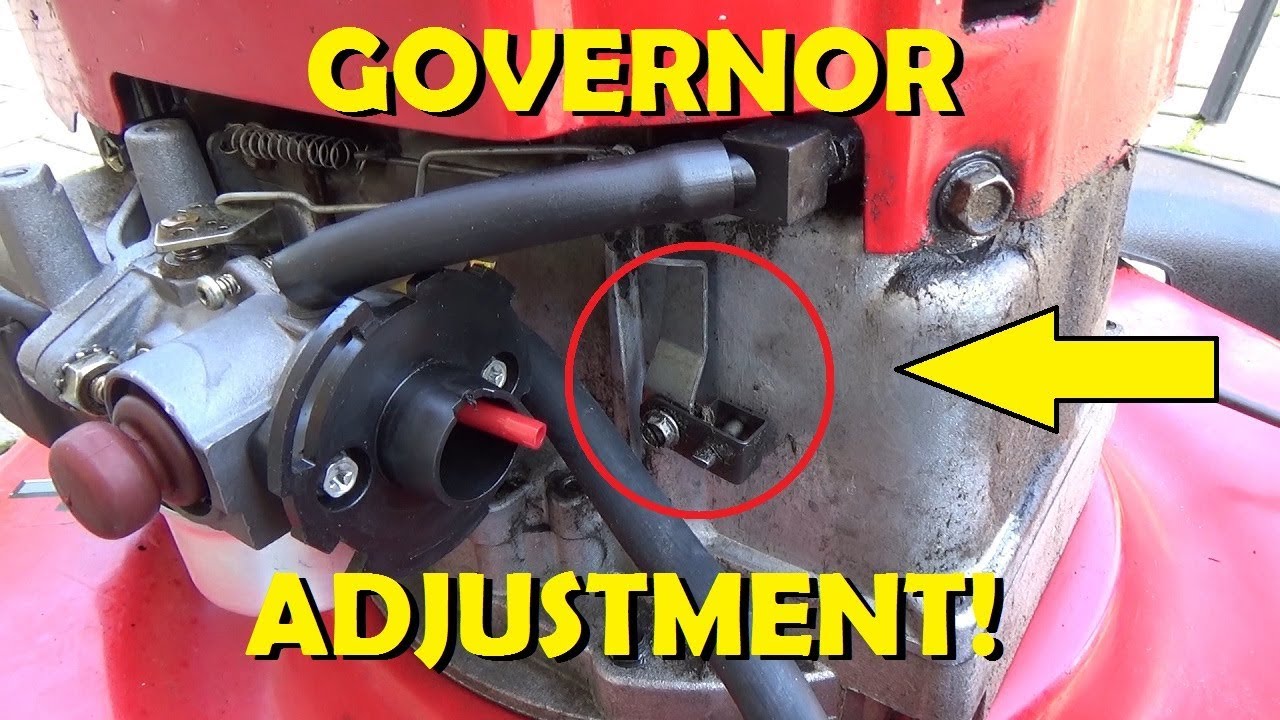
It is often found on the bottom or side of the carburetor. On a bowl-style carburetor, it may be built into the bowl bolt or located near the main jet.
Turning a fuel screw in usually reduces fuel and creates a leaner mixture. Turning it out usually adds fuel and creates a richer mixture. This is common, but not universal. Some designs use an air screw, where the effect is reversed.
A high-speed screw that is too lean can cause:
- Surging at full throttle
- Popping through the muffler
- Loss of power in tall grass
- Excessive heat
- An engine that improves when the choke is partly closed
A high-speed screw that is too rich can cause:
- Black exhaust smoke
- Slow throttle response
- Wet or sooty spark plugs
- A muffled, uneven engine sound
- Poor fuel economy
Low-speed or idle-mixture screw
The low-speed screw controls the mixture at idle and during the first part of throttle movement. It can affect starting, smooth idling, and how the engine accepts throttle.
Some carburetors use a fuel screw on the engine side of the throttle plate. Others use an air screw on the air-filter side. This location can help you identify its function.
| Screw location | Common design | Turning out often does this |
|---|---|---|
| Engine side of throttle plate | Fuel screw | Adds fuel |
| Air-filter side of throttle plate | Air screw | Adds air |
| Throttle linkage stop | Idle-speed screw | Raises throttle opening |
This is a helpful clue, not a guarantee. Read the manual before making a change.
Idle-speed or throttle-stop screw
The idle-speed screw sets how far the throttle plate stays open when the engine is not under load. It usually touches a lever or linkage stop.
Turning it in often raises idle speed. Turning it out often lowers idle speed. The direction can vary by design.
This screw does not correct a rich or lean mixture. If you use it to hide a fuel problem, the mower may idle too fast or the blade may keep spinning when the control bar is released. That creates a safety risk.
⚠️ Safety Warning: Never set engine speed by ear alone. Follow the manual’s rated speed and blade-stop instructions. An overspeeding engine can damage the mower and create a serious blade hazard.
Choke adjustment is not mixture adjustment
The choke plate restricts air during a cold start. It is not a screw for normal fuel tuning.
If the engine only runs with the choke partly closed, the engine may have a lean fuel problem. A blocked main jet is a common cause. Do not leave the choke partly on as a permanent fix.
How to identify the screws on your mower
The best way to identify a carburetor screw is to trace what it touches. A screw connected to a throttle lever is likely an idle stop. A needle with a spring is often a mixture screw. A large bowl bolt may contain the main jet.
Check the engine and carburetor model
Find the engine model number on the engine shroud, valve cover, or side label. The mower deck brand and engine brand may be different. A mower sold under one brand can use an engine made by another company.
Search the engine model in the owner’s manual or parts diagram. Look for a carburetor drawing. The diagram may show:
- Main jet
- Pilot jet
- Air-fuel adjustment screw
- Throttle-stop screw
- Choke shaft
- Float bowl
- Gasket
- Needle valve
- Fuel solenoid
A parts diagram is often more useful than a general video. Carburetors can look alike while using different screw settings.
Look for limiter caps and sealed screws
A plastic cap over a screw may limit adjustment range. A metal plug may cover a factory-set mixture screw. These features are common on newer small engines.
Do not drill out a plug or force a limiter cap off without a repair procedure. The setting may be part of the engine’s emissions system. It may also be impossible to restore accurately without a tachometer and the correct service data.
Know when there is no adjustment to make
Many modern push mowers and battery mowers do not have a carburetor at all. Battery and electric mowers use an electric motor and electronic controls. A robotic mower also uses electric drive systems.
Some gas mowers use a carburetor with a fixed main jet. In that case, cleaning or replacing the jet is the correct repair. Turning the bowl bolt will not tune the engine.
Symptoms that point to adjustment problems
Carburetor adjustment is most useful when the engine is clean, mechanically sound, and already close to normal operation. Use the symptom pattern to decide whether adjustment is reasonable.

| Symptom | Likely area | First check |
|---|---|---|
| Runs only with choke partly on | Lean mixture or blocked main jet | Air filter, fuel flow, main jet |
| Black smoke at full throttle | Rich mixture or restricted air | Air filter and choke position |
| Surges with no load | Lean setting, governor issue, or air leak | Intake gasket and linkage |
| Dies when blade engages | Weak fuel delivery or low power | Main jet, blade condition, engine speed |
| Starts, then stalls | Dirty pilot circuit or stale fuel | Fresh fuel and carburetor passages |
| Engine races at idle | Linkage problem or too-high idle setting | Governor spring and throttle stop |
| Popping on deceleration | Lean mixture or exhaust leak | Intake and muffler connections |
These signs are clues, not proof. For example, a dirty air filter can make the engine rich. A loose intake gasket can make it lean. A bent mower blade can overload the engine and make a good carburetor seem weak.
When a lean setting is likely
A lean engine may surge up and down. It may run better when you partly close the choke because the choke reduces air. It may also hesitate when you move the throttle quickly.
Lean running can come from:
- Too little fuel at the main jet
- A partially blocked jet
- An intake air leak
- Low fuel level in the bowl
- A loose carburetor mounting bolt
- A cracked primer bulb gasket
- A restricted fuel line
Do not keep opening the fuel screw if the passage is blocked. That may not provide enough fuel and can hide the real fault.
When a rich setting is likely
A rich engine often produces dark smoke. The spark plug may be black or wet. The engine may sound dull and fail to reach normal speed.
Rich running can come from:
- A clogged air filter
- A partly closed choke
- A leaking needle valve
- Too much fuel in the bowl
- A float that has absorbed fuel
- A fuel screw opened too far
- A damaged air box seal
Replace or clean the air filter before touching a mixture screw. A filter is a low-cost part and a common cause of rich operation.
What to do before adjusting a carburetor
Preparation prevents false adjustments. Start with basic maintenance and confirm that the engine is safe to run.

Basic inspection checklist
Use this order:
- Read the owner’s manual.
- Confirm the engine model.
- Check the fuel age and condition.
- Inspect the air filter.
- Inspect the spark plug.
- Check the fuel line and fuel cap vent.
- Inspect the throttle and governor linkage.
- Check the blade for damage or heavy buildup.
- Look for loose carburetor bolts and intake leaks.
- Confirm that the adjustment screw is serviceable.
Fresh fuel matters. Gasoline can degrade during storage, especially in warm sheds or garages. Ethanol-blended fuel can attract moisture and leave deposits. Use the fuel grade and storage advice listed in the manual.
Tools and supplies
The exact tools depend on the engine. A small flat screwdriver may fit one screw, while another carburetor may need a special splined driver.
| Tool or supply | Why it helps | Must-have? |
|---|---|---|
| Owner’s manual | Gives settings and safety steps | Yes |
| Small correct screwdriver | Prevents screw damage | Yes |
| Tachometer | Checks engine speed | Strongly recommended |
| Fresh approved fuel | Removes stale-fuel confusion | Often |
| Safety glasses and gloves | Protects eyes and hands | Yes |
| Carburetor cleaner | Cleans external deposits | Sometimes |
| Notebook or phone camera | Records the starting position | Helpful |
Do not use a screwdriver that slips. A damaged mixture screw can turn a simple adjustment into a carburetor replacement.
💡 Pro Tip: Before moving a screw, lightly turn it clockwise only until it seats, while counting the turns. Write down the number. Do not force the tip against its seat. This record gives you a way back to the original setting.
A safe, general carburetor adjustment method
The best adjustment method is the one in the engine manual. If the manual gives no procedure and the screw is clearly serviceable, use small changes and stop when the engine responds cleanly.
Step 1: Move the mower to a safe work area
Work outdoors in a clear, level area. Keep the mower away from dry leaves, fuel containers, open flames, and sparks. Make sure children and pets cannot enter the work zone.
Wear safety glasses, hearing protection, closed-toe shoes, and work gloves. Keep loose clothing away from the flywheel and cooling fan.
Step 2: Secure the mower
For a push mower, place it on level ground. Do not tip a gas mower onto its side unless the manual gives a safe direction and method.
If you need to inspect underneath, remove the spark plug wire and secure it away from the plug. For an electric-start or battery system, remove the battery if the manual allows it. This prevents accidental starting.
Step 3: Warm the engine as directed
Some adjustments require a warm engine. Start the mower according to the manual and let it reach normal operating temperature.
Keep hands, tools, and clothing away from the blade and belts. Never reach near a moving blade. If the blade must run for a test, stand behind the handle and keep bystanders away.
Step 4: Find the original setting
If the screw has a limiter cap, stop. If it is adjustable, turn it in gently while counting turns. Do not tighten it hard.
A common starting point on some older carburetors is around one to one-and-a-half turns out from lightly seated. This is not a universal setting. Some engines require a different position, and some screws are not meant to be seated during service.
Step 5: Adjust one screw at a time
Make changes in small steps, such as one-eighth of a turn. Wait several seconds after each change so the engine can respond.
For a fuel screw:
- Turning out often adds fuel.
- Turning in often reduces fuel.
For an air screw:
- Turning out often adds air.
- Turning in often reduces air.
If the engine speed rises and then falls as you turn, you may have passed the best setting. Return toward the point where the engine runs smoothly and responds to throttle.
Step 6: Set the low-speed circuit first
If the carburetor has both low- and high-speed adjustments, set the low-speed circuit first. Adjust for a steady idle and clean throttle response.
Move the throttle slowly. The engine should accept the change without a long hesitation or stall. If it does not, check for an intake leak or blocked pilot circuit before making a large adjustment.
Step 7: Set the high-speed circuit
Move the throttle to the manufacturer’s recommended mowing speed. Use a tachometer when the manual provides a rated speed.
Turn the high-speed screw in small steps. Listen for a smooth, steady sound. Test the engine under a normal load only if the mower is secure and the manual permits it.
Do not set the engine to the highest sound. An engine that sounds fast may already be above its safe speed.
Step 8: Recheck the idle and governor
Changing one circuit can affect another. Recheck idle speed and throttle response.
The governor should move the throttle as the blade enters grass. Do not bend the governor arm or change the spring position unless the service manual gives the exact procedure. Governor changes can cause overspeed.
Step 9: Test under normal mowing conditions
After adjustment, mow a small clear section. Use dry grass if possible. Wet grass increases load and can make a healthy mower seem weak.
Watch for smoke, surging, stalling, or unusual noise. Stop if the engine races, the blade keeps spinning after the control is released, or fuel leaks appear.
Understanding the adjustment sequence
The adjustment order matters because the circuits overlap. Low-speed settings affect transition, while high-speed settings affect cutting power.
| Adjustment stage | Engine condition | Desired result |
|---|---|---|
| Initial setting | Engine off | Safe baseline |
| Low-speed setting | Idle or light throttle | Steady idle |
| Transition check | Slow throttle increase | No stumble |
| High-speed setting | Full throttle | Smooth rated speed |
| Load check | Cutting dry grass | Holds speed without smoke |
The best setting is not always the fastest setting. It is the setting that supports stable operation at the manufacturer’s rated speed.
Why small turns matter
A carburetor needle has a fine tip. A tiny turn can change fuel flow. Large turns can move the mixture far beyond the useful range.
Use a notebook. Record the starting position and every change. If the engine gets worse, return to the last known position.
Why a tachometer helps
Engine sound can fool you. A mower beside a fence, garage, or house may sound faster than it is. A digital tachometer can show revolutions per minute, or RPM.
Use the RPM range in the manual. If no data is available, ask a repair shop or the engine maker. Do not guess at a safe maximum.
Common mistakes that make mower problems worse
Many carburetor problems come from changing the wrong part. These mistakes can waste time and create new faults.
Adjusting the idle stop to fix a fuel problem
Raising idle speed can keep a mower running, but it does not repair a blocked jet. It may also make the blade spin when it should stop.
Use the idle stop only for the specified idle setting. If the engine stalls at idle, inspect the pilot circuit and air leaks.
Turning every screw at once
If you turn the low-speed screw, high-speed screw, and idle stop together, you lose the baseline. Make one change at a time.
A phone photo can help you remember linkage positions. A written note is better for screw turns.
Running without the air filter
Removing the filter may change the mixture and allow dirt into the engine. It can also create a false impression that the carburetor needs adjustment.
Test with the correct filter installed. Replace a damaged foam or paper element.
Using starting fluid as a repair
Starting fluid may help diagnose a fuel delivery issue, but it is not a normal fuel source. It can wash oil from cylinder walls and create a fire risk.
Use the starting method in the manual. If the engine needs repeated spray to run, repair the fuel system.
Bending governor parts
The governor controls engine speed as load changes. Bending its arm or stretching its spring can create dangerous overspeed.
Leave governor repairs to a trained technician unless the service manual gives clear instructions.
Ignoring fuel leaks
A leaking bowl gasket, fuel line, needle valve, or primer bulb is a repair issue. Do not tune around a leak.
Shut off the fuel supply if possible. Let the engine cool. Replace the correct seal or carburetor part.
Adjustment screws versus carburetor cleaning
A screw adjustment works best when passages are clean. Deposits in a jet can restrict fuel even when the screw is set correctly.
When cleaning may solve the problem
Cleaning is worth considering when:
- Fuel sat in the mower during storage.
- The engine starts and then stalls.
- The engine runs only with choke.
- The bowl contains visible debris.
- The main jet has a blocked or dirty opening.
- The mower has been unused through winter.
Use the manual for disassembly. Take photos before removing linkage or springs. Replace gaskets that are hard, torn, or swollen.
Do not poke jets with steel wire. It can enlarge the opening and change fuel flow. Use the correct soft cleaning tool or replace the jet.
When a new carburetor may be better
A replacement carburetor can make sense when the original is corroded, the throttle shaft is worn, the fuel solenoid fails, or several small parts need replacement.
Match the engine model, carburetor design, linkage, choke type, gasket shape, and fuel inlet. A low-cost part with the wrong linkage may create more work.
🔧 Quick Fix: If a mower suddenly runs badly after refueling, drain questionable fuel and inspect the fuel cap vent before adjusting screws. A blocked vent can interrupt fuel flow and mimic a lean carburetor.
How weather and storage affect carburetor settings
Temperature, humidity, fuel condition, and grass load all affect engine behavior. A setting that seems fine in cool, dry weather may act different on a hot day.
| Condition | What you may notice | Useful response |
|---|---|---|
| Cold start | Hard starting or slow warm-up | Use the choke as directed |
| Hot weather | Heat and possible lean symptoms | Check fuel flow and cooling fins |
| High humidity | Slightly different engine response | Avoid large adjustments |
| Wet grass | Heavy load and bogging | Mow when turf is dry |
| Long storage | Stalling and varnish deposits | Stabilize or drain fuel as directed |
Do not chase weather changes with constant screw turns. First check fuel quality, air flow, cooling, and mowing height.
A mower that cuts drought-stressed turf too low can struggle even with a good carburetor. Raise the mowing height within the grass type’s recommended range. Sharp mower blades also reduce engine load.
Safety rules for carburetor adjustment and mower repair
Gasoline, hot engines, moving blades, and exhaust all create hazards. A small mower deserves the same care as larger outdoor power equipment.
Follow these rules every time:
- Wear eye and hearing protection.
- Wear closed-toe shoes and work gloves.
- Clear stones, sticks, wire, and toys before mowing.
- Keep children and pets away from the mower.
- Never mow wet grass on slopes.
- Disconnect the spark plug wire before servicing a gas mower.
- Remove the battery before servicing an electric mower.
- Never refuel a hot engine.
- Work outdoors or in a well-ventilated area.
- Keep fuel away from flames, heaters, and pilot lights.
- Follow the owner’s manual.
- Stop if you smell raw fuel or see a leak.
A mower for a small flat yard may be easy to handle, but it still has a fast blade and a hot engine. A self-propelled mower on a hill creates extra control risk. Do not test a mower on a slope while troubleshooting the carburetor.
📜 Check Local Rules: Some HOAs and cities restrict gas-powered equipment, mowing hours, noise, or fuel storage. Confirm local rules before repairing or using a gas mower. Battery or corded mowers may suit neighborhoods with strict noise limits, but check cord length, outlets, and terrain first.
When to call a repair shop
Carburetor adjustment is reasonable for a careful DIYer who can identify the screw, follow the manual, and use a safe work area. It is not the right job for every owner.
Call a qualified repair shop when:
- The engine overspeeds.
- The governor has been altered.
- Fuel leaks from the carburetor.
- The engine backfires near the carburetor.
- The adjustment screw is damaged.
- A limiter cap or emissions plug must be removed.
- Compression seems low.
- The mower has electrical fuel controls you cannot test.
- The engine still stalls after cleaning.
- You lack a tachometer and the manual requires one.
A repair visit may cost less than replacing a good mower. It can also protect the engine from lean running or overspeed.
For a senior, first-time homeowner, or gift recipient, a mower with simple controls and a nearby service network may be a better choice than an older gas mower with many adjustment points.
Choosing a mower with carburetor needs in mind
Carburetor adjustment matters only on gas-powered equipment. Different mower types have different service needs.
| Mower type | Carburetor? | Good fit |
|---|---|---|
| Gas push mower | Usually | Small to medium flat yards |
| Gas self-propelled mower | Usually | Larger yards or mild slopes |
| Battery mower | No | Small to medium yards with charging space |
| Corded mower | No | Small yards near an outdoor outlet |
| Riding mower | Usually | Large properties and long mowing sessions |
| Zero-turn mower | Usually | Large open yards and fast coverage |
| Robotic mower | No | Defined lawns with suitable boundaries |
| Reel mower | No engine | Small, flat, regularly cut turf |
A battery mower avoids carburetor cleaning, stale fuel, spark plugs, and oil changes. It needs a compatible battery platform, charger storage, and enough runtime for the yard.
A gas mower can suit a large yard, thick turf, or a homeowner who wants quick refueling. It also creates more noise, vibration, fuel storage needs, and maintenance.
Match the machine to the yard
Measure the lawn, gate width, slope, and storage space before buying. A 21-inch deck may suit many small and medium yards, while a narrower deck can fit tight gates and planting beds.
For hills, control matters more than raw power. A self-propelled mower can help some users, but it adds weight and drive-system parts. Riding and zero-turn mowers need enough space to turn safely and may not suit steep or rough slopes.
String trimmers, edgers, and leaf blowers often share a fuel system. If a homeowner does not want to manage gasoline, a battery platform may simplify the whole lawn care setup.
Maintenance that reduces carburetor trouble
Regular care helps keep the mixture stable. It also lets you find problems before a mower becomes hard to start.
| Maintenance task | Suggested timing | Why it matters |
|---|---|---|
| Check air filter | Before the mowing season and as needed | Controls air flow |
| Inspect spark plug | Seasonally | Confirms ignition condition |
| Check fuel lines | Seasonally | Finds leaks and cracks |
| Clean cooling fins | When dirty | Reduces overheating |
| Sharpen or replace blade | As needed | Reduces cutting load |
| Drain or stabilize fuel | Before storage | Limits fuel deposits |
| Change engine oil | Per manual | Protects internal parts |
Use the manual’s schedule over a general chart. Dusty yards, sandy soil, heavy leaf work, and long mowing sessions may require more frequent service.
Keep the mower deck clean. Packed grass can increase load and block cooling air. Let the mower cool before cleaning, and disconnect the spark plug or battery first.
Fuel storage basics
Use an approved fuel container. Keep it closed, labeled, and stored where local rules allow. Do not store gasoline beside a water heater, furnace, or ignition source.
Fuel stabilizer can help during storage when used at the correct ratio. Stabilizer does not restore badly degraded fuel. Follow the product label and the engine manual.
End-of-life disposal
Do not pour gasoline, oil, or carburetor cleaner onto soil or down a drain. Take old gas and oil to a local household hazardous-waste site.
Recycle lithium-ion mower batteries through a designated battery drop-off. Do not place loose batteries in household trash. Usable mowers can often be donated, repaired, or recycled through a local program.
🌿 Eco or Disposal Note: A repairable gas mower may have more useful life than its owner expects. Donating it to a repair program or recycling its metal parts can keep equipment out of a landfill.
Frequently asked questions
Q: Which way do I turn a mower carburetor adjustment screw?
A: On many fuel screws, turning the screw out adds fuel and turning it in reduces fuel. On an air screw, the effect may be opposite. Confirm the design in the manual and make changes in one-eighth-turn steps.
Q: How many turns out should a carburetor screw be?
A: There is no universal number. Some older carburetors start near one to one-and-a-half turns out, but the correct setting depends on the engine and screw type. Use the manual or record the original setting.
Q: Why does my mower run only with the choke on?
A: The engine may have a lean fuel mixture caused by a blocked main jet, dirty pilot passage, air leak, low fuel level, or restricted fuel flow. Check the air filter and fresh fuel first. Do not use the choke as a permanent repair.
Q: Can I adjust a carburetor without a tachometer?
A: You can sometimes make a basic mixture adjustment, but a tachometer is safer when the manual specifies engine RPM. Sound is not a reliable way to identify safe speed.
Q: Does a dirty air filter affect carburetor adjustment?
A: Yes. A restricted filter reduces air flow and can make the engine run rich. Install the correct clean filter before tuning the carburetor.
Q: Why does my mower surge at full throttle?
A: Surging may point to a lean mixture, blocked main jet, intake leak, governor problem, or restricted fuel flow. Inspect the fuel system and linkage before changing the high-speed screw.
Q: Should I remove a limiter cap?
A: Usually, no. A limiter cap may protect a factory or emissions setting. Follow the service manual and local rules. A repair shop can handle sealed adjustments when needed.
Q: Can a carburetor screw fix a mower that dies when the blade engages?
A: It may help only if the mixture is slightly wrong. A dull or bent blade, packed deck, low engine speed, blocked main jet, weak fuel delivery, or governor problem can also cause the stall.
Q: Is carburetor cleaner enough to fix a mower?
A: Cleaner may remove surface deposits, but it cannot repair a torn gasket, worn throttle shaft, stuck needle valve, damaged jet, or bad fuel solenoid. Disassembly and replacement parts may be needed.
Q: Are battery mowers easier to maintain than gas mowers?
A: They usually avoid carburetors, spark plugs, fuel storage, and oil changes. They still need blade care, deck cleaning, battery storage, and safe charging. Check battery cost and compatibility before buying.
Q: What is the best mower for a small yard and a first-time homeowner?
A: A battery push mower can suit a small, mostly flat yard when the owner has a place to charge and store the battery. A corded mower can suit a very small yard near an outlet. A gas mower may suit thicker turf but requires fuel and engine care.
Q: What mower suits a senior with a hilly lawn?
A: There is no single answer. A lighter self-propelled mower may help on mild slopes, but steep hills call for careful evaluation and may require professional lawn service. Never mow wet grass on a slope. Check handle controls, weight, braking, and local terrain.
Q: How long does a lawn mower carburetor last?
A: Service life depends on fuel quality, storage, dust, corrosion, and use. A clean carburetor can last for many seasons, while stale fuel or water contamination can cause trouble much sooner. Replace worn seals, jets, or the complete carburetor when repair cost and reliability point that way.
Q: Can I use a carburetor from a similar mower?
A: Do not assume it will fit. Match the engine model, mounting pattern, gasket, linkage, choke, fuel inlet, jetting, and fuel solenoid. Confirm the part number in the manual or parts diagram.
Final thoughts
Lawn mower carburetor adjustment screws are small controls with a large effect. A high-speed screw affects cutting power. A low-speed screw affects idle and throttle response. An idle-stop screw changes throttle opening, not the fuel mixture.
The best repair path is simple: identify the engine, read the manual, inspect basic maintenance items, record the original setting, and make tiny changes only when the screw is designed for adjustment. If the mower has a fixed jet, sealed screw, fuel leak, governor problem, or dangerous speed issue, cleaning or professional repair is safer than guesswork.
For a first-time homeowner or gift buyer, a battery mower may reduce engine maintenance. For a DIY owner with a gas mower, learning what each screw does can prevent needless parts replacement. In every case, match the mower to the yard, slope, storage space, local rules, and the person who will use it.


One Comment