Toro Recycler Electric Lawn Mower Not Working: Easy Fix
A Toro Recycler electric lawn mower that will not start can be frustrating, especially when the grass is growing fast and the weather window is short. In many cases, the problem is simple: a battery is not seated, the safety bar is not held correctly, the blade is blocked, or the mower is too hot. A few careful checks can often restore operation without a repair bill.
This guide explains why a Toro Recycler battery mower may stop working, how to test the common causes, and when to stop troubleshooting. It also covers models with different controls, batteries, chargers, and cutting systems. Always use the exact instructions in your owner’s manual because Toro Recycler models can vary.

Quick answer: why is your Toro Recycler electric mower not working?
The most common causes are a dead or poorly seated battery, a charger problem, a released safety bar, wet or packed grass under the deck, a jammed blade, or an overheating protection shutoff. Remove the battery before inspecting the mower. Charge the correct battery, clear the deck, check the controls, and try again on dry grass. If the motor still will not run, contact an authorized Toro service center.
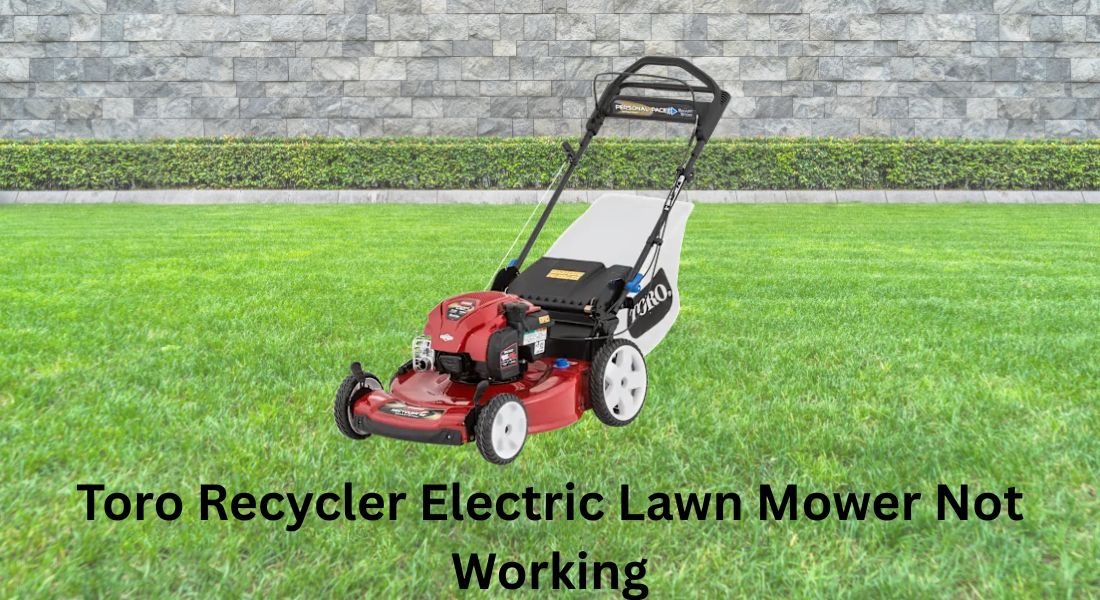
A Toro Recycler electric mower is designed to make lawn care easier on small and medium yards. It usually has fewer service parts than a gas mower. There is no fuel tank, carburetor, air filter, or spark plug to service. Still, the mower has safety switches, electronic controls, a motor, battery contacts, and a blade that all need care.
For a first-time homeowner, the best first step is not to take the mower apart. Start with the battery, charger, controls, and visible blockages. A gift buyer helping a senior or new homeowner should use the same order and should not bypass any safety switch.
Start with safety before troubleshooting
Electrical and blade faults can cause injury even when the mower looks quiet. Turn the mower off, remove the battery, and wait for all moving parts to stop before touching the deck. Do not work on the mower while the battery is installed.
Wear safety glasses, closed-toe shoes, and work gloves when clearing grass or debris. Keep children and pets away from the work area. Never mow wet grass on a slope, and follow the owner’s manual for every repair step.
⚠️ Safety Warning: Never bypass the safety bar, start button, interlock switch, or any other safety device. If a safety feature seems faulty, stop using the mower until it is repaired.
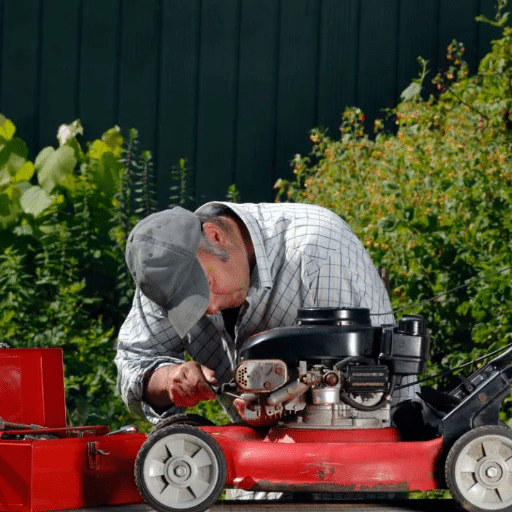
What to check before touching the blade
Move the mower to a flat, dry surface. Remove the battery and inspect the outside of the deck, wheels, handle, and battery compartment. Look for packed grass, sticks, wire, stones, or a damaged blade.
Do not lift the mower by the handle alone. If you must tilt it, follow the manual’s direction. Some models should be tilted with the discharge side down to protect electrical parts.
Battery safety basics
Use only the Toro battery and charger approved for your mower. Battery voltage and amp-hours, or Ah, must match the model’s requirements. Amp-hours describe stored energy, but a larger battery is not automatically compatible with every mower.
Do not use a swollen, cracked, leaking, hot, or damaged lithium-ion battery. Do not place a damaged battery in household trash. Take it to a battery recycling drop-off.
What the mower symptom tells you
The sound and behavior of the mower can point to the problem. A completely silent mower often has a power, control, or safety issue. A motor that hums but does not spin may have a blade blockage or motor fault.
Use the table below as a starting point. It does not replace the Toro manual or professional testing.
| Symptom | Likely area to check | First safe action |
|---|---|---|
| No lights, sound, or motor | Battery, charger, contacts, controls | Charge and reseat the battery |
| Lights work but blade will not start | Start button or safety bar | Follow the starting sequence |
| Starts, then stops | Overload, tall grass, heat, blockage | Remove battery and clear the deck |
| Motor runs but blade does not turn | Blade or motor drive problem | Stop using it and inspect safely |
| Weak cut or short runtime | Dull blade, dense grass, battery condition | Sharpen or replace the blade; test battery |
| Charger does not show normal status | Outlet, charger, battery, temperature | Try a known-good outlet and cool the battery |
| Mower vibrates or shakes | Bent blade, loose hardware, debris | Remove battery and stop until checked |
The main clue is whether the mower has any response at all. If it is silent, begin with power and controls. If it runs but cuts poorly, inspect the blade, deck height, grass conditions, and battery charge.
Check the battery, charger, and power path
A battery problem is the first thing to rule out because an electric mower cannot run without enough power. Even a battery that worked last week may be too cold, too hot, deeply discharged, or poorly connected.
Remove the battery and inspect its terminals. The contacts should be clean and dry. Look for dirt, grass, corrosion, bent metal, or signs of heat. Do not scrape the contacts with a sharp metal tool.
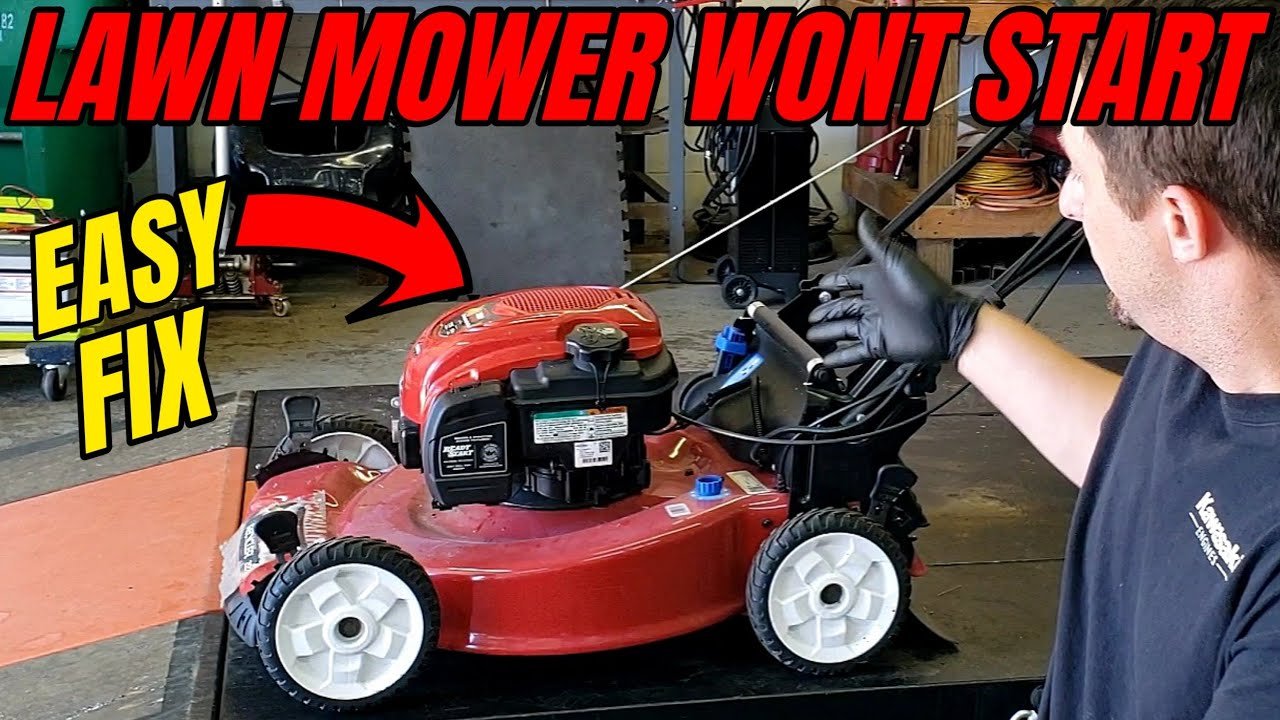
Confirm the battery is charged
Place the battery on the correct Toro charger. Use a wall outlet that you know works. Some chargers show different lights for charging, full charge, error, or temperature protection, so check the symbols in the manual.
Allow the battery to cool to room temperature if it was used in hot weather. A very cold battery may also refuse to charge. Do not place it on a heater or use a hair dryer to change its temperature.
If the battery shows a full charge but the mower remains dead, remove and reinstall it firmly. A battery can appear seated while the contacts are not fully engaged. Close the battery cover if your model has one.
Inspect the charger
A charger can fail even when the battery is healthy. Check the cord, plug, housing, and charging port for damage. Do not use a charger with a cut cord, melted plastic, burnt smell, or loose connection.
Try another safe outlet. Avoid testing through a long extension cord, power strip, or outdoor timer unless the manual allows it. If the charger gives an error with more than one compatible battery, the charger may need service.
Check battery temperature and storage
Lithium-ion batteries work best when stored in a dry place with moderate temperatures. A hot shed, freezing garage, or damp basement can shorten battery life. Do not leave the battery outside or inside the mower for long-term storage unless Toro says that is acceptable.
🔧 Quick Fix: Remove the battery for one minute, inspect the contacts, and reinstall it until it clicks or sits fully in place. This can correct a poor connection, but it will not repair a damaged battery or switch.
Battery and charger problem guide
This table helps separate a battery issue from a mower issue. Test only with parts approved for your specific Toro model.

| What you observe | Most likely cause | What to do |
|---|---|---|
| Charger stays dark | Outlet, cord, or charger fault | Test the outlet and inspect the charger |
| Charger reports an error | Hot, cold, damaged, or wrong battery | Let it reach room temperature and check compatibility |
| Battery charges but mower is silent | Poor contact or mower control fault | Reseat battery and inspect the compartment |
| Battery loses charge quickly | Old battery, dull blade, thick grass, or wet turf | Reduce load and consider battery testing |
| Battery will not accept a charge | Deep discharge or failed battery | Use an authorized service or recycling program |
A battery that is several seasons old may have lost capacity. Runtime also drops when grass is tall, wet, thick, or drought-stressed. A heavy cutting load is like asking a small car to climb a steep hill; it uses energy faster.
Use the correct starting sequence
Many Toro Recycler electric mowers need more than one action to start. The exact sequence varies by model. Common controls include a power button, a bail or safety bar, and sometimes a start button or key.
Read the label near the handle. Hold the safety bar in the correct position, press the start control, and release or hold controls as the manual shows. If you press buttons in the wrong order, the mower may remain silent even when the battery is full.
Inspect the safety bar and handle controls
The safety bar, also called a bail, helps stop the blade when released. Check that it moves smoothly and returns to its normal position. Grass, dirt, or a bent handle can prevent it from reaching the start position.
Look at the handle assembly. If it was recently folded, confirm that it is fully open and locked. Some mowers use a handle interlock that will not allow operation when the handle is not set correctly.
Do not tape the safety bar down. Do not hold it with a clamp. Those actions can defeat the feature that protects you when you let go.
Check the start button and key
Some electric mowers use a removable safety key. Make sure it is installed as directed. If the key is missing, damaged, or loose, the mower may not respond.
Press the start button firmly but do not force it. A stuck or damaged button needs service. Keep water and spray cleaners away from the control panel unless the manual specifically permits cleaning there.
Inspect the blade and mower deck
A blocked blade can stop an electric mower or cause it to shut down under load. Tall wet grass can wrap around the blade. A stick, wire, garden hose, or hidden stone can also jam the cutting system.
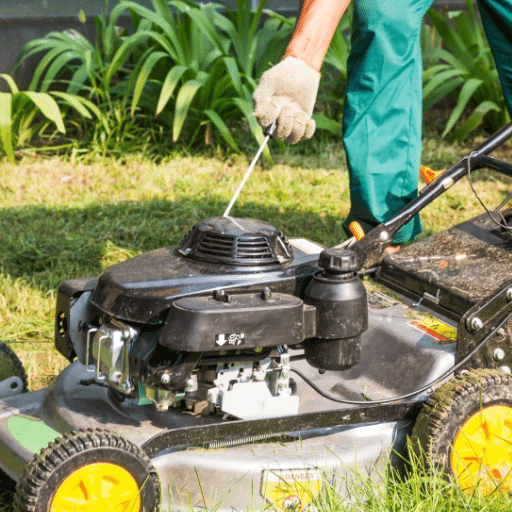
Remove the battery before looking under the deck. Wear gloves and use a brush or tool to remove packed grass. Never reach under the deck with bare hands, even if you believe the mower is off.
Remove grass buildup
Grass buildup reduces airflow and can make the motor work harder. It also changes the way a Recycler deck moves clippings. Wet grass is especially likely to form a heavy mat.
Scrape buildup away with a plastic scraper or stiff brush. Avoid hitting the deck or motor housing with a metal tool. Never spray water into the motor, battery compartment, controls, or electrical connectors.
Let the mower dry fully before trying it again. If the grass is wet, wait for a dry mowing period. Wet turf can also cause ruts and clumps, so postponing the cut helps both the mower and the lawn.
Check for a loose or bent blade
A loose blade can create vibration, poor cutting, and unusual noise. A bent blade can make the mower unsafe and may damage the motor or deck. If the blade looks bent, cracked, deeply nicked, or badly worn, replace it with the correct Toro part.
Use the blade part number listed for your exact model. Blade length, mounting hole shape, balance, and hardware matter. Do not assume that a blade from another Toro Recycler model will fit.
If you remove the blade, follow the manual. Some repairs require a torque wrench to tighten the blade bolt correctly. If you do not have the right tools or feel unsure, use a repair shop.
Why the mower starts and then stops
A mower that starts and stops is often protecting itself. The motor may be overloaded by high grass, a blocked blade, a dull blade, or a steep cutting load. The battery or electronics may also be too hot.
Set the mower on a flat, clear area. Remove the battery and inspect the blade and deck. Then install a charged battery and test the mower without entering thick grass.
Reduce the cutting load
Raise the mowing height for the first pass through tall grass. A mower should not remove more than about one-third of the grass blade in one cut. Cutting less at a time reduces strain on the motor and helps turfgrass recover.
Move slowly through thick sections. If the mower has a self-propelled drive system, use a slower speed when cutting heavy grass. Self-propelled operation uses extra battery power because it drives the wheels as well as the blade.
Do not mow wet grass if you can avoid it. Wet clippings stick to the deck and increase resistance. Drought-stressed grass may also be tough and brittle, so use a sharp blade and the correct mowing height.
Allow the motor and battery to cool
Stop mowing if the housing feels unusually hot or the mower shuts down repeatedly. Remove the battery and allow both parts to cool in a shaded, dry place.
Do not cover a hot mower or place it in a closed shed right away. Once cool, inspect the deck and test it with a light cut. Repeated thermal shutdowns may signal a failing motor, sensor, battery, or controller.
Solve poor cutting, short runtime, and uneven mowing
A mower can be “working” but still fail to do the job well. Uneven strips, torn grass, short runtime, and clumps often come from a dull blade, a low deck setting, wet turf, or an overloaded battery.
Toro Recycler models may use mulching systems, side discharge, or a grass catcher. Mulching means the deck cuts clippings into smaller pieces and returns them to the lawn. A catcher collects clippings, while side discharge sends them to the side.
Sharpen or replace the blade
A dull blade tears grass instead of making a clean cut. Torn grass may look pale or ragged at the tips. It can also make the mower work harder.
Inspect the blade at the start of the mowing season and after striking a hard object. Replace a blade that is cracked, bent, too thin, or difficult to balance. Sharpen a serviceable blade with the correct angle, or have a mower shop sharpen it.
Do not use a blade that is missing its balance or mounting hardware. Check the manual for blade service instructions and the correct replacement part number.
Adjust mowing height
The right mowing height depends on grass type, climate, shade, and season. Cool-season turf often needs a different height from warm-season turf. Your local extension service can provide guidance for your grass type.
Avoid setting the deck very low during drought or heat. A higher setting can help shade the soil and reduce stress. A low cut can also increase the chance of scalping on uneven ground.
Check the catcher and mulch plug
A full grass catcher can restrict airflow and add weight. Empty it when it becomes full. Make sure the bag frame, door, and discharge path are installed as the manual shows.
If you use a mulch plug, check that it is fully seated. A loose plug can affect discharge and may create a safety issue. Never reach into the discharge opening while the battery is installed.
Common causes and proper fixes
The following table gathers the most common Toro Recycler electric mower problems. Begin with the simple checks, then move to parts or service.
| Problem | Likely cause | Safe fix |
|---|---|---|
| Mower is completely dead | Empty battery or poor connection | Charge and reseat the battery |
| Starts only sometimes | Safety bar, key, or control issue | Check the starting sequence and handle lock |
| Stops in tall grass | Overload or blocked blade | Raise the deck and clear the deck |
| Runs with loud vibration | Bent or unbalanced blade | Stop and replace or service the blade |
| Leaves clumps | Wet grass or full catcher | Mow dry turf and empty the catcher |
| Cuts unevenly | Low tire, uneven deck, or damaged blade | Check wheels, height settings, and blade |
| Battery drains fast | Dense grass, dull blade, cold battery, or age | Reduce load and test the battery |
| Charger flashes an error | Temperature or battery fault | Cool the battery and check the manual |
| Burning smell | Electrical or motor fault | Stop immediately and seek service |
Do not keep restarting a mower that smells burnt, sparks, smokes, or makes a harsh grinding sound. Repeated attempts can turn a small fault into a costly repair.
Prevention: keep the mower reliable
The best way to prevent a Toro Recycler electric mower from stopping is to reduce stress before it starts. Mow on dry days, keep the blade sharp, clear debris, and store the battery correctly.
Walk the lawn before mowing. Pick up stones, toys, wire, branches, and pet waste. This protects the blade, reduces vibration, and helps protect children, pets, windows, and nearby property.
Simple maintenance schedule
Electric mowers need less routine service than gas mowers, but they are not maintenance-free. The blade, wheels, deck, battery, charger, and controls all need checks.
Use this schedule as a general guide. Your manual takes priority.
| When | Maintenance task | Why it matters |
|---|---|---|
| Before each mow | Clear debris and inspect the controls | Reduces blade strikes and start faults |
| After each mow | Remove grass from the deck and wheels | Limits buildup and drag |
| Monthly in season | Check blade, hardware, handle, and wheels | Finds wear before it becomes unsafe |
| Every few mowing sessions | Clean battery contacts and charger area | Supports a steady connection |
| Before storage | Clean, dry, charge as directed, and remove battery | Helps protect the mower and battery |
| Start of season | Test battery, charger, blade, and height settings | Prevents surprises during the first cut |
A mower blade often wears out before the motor. Wheels, height levers, catcher parts, and handle hardware may also wear with heavy use. Batteries have a limited service life and may need replacement after repeated seasons, depending on use and storage.
Store the mower and battery correctly
Keep the mower indoors in a dry garage, shed, or utility area. Protect it from rain, standing water, direct sun, and freezing moisture. Fold the handle only as the manual permits.
Store the battery away from fuel, heat, metal tools, and damp areas. Do not store loose batteries where their terminals can touch keys, coins, or other metal objects.
🌿 Eco or Disposal Note: Recycle lithium-ion batteries through a designated battery drop-off. Take old gasoline and oil from other lawn equipment to a household hazardous-waste site. Donate or recycle a usable mower instead of sending it to a landfill.
Climate and yard conditions matter
Hot weather can reduce battery performance and trigger thermal protection. Cold weather can reduce available power and slow charging. Wet grass raises the load and can clog the deck.
Hilly lawns also place more demand on the operator and mower. A walk-behind electric mower may suit a small, gently sloped yard, but a steep property may call for a different tool or professional service. Never mow across a dangerous slope if the mower manual warns against it.
When a Toro Recycler electric mower is worth repairing
Repair makes sense when the problem is a battery connection, dirty deck, worn blade, loose handle part, or replaceable control. These fixes are usually simpler than replacing the whole mower.
A motor controller, wiring harness, or battery can cost more. Compare the repair estimate with the mower’s age, condition, replacement battery price, and warranty status. A mower that has a sound deck and good wheels may be worth repairing even if one electronic part fails.
For a small flat yard, an electric push mower can remain a practical choice for many seasons. For a large yard, steep slope, or thick grass, a self-propelled battery mower, gas mower, riding mower, or zero-turn mower may better match the workload.
Choosing alternatives by yard type
The right alternative depends on more than the word “electric.” Measure the lawn, gate width, storage area, slopes, and distance from the nearest outlet before buying.
| Yard and user | Mower type to consider | Main limitation |
|---|---|---|
| Small, flat yard and light grass | Corded or battery push mower | Cord management or battery charging |
| Small yard with limited storage | Compact battery mower or reel mower | Reel mowers need frequent mowing and effort |
| Medium yard with mild slopes | Self-propelled battery mower | Higher cost and battery replacement |
| Large lawn | Riding mower | Needs more storage and wider access |
| Large open lawn with obstacles | Zero-turn mower | Higher price and more complex operation |
| Very small, regular lawn | Robotic mower | Setup, boundary planning, and theft concerns |
A string trimmer, edger, or leaf blower may be more useful than a larger mower if the property is small. A reel mower can suit a level patch of fine turf, but it is less useful for tall grass, weeds, or neglected lawns.
Who should skip a battery Recycler mower?
Skip a small electric walk-behind mower if the yard is too large for the available batteries, has steep slopes, or often contains wet, dense grass. Also skip it if there is no safe indoor storage or if the owner cannot manage battery charging.
For seniors, a lightweight push model may be easier to lift, but a self-propelled mower can reduce pushing effort on a mild slope. It also adds controls, weight, and cost. A family member buying one as a gift should ask about strength, terrain, storage, and comfort rather than choosing by appearance alone.
🎁 Gift-Buyer Note: Before buying, confirm the exact mower model, battery voltage, charger type, deck width, handle height, and replacement blade number. A mower that seems similar may not use the same battery system.
When to call a repair shop
Professional service is the right choice when the mower has electrical damage, repeated shutdowns, smoke, burning odor, exposed wires, or a control that does not work. It is also wise when the blade spindle, motor, or deck is damaged.
Call an authorized Toro dealer if the mower is under warranty. Opening the motor housing or controller may affect warranty service. Have the model number and serial number ready when you call.
Stop DIY work if you lack a torque wrench, cannot identify the correct blade, or are unsure how to test electrical parts. A repair shop can check battery health, motor current, controller faults, and safety switches with the proper tools.
Signs the mower should stay out of service
Do not use the mower if you see any of these signs:
- Cracks in the battery case
- Smoke, sparks, or a burning smell
- A swollen battery
- A blade that is bent or cracked
- A deck that is split or badly damaged
- Exposed wires or melted connectors
- A safety bar that does not stop the blade
- Loud grinding from the motor or blade spindle
- Severe vibration after a blade strike
A mower does not need to look badly damaged to be unsafe. Small electrical faults can grow under heat and vibration. When in doubt, remove the battery and ask for help.
Frequently asked questions
Q: Why is my Toro Recycler battery mower not starting even with a full battery?
A: Check that the battery is the correct model and fully seated. Confirm the handle is open and locked, the safety key is installed if required, and the starting sequence is correct. Inspect the safety bar and look for grass or debris around the controls. If the mower remains silent, the control system, switch, charger, or battery may need professional testing.
Q: How do I reset a Toro Recycler electric mower?
A: Most models do not use a simple reset button. Turn the mower off, remove the battery, wait briefly, inspect the deck, and reinstall the charged battery. Follow the exact reset or restart steps in the owner’s manual. Do not bypass a shutdown by disconnecting safety parts.
Q: Why does my Toro electric mower stop after a few minutes?
A: The common causes are tall grass, wet grass, a dull blade, a blocked deck, overheating, or a weak battery. Let the mower and battery cool. Clear the deck, raise the cutting height, and try a light pass on dry grass. Repeated stops need service.
Q: Can I use a different Toro battery in my Recycler mower?
A: Only use a battery that Toro lists as compatible with your exact mower. Voltage, battery platform, connector design, and electronic communication can differ. Check the manual and current product page before buying a replacement.
Q: Why does the Toro mower make a humming sound but not cut?
A: Remove the battery and inspect the blade for grass, wire, or another blockage. A bent blade, seized spindle, or motor fault can also cause humming. Do not keep trying to start it. If the blade does not turn freely as described in the manual, use a repair shop.
Q: Why is my electric mower cutting unevenly?
A: Check the mowing height at each wheel, tire condition, deck buildup, and blade balance. Uneven ground can also cause the deck to scalp high spots. Replace a bent blade and mow at a suitable height for your turfgrass.
Q: How long should a Toro Recycler electric mower last?
A: Service life depends on storage, mowing frequency, yard size, climate, blade care, and battery replacement. The motor may last longer than the battery or wheels. A clean deck, dry storage, sharp blade, and correct battery care can help reduce wear, but no fixed life span applies to every model.
Q: Can I mow wet grass with a Toro electric mower?
A: It is better to wait for dry grass. Wet clippings can clog the deck, increase motor load, reduce traction, and leave clumps. Never mow wet grass on a slope. Wet conditions also increase the risk of slipping.
Q: Is a Toro Recycler electric mower good for hills?
A: It may suit a small yard with mild slopes if the manual permits it and the operator has safe footing. A steep or uneven lawn may require another mower type or professional service. Self-propelled drive can reduce pushing effort, but it does not remove the risk of sliding or losing control.
Q: Why does my Toro battery charger show an error?
A: The battery may be too hot, too cold, damaged, deeply discharged, or incompatible. Check the charger lights in the manual. Test a known-good outlet and inspect the charger cord. Do not charge a swollen or damaged battery.
Q: Should I replace the blade or sharpen it?
A: Sharpen a blade only if it is straight, sound, and thick enough to remain balanced. Replace it if it is cracked, bent, badly worn, or damaged after hitting an object. Use the exact blade part number for your model.
Q: Can I wash my Toro Recycler mower with a hose?
A: Do not spray the motor, battery compartment, charger, controls, or electrical connectors. Remove the battery and clean the deck only as the owner’s manual allows. A dry brush or plastic scraper is often safer than a hose.
Q: Is a Toro Recycler electric mower suitable for seniors?
A: It can suit a senior with a small, level yard if the mower is light enough to move and the controls are easy to use. A self-propelled model may help on mild slopes but can be heavier. The buyer should consider lifting, turning, charging, storage, and emergency stop comfort.
Q: What should I do with an old Toro mower battery?
A: Do not place a lithium-ion battery in household trash or curbside recycling unless your local program specifically accepts it. Cover exposed terminals if the recycling center instructs you to do so, and use a designated battery drop-off. Follow local rules for disposal.
Q: Does an electric mower need an air filter, spark plug, or fuel stabilizer?
A: A battery electric mower normally does not use those gas-engine parts. A gas Toro Recycler does. Confirm the power type before ordering service parts because electric and gas versions may share the Recycler name but need very different maintenance.
Final thoughts
A Toro Recycler electric lawn mower that is not working often needs a basic check, not a complete replacement. Start with safety. Remove the battery, confirm the charge and fit, inspect the controls, clear the deck, and test the mower on dry grass with a light cutting load.
If the mower still fails, do not force it or bypass a safety feature. A damaged battery, controller, motor, blade spindle, or switch needs the correct part and proper testing. Keep the model number, manual, and battery information nearby when contacting Toro or a repair shop.
For a small, fairly level yard, a Toro electric Recycler can be a sensible option when the battery system, deck width, storage space, and cutting needs match. For steep hills, large lawns, wet conditions, or heavy grass, compare it with a self-propelled mower, gas mower, riding mower, or another suitable tool. Confirm current specifications, compatibility, warranty terms, and local rules before buying.
Affiliate disclosure: This article may contain affiliate links. If you buy through one of these links, we may earn a commission at no extra cost to you. Product details, compatibility, and availability can change, so confirm information with Toro and the current product listing before purchasing.