Best Fabric Grow Bags: Smart Buying Guide
The best fabric grow bags offer strong handles, fast drainage, good airflow, and enough room for healthy roots.
If hard pots leave your plants soggy, cramped, or hard to move, fabric grow bags can solve those problems. Their breathable sides help excess water escape and let air reach the root zone. They also fold flat when the season ends. I compared nine popular options in different sizes, pack counts, and fabric weights. My picks cover small patios, raised beds, balconies, vegetable gardens, and larger plants that need more soil.
See the differences between my top picks at a glance.
Land Guard 5-Gallon Grow Bags

Land Guard’s four-pack gives home gardeners a simple way to start with five-gallon fabric pots. This size suits many common crops, including herbs, leafy greens, peppers, and compact tomato plants. The thickened nonwoven material should allow air and water to move through the sides. That helps reduce the risk of water staying trapped around the roots.
The built-in handles make each bag easier to move before the plant and soil become very heavy. Five gallons also offers a useful balance between root space and portability. Still, a full bag can weigh far more than an empty one, so I would move it before watering when possible. This set fits gardeners who want a practical starter pack without buying a large quantity.
Pros:
- Useful five-gallon size for many home crops
- Thick nonwoven material supports repeated seasonal use
- Handles make placement and repositioning easier
- Good pack size for a small patio or balcony garden
- Fabric sides support drainage and root airflow
Cons:
- Four bags may not cover a large garden
- Five gallons may limit very large root systems
- Dark fabric can become warm in strong summer sun
What Amazon Buyers Are Saying
Customer review patterns for this type of Land Guard bag often focus on useful handles, easy setup, and good value for a small group of containers. Buyers commonly like the light weight when the bags are empty and the ability to fold them for storage. As with many fabric pots, some gardeners note that filled bags can be hard to move. A few also point out that the bag shape depends on how evenly the soil is added.
My Recommendation
I recommend this set for beginners, renters, and gardeners who need a few dependable containers. It is not the largest option here, but its five-gallon format is easy to manage. It offers strong value when you want a small, flexible garden setup.
VIVOSUN 5-Gallon Fabric Pots

This VIVOSUN set includes five five-gallon bags made from listed 300G thickened nonwoven fabric. The pack works well for gardeners who want several matching containers. Five gallons can support many herbs, flowers, greens, and medium-size vegetables when the plant variety matches the container. The fabric design aims to provide drainage and airflow around the root area.
The bags include handles, which helps when you need to shift plants to follow the sun. Their BPA-free construction is also a useful detail for people who grow food crops. I like this set for its broad use and familiar size. It gives you enough containers to test several crops without committing to large, heavy bags.
Pros:
- Five-pack supports a fuller container garden
- 300G fabric offers a substantial feel
- Five-gallon size suits many vegetables and flowers
- Handles help with seasonal placement changes
- BPA-free construction is useful for food gardening
Cons:
- Not ideal for plants that need very deep root space
- Filled bags become heavy and may sag during lifting
- Fabric pots need more frequent watering in hot weather
What Amazon Buyers Are Saying
Common buyer feedback highlights the balance of price, quantity, and size. Gardeners often use these bags for vegetables, flowers, and small fruiting plants. Reviewers also tend to value the handles and the way the bags store when empty. The most common practical concern with fabric containers is faster drying, especially in hot or windy locations. Buyers also remind new users to place the bags on a surface that drains well.
My Recommendation
This is one of my safest all-purpose choices. The five-pack and five-gallon size fit many home gardens, and the listed fabric weight adds confidence. I would choose it for a first set of reusable fabric pots.
Gardzen 10-Gallon Grow Bags

Gardzen’s ten-pack of ten-gallon bags targets gardeners who want more root room and more containers. The 10-gallon size works well for larger vegetables, ornamentals, and plants that outgrow small pots. Its listed 300G nonwoven fabric should support breathability while allowing excess water to leave the root zone. The pack can also help create a neat row of matching planters.
Heavy-duty handles are especially helpful with a bag this size, although a filled ten-gallon pot can still be difficult to carry. The large pack suits a backyard garden better than a tiny balcony. It may also give you room to grow crops that need a wider root zone. I would plan the final placement before adding soil, compost, and water.
Pros:
- Ten-gallon capacity gives roots more growing room
- Ten-pack offers strong value for larger gardens
- Heavy-duty handles help with careful repositioning
- 300G fabric balances airflow and support
- Works for vegetables, flowers, and other larger plants
Cons:
- Large filled bags are not easy to move
- Ten bags need a sizable storage and growing area
- Large pots use more soil and may cost more to fill
What Amazon Buyers Are Saying
Buyers often praise the quantity and the larger size for garden projects. Many gardeners use the bags for crops that need more soil than a standard five-gallon pot provides. The handles receive attention because they make empty or partly filled bags easier to position. As expected, some users find that a fully loaded ten-gallon bag becomes too heavy for regular movement. Shape and stability can also depend on the ground beneath each bag.
My Recommendation
I recommend this set for serious container gardeners and anyone planting several larger crops. It is more than most balcony growers need, but it gives excellent capacity for the price. Choose it when root room matters more than portability.
Land Guard 10-Gallon Grow Bags
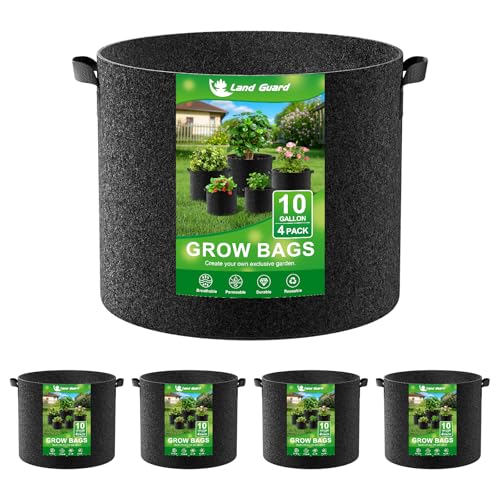
This Land Guard option uses a four-pack of ten-gallon fabric pots. It suits gardeners who want large containers but do not need ten of them. The thickened nonwoven fabric should let water drain while giving the sides enough support for a full soil mix. The larger capacity is useful for plants with broad or deeper root systems.
Handles add practical value, but I would treat them as positioning aids rather than a promise that a full bag is easy to carry. Four bags can fit a small raised-bed style layout or a focused vegetable garden. They also give you more freedom to grow plants that feel restricted in smaller pots. This is a good middle ground between a small starter set and a large bulk pack.
Pros:
- Ten-gallon size supports larger container crops
- Four-pack suits a focused garden layout
- Thick fabric offers useful structure
- Handles help with setup and minor adjustments
- More manageable quantity than a ten-pack
Cons:
- Large bags require more soil and water
- Four containers may not cover a full garden plan
- Heavy when filled to capacity
What Amazon Buyers Are Saying
Review themes for large Land Guard bags tend to center on the roomy size, easy setup, and useful handles. Buyers who grow vegetables in containers often like having a deeper alternative to five-gallon pots. Some gardeners mention that large fabric bags can dry faster than rigid plastic pots. Others note that the bags work best on level ground, since soft fabric sides follow the surface below.
My Recommendation
This is a strong pick for gardeners who need large bags but prefer a four-pack. It offers useful capacity without forcing you to buy ten containers. I would select it for tomatoes, flowers, and other plants that need extra room.
Songrey 10-Gallon Grow Bags

Songrey’s ten-pack targets gardeners who want many large planting spaces at once. Each bag is listed at ten gallons and uses thickened nonwoven fabric. That size can work well for potatoes, vegetables, flowers, and other plants that need more soil volume. Handles make the bags easier to arrange before they become fully loaded.
The large pack is useful for a planned garden with several crops. It can also help you separate plants by soil mix or watering needs. The tradeoff is weight: ten filled bags take time, soil, and space to manage. I would measure your growing area first and set each bag in its final spot before filling it.
Pros:
- Ten large bags support an expanded container garden
- Ten-gallon size suits root-hungry crops
- Useful for potatoes and other vegetables
- Thick nonwoven fabric supports drainage
- Handles improve setup and placement
Cons:
- Large pack needs a lot of storage space
- Full bags are difficult to move
- Filling ten bags can require a large soil budget
What Amazon Buyers Are Saying
Buyers commonly value this style of pack because it provides many large bags for one garden project. Gardeners often mention vegetable growing and potato growing as useful applications. The most repeated practical issue with large fabric pots is not the empty bag, but the weight after filling. Some users also find that careful watering matters because fabric sides can lose moisture faster than sealed containers.
My Recommendation
I recommend Songrey for gardeners who want quantity and large capacity at the same time. It makes the most sense for a backyard or community garden, not a small indoor space. If you can manage the soil and placement, it offers excellent planting flexibility.
Gardzen 5-Gallon Grow Bags

Gardzen’s five-gallon ten-pack is built for gardeners who need many medium-size containers. The listed 300G fabric offers a useful mix of breathability and support. Five gallons works for herbs, flowers, greens, peppers, and many compact vegetables. The pack also makes it easier to group plants by sunlight, soil, or watering needs.
Heavy-duty handles add convenience when you need to turn or shift a bag. Like every fabric pot, these containers work best when you choose a level, well-drained surface. Ten bags can create a productive garden without the larger soil demand of ten-gallon containers. I see this as a strong value pick for gardeners who prefer several smaller plants.
Pros:
- Ten-pack offers many planting spaces
- Five-gallon size is easy to fit into small gardens
- 300G fabric supports airflow and drainage
- Heavy-duty handles help with repositioning
- BPA-free construction suits food crops
Cons:
- Not the best size for very large plants
- Ten bags can still require frequent watering
- More containers mean more watering tasks
What Amazon Buyers Are Saying
Customers often like the large quantity and the practical five-gallon size. Many use the bags for flowers, vegetables, herbs, and small garden trials. Buyers also tend to appreciate how fabric pots fold down when not in use. Some reviews note that filled bags can lose their shape if the soil is not packed evenly. Others recommend checking moisture often during warm or dry weather.
My Recommendation
This is my favorite bulk option for medium-size plants. The ten-pack gives you room to grow many crops, while five gallons remains easier to handle than larger bags. It is a smart choice for a productive patio or backyard container garden.
VIVOSUN 15-Gallon Fabric Pots

These VIVOSUN bags provide the largest listed capacity in this review. A 15-gallon pot gives large plants much more soil volume than a five-gallon model. The bags use listed 300G thickened nonwoven fabric and include handles. Their BPA-free construction is a useful feature for gardeners growing edible plants.
This set fits large vegetables, shrubs, and plants with demanding root systems. The extra room can reduce the need to move plants into bigger containers later. However, a full 15-gallon bag becomes very heavy, so placement matters even more. I would use a sturdy, level surface and plan the layout before filling these pots.
Pros:
- Largest capacity among the reviewed options
- Five-pack gives room for several large plants
- 300G fabric supports drainage and air movement
- Handles help with empty-bag placement
- BPA-free construction suits edible gardening
Cons:
- Filled bags are very hard to move
- They use a large amount of soil
- Too large for many balconies and small patios
What Amazon Buyers Are Saying
Buyers who choose 15-gallon bags usually focus on capacity and the ability to grow larger plants in containers. Review patterns also show that handles help most before the bags reach full weight. The main concern is practical: large fabric pots need space, soil, and a stable location. Gardeners in hot climates may also need to watch moisture more closely because breathable sides can dry out quickly.
My Recommendation
Choose this set when root space is your top concern. It is too large for casual container use, but it can be excellent for a serious garden. I recommend it for large plants and growers who can commit to a permanent placement area.
AC Infinity 5-Gallon Fabric Pots

AC Infinity takes a more specialized approach with these five-gallon pots. They use listed 500G nonwoven fabric, which is heavier than the 300G material used by many options here. The standout feature is the LST metal ring system. It gives growers a built-in point for low-stress training of fruit, vegetable, and flower plants.
The five-pack remains a useful size for many home gardens. Machine-washable construction can also make end-of-season care more convenient, if the bags are cleaned and dried fully before storage. This model costs more than a basic fabric pot in many cases, but the added training feature may justify it for experienced growers. It is less compelling if you only need a simple container.
Pros:
- Heavy 500G fabric offers a more substantial build
- Metal rings support low-stress plant training
- Five-gallon size fits many indoor or outdoor setups
- Machine-washable design supports easier cleaning
- Five-pack works for a focused collection of plants
Cons:
- Special features may cost more than basic bags
- Training rings are unnecessary for some gardeners
- Five gallons may not suit very large plants
What Amazon Buyers Are Saying
Customer discussions often focus on the heavier fabric and the usefulness of the metal training rings. Experienced growers tend to value the extra control during plant training. Buyers who want a simple pot may see the added hardware as more than they need. Some gardeners also note that washing and drying fabric pots takes time, even when the cleaning process is easier than with some rigid containers.
My Recommendation
This is my premium pick for growers who will use the training rings. The heavier fabric and washable design add value beyond a basic pot. If you only need a standard container for herbs, choose a simpler and less specialized option.
VIVOSUN 10-Gallon Fabric Pots

This VIVOSUN set offers five ten-gallon bags for gardeners who want a middle size between standard and extra-large pots. The listed 300G fabric supports drainage and root airflow. Ten gallons gives many vegetables and flowers more room than a five-gallon bag without reaching the size of a 15-gallon container. The included handles add convenience during setup.
BPA-free construction makes the set a sensible choice for food gardens. Five bags can form a useful group for tomatoes, peppers, flowers, or other medium-to-large plants. As with other large fabric pots, I would fill them in place because moving them later can be difficult. This option suits gardeners who want a known size from a familiar planting format.
Pros:
- Ten-gallon capacity fits many larger crops
- Five-pack provides a balanced garden setup
- 300G nonwoven fabric supports drainage
- Handles help during initial placement
- BPA-free material suits vegetable growing
Cons:
- Too large for some small spaces
- Filled bags are difficult to carry far
- May need more frequent watering than solid pots
What Amazon Buyers Are Saying
Buyers commonly like the ten-gallon size because it gives plants more room without the bulk of the largest bags. The five-pack also receives attention from gardeners who want several matching containers. Reviewers often mention the handles as helpful during setup. Common limitations include weight after filling and the need to monitor moisture during hot weather.
My Recommendation
I recommend this set for gardeners who want a dependable medium-large size. It is a strong choice for vegetables and flowers that have outgrown five-gallon pots. The balance of capacity, quantity, and simple design makes it easy to use.
FEED GARDEN 5-Gallon Grow Bags

FEED GARDEN offers four five-gallon bags made from listed 300G thickened nonwoven fabric. The size works well for herbs, lettuce, strawberries, flowers, and many compact vegetables. Double-stitched handles add a helpful detail for gardeners who move their pots during the day. The foldable design also makes storage easier after the growing season.
This set fits small gardens that need a few useful containers rather than a bulk supply. The breathable sides can help excess water escape, but they also mean the soil may dry faster than it would in a sealed pot. I would place these bags where drainage will not stain or damage the surface below. For basic patio gardening, the design keeps things simple and flexible.
Pros:
- Good five-gallon size for herbs and flowers
- Double-stitched handles add useful support
- 300G fabric provides airflow and drainage
- Foldable design saves storage space
- Four-pack suits a small container garden
Cons:
- Four bags may be limiting for larger gardens
- Not designed for plants needing very large root space
- Breathable sides can increase watering needs
What Amazon Buyers Are Saying
Buyers commonly appreciate the compact pack, foldable storage, and double-stitched handles. Gardeners often choose this kind of set for herbs, greens, flowers, and strawberries. As with other fabric containers, review discussions tend to mention faster drying in warm conditions. Some users also note that a level surface helps the soft bags hold a neat shape.
My Recommendation
This is a good budget-friendly option for small gardens and new growers. The five-gallon capacity is practical, and the four-pack avoids excess containers. I would choose it for herbs, flowers, lettuce, and other plants with modest root needs.
How to Choose Best Fabric Grow Bags
Choosing the best fabric grow bags starts with your plant, space, climate, and daily routine. A bigger bag is not always better. Large pots need more soil and become hard to move. Small bags save space but may dry out faster and limit root growth. I look at the following points before I buy.
1. Match the Bag Size to the Plant
Five-gallon bags work well for herbs, greens, flowers, peppers, and many compact vegetables. Ten-gallon bags give larger plants more room. Fifteen-gallon bags suit plants with broad or demanding root systems. Check the mature size of the plant, not only the size of the seedling.
Also think about height and width. A bag can hold the right volume but still need a stable area around it. Leave enough space for watering, pruning, and airflow. If you plan to move the bag, remember that wet soil adds a great deal of weight.
2. Check Fabric Weight, Stitching, and Handles
Many products in this review list 300G nonwoven fabric. The AC Infinity model lists 500G fabric. A heavier fabric may feel more firm and resist wear, but fabric weight alone does not prove total quality. Inspect the seams, handle attachment, base, and overall shape.
Handles matter most during setup and light repositioning. Do not assume they make a full bag easy to carry. Double stitching or reinforced attachment can add confidence, especially on ten- and 15-gallon bags. If you grow food, check the product listing for material details such as BPA-free construction.
3. Think About Drainage, Watering, and Long-Term Value
Fabric grow bags drain more freely than sealed pots. That helps prevent standing water, but it can also make the soil dry sooner. Check your plants often during hot, dry, or windy weather. Use a quality potting mix that holds moisture while still draining well.
Place each bag on a level surface with room for water to escape. Clean the bags after the season if the maker allows it, then dry them fully before storage. A reusable bag can offer good value over several seasons when you handle it with care. Compare the pack count with your real garden plan, since the lowest price per bag is not useful if you buy the wrong size.
Final Verdict: Which Should You Buy?
For most gardeners, I recommend the VIVOSUN five-gallon set. For bulk value, Gardzen’s five-gallon ten-pack stands out. Choose AC Infinity if you need heavy fabric and training rings.
The best fabric grow bags should match your plants and space. Select the right size, monitor moisture, and place each bag before filling it.
FAQs Of best fabric grow bags
Are fabric grow bags better than plastic pots?
They can be better for drainage, airflow, storage, and root control. Plastic pots may hold moisture longer and keep a firmer shape. The better choice depends on your plant and watering routine.
What size fabric grow bag is best for vegetables?
Five gallons suits many herbs, greens, peppers, flowers, and compact vegetables. Ten gallons works better for larger plants. Use 15 gallons when the plant needs more root space.
Do fabric grow bags need drainage holes?
The fabric sides already allow water to escape. You should still place each bag on a surface that drains well and never let it sit in standing water.
How often should I water plants in fabric grow bags?
Check the soil often, especially in hot or windy weather. Water when the top layer begins to dry, while avoiding a constantly soaked mix.
Can fabric grow bags be reused?
Yes. Empty, clean, and dry them after the season. Store them in a dry place, and inspect the seams and handles before using them again.