
How Do Remote Lawn Mowers Work: How They Operate
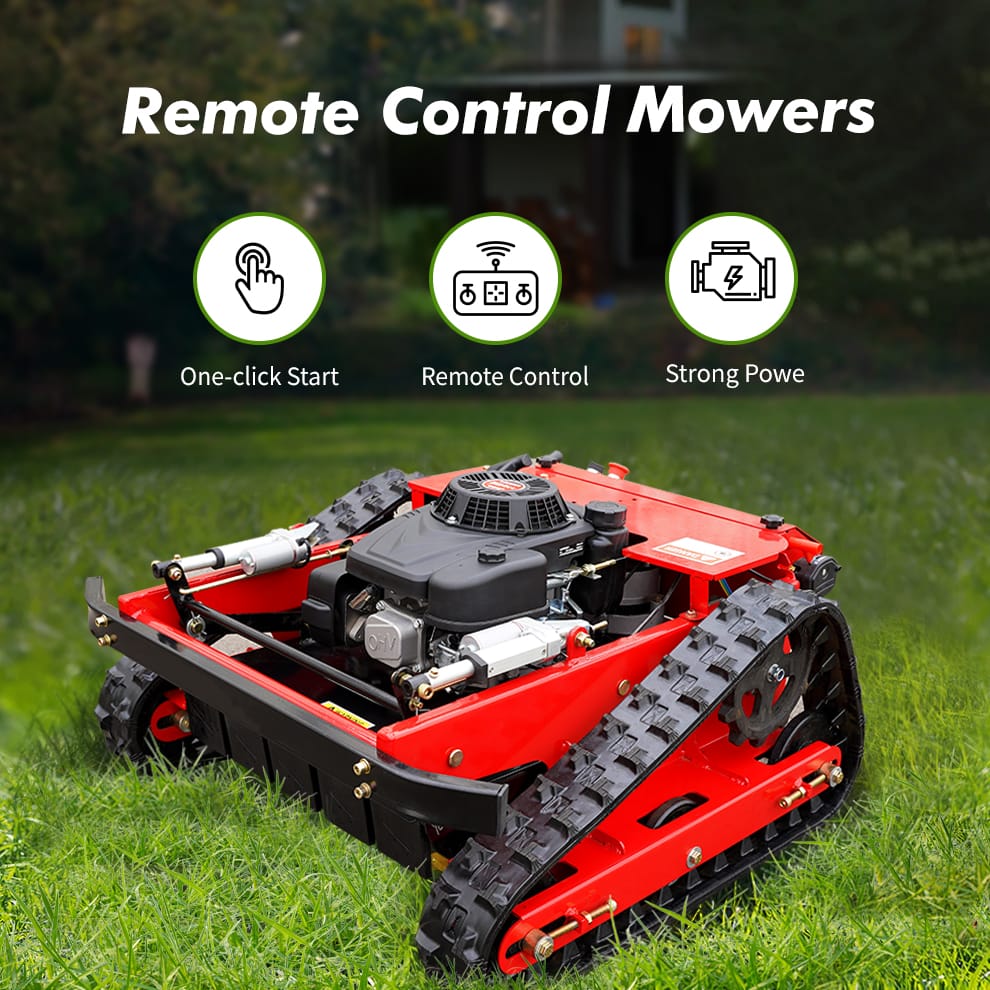
Remote lawn mowers let an operator control a mower from a distance with a handheld transmitter, phone, or other control device. The mower receives wireless commands, moves with electric drive motors or hydraulic systems, and spins its cutting blades with a separate power system.
In the United States, people use remote mowers on steep hills, large rural properties, roadside areas, commercial grounds, and places where a walk-behind or ride-on mower may be unsafe. Some models are fully remote-controlled. Others are robotic mowers that follow a programmed route with little or no live control.
The key difference is simple: a remote-controlled mower follows the operator’s commands, while an autonomous robotic mower follows software, sensors, and boundary rules.

What Is a Remote-Controlled Lawn Mower?
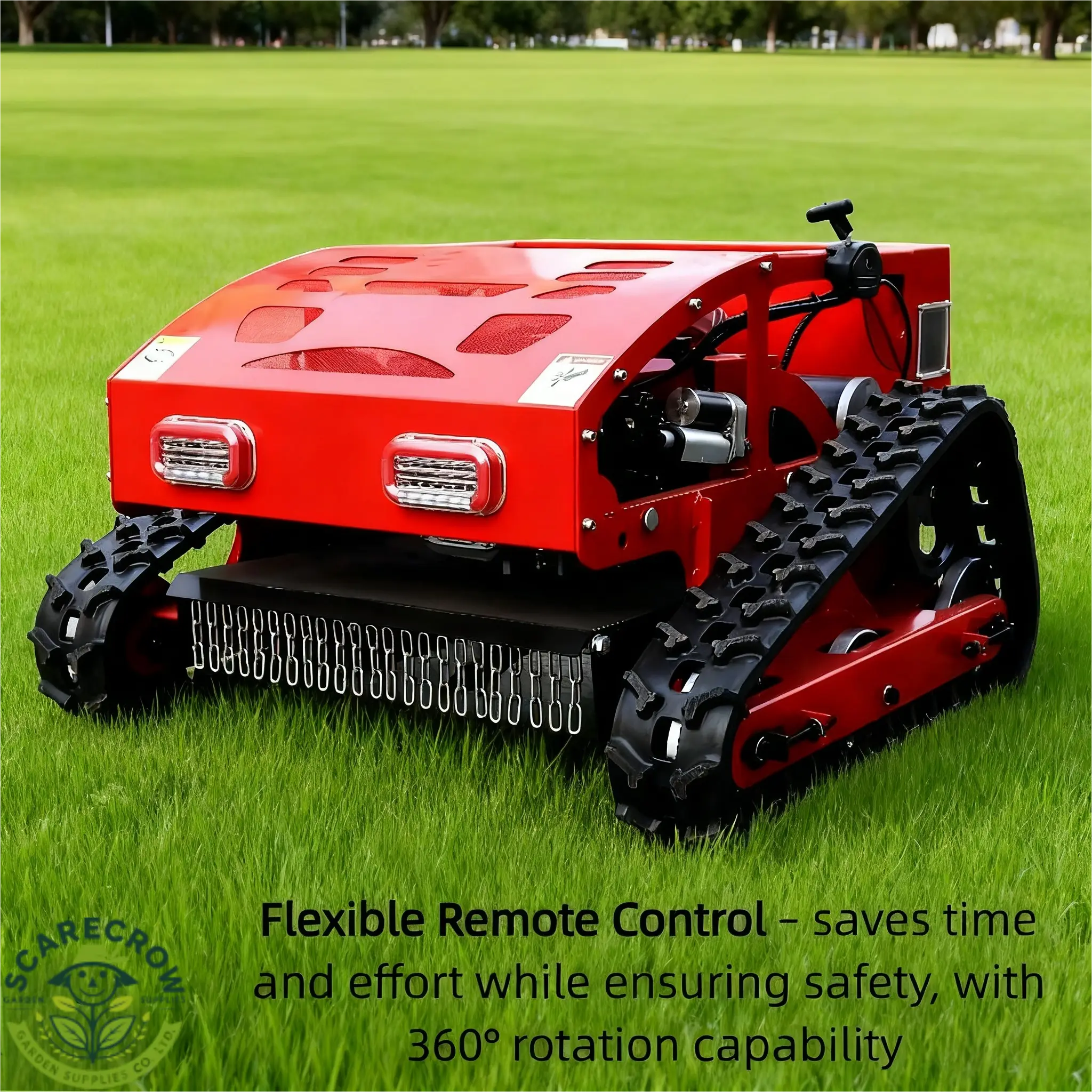
A remote-controlled lawn mower is a powered mower that an operator drives from outside the machine. The operator uses a wireless controller to steer, stop, change speed, and control the cutting system.
These mowers are not the same as small radio-controlled toys. Many commercial units include:
- A steel cutting deck
- One or more gasoline or diesel engines, or electric motors
- Hydraulic or electric wheel drives
- A wireless receiver
- Emergency stop systems
- Safety sensors
- Protective guards
- Low-speed and slope-control settings
Remote mowers come in several forms.
Remote slope mowers
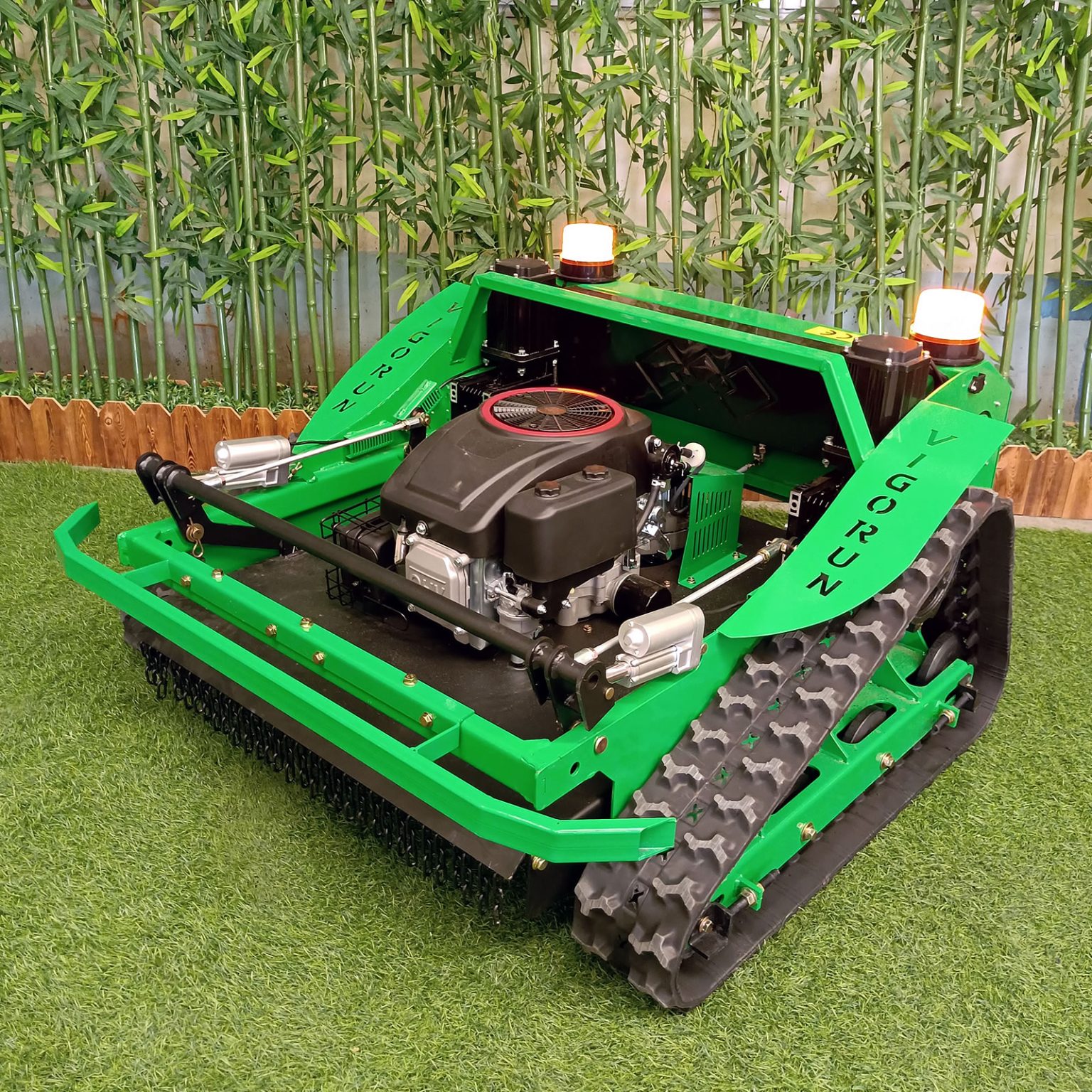
Remote slope mowers are built for hills, embankments, drainage areas, and rough ground. They often have tracked drive systems or wide wheels that improve grip.
The operator can stand several feet or several dozen feet away, depending on the design and approved operating range. The distance is not the only concern. Trees, buildings, terrain, and other radio signals can reduce communication.
Remote commercial mowers
Commercial remote mowers may cut grass in parks, sports areas, utility corridors, airports, and large private properties. They usually have wider decks and stronger drive systems than consumer robotic mowers.
Robotic lawn mowers
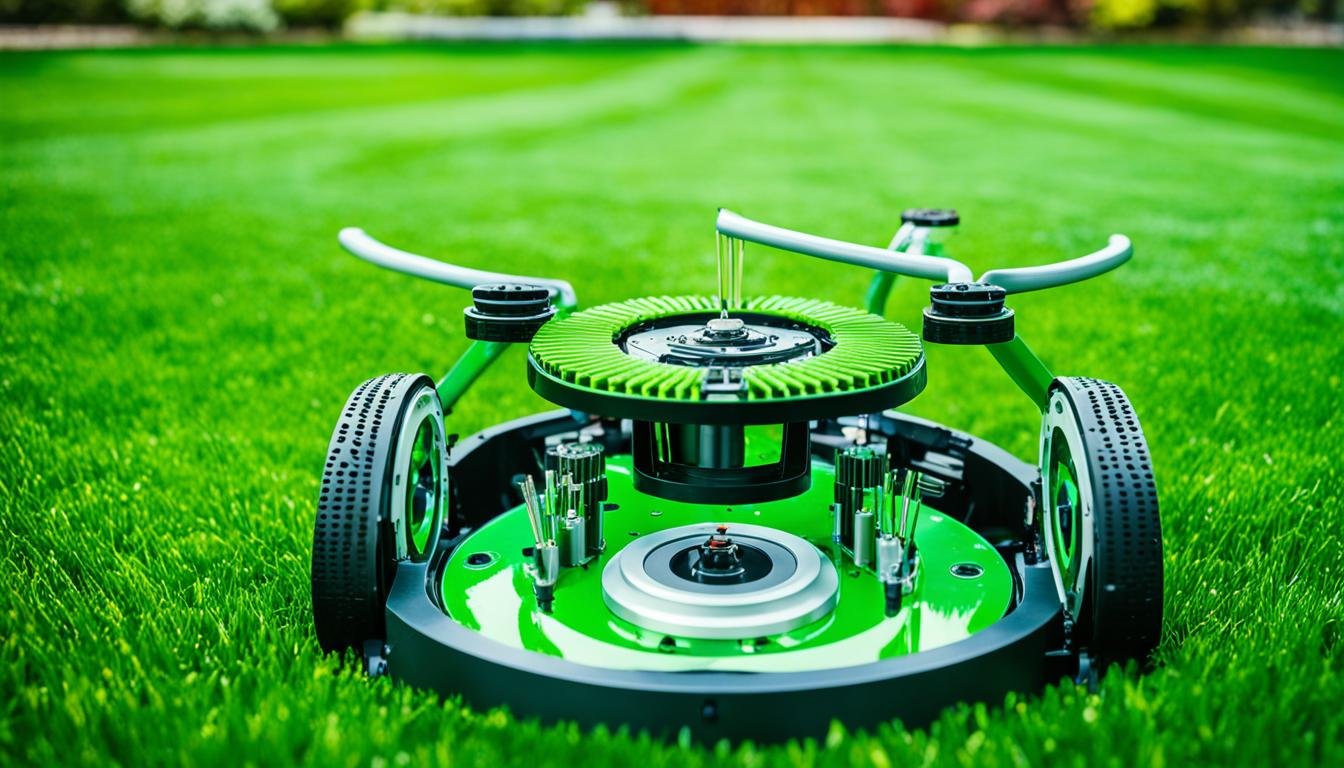
Robotic mowers work with less direct control. A robotic model may use a buried perimeter wire, surface boundary wire, GPS guidance, cameras, or other sensors. It travels through a programmed area and returns to a charging station when needed.
A robotic mower may have a remote-control mode through an app. However, its main job is to mow on its own.
How Does a Remote Lawn Mower Work?
A remote lawn mower works by joining five systems: the controller, radio link, control computer, drive system, and cutting system.
1. The operator sends a command
The operator moves a joystick, trigger, wheel, or button on the remote controller. Common commands include:
- Forward
- Reverse
- Left
- Right
- Stop
- Speed change
- Blade start and stop
- Engine throttle
- Deck height adjustment on some models
The controller changes each movement into an electronic signal.
2. A receiver reads the signal
A receiver on the mower picks up the wireless signal. The receiver sends the command to the mower’s control unit.
Many systems use a digital radio connection. The control unit may check whether the signal is valid before acting on it. If the signal stops, the mower may slow down, stop driving, shut off the blades, or stop the engine.
The exact response depends on the model. Read the owner’s manual before assuming that every remote mower stops in the same way.
3. A control unit checks the command
The control unit acts like the mower’s brain. It checks input from the controller and safety devices.
It may also monitor:
- Receiver connection
- Battery voltage
- Engine speed
- Motor temperature
- Hydraulic pressure
- Tilt angle
- Seat or access covers
- Blade engagement
- Emergency stop status
If the system detects a serious fault, it may prevent the blades from starting or stop the mower.
4. Drive motors move the mower
The mower converts the command into movement. There are two common designs.
Hydraulic drive
A gasoline or diesel engine powers hydraulic pumps. The pumps send pressurized fluid to hydraulic motors near the wheels or tracks.
The control system changes fluid flow to each side of the mower. If the left side moves faster than the right side, the mower turns right. If one side moves forward while the other moves backward, the mower can turn sharply.
This design is common on heavy commercial machines because hydraulic systems can deliver strong torque at low speed.
Electric drive
An electric mower uses batteries and electric motors for movement. The controller changes the speed and direction of each motor.
Electric drive systems can offer quiet operation and precise control. Their working time depends on battery size, grass height, slope, temperature, speed, and blade load.
5. The cutting system removes the grass
A separate motor or engine system spins the cutting blades. The blades may sit under a deck like those on a conventional rotary mower.
The cutting system can include:
- One blade
- Multiple blades
- A belt drive
- Direct electric drive
- A mechanical clutch
- A hydraulic motor
- A blade brake
The drive system and cutting system are often controlled separately. This means the mower may drive without the blades turning. That feature helps the operator move the machine safely across paths or toward a work area.
How Do Remote Mowers Steer on Hills?
Remote mowers steer by changing the speed or direction of the drive wheels or tracks. On a slope, the machine must also manage traction, weight balance, and sideways sliding.
Tracked models often use skid steering. Each track has its own drive system. The mower turns when one track moves faster than the other.
Wheeled models may use separate wheel motors or a steering system. Their performance depends more heavily on tire grip and ground condition.
A mower can climb a slope without being safe to use there. The allowed slope angle depends on the model, surface, direction of travel, grass condition, and manufacturer instructions.
Why slope direction matters
Driving straight up and down a hill is often different from driving across it. A mower may have more risk of sliding or tipping when it travels sideways across a slope.
Wet grass, loose soil, leaves, mud, and frost can reduce traction. A slope that seems manageable in dry conditions may become unsafe after rain.
Slope calculations
Manufacturers may state a maximum slope in degrees or as a percentage.
The two measurements are not the same:
| Slope angle | Approximate grade |
|---|---|
| 10 degrees | 18% |
| 15 degrees | 27% |
| 20 degrees | 36% |
| 25 degrees | 47% |
| 30 degrees | 58% |
These are approximate conversions. A 20-degree slope is not the same as a 20% slope.
For a simple field estimate, measure the rise and horizontal distance:
Slope percentage = vertical rise ÷ horizontal distance × 100
For example, a 3-foot rise over a 10-foot horizontal distance equals a 30% grade. That is about 17 degrees.
This calculation does not replace the mower’s manual. A machine may have a lower safe limit for sideways travel, wet ground, or uneven terrain.
What Powers a Remote Lawn Mower?
Remote mowers usually use gasoline, diesel, battery power, or a combination of engine and hydraulic systems.
Gasoline and diesel systems
A combustion engine may power the blades, hydraulic pumps, or both. These machines can run for long periods when the operator refuels them.
Their limits include:
- Fuel storage
- Exhaust fumes
- Engine noise
- Hot surfaces
- Oil and filter service
- Fire risk during refueling
Never refuel a hot engine or refuel near flames, sparks, or cigarettes. Follow the fuel and storage instructions in the manual.
Battery-powered systems
Battery-powered remote mowers use rechargeable battery packs. The batteries may power both the drive motors and cutting blades.
Runtime is not a fixed number. Heavy grass and steep slopes require more energy than short, dry grass on level ground. Cold weather can also reduce battery performance.
A basic runtime estimate is:
Approximate runtime = usable battery watt-hours ÷ average power draw
For example, a battery rated at 2,000 watt-hours does not always provide 2,000 usable watt-hours at the blade and drive motors. The control system may reserve part of the charge, and real power draw changes during mowing.
Hybrid systems
Some remote mowers use an engine to generate electricity or power hydraulics while electric motors control the drive or cutting equipment. Hybrid designs can combine long operating time with precise control.
The system layout varies by manufacturer. Check the service manual for the actual power path before attempting repairs.

What Happens If the Remote Signal Is Lost?
Most remote mowers include a failsafe response for lost communication. The mower may stop movement, disengage the blades, shut down the engine, or activate an emergency stop.
However, never treat signal loss as a guaranteed safety solution. A failed component, incorrect setup, damaged antenna, or software fault can change the response.
Before mowing:
- Test the emergency stop.
- Test the controller’s stop command.
- Confirm the mower reacts when the controller is switched off.
- Check the stated operating range.
- Remove people and animals from the work area.
- Keep the controller charged.
- Maintain a clear view of the mower.
- Stop work if the signal becomes weak or intermittent.
The operator should know where the physical emergency stop is located. Some machines also have an emergency stop on the remote controller.
How Do Robotic Lawn Mowers Work Without a Driver?
Robotic lawn mowers use sensors and software to decide where to travel. They do not usually need continuous joystick control.
Boundary wire systems
Many robotic mowers use a low-voltage boundary wire around the lawn. The mower detects the wire and stays inside the marked area.
The wire may also define:
- No-go zones
- Narrow passages
- Islands around trees or beds
- Charging paths
A broken wire can cause the mower to leave its expected area or stop. Installation quality affects reliability.
GPS and satellite guidance
Some robotic mowers use satellite signals to map or guide the work area. Satellite guidance can reduce the need for a physical boundary wire, but trees, buildings, slopes, and signal conditions can affect accuracy.
A GPS label does not mean the mower can safely operate without supervision. The owner must still set boundaries, check maps, and follow the manufacturer’s instructions.
Cameras and obstacle sensors
Some models use cameras, ultrasonic sensors, lift sensors, tilt sensors, or bump sensors. These systems may help detect objects or prevent operation during unsafe conditions.
Sensors have limits. Tall grass, low light, dirt, water, thin wires, toys, and small animals may not be detected reliably.
Charging and mowing cycles
A robotic mower normally returns to a charging station when its battery is low. After charging, it resumes a scheduled task or returns to a mapped area.
This creates a different mowing pattern from a standard mower. A robotic mower may cut small amounts of grass often instead of cutting tall grass once a week.
Remote-Controlled vs. Robotic Lawn Mowers
The right type depends on the property and the amount of control you need.
| Feature | Remote-controlled mower | Robotic mower |
|---|---|---|
| Main control | Live operator input | Software and sensors |
| Best use | Slopes, rough areas, commercial work | Maintained lawns and regular mowing |
| Operator view | Usually required | Still useful for checks |
| Typical mowing style | Direct cutting pass | Repeated programmed routes |
| Boundary setup | Often minimal | Usually required |
| Slope ability | May be high, model dependent | Usually more limited |
| Safety concern | Moving machine and blades | Unattended operation and obstacles |
| Labor need | Operator remains involved | Less routine labor |
| Main limitation | Requires active control | Sensors and mapping can fail |
A remote-controlled mower may be better for a steep roadside bank. A robotic mower may be better for a fenced, mostly level residential lawn.
Neither type is automatically safe for every property.
How to Use a Remote Lawn Mower Safely
Remote mowers contain powerful blades and can move across uneven ground. Treat them like heavy equipment, not household gadgets.
Before starting
- Read the operator’s manual.
- Complete any required training.
- Inspect the mower, controller, blades, guards, tires, tracks, and battery.
- Look for rocks, wire, toys, branches, and hidden objects.
- Keep children, pets, and bystanders away.
- Check weather and ground conditions.
- Confirm the planned route.
- Test the stop and failsafe systems.
- Wear sturdy footwear, eye protection, and hearing protection when required.
- Keep a charged phone or another communication method nearby.
While mowing
- Keep the mower in view unless the manual specifically allows another method.
- Keep both hands on the controller when moving the machine.
- Stay outside the mower’s travel path.
- Do not stand below a machine working on a slope.
- Do not approach a running blade deck.
- Stop the mower before clearing grass or debris.
- Do not disable guards, interlocks, or tilt sensors.
- Slow down near drop-offs, roads, water, fences, and hard surfaces.
- Stop work when visibility, traction, or radio control becomes uncertain.
During maintenance
Turn off the engine or motor, remove the key or battery connection as directed, engage the parking brake, and wait for all moving parts to stop.
Do not rely only on the remote control’s stop button. Follow the machine’s lockout, blade service, and battery isolation procedure.
The Occupational Safety and Health Administration provides general powered-equipment guidance for workplaces. Commercial operators should also follow applicable federal, state, and local rules.
Common Problems With Remote Lawn Mowers
A remote mower that will not work may have a simple control, power, or safety issue. Start with safe checks before opening covers or touching wiring.
The mower does not move
Possible causes include:
- Emergency stop is active
- Remote controller is off
- Controller battery is low
- Mower battery is low
- Parking brake is engaged
- Receiver has lost pairing
- A safety interlock is active
- Hydraulic fluid or system pressure is low
First, move away from the machine, set the controller to stop, and check the displays or warning lights. Use the manual’s fault-code procedure.
The blades do not start
Possible causes include:
- Blade switch is off
- Engine speed is too low
- Deck is blocked
- Blade clutch has a fault
- Battery voltage is too low
- A tilt or access-cover sensor is active
Never reach under the deck to inspect it while the mower is powered.
The mower stops on a slope
The ground may be too steep, wet, loose, or uneven. The machine may also detect excessive tilt, low battery power, loss of radio signal, or high motor temperature.
Do not repeatedly restart it without finding the cause. Move the mower to a safe, level area if you can do so without approaching a hazard.
The mower drifts or turns poorly
Unequal tire pressure, track wear, damaged drive components, hydraulic problems, or incorrect control calibration can cause poor steering.
Stop using the machine if it does not respond predictably. Steering faults are especially dangerous near slopes, roads, and people.

What Affects Remote Mower Performance?
Remote mower performance depends on more than engine size or cutting width.
Terrain
Rocks, holes, roots, wet soil, and sharp drop-offs affect traction and stability. A mower designed for a smooth slope may not handle a rough construction site.
Grass height and density
Tall, wet, or thick grass increases blade load. The mower may slow down, use more fuel, draw more battery power, or clog the deck.
Radio conditions
Radio range can change due to:
- Trees
- Buildings
- Hills
- Metal structures
- Electrical interference
- Low controller battery
- Damaged antennas
The advertised range may apply only under specific open-area conditions. Do not assume that range remains constant on a wooded or hilly property.
Weather
Rain can reduce traction and visibility. Lightning creates an additional outdoor-work hazard. Heat can affect batteries, engines, hydraulics, and operator endurance.
Follow the manual’s limits for rain, temperature, charging, and storage.
Maintenance
A remote mower needs routine care. Typical tasks include:
- Cleaning the deck
- Sharpening or replacing blades
- Checking fasteners
- Inspecting tires or tracks
- Checking hydraulic fluid
- Servicing the engine
- Cleaning cooling areas
- Charging and storing batteries correctly
- Updating software when required
Maintenance intervals vary by model and duty cycle. Commercial use may require more frequent service than occasional residential use.
How Much Does a Remote Lawn Mower Cost to Operate?
Operating cost includes more than the purchase price.
| Cost area | Gas or diesel remote mower | Battery remote mower |
|---|---|---|
| Energy | Fuel and engine oil | Electricity |
| Routine service | Oil, filters, belts, plugs | Fewer engine parts |
| Wear parts | Blades, belts, tires, tracks | Blades, tires, tracks |
| Downtime | Refueling and service | Charging and battery cooling |
| Long-term concern | Engine and hydraulic repair | Battery replacement |
A simple energy comparison uses actual consumption:
Energy cost per hour = fuel used per hour × fuel price
For electricity:
Charging cost = kilowatt-hours used × electricity rate
These calculations exclude labor, delivery, repairs, depreciation, and battery replacement. A wider cutting deck may reduce mowing time, but a larger machine may cost more to transport and maintain.
Common Mistakes to Avoid
The most serious mistakes involve treating a remote mower as risk-free because the operator is not sitting on it.
Avoid these errors:
- Operating without reading the manual
- Letting children use the controller
- Mowing with people or pets nearby
- Working across a slope without checking the manual
- Trusting a GPS or sensor system without supervision
- Using the mower after a signal fault
- Clearing a clog with the blade system energized
- Disabling safety switches
- Refueling a hot engine
- Charging a damaged or wet battery
- Ignoring unusual noise, vibration, heat, or steering
- Using a commercial machine on a slope beyond its rated limit
- Assuming a remote stop button replaces physical isolation during service
If the mower behaves unpredictably, stop work and contact the manufacturer or a qualified service technician.
Frequently Asked Questions
Can a remote lawn mower cut very steep hills?
Some are designed for steep slopes, but the safe limit depends on the exact model and surface. Check the manual for maximum uphill, downhill, and side-slope limits. Wet grass and loose soil can make a permitted slope unsafe.
Can remote lawn mowers work in the rain?
Some models may tolerate limited moisture, but that does not mean they are safe to use in heavy rain. Water can reduce traction, affect visibility, damage electronics, and increase electrical risk. Follow the manufacturer’s weather limits.
Do remote mowers need Wi-Fi?
Not always. Many remote-controlled mowers use a dedicated radio transmitter and receiver. Robotic mowers may use Wi-Fi, cellular service, GPS, Bluetooth, or boundary wire systems. The required connection depends on the model.
Can a remote mower operate out of sight?
Some commercial systems support advanced monitoring or route control, but operators should follow the exact manual and local safety rules. A clear view is often the safest practice because cameras and wireless links can fail.
Are remote lawn mowers safe around pets?
No mower with exposed or enclosed powered blades should operate near pets. Keep animals outside the work area. Robotic sensors may not detect every small animal, toy, or object.
Key Takeaways
- A remote lawn mower receives commands from a handheld controller.
- Its receiver sends those commands to a control unit.
- Electric motors or hydraulic systems move the wheels or tracks.
- A separate engine or motor powers the blades.
- Remote-controlled models need active operator control.
- Robotic mowers use maps, sensors, boundary wires, GPS, or software to mow with less direct input.
- Slope limits, traction, radio range, weather, and maintenance affect performance.
- Safety systems help, but they do not replace supervision.
- Always follow the exact owner’s manual for slope, weather, charging, maintenance, and emergency procedures.
Conclusion
Remote lawn mowers work by combining wireless control with powered drive and cutting systems. The operator sends commands, the receiver passes them to the control unit, and the mower adjusts its wheels, tracks, hydraulic motors, or electric motors.
For U.S. property owners, the main benefit is distance from steep, rough, or hazardous mowing areas. The main trade-off is that powerful equipment still requires training, clear visibility, careful terrain checks, and regular maintenance.
Before choosing one, measure the property’s slope, ground condition, mowing area, obstacles, signal path, and service needs. Then compare those conditions with the exact limits in the manufacturer’s manual.
Sources and Further Reading
- Occupational Safety and Health Administration: Lawn Mower Safety
- Occupational Safety and Health Administration: Control of Hazardous Energy
- Consumer Product Safety Commission: Outdoor Power Equipment Safety
- U.S. Environmental Protection Agency: Small Engines
- Manufacturer owner’s manual for the exact remote or robotic mower model being used


