


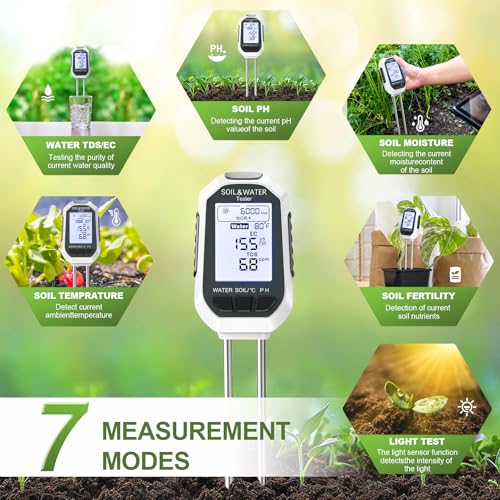
The best pH testers for soil make plant care simpler by showing acidity, moisture, light, and nutrient clues fast.
Have you ever watched a plant fade even though you water it on schedule? Soil pH may be the hidden cause. A tester can show whether your soil is too acidic, too alkaline, or near the range your plants need. I compared digital meters, analog tools, test strips, and full soil kits for gardens, lawns, farms, raised beds, and houseplants. The right pick depends on how much detail you want, how often you test, and whether you prefer a quick reading or a more complete soil check.
Buladeke 7-in-1 Digital Soil Tester
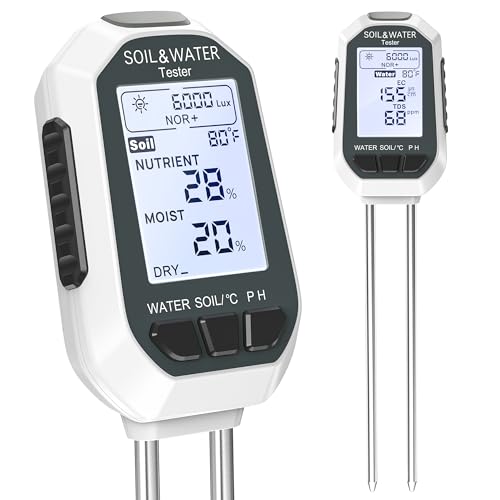
The Buladeke 7-in-1 Digital Soil Tester is built for gardeners who want more than a simple pH reading. Its broad feature set can help you check soil moisture, light, fertility, temperature, and other growing conditions from one handheld tool. That makes it useful when a plant looks weak but the cause is not clear.
I like this style of tester for raised beds, vegetable plots, houseplants, and lawn work. A multi-function meter can act like a small dashboard for your soil, but each reading should still be treated as a guide rather than a lab report. Use it across several spots, keep the probe clean, and compare the results with the needs of your plants.
Pros:
- Offers several useful soil and growing-condition readings
- Helps check pH and moisture without separate tools
- Useful for indoor plants, gardens, lawns, and beds
- Digital display is easier to read than a tiny color chart
- Can help identify watering and light problems together
- Good choice for gardeners who want one compact kit
Cons:
- More features can make the controls less simple for beginners
- Digital meters need careful probe cleaning and correct use
- Fertility readings should not replace a professional nutrient test
My Recommendation
I recommend the Buladeke for curious gardeners who want a broad look at plant conditions. It is especially handy for people who manage several types of plants and do not want a separate moisture meter, light meter, and pH tool. It is one of the best pH testers for soil when convenience matters as much as a quick acidity check.
| Best for | Why |
|---|---|
| Mixed plant collections | One tool checks several common growing factors. |
| Raised beds | It helps compare conditions in different areas. |
| New gardeners | The digital format makes basic readings easy to follow. |
SONKIR MS02 3-in-1 Soil pH Meter

The SONKIR MS02 combines soil pH, moisture, and light checks in a simple 3-in-1 design. It needs no battery, which is a real benefit when you want to test a garden bed without dealing with charging or replacement cells. The analog display gives quick feedback while you move from plant to plant.
This meter suits routine care more than detailed soil analysis. I would use it before watering, after changing potting soil, and when a lawn develops pale or uneven growth. The probe must make good contact with the soil, and a few readings from different spots will give you a better picture than one test.
Pros:
- Checks pH, moisture, and light in one tool
- Requires no battery or charging
- Simple design works well for quick garden checks
- Useful for both indoor pots and outdoor soil
- Lightweight body is easy to carry around a yard
- Low operating cost makes frequent testing practical
Cons:
- Analog readings may take practice to interpret
- It does not provide a full nitrogen, phosphorus, and potassium test
- Results can vary if the probe is placed in dry or loose soil
My Recommendation
The SONKIR MS02 is a strong pick for simple plant care and regular checks. It is best for gardeners who want an affordable, no-battery meter that covers the basics. Among the best pH testers for soil, it stands out for easy ownership and useful three-function coverage.
| Best for | Why |
|---|---|
| Houseplants | The compact meter fits pots and checks moisture before watering. |
| Budget shoppers | No batteries or strips keep long-term costs low. |
| Lawn care | It helps spot pH and moisture differences across a yard. |
HSLGOVE 7-in-1 Soil Test Kit

The HSLGOVE 7-in-1 Soil Test Kit is designed for gardeners who want a wider set of readings on one dual-screen device. It includes soil pH and moisture information, along with soil temperature, air temperature, humidity, and other plant-care indicators. That range can be helpful when weather and soil conditions change from day to day.
This is the kind of tester I would keep near a greenhouse, seed-starting shelf, or large garden. Temperature and humidity readings add context that a basic pH meter cannot provide. Still, avoid treating a displayed fertility value as a complete laboratory soil report, since nutrient testing requires a controlled sample and calibrated method.
Pros:
- Provides a broad set of soil and air measurements
- Dual-screen design can show more than one reading at a time
- Useful for greenhouses, indoor plants, and outdoor gardens
- Soil temperature data helps with seeds and root growth
- Humidity information supports better indoor plant care
- Good fit for gardeners who enjoy tracking conditions
Cons:
- Its many readings may feel excessive for a small plant collection
- Digital equipment needs proper care around water and mud
- Displayed fertility data should be confirmed with a full soil test
My Recommendation
I recommend the HSLGOVE for serious home growers, greenhouse users, and gardeners who like clear data. It is one of the best pH testers for soil for checking the larger growing picture, not just acidity. Choose it if temperature and humidity matter to your planting plan.
| Best for | Why |
|---|---|
| Greenhouses | Air temperature and humidity add useful climate information. |
| Seed starting | Soil temperature can help guide planting decisions. |
| Data-focused gardeners | Multiple readings make it easier to compare growing areas. |
YAMRON 4-in-1 Digital Soil Meter

The YAMRON 4-in-1 Digital Soil Meter gives plant owners a practical way to check several basic conditions. Its focus on indoor and outdoor plants makes it useful for containers, flower beds, herbs, and small lawns. A digital screen can make the reading feel faster and clearer than a dial.
I see this as a middle-ground option. It offers more information than a basic pH-only tool without the larger feature list of a 7-in-1 tester. For best results, test soil when it is slightly moist, press the probe into the root zone, and wipe it clean between samples.
Pros:
- Combines four common plant-care checks
- Digital display is easy to read in normal light
- Works for indoor containers and outdoor planting areas
- Useful for checking conditions before adding water or fertilizer
- Compact format is easy to store in a garden drawer
- Offers a practical balance between price and features
Cons:
- Digital readings still depend on good soil contact
- It may not satisfy users who need a full nutrient analysis
- It requires more care than a basic analog meter
My Recommendation
The YAMRON is a good choice for plant owners who want a modern, mid-range tool. It belongs on a shortlist of the best pH testers for soil for people who want useful features without a complicated professional setup. It is especially helpful for checking several containers with different watering needs.
| Best for | Why |
|---|---|
| Indoor plants | The compact digital format is easy to use around pots. |
| Small gardens | Four readings offer useful detail without a large kit. |
| New tool buyers | It provides a simple step up from a single-purpose tester. |
Rapitest Complete Garden Soil Test Kit
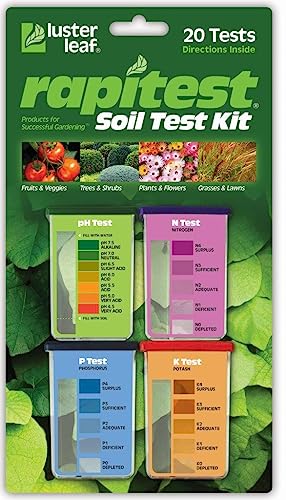
The Rapitest Soil Test Kit takes a different path from electronic meters. It uses a test process to check soil pH and key garden nutrients, so it can give more useful information when you are deciding how to amend soil. It is made for gardens, vegetables, flowers, and lawns.
This kit takes more time than inserting a probe, but that extra step can be worthwhile. A soil sample represents a specific area, so collect it from the root zone and follow the directions closely. I prefer this type of kit when a garden has repeated problems or when I want nutrient information before applying lime or fertilizer.
Pros:
- Checks soil pH and important garden nutrient levels
- Useful for vegetables, flowers, lawns, and garden beds
- Helps guide soil amendments more thoughtfully
- Does not rely on batteries or electronic calibration
- Good option for planned seasonal soil checks
- More informative than a pH-only moisture meter
Cons:
- Testing takes longer than using a digital probe
- Color comparison can be harder in poor lighting
- Supplies may run out after repeated tests
My Recommendation
I recommend Rapitest for gardeners who want a more complete soil review. It is among the best pH testers for soil when fertilizer and amendment choices matter. Pick it for a vegetable plot, lawn renovation, or garden that keeps showing the same growth problem.
| Best for | Why |
|---|---|
| Vegetable gardens | pH and nutrient results help support planned feeding. |
| Lawn repair | It can reveal soil issues before you spend on treatments. |
| Seasonal testing | The kit suits spring and fall soil checks. |
100-Pack Soil pH Test Strips

These soil pH test strips offer a low-cost way to test many samples. The stated range of 3.5 to 9 covers acidic, neutral, and alkaline soil conditions found in many gardens. A large pack is useful when you want to compare containers, beds, compost mixes, and lawn areas.
Strips work best when you prepare a soil mixture carefully. A typical process involves mixing a representative soil sample with clean water, allowing solids to settle, and dipping the strip into the liquid as directed. They do not measure moisture, light, or nutrients, but they can provide a quick pH screen before you choose a more detailed test.
Pros:
- Includes many tests for repeated sampling
- Covers a wide pH range for common garden use
- Easy to store in a small drawer or garden box
- No batteries, charging, or probe care is required
- Useful for comparing several soil samples
- Affordable for gardeners with many plants
Cons:
- Color matching may be less exact than a calibrated meter
- Requires sample preparation before testing
- Does not show moisture, light, or nutrient levels
My Recommendation
These strips are best for gardeners who value quantity and low cost. They are some of the best pH testers for soil for quick screening, classroom projects, compost checks, and large collections of pots. Keep in mind that strips show a pH estimate, so use a more complete kit when a major amendment decision depends on the result.
| Best for | Why |
|---|---|
| Many soil samples | One pack supports repeated checks across beds and pots. |
| Compost testing | The broad pH range helps screen mixed growing media. |
| Low-cost testing | There is no battery or electronic tool to maintain. |
Aenncci 2-in-1 Soil Moisture and pH Meter

The Aenncci 2-in-1 meter focuses on two of the most useful checks for everyday plant care: soil moisture and pH. Its large dual-dial design aims to make both readings visible at a glance. The simple format can feel less intimidating than a digital instrument with several modes.
I would use this meter for houseplants, garden beds, and lawn spots where watering and soil acidity may both affect growth. It does not replace a nutrient kit, but it can help prevent two common mistakes: watering on a fixed schedule and adding soil products without checking pH. Take readings in multiple places for a fair comparison.
Pros:
- Checks moisture and pH with one simple tool
- Large dials are easy to view while standing or kneeling
- Requires no battery or charging
- Useful for indoor and outdoor plants
- Helps reduce guesswork before watering
- Simple controls suit beginners and older gardeners
Cons:
- It does not test major soil nutrients
- Dial readings may be less precise than laboratory results
- Hard, rocky soil can make probe insertion difficult
My Recommendation
The Aenncci is a practical pick for anyone who wants the basics without extra features. It is one of the best pH testers for soil for beginner gardeners, indoor plant owners, and people who prefer large analog displays. Its strongest value comes from pairing pH information with a quick moisture check.
| Best for | Why |
|---|---|
| Beginner gardeners | Two clear dials keep daily checks simple. |
| Houseplant care | Moisture readings help avoid overwatering. |
| No-battery use | The analog design is ready whenever you need it. |
4-in-1 Soil Moisture and pH Meter

This 4-in-1 soil tester checks moisture, light, nutrients, and pH in a battery-free design. It is aimed at gardeners who want a quick look at several conditions without building a collection of separate tools. The compact shape also makes it easy to carry around containers, beds, and lawn areas.
The no-battery design keeps operation simple, but it also means the user must read the scales with care. I would treat the nutrient setting as a general guide rather than a precise fertilizer prescription. Used with plant symptoms, soil history, and a proper lab test when needed, this meter can make routine care more informed.
Pros:
- Combines four useful readings in one tool
- No battery cost or charging routine
- Checks light as well as soil conditions
- Useful for indoor plants, farms, lawns, and gardens
- Helps compare spots with different light and moisture
- Portable design is convenient for routine inspections
Cons:
- Analog scales may take time to understand
- The nutrient reading is not a full soil fertility report
- It may not be ideal for users who want exact digital numbers
My Recommendation
This tester is best for gardeners who want several basic clues at a low-maintenance level. It deserves a place among the best pH testers for soil for people who care about light and moisture as much as acidity. It is a useful general tool, but serious fertilizer planning should include a proper nutrient test.
| Best for | Why |
|---|---|
| Outdoor plant checks | It combines pH, moisture, light, and nutrient clues. |
| Battery-free use | The passive design needs no charging or replacement cells. |
| Plant gifts | Its simple format is useful for new plant owners. |
How to Choose the Best pH Testers for Soil
Choosing a soil pH tester is easier when you first decide what problem you want to solve. If a plant droops, moisture may matter more than pH. If leaves turn yellow or growth stays weak, pH and nutrients may both deserve attention. A good tool should match your garden size, skill level, and testing habits.
Choose the right testing method
Digital meters give quick readings and often combine pH with moisture, light, or temperature. They work well for routine checks, but they need clean probes and proper contact. Analog meters are simple and do not need batteries, though their scales may take practice. Test strips and chemical kits require sample preparation, yet they can be useful when you want to compare soil samples or check nutrients.
Think about testing depth
Roots live in a certain zone, so a surface reading may not tell the full story. Insert a probe into the root area without forcing it through rocks, roots, or compacted soil. For strips and chemical kits, take small samples from several spots and mix them as directed. This reduces the chance that one unusual patch controls your decision.
Do not confuse pH with fertility
Soil pH measures how acidic or alkaline the soil is. It does not directly tell you how much nitrogen, phosphorus, or potassium the soil contains. Many plants grow best in slightly acidic to near-neutral soil, but each crop has its own preferred range. Use a nutrient test when you need to plan fertilizer or correct a long-term soil problem.
Use a tester as a guide
Home soil testers are useful for trends. They can show that one bed is more acidic than another or that a pot stays wetter than expected. They cannot always match the precision of a laboratory test. If you plan a large lime application, manage a valuable crop, or face a persistent problem, confirm the result with a reputable soil laboratory or local extension service.
How I Test Soil for Better Results
I start by removing mulch, leaves, and surface debris from the test spot. I then take readings from several areas instead of trusting one location. Soil should not be muddy, bone dry, or packed like a brick. Slightly moist soil usually gives a probe better contact.
Before the first reading, I check the meter for damage and clean the probe. I insert it gently into the soil and wait for the display or needle to settle. After each test, I wipe away soil and moisture. This small step helps reduce residue and makes the next reading more reliable.
For strips or chemical kits, I use a clean container and follow the sample-to-water directions. I compare colors in good natural light and record the result. A simple notebook can reveal trends that one test cannot. I also note recent fertilizer, compost, rain, and watering because each can affect the reading.
Common Soil pH Testing Mistakes
The most common mistake is testing one tiny spot and treating it as the whole garden. Soil can change within a few feet, especially near compost, walkways, tree roots, or downspouts. Another mistake is testing right after fertilizer or lime. These products can create a short-term result that does not represent the wider bed.
Some gardeners also push probes into hard ground. That can damage the probe and produce poor contact. Moisten the soil first if needed, but do not flood it. Finally, avoid adding lime or sulfur simply because a plant looks unhealthy. Check pH, review watering and light, and seek a full soil report when the issue continues.
FAQs Of best ph testers for soil
What is the best pH range for garden soil?
Many garden plants grow well in soil near pH 6.0 to 7.0, but the ideal range depends on the plant. Blueberries prefer more acidic soil, while some vegetables tolerate a broader range. Always compare your reading with the needs of the crop you grow.
Are digital soil pH meters accurate?
Digital meters can be useful for home trends when you use them correctly. Clean the probe, make good soil contact, and test more than one spot. For major soil changes, confirm the result with a laboratory test.
Do soil pH testers measure fertilizer levels?
Most basic pH meters do not measure fertilizer nutrients. Some multi-function tools display a general fertility reading, but that is not the same as a complete nitrogen, phosphorus, and potassium test. Use a soil test kit or lab service for detailed nutrient information.
Should I test soil when it is wet?
Slightly moist soil often works well for probe meters. Very dry soil may not contact the probe, while muddy soil can distort some tests. Follow the instructions for your specific tester and keep conditions similar when comparing readings.
How often should I test garden soil?
A seasonal test is often enough for home gardens, especially before planting or major amendments. Test again when plants show repeated problems or when you change the soil. Frequent checks help track trends but do not replace good watering, light, and drainage practices.
Final Verdict: Which Should You Buy?
The Rapitest is my top choice for gardeners who want pH plus nutrient guidance. For fast daily checks, the SONKIR MS02 is simpler and needs no battery. The Buladeke and HSLGOVE suit users who want many readings.
The best pH testers for soil reduce guesswork and protect plants from needless amendments. Choose the tool that fits your garden, test several spots, and confirm major decisions with a full soil report.
