


Riding lawn mowers are a popular choice for homeowners who have large yards or need to cover uneven terrain. They offer more power and comfort compared to push mowers, making it easier to cut grass quickly. These machines come in many styles, but not all are suited for every type of yard.
When it comes to slopes, riding lawn mowers need special features to stay safe and perform well. Handling hills needs good traction, a stable design, and strong brakes to avoid slipping or tipping. Many mowers struggle with steep or uneven slopes, so picking the right one is important.
The key things to look for include engine power, mower deck size, tire type, and safety features like hill start assist. Understanding these helps narrow down your choices. We spent time testing several riding lawn mowers to find the best ones for slopes, focusing on safety, ease of use, and cutting quality.
Best Riding Lawn Mower For Slopes
We have tested and researched many riding lawn mowers to find the best options for steep and uneven yards. Our list focuses on machines that offer strong power, stability, and safety for mowing on slopes. These mowers will help you maintain your lawn with confidence.
Craftsman 36″ Gas Riding Mower

We found this mower handles slopes well thanks to its power and easy control, making it a solid choice for medium-sized yards with hilly terrain.
Pros
- Strong engine provides reliable power on slopes
- Tight turning radius helps navigate tricky areas
- Comfortable seat and adjustable speeds improve user experience
Cons
- Assembly takes some time and tools
- Manual transmission may feel tricky for beginners
- Engine can stall if not handled carefully on steep hills
The Craftsman mower impressed us with its sturdy build and smooth drive up inclines. Its 11.5 HP Briggs and Stratton engine starts easily and pulls through thicker grass without much effort.
Maneuvering around trees and flower beds was easier than expected, thanks to the 18″ turning radius. The Turf Saver wheels grip well, giving us better control when cutting uneven ground.
We did notice the mower needs careful handling on steeper slopes to avoid stalling. Switching between the seven speeds took some practice, but once we got the hang of it, cutting felt efficient and comfortable. Overall, it’s a dependable machine for yards up to two acres with hills.
Craftsman 42″ Gas Riding Mower

This mower works well on gentle slopes and medium-sized yards but may require careful handling on steeper hills.
Pros
- Powerful 17.5 HP engine starts easily
- Smooth turning with a tight 18″ radius
- Comfortable seat for longer mowing sessions
Cons
- Assembly can be tricky, missing parts reported
- Belt may slip or come off during use
- Not best for very steep or uneven slopes
We found the engine runs strong and reliable, making cutting up to two acres manageable. The turning radius is tight, which helps when maneuvering around trees or flower beds on sloped areas. It’s comfortable enough for hours of work thanks to the padded seat.
Handling on slopes is decent but requires care. The mower is heavier, which gives it stability, but it doesn’t have special slope-control features. Some users have had issues with the blade belt coming off, so regular checks after mowing are wise.
Putting it together out of the box takes some patience. Parts like bolts and cotter pins might be missing, which can delay the first use. Once running, it cuts cleanly with a wide 42-inch deck, and the manual transmission gives good control over speed depending on the terrain.
Husqvarna Z246 Riding Mower
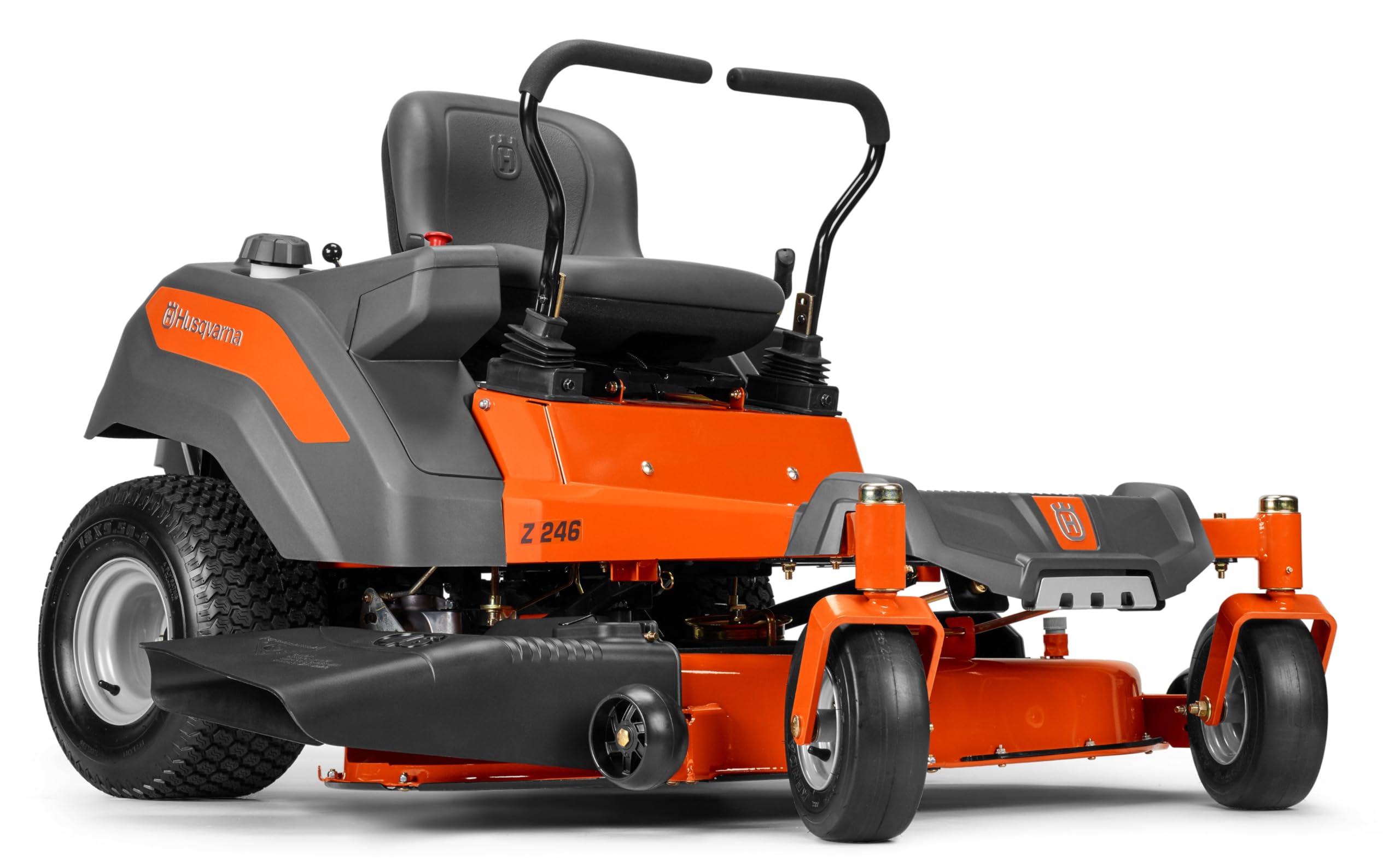
This mower handles slopes well thanks to its solid engine and smooth transmission, making it a strong choice for smaller yards with uneven terrain.
Pros
- Strong Briggs engine that powers through hills
- Easy-to-use Hydro-Gear EZT transmission for good control
- Compact 46-inch deck fits smaller yards neatly
Cons
- Assembly can be tricky and needs tools
- Some users report reliability issues after initial use
- Weight makes it harder to move around by hand
We found the Husqvarna Z246 to have a good balance of power and size. Its 22HP Briggs engine gives us confidence on sloping areas, where power and control really matter. The mower feels sturdy, and the deck size is just right for small to medium yards, cutting grass evenly.
The hydrostatic transmission delivers smooth turns and excellent speed management. Going uphill felt stable and safe, which is key for slopes. The controls are straightforward, so anyone can pick it up quickly.
On the downside, the mower comes mostly disassembled. We needed some extra time and tools to get it ready. Also, a few people mention the machine has experienced some issues after a short time, so check warranty and support options. Overall, it’s a solid mower for hillside cutting if you’re prepared for setup and occasional maintenance.
Husqvarna Z254
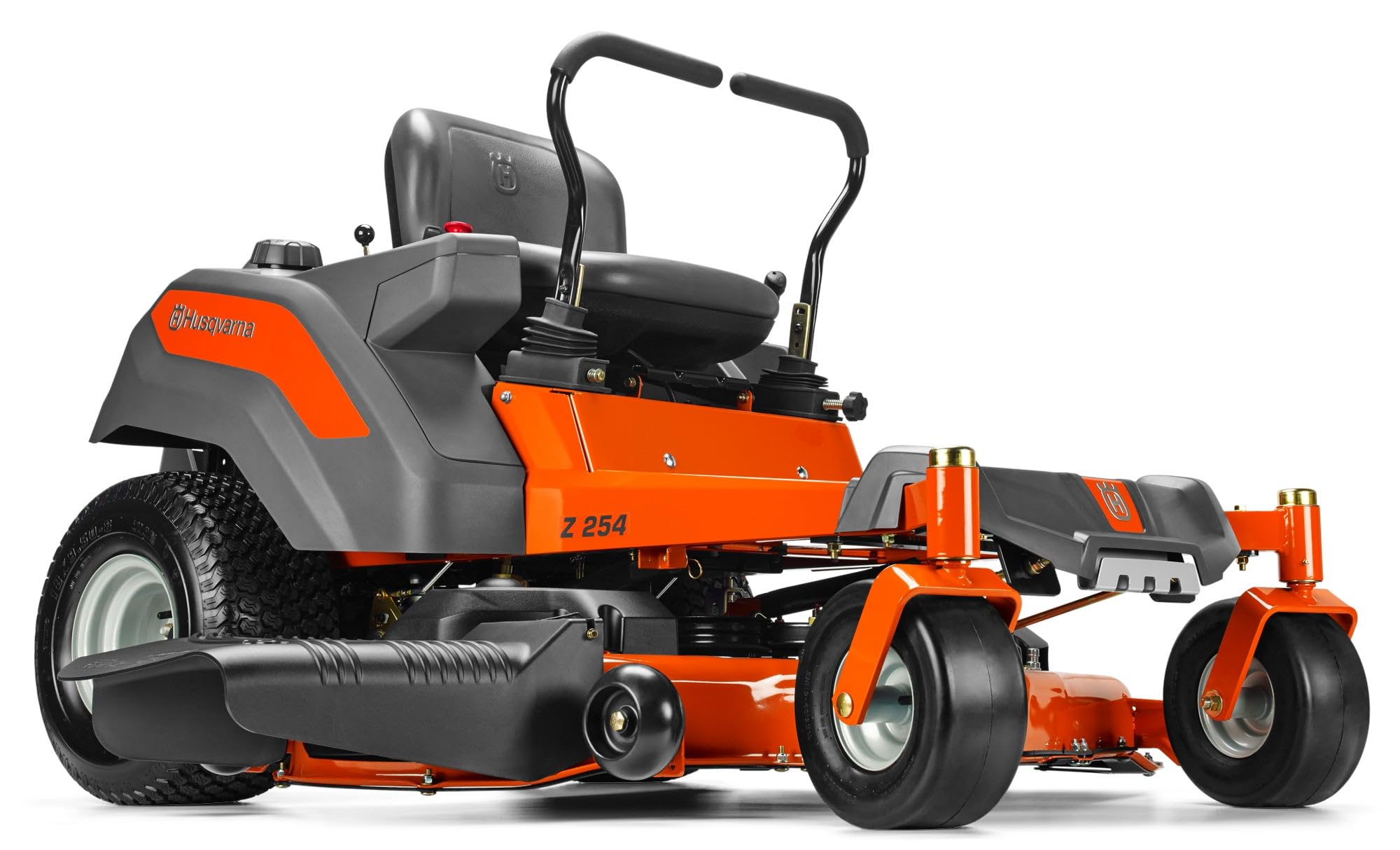
This mower handles slopes well with strong power and a wide cutting deck, making big jobs go faster.
Pros
- Powerful 24HP Briggs engine cuts through thick grass easily
- Large 54-inch deck reduces the time spent mowing
- Smooth hydrostatic transmission gives good control on hills
Cons
- Heavy weight makes it less easy to move or transport
- Some users had trouble with assembly parts missing
- Brakes can feel weak on steep slopes
We found the Husqvarna Z254 strong when moving over hills. Its V-Twin engine keeps good speed going up and down slopes without bogging down. The wide 54-inch cutting deck took care of a large yard quickly, which saved us a lot of time.
Operating the mower felt balanced thanks to the Hydro-Gear EZT transmission. This made controlling speed on slopes easier than on some other models we’ve used. The fuel tank also holds enough for long sessions without stopping too much.
However, the machine is pretty heavy, so moving it around for storage took some effort. We also noticed the brakes needed practice to use effectively on steep inclines. A few bolts were missing when we unpacked it, which slowed setup. Overall, we think it’s a solid choice for slopes if you want power and speed.
Husqvarna TS 146
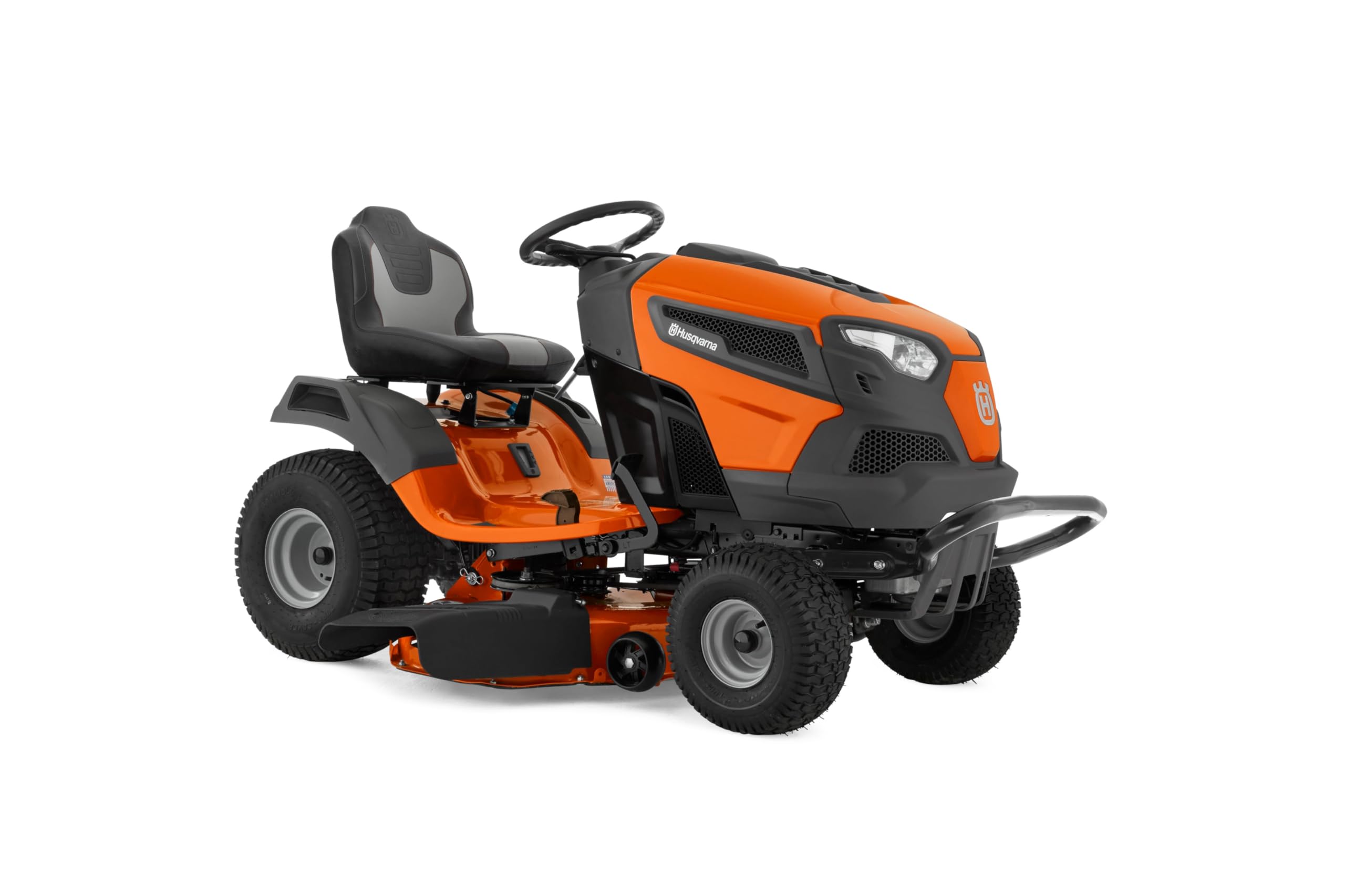
This mower handles slopes well while giving a neat cut and keeping us comfortable during long jobs.
Pros
- Strong and reliable Briggs engine
- Comfortable seat and easy steering
- Durable steel deck cuts evenly on hills
Cons
- Assembly takes some time and effort
- Slightly heavy, so moving it without use is tough
- Small fuel tank means more frequent refills
The Husqvarna TS 146 impressed us with its smooth ride over uneven ground. The powerful engine never struggled, even on steeper slopes, and the mower deck stayed steady, giving a clean cut each pass.
We liked how the high-back seat supported us and the ergonomic steering felt natural after just a little use. It made mowing on hills less tiring, which is a big plus for bigger yards.
On the downside, assembling the mower took longer than expected. Also, the mower’s weight makes it hard to push or move manually if needed. Its 3-gallon fuel tank meant we stopped more often to refill when covering large areas.
Overall, this mower stands out for hillside mowing with solid power and comfort. It’s a solid choice if you want strong performance paired with ease of use.
EGO Power+ Z6 Electric Riding Mower

This mower is a strong electric option for slopes, offering gas-like power with the convenience of zero emissions and quiet operation.
Pros
- Powerful electric motors that handle slopes smoothly
- Long battery life covers up to 2 acres on a charge
- Adjustable ride modes and seat suspension add comfort
Cons
- Heavier than typical electric mowers, making transport harder
- Assembly takes time and some mechanical skill
- Recharge time requires planning for larger lawns
Using the EGO Power+ Z6 on a hilly lawn felt easy thanks to its strong brushless motors. The zero-turn radius helped us maneuver tight corners and steep slopes without strain. It’s quieter than gas mowers and doesn’t produce fumes, which is a plus for us.
The battery life impressed us most, managing roughly 2 acres per charge. We liked how the ride controls let us switch between slower, precise mowing and faster modes depending on terrain. The seat suspension softened the bumps on uneven ground, adding comfort.
It did feel heavy when moving it off the lawn, so plan accordingly if you need to lift it. Setup took a bit longer than expected and requires some basic tools. Also, when tackling larger areas, battery recharge time means we had to schedule breaks to keep mowing. Overall, it’s a reliable and high-power electric mower for slopes.
Greenworks 60V 30″ Riding Lawn Mower
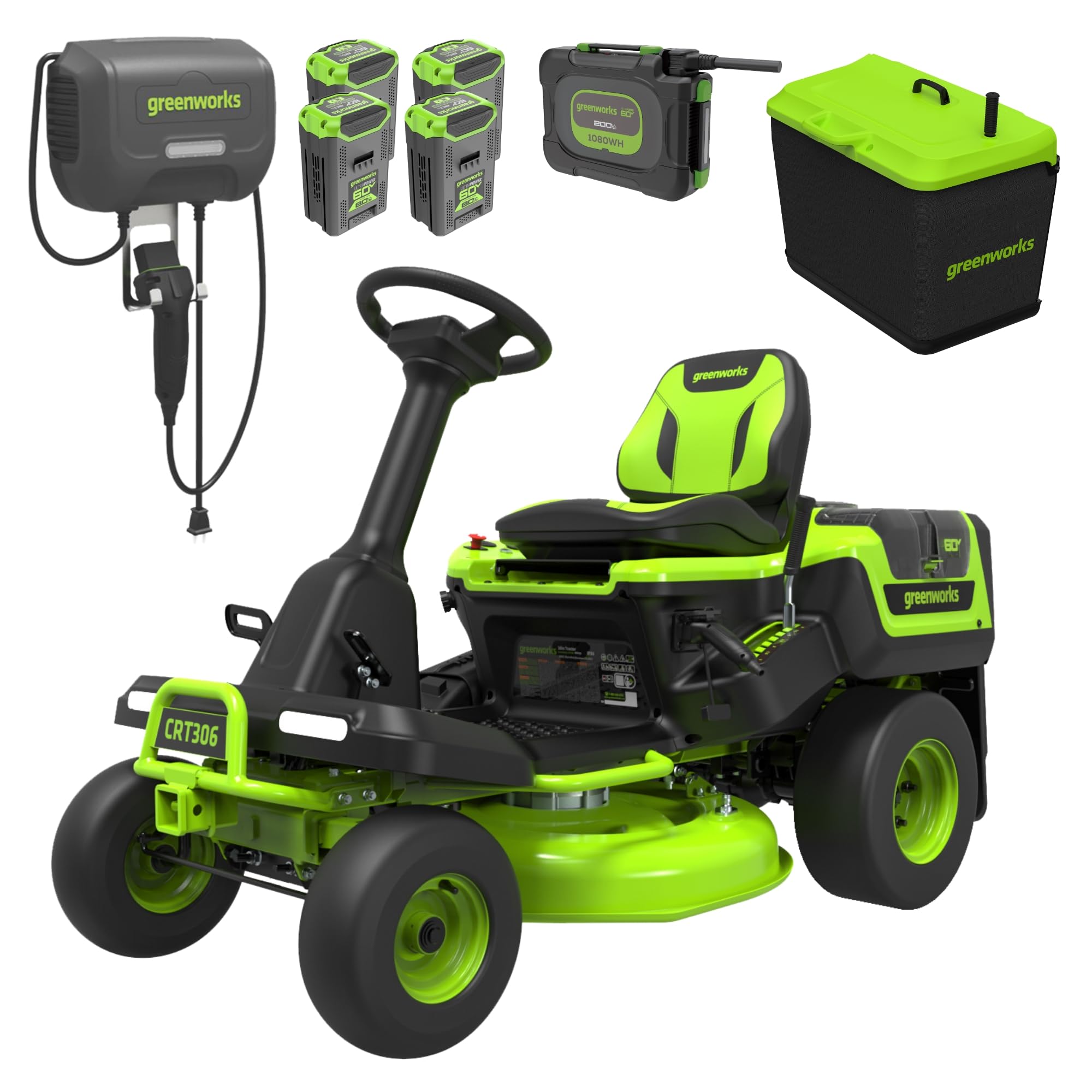
We think this mower is a solid choice for handling slopes up to 15° with ease, thanks to its traction control and good battery life.
Pros
- Smooth operation on hills without sliding
- Long battery life covers almost 3 acres
- Simple cutting height adjustment with one lever
Cons
- Assembly takes some time and effort
- Heavier than some other battery mowers
- Bagging system can fill quickly on thick grass
This Greenworks mower gave us a reliable, steady cut even when mowing steep slopes. We liked that it stayed stable and didn’t slip while going up or down hills, which made our job safer.
Battery life impressed us. It easily ran for long enough to cover almost three acres, which saved several trips recharging. It also cut the grass evenly since the blower adapts to thicker or thinner patches without us needing to adjust speed manually.
One downside was putting it together; it needed careful time and patience to get set up. We also noticed it felt heavier than expected, so it was a bit hard to move manually. The bagging system was handy but needed emptying often when grass was thick. Overall, it’s a great pick for slopes if you want cleaner, quieter mowing with low maintenance.
EGO Power+ Electric Mower

We find this mower a great choice for slopes because it handles turns smoothly and stays stable on uneven ground.
Pros
- Easy to steer like a car, not clunky like other zero-turn mowers
- Runs quietly with no fumes, unlike gas mowers
- Long battery life cuts large areas in one go
Cons
- It feels heavy and takes some effort to move around at first
- Higher price than typical gas mowers
- Charging takes time if you add more batteries
The EGO Power+ mower drives differently from most zero-turn mowers we’ve used. The steering wheel gives us better control when going up and down slopes. It doesn’t slide out as much, which made mowing sloped areas less stressful.
Battery power surprised us because it matches the strength of gas engines without the loud noise or emissions. We appreciated being able to mow a big patch, almost 2.5 acres, without needing to recharge. It’s easier to maintain than a gas mower, too.
Some things to keep in mind are the weight—it feels solid and heavy. That can be a bit much if you need to transport it. Also, the price is higher, but you pay for the tech and electric power. Charging more batteries to cover very large yards adds some downtime.
Overall, it’s a solid mower for pads and hills alike, especially if you want less noise and cleaner power.
Husqvarna 24HP Riding Lawn Mower

This mower is a strong choice for slopes thanks to its power, reliable traction, and solid build, but it has a few small flaws in comfort and steering.
Pros
- Powerful engine that handles hills well
- Excellent traction with differential lock and wide tires
- Sturdy deck and tough frame for lasting use
Cons
- Steering can feel off-center and tricky at first
- Firmer ride that may not suit all users
- Getting on and off the mower can be a bit tight
We found the Husqvarna’s 24 HP engine gave us the confidence to work up steep slopes without the mower slowing down. The hydrostatic transmission with an electronic differential lock made sure power went where it needed to, preventing wheel spin on uneven ground.
The 54-inch ClearCut deck is versatile and cuts cleanly, even on thicker grass. Its commercial-grade build means it holds up well when mowing larger areas or rougher lawns. The wide rear tires also helped keep the mower from digging into the grass too much, which was great for preserving the yard’s look.
Comfort-wise, the high vinyl seat felt supportive, but the steering needed some getting used to. It felt a bit off-center first and was less smooth than other mowers we’ve tried. Also, because of the design, hopping on and off isn’t as easy as some models due to tighter space near the wheel.
Overall, the Husqvarna mower handled slopes and rough patches well, giving us a reliable cut and solid comfort once we adjusted to its quirks. It’s a strong pick if you want power and traction on hilly ground.
Ariens Edge 52″ Kawasaki Zero Turn

This mower handles slopes well and offers a smooth cutting experience, making it a solid choice for uneven yards.
Pros
- Strong 21.5HP Kawasaki engine powers through thick grass
- Zero turn design makes maneuvering on slopes easier
- Large 52-inch deck covers more ground quickly
Cons
- Takes some time to master the controls
- Heavier weight makes transport a bit tricky
- Basic plastic parts feel less durable
We found the Ariens Edge to be reliable on sloped terrain. The Kawasaki engine provides enough power to keep the mower steady uphill without losing speed. Getting used to the zero turn function needed patience, but it paid off with tight turns and better control.
Cutting with the 52-inch deck saved us time, especially on larger areas. The mower stayed stable going sideways on slopes, which reduced the chance of tipping. However, moving the mower by hand or loading it on a trailer is harder due to its weight.
Controls are mostly metal, but some plastic parts seemed less tough after use. Overall, it’s a good mower if you want power, speed, and precision on hills but don’t mind putting in some practice time.
Buying Guide
When we look for the best riding lawn mower for slopes, safety is our top priority. We need a mower with good stability to prevent tipping on uneven ground. A low center of gravity and wide wheelbase help keep the mower steady.
Next, the engine power matters. We want enough power to handle thick grass and steep inclines without stalling. A higher horsepower engine is better for tough mowing jobs.
The cutting deck size affects how much area we can mow at once. A wider deck lets us finish faster but may be harder to control on slopes. We should balance deck size with how much control we want on hills.
Traction features like all-wheel drive or special tires improve grip on slippery or steep surfaces. These features help us mow more safely and efficiently.
Comfort is important too. We prefer mowers with comfortable seats and easy-to-use controls. This reduces fatigue when mowing large or hilly yards.
| Feature | What to Look For | Why It Matters |
|---|---|---|
| Stability | Low center of gravity, wide wheels | Prevents tipping on slopes |
| Engine Power | Higher horsepower | Handles steep, thick grass |
| Cutting Deck | Medium to wide size | Balances speed and control |
| Traction | All-wheel drive or good tires | Improves grip on hills |
| Comfort | Adjustable seat, simple controls | Reduces user fatigue |
By focusing on these features, we can choose a mower that fits our needs and keeps us safe on slopes.
FAQs
What makes a lawn mower good for slopes?
We look for mowers with good traction, a low center of gravity, and powerful engines. These features help keep the mower stable and prevent slipping on hills.
Are riding mowers safe to use on steep slopes?
Riding mowers can be safe if used correctly. We should always follow the manufacturer’s slope limit and avoid mowing very steep areas. Using a mower with a tilt or rollover protection system also adds safety.
How much area can these mowers cover?
Most riding mowers for slopes can cover 1 to 3 acres easily. This depends on the mower’s engine size and deck width.
How often should we maintain a riding mower for slopes?
Regular maintenance is key. We recommend checking the blade sharpness, cleaning the deck, and inspecting the tires after each use. Oil changes and belt checks should happen every 50 hours of mowing.
How do riding mowers compare to push mowers on slopes?
Riding mowers cover more ground quickly and reduce physical strain. Push mowers may offer better control on very small or steep areas but can be tiring for large slopes.
What types of tires work best on slopes?
Turf tires or specially designed slope tires give better grip on hills. We should avoid slick tires, as they might slip on wet or uneven ground.
Can riding mowers handle wet grass on slopes?
We advise caution when mowing wet grass. Wet grass can be slippery and clog the mower. It is best to wait for dry conditions to mow safely and efficiently.
Conclusion
When choosing the best riding lawn mower for slopes, we need to focus on safety and efficiency. Models with strong engines and good traction make mowing steep or uneven areas easier and more controlled.
Eco-friendly options reduce emissions and help protect the environment. Electric and battery-powered mowers are becoming great alternatives to gas ones, especially for those who want quieter, healthier lawns.
Durability is key for long-term use. We should choose mowers made with quality materials and reliable parts to get the best value and fewer repairs over time.
Here’s what to remember when picking a mower for slopes:
- Strong engine power for tough mowing jobs
- Safe handling and stability on hills
- Environmentally friendly features to reduce pollution
- Durability to last through many seasons
By selecting a reliable mower, we invest in better lawn care and safer work conditions. Let’s take action and choose the mower that fits our needs best. It will make mowing our sloped yards easier, safer, and more enjoyable.
