How Do Snow Blowers Work: Complete Snow Removal Guide
Snow removal feels simple until the first heavy storm covers the driveway, sidewalk, and steps. A shovel can handle a small path, but deep or wet snow can turn a short chore into a long workout. A snow blower uses an engine or electric motor to collect snow, break it up, and throw it through a chute.
The right machine depends on more than snowfall totals. Driveway size, snow depth, slope, pavement type, storage space, user strength, and local rules all matter. This guide explains how snow blowers work, compares the main types, covers safe use and care, and helps first-time buyers, DIY users, and gift buyers choose a machine that fits the job.

Quick answer: How does a snow blower work?
A snow blower uses an auger to pull snow into the machine. The auger is a corkscrew-shaped part that breaks up and moves snow toward an impeller. The impeller then pushes the snow through a discharge chute, which directs it away from the cleared path. Single-stage models use one main rotor, while two-stage models use a separate auger and impeller.

The best snow blower for a small, paved driveway is often a single-stage electric or battery model. A two-stage gas or battery machine suits deep snow, gravel, long driveways, and steep areas. Always match the machine to your normal storm depth, not only to the lightest snowfall you expect.
The basic parts of a snow blower
Snow blowers look different from one brand to another, but most use the same core parts. Think of the machine as a short conveyor system: it gathers snow, moves it inward, lifts it, and sends it through the chute.

Auger
The auger is the front part that contacts the snow. It may use rubber paddles, plastic paddles, steel flights, or a mix of materials. Its job is to scoop, scrape, and move snow toward the center of the housing.
On a single-stage machine, the auger often performs two jobs. It gathers the snow and throws it through the chute. On a two-stage machine, it usually only moves snow to the center, where the impeller takes over.
A rubber auger can be gentle on paved surfaces. A steel auger can handle packed snow and icy buildup, but it may scratch delicate surfaces if used carelessly. Check the owner’s manual before using any snow blower on decorative stone, wood, or fragile pavers.

Impeller
The impeller is a fast-spinning fan behind the auger. It pulls snow from the auger housing and pushes it up and out through the discharge chute.
The separate impeller is the key feature in a two-stage snow blower. It helps the machine move more snow at once and often throws snow farther than a single-stage unit. This matters when the driveway is wide or the snow must travel over a tall bank.

Chute and deflector
The discharge chute controls where the snow goes. Most chutes rotate from side to side. A deflector at the top changes the height of the snow stream.
Some machines use a hand crank. Others use levers, joysticks, or electric controls. A remote control is useful when the operator needs to adjust the direction without stopping.
Snow can freeze inside the chute during wet storms. Never reach into the chute with your hand. Turn the machine off, wait for all moving parts to stop, and use the clean-out tool supplied with the machine.

Drive system
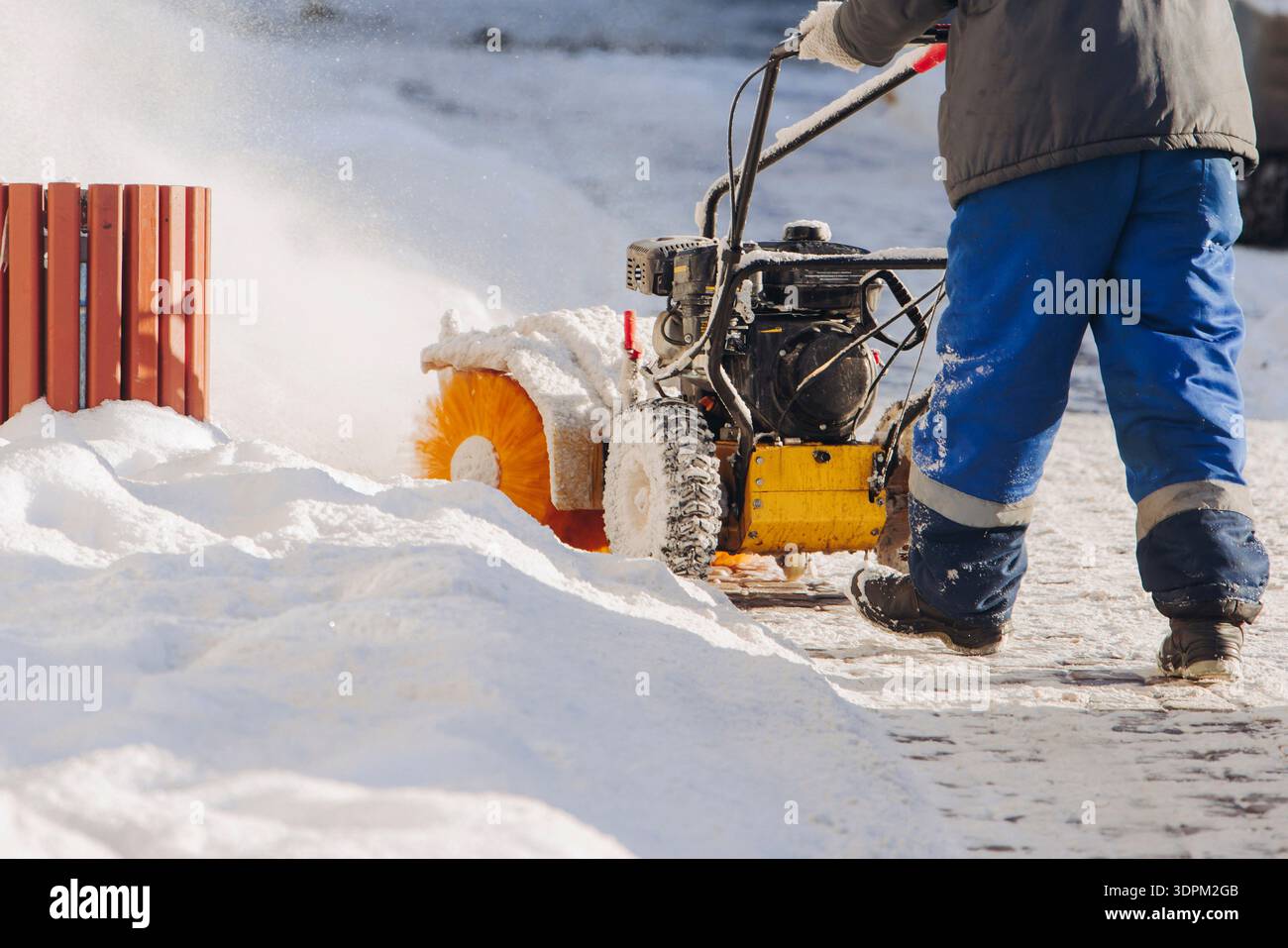
Some snow blowers move only when you push them. Others use powered wheels or tracks. A self-propelled snow blower uses an engine or motor to drive the wheels, so the operator guides the machine instead of pushing its full weight.
Self-propelled drive is helpful on long driveways, slopes, and heavy snow. It also suits seniors or users with limited strength. The tradeoff is more weight, more parts, and a higher purchase price.
Tracked models can offer strong traction on slopes and packed snow. Wheeled models are often easier to turn and may feel lighter on flat pavement.
Engine, motor, and controls
Gas snow blowers use a small four-stroke engine. Engine size is often listed in cubic centimeters, or cc. A larger engine may provide more power, but engine size alone does not tell you how well a machine will perform.
Electric snow blowers use either a power cord or a rechargeable battery. Battery models list voltage and amp-hours, written as Ah. Voltage describes the electrical system. Amp-hours describe battery capacity. Runtime depends on snow depth, temperature, speed, snow moisture, and the battery used.
Brushless motors use electronic controls and do not use traditional carbon brushes. They can run efficiently and may need less motor maintenance, but the machine still needs care.

How snow moves through the machine
A snow blower follows a simple path. The front auger gathers the snow, the center section moves it inward, and the impeller sends it through the chute.

Single-stage snow blowers
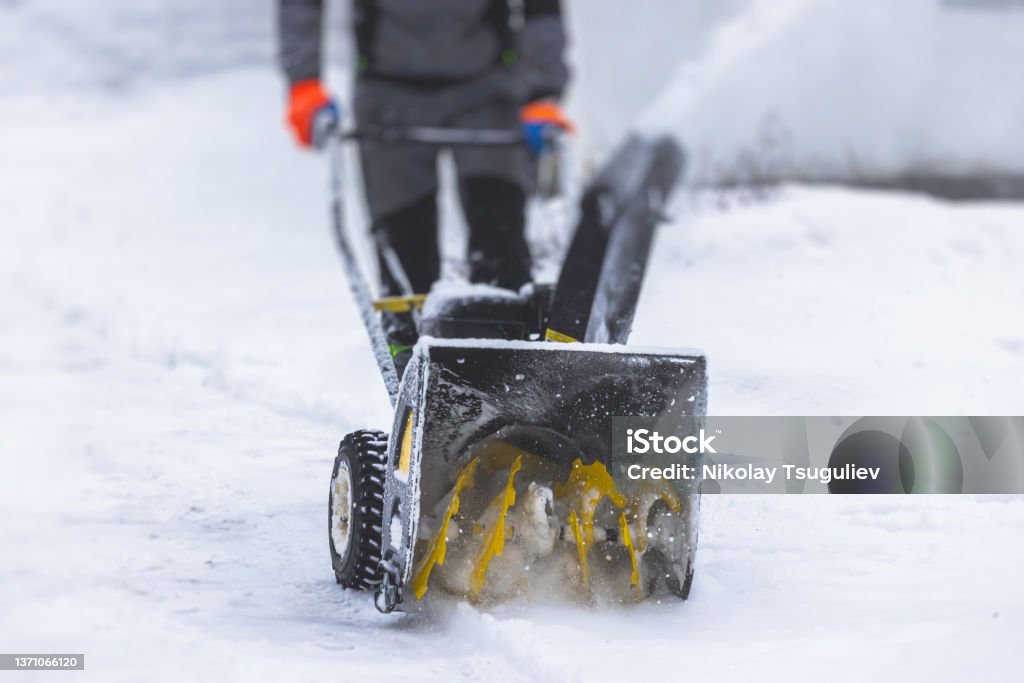
A single-stage machine uses one rotating auger to collect and throw snow. The auger usually touches the ground or stays close to the pavement. This design is compact and easy to store.
Single-stage units work best for light to moderate snow on paved driveways, walkways, decks, and short paths. Many are designed for snow depths around 6 to 12 inches, but the exact limit depends on the model and snow condition.
Wet snow can reduce performance. Heavy snow may clog the chute or overload the motor. Gravel can also be a problem because the auger may pick up stones and throw them.

Two-stage snow blowers
A two-stage snow blower separates the work between an auger and an impeller. The auger collects snow and feeds it to the impeller. The impeller then throws the snow through the chute.
This design is better for deep snow, packed snow, gravel driveways, and larger areas. Many two-stage machines use powered wheels, which helps on slopes and long runs.
Two-stage blowers are larger and more costly. They need more storage room and may require more setup and maintenance. They also leave a thin layer of snow more often than a single-stage machine because the auger does not scrape as closely.
Three-stage snow blowers
A three-stage model adds an accelerator or center auger between the side auger sections and the impeller. The goal is to move snow through the housing faster.
These machines can suit very heavy snow and large properties. They also tend to be wide, heavy, and expensive. For a short suburban driveway, the extra stage may add cost and storage needs without adding much practical value.

Corded electric snow blowers
A corded model uses household power through an outdoor extension cord. It can be light, quiet, and easy to start. It does not require gasoline, oil changes, or battery charging.
The cord limits range and can become hard to manage in deep snow. Use only the cord type and length allowed in the manual. Keep the cord behind you and away from the auger.
A corded machine suits a small, close-to-the-house walkway or short paved driveway. It does not suit a large lot, a long driveway, or a site where outlets are far away.

Battery snow blowers
A battery snow blower uses one or more rechargeable lithium-ion batteries. These machines start with a switch or button and usually make less noise than gas models.
Battery performance changes with cold weather. Batteries may provide less usable power when stored or used in very low temperatures. Keep them indoors at the temperature listed in the manual, and bring a spare battery if the area is large.
Battery systems also vary by brand. Confirm voltage, battery type, charger, and compatibility before buying. A tool battery from one product family may not fit another, even if the voltage looks similar.

Gas snow blowers
Gas models remain useful for large driveways, deep snow, and long storms. They can run as long as fuel is available and do not depend on an extension cord or charged battery.
They also need more care. Common service items include engine oil, spark plugs, air filters, shear pins, belts, and fuel treatment. Gas engines can be harder to start in cold weather if fuel is old or the carburetor needs service.
Gas equipment is also louder and produces exhaust. Check local rules, HOA restrictions, and any fuel storage requirements before buying.
Snow blower types at a glance
The table below shows the main design differences. These are general patterns, not promises for every model.
| Type | Best fit |
|---|---|
| Single-stage electric or battery | Small paved driveways and sidewalks with light to moderate snow |
| Two-stage gas or battery | Deep snow, long driveways, slopes, and gravel |
| Three-stage | Large properties and frequent heavy snow |
| Corded electric | Short paths close to an outdoor outlet |
A small machine is easier to carry and store. A larger machine gives more capacity but needs more room, strength, and upkeep.
What happens during a snow-clearing pass?
The operator usually works in straight passes. The machine should face into the snow at a controlled speed. The auger gathers the snow, and the chute sends it to the side.
Step 1: The auger breaks and gathers snow
As the machine moves forward, the auger contacts the snow. Its spiral shape pulls snow toward the center. In packed snow, the auger may break the layer into smaller pieces.
A single-stage auger also throws the snow. On a two-stage machine, the auger feeds the impeller. The operator controls speed by walking pace or drive settings.
Step 2: The impeller accelerates the snow
On a two-stage blower, the impeller spins much faster than the auger. It takes the gathered snow and pushes it into the chute.
This is why two-stage models often handle deeper snow better. The impeller gives the machine a dedicated part for moving material out of the housing.
Step 3: The chute directs the discharge
The chute sends snow toward a selected area. Set the chute before entering a pass when possible. Avoid throwing snow toward cars, windows, doors, roads, pets, or people.
Snow banks can grow during a storm. Change the discharge direction so you do not keep piling snow in one narrow spot. A tall, wet bank may become difficult to move later.
Step 4: The drive system moves the machine
Push models require the operator to provide forward force. Self-propelled models use wheel drive. Some offer several forward speeds and one or more reverse speeds.
Use a slow setting in heavy snow. Moving too fast can overload the auger, reduce clearing quality, and increase the chance of a clog.
Choosing a snow blower for your yard
The best snow blower is the one that matches your space and your normal storm conditions. Measure before shopping. Check the driveway length, width, slope, gate opening, steps, and storage area.
For a small paved driveway
A single-stage battery model can suit a small driveway with modest snowfall. It is often easier to lift, store, and start than a gas machine.
A corded model may work if the driveway is short and an approved outdoor outlet is close. Avoid it if the cord will cross a public path or create a trip hazard.
This setup suits first-time homeowners, renters with storage limits, and gift buyers shopping for someone who clears a short paved path.
For a long driveway
A two-stage machine is often more practical for a long driveway. The wider intake can reduce the number of passes, while self-propelled drive reduces pushing effort.
Look for controls that are easy to use with gloves. A chute control near the handle can save time during a storm. Heated grips may add comfort, but they also add electrical parts and cost.
For gravel
Gravel needs special care. A single-stage rubber-auger machine may pick up stones. A two-stage model with adjustable skid shoes can keep the housing slightly above the surface.
Skid shoes are replaceable wear parts under the housing. Adjust them according to the manual. Set them too low and the machine may scrape or collect gravel. Set them too high and it may leave more snow behind.
For hills
A hilly driveway needs traction and control. Self-propelled wheels or tracks can reduce effort. Large tires may help, but tire size alone does not prove that a machine is safe on a slope.
Work across a slope only when the manual allows it and conditions are stable. Ice, packed snow, and wet surfaces can make any machine hard to control. If the slope feels unsafe on foot, a snow blower may not be the right tool.
For seniors or users with limited strength
Look for a manageable weight, simple controls, easy starting, and powered drive. Battery machines remove fuel mixing and cold-start work. A smaller model may be easier to turn, but it can struggle in deep snow.
A gift buyer should ask about storage, battery charging, driveway size, and the recipient’s physical comfort. Do not choose a large professional-style machine only because it looks powerful.
Yard and user matching guide
Use this table as a starting point. Always confirm the exact capacity, intake height, clearing width, and slope guidance on the product page and in the manual.
| Yard or user | Usually suitable |
|---|---|
| Short paved walk and small driveway | Single-stage corded or battery model |
| Medium paved driveway | Single-stage battery or compact two-stage model |
| Long driveway or frequent deep snow | Two-stage gas or battery model |
| Gravel surface | Two-stage model with adjustable skid shoes |
| Senior user with limited strength | Self-propelled model with simple controls |
The surface matters as much as the snowfall. A short gravel driveway may need a stronger design than a longer paved one.
Key specifications that matter
Product listings can feel crowded with numbers. Focus on the specifications that affect your work, storage, and operating comfort.
Clearing width and intake height
Clearing width is the amount of snow the machine removes in one pass. Common widths range from about 18 to 30 inches, though some larger machines are wider.
A wider unit can reduce passes on a broad driveway. It can also be harder to fit through a gate or store in a narrow shed.
Intake height describes how tall a snow wall the machine can take in. A high intake helps when plows leave tall banks at the end of a driveway.
Throw distance
Throw distance depends on snow type, wind, chute design, impeller speed, and machine condition. Dry, light snow usually moves more easily than wet, heavy snow.
Do not buy based on a claimed maximum distance alone. Your actual result will change with storm conditions. The chute should still give you useful control when snow is wet or packed.
Weight and balance
Weight affects transport, turning, traction, and storage. A heavy two-stage blower may feel stable in deep snow but difficult to lift over a step.
Check whether the machine can fit through your garage door, gate, and shed entrance. Measure the storage height too. Foldable handles can help, but confirm the folded dimensions.
Batteries and runtime
Battery listings may show a recommended area or runtime. Treat those figures as estimates unless the manufacturer states the test conditions. Snow depth, temperature, moisture, pace, and battery age all affect runtime.
Check whether the kit includes a battery and charger. Some bare-tool models do not. Also check if the battery is shared with other tools such as a string trimmer, edger, or leaf blower.
Controls and ease of use
Useful controls include wheel drive, chute rotation, deflector adjustment, reverse, headlights, and heated handles. These features can reduce effort, but more controls can also increase repair needs.
A first-time user should favor clear levers and a manual with good diagrams. Gift buyers should avoid complicated controls unless the recipient already uses outdoor power equipment.
Electric, battery, and gas models compared
Each power source has a clear place. The main difference is the balance between convenience, capacity, noise, and maintenance.
| Power source | Main strengths | Main limits |
|---|---|---|
| Corded electric | Light, quiet, low routine maintenance | Limited by cord and outlet access |
| Battery electric | Easy start, lower noise, no fuel storage | Runtime changes in cold weather; batteries cost more |
| Gas | Strong capacity and long operating range | Noise, exhaust, fuel care, oil, and cold starts |
Battery models often suit small to medium paved areas. Gas models suit large properties and deep snow. Corded machines suit short paths close to a safe outlet.
What wears out first?
Snow blowers face ice, moisture, vibration, and abrasive grit. Normal wear does not mean the machine is poor. It means the machine needs inspection and replacement parts.
Shear pins and bolts
Shear pins protect the auger gearbox. If the auger hits a hidden object, the pin may break so the gearbox does not take the full force.
Use only the correct replacement part. Do not replace a shear pin with a regular bolt. A harder bolt may transfer impact into expensive gears.
Belts
Belts transfer engine or motor power to the auger, impeller, or wheels. A worn belt may slip, squeal, crack, or reduce performance.
Check belt tension and replacement steps in the manual. Disconnect the spark plug wire or remove the battery before opening covers or working near moving parts.
Skid shoes
Skid shoes slide along the ground and protect the housing. They wear faster on rough pavement, gravel, and concrete edges.
Replace them when they become thin or difficult to adjust. Correct height helps prevent scraping and reduces the chance of collecting stones.
Scraper bar
The scraper bar sits near the bottom of some snow blower housings. It helps remove snow close to the surface.
A worn scraper bar can leave more snow behind. Replace it according to the manual and surface conditions.
Batteries, spark plugs, and fuel systems
Battery capacity decreases over time and with repeated charge cycles. Store lithium-ion batteries in the conditions listed by the manufacturer. Do not use a swollen, cracked, hot, or damaged battery.
Gas engines need fresh fuel, clean air filters, and a good spark plug. Old fuel can cause hard starting and poor running. Fuel stabilizer can help when used as directed, but it does not fix contaminated fuel.
Maintenance that keeps a snow blower ready
A snow blower should be checked before the storm, during use, and at the end of the season. Small inspections can prevent a long delay during heavy snow.
| Timing | Maintenance task |
|---|---|
| Before each storm | Check bolts, tires, skid shoes, chute, controls, battery charge, and fuel |
| During operation | Stop for clogs, inspect for vibration, and clear packed snow safely |
| After use | Let the machine dry, remove snow buildup, and inspect for damage |
| End of season | Service engine parts, treat or drain fuel as directed, and store batteries indoors |
Never store a wet gas machine in a sealed area until it has cooled and dried. Moisture can lead to rust, and fuel vapors can create a fire risk.
Safe snow blower operation
Snow blowers can throw ice, stones, and other objects at high speed. Safe habits protect the operator, family members, pets, vehicles, windows, and neighbors.
⚠️ Safety Warning: Wear safety glasses, hearing protection, gloves, and closed-toe shoes. Clear toys, hoses, sticks, stones, and other debris first. Keep children and pets away, and follow the owner’s manual every time.
Before starting
Inspect the area in daylight when possible. Mark low walls, drains, landscaping edges, and other hidden objects. Make sure the chute points away from people and property.
Check the weather and surface. Ice can reduce traction. Wet, heavy snow can overload a small machine. Never assume that a powerful machine removes the need for care.
While operating
Keep both hands on the controls when the machine is moving. Walk at a steady pace. Do not run or pull the blower backward while the auger is engaged unless the manual specifically permits that action.
If the machine vibrates, makes a new sound, or stops throwing snow, shut it down. Turn off the engine or motor, remove the key if supplied, disconnect the spark plug wire or remove the battery, and wait for all moving parts to stop.
Use the clean-out tool, not your hand, to clear a chute. Even a stopped auger can move suddenly if packed snow releases.
Refueling a gas snow blower
Turn off the engine and let it cool before adding fuel. Never refuel near flames, heaters, cigarettes, or a running engine. Use an approved fuel container and follow local storage rules.
Do not overfill the tank. Wipe up spills before starting the machine. Store fuel only where local rules allow and where children cannot reach it.
Working near roads and neighbors
Do not throw snow into a street or toward passing traffic. Snow can hide ice and create a hazard for drivers and pedestrians.
Noise may matter early in the morning or late at night. Check city noise rules and HOA limits. Some areas also restrict new gas-powered outdoor equipment.
📜 Check Local Rules: Confirm HOA policies, noise ordinances, gas-equipment restrictions, and fuel storage laws before buying. Rules can vary by city, county, and property type.
Common snow blower mistakes
Many problems come from using the right machine in the wrong way. Avoiding a few simple errors can improve safety and reduce repairs.
Choosing by maximum snowfall only
A machine rated for a certain snow depth may not handle wet snow, packed banks, or gravel in the same way. Look at surface, snow moisture, driveway length, and slope together.
Using the wrong speed
Moving too quickly can plug the chute or overload the belt. Use a slower drive speed in deep snow. Make narrower passes when the snow is tall.
Throwing snow into the wind
Wind can blow snow back onto the cleared area or toward a window. Change your pattern as wind direction shifts.
Skipping debris removal
Small stones can damage the auger, shear pins, and impeller. Clear the area before the storm when possible.
Storing batteries in the cold
Extreme cold can reduce battery performance and may shorten battery life if charging occurs outside the approved range. Follow the charger and battery instructions.
Ignoring unusual vibration
Vibration may signal a damaged auger, bent component, broken shear pin, or packed ice. Stop and inspect safely. Continuing to run the machine can turn a small repair into a major one.
How much should you spend?
Snow blower prices change by brand, season, power source, and included equipment. Compare current listings rather than relying on old price guides.
| Budget level | What you may find | Best for |
|---|---|---|
| Entry level | Compact corded, battery, or small single-stage units | Short paved paths and light snow |
| Midrange | Larger single-stage and compact two-stage models | Medium driveways and regular winter use |
| Higher range | Self-propelled two-stage or three-stage machines | Deep snow, large lots, slopes, and frequent storms |
Remember to include batteries, chargers, fuel cans, maintenance parts, and storage needs. A low purchase price may not be low if you need extra batteries or a long extension cord.
Is a snow blower worth the money?
A snow blower can be worth the money when the driveway is large, storms are frequent, or shoveling creates too much strain. It can also save time for a household that needs a clear path early in the morning.
A shovel may be the better choice for a short walk, mild climate, or home with little storage. A snow removal service may make more sense for a very steep driveway, a person with health limits, or someone who does not want fuel and machine care.
The value depends on use. A large gas blower stored for years may not be a good fit for a small city walkway. A compact battery model may be practical for that same user.
Alternatives to owning a snow blower
Snow blowers are not the only way to clear snow. Your choice should reflect health, space, climate, and the size of the area.
Snow shovel
A shovel costs less and needs little storage. Ergonomic designs can reduce bending, but deep or wet snow still requires physical effort.
Electric snow shovel
An electric snow shovel is smaller than a full snow blower. It can suit steps, decks, and narrow paths. It may not handle deep banks or long driveways well.
Snow plow service
A plow service removes the need to store and maintain a machine. It may be useful for seniors, busy families, or homes with steep driveways. Availability and service timing vary.
Manual or powered snow pusher
A wide pusher can move light snow from flat pavement. It works best before snow becomes packed. It is not a replacement for a two-stage blower in deep storms.
Storage and end-of-season care
Good storage protects the machine from rust, stale fuel, battery damage, and accidental starting. Clean the housing after each use, but keep water away from electrical parts unless the manual allows washing.
For a gas model, follow the manual on draining fuel or adding stabilizer. Change oil at the recommended interval. Inspect the spark plug, air filter, belts, shear pins, and skid shoes before the next season.
For a battery model, remove the battery before storage if instructed. Store it in a dry indoor location at the recommended charge level and temperature. Do not store batteries near heat, flames, or metal objects that could bridge the terminals.
Store the machine where children cannot reach the controls. If space is limited, measure the machine with the handle folded. Some models need a cover, but the machine should be dry before covering it.
🌿 Eco and Disposal Note: Recycle lithium-ion batteries through a designated battery drop-off. Take old gasoline and engine oil to a household hazardous-waste site. Donate or recycle usable equipment instead of sending it to a landfill.
When to call a repair shop
Some work is suitable for a careful DIY owner. Replacing a shear pin, scraper bar, skid shoe, or spark plug may be simple if the manual provides clear steps.
Call a repair shop when the gearbox is damaged, the engine will not run after basic checks, the machine has severe vibration, or electrical parts show heat damage. A shop can also diagnose fuel-system problems and test charging systems.
Do not repair a running machine. Remove the battery or disconnect the spark plug before servicing. If you are unsure which part is safe to remove, stop and ask a qualified technician.
Questions people ask about snow blowers
Q: Can a snow blower remove wet, heavy snow?
A: Yes, some can, but wet snow is harder to move than dry snow. A two-stage model usually handles heavy snow better than a small single-stage unit. Work slowly, keep the chute clear with the supplied tool, and check the manual for operating limits.
Q: What is the main difference between a single-stage and two-stage snow blower?
A: A single-stage machine uses one auger to gather and throw snow. A two-stage machine uses an auger to collect snow and a separate impeller to throw it. Two-stage models usually suit deeper snow, gravel, longer driveways, and slopes.
Q: Are battery snow blowers good for seniors?
A: A battery model can suit seniors when it has a manageable weight, simple controls, and powered drive. It removes fuel storage and many cold-start issues. The user still needs enough battery capacity for the full area and safe footing.
Q: Can I use a snow blower on gravel?
A: Yes, but choose a design with adjustable skid shoes and proper ground clearance. A two-stage machine often gives better control on gravel. Remove loose stones and use the settings listed in the manual.
Q: How long does a snow blower last?
A: Service life varies with design, storage, storm frequency, and maintenance. Belts, shear pins, scraper bars, skid shoes, spark plugs, and batteries may need replacement before the main machine. Regular inspection can help you find wear early.
Q: Why does a snow blower clog?
A: Wet snow, fast operating speed, a worn belt, a damaged impeller, or an overloaded intake can cause clogs. Turn the machine off, disconnect the spark plug or remove the battery, wait for moving parts to stop, and use the clean-out tool.
Q: Can I use a regular extension cord with a corded snow blower?
A: Use only the cord type, gauge, length, and outdoor rating allowed by the manual. A cord that is too long or too light can reduce performance and create a safety risk. Keep it behind the machine and away from the auger.
Q: Should I buy a gas or battery snow blower?
A: Choose battery for lower noise, easier starting, and small to medium areas where the battery system fits your needs. Choose gas for long driveways, deep snow, and extended operation, if local rules and fuel storage allow it.
Q: Do snow blowers work on ice?
A: They can break some packed snow and light ice, but they are not ice-removal tools. Thick ice may damage the auger or shear pins. Use an approved ice melt or another safe method as needed, and avoid forcing the machine.
Q: Is a wider snow blower always better?
A: No. A wider machine can clear more area per pass, but it may be harder to turn, heavier to store, and too wide for a gate. Measure the property and choose a width that fits the operator and storage space.
Q: What should I check before buying a used snow blower?
A: Check the cold start, auger movement, chute controls, wheel drive, belts, tires, oil condition, fuel system, rust, and unusual vibration. Confirm that replacement shear pins and belts are still available. Ask for the manual and model number.
Q: Can I leave a snow blower outside?
A: Outdoor storage is not ideal. Moisture, freezing temperatures, sunlight, and theft can damage the machine. If outside storage is unavoidable, use a dry, ventilated, secure shelter and follow the manual’s storage directions.
Final advice
A snow blower works by gathering snow with an auger and sending it through a chute with either the auger alone or an auger-and-impeller system. Single-stage models suit smaller paved areas and lighter storms. Two-stage models better fit deep snow, gravel, long driveways, and slopes. Three-stage models are aimed at large areas and frequent heavy snow.
Before you buy, measure the driveway, check the slope, confirm gate width, and plan where the machine will live. Compare clearing width, intake height, weight, drive system, battery compatibility, fuel needs, and replacement parts. For a gift, ask about the recipient’s strength, storage, and usual snowfall instead of choosing the largest machine.
Use eye and hearing protection, closed-toe shoes, and the clean-out tool. Clear debris first. Keep children and pets away. Never reach into a chute, refuel a hot engine, or service a machine that can start. With the right match and steady care, a snow blower can make winter cleanup more manageable without turning a simple storm into a repair bill.
Affiliate disclosure: This article may contain affiliate links. If you buy through one of these links, we may earn a commission at no extra cost to you. Product prices, specifications, battery compatibility, and availability can change, so confirm current details on the manufacturer’s product page and in the owner’s manual before purchasing.