
Lawn Mower PTO Not Engaging: Causes, Fixes & Tips
If the PTO on your riding lawn mower or zero-turn mower will not engage, start with the safety switches, battery power, PTO switch, wiring, and electric clutch. A failed clutch, broken belt, damaged pulley, or internal deck problem can also stop the blades.
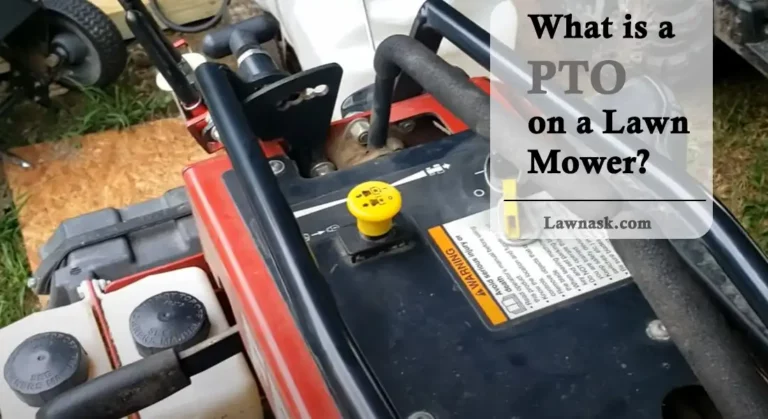
PTO means power takeoff. On most U.S. riding mowers, the PTO transfers engine power to the mower deck when you pull a knob, move a lever, or press a switch. The PTO may use an electric clutch, a mechanical clutch, or a belt-driven system, depending on the mower.
Before testing anything, park the mower on level ground, set the brake, turn off the engine, remove the key, and disconnect the spark plug wire or battery when working near the blades. Never place your hands under a mower deck that could start or move.

Quick diagnosis: what the symptom usually means
The sound and behavior of the mower can point to the cause.
| Symptom | Likely causes | Best first check |
|---|---|---|
| Nothing happens when PTO is switched on | Dead battery, blown fuse, bad PTO switch, safety interlock, broken wire | Check battery voltage, fuse, and seat/brake switches |
| PTO clicks but blades do not turn | Broken deck belt, seized pulley, failed clutch, damaged belt tensioner | Inspect the belt and spin pulleys with the engine off |
| PTO engages, then stops | Low voltage, loose connector, bad safety switch, overheating clutch | Check charging voltage and wiring |
| PTO works only sometimes | Worn switch, loose plug, failing clutch coil, broken wire | Wiggle-test connectors with the engine off |
| Engine stalls when PTO is engaged | Deck jam, seized spindle, plugged deck, engine overload | Inspect the deck and blades |
| Blades turn but cut poorly | Worn or loose blades, bent deck, poor belt tension | Check blade condition and deck level |
A PTO problem may be electrical, mechanical, or both. Do not replace the clutch before checking the simple causes. A loose connector or weak battery can look like a costly clutch failure.
Safety steps before troubleshooting
Turn the mower off before touching the deck, belt, pulleys, wiring, or blades. Remove the ignition key and disconnect the negative battery cable when testing or repairing electrical parts.
For extra protection, disconnect the spark plug wires on a gasoline mower. Keep the wires away from the spark plugs so the engine cannot start by accident. On an electric mower, remove the battery pack according to the owner’s manual.
Wear work gloves when handling blades or belts, but do not use gloves as a reason to touch a blade that may move. A blade can rotate from stored belt tension or from movement in another part of the deck.
If you must perform a live voltage test, keep clear of the blades and moving belts. Use a properly rated multimeter. If the mower has damaged insulation, melted wiring, a burning smell, or a short circuit, stop and arrange professional repair.

How a mower PTO works
Most modern riding mowers use an electric PTO clutch. This clutch has a coil, pulley, rotor, and armature. When you activate the PTO switch, battery voltage reaches the clutch coil. The magnetic field pulls the clutch parts together and turns the deck belt.
A mower may also use a mechanical PTO. A lever or cable moves a clutch or belt tensioner. These systems do not depend on a PTO clutch coil, but they still need correct cable travel, belt tension, and free-moving deck parts.
The PTO circuit usually includes:
- Battery
- Main fuse or fusible link
- Ignition switch
- PTO switch
- Seat switch
- Brake or parking-brake switch
- Reverse safety switch on some models
- Wiring harness and connectors
- PTO clutch or mechanical engagement system
The exact system varies by brand and model. A John Deere, Cub Cadet, Husqvarna, Toro, Craftsman, or Bad Boy mower may use different switch logic and wire colors. Use the wiring diagram for your exact model rather than relying on a color chart from another mower.
Common causes and fixes
1. The PTO switch is faulty
The PTO switch sends power to the clutch or actuator. Internal contacts can wear out, burn, or fail to close.
A bad switch may cause a dead PTO, intermittent operation, or a PTO that works only when the knob is held in a certain position.
Fix:
- Turn off the engine and remove the key.
- Inspect the switch plug for corrosion, loose terminals, or heat damage.
- Check the switch with a multimeter using the continuity setting.
- Compare the results with the wiring diagram or service manual.
- Replace the switch if it fails the specified test.
Do not bypass the switch as a permanent repair. The switch is part of the mower’s safety system.
2. A safety interlock is stopping the PTO
The mower may prevent PTO operation when a safety condition is not met. Common conditions include:
- The operator is not seated.
- The parking brake is not set.
- The transmission is not in the correct position.
- The mower is in reverse.
- A control lever is not in neutral.
- A safety switch or connector is damaged.
A safety switch can fail in either direction. It may prevent the PTO from engaging, or it may fail to stop the blades when the operator leaves the seat.
Fix:
Check that the brake is fully set and the control levers are in the correct position. Sit firmly in the seat and test the PTO only as the owner’s manual permits.
Then inspect the switches and plugs for bent terminals, dirt, moisture, or loose mounting. Test each switch according to the manufacturer’s procedure. Never permanently bridge, remove, or defeat a safety interlock.
3. The battery is weak
An electric PTO clutch needs enough voltage to pull in and hold. A battery may crank the engine yet still be too weak for reliable PTO operation.
A fully charged 12-volt lead-acid battery often measures about 12.6 volts at rest. The exact reading depends on battery type, temperature, and recent charging. With the engine running, the charging system should normally raise voltage above the resting level, but use the mower manual for the correct specification.
Fix:
- Inspect and clean the battery terminals.
- Check the ground cable where it connects to the frame or engine.
- Charge and test the battery.
- Check charging voltage with the engine running if the manual allows it.
- Replace the battery if it cannot hold a charge.
A weak charging system can cause the PTO to engage briefly and then drop out. Check the battery before condemning the clutch.
4. A fuse or fusible link has failed
A blown fuse often indicates an electrical fault, not just an old fuse. Common causes include a pinched wire, shorted clutch coil, damaged connector, or water intrusion.
Fix:
- Turn off the mower and remove the key.
- Find the fuse using the owner’s manual.
- Replace it only with the same type and amperage.
- Test the PTO.
- If the new fuse blows again, stop and trace the circuit.
Never install a larger fuse. It can allow the wire to overheat and create a fire risk.
5. The wiring or ground connection is damaged
The PTO circuit can fail because of a broken wire, loose terminal, rubbed insulation, or poor ground. Vibration under the seat and near the deck can damage wiring over time.
Look for:
- Green or white corrosion
- Loose plugs
- Burned terminals
- Exposed copper
- Wires pinched under brackets
- Harnesses rubbing on the frame
- Poor battery or clutch ground
Fix:
Repair damaged wires with suitable automotive-grade connectors or replace the harness section. Secure the harness away from sharp edges and moving parts.
A visual check is not always enough. A wire may look fine but break inside its insulation. A continuity test with the circuit disconnected can help locate an open wire.
6. The electric PTO clutch has failed
A clutch can fail when its coil burns out, its bearing seizes, or its friction surfaces wear. Heat, belt misalignment, poor voltage, and deck overload can shorten clutch life.
Typical signs include:
- No click when voltage reaches the clutch
- A burnt smell
- Melted clutch wiring
- A noisy or rough clutch bearing
- A clutch that engages only when cold
- Correct voltage at the clutch but no engagement
Fix:
With the engine off, inspect the clutch and connector. If the manufacturer’s test procedure calls for a resistance check, compare the measured value with the exact model specification. PTO clutch resistance is not universal, so do not use a generic ohm value as proof of failure.
With the PTO commanded on and the safety conditions met, a qualified person can check for voltage at the clutch connector. The reading should be close to the mower’s available system voltage. If power reaches the clutch but it does not engage, the clutch is a strong suspect.
Replace the clutch only after checking the switch, fuse, wiring, ground, and battery. Some models require special tools or a crankshaft-holding method to remove the clutch.
7. The deck belt is broken, loose, or routed incorrectly
The PTO can engage normally while the blades remain still if the deck belt is broken or off its pulleys.
A belt may come off because of:
- A seized spindle
- A bent pulley
- Incorrect belt routing
- A failed idler arm
- A weak spring
- A damaged belt guard
- A belt that is too loose or too long
Fix:
With the engine off and the battery disconnected, inspect the belt. Compare its route with the diagram under the hood or in the owner’s manual.
Check each pulley by hand. It should turn smoothly without wobble or grinding. Replace a worn belt with the correct part number or specification. An incorrect belt can look close to the original but fail to maintain proper tension.
8. A deck spindle or pulley is seized
A spindle holds a mower blade. If its bearing fails, the spindle can lock up and prevent the belt from moving. The engine may stall when you engage the PTO because it suddenly meets a solid mechanical load.
Fix:
Remove the belt tension as directed by the manual. Rotate each spindle and idler pulley by hand. Replace a pulley or spindle that feels rough, binds, wobbles, or makes grinding sounds.
Do not keep trying to engage the PTO against a seized spindle. Repeated attempts can damage the belt, clutch, engine crankshaft, or wiring.
9. The PTO cable or linkage is out of adjustment
Mechanical PTO systems use a cable, rod, lever, or spring. The system may fail if the cable stretches, the linkage bends, or the spring breaks.
Signs include a loose PTO lever, limited lever travel, or a clutch that engages only part way.
Fix:
Inspect the cable ends and mounting brackets. Confirm that the lever moves the actuator through its full range. Adjust the cable only to the specification in the service manual.
Do not overtighten the cable. Excess tension can keep the clutch partly engaged, increase belt wear, and make the PTO difficult to disengage.

A practical step-by-step troubleshooting sequence
Use this order because it starts with safe, common, and low-cost checks.
Step 1: Confirm the operating conditions
Read the operator’s manual for the correct PTO procedure. Set the brake, sit in the seat, place the transmission or control levers in the required position, and start the engine only when it is safe.
Try the PTO once. Listen for a clear click. Do not repeat the test if the engine stalls, the belt smokes, or a harsh grinding sound occurs.
Step 2: Inspect the mower with the engine off
Remove the key and disconnect power. Look under the deck for a broken belt, packed grass, a loose blade, or a damaged pulley.
Clear grass only with a tool, not your hands. A packed deck can restrict blade movement and overload the PTO.
Step 3: Check the battery and terminals
Inspect the positive and negative terminals. Clean corrosion and tighten loose connections.
If you have a multimeter, measure the battery at rest. Then check the charging system according to the manual. A battery that repeatedly loses charge may point to a charging fault rather than a bad battery alone.
Step 4: Check the fuse
Find the PTO or control-system fuse. Replace it only with the specified fuse.
If it blows again, do not keep replacing fuses. A repeated failure needs circuit testing.
Step 5: Inspect the PTO switch and safety switches
Look for a loose plug or damaged switch. Confirm that the brake, seat, reverse, and neutral conditions work as intended.
The mower should not operate in an unsafe state. If a safety switch behaves strangely, repair it before using the mower.
Step 6: Test for voltage at the clutch
This step requires care. Use the wiring diagram and the correct meter setting. Test only if you understand how to avoid moving parts and electrical shorts.
- No voltage at the clutch: trace backward to the switch, fuse, safety circuit, and wiring.
- Correct voltage at the clutch but no click: suspect the clutch.
- Voltage appears and disappears: suspect a loose connection, safety switch, weak charging system, or failing clutch.
Step 7: Check clutch and spindle resistance
Disconnect the clutch before measuring resistance. Compare the result with the exact service specification.
Then check the clutch bearing and deck spindles for noise, binding, or wobble. A correct electrical reading does not prove that the mechanical parts are healthy.
Step 8: Repair, retest, and verify
After the repair, reinstall all guards and route the belt correctly. Start the mower in a clear area and engage the PTO briefly.
The repair is successful when the PTO engages smoothly, the belt tracks correctly, the blades reach normal speed, and the PTO disengages fully when switched off.

Electrical diagnosis: a simple decision table
The table below helps separate control-circuit faults from clutch and deck faults.
| Test result | What it suggests | Next action |
|---|---|---|
| Battery is low at rest | Weak, discharged, or damaged battery | Charge and test battery |
| Fuse is open | Short, overload, or failed component | Replace once, then inspect if it fails again |
| No power leaving PTO switch | Failed switch or missing input power | Test switch and supply |
| Power leaves switch but not clutch | Open wire, safety circuit, or connector | Trace the harness |
| Correct power reaches clutch, no click | Failed clutch coil or clutch mechanism | Test clutch to model specification |
| Clutch clicks but belt does not move | Belt, pulley, or spindle problem | Inspect deck drive |
| PTO works cold but fails hot | Coil, bearing, voltage, or overload issue | Check voltage and clutch temperature behavior |
| Engine dies when PTO engages | Seized deck part or severe belt load | Stop testing and inspect the deck |
Voltage tests can find an open circuit, but they do not always find a connection that fails under load. A corroded terminal may show voltage with no load and fail when the clutch draws current. If the fault remains unclear, a technician may use a voltage-drop test or a current test.
What not to do
Do not bypass the seat switch, brake switch, reverse switch, or PTO safety circuit. A bypass may make the mower run, but it can also allow the blades to turn when a person is near the deck.
Do not install a larger fuse. The fuse protects the wiring and electrical parts.
Do not test a spinning mower deck by reaching under it. Do not hold the clutch pulley with your hand while the engine runs.
Do not assume every PTO clutch has the same resistance. Use the model-specific service data.
Do not replace the PTO clutch before checking the belt, fuse, switch, safety circuit, battery, and wiring. These parts often cause the same symptom and cost less to inspect.
Do not use penetrating oil as a fix for an electrical clutch. It will not repair a burned coil and may contaminate clutch surfaces.
When professional repair is the better choice
Arrange qualified service when the mower has melted wiring, repeated fuse failures, a damaged crankshaft, a seized spindle, or a clutch that requires special removal tools.
Professional help is also sensible when the wiring diagram is unavailable or when live testing near the deck feels unsafe. A technician can perform voltage-drop tests, check clutch current draw, inspect the charging system, and confirm whether the clutch or control circuit failed first.
Stop using the mower if the PTO will not disengage. Turn off the engine, remove the key, disconnect the battery, and keep people away from the deck until the problem is repaired.

Key takeaways
- Start with safety switches, battery power, fuse, PTO switch, and wiring.
- If the clutch receives correct voltage but does not engage, the electric clutch may have failed.
- If the PTO clicks but the blades do not turn, inspect the belt, pulleys, and spindles.
- A PTO that drops out while mowing may have a low-voltage, wiring, safety-switch, or heat-related fault.
- Never bypass a safety switch or use a larger fuse.
- Use the exact owner’s or service manual for wiring, resistance, belt routing, and adjustment specifications.
Frequently asked questions
Why does my lawn mower PTO click but not engage?
A click usually means the clutch is receiving enough power to move, but it does not prove that the clutch is fully working. Check the deck belt, belt tensioner, pulleys, and spindles. A worn clutch can also click without producing enough force to drive the deck.
Why does the PTO stop after a few minutes?
Heat can expose a weak clutch coil, poor connector, low charging voltage, or failing safety switch. Check the charging system and clutch voltage while the problem occurs, if you can do so safely. Also inspect the deck for excess load from a seized spindle or packed grass.
Can a weak battery prevent the PTO from engaging?
Yes. The engine may still start while the battery or charging system cannot maintain the voltage needed by the PTO clutch. Charge and test the battery, then check the mower’s charging voltage.
Why does the engine die when I turn on the PTO?
A seized spindle, jammed deck, damaged belt, or severe grass buildup can place too much load on the engine. Stop engaging the PTO and inspect the deck with the engine off. A fuel or engine problem is also possible, but the deck should be checked first.
How do I know if the PTO clutch is bad?
A failed clutch is more likely when the correct voltage reaches its connector but the clutch does not click or engage. Confirm the battery, fuse, switch, safety circuit, wiring, and deck parts first. Then compare clutch resistance and other tests with the exact service specification.
Conclusion
A lawn mower PTO that will not engage is usually traced to one of a few areas: the safety circuit, battery and charging system, fuse, PTO switch, wiring, electric clutch, belt, or deck spindle.
Follow the checks in order. Begin with safe visual inspections and basic power checks. Then test the control circuit and clutch only when you can work safely and follow the mower’s service information. If the PTO engages but the deck does not turn, focus on the belt and pulleys. If the clutch has power but remains inactive, the clutch becomes the leading suspect.
The right repair is the one that restores both cutting function and the mower’s safety controls.



One Comment