How To Start An Electric Start Snowblower: Easy Guide
Starting an electric start snowblower is simple once you know which type you own. Most electric start snowblowers use a gas engine with a push-button starter. A few newer models use a rechargeable battery and electric motor. The steps differ, so check the owner’s manual before you begin.
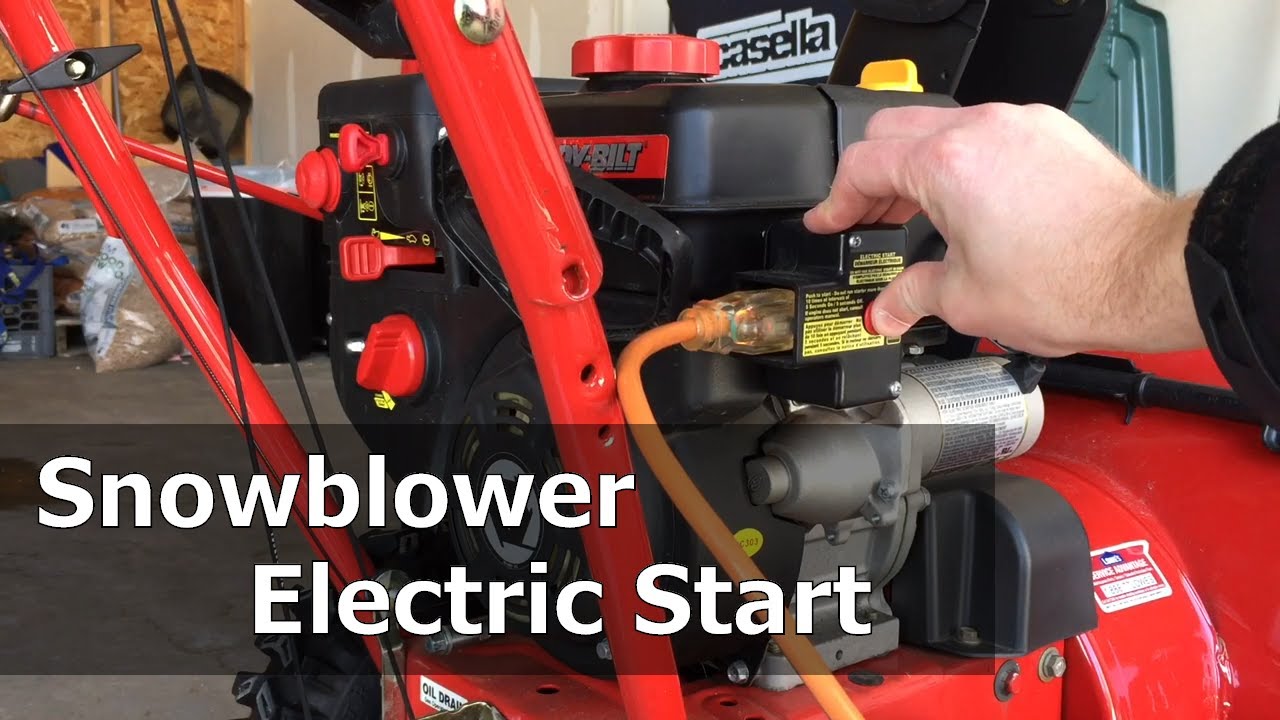
For most gas models, you add fresh fuel, open the fuel valve, set the choke, press the primer, and connect the starter cord to a safe outlet. Then press the electric start button for a few seconds. Once the engine runs, move the choke to the run position and let the machine warm up.
This guide explains how to start an electric start snowblower safely, even if you are a first-time homeowner, a DIY user, or someone buying a snowblower for a senior family member. It also covers cold-start problems, battery models, extension cords, fuel, storage, and common mistakes.

Affiliate disclosure: This article may contain affiliate links. If you buy through one, we may earn a commission at no extra cost to you. Always confirm current specifications, fit, compatibility, and safety instructions on the manufacturer’s product page and in the owner’s manual.
Quick Answer: How Do You Start an Electric Start Snowblower?
The best way to start a gas electric start snowblower is to place it outdoors, check the oil and fuel, open the fuel valve, move the throttle to fast, set the choke to choke, press the primer two or three times, and connect the starter plug to a grounded outdoor outlet. Press the electric start button until the engine runs. Move the choke to run as the engine warms.

A battery-powered electric snowblower needs a charged battery, a clear discharge chute, and the safety key or switch in place. Insert the battery, hold the safety button, and squeeze or press the start control shown in the manual.
Never start a gas snowblower inside a garage, shed, basement, or enclosed porch. Carbon monoxide can build up fast, even when a door is open. Start and run the machine outdoors, away from doors and windows.
Know Which Electric Start Snowblower You Have
The first step is to identify the starting system. “Electric start” often describes a gas snowblower with a small electric starter motor. It does not always mean the machine itself is fully electric.

A gas snowblower burns fuel in an engine. The electric start system turns that engine over, much like a car starter. Many of these machines still need gasoline, engine oil, a spark plug, a choke, and a primer bulb.
A battery snowblower uses a rechargeable battery and electric motor. It has no gas tank, spark plug, or engine oil. It may still have a battery safety key, auger control, drive lever, and chute controls.
Gas Electric Start Versus Battery Electric
The main difference between these two types is the power source. A gas model uses fuel and often needs a grounded extension cord for starting. A battery model uses a charged battery and starts with a switch or control button.
| Snowblower type | What starts it | Main items to check |
|---|---|---|
| Gas with electric start | Starter motor turns over a gas engine | Fuel, oil, choke, primer, spark plug, outlet |
| Battery electric | Electric motor receives power from a battery | Battery charge, safety key, controls, chute |
| Gas with manual backup | Electric starter or pull cord | Fuel, oil, choke, starter system, pull cord |
A gas electric start model can suit larger drives, deep snow, and areas where long runtime matters. A battery model can suit small and medium driveways, close neighbors, and users who want less noise and no fuel storage.
Is an Electric Start Snowblower Right for You?
An electric start snowblower can help if you dislike pulling a recoil cord. It is also useful for people with limited hand strength, stiff shoulders, arthritis, or back pain. A senior user may find a push-button starter much easier than repeated pulls.
Still, electric start does not remove every task. You must clear packed snow, check fuel or charge, manage the chute, and follow safe operating steps. A heavy two-stage gas machine may be hard to steer on a narrow path, even if it starts with one button.
Tools and Materials You May Need
Gather the basic items before a storm. The right supplies reduce delays and help prevent damage to the starter, engine, and drive system.

You do not need a large tool kit for normal starting. You may need more equipment when the snowblower has sat for months or the starter fails.
| Item | Why you may need it | Important note |
|---|---|---|
| Fresh gasoline | Powers a gas engine | Use the fuel grade listed in the manual |
| Engine oil | Lubricates the engine | Check level on a flat surface |
| Outdoor extension cord | Supplies power to the starter | Use the cord type and length listed by the maker |
| Battery charger | Charges a battery model | Use the approved charger |
| Safety glasses | Protects eyes from snow and debris | Wear them during use and clearing |
| Work gloves | Helps protect hands from cold and sharp parts | Never place hands in the chute |
| Fuel stabilizer | Helps during seasonal storage | Follow the bottle and manual directions |
Choosing the Right Extension Cord
Use a heavy-duty, outdoor-rated extension cord when the manual calls for one. Many electric starters use a standard household-style plug, but the cord must be rated for outdoor use and the correct electrical load.
Do not use a damaged cord. Avoid thin indoor cords, cords with loose ends, and cords that become warm during use. Keep the cord behind you and away from the auger, wheels, and discharge chute.
Never connect the starter to a wet outlet. A ground-fault circuit interrupter, or GFCI, can add protection where local rules or the manual call for it.
Safety and Preparation Before Starting
Safe starting begins before you touch the switch. Clear the area, inspect the machine, and give the snowblower room to run.

Wear safety glasses, hearing protection, gloves, long pants, and closed-toe shoes with good traction. Keep children, pets, and other people away from the work area. Snow can hide stones, sticks, wire, toys, and pieces of ice.
Place a gas snowblower outdoors before starting it. Point the discharge chute away from people, windows, vehicles, and fragile surfaces. Do not point it at a road where passing traffic may be nearby.
⚠️ Safety Warning: Never put your hand into the chute or auger housing. If snow blocks the machine, shut off the engine, remove the key, disconnect the spark plug wire, or remove the battery. Wait until all parts stop, then use the clean-out tool.
Pre-Start Inspection
Walk around the snowblower before each use. Look for loose bolts, damaged guards, cracked belts, worn skid shoes, and controls that do not move freely.
Check that the auger and impeller are free of ice. The impeller is the fan-like part that throws snow through the chute. Never test it with your hand.
Use this quick check:
- Confirm the discharge chute is attached.
- Check the fuel level on a gas model.
- Check the engine oil level.
- Inspect the extension cord or battery.
- Make sure the safety key is installed.
- Check tire pressure if the manual lists a pressure.
- Confirm the skid shoes are set for the surface.
- Move the control levers to make sure they are not stuck.
Prepare the Snowblower Location
Start the machine on a clear section of pavement or packed snow. Do not start it deep inside a snowbank. Ice around the auger can make the machine jump or clog as soon as the control engages.
If the snowblower has a heated handle, allow the engine or motor to run only as the manual directs. Heated grips can drain a battery faster on battery models.
Step-by-Step: Starting a Gas Electric Start Snowblower
The exact control labels vary by brand. Your machine may use “choke,” “primer,” “run,” “stop,” or simple symbols. The owner’s manual takes priority over any general guide.

1. Move the Snowblower Outdoors
Roll the snowblower into an open area. Keep at least several feet of clear space around it. Point the chute away from people, animals, homes, windows, and parked cars.
Set the transmission or drive control to neutral if the machine has one. Release the auger and drive levers. A snowblower should not move when you start it.
2. Check the Oil
Place the snowblower on level ground. Remove the oil dipstick or oil-fill cap, wipe it clean, insert it as the manual directs, and check the level.
Do not overfill the engine. Too much oil can cause smoke, leaks, or engine problems. If the oil looks very low, stop and add the correct type before starting.
Cold weather affects oil flow. Use only the oil grade listed by the manufacturer for your temperature range.
3. Add Fresh Fuel
If the machine uses gas, fill the tank outdoors with fresh fuel. Stop below the filler neck so the fuel has room to expand.
Never refuel a hot or running engine. Let it cool first. Wipe up spills before starting.
For seasonal storage, many manufacturers advise draining fuel or using fuel stabilizer. Old fuel is a common cause of hard starting after summer storage.
4. Open the Fuel Shutoff Valve
Some gas snowblowers have a small fuel valve near the carburetor. Turn it to the open or on position.
If your model does not have a fuel valve, skip this step. Do not force a control that does not move easily.
5. Insert the Ignition Key
Push the safety or ignition key into its slot. Some models use a removable key that must be fully inserted for the engine to run.
The key often acts as a safety device. Keep it in place during use, but remove it before service, transport, or storage.
6. Set the Throttle to Fast
Move the throttle to the fast, high, or rabbit symbol. A higher engine speed helps the engine start and gives the auger system the power it needs.
Some smaller snowblowers do not have a separate throttle. If yours has no throttle lever, follow the manual’s start position.
7. Set the Choke
Move the choke to full choke when the engine is cold. The choke limits air and adds a richer fuel mixture for starting.
A warm engine may need little or no choke. Using full choke on a warm engine can flood it.
| Engine condition | Usual choke position | What to watch for |
|---|---|---|
| Cold after storage | Full choke | May need several seconds of cranking |
| Cold after a short stop | Partial or full choke | Adjust if it sputters |
| Warm engine | Run or no choke | Full choke may flood it |
| Flooded engine | Run or no choke | Wait and follow the manual |
The correct position can vary by carburetor design and weather. If the engine starts but sounds rough, move the choke toward run in small steps.
8. Press the Primer Bulb
Press the primer bulb two or three times if the manual calls for it. The primer sends fuel toward the carburetor.
Do not keep pressing it without reason. Too much priming can flood the engine. In very cold weather, the manual may call for more presses.
If the primer bulb feels hard, cracked, or does not spring back, it may need replacement. A damaged primer bulb can make starting difficult.
9. Connect the Starter Cord
Plug the extension cord into the snowblower’s electric starter socket. Then connect the other end to a properly grounded outdoor outlet.
Keep the cord away from the auger, tires, and chute. Leave enough slack for safe movement, but do not create a loop where the machine can catch it.
10. Press the Electric Start Button
Press and hold the starter button for a few seconds. The starter motor should turn the engine over.
Do not hold the button continuously for a long period. Many manuals advise short attempts, followed by a cooling pause. Follow the exact time limit in your manual.
If the engine does not start after a few attempts, stop. Check fuel, choke, primer, key, oil, and cord connection before trying again.
11. Release the Button and Move the Choke
Release the starter button as soon as the engine runs. Leaving the starter engaged can damage the starter motor.
Let the engine run for a short warm-up period. Move the choke slowly from full choke to partial choke, then to run. If the engine begins to stall, return the choke slightly and give it more time.
12. Disconnect the Extension Cord
Unplug the cord from the wall first, then unplug it from the snowblower. Store the cord indoors where it stays dry.
Never drive or walk over the cord. Inspect it after each use and replace it if the jacket is cut, crushed, or worn.
13. Engage the Auger and Drive Controls
Stand behind the handles. Engage the auger control only when you are ready to clear snow. Use the drive lever if the snowblower is self-propelled.
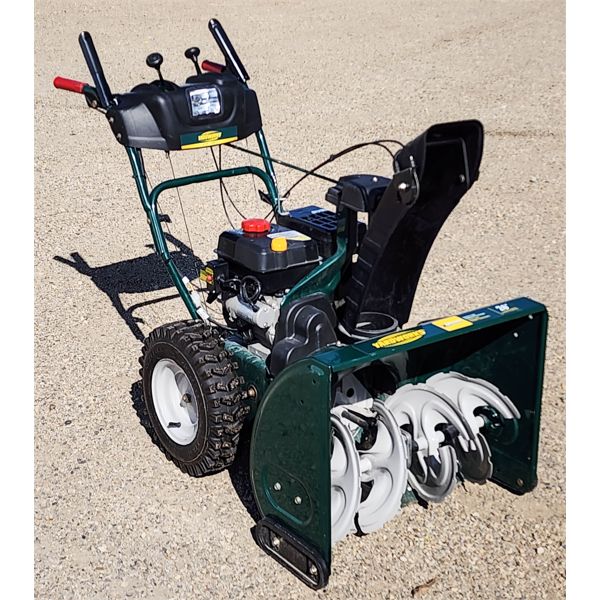
A two-stage snowblower uses an auger to gather snow and an impeller to throw it. A single-stage model uses one rotating auger to move snow and may work best on lighter snow and paved paths.
Start with a slow drive speed. Heavy, wet snow may require a slower pass than light powder.
Starting a Battery-Powered Electric Snowblower
Battery models skip fuel, oil, primer, and choke steps. They are often simple to start, but the battery must be charged and seated correctly.

Charge the battery indoors in a dry area unless the manufacturer says otherwise. Keep the battery away from extreme heat, water, and metal objects that could bridge the terminals.
Before inserting the battery, inspect the auger housing and chute. Remove packed ice only with the battery removed and the machine fully stopped.
Battery Start Steps
- Insert the safety key if the model uses one.
- Install a fully charged, compatible battery.
- Close the battery cover.
- Stand behind the handles.
- Press and hold the safety button.
- Squeeze or press the auger start control.
- Release the safety button only if the manual says to do so.
- Test the chute and drive controls at low speed.
Some brands use a battery platform shared with string trimmers, edgers, leaf blowers, and lawn mowers. Do not assume that every battery fits every tool. Confirm voltage, connector style, battery series, and charger compatibility.
What the Main Controls Do
A snowblower can have more controls than a push mower. Learning each one prevents sudden movement and reduces mistakes during a storm.

The auger control starts the snow-gathering mechanism. The drive control moves the machine forward. Chute controls change where the snow goes.
| Control | Function | Safe use |
|---|---|---|
| Auger lever | Turns the auger and impeller | Engage only when clear of people |
| Drive lever | Moves the wheels or track | Start at a slow speed |
| Chute rotation | Turns the discharge direction | Keep snow away from roads and windows |
| Deflector | Changes the snow height | Lower it near people or buildings |
| Speed control | Changes forward speed | Use slower speeds in heavy snow |
| Safety key | Allows the engine or motor to run | Remove before service |
Take time to practice with the machine off. Find each lever, key, and control before the first major storm.
Common Starting Problems and Simple Fixes
Most starting problems come from fuel, choke, battery, cord, or safety-control issues. A calm checklist works better than repeated button presses.

The table below covers common symptoms. Stop if you smell strong fuel, see smoke, hear grinding, or notice a damaged wire.
| Symptom | Likely cause | First safe check |
|---|---|---|
| Starter does not turn | No power, bad cord, key missing | Check outlet, cord, plug, and key |
| Engine turns but does not start | No fuel or wrong choke | Check fuel valve, fuel, primer, and choke |
| Engine starts then stops | Choke left on or stale fuel | Move choke toward run |
| Battery model is silent | Battery empty or not seated | Recharge and reinstall battery |
| Starter clicks | Weak power connection or battery | Check outlet and cord connection |
| Engine floods | Too much fuel or primer use | Stop, set choke to run, follow manual |
The Electric Starter Does Nothing
First, check that the ignition key is inserted. Then confirm that the extension cord is plugged into both the snowblower and the outlet.
Test the outlet with another tool only if it is safe to do so. A tripped breaker or GFCI may be the cause. Do not bypass a breaker or use a damaged outlet.
If the starter hums but the engine does not turn, the starter gear may not be engaging. This can require service.
The Engine Turns but Will Not Start
Check the fuel valve and tank. Old fuel may not ignite well, especially after warm-weather storage.
Set the choke correctly and use the primer as directed. If you smell a strong fuel odor, the engine may be flooded. Wait several minutes and follow the manual’s flooded-engine procedure.
A worn spark plug, blocked carburetor, dirty air filter, or damaged ignition wire may also cause the problem. These parts need inspection if basic checks fail.
The Snowblower Starts but Runs Roughly
A cold engine may run unevenly for the first minute. Move the choke toward run slowly.
If rough running continues, stop the machine and inspect the fuel. Water in the tank, stale fuel, or dirt in the carburetor can cause poor operation. Do not spray starting fluid into the engine unless the manufacturer specifically allows it.
The Battery Drains Too Fast
Cold weather reduces battery performance. Heavy wet snow also makes the motor work harder than light powder.
Bring the battery indoors after use if the manual allows it. Let it warm to room temperature before charging. Do not charge a frozen or wet battery.
Use only the charger made for that battery system. A battery that swells, leaks, smells hot, or becomes unusually warm should be removed from service and handled according to local battery safety guidance.
Cold Weather Starting Tips
Very cold weather can affect fuel, oil, batteries, cords, and moving parts. Preparation matters more than force.

Store a gas snowblower under cover, but never start it in the storage area. Keep the machine dry and protect the controls from packed ice.
Use the manufacturer’s recommended winter oil. Thick oil can make the starter work harder. Do not add unapproved chemicals to fuel or oil.
Brush snow away from the engine before starting. Ice around the carburetor, starter, or chute can cause trouble. Never pour hot water over frozen parts because the water can refreeze and damage components.
A battery snowblower should have its battery stored and charged as the manual directs. Some batteries perform better when warmed indoors before use.
💡 Pro Tip: If a gas snowblower has trouble starting after a long summer, do not keep cranking it. Fresh fuel, a clean spark plug, and a correct choke setting often solve the issue, but a blocked carburetor may need professional cleaning.
Common Mistakes to Avoid
Small mistakes can damage a starter or create a safety risk. Most are easy to prevent.
Holding the Starter Too Long
Electric starters are not designed for endless cranking. Long attempts can overheat the starter motor and drain a battery or weaken an outlet connection.
Use short attempts with pauses. Follow the manual’s time limit.
Starting Indoors
A garage door does not make indoor starting safe. Carbon monoxide can build up in a short time.
Move the snowblower fully outside before starting. Keep the exhaust away from doors and windows.
Using the Wrong Cord
A thin indoor cord may overheat. A cord that is too long can also reduce power to the starter.
Use the gauge, length, and outdoor rating specified in the manual. Replace cords with cuts, crushed areas, or loose plugs.
Clearing a Clog With Your Hand
The auger can move suddenly when packed snow breaks loose. Even a stopped machine can hold stored energy in the belt or rotating parts.
Shut off the engine, remove the key, disconnect the spark plug wire, or remove the battery. Wait, then use the clean-out tool.
Leaving the Choke On
A choke helps a cold engine start. It is not normally used for the entire job.
Move it toward run as the engine warms. Running with the choke on can cause smoke, poor power, and excess fuel use.
Ignoring Wet Snow
Wet snow is heavy and can clog the chute. It may also strain the belt, auger, and drive system.
Use slower passes. Keep the chute clean and stop before forcing the machine into a deep, hard bank.
How Long Starting Should Take
A prepared gas electric start snowblower may start within a few seconds of cranking. A battery model can start almost at once when the battery is charged and the safety controls are in place.
The setup time is often longer than the start itself. A first-time user may need several minutes to check oil, fuel, controls, and the cord. After a storm, cleanup and drying also take time.
| Task | Typical effort | What changes the time |
|---|---|---|
| Pre-start inspection | A few minutes | Ice, storage condition, and machine age |
| Gas engine start | Several short attempts | Temperature, fuel, choke, and spark |
| Battery start | Less than a minute | Battery charge and control design |
| Chute adjustment | A few seconds | Manual or electric chute controls |
| End-of-use cleanup | Several minutes | Wet snow and clogging |
Do not rush the inspection. A few minutes can prevent a broken belt, damaged starter, or unsafe clog.
Electric Start Snowblower Care and Storage
Starting gets easier when the snowblower is stored and serviced well. End-of-season care matters because stale fuel and moisture cause many first-start failures.

After each use, shut down the machine according to the manual. Let moving parts stop. Brush snow from the chute, auger housing, handles, and controls.
For a gas model, check the fuel-storage instructions. Some makers advise draining the tank and carburetor. Others allow stabilized fuel. Use the exact method in the manual.
For a battery model, remove the battery before storage if the manual says to do so. Store the battery in a cool, dry place within the maker’s recommended charge range.
Parts That Wear First
The belts, skid shoes, scraper bar, shear pins, spark plug, and battery are common wear or service items. The exact parts depend on whether the machine is single-stage, two-stage, gas, or battery powered.
A shear pin is designed to break if the auger hits a hard object. Do not replace it with a regular bolt. The wrong fastener can damage the gearbox or create a hazard.
Check replacement part numbers before ordering. Confirm the model number, serial range, belt size, battery platform, spark plug type, and auger design.
| Part | Signs of wear | Service note |
|---|---|---|
| Scraper bar | Uneven clearing or visible wear | Replace when adjustment is no longer possible |
| Skid shoes | Thin or uneven surfaces | Set for pavement, gravel, or packed snow |
| Shear pins | Break during impact | Use the specified replacement only |
| Drive belt | Slipping, cracking, or squealing | Disconnect power before inspection |
| Spark plug | Hard starting or weak running | Use the manual’s plug type and gap |
| Battery | Short runtime or swelling | Stop using a damaged battery |
Storage in a Garage or Shed
A dry garage or shed is better than an uncovered spot, but fuel rules still apply. Keep gasoline in an approved container and follow local storage laws.
Do not store a gas snowblower near a furnace, water heater, pilot light, or other ignition source. Allow the machine to cool before covering it.
A battery snowblower needs protection from rain and freezing water. Keep the battery and charger dry. Never cover a wet machine and leave it sealed for months.
🌿 Eco or Disposal Note: Recycle lithium-ion batteries through a designated battery drop-off. Take old gas and engine oil to a household hazardous-waste site. Donate or recycle usable equipment rather than placing it in regular trash.
Choosing a Snowblower for Your Yard and User
Electric start is only one feature. The right machine also depends on snow depth, driveway size, slope, surface, storage, and the person using it.

A small, flat paved walk may need a single-stage battery model. A long driveway with deep snow may call for a two-stage gas model. Gravel requires careful skid-shoe adjustment so the auger does not pick up stones.
Yard and User Guide
| Yard and user | Suitable direction | Limit to consider |
|---|---|---|
| Small, flat paved path | Compact single-stage electric model | May struggle in deep, wet snow |
| Medium driveway | Battery model or compact gas model | Check runtime or fuel needs |
| Long driveway | Larger two-stage gas model | Heavy, louder, and needs storage |
| Hilly driveway | Self-propelled two-stage model | Still needs careful control on slopes |
| Senior user | Push-button electric start and simple controls | Weight and steering still matter |
| Gravel surface | Adjustable skid shoes and proper clearance | Stones can damage the auger |
| Close neighbors | Battery model with lower operating noise | Runtime may vary in cold weather |
The best snowblower for a senior is not simply the one with electric start. Look for manageable weight, large controls, easy chute adjustment, stable wheels, and a drive system that does not require high hand strength.
For hilly lawns or sloped drives, avoid assuming that self-propelled means effortless. The operator must still guide the machine and control its speed. A heavy snowblower can be hard to stop or turn on ice.
Gas Versus Battery for Snow Removal
Gas snowblowers often suit long jobs and deep snow. They can keep running as long as you have fuel, but they need more maintenance and create exhaust and noise.
Battery snowblowers suit users who want quick starts, lower routine maintenance, and no fuel mixing or storage. Cold weather and thick snow can reduce usable battery time. Check the manufacturer’s runtime information for your model, battery size, and conditions.
Corded snowblowers can work for short paths near an outlet. They are less practical for large areas because the cord can snag or enter the work path.
Local Rules and Neighborhood Concerns
Snowblower use may be affected by local noise rules, HOA policies, fuel-storage laws, and restrictions on gas equipment. These rules vary by city and neighborhood.

Check your city, county, and HOA before buying. Some areas limit operating hours or restrict small-engine equipment. A battery snowblower may help with noise concerns, but it does not remove all local rules.
📜 Check Local Rules: Confirm approved operating times, fuel-storage limits, battery disposal options, and HOA requirements before you buy or use a snowblower.
Be considerate of neighbors. Point snow away from sidewalks, parked vehicles, windows, and neighboring property. Avoid early-morning operation unless you know local rules allow it.
When to Call a Repair Shop
Basic checks are reasonable for a homeowner. Electrical repairs, carburetor work, belt replacement, and internal engine repairs may need trained service.
Call a repair shop if the starter repeatedly clicks, the engine backfires, fuel leaks, the cord gets hot, the battery swells, or the auger spins when the control is released.
A professional should also inspect a machine that has been submerged, struck a large object, or developed a grinding noise. Do not keep using a snowblower that vibrates heavily.
Disconnect the spark plug or remove the battery before transporting a machine for repair. Tell the technician what happened and what checks you already made.
FAQs About Electric Start Snowblowers
Q: Do electric start snowblowers need gas?
A: Many do. The term often means a gas engine with an electric starter. Check for a fuel tank, oil fill, spark plug, and carburetor. A battery snowblower has no gasoline engine.
Q: Can I start a gas snowblower with a car battery?
A: Usually no. Use only the starting method approved by the manufacturer. Do not connect a car battery or improvised wires unless the manual specifically provides that procedure.
Q: Can I use any extension cord?
A: No. Use an outdoor-rated cord with the gauge and length listed in the owner’s manual. A cord that is too thin, too long, damaged, or not grounded can create a shock or fire risk.
Q: Why will my electric start snowblower not start?
A: Check the ignition key, fuel, oil, fuel valve, choke, primer, extension cord, outlet, and battery if equipped. If the engine cranks but does not run, stale fuel or a spark problem may be involved.
Q: How many times should I press the primer?
A: Use the number listed in the manual. Many machines need only a few presses when cold. Too many presses can flood the engine.
Q: Should I leave the choke on while snow blowing?
A: No. The choke is mainly for starting a cold engine. Move it toward run as the engine warms. Follow the manual if the engine needs a different sequence.
Q: Is electric start worth the extra cost?
A: It can be worth it for users who dislike recoil starting, have limited hand strength, or use the machine in very cold weather. It may be less important for a small, easy-start model used on a short flat path.
Q: Are battery snowblowers good for heavy snow?
A: Some are designed for heavy snow, but capacity differs by model. Check the manufacturer’s clearing width, snow-depth guidance, battery size, and runtime claims. Wet snow and deep drifts place more demand on the motor.
Q: Can I store the snowblower outside?
A: It is better to store it in a dry, covered space. Outdoor storage exposes controls, belts, batteries, and metal parts to moisture. If outdoor storage is unavoidable, follow the manual and protect the machine from rain and snow.
Q: What should I do if the chute clogs?
A: Shut off the engine, remove the key, disconnect the spark plug wire, or remove the battery. Wait for all parts to stop. Use the clean-out tool, never your hand.
Q: Why does my snowblower start and then stall?
A: The choke may remain on, the fuel may be stale, the carburetor may be dirty, or the engine may not be receiving enough fuel. Move the choke toward run first. If the problem continues, arrange service.
Q: Can a senior safely use an electric start snowblower?
A: Electric start can reduce the effort needed to start the machine. The user must still be able to control its weight, direction, speed, chute, and stopping process. A compact model with simple controls may suit a small, flat area better than a large two-stage machine.
Q: How often should I service a snowblower?
A: Inspect it before every use. At the end of the season, follow the manual for fuel, oil, belt, spark plug, shear pin, battery, and storage care. Service more often when the machine clears heavy, wet snow.
Q: Can I use a snowblower on a lawn?
A: You can use some models on turf, but set the skid shoes correctly and avoid digging into the soil. Gravel, grass, and paved surfaces need different clearance. Never assume the same setting suits every surface.
Final Advice
The safest way to start an electric start snowblower is to slow down and use the correct sequence for your model. Put a gas machine outdoors, check fuel and oil, set the choke, prime it as directed, connect a safe outdoor cord, and use short starter attempts. For a battery model, charge and seat the correct battery, install the safety key, and follow the start controls in the manual.
Choose the machine for the person and the property, not just the push-button feature. A compact battery model may suit a small, flat driveway and a noise-sensitive neighborhood. A larger self-propelled gas model may suit a long drive with deep, wet snow, but it needs more care, fuel, space, and physical control.
Before the next storm, practice finding the key, starter, choke, auger lever, drive lever, and chute controls. Clear debris first, keep people away, wear eye and hearing protection, and disconnect the spark plug or remove the battery before servicing. A few careful steps can make cold-weather snow removal safer and far less stressful.

One Comment