
How Much Do Zero Turn Lawn Mowers Cost: Price Guide
A new zero-turn lawn mower usually costs $2,500 to $12,000 in the United States. Entry-level residential models may cost less than $3,000, while heavy-duty commercial mowers can cost $15,000 to more than $25,000.
Your final price depends on the mower’s deck size, engine power, build quality, fuel type, warranty, and intended use. A used zero-turn mower may cost $1,000 to $8,000, but repair risk is higher.
For most U.S. homeowners, a realistic budget is $3,500 to $7,000 for a dependable residential mower with a 42- to 54-inch cutting deck.

Zero-Turn Mower Price Ranges at a Glance
The table below shows common U.S. price ranges. These are planning estimates, not live quotes. Prices vary by brand, dealer, region, promotions, and model year.
| Zero-turn mower type | Typical U.S. price | Best for |
|---|---|---|
| Entry-level residential | $2,500–$4,000 | Small to medium lawns |
| Mid-range residential | $4,000–$7,000 | Regular home use and larger yards |
| Premium residential | $7,000–$12,000 | Large properties and frequent mowing |
| Commercial light-duty | $7,000–$12,000 | Small lawn-care businesses |
| Commercial heavy-duty | $12,000–$25,000+ | Daily professional use |
| Battery electric residential | $3,500–$8,000 | Quieter mowing and low routine service |
| Used residential | $1,000–$6,000 | Lower-cost ownership |
| Used commercial | $3,000–$12,000+ | Buyers who can inspect and repair equipment |
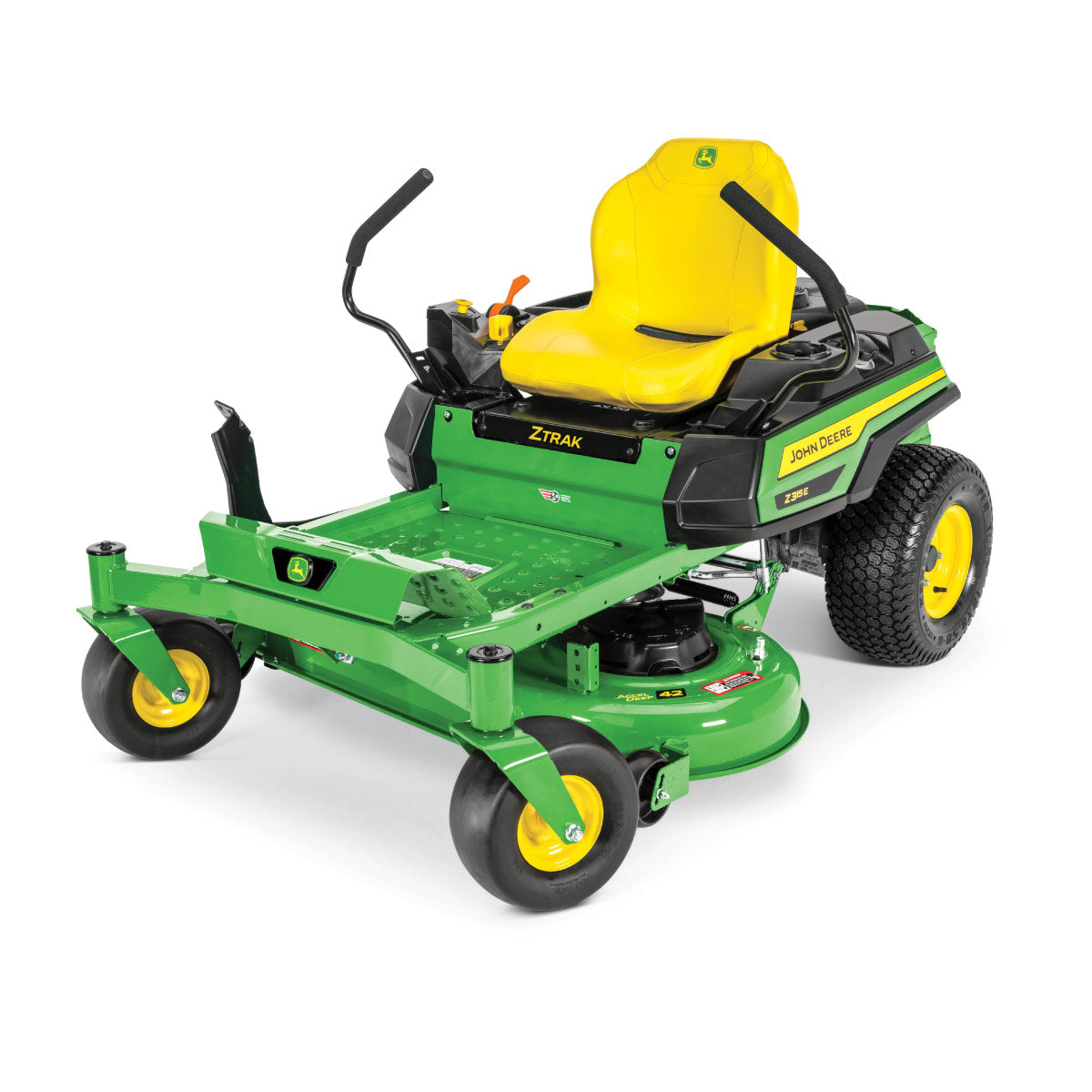
A zero-turn mower costs more than a standard riding mower because it uses two independently controlled drive wheels. This lets the mower turn within its own length. The design saves time around trees, beds, fences, and other obstacles.
The lowest price is not always the lowest cost. A cheap mower with a weak deck, small tires, or poor parts support may cost more over time than a better-built model.

What Changes the Price of a Zero-Turn Mower?
The largest price differences come from the cutting deck, engine, frame, transmission, and intended duty cycle.
Cutting deck size
The deck controls how much grass the mower cuts in one pass.
- 34 to 42 inches: Best for narrow gates and smaller lawns.
- 48 to 54 inches: A common choice for suburban and rural homes.
- 60 inches or more: Useful for large open lawns and commercial work.
A larger deck often costs more. It may also reduce mowing time on open ground. However, a large deck is harder to use in tight areas and may not fit through a shed door or gate.
Measure every narrow passage before buying. A mower that cannot reach part of the property will not save time.
Engine and transmission
Most gas zero-turn mowers use engines from about 18 to 35 horsepower. Larger engines often support wider decks, thicker blades, stronger transmissions, and longer work cycles.
The transmission matters because it transfers engine power to the drive wheels. Residential transmissions are made for lower use than commercial-grade transmissions. Commercial units often have stronger housings, serviceable parts, and better cooling.
A higher horsepower number alone does not prove that a mower is better. Match the engine and transmission to the size of the property and the hours of use.
Frame and deck construction
A stamped steel deck is often lighter and less costly. A fabricated deck is usually made from thicker steel plates and may better handle frequent use or rough ground.
Other parts that affect price include:
- Frame thickness
- Front caster wheels
- Seat suspension
- Hydraulic pumps and motors
- Blade spindle design
- Tire size
- Fuel tank capacity
- Access to filters and grease points
These parts may not change the first mowing result. They can change service life, comfort, and repair cost.
Fuel type
Gas models usually have the lowest purchase price and the widest range of sizes. Battery models can cost more at first, especially when the price includes large batteries and a charger.
Electric mowers may reduce noise, fuel handling, oil changes, and some engine service. Their practical range depends on battery size, grass height, slope, temperature, and mowing conditions.

How Much Does a Residential Zero-Turn Mower Cost?
Most residential zero-turn mowers cost $2,500 to $12,000, with many buyers landing between $3,500 and $7,000.
Entry-level residential models: $2,500 to $4,000
These mowers suit homeowners with small or medium lawns. They often include a 34- to 48-inch deck and a residential engine and transmission.
They may have:
- A lighter frame
- A basic seat
- Smaller tires
- A shorter warranty than premium models
- Fewer service features
An entry-level mower can work well on a fairly smooth lawn. It may be a poor fit for steep slopes, rough fields, or many hours of weekly use.
Mid-range residential models: $4,000 to $7,000
This range includes many practical choices for large home lots. Models often offer a 48- to 54-inch deck, stronger construction, better comfort, and more durable drive components.
This tier can offer a good balance between price and service life. It is often the best starting point for a homeowner who cuts several acres but does not mow for customers.
Premium residential models: $7,000 to $12,000
Premium residential mowers may use larger engines, wider decks, suspension seats, stronger frames, and improved service access.
The extra cost may make sense when:
- The property is several acres.
- You mow every week for much of the year.
- The ground is rough.
- More than one person will use the mower.
- Comfort matters during long mowing sessions.
Premium features do not remove the need for safe operation or routine maintenance.

How Much Does a Commercial Zero-Turn Mower Cost?
Commercial zero-turn mowers commonly cost $7,000 to $25,000 or more in the U.S. A small commercial unit may cost near the top of the residential market. Large, heavy-duty models can cost much more.
Commercial mowers tend to include:
- Reinforced frames
- Fabricated steel decks
- Commercial engines
- Serviceable hydraulic systems
- High-back or suspension seats
- Larger fuel tanks
- Stronger spindles and caster assemblies
- Longer commercial warranties on selected parts
The right comparison is not only purchase price. A lawn-care business should also consider mowing hours, downtime, transport, maintenance, resale value, and financing cost.
For example, a $12,000 mower may be easier to justify for a business that uses it every workday. It may not be economical for a homeowner who mows one acre each week.
How Much Does an Electric Zero-Turn Mower Cost?
Battery-powered zero-turn mowers generally cost $3,500 to $8,000 for residential use. Larger commercial battery models may cost $10,000 to $25,000 or more, depending on battery capacity and equipment included.
The advertised price may not include every battery needed for your property. Check these items before comparing an electric mower with a gas mower:
- Number of batteries included
- Battery capacity
- Charger type
- Charge time
- Spare battery price
- Expected run time under heavy grass
- Battery warranty
- Replacement battery availability
Electric models can have lower routine service needs because they do not use engine oil, spark plugs, or fuel filters. They still need blade sharpening, deck cleaning, tire checks, belt checks, and safe battery care.
Battery replacement is a long-term cost. The exact cost depends on the mower brand, battery size, warranty, and future availability.

How Much Does a Used Zero-Turn Mower Cost?
A used zero-turn mower may cost $1,000 to $8,000, while used commercial models can cost more. Age, engine hours, deck condition, brand support, and local demand have a large effect on price.
A low price can be sensible when the mower has:
- Clear service records
- Good cold-start behavior
- Even cutting performance
- No hydraulic leaks
- A straight deck
- Tight steering controls
- Good belts and pulleys
- Available replacement parts
Inspect the mower before paying. Ask the seller to start it cold. A warm engine may hide hard starting, smoke, or other problems.
Check for:
- Oil leaks around the engine and transmission.
- Hydraulic fluid leaks near pumps, hoses, and wheel motors.
- Cracks or welds on the frame and deck.
- Uneven blade spindle noise.
- Excessive vibration when the blades run.
- Weak or uneven drive movement.
- Worn tires and loose caster wheels.
- Missing guards or safety switches.
A used mower with low hours is not automatically a good deal. Poor storage, skipped service, and rough ground can cause serious wear.

What Extra Costs Should You Budget For?
The mower price is only part of the purchase. A realistic budget may also include delivery, setup, fuel, maintenance, accessories, repairs, and storage.
Common first-year costs
| Expense | Typical planning range |
|---|---|
| Delivery or transport | $0–$500+ |
| Initial service or setup | $100–$400 |
| Spare blades | $50–$200 |
| Mulching kit or discharge cover | $50–$300 |
| Trailer | $1,000–$5,000+ |
| Tie-downs and ramps | $50–$500 |
| Fuel storage and fuel | Varies |
| Annual residential maintenance | About $200–$800 |
| Repairs outside warranty | Highly variable |
These figures are broad planning ranges. Local labor rates and parts prices can change the result.
A trailer is not needed for every homeowner. It becomes important when you transport the mower between properties. A secure shed or garage also protects the machine from weather and theft.
A simple ownership calculation
Suppose a homeowner buys a $5,000 mower and spends $500 on setup and accessories. The starting cost is:
$5,000 + $500 = $5,500
If the mower is used for five years, the purchase cost alone averages:
$5,500 ÷ 5 = $1,100 per year
This is not the full cost. Add fuel, maintenance, repairs, storage, and the mower’s resale value. The calculation only shows why a low purchase price may not tell the whole story.

How Much Should You Spend on a Zero-Turn Mower?
Spend enough to match your lawn size, terrain, mowing hours, and repair expectations.
- Under 1 acre: A compact 34- to 42-inch model may be enough.
- 1 to 3 acres: A 42- to 54-inch residential mower often fits.
- 3 or more acres: Consider a stronger 48- to 60-inch mower.
- Rough ground or frequent use: Favor a fabricated deck and stronger transmission.
- Commercial work: Choose a commercial unit with parts and service support.
- Narrow gates: Measure first and consider a smaller deck.
- Steep slopes: Review the owner’s manual and safety guidance before choosing a zero-turn model.
Zero-turn mowers are most useful on open lawns with many obstacles. They are less useful when the property has steep slopes, deep ditches, wet ground, or many tight spaces.
Never treat a zero-turn mower as a general-purpose tractor. Follow the manufacturer’s slope limits. Keep the discharge guard in place, wear hearing and eye protection, and keep people and pets away from the mowing area.

How to Compare Zero-Turn Mower Prices
Compare the features that affect long-term use, not just the sale price.
1. Compare deck size and build
A wider deck may save time, but only when it fits the property. Check whether the deck is stamped or fabricated and whether replacement blades and spindles are easy to find.
2. Compare the engine and drive system
Look for the engine model, horsepower, fuel capacity, and transmission type. Ask whether the transmission is designed for residential or commercial duty.
3. Check the warranty
Read what the warranty covers and who performs the work. Engine, battery, frame, deck, and drivetrain coverage may have different terms.
4. Check local service support
A nearby dealer can reduce downtime. Before buying, ask about parts stock, repair lead times, winter service, and warranty work.
5. Price the complete package
Include batteries, a charger, a trailer, a mulch kit, delivery, taxes, and setup. Two mowers with similar sticker prices may have very different ready-to-use costs.
6. Consider resale value
Well-maintained models with strong parts support often remain easier to sell. Keep receipts and service records. Clean the deck and store the mower indoors when possible.

Common Mistakes That Raise the Total Cost
Many buyers focus on the mower’s advertised price and miss the conditions that affect ownership.
Buying too much mower
A commercial mower can be costly to maintain if a homeowner uses it for one small lawn. Extra size and power may add cost without a useful benefit.
Buying too little mower
An entry-level machine may struggle with long grass, slopes, rough ground, or frequent use. Replacing it early can cost more than buying the right class of mower at the start.
Ignoring access limits
Measure gates, shed doors, bridges, and trailer ramps. Include the mower’s full width with the discharge chute in its normal position.
Skipping a test drive
A test drive can reveal poor steering response, vibration, uncomfortable controls, or a weak transmission. Test the mower on the type of ground you plan to cut when possible.
Treating used hours as the only wear measure
Engine hours help, but they do not show storage quality, maintenance, operator habits, or deck damage. Inspect the machine as a whole.

Key Takeaways
- A new U.S. zero-turn mower usually costs $2,500 to $12,000.
- Most homeowners should plan on $3,500 to $7,000.
- Commercial models can cost $7,000 to more than $25,000.
- Used models may cost $1,000 to $8,000, but inspection is essential.
- Add delivery, maintenance, fuel, repairs, accessories, and storage to the purchase price.
- Choose deck size based on both lawn area and gate or shed access.
- A commercial mower is not automatically the best value for home use.
- Follow the owner’s manual for slope limits and operating safety.
Frequently Asked Questions
Is a zero-turn mower worth the money?
A zero-turn mower may be worth the cost if you have a large, open lawn with trees, beds, or other obstacles. It can reduce turning and trimming time. It may not be worth the price for a small or steep property.
What is the cheapest reliable zero-turn mower?
The cheapest reliable option is often a basic residential model from a brand with local parts and service support. Plan for at least about $2,500 to $4,000 new, or inspect used models carefully below that range.
How long does a zero-turn mower last?
Service life varies with construction, maintenance, storage, ground conditions, and use. A homeowner mower may last many years with proper care. Commercial equipment can also last for years, but it may accumulate far more operating hours and need more repairs.
Are electric zero-turn mowers cheaper to operate?
They can be cheaper to operate in some situations because they use no gasoline or engine oil and may need less routine engine service. Battery replacement and charging needs can offset part of those savings.
Can I finance a zero-turn mower?
Many dealers and manufacturers offer financing, but terms vary. Compare the cash price, interest rate, fees, down payment, total repayment, and warranty. A monthly payment does not show the full cost.
What size zero-turn mower do I need for 2 acres?
A 42- to 54-inch mower is often a practical range for two acres, depending on gates, trees, slopes, and lawn layout. A wider deck may save time on open ground, while a smaller deck may work better around tight obstacles.
Conclusion
The typical cost of a zero-turn lawn mower in the United States is about $2,500 to $12,000, with $3,500 to $7,000 covering many capable residential models. Commercial equipment can cost much more, while used machines offer lower entry prices with greater inspection risk.
Start with the lawn, not the price tag. Measure access points, estimate yearly use, compare the complete ownership cost, and confirm local service support. The best mower is the one that fits the property and workload without paying for features you will not use.


