Can You Use Car Oil In Lawn Mower: Safe Guide
Yes, you can use car oil in some lawn mowers, but only if the oil grade matches the engine maker’s instructions.
The answer to “can you use car oil in lawn mower” depends on the mower’s engine, climate, oil type, and manufacturer requirements. Using the wrong oil may cause hard starting, poor lubrication, excess smoke, or engine damage, so this guide explains how to choose the right oil with confidence.
Can You Use Car Oil in a Lawn Mower?
In many cases, you can use car oil in a lawn mower. Small four-stroke mower engines often run well with common automotive oils, such as SAE 30 or 10W-30. However, the oil must match the specifications listed in your owner’s manual.
A lawn mower engine is not the same as a car engine. It is smaller, air-cooled, and often works at high speed with little protection from heat. A car engine usually has a pressurized oil system and a liquid cooling system. Because of this, the correct oil grade matters.
Before adding oil, check:
• The mower manual
• The engine brand and model
• The recommended SAE viscosity
• The outdoor temperature
• Whether the engine is four-stroke or two-stroke
If you are asking, “can you use car oil in lawn mower,” the safest answer is yes, but not blindly. The oil label and mower manual must agree.

When Car Oil Is Safe for a Lawn Mower
Car oil is usually safe for a four-stroke lawn mower when it has the correct viscosity and quality rating. Many modern automotive oils meet the lubrication needs of small engines.
Common acceptable choices may include:
• SAE 30 in warm weather
• SAE 10W-30 for changing temperatures
• SAE 5W-30 in cold conditions, if the manual allows it
• Synthetic 10W-30 for broad temperature protection
The letters and numbers describe how the oil flows. SAE 30 is a single-grade oil that works well in warm weather. A 10W-30 oil flows better during cold starts and remains useful when the engine becomes hot.
When people ask, “can you use car oil in lawn mower,” they often mean regular motor oil from an auto parts store. That oil can work well in many four-stroke engines, but the exact grade remains important.
Look for a current gasoline-engine service rating on the bottle. Avoid oil that is dirty, mixed with another fluid, or stored without a tight cap.

When You Should Not Use Car Oil
There are times when automotive oil is not the right choice. The biggest concern is using car oil in a two-stroke engine that needs oil mixed with gasoline.
Two-stroke engines do not have a separate oil reservoir in the same way four-stroke engines do. They usually need special two-cycle oil mixed with fuel or added to a separate oil tank. Never pour ordinary car oil into the fuel tank unless the manual specifically says to do so.
Do not use car oil when:
• The manual requires special two-cycle oil
• The mower uses a two-stroke engine
• The oil has the wrong viscosity
• The oil is contaminated or badly aged
• The engine maker requires a special synthetic or small-engine formula
• The oil level is already full
The question “can you use car oil in lawn mower” becomes more complicated with riding mowers. Many riding mower engines use four-stroke oil, but some require a specific oil grade for the transmission, hydrostatic system, or engine. Engine oil and transmission fluid are not interchangeable.
:max_bytes(150000):strip_icc()/mower-maintenance-for-four-cycle-engine-2131183-06-31f76aa3de3845f0a04309288532781b.jpg)
Understanding Lawn Mower Oil Types
Choosing mower oil becomes easier when you understand the main types. Oil viscosity tells you how thick or thin the oil is at different temperatures.
SAE 30
SAE 30 is a common choice for push mowers used in warm weather. It is simple and affordable, but it may flow slowly during cold starts.
SAE 10W-30
SAE 10W-30 is a flexible option for many climates. It flows more easily when the engine is cold and still protects the engine when it reaches operating temperature.
SAE 5W-30
SAE 5W-30 can help with cold-weather starting. Some synthetic versions work across a wide temperature range, but you should use it only when the manufacturer approves it.
Synthetic oil
Synthetic oil can provide strong flow at startup and stable protection during heat. It may cost more, but it can be useful for frequent mowing, very hot weather, or large temperature changes.
A common mistake is assuming that thicker oil always gives better protection. In reality, oil that is too thick may make the engine hard to start and may not circulate quickly enough.
Car Oil vs. Lawn Mower Oil
Car oil and lawn mower oil often look similar because both lubricate gasoline engines. The main difference is the engine design and operating environment.
A lawn mower engine often:
• Runs at a high speed
• Uses air for cooling
• Experiences dust and grass debris
• Has a small oil capacity
• Works under changing loads
• May sit unused for several months
A car engine often holds more oil and has advanced cooling and filtration systems. This does not automatically make car oil unsafe for mowers. It simply means that the oil must be selected with the mower’s needs in mind.
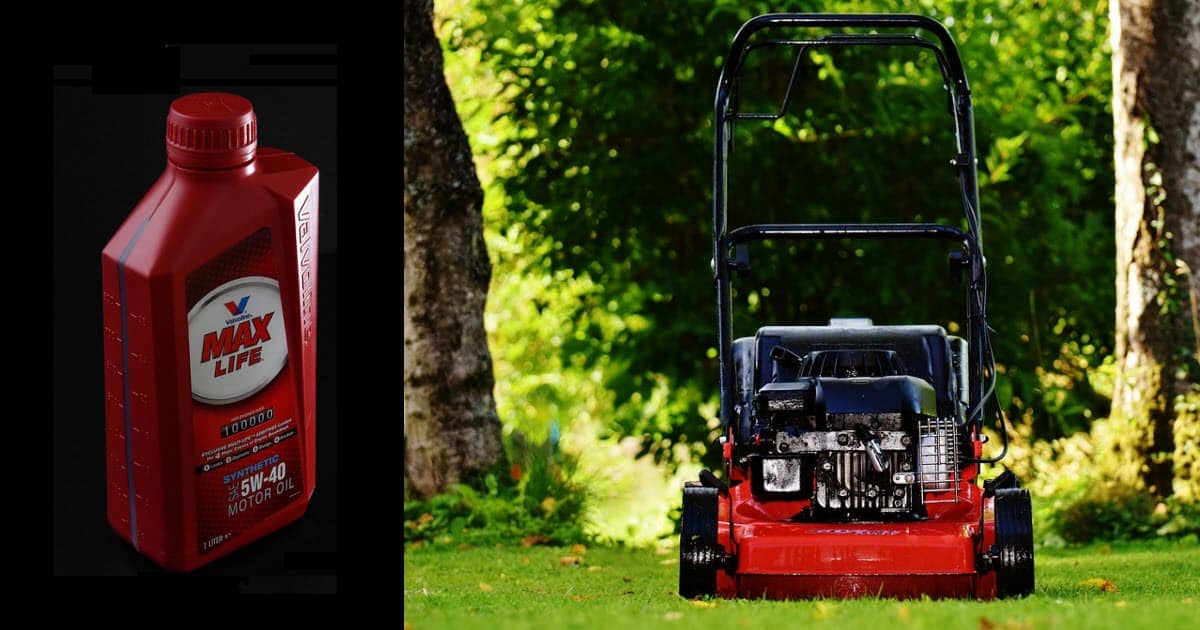
If you wonder, “can you use car oil in lawn mower,” think of it this way: car oil may be suitable, but the mower’s manual is the final judge. The words “automotive” and “small engine” matter less than the correct viscosity and service rating.
How to Check Your Lawn Mower’s Oil Requirement
You can find the correct oil information in a few minutes. Start with the mower’s owner’s manual. Look for a section called “engine oil,” “lubrication,” or “maintenance.”
If you do not have the manual, check:
- The engine name and model number
- The label near the oil fill cap
- The manufacturer’s official manual database
- The mower manufacturer’s support page
- A trusted repair shop or dealer
The engine model is more useful than the mower’s brand alone. A single mower brand may sell machines with engines from different manufacturers.
Write down the recommended oil grade before shopping. For example, the manual may specify SAE 30 above a certain temperature or 10W-30 for a wider range. This small step can prevent an expensive repair.

How Much Oil Does a Lawn Mower Need?
Most push mower engines need far less oil than a car. Many hold about 15 to 24 fluid ounces, although the correct amount varies by engine.
Never pour in a full bottle without checking the dipstick. Overfilling can cause the crankshaft to whip the oil into foam. Foamy oil does not lubricate well and may increase pressure inside the engine.
Use this process:
- Park the mower on level ground.
- Turn off the engine and let it cool.
- Clean around the oil cap.
- Remove the dipstick and wipe it clean.
- Insert the dipstick without tightening it, if the manual says to do so.
- Remove it and check the level.
- Add a small amount of oil at a time.
- Stop when the level reaches the full mark.
When considering “can you use car oil in lawn mower,” remember that the amount is just as important as the oil type. Too little oil can cause severe wear. Too much can also create problems.
/mower-maintenance-for-four-cycle-engine-2131183-10-de8a484ada4a4c8896934080f0d61b65.jpg)
How to Change Lawn Mower Oil
Changing the oil is one of the best ways to protect a mower engine. Fresh oil removes heat and carries away small particles created by normal wear.
Follow these general steps:
- Run the mower for a few minutes to warm the oil.
- Turn off the engine and disconnect the spark plug wire.
- Place the mower on a level surface.
- Position an approved drain pan under the drain plug or oil fill area.
- Drain the old oil completely.
- Replace the drain plug if your mower has one.
- Add the correct new oil slowly.
- Check the level with the dipstick.
- Wipe away spills before starting the engine.
- Reconnect the spark plug wire.
Dispose of used oil at an approved recycling or collection center. Do not pour it onto the ground, into a drain, or into household trash.
A practical lesson many mower owners learn the hard way is that oil changes are messy when rushed. Place cardboard under the pan and keep a clean rag nearby. A few minutes of preparation can save a stained driveway.

What Happens If You Use the Wrong Car Oil?
Using the wrong oil once may not destroy the engine, but repeated use can cause trouble. The risk depends on the oil grade, amount, engine design, and operating conditions.
Possible problems include:
• Difficult starting
• Increased engine noise
• Excessive smoke
• High oil consumption
• Poor lubrication
• Overheating
• Carbon buildup
• Premature wear
Oil that is too thin may not protect well during high heat. Oil that is too thick may flow poorly during startup. Overfilled oil may enter areas where it should not be, including the air filter or combustion chamber.
If you used the wrong oil, do not panic. Check the level and drain it if necessary. Refill the engine with the correct oil, then monitor smoke, noise, and performance.
Can You Use Synthetic Car Oil in a Lawn Mower?
You can often use synthetic car oil in a four-stroke lawn mower if the manual allows the selected viscosity. Synthetic oil can flow well during cold starts and remain stable at high temperatures.
It may be useful when:
• You mow in very hot weather
• You start the mower in cool spring weather
• The engine works for long periods
• You want longer oil stability between changes
• The manufacturer lists synthetic oil as acceptable
Synthetic oil does not turn an old engine into a new one. It also does not excuse long periods between oil changes. Dirt, fuel dilution, and moisture can still contaminate the oil.
When answering “can you use car oil in lawn mower,” synthetic automotive oil is often acceptable for four-stroke engines. Still, follow the manual and use the right SAE grade.
Common Mistakes to Avoid
Small errors can shorten engine life. Most are easy to prevent.
Avoid these mistakes:
• Guessing the oil type
• Filling above the dipstick’s full mark
• Checking oil while the mower is tilted
• Mixing two-stroke and four-stroke oil systems
• Leaving old oil in the engine for years
• Using oil that contains dirt or water
• Starting the engine with the dipstick missing
• Spilling oil onto the air filter
• Ignoring smoke or sudden engine noise
One mistake I often see is checking the oil with the mower resting on a hill. The reading may look correct even when the engine is overfilled or underfilled. Always check on level ground.
Another common mistake is storing a mower with very old oil inside. Oil can collect moisture during seasonal storage, so changing it before storage or before the first spring mowing is a wise habit.
Best Oil Choice by Weather
Weather affects how engine oil flows. A mower used in Florida may need a different viscosity choice than one used in Minnesota.
Use the manual first, then consider these general patterns:
• Hot weather: SAE 30 or the manufacturer’s approved 10W-30
• Mild weather: SAE 10W-30 is often practical
• Cold starts: SAE 5W-30 may help if approved
• Wide temperature changes: An approved synthetic multi-grade oil may help
Do not change oil grades only because the weather feels different for one day. Use the temperature range listed by the engine maker.
If you mow in a hot climate, keep the engine clean. Grass clippings can block cooling areas and make the engine run hotter. Even the best car oil cannot protect an engine that cannot release heat.
Signs Your Lawn Mower Needs an Oil Change
Oil does not always look perfect, but several warning signs suggest that service is due.
Watch for:
• Dark, gritty, or thick oil
• A strong fuel smell in the oil
• Low oil on the dipstick
• Blue or gray exhaust smoke
• Loud tapping or knocking
• An engine that runs hotter than normal
• Hard starting after regular use
Dark oil alone does not always mean it is bad. Oil becomes dark as it collects small particles and combustion byproducts. However, gritty oil, a fuel smell, or a sharp metal odor deserves attention.
Most manufacturers recommend changing mower oil after the first several hours of use on a new engine, then at regular seasonal or hour-based intervals. Follow the schedule in your manual for the most accurate guidance.
Frequently Asked Questions About Can You Use Car Oil in Lawn Mower
Can you use 10W-30 car oil in a lawn mower?
Yes, many four-stroke lawn mower engines can use 10W-30 automotive oil. Check the owner’s manual first because some engines recommend SAE 30 or another grade.
Can you use SAE 30 car oil in a lawn mower?
SAE 30 car oil may work in many push mowers used in warm weather. It is not suitable for every engine or climate, so confirm the manufacturer’s recommendation before filling the crankcase.
Can you use synthetic car oil in a lawn mower?
Synthetic car oil is often suitable for four-stroke mowers when the viscosity matches the manual. It may improve cold starts and high-temperature stability, but it still needs regular changes.
Can you use car oil in a two-stroke lawn mower?
Usually, no. Two-stroke mowers generally require special two-cycle oil mixed with fuel or placed in a separate oil tank, according to the engine instructions.
What happens if you put too much car oil in a lawn mower?
Too much oil can cause foaming, smoke, leaks, poor performance, and engine damage. Drain or remove the excess until the level reaches the correct mark on the dipstick.
How often should you change lawn mower oil?
Many mower engines need an oil change once each season or after a set number of operating hours. The exact schedule varies, so use the engine manual rather than relying only on a general rule.
Conclusion
You can use car oil in many four-stroke lawn mowers, but the oil must have the correct SAE grade and meet the engine maker’s requirements. Always check the manual, avoid automotive oil in two-stroke fuel systems, keep the oil level accurate, and change the oil on schedule.
Treat your mower’s engine like a small athlete: give it clean oil, keep it cool, and do not push it past its limits. Check your mower manual before the next refill, and share your oil questions or mowing experience in the comments.