
How Well Do Battery Lawn Mowers Work: Real Results
Battery lawn mowers work well for many U.S. homeowners, especially those with small or medium-sized yards. They start with a button, make less noise than gas mowers, and need far less routine care. A good model can cut regular grass as well as a gas mower when its battery is charged and the deck is kept clear.
They are not ideal for every lawn. Thick, wet, tall, or neglected grass can drain a battery fast. Large properties may require extra batteries, several charging cycles, or a second battery pack. The best choice depends on lawn size, grass type, slope, mowing frequency, and access to a garage outlet.

How well do battery lawn mowers cut grass?
Battery lawn mowers can provide a clean, even cut when used under normal mowing conditions. Current cordless models use brushless motors, sharp steel or composite blades, and electronic controls that can increase motor power when the grass gets thicker.
A battery mower usually performs best when you:
- Mow once a week during active growth.
- Keep the blade sharp.
- Avoid cutting wet grass.
- Remove no more than one-third of the grass height at a time.
- Use the correct cutting height for the season and grass type.
- Clear leaves, sticks, and heavy debris before mowing.
Most battery mowers are designed for normal residential turf. They can handle common U.S. grasses such as tall fescue, Kentucky bluegrass, perennial ryegrass, Bermuda grass, and St. Augustine grass. Performance varies by model and by the conditions in your yard.
Cutting power compared with gas
Gas mowers still have an advantage when the grass is very tall, wet, or dense. Their fuel tanks can be refilled in minutes, and many large engines maintain strong power during long mowing sessions.
Battery models often match gas mowers during routine weekly mowing. Many also have automatic power control. The motor uses less energy in light grass and draws more power when the blade meets thicker growth.
That extra power reduces battery life. A mower that handles a normal cut for 45 minutes may run for much less time in damp, overgrown grass. This is normal and does not necessarily indicate a faulty battery.
Mulching, bagging, and side discharge
Most battery lawn mowers offer one or more of these cutting modes:
- Mulching: The blade cuts grass into small pieces and returns them to the lawn.
- Bagging: The mower collects clippings in a rear bag.
- Side discharge: The mower sends clippings onto the lawn.
Mulching usually uses less energy than bagging because the mower does not have to move clippings into a bag. However, thick grass may require more blade work during mulching.
Bagging can increase energy use because the mower must cut and move more material. A full grass bag also adds weight and can restrict airflow. Empty it before it becomes packed.
How long does a battery lawn mower run?
A battery lawn mower commonly runs for about 30 to 60 minutes under light to moderate conditions, but the actual time depends on the battery, mower, grass, terrain, and cutting mode. Manufacturer runtime figures often use ideal test conditions, so real mowing time may be lower.
The most useful battery measurement is watt-hours, or Wh.
Watt-hours = volts × amp-hours
For example, a 56-volt battery rated at 5 amp-hours stores about:
56 V × 5 Ah = 280 Wh
This calculation estimates stored energy. It does not guarantee a specific runtime because motor efficiency, blade load, slope, temperature, and battery age all affect the result.
Estimated mowing area
A better way to compare models is to consider mowing area rather than time alone. A mower that travels 3 miles per hour and cuts a 21-inch path has a theoretical cutting capacity of about 0.95 acres per hour. Real conditions reduce that figure because you turn, overlap rows, stop, empty the bag, and avoid obstacles.
A practical estimate looks like this:
| Battery mower setup | Typical use | Practical result |
|---|---|---|
| One small battery | Small, level lawn | Often enough for one session |
| One larger battery | Medium lawn with light grass | May finish in one session |
| Two batteries | Medium or larger lawn | More useful working time |
| Several batteries | Large lawn or heavy growth | Less downtime between cuts |
These are planning categories, not guarantees. Check the mower’s manual for the maker’s stated coverage area and test the first few mowing sessions under your own conditions.
What reduces runtime?
Battery runtime can fall sharply when:
- Grass is wet.
- Grass has grown too tall.
- The blade is dull.
- The deck is clogged.
- The mower is used on a steep slope.
- The grass is thick or dense.
- The battery is cold or very hot.
- The operator uses the highest power mode.
- The bagger is full.
- The tire pressure or wheel setup causes extra drag.
A sharp blade often improves both cut quality and battery life. A dull blade makes the motor work harder and can leave ragged grass tips.

Are battery lawn mowers powerful enough for large yards?
Battery lawn mowers can work on large U.S. properties, but the battery system must match the mowing area. A single compact battery mower may not be practical for a lawn that takes more than an hour to cut.
For a large yard, look for:
- A wide cutting deck.
- Two battery ports.
- Batteries with higher watt-hour capacity.
- A fast charger or multiple chargers.
- A steel deck if durability matters.
- Larger rear wheels for uneven ground.
- A self-propelled drive system only when needed.
A wide deck can reduce mowing time, but it may also use more energy. A self-propelled mower adds convenience on slopes and rough ground, yet the drive motor consumes part of the battery charge. If your lawn is flat, a push model usually gives longer runtime and costs less.
Matching battery capacity to lawn size
There is no universal battery size for a given acreage. Two yards with the same area can require different energy because one may be flat and open while the other has trees, slopes, wet soil, and thick grass.
Use this method:
- Measure or estimate the area you mow.
- Record how long your current mower takes.
- Check the battery mower’s stated runtime and coverage.
- Buy enough battery capacity to finish with a reserve.
- Choose a second battery if waiting several hours to recharge would be inconvenient.
Do not plan to drain a lithium-ion battery completely every time. Leaving some charge in reserve helps avoid an unfinished lawn when conditions become difficult.
What are the main benefits of battery lawn mowers?
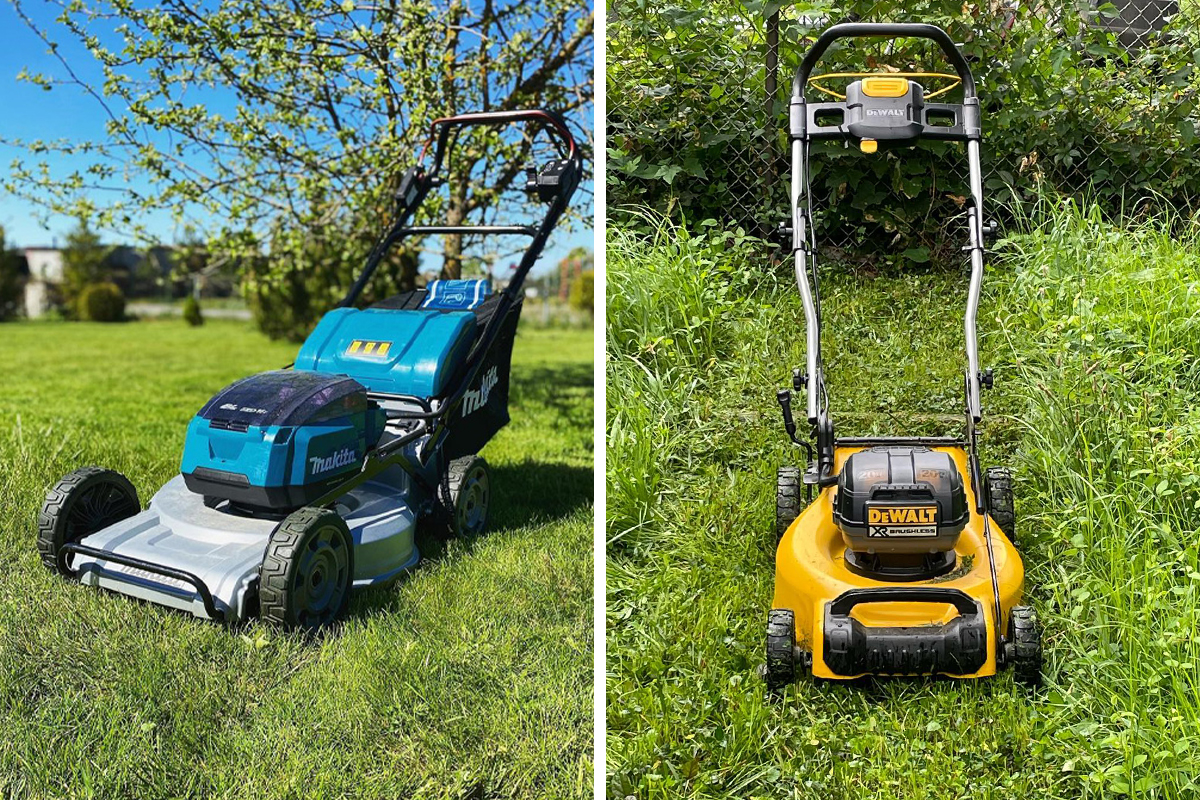
Battery mowers offer clear benefits for many homeowners in the United States. Their biggest advantage is convenience rather than unlimited power.
Easier starting and simpler care
A battery mower starts with a button, key, or safety control. It does not need gasoline, oil changes, fuel stabilizer, spark plugs, or carburetor cleaning.
Routine care still matters. Owners should:
- Remove the battery before cleaning or servicing.
- Keep the underside of the deck free of packed grass.
- Sharpen or replace the blade as needed.
- Store the mower in a dry place.
- Inspect the power cord and charger.
- Follow the battery maker’s storage instructions.
Lower operating noise
Battery mowers are usually quieter than gas mowers. They still produce blade noise, so hearing protection remains sensible during long mowing sessions. Lower noise may make early or evening mowing less disruptive, but local noise rules and neighborhood expectations still apply.
The U.S. Environmental Protection Agency describes battery-powered outdoor equipment as a way to reduce direct fuel use and local engine emissions. A battery mower has no exhaust at the point of use, although electricity generation and battery manufacturing still have environmental impacts.
Less vibration and fewer fumes
Battery motors generally create less vibration than gas engines. They also do not produce exhaust fumes around the operator during mowing. This can make the task more comfortable, especially in small yards near homes, patios, or windows.
Shared battery systems
Many outdoor power brands sell mowers that use the same battery platform as their trimmers, blowers, and chainsaws. This can lower the cost of adding tools later. Before buying, check whether the battery is compatible across the exact product line and voltage group.
A battery that physically fits a tool may not be electrically compatible. Use only the charger and battery types approved by the manufacturer.
What are the drawbacks of battery lawn mowers?
Battery lawn mowers have limits that matter most on large, steep, rough, or poorly maintained lawns.
Limited runtime
The mower stops when the battery is empty. A gas mower can usually continue after a quick refuel, while a battery may need a recharge that takes from about 30 minutes to several hours, depending on the battery and charger.
A second battery solves much of this problem but increases the purchase cost.
Higher initial cost
The mower, battery, and charger may cost more at the start than a basic gas mower. The comparison changes if you already own compatible batteries or if the mower includes a large battery and charger.
Consider the complete system cost:
- Mower body.
- Battery or batteries.
- Charger.
- Replacement blade.
- Replacement battery over the mower’s life.
- Storage space and maintenance needs.
Do not compare only the mower body price when the battery and charger are sold separately.
Battery aging
Lithium-ion batteries gradually lose capacity with use and age. Heat, deep discharge, poor storage, and long periods at extreme charge levels can reduce service life.
Follow the product manual. In general:
- Store batteries in a cool, dry place.
- Keep them away from direct sun and high heat.
- Do not use a damaged, swollen, cracked, or wet battery.
- Use the approved charger.
- Do not modify the battery pack.
- Recycle batteries through an accepted program when they reach the end of service.
The U.S. Consumer Product Safety Commission warns that lithium-ion batteries can cause fires when damaged, misused, or charged with incompatible equipment.
Do battery lawn mowers work on hills and uneven ground?
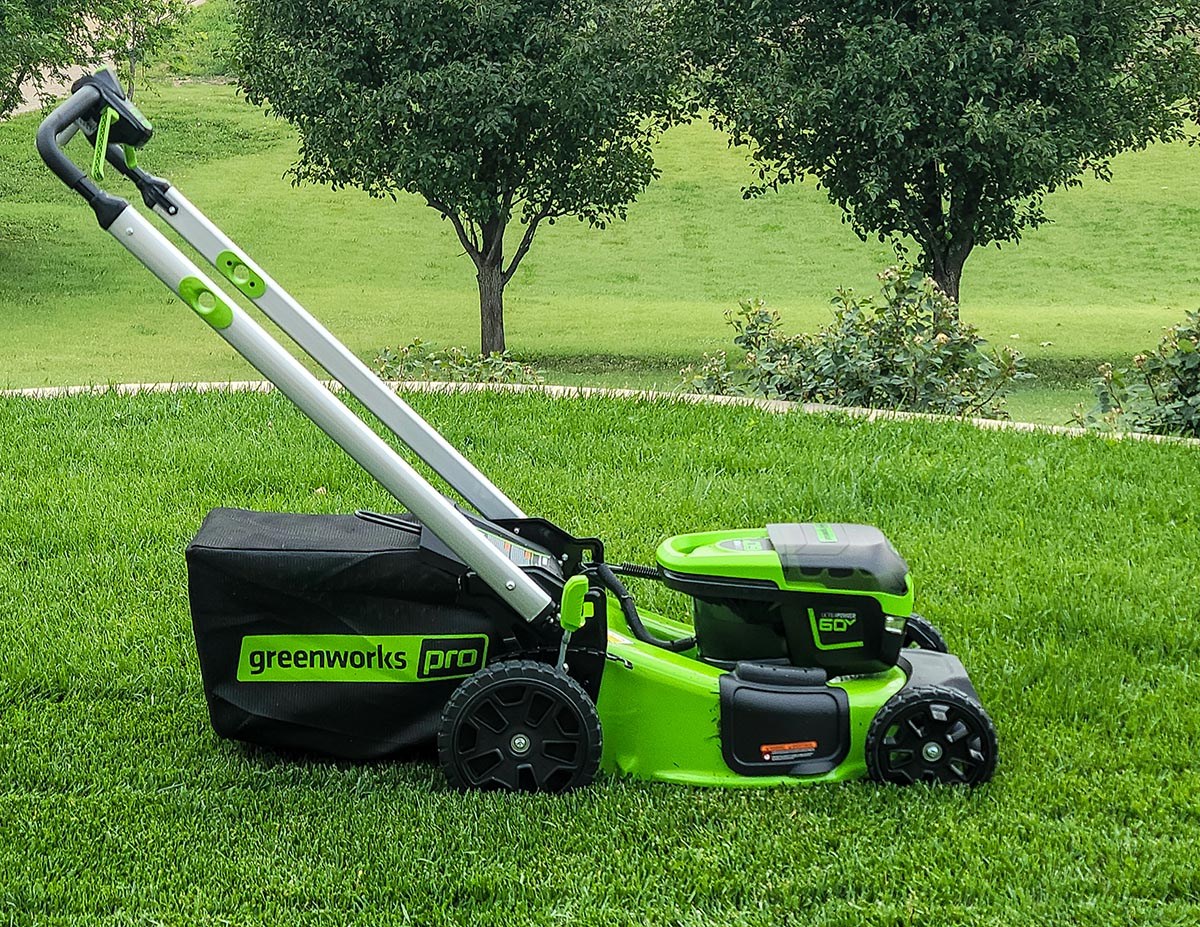
Battery lawn mowers can work on mild slopes, but the mower’s weight, traction, and drive system affect control. Self-propelled models reduce pushing effort, yet they do not remove the risk of slipping or losing control.
Follow the slope instructions in the owner’s manual. Many manufacturers advise mowing across the face of a slope rather than straight up and down, but the correct method depends on the mower design and local conditions.
Avoid mowing when:
- The ground is wet or slippery.
- You cannot keep stable footing.
- The slope exceeds the manual’s limit.
- The mower begins to slide.
- The grass hides holes, rocks, or other hazards.
Never lift, tilt, or reach under a running mower. Remove the safety key or battery before clearing a blockage. The blade can move unexpectedly if the mower is not fully disabled.
How do battery lawn mowers compare with gas and corded models?
The right type depends on the lawn and the owner’s priorities.
| Feature | Battery mower | Gas mower | Corded electric mower |
|---|---|---|---|
| Starting | Button or control | Pull cord or electric start | Button or control |
| Local exhaust | None during use | Yes | None during use |
| Noise | Lower | Higher | Low |
| Runtime | Limited by battery | Extended by refueling | Limited by cord length |
| Maintenance | Low | Higher | Low |
| Large yards | Possible with extra batteries | Usually strong fit | Often inconvenient |
| Fuel or cord handling | Battery charging | Gas storage and refueling | Extension cord management |
| Best fit | Small to medium yards | Heavy growth and long sessions | Small yards near outlets |
Battery models are often the middle ground. They provide more freedom than a corded mower and less maintenance than a gas mower. Gas remains useful when cutting power, long runtime, or heavy-duty work matters more than noise and maintenance.

How to choose a battery lawn mower
Choose a mower by matching its battery system and deck design to your actual lawn, not by voltage alone.
1. Measure your lawn
Exclude patios, driveways, garden beds, and other areas that do not need mowing. If possible, track the time required to mow the usable grass area.
2. Check the battery and charger package
Confirm:
- Battery voltage.
- Amp-hour rating.
- Number of batteries included.
- Battery capacity in watt-hours.
- Charge time.
- Charger type.
- Compatibility with other tools.
A high voltage number does not automatically mean a longer runtime. Runtime depends on both voltage and amp-hours, as well as motor efficiency.
3. Select the deck width
A 19- to 21-inch deck suits many residential lawns. A wider deck can reduce passes on open ground but may be harder to maneuver around trees, gates, and narrow spaces.
4. Decide whether self-propulsion is needed
Self-propulsion helps on slopes and rough ground. It can be unnecessary on a small, flat lawn and will reduce available runtime.
5. Look at cutting height and adjustment
The mower should offer a height range suitable for your grass. Single-point height adjustment is faster, while separate wheel adjustments may be less convenient.
6. Review storage and service needs
Make sure the mower, batteries, and charger can stay dry and protected from extreme heat. Check whether replacement blades and batteries are available in the United States.
Common battery mower problems and fixes
Most performance problems come from a low charge, heavy grass, a dull blade, or a blocked deck.
| Symptom | Likely cause | Safe first check |
|---|---|---|
| Mower will not start | Battery, safety key, or control issue | Confirm the battery is charged and correctly seated |
| Stops during mowing | Overload, low charge, or overheating | Turn it off, remove the battery, and let it cool |
| Leaves uncut strips | Dull blade or mowing too fast | Inspect the blade and slow down |
| Runtime seems short | Wet grass, high power mode, or old battery | Compare use conditions and inspect battery age |
| Poor bagging | Full bag or blocked airflow | Empty the bag and clear the deck |
| Mower vibrates | Damaged or unbalanced blade | Stop use and inspect before restarting |
Do not bypass a safety switch or continue using a mower that vibrates heavily. A bent blade, damaged deck, or failing battery needs service or replacement.

Are battery lawn mowers worth it?
A battery lawn mower is usually worth considering if you have a small or medium U.S. lawn, want low routine maintenance, and can charge the battery between mowing sessions. It is especially practical for homeowners who dislike fuel storage, engine noise, and pull-start problems.
A gas mower may be the better choice for very large properties, frequent heavy growth, thick wet grass, or long mowing sessions without breaks. A corded mower can still make sense for a small lawn close to an outdoor outlet.
Before buying, estimate your lawn size, check the complete battery and charger package, and read the manual’s runtime and slope limits. The best battery mower is the one that can finish your normal mowing job with some charge left.
Frequently asked questions
Can a battery lawn mower cut tall grass?
Yes, but tall grass uses more battery power and may require several passes. Raise the deck, mow slowly, and avoid cutting wet grass. If the grass is severely overgrown, a gas mower or professional service may be more practical for the first cut.
How many batteries do I need for a lawn mower?
One battery may be enough for a small lawn. Medium or large lawns may need a second battery, especially when the mower is self-propelled or used in thick grass. Use the manufacturer’s coverage estimate as a starting point, then add a reserve for difficult conditions.
Do battery lawn mowers need oil?
No. Battery lawn mowers do not use engine oil. They still need blade care, deck cleaning, wheel checks, and battery maintenance.
Can I leave a battery in the mower?
Follow the owner’s manual. Removing the battery during storage is often a sensible safety step, especially before cleaning, transporting, or servicing the mower. Store the battery and charger in a dry area within the temperature range stated by the manufacturer.
How long do lawn mower batteries last?
Battery life varies with use, charging habits, heat, storage, and product design. Capacity gradually declines rather than ending all at once. Replace a battery when it no longer provides enough working time or shows damage. Never use a swollen, cracked, leaking, or overheated battery.
Are battery mowers safe in wet grass?
Wet grass can clog the deck, reduce traction, worsen the cut, and increase the chance of slipping. Follow the manual and avoid mowing when the lawn is wet or conditions are unsafe.
Conclusion
Battery lawn mowers work very well for routine residential mowing when the mower matches the lawn. They offer simple starting, low maintenance, less noise, and no exhaust at the point of use. Their main limits are battery runtime, recharge time, battery aging, and reduced performance in wet or overgrown grass.
For the next step, measure the area you mow, estimate your usual mowing time, and compare that figure with the mower’s stated battery capacity and coverage. Choose extra battery capacity when finishing the lawn in one session matters more than minimizing the purchase price.


