


There’s nothing more frustrating than starting your weekend ready to mow, pulling the handle on your mower, and realizing it refuses to move forward. You feel the engine humming, the blades spinning, but the wheels just won’t budge. Suddenly, mowing turns from an easy stroll into a full-body workout. That’s when you realize the lawn mower self propel is not working—and you’re left wondering what went wrong.
If you’ve ever been there, you’re not alone. Most homeowners face this issue at some point, whether they own a Toro, Honda, Craftsman, Troy-Bilt, or Husqvarna mower. The good news? In many cases, it’s not a big deal. You might just need a cable adjustment, a quick cleaning, or a new belt. With a few simple checks, you can bring your mower back to life in under an hour.
In this guide, we’ll break down the most common causes, show you step-by-step fixes, and share some maintenance secrets to keep your self-propel system running like new. You’ll also learn brand-specific tips and how to tell when it’s time to call a professional. So grab your gloves, let’s get your mower moving again.
Understanding How Self-Propel Works
Before we dive into fixing anything, it helps to understand how the self-propel system works. When you pull the drive lever on your handle, a cable tightens and activates a transmission. That transmission then drives a belt, which turns the mower’s wheels—helping it roll forward without you pushing hard.
Here’s a simple breakdown of what happens:
| Component | Function | Common Problem |
|---|---|---|
| Drive Cable | Connects lever to transmission | Stretches or loosens over time |
| Drive Belt | Transfers power from engine to wheels | Wears out, slips, or breaks |
| Transmission | Converts engine power into wheel motion | May seize or strip gears |
| Drive Wheels | Provide traction and movement | Can clog with debris or strip gears |
If one part of this chain fails, your mower won’t move as it should. That’s why diagnosing where the issue starts is key to restoring your lawn mower self propel not working problem.
Common Causes of Self Propel Not Working
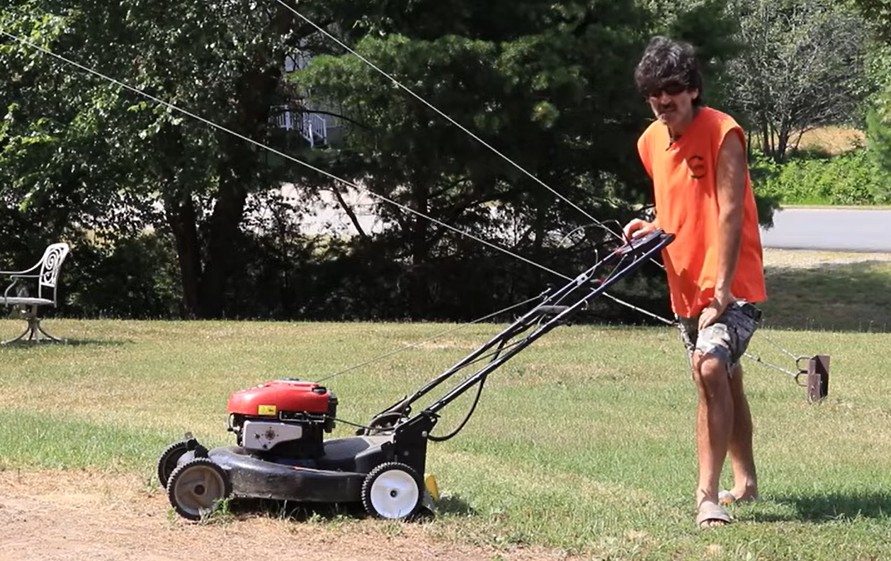
When your lawn mower self propel stops working, it could be due to one of several issues. Here are the most common ones:
- Stretched or disconnected drive cable – Over time, the cable loses tension or slips from its bracket.
- Worn or broken drive belt – A cracked or loose belt can’t grip the pulleys properly.
- Debris around drive wheels or axles – Grass buildup blocks movement.
- Damaged wheel gears or stripped hubs – Wheels can spin freely without engaging.
- Transmission or pulley issues – Internal damage or misalignment prevents power transfer.
- Improper wheel height or uneven settings – Causes traction imbalance.
- Seized transmission due to lack of lubrication – Often happens in older mowers.
Each of these can stop your mower from moving, but the good news is—most are easy to fix at home with basic tools. Let’s start with the simplest one.
Quick Fix: Adjust the Drive Cable
If your self-propel lever feels loose, or the wheels don’t engage when you pull it, your drive cable may just need tightening. This is one of the easiest and fastest fixes, and often solves the problem instantly.
Here’s what to do:
- Disconnect power first:
- For gas mowers, pull off the spark plug wire.
- For battery or electric mowers, remove the battery or unplug the power cord.
- Inspect the cable:
- Follow it from the handle down to the transmission.
- Look for fraying, slack, or a detached end.
- Adjust tension:
- Most models have a small adjuster near the handle or on the cable bracket.
- Turn the adjuster screw to remove slack.
- You want about 1/8 to 1/4 inch of free play at the lever before it engages.
- Check lever and spring:
- Make sure the spring near the transmission moves freely.
- Tighten any loose bolts around the handle or bracket.
Test your mower:
Lift the back wheels off the ground and pull the lever. If the wheels turn, you’ve likely fixed your lawn mower self propel not working issue. If not, move on to cleaning and wheel inspection.
Clearing Debris and Checking Wheel Gears
One of the most overlooked causes of drive failure is grass buildup. Over time, damp grass, mud, and dirt pack tightly around your drive wheels. This can jam the gears or block the ratchet mechanism from engaging.
Follow these steps:
- Unplug or disconnect power before touching anything.
- Tilt the mower safely with the carburetor and air filter facing upward.
- Remove the drive wheels:
- Pry off the hubcaps.
- Unscrew the retaining nut or bolt.
- Pull the wheel off the axle.
- Clean everything:
- Use a brush to remove hardened grass, string, or debris.
- Pay special attention to the small gears inside the wheel.
- Wipe the axle clean.
- Inspect gears:
- Look for worn, rounded, or stripped teeth.
- Check that the pawl or spring mechanism moves freely.
- Lubricate lightly:
- Apply dry lube or a drop of machine oil to the pawl pivots.
- Avoid heavy grease—it traps more debris.
Once done, reassemble the wheel, making sure washers and spacers go back in the same order. Spin the wheel by hand. It should engage when turned forward and freewheel when pulled backward. If not, the internal gear may be worn and need replacement.
Replacing a Worn Drive Belt
A stretched or cracked drive belt is another common reason for a lawn mower self propel not working issue. If your mower’s engine runs fine and the blade spins, but the wheels don’t move, this could be the culprit.
You’ll need:
A wrench set, gloves, and possibly a new OEM belt (check your manual or model number).
Steps to replace:
- Disconnect power.
- Remove the deck cover or the shroud protecting the belt area.
- Locate the belt connecting the engine pulley to the transmission pulley.
- Inspect it carefully:
- Look for cracks, fraying, or glazing (a shiny appearance).
- If it’s stretched or damaged, it needs replacing.
- Remove the old belt:
- Note the routing before removal (a quick photo helps).
- Slide it off both pulleys.
- Install the new belt:
- Start by fitting it around the transmission pulley, then around the engine pulley.
- Make sure it sits in the pulley grooves and doesn’t rub on the guides.
- Check pulley alignment:
- Spin both pulleys by hand—they should rotate smoothly and stay aligned.
Once reassembled, test the mower on a flat surface. If it moves forward smoothly, you’ve solved the problem. If not, the transmission might be the next suspect.
Inspecting the Transmission and Pulleys
If you’ve checked the cable, wheels, and belt but your mower still doesn’t move, the issue could be inside the transmission or pulley system. This is more advanced but still manageable with care.
Signs of transmission issues:
- Grinding noise when engaging the self-propel
- Wheels don’t move even though the belt turns
- Visible oil or grease leaking near the drive housing
How to check it:
- Inspect the pulley:
- Make sure it’s tight on the transmission shaft.
- Look for a missing key or stripped spline.
- Check transmission mounts:
- Loose bolts can cause misalignment, making the belt slip off.
- Tighten all mounting bolts and brackets.
- Spin the transmission pulley:
- With the mower lifted, turn the pulley by hand.
- The wheels should move smoothly. If not, the gearbox might be jammed.
- Transmission service or replacement:
- Some transmissions are sealed and must be replaced if damaged.
- Others can be opened, cleaned, and regreased using NLGI #2 lithium grease.
If you’re hearing grinding, clunking, or the wheels don’t turn even when lifted, it’s best to replace the transmission. While that sounds expensive, most replacements cost between $60–$180, depending on your model.
Preventing Future Self-Propel Problems
Fixing a lawn mower self propel not working issue is great—but preventing it from happening again is even better. A few minutes of maintenance after each mow can extend your mower’s life by years.
Here’s what you should do regularly:
- Clean under the deck after every mowing session to stop buildup.
- Inspect the cable tension monthly during the season.
- Replace the belt every 1–2 seasons or sooner if worn.
- Avoid heavy grease on gears—use dry lubricant instead.
- Store indoors to protect against rust and corrosion.
- Check wheel height settings to ensure even traction.
Pro Tip: Never force your mower through thick grass with the self-propel off. Doing so puts strain on the belt and cable, causing them to stretch prematurely. Also, always keep spare parts—like a belt or wheel gear kit—handy during mowing season. A 10-minute swap can save an entire afternoon.
Brand-Specific Troubleshooting Tips
Different mower brands use different self-propel systems, so the repair approach can vary slightly. Below are brand-focused insights to help you handle your model confidently.
Honda Lawn Mowers
Honda self-propel systems are known for their smooth operation, but they’re also prone to cable stretch. If your Honda mower feels weak or only engages halfway, start by tightening the drive cable at the handlebar.
Honda HRR and HRX models also tend to pack grass near the twin blades, which can clog the deck and slow down the drive. Regular cleaning prevents drag on the transmission. If you hear grinding, it may point to a worn hydrostatic drive belt—check the belt before assuming the transmission is bad.
Toro Lawn Mowers
Toro’s famous Personal Pace drive system uses a traction cable under the handle that adjusts automatically to your walking speed. When your lawn mower self propel stops working on a Toro, the most common issue is a stretched traction cable or a worn drive belt.
Use the traction control knob on top of the handle to fine-tune tension. If your mower still moves slowly or slips under load, replace the belt and clean the drive pulleys.
Pro tip: Avoid over-tightening the traction cable—it can cause the wheels to creep even when idle.
Craftsman and Troy-Bilt
These models often use a front-wheel drive setup. Because the front collects the most grass and debris, it’s common for the wheel gears to clog or the belt to slip. If your mower drags or only one wheel engages, remove both front wheels and clean the gear teeth thoroughly.
Replace worn plastic drive gears immediately, as they tend to round off easily. For belt replacement, always follow the original OEM routing—Craftsman belts are sensitive to alignment and tension.
Husqvarna and AYP
Rear-drive Husqvarna models offer great traction, but they rely on drive keys and wheel bushings that can wear down. If your mower moves inconsistently or one wheel stops, inspect for a sheared drive key inside the hub.
Also, check the belt guides—Husqvarna mowers often have tight pulley clearances, and a misplaced guide can make even a new belt slip.
Greenworks, EGO, and Ryobi (Battery Mowers)
Battery-powered mowers add a twist to the problem. If the self-propel motor doesn’t respond, first check the battery connection and speed setting. Many modern electric mowers have adjustable speed dials—make sure it’s not set too low.
Also, inspect the drive motor fuse or reset switch. Debris buildup can block the wheels just like in gas models. If there’s still no response, you might be dealing with a faulty control board or wiring harness—issues best left to professionals.
Safety First: Essential Precautions Before Repairs
Before touching any part of your mower, safety comes first. Many DIY repairs are simple, but improper handling can cause fuel leaks or injuries.
Here’s a quick checklist before you begin:
- Always disconnect the spark plug wire on gas mowers to prevent accidental starts.
- For battery or electric models, remove the battery and safety key, or unplug the mower completely.
- Tip the mower correctly—always with the carburetor and air filter facing upward. This prevents oil and fuel from flooding the engine.
- Wear gloves and eye protection when removing wheels or belts.
- If you remove the blade for belt access, retighten it to manufacturer torque (usually 35–60 ft-lb).
- Work on a flat, dry surface to avoid tipping.
Safety might sound basic, but skipping these steps often leads to damage or injury. A few minutes of care can save you hours of frustration.
Advanced Troubleshooting: When the Basics Don’t Work
Sometimes, even after you’ve checked the belt, cable, and wheels, the self-propel system still won’t engage properly. At that point, it’s time to dig deeper.
1. Transmission or Gearbox Issues
If you notice loud grinding or clunking when engaging the drive, it usually means the transmission gears are worn or the bearings have seized.
Open transmissions can be serviced—remove the screws, clean out the old grease, inspect for metal shavings, and reapply lithium-based grease.
Sealed transmissions, however, must be replaced as a unit. A worn gearbox won’t transmit torque efficiently, causing the mower to stall or drag.
2. Pulley Alignment and Wear
If the belt repeatedly slips or squeals, your pulleys may be misaligned or rusted. Clean both pulleys with a wire brush and check for wobbling or sharp edges. Even a small dent can make a new belt slip.
3. Return Springs and Mounting Bolts
A weak or missing return spring can prevent the lever from fully disengaging, leading to poor performance. Check the small spring attached near the transmission or cable bracket.
Also, ensure all mounting bolts are tight—vibration over time can loosen them, causing the system to misalign.
4. Sheared Drive Key
Some models use a tiny metal key to lock the drive gear to the axle. If this shears off, the wheel will spin freely while the shaft stays still.
Replacing this inexpensive part can instantly bring back your drive power.
Estimated Costs: DIY vs Professional Repair
If you’re unsure whether to repair the mower yourself or take it to a shop, here’s a quick cost comparison table:
| Repair Type | DIY Cost | Shop Cost (Labor + Parts) | Difficulty |
|---|---|---|---|
| Drive Cable Adjustment | $0–$20 | $40–$80 | Easy |
| Replace Drive Belt | $10–$35 | $80–$150 | Moderate |
| New Drive Wheels | $15–$40 each | $60–$100 total | Easy |
| Replace Transmission | $60–$180 | $150–$300+ | Advanced |
| Clean Wheel Gears | Free | $40–$60 | Easy |
| Cable or Spring Replacement | $10–$25 | $60–$100 | Moderate |
If your mower is still under warranty (usually 2–3 years), check whether drive components are covered. Avoid modifications or non-OEM parts during the warranty period—they can void coverage.
When to Call a Professional
Not everyone wants to spend an afternoon disassembling a mower, and that’s okay. Here’s when calling a repair shop is your best option:
- Persistent grinding or clunking even after new parts
- Oil or grease leaking from the transmission housing
- Belt keeps slipping off despite proper routing
- Bent drive axle or deck misalignment
- Electric mowers showing error codes or no drive motor response
A professional can diagnose these issues quickly and ensure everything is aligned properly. When choosing a repair shop, look for:
- Experience with your mower brand
- Transparent labor rates (usually $60–$100/hr)
- Warranty on repairs (30–90 days typical)
- Use of OEM replacement parts
For older mowers, compare the cost of repair to replacement. Sometimes, a new mower with a better design or higher efficiency can save you money in the long run.
Pro Maintenance Tips for Long-Term Reliability
The best way to avoid a lawn mower self propel not working scenario is consistent upkeep. Here’s how to keep your mower running smoothly year-round:
- Clean the drive wheels after every mow—use a putty knife to remove debris.
- Check cable tension monthly. Adjust if the lever travel feels too loose or tight.
- Replace the drive belt every 25–50 hours of operation.
- Avoid storing the mower outdoors—moisture causes rust on cables and springs.
- Use dry lubricant instead of grease on wheel gears.
- After washing the mower, blow-dry the wheels and gear areas with compressed air to prevent rust.
- Keep the deck clear—grass buildup increases rolling resistance and makes the drive feel weak.
Pro Tip: If one wheel pulls stronger than the other, swap sides. If the problem follows the wheel, replace it—the gear or pawl mechanism inside is likely worn.
Alternative Solutions if Repairs Keep Failing
If your mower continues to struggle even after multiple fixes, it might be time to consider alternatives. Below is a comparison of possible solutions:
| Solution | Pros | Cons | Best For |
|---|---|---|---|
| Rear-wheel drive mower | Better traction on hills | Slightly higher cost | Sloped lawns |
| Brushless battery mower with separate drive motor | Quiet, low maintenance | Higher battery cost | Small to medium lawns |
| Professional seasonal maintenance | Reliable, stress-free | Yearly expense | Busy homeowners |
| Manual push mower | Simple, zero maintenance | Requires more effort | Small, flat yards |
Sometimes, upgrading to a newer model pays off in reduced maintenance and fuel costs.
Frequently Asked Questions (FAQ)
1. Why does my lawn mower self propel work on pavement but not on grass?
This usually means your drive belt is slipping or your cable tension is weak. On pavement, there’s less resistance, so even a worn belt can move the mower. But under the load of grass, it slips. Tighten the cable and clean the wheel gears for a stronger grip.
2. How tight should the self-propel cable be?
Aim for 1/8–1/4 inch of play at the lever. If you must pull the handle all the way back before movement starts, tighten the cable. If the wheels move without touching the lever, loosen it slightly.
3. Should I grease the wheel gears?
Use a light oil or dry lube—never heavy grease. Grease collects dirt and debris, wearing out the gears faster. Some sealed wheel hubs need no lubrication at all.
4. How often should I replace the drive belt?
Inspect it every 25 hours of mowing and replace it every 1–2 seasons. If it’s shiny, cracked, or stretched, swap it immediately.
5. My self-propel feels weak even after a new belt. Why?
Check for wheel gear wear, belt alignment, and correct cable tension. Also, make sure the mower deck isn’t dragging due to built-up grass.
6. One wheel locks up when I pull the mower backward. Is that normal?
Some models have a one-way ratchet in the wheels. If a wheel locks in reverse, it may be stuck with debris or rust. Clean and lightly oil the mechanism so it can freewheel again.
7. Can I use a generic (non-OEM) belt?
Technically, yes—but it’s not ideal. OEM belts match the exact dimensions and profile. Aftermarket belts often slip or wear faster, causing the same problem to return.
Final Thoughts: Getting Your Mower Moving Again
A lawn mower self propel not working problem can seem like a big deal, but most of the time it’s just a stretched cable, a clogged wheel gear, or a worn belt. Start simple, work through each step, and you’ll usually have your mower running again in under an hour.
Here’s a quick recap of the process:
- Adjust and secure the drive cable
- Clean the drive wheels and gears
- Replace a worn or slipping belt
- Inspect pulleys, springs, and transmission alignment
- Service or replace the gearbox if necessary
With a few tools, patience, and this guide, you can fix your mower and save hundreds in repair costs. Remember, regular cleaning and quick inspections are your best defense against future issues.
