Lawn Mower Leaking Gas From Carburetor: Fix It Fast
A lawn mower leaking gas from the carburetor usually has a stuck float, worn needle, damaged gasket, or fuel system fault.
A lawn mower leaking gas from the carburetor is more than a small mess. It can waste fuel, harm the engine, damage nearby parts, and create a serious fire risk. With the right checks, you can often find the cause in a few minutes. This guide explains safe diagnosis, common repairs, warning signs, and ways to stop the leak from returning.

Stop Using the Mower and Make It Safe
If you notice a lawn mower leaking gas from the carburetor, turn the engine off at once. Do not restart it to “see how bad the leak is.” Gasoline vapors can catch fire from a spark, hot muffler, cigarette, or electrical part.
Move the mower outdoors to a flat, well-ventilated place. Keep it away from your home, garage, water heater, power tools, and open flames.
Follow these safety steps:
- Shut off the fuel valve, if the mower has one.
- Remove the spark plug wire and keep it away from the plug.
- Let the engine cool fully.
- Wear fuel-resistant gloves and eye protection.
- Keep a proper fuel container nearby.
- Wipe spilled gas with absorbent material.
- Do not use a shop vacuum near gasoline.
- Never drain fuel into soil, a storm drain, or household trash.
Gasoline can also remove skin oils and irritate your eyes. Wash exposed skin with soap and water. Dispose of fuel-soaked materials according to local hazardous-waste rules.
A lawn mower leaking gas from the carburetor may also have fuel inside the crankcase. This happens when gas passes through the carburetor and flows into the engine. If the oil smells like gasoline or looks unusually thin, do not run the mower until the oil and filter are changed.

Why Is the Carburetor Leaking Gas?
The carburetor controls the amount of fuel that enters the engine. A small float and needle valve usually regulate the fuel level inside the carburetor bowl. When the fuel reaches the correct level, the float rises and the needle stops the flow.
If that system fails, fuel can continue entering the bowl. It may then drip from the bowl, run through the air filter, or spill from the carburetor throat.
The most common causes include:
- A stuck or damaged float
- A dirty or worn needle valve
- A damaged float seat
- A loose carburetor bowl bolt
- A cracked bowl gasket
- A blocked carburetor vent
- A damaged fuel line
- A failed fuel shutoff valve
- A bad primer bulb
- A loose carburetor mounting gasket
- A mower stored with old fuel
- An incorrect carburetor repair or adjustment
A lawn mower leaking gas from the carburetor often has one small part causing a large problem. Think of the float system as a toilet tank. When the tank fills, the float lifts and shuts off the water. If the float sticks, water keeps flowing. A mower carburetor works in much the same way.

Common Signs of a Carburetor Fuel Leak
A visible drip is the clearest warning sign, but a lawn mower leaking gas from the carburetor may show other symptoms first.
Look for these clues:
- A strong gasoline smell near the mower
- Wetness around the carburetor bowl
- Gas dripping from the air filter housing
- A soaked or dirty air filter
- Hard starting
- A flooded engine
- Black exhaust smoke
- Rough running
- Gas in the engine oil
- A mower that starts and then stalls
- A fuel puddle under the machine
Gas may not always leak while the mower is running. It can leak when the mower is parked because fuel continues to flow from the tank. This is common on machines that rely on gravity to feed fuel to the carburetor.
Check the exact source before ordering parts. Fuel can travel along a hose or engine surface, making a leak at the carburetor look like a leak from the tank or fuel line.
How to Find the Exact Leak
A careful inspection can prevent you from replacing the wrong part. Before testing, make sure the engine is cool and the spark plug wire is disconnected.
Use this simple process:
- Clean the outside of the carburetor with a rag.
- Dry the area completely.
- Add a small amount of fuel to the tank, if safe to do so.
- Watch the carburetor without starting the engine.
- Note where the first drop appears.
- Shut off the fuel and remove the tank fuel if the leak is serious.
- Inspect the fuel line, bowl, bowl bolt, primer bulb, and air filter area.
A clean, dry surface makes the first wet spot easier to see. Do not place your face close to the carburetor. Use a flashlight from a safe distance.
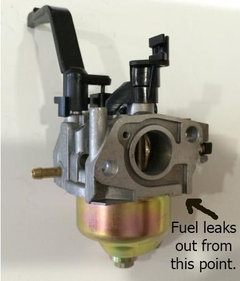
If gas appears at the bowl seam, the gasket may be damaged or the bowl may be loose. If gas comes from the carburetor throat, the float or needle valve may not be stopping fuel flow. If gas comes from the hose connection, the issue may be a cracked line or loose clamp.

Check the Float and Needle Valve
A stuck float is one of the most common reasons for a lawn mower leaking gas from the carburetor. The float may be made of plastic, foam, or metal. It moves up and down as fuel enters the bowl.
A float can stick because of:
- Dirt or varnish from old gas
- A bent float hinge
- A damaged float
- A pinched gasket
- Corrosion around the hinge
- A worn needle valve
Remove the carburetor bowl only after shutting off the fuel and draining the system. Keep track of the bowl bolt, gasket, float pin, and other small parts.
The float should move freely. It should not rub against the carburetor body. If it contains fuel, feels heavy, or has a crack, replace it. A fuel-filled float cannot rise correctly.
Inspect the needle valve tip. It should be smooth and free of dirt. A rubber-tipped needle with a deep groove may not seal. Clean light dirt with approved carburetor cleaner, but replace badly worn parts.
Do not force the float or spray cleaner into every opening without checking the material. Some cleaners can harm plastic, rubber, paint, and certain seals.

Inspect the Carburetor Bowl and Gasket
The carburetor bowl holds fuel below the main body. A lawn mower leaking gas from the carburetor often leaks at the bowl gasket or the bowl bolt.
Check the bowl for:
- A cracked metal or plastic body
- Rust around the rim
- A bent sealing edge
- A missing gasket
- A hardened or flattened gasket
- Dirt between the bowl and carburetor
- A damaged bowl bolt washer
Clean the mating surfaces with a lint-free cloth. Do not scrape them with a sharp blade. A deep scratch can create a new leak.
Install the correct replacement gasket in the correct position. Some gaskets look similar but have different shapes. Use the engine model and carburetor number when buying parts.
Tighten the bowl bolt firmly, but do not overtighten it. Small carburetor bodies can crack or strip. If the manufacturer lists a torque value, follow it. If no value is available, tighten the bolt snugly and evenly.
Sealants are usually not a good fix for a carburetor bowl gasket. They can break loose and block fuel passages. A new gasket is safer and more reliable.

Inspect the Fuel Line, Primer Bulb, and Shutoff Valve
Not every lawn mower leaking gas from the carburetor has a carburetor problem. Fuel may come from a nearby hose, primer bulb, or valve and then run down the carburetor.
Look closely at the fuel line. Replace it if it is:
- Cracked
- Soft and swollen
- Hard and brittle
- Loose at the fitting
- Wet around the clamp
- Rubbing against a hot engine part
A primer bulb can leak through a split, pinhole, or loose seal. Press it gently and watch for wetness. Do not keep pressing a damaged bulb because this can push more fuel into the carburetor.
If the mower has a fuel shutoff valve, check whether fuel still flows when the valve is closed. A valve that does not stop fuel can allow the carburetor to fill while the mower is stored.
Use fuel-rated hose and the correct clamps. Ordinary plastic tubing may soften or fail when exposed to gasoline. Never replace a fuel line with wire, tape, or a material not made for fuel systems.
Repairing a Lawn Mower Leaking Gas From the Carburetor
The correct repair depends on the leak location and the condition of the parts. A basic cleaning may solve a sticking needle. A damaged float or cracked bowl needs replacement.
A typical repair looks like this:
- Remove the spark plug wire.
- Shut off or drain the fuel.
- Remove the air filter cover if it blocks access.
- Take off the carburetor bowl.
- Inspect the float, needle, gasket, and bowl.
- Clean approved metal passages with carburetor cleaner.
- Replace damaged parts.
- Reassemble the carburetor carefully.
- Restore the fuel supply.
- Check for leaks before starting the engine.
Use a carburetor repair kit made for your engine model. Many small engines look alike, but their gaskets, needles, floats, and bowl bolts may differ.
After repair, add only a small amount of fresh fuel. Watch the carburetor for several minutes. If no fuel appears, start the engine outdoors and let it run briefly. Stop at once if the leak returns.
One practical lesson is worth remembering: do not assume “tighten it more” will solve a lawn mower leaking gas from the carburetor. Excess force often causes cracked bowls, stripped threads, and more expensive repairs.

Check the Engine Oil for Gasoline
Fuel can enter the crankcase when the carburetor does not shut off. This makes the engine oil thin and reduces its ability to protect moving parts.
To check the oil:
- Park the mower on level ground.
- Remove the dipstick.
- Smell the oil carefully from a short distance.
- Check whether the level is higher than normal.
- Look for a thin, watery feel.
A strong gasoline smell or a rising oil level suggests fuel contamination. Do not operate the mower until the fuel leak is repaired and the oil is replaced.
Change the oil after fixing the carburetor. If the mower has an oil filter, replace it as well. Follow the engine manual for oil type, amount, and change procedure.
Running an engine with fuel-diluted oil can cause rapid wear. In severe cases, it may damage bearings, cylinder walls, or other internal parts. This is one reason a small fuel leak should not be ignored.
What Happens When Old Gas Causes the Leak?
Old gasoline can leave sticky deposits inside the carburetor. These deposits may hold the needle valve open or restrict the small passages that control fuel flow.
Fuel quality declines faster when it is exposed to heat, air, and moisture. Ethanol-blended fuel can also attract water during storage. The result may be hard starting, rough running, and a lawn mower leaking gas from the carburetor.
Drain old fuel before long-term storage. Use fresh fuel that matches the engine manual. If you use a fuel stabilizer, add it to fresh fuel and run the engine long enough to move treated fuel through the carburetor.
A stabilizer cannot repair a worn needle, damaged float, or cracked gasket. It helps reduce storage problems, but it is not a substitute for maintenance.
Clean the carburetor when needed, but replace it if the body is cracked, the seat is damaged, or corrosion prevents a reliable seal.
When to Replace the Carburetor
Cleaning is often enough for dirt and light varnish. Replacement may be more practical when the carburetor has major wear or damage.
Consider a replacement carburetor when:
- The carburetor body is cracked.
- The float seat is damaged.
- The bowl sealing surface is badly bent.
- Several internal parts are worn.
- The correct repair kit is hard to find.
- The leak returns after a careful repair.
- Labor costs exceed the price of a new unit.
Match the replacement by engine model, specification number, and carburetor design. The mower brand alone may not identify the correct part.
Avoid very cheap parts with poor seals or incorrect jet sizes. A low-cost carburetor that leaks again can waste time and create another safety risk. Compare the part with the original before installation.
Prevent Future Fuel Leaks
Good storage habits can greatly reduce the chance of a lawn mower leaking gas from the carburetor.
Use these simple habits:
- Turn off the fuel valve after mowing.
- Store the mower on a level surface.
- Keep the air filter and carburetor clean.
- Use fresh fuel.
- Follow the engine maker’s storage instructions.
- Inspect fuel lines at the start of each season.
- Replace cracked primer bulbs.
- Avoid overfilling the fuel tank.
- Keep the mower away from heat and sparks.
- Change engine oil on schedule.
- Do not tip the mower in a way that floods the air filter or carburetor.
If the manual allows it, drain the carburetor bowl before long storage. Some engines are designed to run dry, while others have specific storage steps. Always follow the instructions for your model.
Never store a gasoline mower in a living area. A shed or detached garage with good ventilation is safer, provided local fire rules allow it.
When to Call a Professional
Many bowl gasket and fuel line repairs are manageable for a careful homeowner. However, some problems need professional service.
Ask for help if:
- Fuel is spraying under pressure.
- The tank is cracked.
- The engine oil is heavily contaminated.
- The mower has severe corrosion.
- You cannot stop the fuel flow.
- The carburetor mounting studs are damaged.
- The mower still leaks after repair.
- You smell gas inside a building.
- You are not comfortable handling gasoline.
A repair shop can test the carburetor, check the float height, inspect the fuel shutoff system, and confirm whether the engine has internal damage.
The cost of professional service depends on the mower, part availability, and local labor rates. A simple fuel line repair may be inexpensive, while a complete carburetor replacement and oil service may cost more. Get an estimate before approving major work.
Frequently Asked Questions About a Lawn Mower Leaking Gas From the Carburetor
Can I still use a lawn mower that is leaking gas from the carburetor?
No. Stop using it until you find and repair the leak. Gasoline can ignite, and fuel may also dilute the engine oil.
Why does my lawn mower leak gas when it is turned off?
Fuel can continue flowing from the tank when a float, needle valve, or fuel shutoff valve fails. Gravity-fed systems may leak even when the engine is not running.
Can a bad carburetor gasket cause a gas leak?
Yes. A damaged, loose, or incorrectly installed bowl gasket can allow fuel to seep from the carburetor. Replace the gasket with the correct part and tighten the bowl bolt properly.
How do I know if gasoline is in the mower oil?
Smell the oil and check its level on the dipstick. A strong gas odor, thin oil, or an unusually high oil level can indicate fuel contamination.
Will cleaning the carburetor stop the leak?
Cleaning may help if dirt holds the needle valve open. It will not fix a cracked float, worn needle, damaged seat, broken bowl, or hardened gasket.
Should I replace the whole carburetor?
Not always. A repair kit may solve a minor problem, but replacement is often better when the body, float seat, or bowl is cracked or badly worn.
Can old gasoline cause a lawn mower carburetor to leak?
Yes. Old fuel can form sticky deposits that prevent the needle valve from sealing. Drain stale fuel, clean the system, and use fresh fuel that meets the engine maker’s requirements.
Is it safe to store a mower with gas in the tank?
It depends on the mower manual and storage period. For long storage, follow the manufacturer’s instructions, use approved fuel treatment when suitable, and keep the mower in a cool, ventilated place away from ignition sources.
Conclusion
A lawn mower leaking gas from the carburetor usually points to a float, needle valve, gasket, fuel line, primer bulb, or shutoff problem. Stop the mower, remove ignition sources, check for fuel in the oil, and locate the first wet spot before replacing parts.
Many leaks are simple to repair, but gasoline safety must come first. Use the correct parts, avoid over-tightening, and test the mower outdoors after the repair. If the leak continues or the engine oil is contaminated, contact a qualified repair professional. Share your mower model and leak location in the comments, or explore your owner’s manual for model-specific repair guidance.