Lawn Mower Loses Power Going Uphill: Causes And Fixes
A lawn mower loses power going uphill when its engine lacks fuel, air, spark, blade speed, or traction under extra load.
When a lawn mower loses power going uphill, the slope exposes problems that may stay hidden on flat ground. The engine must work harder to turn the blade and wheels, so a dirty air filter, blocked carburetor, dull blade, low fuel flow, or worn drive belt can quickly show up. This guide explains how to find the cause safely, what you can fix at home, and when professional service is the better choice.

Why a Lawn Mower Loses Power Going Uphill
A hill increases the load on nearly every part of the mower. The engine must maintain blade speed while the transmission or drive system moves the machine upward. If the mower is already short on fuel, air, power, or traction, the extra load can make it slow down, sputter, or stall.
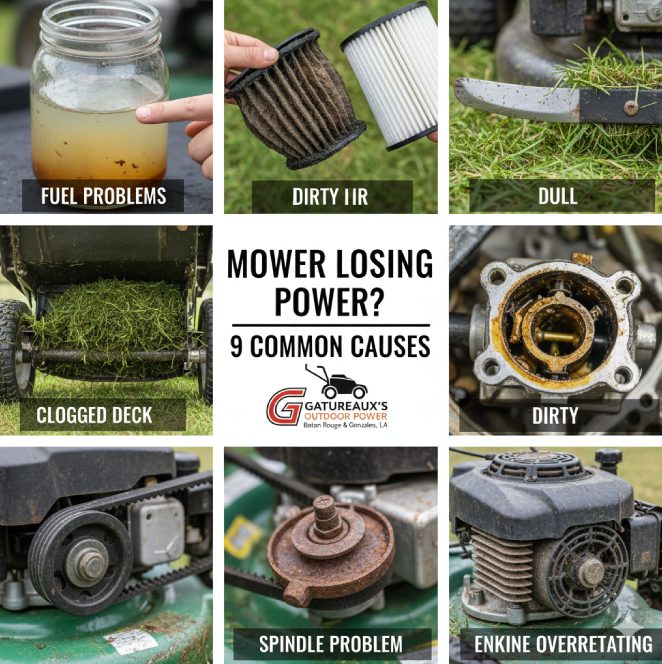
A lawn mower loses power going uphill for several common reasons:
• The air filter is dirty and limits airflow.
• The spark plug is worn, dirty, or incorrectly gapped.
• The carburetor has dirt or old fuel inside it.
• The fuel cap vent is blocked.
• The mower deck or blade is packed with wet grass.
• The blade is dull, bent, or out of balance.
• The engine oil level is too low or too high.
• The drive belt is loose or worn on a riding mower.
• The transmission cannot transfer enough power to the wheels.
• The hill is too steep for the mower.
The slope acts like a stress test. A mower may run well on level ground but fail when the engine needs more torque. Think of it like walking up stairs while carrying a heavy bag. A small weakness becomes obvious when the workload rises.
Start With Safety
Before inspecting a mower, stop the engine and let it cool. Remove the ignition key from a riding mower and disconnect the spark plug wire on a walk behind mower. This prevents an accidental start while your hands are near the blade or belt.
Never place your hands under the deck while the blade can turn. If you need to inspect the blade, tilt a walk behind mower only as directed by the owner’s manual. Tilting it the wrong way can allow oil or fuel to enter the air filter, carburetor, or muffler.
Follow these basic safety steps:
-
Park the mower on level ground.
-
Turn off the engine and remove the key.
-
Wait until all moving parts stop.
-
Disconnect the spark plug wire.
-
Wear work gloves and eye protection.
-
Keep fuel away from sparks, flames, and cigarettes.
-
Use approved ramps and wheel chocks when lifting or inspecting a riding mower.
A riding mower should not be used on a slope beyond the limit listed in its manual. Many lawn tractor manuals warn against sharp turns, sideways travel, and steep slopes because of rollover risk. Power loss on a hill can also reduce steering and braking control.

Check the Easy Causes First
A simple inspection can solve many cases where a lawn mower loses power going uphill. Start with the parts that are easy to inspect and cheap to service. Do not begin by removing the carburetor unless the basic checks are complete.
Check the fuel
Old gasoline can lose quality and form deposits in the carburetor. Small engines often run poorly on stale fuel, especially under load. If the gasoline is more than a month or two old, drain it safely and refill the tank with fresh fuel recommended by the manufacturer.
Look for these fuel problems:
• Water or dirt in the tank.
• A clogged fuel filter.
• A cracked fuel line.
• A loose fuel line connection.
• A blocked fuel cap vent.
To test a suspected fuel cap vent, run the mower briefly with the cap loosened. If the engine improves, replace the cap. Do not use this as a long-term fix, and keep fuel away from hot engine parts.
Inspect the air filter
A paper air filter covered with dust cannot supply enough air. A foam filter soaked with oil or dirt can cause a similar problem. When the engine needs more power uphill, the restricted airflow may cause it to bog down or smoke.
Replace a damaged paper filter. Wash a serviceable foam filter in warm, soapy water, let it dry fully, and apply the correct amount of filter oil if the manual requires it. Never run the mower without its air filter for normal use.
Examine the spark plug
A healthy spark plug usually has a clean electrode and a light tan or gray appearance. Heavy black deposits can point to an overly rich fuel mixture, a dirty filter, or weak combustion. A wet plug may indicate flooding or excess fuel.
Replace the plug if it is cracked, badly worn, oil fouled, or outside the recommended gap. Use the exact plug type listed in the owner’s manual. A spark plug that looks close enough may still have the wrong heat range or reach.

Inspect the Mower Deck and Blade
A mower can lose engine speed uphill because the blade is creating too much resistance. Wet grass, leaves, and packed clippings under the deck act like a brake. A dull blade also needs more engine power because it tears grass instead of cutting it cleanly.
Turn the mower off, disconnect the spark plug wire, and inspect the deck. Scrape away built-up grass with a proper tool. Never use your bare hand, even when the blade appears still.
Inspect the blade for:
• Dull cutting edges.
• Bends or cracks.
• Missing sections.
• Heavy rust.
• Loose mounting hardware.
• Uneven wear.
A blade should be sharpened evenly on both sides. An unbalanced blade can create vibration, damage the spindle, and reduce available power. Replace a cracked or bent blade instead of trying to straighten it.
Cutting tall or wet grass can also make a lawn mower lose power going uphill. Raise the deck height and mow more slowly. If the grass is very tall, make two passes rather than forcing the mower to remove the full height at once.
Check the Engine Oil
Low oil can increase friction and trigger an automatic low oil shutdown system on some walk behind mowers. Too much oil can also cause trouble by allowing oil to enter the air intake or combustion chamber.
Check the oil on level ground. The engine should be off and cool unless the manual gives different instructions. Remove the dipstick, wipe it clean, reinsert it without over-tightening, and check the level.
Use the oil grade recommended for the outside temperature and engine model. Do not guess the amount. Overfilling by even a small amount can cause smoke, rough running, and power loss.
If the oil smells strongly of gasoline, stop using the mower. Fuel may be leaking past the carburetor into the crankcase, which can reduce lubrication and damage the engine.

Clean or Service the Carburetor
The carburetor mixes fuel and air. If its small passages are partly blocked, the engine may idle well but fail when climbing a hill. This is a classic reason a lawn mower loses power going uphill.
Common carburetor clues include:
• The engine surges at full throttle.
• The mower runs better with partial choke.
• The engine stalls when the blade engages.
• The mower starts but cannot handle thick grass.
• Fresh fuel does not improve performance.
A partially blocked main jet is often the problem. The main jet supplies fuel when the engine needs more power. Varnish from old gasoline can restrict this tiny opening.
If you are comfortable with small engine repair, remove and clean the carburetor according to the service manual. Use carburetor cleaner and compressed air carefully. Do not enlarge the jet with a wire, drill bit, or needle because changing its size can alter the fuel mixture.
Some carburetors have sealed adjustment screws. Do not force or modify them without the correct service information. If the mower is under warranty, or if the carburetor contains electronic controls, professional service may be safer.
Look for Ignition and Compression Problems
A weak ignition system may work at low load but fail when the engine is under stress. The ignition coil, spark plug wire, and plug must produce a strong spark at the correct time.
A worn spark plug is the first ignition part to check. If a new plug does not help, a technician can test spark strength and coil operation. Do not hold the plug wire by hand while testing. Use the proper spark tester.
Low compression can also cause a lawn mower to lose power going uphill. Worn piston rings, damaged valves, or a blown head gasket may reduce the engine’s ability to produce torque. Signs include hard starting, blue smoke, excessive oil use, or air escaping through the breather.
Compression testing requires the correct gauge and procedure. A low reading on one test does not always prove the engine is worn, so it should be compared with the manufacturer’s specifications.
Riding Mower Drive Problems
If the engine sounds strong but the mower slows only in the wheels, the problem may be in the drive system. This is more common on riding mowers, lawn tractors, and zero turn mowers than on standard walk behind machines.
Check the following parts:
Drive belt
A stretched, glazed, or damaged belt may slip under load. You may notice a burning rubber smell, squealing, or slow movement on hills. Replace the belt with the correct size and routing shown in the manual.
Transmission
A worn hydrostatic transmission may lose pulling power after it warms up. Low or incorrect transmission fluid can also reduce performance on some models. Only add fluid if the manufacturer provides a service procedure and specifies the exact type.
Parking brake and linkage
A partially engaged brake can make the mower feel weak. Check that the brake releases fully and that the control linkage moves freely.
Tires
Low rear tire pressure reduces traction. A tire may spin on a hill even when the engine has enough power. Check tire pressure against the label or owner’s manual, not the maximum number molded into the tire.
Drive pulleys
A damaged pulley bearing can create drag. Stop using the mower if you hear grinding or see a pulley wobble.
A lawn mower loses power going uphill for an engine reason when the engine speed drops. It loses climbing ability for a drive reason when the engine sounds normal but the wheels slow, slip, or stop.

A Practical Troubleshooting Order
Use this order to avoid replacing good parts. Take notes during each test, and change only one thing at a time.
-
Confirm the slope is within the mower’s safe operating limit.
-
Check the fuel age and fuel level.
-
Inspect the air filter.
-
Check the spark plug.
-
Check the oil level and condition.
-
Clean grass from the deck.
-
Inspect and sharpen or replace the blade.
-
Test the mower on level ground.
-
Test it on a gentle slope with dry grass.
-
Inspect the belt, tires, and transmission if it is a riding mower.
-
Seek service if the engine still stalls or lacks compression.
Run the mower at full governed speed when cutting, unless the manual says otherwise. Do not push the machine faster than the engine can handle. A slower ground speed gives the blade more time to cut and lowers the load.
One mistake I often see in mower troubleshooting is replacing the carburetor first. A dirty deck or dull blade may be the real cause. Another common mistake is mowing uphill with wet grass, then blaming the engine when the deck is simply overloaded.

How to Prevent Power Loss on Hills
Regular care prevents many problems before they appear. Small engines reward simple maintenance. Fresh fuel, clean filters, sharp blades, and the right oil can make a large difference.
Use this maintenance routine:
• Check the oil before each mowing session.
• Clean the deck after cutting wet or tall grass.
• Inspect the blade several times each season.
• Replace the air filter at the interval in the manual.
• Replace the spark plug as recommended.
• Use fuel stabilizer when gasoline will sit for more than a few weeks.
• Keep tire pressure even on both sides.
• Inspect belts for cracks, glazing, and stretching.
• Store the mower in a dry, covered area.
The cutting method matters too. Mow across a slope only when the manual allows it and the machine remains stable. With a walk behind mower, avoid pulling the machine backward toward your feet. With a riding mower, avoid sudden turns and never carry extra weight that raises the rollover risk.
A clean blade and correct deck height are especially important in hot weather. Heat, thick grass, and a clogged deck can combine to make a lawn mower lose power going uphill even when the engine is in good condition.

When to Call a Repair Professional
Some problems are not good do-it-yourself projects. Stop troubleshooting and arrange service if you find a cracked blade, fuel leaking near the engine, severe vibration, smoke from the crankcase, or a transmission that will not move.
Professional diagnosis is also wise when:
• The engine has low compression.
• The mower backfires repeatedly.
• The engine hunts or surges after basic maintenance.
• The drive belt fails again soon after replacement.
• The hydrostatic transmission loses power when hot.
• The mower stalls under every heavy load.
• You cannot safely access the repair area.
A repair shop can perform compression, ignition, fuel pressure, and transmission tests. These tests help separate an engine problem from a drive problem. This matters because replacing several parts without testing can cost more than a proper diagnosis.
Manufacturer manuals are the best source for torque values, oil grades, blade installation, belt routing, slope limits, and service intervals. Engine specifications vary, so general advice should never replace the instructions for your exact model.
Frequently Asked Questions About a Lawn Mower Losing Power Going Uphill
Why does my lawn mower lose power only on hills?
A hill places extra load on the engine and drive system. A dirty air filter, dull blade, restricted fuel flow, packed deck, worn belt, or weak transmission may work on flat ground but fail under this added load.
Can a dull blade make a lawn mower lose power going uphill?
Yes. A dull or damaged blade needs more force to cut grass and can overload the engine, especially in thick or wet turf. Sharpen the blade evenly or replace it if it is bent, cracked, or badly worn.
Why does my riding mower slow down uphill but the engine keeps running?
The issue may be low traction, a slipping drive belt, low tire pressure, or a worn transmission. If the engine speed stays steady while the wheels slow, inspect the drive system rather than starting with the carburetor.
Should I use the choke when my mower loses power on a hill?
Using partial choke may temporarily help if the engine has a lean fuel mixture or restricted fuel flow. It is not a permanent repair, and continued choke use can cause excess fuel, carbon deposits, and poor engine performance.
Can old gas cause a lawn mower to lose power going uphill?
Yes. Old fuel can leave deposits in the carburetor and reduce fuel flow when the engine needs more power. Drain questionable fuel, refill with fresh gasoline, and clean the fuel system if the problem continues.
Is it safe to mow a steep hill if the mower keeps losing power?
No. Power loss can reduce steering and braking control, and a riding mower may become unstable. Follow the slope limits in the owner’s manual and avoid using a mower on a slope that feels unsafe.
How can I tell whether the engine or transmission is the problem?
Listen to the engine while climbing. If engine speed drops, inspect fuel, air, spark, oil, blade, and deck problems; if the engine sounds normal but the mower slows, inspect the belt, tires, pulleys, and transmission.
Conclusion
A lawn mower loses power going uphill because the slope reveals a weakness under load. Start with fresh fuel, a clean air filter, a good spark plug, proper oil, a clean deck, and a sharp blade. On riding mowers, also check tire pressure, the drive belt, pulleys, and transmission.
Work safely, test one change at a time, and do not ignore severe vibration, fuel leaks, smoke, or unsafe slopes. With regular maintenance and the right mowing speed, most power loss problems can be found before they become costly repairs. Share your mower model and symptoms in the comments, or explore your owner’s manual for model-specific service steps.