Lawn Mower Surging Up And Down: Easy Fixes
A lawn mower surging up and down usually points to a fuel, air, governor, or carburetor problem.
When a lawn mower surges up and down, the engine is trying to balance its fuel and air supply but cannot hold a steady speed. I have seen this issue many times, and the cause is often simple: stale gas, a dirty air filter, a clogged carburetor, or a sticking governor spring. This guide explains how to find the cause, fix it safely, and know when professional service is the better choice.

What does a surging lawn mower sound like?
A surging mower speeds up, slows down, and then speeds up again without you changing the throttle. The engine may sound like it is hunting for the correct speed.
The cycle may repeat every few seconds. In some cases, the mower runs well at first and begins surging after it warms up.
Common signs include:
• The engine revs rise and fall at idle or while cutting grass.
• The mower runs better with the choke partly engaged.
• The engine stalls when the blades engage.
• The mower starts easily but will not maintain steady power.
• The engine surges more when the grass is thick or wet.
A small change in engine sound is normal when the blade meets heavy grass. Repeated speed changes on flat, light grass are not normal.

Why is my lawn mower surging up and down?
The main reason a lawn mower surging up and down is a changing fuel and air mixture. The engine receives too much air, too little fuel, or an uneven fuel supply. The governor then opens and closes the throttle to protect engine speed, which creates the repeated rise and fall.
Here are the most common causes.
Dirty or clogged carburetor
A carburetor mixes gasoline with air. Small fuel passages inside it can become blocked by gum, dirt, or old fuel.
When this happens, the engine receives fuel in short bursts. That uneven flow often causes a lawn mower surging up and down problem.
Old gasoline
Gasoline can degrade after sitting for several weeks or months. Old fuel may leave sticky deposits that restrict the carburetor and fuel jet.
Fuel containing ethanol can absorb moisture from the air. Water in the fuel can make starting and steady running more difficult.
Dirty air filter
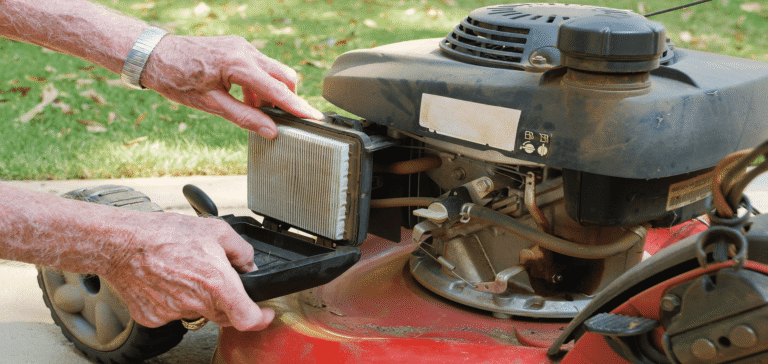
A foam or paper air filter keeps dust out of the engine. When it becomes clogged, the engine cannot get the air it needs.
A dirty filter can make the engine run rich. A damaged or missing filter can let in too much dirt and change the air balance.
Partly closed choke
The choke helps a cold engine start by reducing air flow. It should open as the engine warms.
If the choke plate sticks or the automatic choke malfunctions, the engine may run unevenly. It may also surge, smoke, or lose power.
Governor or throttle linkage problems
The governor controls engine speed. It uses a spring and linkage to adjust the throttle as the cutting load changes.
A bent linkage, weak spring, or buildup near the throttle arm can cause unstable engine speed. Never bend governor parts to increase speed, since overspeeding can damage the engine and create a safety risk.
Air leaks
A loose carburetor gasket or damaged intake seal can let extra air enter the engine. This creates a lean mixture and may cause surging.
Air leaks are more common after carburetor work or when mounting bolts become loose.

How to diagnose a lawn mower surging up and down
Begin with simple checks before removing the carburetor. Many mower repairs become harder because owners take apart working parts too soon.
Always stop the engine, disconnect the spark plug wire, and let the muffler cool before working near the blade or carburetor. Wear gloves when handling sharp deck parts, but keep loose clothing away from moving components.
Use this inspection order:
- Check the fuel
Look inside the tank for dark, cloudy, or dirty gasoline. If the fuel smells sour or looks unusual, drain it into an approved container.
Use fresh fuel that matches the engine maker’s instructions. Do not pour old gasoline into a drain, onto soil, or into a storm sewer.
- Inspect the air filter
Remove the filter and hold it up to light. If little light passes through a paper filter, replace it.
Wash a foam filter with warm water and mild dish soap. Let it dry fully, then apply the amount of clean engine oil recommended by the mower manual.
- Check the spark plug
Remove the spark plug and inspect the tip. Heavy black carbon, oil, a cracked ceramic insulator, or a badly worn electrode can cause poor running.
A spark plug can look clean and still be weak. If it is old or damaged, replacement is often faster and more reliable than cleaning.
- Look at the choke
Move the choke control from closed to open. The choke plate should move freely and reach the fully open position when the engine is warm.
Do not force the plate. A bent shaft or damaged automatic choke may need repair.
- Inspect the governor linkage
With the engine off, look for loose rods, a stretched spring, grass clippings, or rust around the throttle arm. The parts should move freely without binding.
Take a photo before removing any spring. Small springs can be easy to install incorrectly.

How to fix a lawn mower surging up and down
Once you find the likely cause, use the least invasive repair first. This saves time and lowers the chance of damaging a gasket, screw, or linkage.
Replace old fuel
Drain the tank and, if possible, remove fuel from the carburetor bowl. Add fresh gasoline and run the engine briefly.
Use fuel stabilizer when storing the mower for more than a few weeks. Stabilizer works best when added to fresh fuel before storage, not after fuel has already degraded.
Clean or replace the air filter
Replace a paper filter if it is dirty. Clean a foam filter as directed by the engine manual.
Never run a mower for long without its air filter. A short test may be acceptable only when the manufacturer allows it, but regular operation without filtration can allow abrasive dust into the engine.
Clean the carburetor
A basic carburetor cleaning may solve a lawn mower surging up and down issue. Remove the air filter housing and carburetor only if you can track each part and gasket.
Spray approved carburetor cleaner through the visible passages. Do not use wire or a drill bit to enlarge a tiny jet. Even a small change in the jet opening can alter the fuel mixture.
For a heavily blocked carburetor, remove the bowl and clean the main jet. Replace brittle gaskets and O rings during reassembly.
Check the fuel cap vent
A blocked fuel cap vent can create a vacuum in the tank. That limits fuel flow and may cause the engine to surge or stop.
Run the mower only for a brief diagnostic test with the cap loosened. If the engine improves, replace the cap. Do not operate the mower this way as a permanent fix.
Repair an air leak
Tighten loose carburetor mounting bolts evenly. Replace damaged gaskets or intake seals.
Do not use excessive force. Warping the carburetor body or cracking a plastic intake can create a larger problem.
Free the governor linkage
Remove grass and dirt from around the linkage. Check that the spring is connected to the correct holes.
Do not adjust the governor arm unless the service manual gives a precise procedure. Engine makers set maximum speed for safe blade and engine operation.

How to clean a mower carburetor safely
A carburetor cleaning can help when a lawn mower surging up and down is caused by restricted fuel flow. Work in a well-ventilated area away from flames, sparks, cigarettes, and hot surfaces.
You will usually need:
• Fresh gasoline
• Carburetor cleaner
• A socket or nut driver
• A small screwdriver
• A clean container
• Replacement gaskets if needed
Follow these steps:
-
Disconnect the spark plug wire and remove the fuel cap.
-
Close the fuel valve, if the mower has one. If not, clamp the fuel line only with a tool made for that job.
-
Photograph the carburetor and linkage before removal.
-
Remove the carburetor bowl and inspect it for dirt or water.
-
Clean the bowl, main jet, and visible passages with approved cleaner.
-
Replace damaged seals and reinstall the parts in their original order.
-
Reconnect the fuel line, open the valve, and check for leaks.
-
Start the mower outdoors and allow it to warm up.
Never spray cleaner into a running engine unless the product label specifically allows it. Avoid breathing the spray, and follow the cleaner’s safety instructions.
In my experience, the most common mistake is cleaning the carburetor but reusing a hard, cracked bowl gasket. The mower may start, yet the air leak keeps the lawn mower surging up and down.

Why does a mower surge only when the blade is engaged?
A mower may run smoothly without a load but surge when the blade begins cutting. This can happen when the engine lacks power or the governor cannot respond to the extra load.
Check the following items:
• Wet or overly tall grass may be overloading the engine.
• A dull blade requires more engine power.
• Grass may be packed under the deck.
• The blade adapter or spindle may be damaged.
• The engine may have a restricted fuel supply.
• The governor spring may be weak or incorrectly installed.
Turn off the engine and disconnect the spark plug wire before checking under the deck. Never reach under a mower deck while the blade can move.
Raise the cutting height and mow more slowly through heavy grass. If the engine still surges with a sharp blade and clean deck, inspect the fuel and governor systems.

Mistakes to avoid when fixing engine surging
A lawn mower surging up and down can tempt you to turn an adjustment screw. That is often the wrong first step.
Avoid these common mistakes:
• Do not adjust the governor to make the mower sound faster.
• Do not use starting fluid as a regular starting aid.
• Do not clean jets with hard steel wire.
• Do not mix random fuel additives.
• Do not run the mower indoors, even with a garage door open.
• Do not ignore gasoline leaks.
• Do not reinstall a damaged gasket.
• Do not test the mower with the blade guard removed.
Many modern small engines use fixed carburetor settings. Changing a mixture screw may hide the real problem and make emissions and starting performance worse.
Industry safety guidance warns that gasoline engines produce carbon monoxide, an odorless and dangerous gas. Test and run the mower outdoors, far from doors and windows.
When should you take the mower to a professional?
You can handle fresh fuel, air filter replacement, spark plug replacement, and basic cleaning if you feel comfortable with the work. A repair shop is the safer choice when the fault involves internal engine parts or uncertain governor settings.
Get professional help if:
• The engine continues surging after fuel and filter checks.
• The mower backfires or produces heavy smoke.
• The engine overspeeds.
• The carburetor leaks fuel.
• The flywheel key may be damaged.
• The engine has low compression.
• The governor mechanism is broken.
• You cannot identify the correct spring position.
A technician can test compression, spark, fuel flow, and engine speed. This is useful because several small problems can appear at the same time.
Repair cost depends on the mower’s age, engine type, parts availability, and local labor rates. If the deck is badly rusted and the engine needs major work, replacing the mower may cost less than a full repair.
How to prevent a lawn mower from surging
Prevention is easier than repeated carburetor work. A few simple habits can keep the fuel system clean and the engine load steady.
Follow these care tips:
• Use fresh fuel from a clean, approved container.
• Add fuel stabilizer before seasonal storage.
• Replace or clean the air filter on the schedule in the manual.
• Change the engine oil at the recommended interval.
• Keep the mower deck clear of packed grass.
• Sharpen the blade at least once or twice each mowing season, depending on use.
• Store the mower in a dry, well-ventilated area.
• Run the engine dry only if the manufacturer recommends it.
• Inspect the spark plug during regular maintenance.
• Avoid mowing wet grass when possible.
Before winter storage, clean the deck, stabilize the fuel, check the oil, and protect the machine from moisture. Your owner’s manual should guide the final storage steps because fuel systems differ between models.
Frequently Asked Questions About Lawn Mower Surging Up and Down
Can a dirty air filter cause a lawn mower to surge up and down?
Yes. A clogged air filter restricts air and can upset the fuel mixture. Remove and inspect the filter, then clean or replace it according to the engine manual.
Why does my mower run better with the choke on?
A mower that runs better with the choke partly closed often has a restricted fuel passage or a dirty carburetor. The choke adds fuel to the mixture, which can temporarily cover up the fuel shortage.
Is bad gas the most common cause of mower surging?
Bad gas is one of the most common causes, especially after seasonal storage. However, a dirty carburetor, air leak, blocked fuel cap vent, or governor problem can create the same symptom.
Should I adjust the governor when my mower surges?
Do not adjust the governor unless the service manual provides exact instructions. Incorrect adjustment can cause unsafe engine speed and may damage the blade, flywheel, or engine.
Can a spark plug cause a mower to surge?
A worn or fouled spark plug can cause misfiring, rough running, and power loss. It may not be the only cause, but replacing a damaged plug is a simple and useful diagnostic step.
Is it safe to mow if the engine keeps surging?
It is better to stop and inspect the mower. Surging can worsen under load, and an engine that overspeeds may create a serious mechanical and safety hazard.
Conclusion
A lawn mower surging up and down is usually caused by an uneven fuel supply, restricted air flow, a dirty carburetor, or a governor linkage issue. Start with fresh fuel, the air filter, the spark plug, the choke, and the fuel cap before attempting major repairs.
Work outdoors, disconnect the spark plug wire before inspection, and never change governor settings without the correct service instructions. With careful diagnosis and regular maintenance, most surging problems can be fixed before they become expensive.
Try the simple checks first, follow your mower manual, and seek professional help if the engine overspeeds, leaks fuel, or still surges after cleaning. Share your mower model and symptoms in the comments, or explore more small-engine maintenance guides for dependable lawn care.