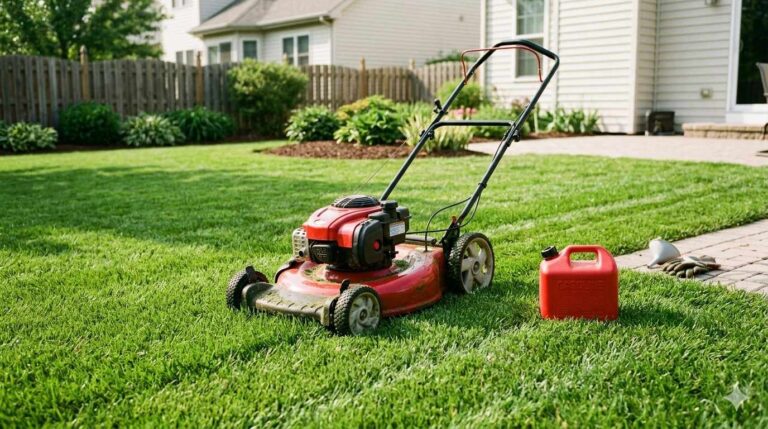
How To Sharpen Lawn Mower Blade Without Removing: Safe Way
You can sharpen a lawn mower blade without removing it by securing the mower and filing the cutting edge in place.
Learning how to sharpen lawn mower blade without removing it can save time during a busy mowing season. The method works well for light dullness, and with the right safety steps, it can restore a clean cut without taking apart the mower deck. This guide explains the tools, safe setup, correct angle, common mistakes, and limits of sharpening a blade while it stays installed.
Is It Safe to Sharpen a Lawn Mower Blade Without Removing It?
Yes, but safety must come first. A mower blade can spin even when the engine is off if the blade moves while you work. Treat it like a loaded spring: it may look still, but it can store force and move without warning.
Before you begin, follow these steps:
- Park the mower on flat, firm ground.
- Turn off the engine and remove the ignition key.
- Disconnect the spark plug wire on a gas mower.
- Remove the battery or disconnect the battery cable on an electric mower.
- Wait until all moving parts stop.
- Block the mower so it cannot roll or tip.
- Wear safety glasses and cut-resistant work gloves.
- Keep children and pets away from the work area.
Never trust the ignition switch alone. Disconnecting the spark plug wire or battery removes a major source of accidental startup.
For a push mower, you may need to tilt the mower slightly to reach the blade. Keep the air filter and carburetor facing upward when possible. This helps prevent fuel or oil from entering parts that may cause starting problems later.
A riding mower needs more care. Lower the cutting deck, set the parking brake, remove the key, and disconnect the battery. If you cannot reach the blade safely, do not force the job. Removing the blade or using a repair shop is safer.

Tools You Need for Sharpening a Mounted Mower Blade
The right tools make it easier to learn how to sharpen lawn mower blade without removing it. You do not need a large workshop, but you do need tools that give you control.
Gather these items:
• Flat metal file or mill file, about 8 to 12 inches long
• Small wire brush
• Work light or flashlight
• Wooden block or blade-holding block
• Socket wrench, if you need to secure the blade bolt
• Safety glasses
• Cut-resistant gloves
• Shop towel
• Angle guide, if available
• Marker or paint pen
A hand file is usually the best choice for an installed blade. It removes metal slowly, so you are less likely to overheat the edge or change its shape.
An angle grinder can sharpen a lawn mower blade faster, but it is harder to control under the mower deck. Sparks, tight spaces, and poor visibility increase the risk of injury. For most homeowners, a file is the safer option.
Avoid using a kitchen knife sharpener or a small household whetstone. Mower blades are thick and have a strong bevel. They need a tool that can remove metal from tough steel.
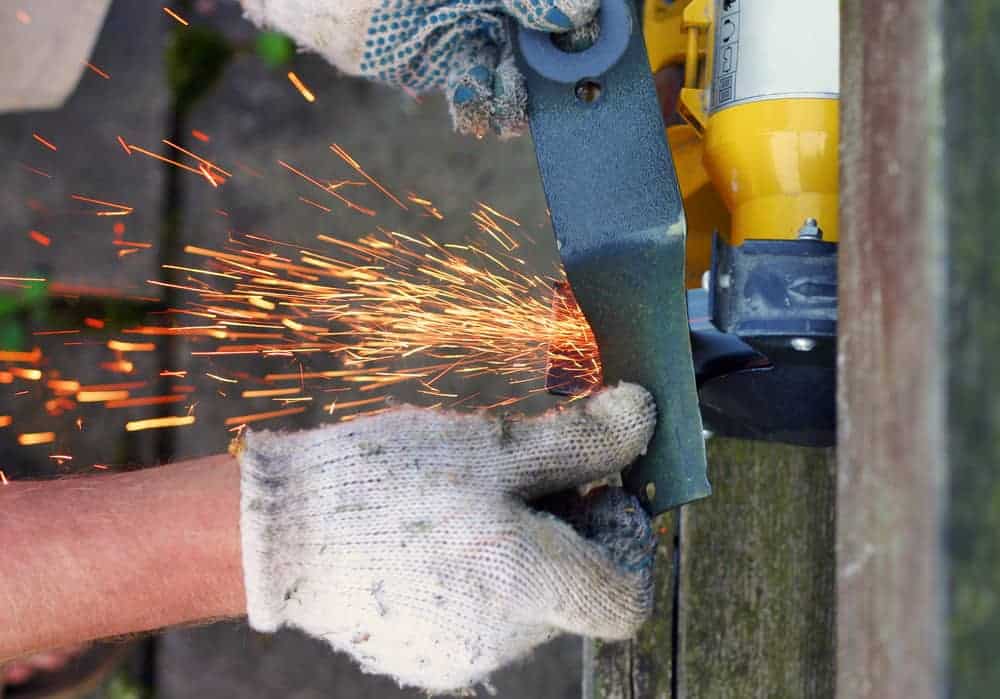
How to Sharpen Lawn Mower Blade Without Removing It
The following process shows how to sharpen lawn mower blade without removing it from the mower. Work slowly. A sharp, even edge is more important than speed.
1. Clean the Blade
Use a wire brush to remove grass, soil, and rust from the cutting edge. A dirty blade hides damage and makes it hard to see the original bevel.
Do not use your bare fingers to check the blade. Even a dull edge can cut skin. Wipe the area with a shop towel after brushing.
2. Secure the Blade
Place a wooden block between the blade and the mower deck or frame. The block keeps the blade from turning while you file.
Do not place your hand near the blade to hold it still. If the blade moves, your hand may slide into the cutting edge. A block gives you distance and control.
Some mower blades have two cutting ends. Secure one end, sharpen it, then reposition the block to reach the other end.
3. Find the Existing Bevel
Look closely at the cutting edge. You should see a sloped surface where the factory grind meets the flat blade.
Follow the same slope. Most mower blades use a bevel near 30 degrees, but the exact angle can vary by model. The mower manual is the best guide when it gives a specific angle.
Do not sharpen the flat upper side of the blade. The goal is to restore the lower cutting bevel, not create a razor edge on both sides.
4. File in One Direction
Hold the file with both hands. Push it across the bevel in one direction, away from your body. Lift the file on the return stroke instead of dragging it back and forth.
Use steady, medium pressure. Make about 10 to 15 strokes, then inspect the edge. Continue until you see a clean line of bright metal along the cutting edge.
Keep the file at the same angle during each stroke. Changing the angle creates a rounded edge that may cut poorly and wear quickly.
5. Match the Other End
Move the block and repeat the process on the opposite cutting end. Try to make a similar number of strokes on both sides.
The two ends do not need to look perfect, but they should have similar bevels and sharpness. An uneven blade can cause vibration and an uneven cut.
6. Remove the Burr
Filing creates a small metal burr along the back of the edge. Lightly draw the file across the flat back side once or twice to remove it.
Do not grind away large amounts of metal from the back. A light pass is enough. The edge should feel clean, not razor sharp.
7. Check the Blade by Sight
With the mower still secured, inspect both ends under a bright light. Look for:
• A similar bevel on both cutting ends
• No large nicks or cracks
• No loose rust flakes
• No sharp burrs
• No signs that the blade is bent
A mower blade does not need to be razor sharp. It should be sharp enough to slice grass instead of tearing it, but a slightly durable edge usually lasts longer than a thin knife edge.
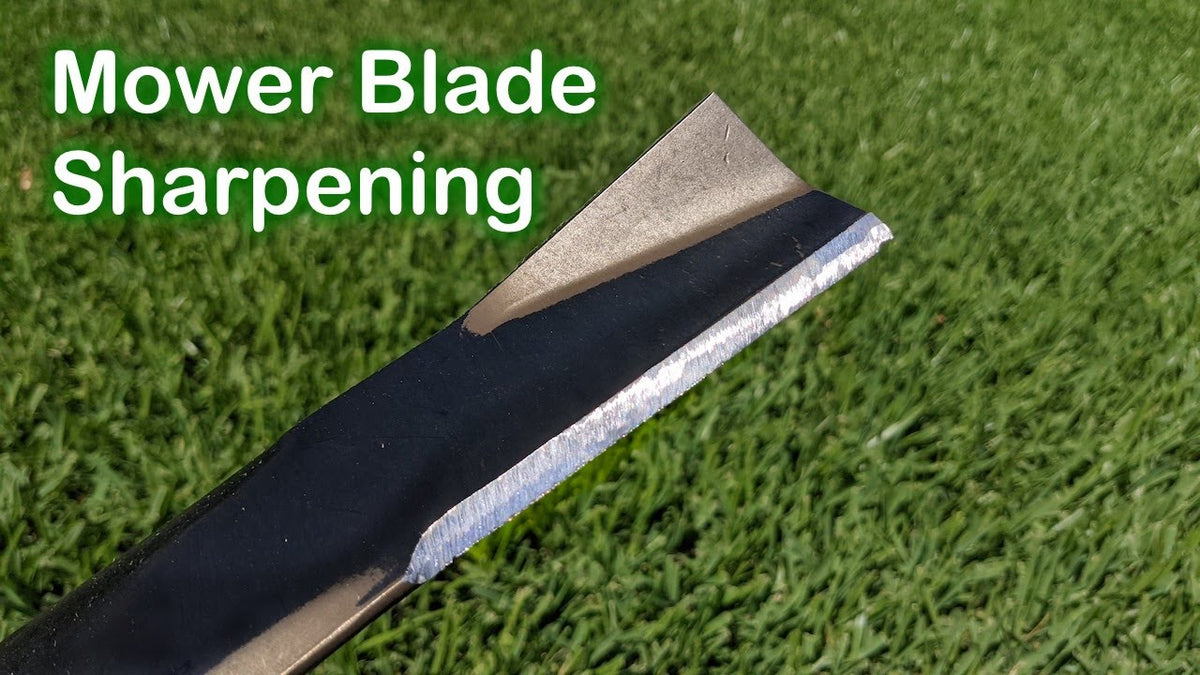
How to Sharpen a Lawn Mower Blade With an Angle Grinder
An angle grinder can help when the blade has small nicks or heavy dullness. However, it requires more care than a hand file.
If you use a grinder while learning how to sharpen lawn mower blade without removing it, follow these precautions:
• Use a flap disc or grinding wheel made for steel.
• Wear safety glasses and a face shield.
• Wear hearing protection.
• Keep sparks away from fuel, dry grass, and plastic parts.
• Use short passes rather than holding the grinder in one place.
• Keep the grinder moving along the bevel.
• Let the blade cool between passes.
Heat can damage the temper of the blade steel. If the edge turns blue, purple, or dark brown, it became too hot. Stop and allow it to cool.
A grinder can also remove too much metal. This changes the blade profile and may weaken the edge. For a blade that only needs routine sharpening, a file offers better control.
Do not use a grinder if you cannot see the bevel clearly. Poor visibility under the deck is one of the main limits of this method. Removing the blade may be safer when damage is serious.

How to Check Blade Balance Without Removing It
Balance is one of the hardest parts of learning how to sharpen lawn mower blade without removing it. A mounted blade cannot be checked with the same accuracy as a removed blade and balancing cone.
Still, you can reduce balance problems by removing the same amount of metal from each cutting end. Count your file strokes and use similar pressure on both sides.
After sharpening, inspect the blade for obvious differences. One end should not look much thinner or shorter than the other.
Signs of a balance problem include:
• Strong vibration through the mower handle
• A rattling sound while the blade spins
• Uneven grass height
• Loose bolts or deck parts after mowing
• A mower that shakes more at high throttle
Stop mowing if severe vibration begins. Shut off the mower, disconnect the spark plug wire or battery, and inspect it again.
A blade that is bent, cracked, or badly nicked should be removed and replaced or professionally serviced. Sharpening cannot correct structural damage.

How Often Should You Sharpen a Mower Blade?
Most home lawn mowers need blade sharpening about once each mowing season or after 20 to 25 hours of use. You may need to sharpen more often if you mow sandy soil, rough ground, or areas with sticks and small stones.
Grass type also affects wear. Dry, gritty grass acts like sandpaper and dulls the edge faster than soft, clean turf.
Watch the lawn instead of following a fixed schedule. A dull blade often leaves these signs:
• Grass tips look torn or shredded.
• The lawn develops a brown or gray cast.
• The mower needs more passes.
• The engine sounds strained.
• The cut height looks uneven.
• The blade leaves uncut strips.
A sharp blade improves the quality of the cut and may reduce stress on the mower. It also helps grass recover because clean cuts cause less tearing.
Do not sharpen too often if the blade still has a clean edge. Each sharpening removes a small amount of steel. Replace the blade when it becomes thin, cracked, deeply damaged, or difficult to balance.

Common Mistakes to Avoid
Many mower problems come from rushing the job. These mistakes are easy to prevent.
Sharpening Before Disconnecting Power
The most serious mistake is starting work while the spark plug wire or battery remains connected. A mower can start from a key turn, electrical fault, or unexpected control movement.
Always disconnect power before your hands enter the blade area.
Filing at the Wrong Angle
A flat file angle creates a weak edge. A steep angle removes too much metal and may make the blade cut poorly.
Use the original bevel as your guide. If the bevel is hard to see, clean the blade and use a marker to color the edge. File until the marker disappears evenly.
Making the Edge Too Sharp
A razor edge sounds useful, but it can fold over quickly when it hits grass, sand, or small debris. A strong, even bevel works better for normal mowing.
Think of the edge as a sturdy pencil tip, not a shaving razor.
Removing Too Much Metal
Deep nicks may tempt you to keep filing until the edge looks perfect. That can shorten the blade and create a balance problem.
If a nick is deep, the blade is bent, or the steel is badly worn, replace it.
Ignoring Vibration
Vibration is not normal after sharpening. It can point to a balance issue, bent blade, loose bolt, damaged spindle, or worn deck part.
Stop the mower and inspect it before using it again.
Working Under an Unstable Mower
Never rely on a jack, slope, or loose wood block alone. The mower must stay stable while you work.
For riding mowers, use equipment rated for the mower’s weight and follow the manufacturer’s lifting instructions.
When You Should Remove the Blade Instead
Knowing how to sharpen lawn mower blade without removing it is useful for quick maintenance, but it is not the best method for every situation.
Remove the blade or seek professional help when:
• The blade has a crack.
• The blade is bent.
• The blade has a large missing section.
• The blade bolt is loose or damaged.
• The spindle makes noise.
• The mower vibrates heavily.
• You need to balance the blade accurately.
• The cutting edge is too worn to reshape safely.
• You cannot reach the full bevel without touching the blade.
The main limitation of sharpening in place is visibility. You cannot inspect the entire blade, check the center hole, or balance it with full accuracy.
In my own mower work, I learned not to force an in-place repair when the blade had a deep rock strike. The quick filing job took longer than expected and still left vibration. Removing the blade revealed a slight bend that was invisible under the deck. Replacing it solved the problem at once.
After-Sharpening Care and Mowing Tips
After you learn how to sharpen lawn mower blade without removing it, a few care habits can help the edge last longer.
Mow when the grass is dry. Wet grass sticks to the deck and can hide the cut line. It also makes the mower work harder.
Avoid mowing over rocks, branches, toys, and sprinkler heads. Even a small object can create a deep nick or bend the blade.
Keep the underside of the deck clean. Built-up grass changes airflow and can make the mower leave clumps. Disconnect the spark plug wire or battery before cleaning around the blade.
Use the correct cutting height. Removing too much grass at once can stress both the lawn and the mower. A common rule is to remove no more than one-third of the grass height in a single mowing session.
After each mowing session, look under the mower for packed grass, loose hardware, or fresh damage. A quick check can prevent a small problem from becoming an expensive repair.
Frequently Asked Questions About How to Sharpen Lawn Mower Blade Without Removing
Can I sharpen a lawn mower blade while it is still attached?
Yes, you can sharpen a lightly dull blade with a hand file while it remains attached. Disconnect the spark plug wire or battery, block the blade, and follow the existing bevel.
What angle should I use to sharpen a mower blade?
Many mower blades use a bevel close to 30 degrees, but the correct angle depends on the blade design. Match the original bevel or check the mower owner’s manual.
Is it better to use a file or an angle grinder?
A file is safer and gives better control for routine sharpening. An angle grinder works faster but can overheat the blade, remove too much metal, or create an uneven edge.
How do I know if my mower blade is sharp enough?
The blade should have a clean, even edge without large burrs. It does not need to be razor sharp; a durable edge that cuts grass cleanly is the better goal.
Can I sharpen a bent mower blade without removing it?
No. Sharpening will not fix a bent blade and may make balance problems worse. Remove and replace the blade, or have it inspected by a qualified mower technician.
How often should I sharpen my mower blade?
For many home lawns, sharpening once per season or every 20 to 25 mowing hours works well. Sandy soil, rough ground, and frequent contact with debris may require more frequent sharpening.
Why does my mower vibrate after sharpening?
Vibration may come from an unbalanced blade, bent blade, loose blade bolt, damaged spindle, or worn deck part. Stop the mower and disconnect power before inspecting it.
Conclusion
Learning how to sharpen lawn mower blade without removing it can make routine mower care faster and easier. Secure the mower, disconnect all power, block the blade, follow the original bevel, and use a file with slow, even strokes.
This method is best for light dullness and small edge damage. Replace or professionally inspect any blade that is cracked, bent, badly worn, or linked to strong vibration. Take a few minutes to sharpen safely, then test the mower on a small section of grass and check the cut quality. Share your mower maintenance tips or explore more lawn care guides for a healthier, cleaner-looking yard.