How Often To Sharpen Mower Blade: Best Timing And Tips
Sharpen your mower blade every 20 to 25 hours of cutting, or at least twice during the mowing season.
Knowing how often to sharpen mower blade can make the difference between a clean, healthy lawn and grass that looks torn and brown. The right schedule depends on your mowing hours, grass type, soil, and yard debris, so this guide explains the signs, tools, timing, and safe steps that help you get the best cut.
How Often to Sharpen a Mower Blade
For most homeowners, sharpening a mower blade every 20 to 25 hours of use is a good rule. This often means sharpening it two or three times per mowing season. A mower used on a small, clean lawn may need less care, while a mower that hits dirt, sand, sticks, or rocks may need sharpening much sooner.
You should also inspect the blade at the start of the season and after any hard impact. A blade can lose its edge in one afternoon if it strikes a hidden stone or metal object. In that case, do not wait until the scheduled service date.
Use these basic guidelines:
• Light residential use: Sharpen the blade once or twice each season.
• Regular weekly mowing: Sharpen every 20 to 25 operating hours.
• Heavy use or rough ground: Check and sharpen every 10 to 15 hours.
• Commercial mowing: Inspect the blade daily and sharpen as needed.
• After hitting a rock or root: Stop the mower and inspect the blade at once.
The exact answer to how often to sharpen mower blade depends on conditions, not just the calendar. A mower that runs for one hour each week has a very different workload from one used for several large properties.
Why a Sharp Mower Blade Matters
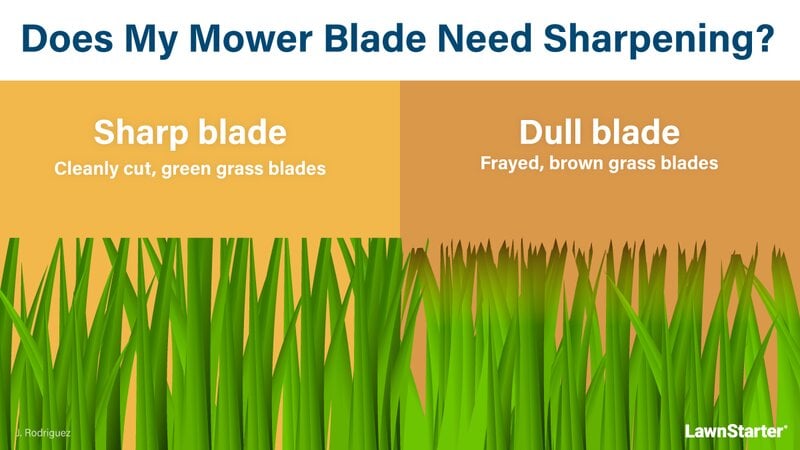
A sharp mower blade cuts grass like a pair of clean scissors. A dull blade acts more like a butter knife. Instead of slicing the grass, it bends, pulls, and tears the leaf tips.
Torn grass often develops ragged, pale, or brown ends. These damaged tips can lose moisture more quickly and may be more open to disease. A clean cut helps the grass recover faster and keeps the lawn looking greener.
A sharp blade also supports better mower performance. It can reduce repeated passes, improve cutting quality, and help the machine work with less strain. However, blade sharpness is only one part of mower care. Proper mowing height, a clean deck, and a healthy lawn also matter.
Here are the main benefits of regular sharpening:
• Cleaner grass cuts
• Fewer brown or frayed tips
• More even lawn height
• Less need to mow the same area twice
• Lower stress on the engine
• Better fuel or battery efficiency
• A more attractive lawn
When people ask how often to sharpen mower blade, they are often trying to solve a poor-cut problem. In many cases, the blade is the first thing worth checking.
Signs Your Mower Blade Needs Sharpening
You do not need to guess how often to sharpen mower blade if you learn the warning signs. A quick inspection after mowing can tell you a great deal.
Look closely at the grass and listen to the mower. A dull blade often leaves clues before the problem becomes serious.
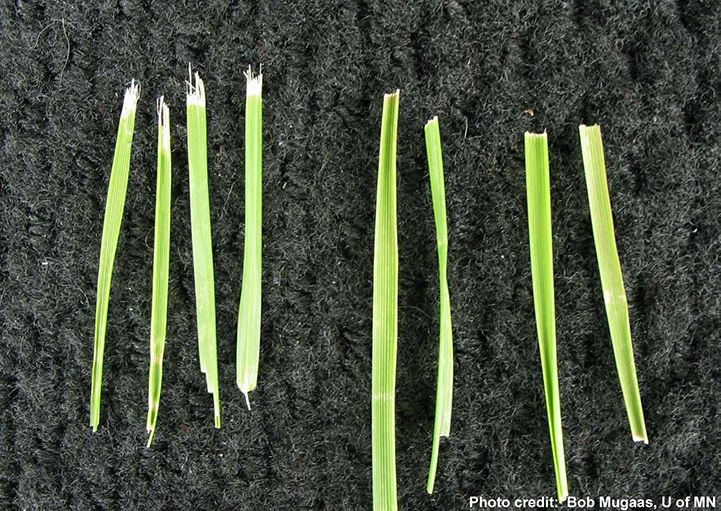
Ragged or torn grass tips
After mowing, examine a few grass blades. If the tips look split, shredded, or bruised instead of cleanly cut, the blade may be dull.
You may notice this more clearly on thick grass. Cut a small section, then inspect the tips in good daylight. A clean cut should look fairly smooth.
Uneven cutting
A dull blade can leave tall strips or make the lawn look rough even when you mow in straight lines. Uneven cutting can also come from a bent blade, a clogged deck, low tire pressure, or an uneven mower deck.
If the blade is sharp but the cut remains uneven, inspect these other parts before sharpening again.
Brown tips after mowing
Brown tips do not always mean the blade is dull. Dry weather, heat, poor watering, disease, and mowing too short can also cause browning.
Still, a dull blade is a common cause. If brown tips appear soon after mowing and the grass ends look torn, blade maintenance is a sensible first step.
More vibration or noise
A sudden vibration may mean the blade is bent, cracked, loose, or badly unbalanced. Sharpening will not fix structural damage.
Turn off the mower, disconnect the spark plug wire on a gas mower, or remove the battery on a battery mower. Never place your hands under the deck while the blade can move.
The mower struggles in thick grass
A mower that bogs down may have a dull blade, a blocked deck, a dirty air filter, or an engine problem. If the deck is clean and the motor is working properly, sharpening may restore a smoother cut.
:max_bytes(150000):strip_icc()/ms-lawn-mower-blade-9714134a47e649b494d7b73a3eb8dd6c.jpg)
What Affects Mower Blade Sharpening Frequency?
The best answer to how often to sharpen mower blade changes with your mowing environment. Two people can use the same mower for the same number of hours and need different sharpening schedules.
Grass type
Thick, tough grass puts more pressure on a cutting edge. Some warm-season grasses grow dense and fast, which can wear a blade more quickly than thin, slow-growing turf.
Wet grass also creates extra drag. It clumps under the deck and can make the mower work harder. Try to mow when the grass is dry when possible.
Soil and sand
Sand acts like fine abrasive paper. Even if the blade does not hit a rock, sandy soil can wear the edge down over time.
If your yard has sandy soil, inspect the blade often. You may need to sharpen it more than the usual two or three times per season.
Sticks, stones, and hidden objects
Small sticks may not cause visible damage, but repeated impacts can nick the edge. Rocks, sprinkler heads, roots, and edging blocks can bend or chip a blade.
Walk the lawn before mowing. Removing objects protects the mower, blade, and anyone nearby.
Mowing frequency
A weekly mowing routine does not always mean heavy use. Growth speed changes throughout the year. Spring and early summer may require more frequent mowing, which increases blade wear.
Track operating time if you want a more accurate answer to how often to sharpen mower blade. A simple note in your phone can help.
Mower type
Walk-behind mowers often need seasonal blade care. Riding mowers and zero-turn mowers may need more frequent inspection because they cover larger areas and run for longer periods.
Mulching blades can also wear differently because they circulate grass under the deck. Their shape may include extra curves or lifting surfaces, so follow the mower maker’s instructions.
How to Check a Mower Blade
Before deciding how often to sharpen mower blade, inspect its condition safely. The blade should be checked before sharpening and after any strong impact.
Follow these steps:
-
Park the mower on a flat surface.
-
Turn off the engine and allow hot parts to cool.
-
Disconnect the spark plug wire on a gas mower.
-
Remove the battery or safety key on an electric mower.
-
Tip the mower only as recommended in the owner’s manual.
-
Wear work gloves and eye protection.
-
Check the blade for a dull edge, chips, cracks, bends, and heavy rust.
-
Confirm that the blade bolt and washer are in good condition.
A dull edge usually has a rounded appearance. A sharp edge does not need to be razor-thin. In fact, an overly thin edge can become weak and chip easily.
Do not rely on the old “paper test” as your only guide. A blade can cut paper and still be poorly balanced or damaged. Visual inspection and mowing results give better information.

How to Sharpen a Mower Blade
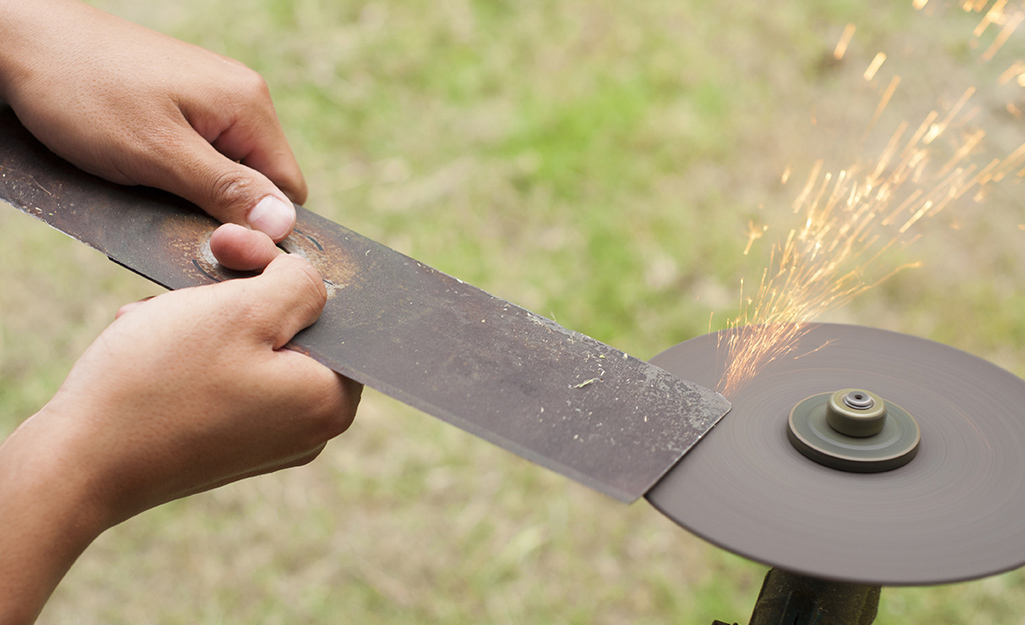
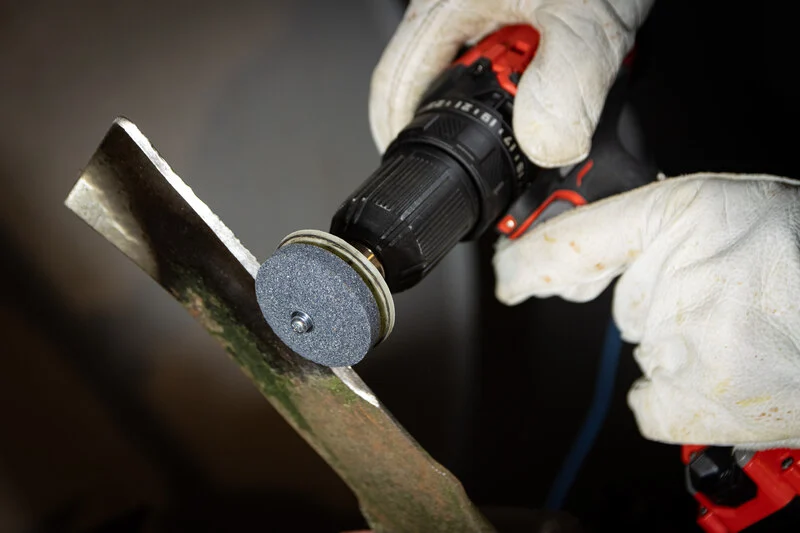
You can sharpen a mower blade with a hand file, bench grinder, or angle grinder. A file gives the most control and creates less heat. A grinder is faster but can remove too much metal or overheat the edge.
Tools you may need
• Work gloves
• Safety glasses
• Socket wrench
• Blade clamp or bench vise
• Metal file, grinder, or sharpening tool
• Wire brush
• Blade balancer
• Torque wrench, if recommended by the manual
Sharpening with a hand file
A hand file is a good choice for many homeowners. It is slower than a grinder, but it is simple and less likely to damage the blade.
-
Remove the blade and note which side faces downward.
-
Secure the blade firmly in a vise.
-
Follow the existing bevel on the cutting edge.
-
Push the file in one direction along the edge.
-
Make an equal number of strokes on both ends.
-
Remove only enough metal to restore a clean edge.
-
Brush away filings and check for burrs.
Keep the original bevel angle. Many mower blades use an angle near 30 degrees, but the correct angle can vary. If the manufacturer provides a specification, follow it.
Sharpening with a grinder
A grinder can restore an edge quickly, but use a light touch. Move the blade across the wheel rather than holding one area in place.
Excess heat can weaken the metal and cause discoloration. If the blade becomes too hot to touch, stop and let it cool. Never cool a hot blade by placing it in water, as sudden cooling may affect the metal.
Balance the blade
Balancing is just as important as sharpening. An unbalanced blade can cause vibration, damage the spindle, and make mowing uncomfortable.
Place the blade on a blade balancer or hang it from a nail through the center hole. If one side drops, remove a small amount of metal from that side. Do not grind heavily on the lighter side.
Replace the blade if it has a serious crack, deep bend, large missing section, or excessive wear. Sharpening cannot make a damaged blade safe.
Common Mower Blade Sharpening Mistakes
Many mower problems come from small maintenance mistakes. Avoiding them can extend blade life and improve safety.
Making the blade too sharp
A mower blade does not need to be razor sharp. A slightly durable edge is better because it can handle normal contact with grass and small bits of debris.
An edge that is too thin may fold, chip, or wear quickly. Aim for a clean, even bevel rather than a knife-like edge.
Removing too much metal
Grinding too deeply can change the blade’s shape and balance. Take small amounts off both sides and stop when the edge is smooth.
If the blade has large chips, do not keep grinding until the whole chip disappears. Replace the blade when damage is serious.
Ignoring balance
A sharp but unbalanced blade can create strong vibration. This can damage the mower and make the handle shake.
Always check balance after sharpening. It takes only a few minutes and can prevent a costly repair.
Installing the blade upside down
Most mower blades have a top side marked with words such as “bottom,” “deck,” or “grass side.” Install the blade according to the mower manual.
An upside-down blade may fail to cut well and can affect airflow under the deck.
Over-tightening the blade bolt
The blade bolt must be secure, but excessive force can damage the bolt or spindle. Use the torque value in the owner’s manual when available.
If you are unsure, have a mower repair shop install the blade. A small service fee is cheaper than a damaged spindle or unsafe blade.
Sharpening without removing the power source
Never work near the blade while the mower can start. Disconnect the spark plug wire, remove the battery, and follow all safety steps before touching the blade.
Should You Sharpen or Replace the Mower Blade?
Sharpen the blade when the edge is dull but the metal is straight and intact. Replace it when it has serious damage or has become too thin.
Replace the blade if you find:
• Cracks
• A deep bend
• Large chips
• A damaged center hole
• Severe rust or corrosion
• A blade that will not balance
• A blade that has been sharpened many times and lost its original shape
A new blade may also be the better choice when sharpening takes too much metal. Mower blades are designed to handle force and rotation at high speed. Do not take risks with a questionable part.
Choose a replacement blade that matches the mower model. Blade length, center hole shape, width, lift design, and mounting holes must be correct.
Best Mowing Habits for Longer Blade Life
Good mowing habits can reduce how often to sharpen mower blade. They also help the mower cut more evenly.
Keep the mower deck at the correct height. Cutting more than one-third of the grass height at once can stress the lawn and the mower. Raise the deck during hot, dry weather if your grass needs less stress.
Mow slowly through tall or thick grass. Pushing too fast can overload the engine and leave clumps behind. If the grass is very tall, raise the deck first, then lower it gradually over later cuts.
Clean the underside of the deck after the mower is off and safe. Grass buildup can restrict airflow and cause uneven cutting. Do not spray water into the engine, electrical parts, or battery area.
Before each mowing session:
• Walk the lawn and remove stones, toys, branches, and wire.
• Check the blade area for loose parts.
• Confirm that the deck is clear.
• Make sure the tires are properly inflated.
• Avoid mowing wet grass when possible.
• Watch for sprinkler heads, roots, and edging stones.
These simple habits often matter as much as how often to sharpen mower blade.
Seasonal Mower Blade Care Schedule
A simple schedule makes blade care easier. You do not need to wait for a serious cutting problem.
Before the mowing season
Inspect the blade for rust, bends, cracks, and dull edges. Sharpen or replace it before the first major mowing session.
Check the blade bolt, deck, wheels, belts, and safety controls. On a gas mower, also check the oil, air filter, and spark plug according to the manual.
During the season
Inspect the blade every few mowing sessions. If you mow about one hour each week, check it once a month and sharpen it every 20 to 25 hours.
After mowing rough ground or hitting an object, stop and inspect the mower before continuing.
At the end of the season
Clean and dry the blade before storage. A light coating of rust protection on exposed metal can help, but keep oil away from belts, brakes, and areas that contact grass.
Store the mower in a dry place. Mark the date of the last sharpening so you have a clear starting point next spring.
This routine gives you a practical answer to how often to sharpen mower blade without relying on guesswork.
Safety Tips for Mower Blade Sharpening
Mower blades are heavy, sharp, and capable of causing serious injury. Safe preparation is essential.
Always read the mower’s owner’s manual before removing the blade. Different mower designs have different safe tipping positions and blade bolt requirements.
Wear eye protection when filing, grinding, or brushing the blade. Use hearing protection with power grinders. Keep loose clothing, hair, and fingers away from moving tools.
Remember these safety rules:
• Disconnect all power before blade removal.
• Use a stable vise or blade clamp.
• Do not hold the blade in your hand while grinding.
• Let the blade cool naturally after grinding.
• Do not use a cracked or bent blade.
• Keep children and pets away from the work area.
• Recheck the blade bolt before starting the mower.
• Stop immediately if the mower develops unusual vibration.
If you do not feel comfortable removing or sharpening the blade, a qualified mower service technician can do it safely.
Frequently Asked Questions About How Often to Sharpen Mower Blade
How often should I sharpen my mower blade if I mow once a week?
For most weekly mowing, sharpen the blade every 20 to 25 operating hours. This often equals two or three times during the active mowing season, depending on lawn size and ground conditions.
Can a dull mower blade damage grass?
Yes. A dull blade can tear and bruise grass instead of making a clean cut. The damaged tips may turn brown and can make the lawn look uneven or unhealthy.
How do I know if my mower blade is sharp enough?
The edge should look clean and even without large nicks. It does not need to be razor sharp, and the blade must also be straight and properly balanced.
Is it better to sharpen or replace a mower blade?
Sharpen a blade when it is only dull and remains straight, solid, and balanced. Replace it if it has cracks, deep bends, large chips, severe corrosion, or a damaged center hole.
Can I sharpen a mower blade without removing it?
You can touch up some blades while attached, but removing the blade is safer and allows you to inspect and balance it properly. Always disconnect the mower’s power source before working near the blade.
How long does a sharpened mower blade last?
A sharpened blade may last many mowing sessions, but its life depends on grass, soil, debris, and impact damage. Inspect it regularly rather than relying on a fixed number of hours.
Conclusion
For most homeowners, how often to sharpen mower blade comes down to every 20 to 25 hours of mowing, or about two to three times per season. Sharpen sooner when you mow sandy soil, thick grass, or rough ground, and inspect the blade after every hard impact.
A clean edge, proper balance, safe installation, and good mowing habits will help your mower perform better and keep your lawn looking fresh. Check your blade before the next mowing session, and share your mower care tips or questions in the comments.