


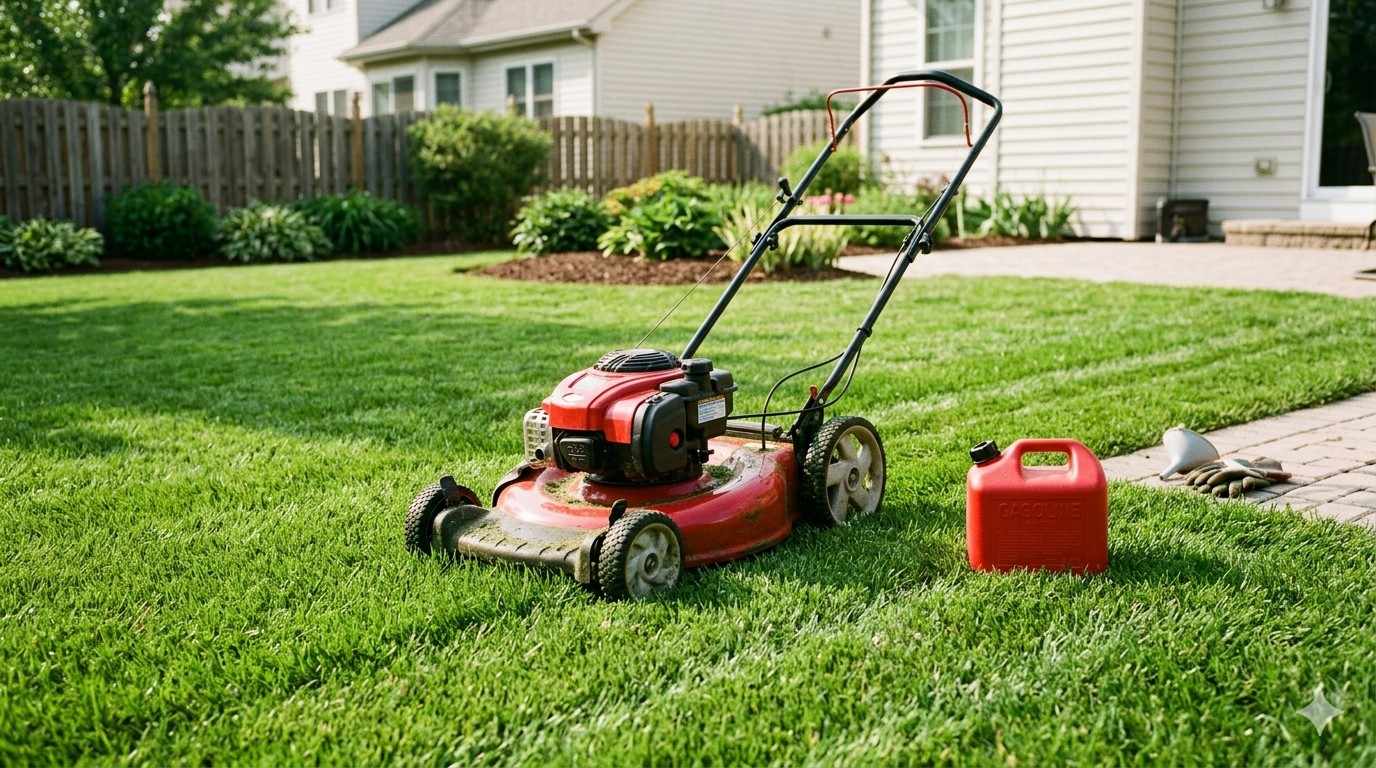
Yes, most four-stroke lawn mowers can use fresh regular unleaded gasoline with the correct octane.
For most gas-powered lawn mowers, regular 87-octane unleaded fuel is the right choice. The important details are the engine type, ethanol content, fuel age, and the instructions in your owner’s manual. This guide explains when regular gas works, which fuel to avoid, and how to prevent common mower problems.
Can you use regular gas in a lawn mower?
Yes, you can use regular gas in a lawn mower if the manufacturer allows 87-octane unleaded gasoline. Most modern four-stroke push mowers, riding mowers, and zero-turn mowers are designed to run on regular unleaded fuel.
Regular gas usually has an octane rating of 87 in the United States. Octane measures how well fuel resists premature burning inside the engine. A higher octane number does not automatically mean better performance in a lawn mower.
Before filling the tank, check the fuel label and your mower manual. The safest choice is usually:
• Fresh, unleaded gasoline
• An octane rating of 87 or higher
• No more than 10% ethanol, often labeled E10
• Fuel bought from a busy gas station
Using regular gas in a lawn mower is normally safe when the fuel is fresh and clean. Old or contaminated fuel causes more problems than the octane level.
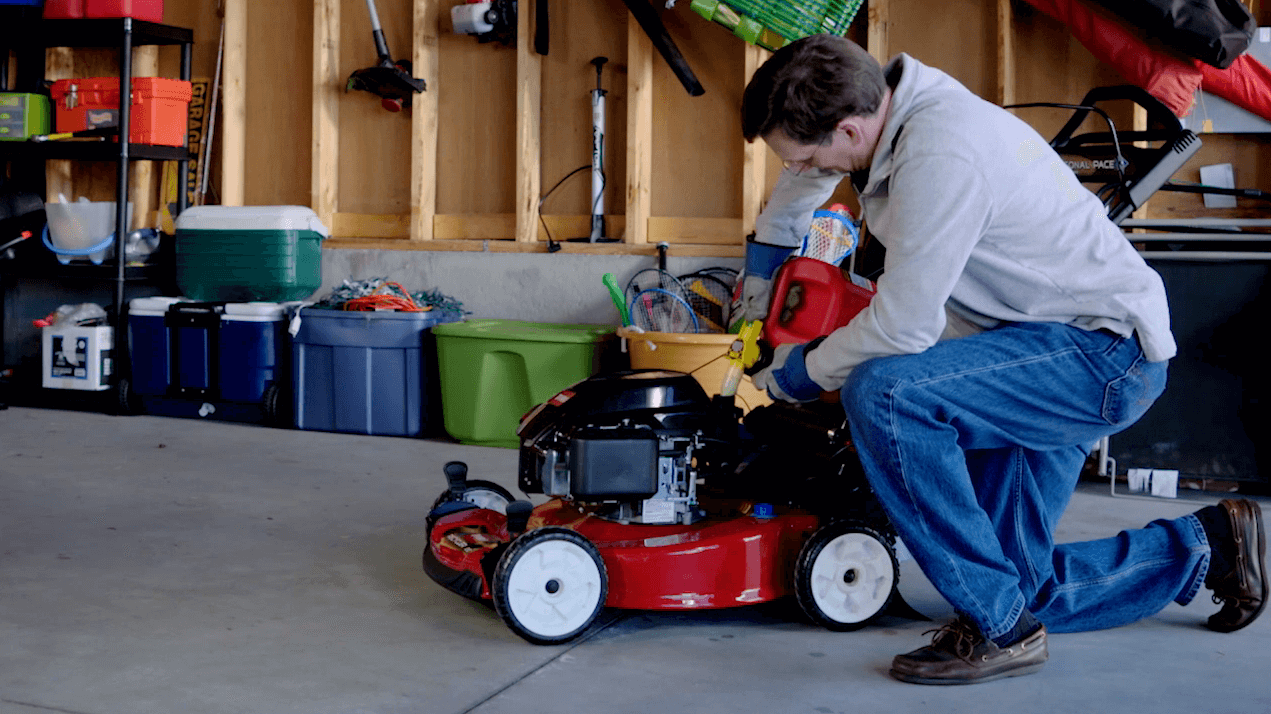
What type of gas does a lawn mower need?
Most lawn mowers use regular unleaded gasoline. However, the exact fuel depends on the engine design and the manufacturer’s instructions.
Four-stroke lawn mower engines
A four-stroke engine has a separate oil reservoir. You add gasoline to the fuel tank and engine oil to the crankcase. Many common push mowers and riding mowers use this design.
For these engines, regular 87-octane unleaded gas is usually suitable. Never mix engine oil into the gas unless the manual clearly tells you to do so.
Two-stroke lawn mower engines
Some older or smaller machines use two-stroke engines. These engines need gasoline mixed with two-cycle oil because the fuel also lubricates the engine.
Using straight regular gas in a two-stroke mower can cause serious damage. Without the correct oil mixture, the piston and cylinder may overheat and seize.
Always follow the fuel ratio in the manual. Common ratios include:
• 50 parts gasoline to 1 part two-cycle oil
• 40 parts gasoline to 1 part two-cycle oil
• A special premixed two-cycle fuel
Never guess the ratio. Too little oil can damage the engine, while too much oil can cause smoke, poor power, and spark plug problems.

Is 87 octane regular gas safe for lawn mowers?
For most lawn mowers, 87 octane regular gas is safe and appropriate. The engine does not need premium fuel unless the manufacturer specifically requires it.
Premium gasoline often has an octane rating of 91 or 93. It can resist engine knock in high-compression engines, but most lawn mower engines do not have that need. Paying more for premium fuel usually gives no power or fuel economy benefit.
Regular gas in a lawn mower should be:
• Unleaded
• Fresh
• Clean
• Suitable for small engines
• Stored in an approved fuel container
Avoid gasoline that has been sitting in a mower tank for months. Fuel changes over time as lighter chemicals evaporate. This can leave behind thick deposits that clog the carburetor.
Can you use ethanol gas in a lawn mower?
Many lawn mowers can use E10 gasoline, which contains up to 10% ethanol. E10 is widely sold as regular gas in the United States and is approved for many small engines.
However, ethanol can attract moisture. Water in the fuel may cause corrosion, hard starting, rough running, or carburetor damage. This risk increases when the mower sits unused for long periods.
Do not use E15 or E85 unless the mower manual clearly approves it. E15 contains up to 15% ethanol, while E85 contains much more ethanol. Many small engines are not designed for either fuel.
For safer fueling:
• Use E10 only when the manual allows it
• Buy only enough fuel for about 30 days when possible
• Keep the gas can tightly sealed
• Use a fuel stabilizer for seasonal storage
• Drain or run the engine dry when the manual recommends it
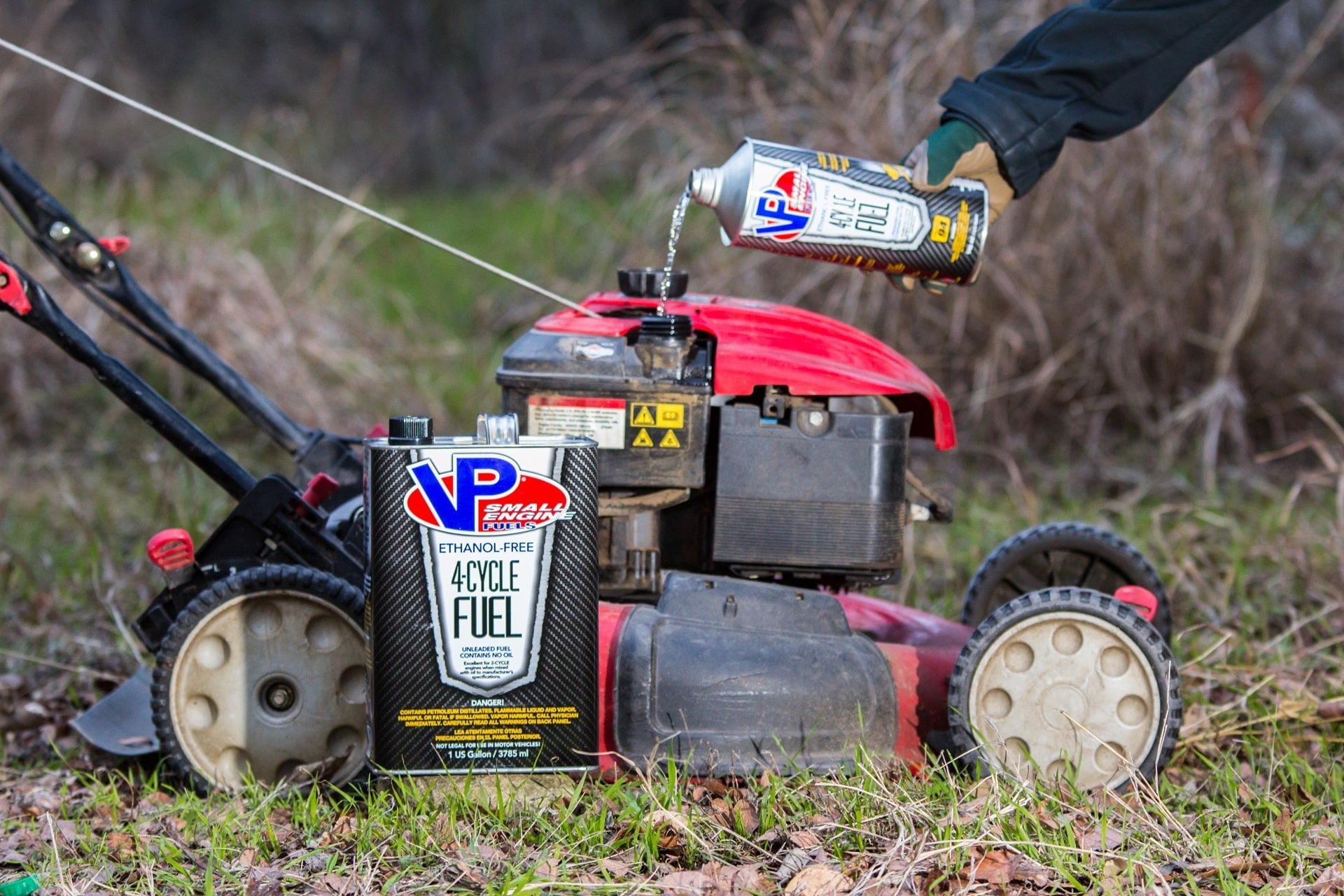
Ethanol-free gasoline can be a good choice for a mower that sits for weeks or months. It often costs more, but it may reduce fuel-related storage problems.

What happens if you use the wrong gas in a lawn mower?
The result depends on the type of wrong fuel. A small difference in octane usually does not cause major harm, but diesel, mixed fuel, or stale gasoline can create serious trouble.
Using premium gas
Premium gas normally will not damage a lawn mower. It simply costs more and usually offers no useful benefit unless the manual calls for it.
Using old gasoline
Old gas may make the mower hard to start. It can also cause sputtering, surging, smoke, weak power, and clogged fuel passages.
Using diesel fuel
Diesel fuel should never be used in a gasoline lawn mower. The engine may fail to start, smoke heavily, or stop soon after running. Drain the tank and fuel system before trying to operate the mower again.
Using gas without two-cycle oil
In a two-stroke engine, straight gas can cause rapid overheating and internal damage. Stop the engine as soon as you realize the mistake and follow the manufacturer’s draining and repair instructions.
Using gas with too much oil
An overly rich oil mixture may produce blue smoke, foul the spark plug, and reduce engine power. Drain the mixture and refill it at the correct ratio.

How to put regular gas in a lawn mower safely
Filling a mower is simple, but a few safe habits protect both you and the engine. Gasoline vapors can ignite easily, so work outdoors in a well-ventilated area.
Follow these steps:
-
Turn off the mower and let the engine cool.
-
Move the mower away from dry grass, sparks, cigarettes, and open flames.
-
Clean dirt from around the fuel cap.
-
Remove the cap slowly to release pressure.
-
Pour fresh regular unleaded gas into an approved fuel container.
-
Stop below the filler neck. Do not overfill the tank.
-
Wipe up spills before starting the mower.
-
Tighten the fuel cap and move the mower to a clear area.
-
Start the engine according to the manual.
Do not pour gasoline while the engine is hot. Also, never store fuel in a glass jar, thin household container, or unapproved bottle.
A useful habit is to label your gas can. Mark it as “unleaded gasoline” or “two-cycle mix” so you do not accidentally use the wrong fuel.

How much gas should you put in a lawn mower?
Fill the tank only to the level recommended by the mower manufacturer. Leaving a small air space helps fuel expand safely during warm weather.
Do not top off the tank until gasoline reaches the edge. Spilled fuel can damage painted surfaces, create a fire risk, and run onto hot engine parts.
Small push mowers often use less than one gallon of fuel. Riding mowers may hold several gallons. The correct amount depends on the tank size, so check the manual instead of guessing.
If you mow a small yard, avoid filling a large container with more fuel than you can use soon. Fresh fuel is usually better than fuel that has sat through an entire season.

How to store regular gas for a lawn mower
Proper storage helps keep regular gas in a lawn mower from becoming stale. Use a clean, approved fuel container with a tight cap.
Keep stored gasoline:
• In a cool, dry place
• Away from direct sunlight
• Away from furnaces, water heaters, and pilot lights
• Out of reach of children and pets
• In a container approved for gasoline
Fuel stabilizer can slow oxidation and help protect the fuel during storage. Add it when the gasoline is fresh, then run the mower for several minutes so the treated fuel reaches the carburetor.
Before winter storage, read the mower manual. Some manufacturers recommend draining the tank and carburetor. Others recommend filling the tank with treated fuel. Both methods can work when done correctly.
In my experience with mower care, the most common fuel mistake is not using the wrong octane. It is leaving untreated gas in the machine all winter. A few minutes of fuel preparation can prevent hours of spring troubleshooting.

Signs your lawn mower has a fuel problem
Fuel trouble can look similar to a dirty air filter or a worn spark plug. Watch for these symptoms:
• The engine will not start
• The engine starts and then stops
• The mower surges while running
• The engine loses power under load
• The mower produces unusual smoke
• The carburetor leaks fuel
• The engine runs only with the choke on
• The spark plug becomes wet or black
Start with simple checks. Confirm that the fuel is fresh, the tank contains enough gas, and the fuel cap vent is not blocked. Then inspect the air filter, spark plug, and fuel line.
If the mower still runs poorly, drain the old fuel before trying more repairs. A clogged carburetor may need cleaning by a qualified technician. Do not keep running an engine that knocks, overheats, or smells strongly of raw fuel.
Does premium gas make a lawn mower run better?
Premium gas usually does not make a standard lawn mower run better. Most mower engines are built for regular 87-octane fuel, so premium fuel does not provide extra power by itself.
Higher octane fuel is useful only when an engine is designed for it or begins to knock under the recommended fuel. Always follow the mower manufacturer’s instructions rather than assuming expensive fuel is better.
The same rule applies to fuel additives. Some stabilizers are useful for storage, but additives cannot repair stale gas, a damaged carburetor, or a worn engine.
Common mistakes to avoid when fueling a mower
Small fueling errors can lead to poor performance and expensive repairs. Avoid these common mistakes:
• Using diesel in a gasoline mower
• Mixing oil into a four-stroke engine’s fuel
• Forgetting oil in a two-stroke fuel mixture
• Using E15 or E85 without approval
• Storing gas in an open container
• Keeping fuel through several seasons
• Filling the tank beside an open flame
• Overfilling the fuel tank
• Pouring gas onto dry grass
• Ignoring the owner’s manual
A simple fuel routine works well: check the manual, buy fresh fuel, use the correct container, and store the mower properly. These steps protect the carburetor, fuel lines, spark plug, and engine.
Frequently Asked Questions About Can You Use Regular Gas in a Lawn Mower
Can you use regular 87 octane gas in a lawn mower?
Yes, most four-stroke lawn mowers use regular 87-octane unleaded gasoline. Check the owner’s manual to confirm the required fuel and ethanol limit.
Can you use premium gas in a lawn mower?
Yes, premium gas is generally safe in a gasoline lawn mower, but it is usually unnecessary. It does not normally increase power or improve cutting performance.
Can you use E10 gas in a lawn mower?
Many lawn mowers can use E10 gasoline, which contains up to 10% ethanol. Avoid higher ethanol blends unless the manufacturer specifically approves them.
Can you use regular gas in a two-stroke lawn mower?
You can use regular gasoline in a two-stroke mower only when it is mixed with the correct type and amount of two-cycle oil. Straight gas can cause severe engine damage.
How long does gas last in a lawn mower?
Fresh gasoline is best used within about 30 days, especially when it contains ethanol. Fuel stabilizer may extend storage life, but follow the product directions and mower manual.
What should you do if you put diesel in a lawn mower?
Do not start the mower. Drain the fuel tank and fuel system, then refill it with the correct gasoline, or have a qualified repair shop service it.
Is ethanol-free gas better for lawn mowers?
Ethanol-free gas can be helpful for mowers that sit unused for long periods. It reduces some moisture and storage concerns, but it may cost more and is not required for every mower.
Conclusion
For most four-stroke machines, regular 87-octane unleaded gas is the correct fuel for a lawn mower. Use fresh fuel, avoid unapproved ethanol blends, and never confuse a two-stroke fuel mixture with straight gasoline.
The biggest protection is good fuel care. Check the manual, store gas safely, use a stabilizer for long storage, and drain questionable fuel before it causes trouble. Put these habits into practice before your next mowing session, and share your own mower fuel tips in the comments.
