


The best raised garden bed irrigation system delivers steady water with less waste, work, and plant stress.
Summer gardening can feel like a daily race to beat the heat. You water in the morning, return home to dry soil, and then worry about overwatering the next day. A good drip system solves that problem by sending water close to plant roots at a slow, even rate. I looked at tubing layout, nozzle control, connection quality, coverage, and ease of setup to find practical options for raised beds, containers, greenhouses, and small garden rows. The systems below suit different garden sizes and watering needs.
Vego Garden Irrigation Kit

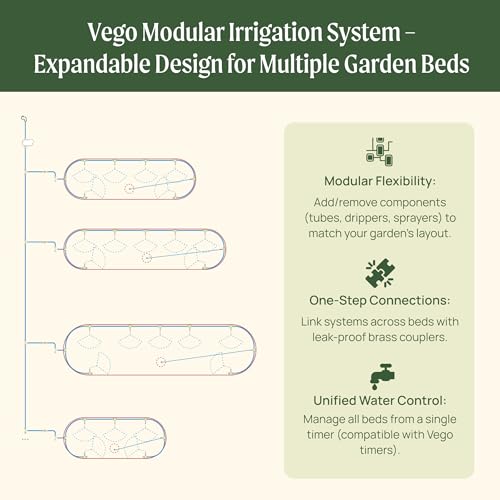
The Vego Garden Irrigation Kit is designed with raised beds in mind. Its layout helps place water lines near vegetables, flowers, and herbs instead of spraying the whole bed. That design can reduce wet foliage and direct more water toward the root zone. I also like the large-bed focus because it gives gardeners room to build a neat, repeatable watering pattern.
This kit makes a strong choice for gardeners who want a tidy DIY setup without buying every part separately. You can arrange the tubing around several plant rows and adjust the layout as crops change. Like any drip system, it works best when the hose connection is secure and the small outlets stay clear. A simple filter and a quick check after installation can help keep the flow steady.
Pros:
- Made for raised garden bed layouts
- Helps place water near plant roots
- Useful coverage for larger beds
- Supports a clean DIY installation
- Can help reduce water lost to bare soil
- Easy to adapt as plants grow
Cons:
- Large layouts may need careful tubing planning
- Small outlets may clog without clean water
- May require extra parts for unusual hose connections
My Recommendation
The Vego kit is best for raised-bed gardeners who want a focused irrigation layout and enough flexibility for vegetables, herbs, and flowers. It stands out when a hand-watering routine has become tiring or inconsistent. I would choose it for a medium or large bed where neat tubing matters. For many growers, it can be the best raised garden bed irrigation system when organized coverage and simple DIY work are the top goals.
Garden Grid 2×4 Drip Irrigation System

The Garden Grid 2×4 system uses a pre-built layout for a common raised-bed size. That is helpful for anyone who wants to avoid measuring and cutting a full irrigation pattern from scratch. The grid can spread water across the bed in a predictable way. It is especially useful for leafy greens, herbs, and closely spaced vegetables.
A pre-built system can also make the first setup less stressful for new gardeners. You still need to connect it to a hose or timer, but the bed layout does not require much guesswork. I would place the lines before adding thick mulch, since early access makes adjustment much easier. The fixed size is convenient, although gardeners with odd-shaped beds may need an extension or a different arrangement.
Pros:
- Pre-built for a standard 2-by-4-foot bed
- Reduces measuring and cutting work
- Provides even coverage for dense plantings
- Good fit for beginners
- Works well with herbs and salad crops
- Creates a neat, low-profile appearance
Cons:
- Less flexible than a fully custom kit
- May not fit larger or curved beds
- Extra tubing may be needed for several beds
My Recommendation
I recommend the Garden Grid to anyone with a standard 2-by-4-foot raised bed who values speed and simplicity. It is a practical option for beginners, busy families, and gardeners who dislike small plumbing tasks. The pre-built pattern removes one of the most common setup hurdles. If your bed matches the intended size, this may be the best raised garden bed irrigation system for fast, even coverage with little planning.
CARPATHEN 100-Foot Drip Irrigation Kit

The CARPATHEN 100-foot kit gives gardeners more tubing for beds, planters, borders, and small greenhouse spaces. Its length allows a gardener to run a main line beside a bed and branch into several rows. The sprinkler and drip-style parts can support different watering patterns, depending on how the system is arranged. This makes it more adaptable than a short kit made for one small container.
I see this as a useful middle-ground option for people building their first multi-bed watering system. A longer line gives you room to route tubing around corners, but it also requires a little more planning. Keep the main line as direct as possible and avoid sharp bends that can restrict flow. For best results, test every outlet before covering the tubing with mulch or soil.
Pros:
- Provides 100 feet of tubing for broader coverage
- Useful for multiple raised beds and planters
- Supports several watering layouts
- Good option for garden expansion
- Can reduce daily hand watering
- Helpful for gardens with mixed plant spacing
Cons:
- Longer tubing takes more time to plan
- Pressure can vary across a complex layout
- Some gardens may need extra connectors or supports
My Recommendation
The CARPATHEN kit is best for gardeners who need more reach than a single-bed system provides. It fits small backyard gardens, several compact raised beds, and mixed planting areas. I would select it when flexibility matters more than having a pre-built grid. It can be the best raised garden bed irrigation system for a growing garden that needs room to expand without starting over.
Thiswing Adjustable 360-Degree Drip System

The Thiswing system includes 16 adjustable nozzles for targeted watering. Adjustable outlets are useful when one bed contains plants with different water needs. You can reduce the flow for herbs or small seedlings and open it more for thirsty vegetables. The 360-degree adjustment also helps direct water around stems instead of spraying straight into one spot.
This kit works well when precision matters. I would use it around tomatoes, peppers, flowers, potted plants, and young crops that need careful placement. The nozzles make it easier to correct dry corners after a test run. Still, adjustable parts need occasional inspection because soil, minerals, and insects can affect small openings over time.
Pros:
- Includes 16 adjustable watering nozzles
- Allows targeted watering around individual plants
- Useful for mixed crops with different needs
- 360-degree adjustment improves placement
- Good for beds, pots, and small garden zones
- Can reduce water pooling near plant stems
Cons:
- Requires more adjustment than a fixed grid
- Nozzles need cleaning if water contains debris
- May not cover a large garden without extra tubing
My Recommendation
The Thiswing system is best for gardeners who want control over each watering point. It suits mixed beds, container gardens, and plants with different sizes or moisture needs. I especially like it for gardeners who enjoy fine-tuning their setup instead of using one fixed flow rate. For targeted watering, it is a strong candidate for the best raised garden bed irrigation system in 2026.
Bonviee 230-Foot Quick-Connect Kit

The Bonviee kit offers 230 feet of tubing, which is a lot of reach for a home garden. It is suited to gardeners who want to water several raised beds, containers, borders, or greenhouse rows from one source. The quick-connect design can make setup and changes easier when compared with systems that require more cutting and permanent joins. Extra length also gives you room to move lines as your garden changes.
Large kits reward careful planning. I suggest drawing the beds on paper, marking the water source, and keeping the longest runs as straight as possible. Use short branches for individual beds and test the farthest outlet before final placement. This system is a good value for expansion, but a tiny garden may not need all the included tubing.
Pros:
- Offers 230 feet of tubing for large layouts
- Quick-connect parts can simplify assembly
- Suitable for multiple raised beds
- Allows future garden expansion
- Useful for greenhouses and container groups
- Reduces the need to buy several small kits
Cons:
- More tubing can create storage and planning work
- Large layouts may need a pressure regulator
- Not the most practical choice for one small bed
My Recommendation
The Bonviee system is best for serious home gardeners with several beds or a large growing area. It gives you the reach to build a full watering network instead of treating each bed as a separate project. I would choose it for expansion, community-style backyard plots, and greenhouse rows. When coverage is the main concern, this kit may be the best raised garden bed irrigation system for long-term garden growth.
HEKIWAY 60-Foot Kit With Smart Timer

The HEKIWAY system combines a 60-foot irrigation layout with a smart water timer. That combination can help gardeners move from hand watering to a repeatable schedule. A timer is useful when work, travel, or hot weather makes daily watering hard to manage. The shorter tubing length suits a compact raised bed, a few planters, or a small patio garden.
Automation does not mean the system can run without checks. I recommend watching the bed during the first week and changing the schedule based on soil moisture, weather, and plant size. Morning watering is often a good starting point because it gives leaves and soil time to dry before evening. The timer adds convenience, but proper setup still matters more than simply running water longer.
Pros:
- Includes a smart water timer
- Helps automate a regular watering schedule
- Good 60-foot length for compact gardens
- Can help plants receive steady care during travel
- Reduces the need for daily hand watering
- Useful for patios, beds, and container groups
Cons:
- Shorter reach than large garden kits
- Timer settings may take some learning
- Requires battery or power maintenance, depending on timer design
My Recommendation
The HEKIWAY kit is best for busy gardeners who want automatic watering in a small or medium garden. It is a smart fit for travelers, new parents, older gardeners, and anyone who forgets a watering day. I would pick it when convenience matters as much as tubing coverage. For simple automation, it is one of the best raised garden bed irrigation system choices in this group.
230-Foot Kit With Adjustable Copper Emitters
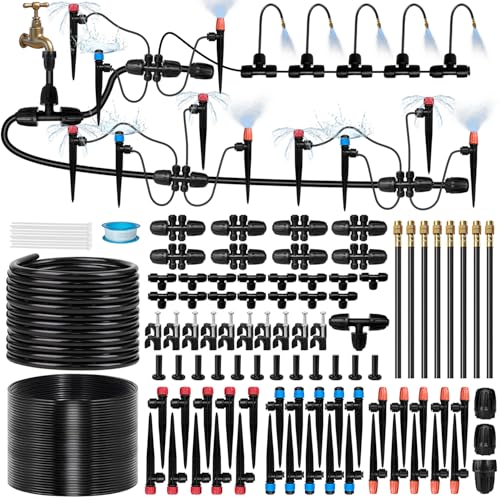
This 230-foot kit is built for wide coverage and includes adjustable copper nozzles and emitters. It also uses both larger and smaller tubing sizes, which can help create a main line with smaller branches. That structure is useful for raised beds, lawns, greenhouses, and potted plants. Adjustable emitters give you more control when plant rows are not uniform.
The copper nozzle design may appeal to gardeners who want a more solid-feeling outlet than a very light plastic piece. Still, the real performance depends on water pressure, filter use, and correct connection. I would divide a very large layout into zones rather than trying to run every outlet at once. This approach can improve flow and make troubleshooting easier.
Pros:
- Provides 230 feet for broad garden coverage
- Includes adjustable copper nozzles and emitters
- Offers 1/2-inch and 1/4-inch tubing options
- Works across beds, pots, and greenhouse areas
- Supports custom branch layouts
- Useful for gardens with different plant needs
Cons:
- Large layouts may need zone planning
- Emitters require periodic cleaning
- May be more system than a small garden needs
My Recommendation
I recommend this kit for gardeners who need long reach and adjustable output in one package. It is a strong fit for large backyards, greenhouse benches, and mixed plant zones. The tubing choices give experienced DIY users more ways to build a clean layout. If you want a broad, adjustable system, this could be the best raised garden bed irrigation system for a complex garden.
50-Foot Adjustable Brass Nozzle Kit

This 50-foot kit is made for smaller watering jobs and includes adjustable brass misting nozzles. The shorter length can be easier to manage around one raised bed, a few pots, or a compact greenhouse. Brass nozzles can feel sturdy during installation and allow gardeners to change the spray direction. The system is useful when you want a light mist or a small, focused flow rather than a large spray pattern.
I would use this option for seedlings, herbs, flowers, and patio crops where gentle coverage matters. It can also work as a starter system for someone who does not want to handle a large roll of tubing. Because misting can lose water to wind, place the nozzles close to the plants and avoid running them during breezy periods. Soil moisture checks remain important, especially in hot weather.
Pros:
- Compact 50-foot layout for small gardens
- Includes adjustable brass misting nozzles
- Easy to route around one bed or patio area
- Good for seedlings and delicate plants
- Brass outlets offer a sturdy feel
- Simple starting point for new gardeners
Cons:
- Limited reach for several large beds
- Mist can drift in windy conditions
- May not suit plants that need deep, slow watering
My Recommendation
The 50-foot kit is best for small raised beds, patios, seedlings, and container gardens. It makes sense for gardeners who want a compact system with adjustable outlets and do not need a large irrigation network. I would not choose it for a wide vegetable plot, but it can be excellent for a focused growing space. For gentle coverage in a small area, it may be the best raised garden bed irrigation system at this size.
How I Evaluate Raised Garden Bed Irrigation Systems
I do not judge a drip kit by tubing length alone. A long kit can look impressive but still perform poorly if the connections leak or the far end receives too little water. I look at the complete setup, including the main line, branch tubing, emitters, connectors, timer compatibility, and ease of adjustment. A good system should make watering more consistent, not create a new daily chore.
I also consider how a system fits real raised beds. Beds vary in width, height, crop spacing, and shape. A system that works well in a 2-by-4-foot box may not suit a long U-shaped bed. That is why this review includes pre-built grids, compact kits, adjustable nozzles, and long systems for several beds.
Why Drip Irrigation Works Well in Raised Beds
Raised beds often drain faster than ground-level soil. That drainage helps prevent soggy roots, but it can also leave plants thirsty during hot, dry weather. Drip irrigation adds water slowly near the root zone. This can help maintain more even moisture than a handheld spray wand.
Drip lines may also reduce water sprayed onto paths and bare soil. Less wet foliage can help create a less favorable setting for some leaf diseases, although no irrigation system replaces good spacing and garden care. The Environmental Protection Agency also promotes efficient watering methods because targeted systems can reduce outdoor water waste when installed and managed well.
Another benefit is time. Once a system is tested and adjusted, you can water several plants at once. Add a timer, and the garden can receive care while you work, sleep, or travel. The system is not magic, though. You still need to check the soil, inspect the outlets, and adjust the schedule when the weather changes.
What to Look for Before Buying
Choose the Right Tubing Length
Measure the bed area before shopping. Include the distance from the outdoor faucet to the bed, not just the size of the soil box. A 50-foot kit may fit one compact bed, while a 100-foot or 230-foot system may suit several beds. Do not buy far more tubing than you can route neatly, unless you plan to expand soon.
Check Water Pressure Needs
Every irrigation system needs enough pressure to move water through its lines. Long runs and many outlets can reduce flow near the end. A pressure regulator may help protect small components and create steadier output. If your garden has several beds, split the layout into zones and water one zone at a time.
Look at Emitter Control
Fixed emitters keep setup simple. Adjustable nozzles give you more control over plant size, soil type, and spacing. A fixed grid works well for similar crops planted in rows. Adjustable outlets work better when a bed contains tomatoes, herbs, flowers, and seedlings together.
Consider a Filter
Small drip openings can clog when water carries grit or mineral deposits. A filter helps reduce that risk. Clean water is especially important for systems with tiny misting nozzles. Even with a filter, inspect the end caps and emitters during the growing season.
Decide Whether You Need a Timer
A timer adds convenience and can improve regularity. It is useful for travel, busy schedules, and hot climates. However, a timer can overwater a bed if you set it once and forget it. Start with short run times, check soil moisture, and change the schedule after rain or a heat wave.
Installation Tips for Better Results
Start by sketching your garden. Mark the faucet, each raised bed, and the main direction of the tubing. Keep the main line close to the beds and use short branches where possible. This plan can save time and reduce wasted connectors.
Lay the tubing in the sun for a short time if it arrives curled. Warm tubing can become easier to shape. Do not force a sharp bend, since a kink can restrict water. Use stakes or clips to hold lines in place, especially during the first week.
Run the system before planting or mulching. Watch each outlet and look for leaks at every joint. Check the farthest emitter as well as the first one near the faucet. If the first outlet flows strongly and the last barely drips, reduce the number of outlets in that zone or split the line.
Place outlets near the root zone, but do not press them directly against the plant stem. As plants grow, move or add outlets when needed. Mulch can help slow evaporation, but leave connectors accessible for service. A neat setup is easier to inspect than tubing hidden under thick soil.
How Often Should You Run a Drip System?
There is no single schedule for every raised bed. Sandy soil may need more frequent watering, while compost-rich soil may hold moisture longer. Seedlings often need shallow, regular moisture, while established tomatoes and shrubs may prefer longer, deeper watering.
Use your finger to check the top few inches of soil. If the soil feels dry below the surface, the bed may need water. If it feels wet and heavy for days, reduce the run time. Your plants, soil, season, and local weather should guide the final schedule.
Morning is often a useful time to irrigate because the water can soak in before the strongest heat. Avoid watering by a rigid calendar when rain has already done the job. A good irrigation system supports observation; it should not replace it.
Three Best Uses for These Irrigation Kits
| Best for | Why |
|---|---|
| Standard 2-by-4-foot raised beds | The Garden Grid offers a pre-built layout with little measuring. |
| Large gardens and several beds | Bonviee and the 230-foot copper-emitter kit provide room for broad coverage. |
| Busy gardeners and travelers | The HEKIWAY kit adds timer-based watering for a compact garden. |
Common Mistakes to Avoid
The first mistake is using too many outlets on one line. More outlets do not always mean better coverage. If the water pressure cannot support them, the far end may receive very little water. Build smaller zones when needed.
The second mistake is burying the system before testing it. A hidden leak can waste water and leave plants dry. Run every zone first, then cover the tubing after you confirm the pattern.
The third mistake is watering by time alone. Ten minutes from one system may deliver very different moisture from ten minutes on another. Check the soil and adjust. A timer should follow the garden, not force the garden to follow the timer.
The fourth mistake is ignoring winter storage. In freezing regions, drain the lines and bring timers or sensitive parts indoors when practical. Ice can expand inside fittings and damage the system. Good storage can help the kit last across more growing seasons.
FAQs Of best raised garden bed irrigation system
What is the best irrigation system for a raised garden bed?
The best option depends on bed size and plant spacing. A pre-built Garden Grid suits a standard 2-by-4-foot bed, while Vego and adjustable-nozzle kits offer more layout control. For several beds, choose a longer 100-foot or 230-foot kit.
Is drip irrigation better than a sprinkler for raised beds?
Drip irrigation usually sends water closer to plant roots and wets less foliage. It can also reduce water lost to paths and wind. Sprinklers may work for broad areas, but drip lines are often more precise for raised beds.
Do I need a timer for raised bed irrigation?
No, but a timer can make watering easier and more regular. It is especially useful during travel or hot weather. Start with short cycles and check soil moisture so the timer does not overwater the bed.
How long should a drip system run?
Run time depends on emitter flow, soil, weather, and plant size. Start with a short cycle and inspect moisture below the surface. Increase the time slowly if the soil remains dry, or reduce it if water pools.
How can I stop drip emitters from clogging?
Use a suitable filter and flush the tubing before final installation. Keep the water source clean and inspect the emitters during the season. Remove and rinse clogged parts instead of increasing the run time.
Final Verdict: Which Should You Buy?
The Vego Garden Irrigation Kit is my top all-around pick for raised beds. The Garden Grid wins for a standard 2-by-4-foot bed, while HEKIWAY is best for timer-based convenience. Large gardens should consider Bonviee or the 230-foot copper-emitter kit.
The best raised garden bed irrigation system is the one that matches your bed size, water pressure, and daily routine. Measure first, test every outlet, and adjust the schedule as plants and weather change.
