To sharpen mulching blades, remove the mower blade, clean it, sharpen the cutting edges with a file or grinder while keeping the original angle, balance the blade, and reinstall it securely before mowing.
For homeowners across the United States, a properly maintained lawn mower is essential for keeping grass healthy during the growing season. Mulching blades work differently from standard mower blades because their curved cutting surfaces are designed to cut grass clippings into smaller pieces that can return nutrients to the lawn. A dull mulching blade can reduce cutting quality, leave uneven patches, and force the mower engine to work harder.
Sharpening mulching blades is a practical maintenance task that many homeowners can complete with basic tools when proper safety steps are followed. The goal is not to create a razor-sharp edge but to restore a clean, consistent cutting surface while preserving the blade’s original shape and balance.
What Are Mulching Blades and Why Do They Need Sharpening?
Mulching blades are specialized mower blades with additional curves, raised sections, or extended cutting surfaces that help circulate grass clippings inside the mower deck. This repeated cutting action breaks clippings into smaller pieces that can decompose and return nutrients to the soil.
Like standard mower blades, mulching blades become dull from normal use. Contact with soil, rocks, sticks, and other debris gradually wears down the cutting edge. A dull blade may tear grass instead of cutting it cleanly, which can make the lawn look brown or uneven.
Source: i.ytimg.com
Signs of a dull mulching blade
Look for torn grass tips, uneven mowing patterns, clumps of clippings, reduced mulching performance, or increased mower vibration.
When to inspect the blade
Many homeowners check blade condition at the beginning of the mowing season and periodically during heavy mowing periods.
Tools Needed to Sharpen Mulching Blades
The sharpening method you choose depends on the condition of the blade and the tools available. A hand file provides more control, while an angle grinder removes material faster but requires careful handling to avoid overheating or changing the blade shape.
Before starting, gather all required equipment and prepare a stable workspace. A secure setup reduces the risk of injury and helps achieve a consistent edge.
Source: oneprojectcloser.com
Safety equipment
Use work gloves and safety glasses to protect against sharp edges and flying metal particles.
Sharpening tools
Common options include a metal file, bench grinder, angle grinder with a flap disc, or a blade sharpening tool.
Additional supplies
A wrench set, blade balancer, cleaning brush, and a marker can help during removal, inspection, and reinstallation.
How to Sharpen Mulching Blades Step by Step
Sharpening a mulching blade involves removing the blade safely, restoring the cutting edge, and checking the final result before putting it back on the mower. Follow the manufacturer’s recommendations when available because blade designs and mower systems can vary.
Turn off the mower, remove the ignition key if equipped, disconnect the spark plug wire on gas-powered models, or remove the battery on electric models.
Step 2: Remove the blade
Tilt the mower safely according to the manufacturer’s instructions and use the correct wrench to loosen the blade bolt. Mark the blade orientation before removal so it can be reinstalled correctly.
Step 3: Clean and inspect the blade
Remove grass buildup and check for cracks, bends, deep chips, or thinning metal. Replace a damaged blade instead of sharpening it.
Step 4: Sharpen the cutting edges
Follow the existing bevel angle and sharpen evenly across the cutting edge. Remove only enough metal to restore a clean edge.
Step 5: Balance and reinstall the blade
Check balance using a blade balancer or a similar method. Reinstall the blade tightly with the correct orientation and hardware.
Using a File to Sharpen Mulching Blades
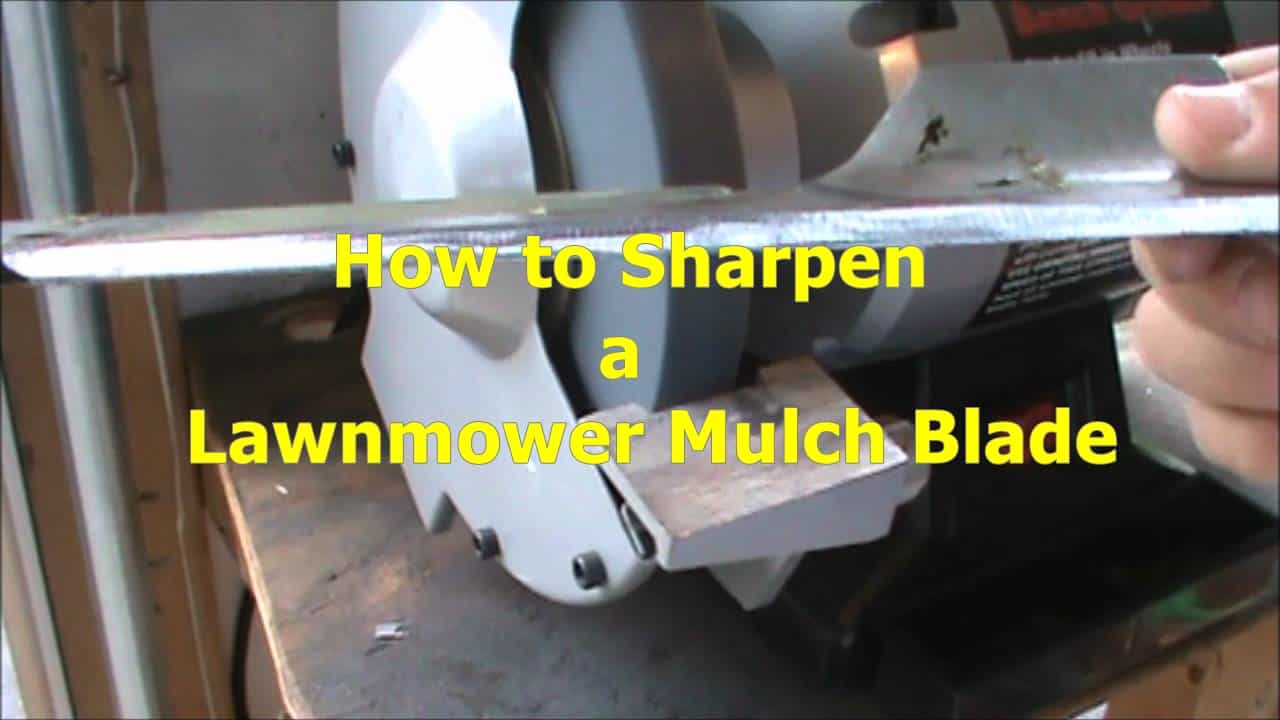
A file is a slower but controlled sharpening method. Hold the file at the same angle as the existing bevel and push it across the edge in one direction. This method works well for blades with moderate dulling and helps avoid removing too much metal.
Best use case
Hand filing is suitable for routine maintenance and small touch-ups.
Using an Angle Grinder to Sharpen Mulching Blades
An angle grinder can sharpen a blade quickly but requires careful control. Use smooth passes and avoid pressing too hard because excessive heat can weaken the metal or create an uneven edge.
Important precaution
Allow the blade to cool if it becomes hot during grinding.
How to Know If a Mulching Blade Is Sharpened Correctly
A properly sharpened mulching blade should have a clean, even cutting edge without excessive material removal. The blade should remain balanced and should not create unusual vibration when the mower operates.
The sharpness needed for a mower blade is different from a knife. A slightly durable edge is preferred because it must withstand contact with grass, dirt, and small debris.
The bevel should look uniform from one end of the blade to the other.
Check blade balance
An unbalanced blade can cause vibration, uneven cutting, and unnecessary stress on mower parts.
Common Mulching Blade Sharpening Mistakes to Avoid
Many sharpening problems happen because too much metal is removed or the original blade design is changed. Careful preparation and inspection help prevent poor cutting performance and safety issues.
Source: i.ytimg.com
Sharpening at the wrong angle
Changing the factory bevel angle can reduce cutting efficiency and shorten blade life.
A blade that is heavier on one side can create harmful vibration.
Working without safety precautions
Always prevent accidental mower startup and protect yourself from sharp metal edges.
Frequently Asked Questions
Q
How often should mulching blades be sharpened?
The sharpening schedule depends on mowing frequency, lawn conditions, and exposure to debris. Many homeowners inspect blades several times during the mowing season and sharpen when cutting performance decreases.
Q
Can I sharpen mulching blades without removing them?
It is possible with some sharpening tools, but removing the blade is generally safer and allows better inspection, cleaning, and balancing.
Q
Should a mulching blade be razor sharp?
No. A mower blade should have a clean cutting edge but does not need a razor-like finish. A slightly durable edge is better suited for lawn mowing conditions.
Q
Can a damaged mulching blade be repaired by sharpening?
Sharpening cannot fix structural problems such as cracks, major bends, or excessive wear. Replace blades with serious damage to maintain safe mower operation.
Q
Why does my mower vibrate after sharpening the blade?
Excessive vibration often indicates an unbalanced blade, incorrect installation, or a damaged blade. Check balance and confirm the blade is installed in the correct direction.
✦ Wrapping Up
Conclusion
Learning how to sharpen mulching blades helps maintain better mower performance and cleaner lawn results. The process requires careful preparation, the correct sharpening angle, and a balance check before returning the blade to service.
Regular inspection allows homeowners to identify wear early and decide whether sharpening is appropriate or whether replacement is safer. A properly maintained mulching blade helps the mower distribute smaller clippings and operate more effectively.
💡 Key Takeaway
Inspect your mulching blade before the next mowing session, sharpen only when needed, and always prioritize safety by disconnecting power and checking blade condition before use.
There’s nothing more frustrating than starting your weekend ready to mow, pulling the handle on your mower, and realizing it refuses to move forward. You feel the engine humming, the blades spinning, but the wheels just won’t budge. Suddenly, mowing turns from an easy stroll into a full-body workout. That’s when you realize the lawn…
Learn the correct type of gas for a Honda lawn mower, including recommended gasoline grades, ethanol limits, fuel storage tips, and common mistakes to avoid.
If your lawn mower turns over but will not start, you’re not alone. Picture this: the weekend sun is shining, the grass is knee-high, and you’re ready to mow. You pull the cord or turn the key — and the mower cranks but refuses to roar to life. That sputtering silence can be maddening, especially…
If you’ve ever spent a Saturday morning tugging at your mower’s cord only to hear sputters instead of a roar, you know how frustrating it feels when your lawn mower engine gives out. It’s like the heart of your machine suddenly stopped beating. You’ve sharpened the blades, cleaned the deck, and checked the fuel —…