
How Big Is A Zero Turn Mower: Size Guide
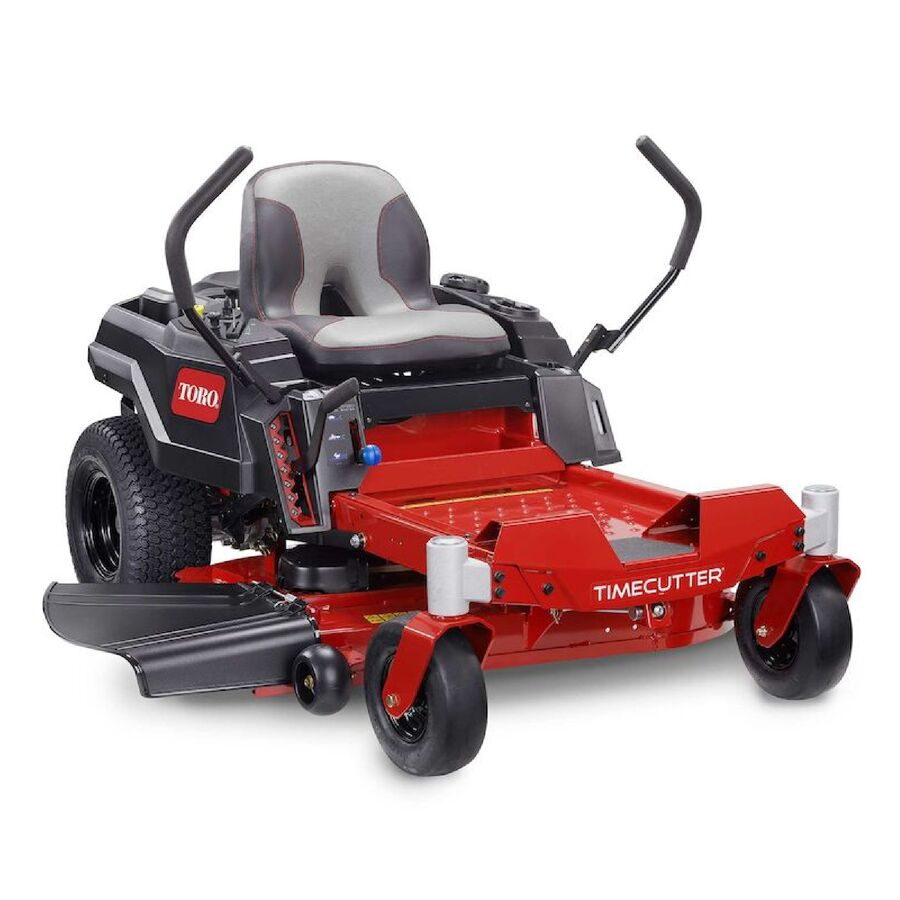
A typical zero-turn mower in the United States is about 4 to 6 feet wide, 6 to 7 feet long, and 3 to 4 feet high. Most residential models have a 42- to 54-inch cutting deck. Larger commercial zero-turn mowers often use 60- to 72-inch decks and may be more than 6 feet wide.
The exact size depends on the mower’s deck, tires, engine, seat, discharge chute, and frame. A 42-inch mower may fit through a backyard gate, while a 60-inch model may need a wider gate, trailer, or storage area.

Typical Zero-Turn Mower Dimensions
The table below gives useful planning ranges for common zero-turn mower classes. These are general ranges, not specifications for every model.
| Mower type | Cutting deck | Approximate overall width | Approximate length | Approximate height |
|---|---|---|---|---|
| Small residential | 32–42 inches | 38–48 inches | 65–75 inches | 38–45 inches |
| Mid-size residential | 42–54 inches | 45–60 inches | 70–80 inches | 40–48 inches |
| Large residential | 54–60 inches | 55–66 inches | 75–85 inches | 42–50 inches |
| Commercial | 48–60 inches | 52–70 inches | 75–90 inches | 45–55 inches |
| Large commercial | 60–72 inches | 65–80 inches | 80–95 inches | 45–60 inches |
Manufacturers measure dimensions in different ways. Some list width with the discharge chute raised. Others list the width with the chute lowered or include the chute in a separate measurement.
For a reliable answer, check the owner’s manual or the manufacturer’s specification sheet for the exact model. For example, brands such as John Deere, Cub Cadet, Toro, and Husqvarna publish model-specific dimensions.
The deck width is not the same as the mower width
A 48-inch deck does not mean the entire mower is exactly 48 inches wide. The frame, wheels, deck brackets, and discharge chute can add several inches.
A mower with a 48-inch deck may have an overall width close to 50 to 60 inches. A mower with a 60-inch deck may be roughly 60 to 70 inches wide, depending on its design.
Use the overall width, not the deck width, when measuring:
- Gates
- Garage doors
- Trailer ramps
- Shed doors
- Narrow paths
- Walkways between buildings
- Space beside parked vehicles

How Wide Is a Zero-Turn Mower?
Most zero-turn mowers are between 38 and 80 inches wide. The deck size is the main factor, but it is not the only one.
Small residential mowers with 32- or 42-inch decks are often about 38 to 48 inches wide. They suit smaller lawns and narrow gates. Mid-size residential models with 48- or 54-inch decks commonly need about 50 to 60 inches of clearance.
Commercial models are wider. A 72-inch commercial mower may need around 6 to 7 feet of open space, and its discharge chute may require even more room when extended.
Common width ranges by deck size
| Deck size | Common overall width range | Typical use |
|---|---|---|
| 32–36 inches | 36–44 inches | Small residential lawns |
| 42 inches | 40–50 inches | Small and medium yards |
| 48 inches | 48–58 inches | Medium and larger residential yards |
| 52–54 inches | 52–62 inches | Larger residential properties |
| 60 inches | 58–70 inches | Large properties and commercial work |
| 72 inches | 68–80 inches | Commercial mowing and open land |
These ranges help with early planning. They should not replace the exact width listed for the mower you plan to buy.
How much gate clearance does a zero-turn mower need?
Measure the narrowest opening, then compare it with the mower’s maximum width. Leave extra room for steering and uneven ground.
A practical target is:
- At least 2 inches of extra space on each side for a straight, smooth approach
- 4 to 6 inches of extra space on each side for easier use
- More space if the path turns sharply, slopes, or has rough ground
For example, if a mower is 52 inches wide, a 56-inch opening may technically work. A 60-inch opening will be easier and safer to use.
Do not measure only the gate leaf. Check the posts, hinges, fence rails, landscaping, and the ground near the opening. The usable opening may be smaller than the advertised gate width.

How Long and Tall Is a Zero-Turn Mower?
A typical zero-turn mower is about 65 to 95 inches long and 38 to 60 inches tall. The length includes the engine area, seat, frame, and front deck.
Small residential machines tend to be shorter. Large commercial mowers are longer because they use larger engines, wider frames, bigger fuel tanks, and larger cutting decks.
Height also varies. The roll-over protection system, or ROPS, can make a major difference. A mower with the ROPS folded may fit in a garage or shed, while the same mower with the ROPS upright may not.
Main parts that affect mower size
Several parts can change the required storage or transport space:
- Cutting deck: The deck usually controls the width.
- Discharge chute: The chute may extend beyond the deck when lowered.
- ROPS bar: This can determine the maximum height.
- Seat and steering levers: These affect length and side clearance.
- Rear tires: Wide tires increase the machine’s footprint.
- Fuel tank and engine cover: These affect length and height.
- Deck lift position: A raised deck may change clearance under doors or ramps.
If you are building a shed or buying a trailer, measure the mower in its actual storage and transport position. Record both the ROPS-up and ROPS-folded height when applicable.

How Much Space Does a Zero-Turn Mower Need for Storage?
A zero-turn mower needs more room than its bare dimensions suggest. You need space to enter, turn, park, inspect, and maintain the machine.
For a residential mower, a storage area of about 8 feet wide by 10 feet long may work for many models. Larger machines may need 10 feet wide by 12 feet long or more, especially if you want room around the mower.
These are planning estimates. Use the exact mower dimensions before building or modifying a structure.
Recommended storage allowance
| Mower size | Mower footprint estimate | More practical storage area |
|---|---|---|
| Small residential | About 4 × 6 feet | About 6 × 8 feet |
| Mid-size residential | About 5 × 7 feet | About 8 × 10 feet |
| Large residential | About 6 × 8 feet | About 8 × 10 or 10 × 12 feet |
| Commercial | About 6 × 8 feet or larger | About 10 × 12 feet or larger |
Keep the area level and dry. Avoid parking where water can collect around the deck, belts, pulleys, or electrical parts.
Allow room to:
- Open the engine cover
- Remove the mower deck if required
- Check oil and filters
- Clean grass from the deck
- Refuel without hitting walls
- Move the steering levers
- Fold the ROPS, if the model allows it
- Roll the mower out without striking equipment
Never assume a folded ROPS makes a mower safe to store under a low ceiling. Confirm the folded height in the owner’s manual.

Will a Zero-Turn Mower Fit Through a Gate or Door?
A zero-turn mower will fit only if its maximum operating width is smaller than the narrowest usable opening. Measure the opening at ground level, because posts, hinges, and uneven pavement can reduce the available space.
Follow these steps before buying:
- Find the mower’s official overall width.
- Confirm whether that width includes the discharge chute.
- Measure the gate or door at its narrowest point.
- Check the path beyond the opening.
- Add room for steering and uneven ground.
- Confirm that the mower can make the turn after entering.
A straight opening is not enough. A mower may pass through a gate but still fail to make the turn into a backyard or shed.
Example clearance calculation
Suppose a mower has an overall width of 54 inches.
- Gate opening: 60 inches
- Mower width: 54 inches
- Total spare width: 6 inches
- Spare space per side: about 3 inches
This may work on a level, straight path. It will feel tight if the gate has a raised threshold, the mower approaches at an angle, or the ground is uneven.
If the mower is wider than the gate, possible solutions include:
- Removing the discharge chute, if the manual permits it
- Folding or raising the chute
- Opening both sides of a double gate
- Temporarily removing a gate section
- Choosing a smaller deck
- Using a different storage location
Do not remove safety equipment or modify the mower unless the manufacturer specifically allows it.

How Much Room Does a Zero-Turn Mower Need to Turn?
A zero-turn mower can rotate within its own approximate footprint, but it still needs room to operate safely. “Zero turn” means the drive wheels can move at different speeds and directions. It does not mean the mower can fit through a narrow space or turn safely anywhere.
A mower needs extra room when:
- Approaching a gate at an angle
- Turning between buildings
- Reversing near a wall
- Loading onto a trailer
- Working beside a ditch or drop-off
- Operating on a slope
- Avoiding trees, posts, and landscaping
The mower deck can swing close to objects while the rear tires pivot. The deck may also extend beyond the path of the rear wheels.
For a narrow passage, measure the full deck and chute width. Then consider the operator’s view and the risk of striking the deck against a post. A few extra inches of clearance can prevent damaged property and bent deck components.
Zero-turn space versus conventional riding mower space
A zero-turn mower often needs less room to turn than a lawn tractor. Its separate drive wheels let it pivot around the rear axle area.
However, a zero-turn mower may be wider than a small lawn tractor with a narrow deck. It may also require more skill near obstacles because the rear of the machine can move in a different path from the front.
The best choice depends on the whole property:
- Choose a smaller deck when gates and paths are narrow.
- Choose a wider deck when the property is open and mowing time matters.
- Consider a lawn tractor when you need a front-mounted attachment or frequent towing.
- Consider a walk-behind mower for very tight areas and small fenced sections.
How Big of a Trailer Do You Need for a Zero-Turn Mower?
Many residential zero-turn mowers fit on a trailer with a usable deck around 6 feet wide and 10 to 12 feet long. Larger commercial mowers may need a trailer that is 7 feet wide or wider, depending on the machine and the required tie-down space.
The trailer must support more than the mower’s physical size. It also needs enough capacity for the mower, fuel, ramps, tools, and other equipment.
Check these measurements before towing:
- Mower width with the chute in the transport position
- Mower length
- Mower weight
- Trailer deck width
- Ramp width and angle
- Trailer payload rating
- Gross vehicle weight rating
- Tie-down points
- Clearance between the mower and trailer rails
Use the mower’s owner’s manual for loading instructions. Drive slowly, keep the deck low, center the machine, and secure it at the manufacturer-recommended points. Never rely only on the parking brake.
A trailer that is just wide enough may be difficult to load. Extra side clearance helps the operator center the mower and attach tie-downs without striking the deck or tires.

How Do You Choose the Right Zero-Turn Mower Size?
Choose the mower size from the property’s access points first, then compare deck width and cutting speed. A large deck can reduce mowing time on open land, but it becomes a problem if the mower cannot reach parts of the yard.
Use this decision guide:
| Property condition | More suitable mower size |
|---|---|
| Narrow gates and small lawn | 32–42-inch deck |
| Medium lawn with open access | 42–48-inch deck |
| Large lawn with few obstacles | 48–54-inch deck |
| Large open acreage | 54–72-inch deck |
| Many trees and tight beds | Smaller deck with good maneuverability |
| Commercial or frequent mowing | Commercial frame and deck based on workload |
The largest mower is not always the fastest choice. A wide deck may require more passes around trees and may leave uncut strips near fences. A smaller mower may take longer in open areas but work better across the entire property.
Check these five measurements before purchase
Write down these measurements:
- Narrowest gate or path
- Garage or shed door width
- Ceiling height
- Trailer deck size
- Turning space near the storage area
Then compare them with the mower’s:
- Overall width
- Overall length
- Height with ROPS up
- Height with ROPS folded
- Weight
Use the largest published measurement for planning. If one source lists the deck width and another lists the chassis width, do not treat them as the same measurement.

Common Mistakes When Measuring a Zero-Turn Mower
The most common mistake is measuring only the cutting deck. The deck is important, but the tires, chute, frame, and ROPS can determine whether the mower fits.
Avoid these errors:
- Assuming a 54-inch deck means a 54-inch machine
- Ignoring the discharge chute
- Measuring a gate at its widest point
- Forgetting the garage door frame
- Measuring height with the ROPS folded when it must remain upright
- Ignoring trailer ramp width
- Forgetting the mower needs room to turn after entering
- Using advertised dimensions from a different model year
- Assuming all decks from the same brand have the same width
- Modifying a safety bar or chute without approval
Specifications can change between model versions. Confirm the model number, deck size, and configuration before relying on a measurement.
If the manufacturer does not list a dimension, contact a dealer or measure the machine in person. A tape measure is more useful than an estimate when a gate or building has only a few inches of spare space.

Frequently Asked Questions
Is a 42-inch zero-turn mower small?
A 42-inch zero-turn mower is small to mid-size for the residential market. Its overall width is often around 40 to 50 inches, but the exact width depends on the frame and chute. It is commonly chosen for smaller yards, narrow gates, and homes with limited storage space.
Can a zero-turn mower fit through a 4-foot gate?
Some small zero-turn mowers can fit through a 48-inch gate, but many 42-inch models leave little side clearance. Check the mower’s maximum width and measure the gate’s usable opening. A 4-foot gate is not automatically wide enough.
Is a 60-inch zero-turn mower too big for a residential lawn?
Not always. A 60-inch mower can work well on a large, open residential property. It may be too wide for narrow gates, small yards, steep areas, or lawns with many trees and tight landscape beds.
How wide is a zero-turn mower with the chute down?
The chute can add several inches to the mower’s effective width. The amount differs by model and deck size. Measure the mower with the chute in the position used for passing through a gate or loading onto a trailer.
Can I store a zero-turn mower in a standard garage?
Many residential zero-turn mowers fit in a standard U.S. garage, but width, length, and ROPS height must be checked. Measure the garage door opening, interior length, ceiling height, and space needed to walk around the mower.
Conclusion
Most zero-turn mowers are about 4 to 6 feet wide, 6 to 7 feet long, and 3 to 4 feet high. Residential deck sizes usually range from 32 to 60 inches, while commercial machines commonly use 48- to 72-inch decks.
For an accurate fit, use the mower’s full published dimensions rather than the deck size alone. Measure gates, doors, storage areas, and trailers at their narrowest points, and leave extra room for turning and safe operation.
The best next step is to choose a mower model and record its overall width, length, height, weight, and chute position before buying or building storage.


