How Many Amps Does A Lawn Mower Use: Power Guide
A lawn mower may use anywhere from about 5 to 15 amps if it is a corded electric model. Battery mowers are usually labeled by volts and amp-hours, not amps. Gas mowers do not use amps to power the blade, although an electric-start system may draw current from a small battery.
The exact answer depends on the mower type, motor size, blade load, grass height, and moisture. A mower cutting dry, short grass uses less current than one pushing through thick, wet turf. Hills, dull blades, clogged decks, and heavy thatch can also raise the electrical load.
This guide explains how many amps different lawn mowers use, how to calculate power, and what the numbers mean when you shop. It also covers cord size, battery ratings, yard size, slope, storage, noise, safety, and the real cost of ownership.

Affiliate Disclosure: This article may contain affiliate links. If you buy through one of these links, we may earn a commission at no extra cost to you. Always confirm current specifications, compatibility, safety details, and replacement part numbers on the product page and in the owner’s manual.
Quick answer: how many amps does a lawn mower use?
A corded electric lawn mower commonly uses about 8 to 15 amps when running. Smaller models may use closer to 5 to 8 amps. Battery mowers do not have one fixed amp rating because current changes with load, battery charge, blade speed, and grass conditions. Gas mowers use no continuous electrical amps for cutting, though an electric starter may use battery current for a short time.

The number printed on a mower is often the motor’s rated current. It is not always the exact current at every moment. A mower can draw more power in tall, wet grass and less power in light, dry grass.
| Mower type | Typical electrical use | Main rating to check |
|---|---|---|
| Corded electric mower | About 5–15 amps | Motor amps and voltage |
| Battery mower | Varies with load | Voltage and amp-hours |
| Gas push mower | No blade current | Engine size in cc |
| Electric-start gas mower | Short battery draw at startup | Battery and starter system |
| Riding or zero-turn mower | Usually no blade amps | Engine horsepower or kW |
The main takeaway is simple: use amps to compare corded electric mowers, but use volts and amp-hours to compare battery mowers. For gas models, focus on engine size, deck width, fuel use, and maintenance instead.
What amps mean on a lawn mower
Amps measure electrical current. In plain terms, an amp tells you how much electric charge flows through a circuit at one time. A corded mower pulls that current from a wall outlet through an extension cord.
Voltage is the electrical pressure that pushes current through the motor. Watts measure total power. The basic formula is:
Watts = Volts × Amps
For example, a 120-volt mower drawing 10 amps uses about 1,200 watts under that load. A mower drawing 12 amps at 120 volts uses about 1,440 watts.

This formula helps you understand why a high-amp mower may cut thick grass with less strain. It does not tell the whole story, though. Motor design, blade shape, deck airflow, cutting width, and blade speed all affect how well the mower uses its power.
Rated amps versus actual running amps
The rated amp number is usually the maximum or normal operating current listed by the maker. The motor may draw less current in easy conditions. It may draw more for a short time when the blade starts or meets heavy grass.
An electric motor often has a brief startup surge. This surge can be higher than the running rating. Most home circuits handle it when the outlet, breaker, and cord are in good condition. A long or undersized extension cord may cause voltage drop, heat, and poor motor performance.
Why tall grass increases amp use
Tall grass makes the blade work harder. Wet blades of grass also stick under the deck and block airflow. The motor then needs more torque, which can increase current draw.
A dull blade creates the same problem. Instead of slicing cleanly, it drags through the turf. The motor works harder, the cut may look ragged, and the mower can use more energy.
Amps by lawn mower type
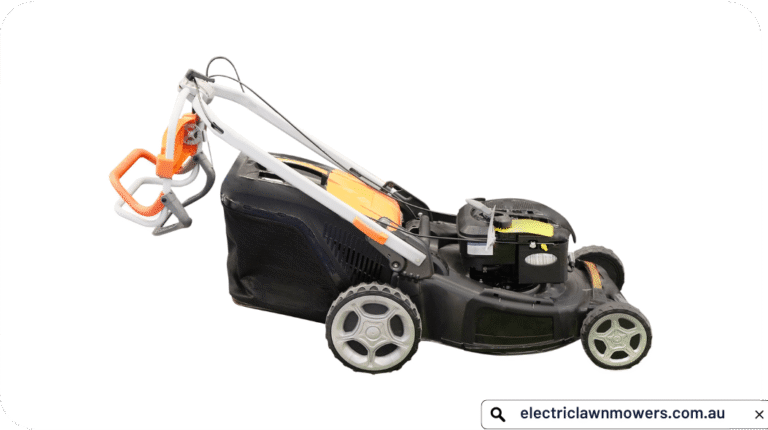
The mower type matters more than the number alone. A corded mower has a direct connection to household power. A battery mower stores energy in a pack. A gas mower turns fuel into mechanical power through an engine.

Corded electric mowers
Most corded electric mowers use a 120-volt household circuit. Many models fall in the 8- to 15-amp range. Compact mowers for small yards may use less, while wider decks and stronger motors may use more.
A corded mower can suit a small, fairly flat yard near an outdoor outlet. It may work well for a renter who wants low maintenance and does not have room to store gasoline. It can also suit a first-time homeowner who already owns a safe, outdoor-rated extension cord.
The cord is the main drawback. You must manage it around trees, flower beds, fences, and the mower deck. A corded mower is not a good fit if the yard has many obstacles or if no outdoor outlet is available.
Battery-powered mowers
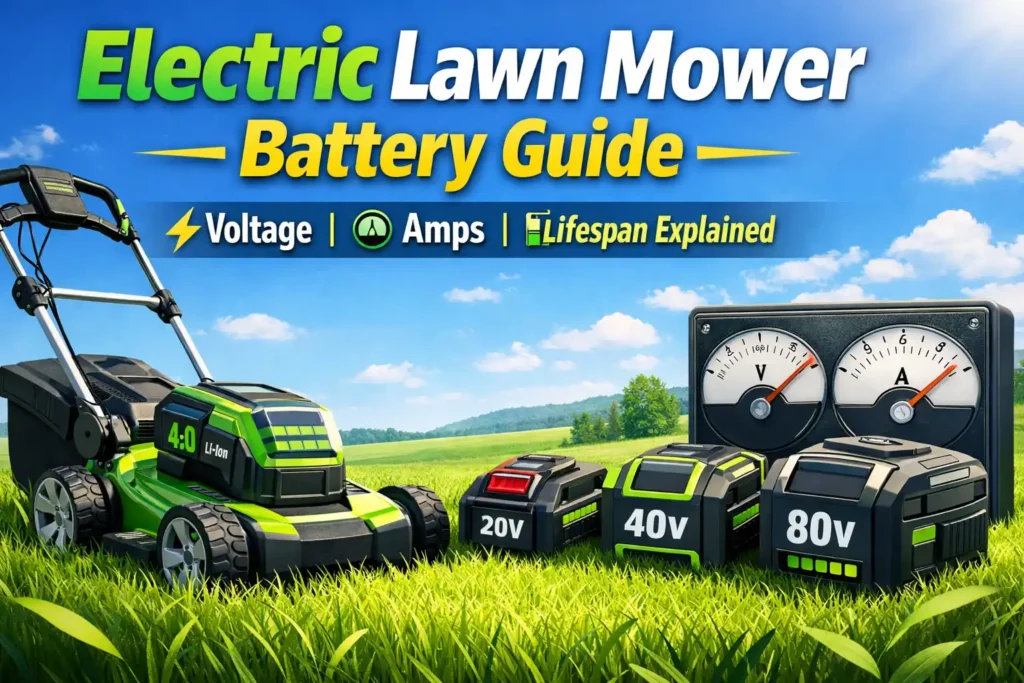
Battery mowers are usually labeled with a voltage such as 18, 40, 56, 60, or 80 volts. The battery’s amp-hour rating, written as Ah, shows its energy capacity. A 5-Ah battery can store more energy than a 2-Ah battery at the same voltage.
Battery mower current changes all the time. A brushless motor, which uses electronic controls instead of brushes that rub against the motor, can adjust output as grass conditions change. The mower may draw modest current in short grass and much more in thick turf.
Do not compare a battery mower’s 5 Ah directly with a corded mower’s 10 amps. They measure different things. One describes stored battery capacity. The other describes current flowing from a power source.
Gas push mowers
A gas mower does not use amps to spin its blade. Its engine burns gasoline and turns the crankshaft. Engine size is often shown in cubic centimeters, or cc. A larger engine may offer more reserve power, but it can also add weight, noise, fuel use, and maintenance.
Gas mowers suit larger yards, areas far from outlets, and users who need long run times without waiting for a battery to charge. They can also handle thick grass well when properly maintained.
The tradeoffs include oil changes, spark plugs, air filters, fuel storage, winter care, exhaust, and louder operation. Some cities, states, or local agencies restrict gas-powered outdoor equipment. Confirm local rules before buying.
Riding and zero-turn mowers
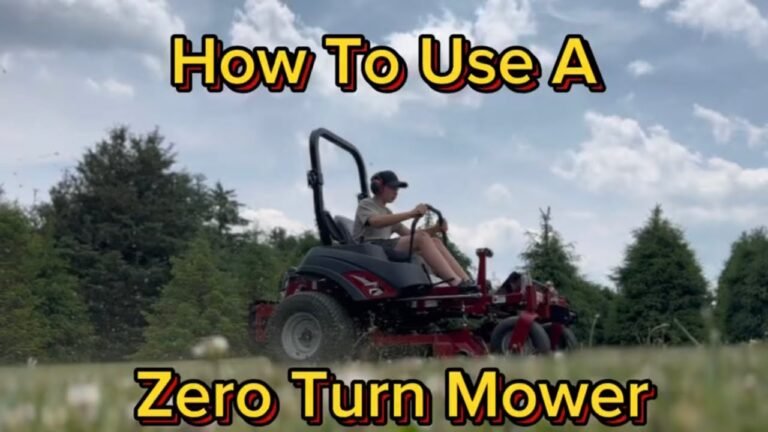
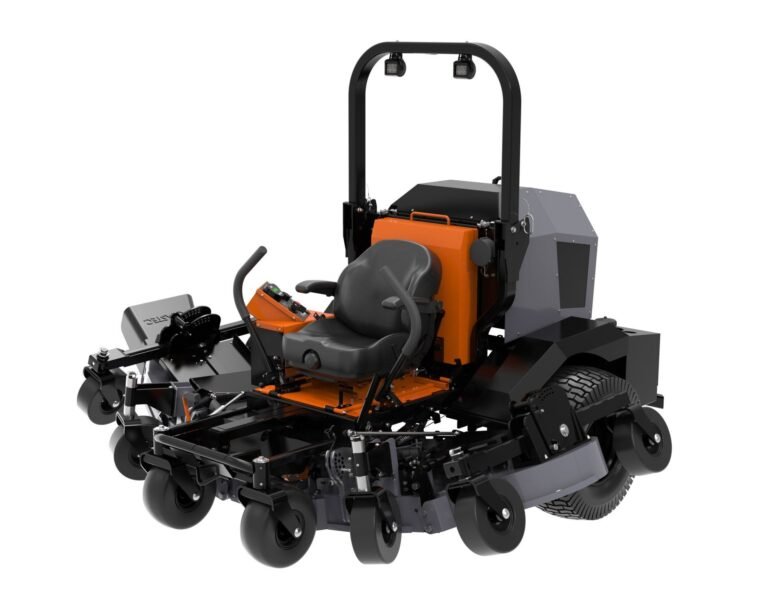
Riding mowers use gas or battery power to drive the blade system and wheels. A zero-turn mower has two independently controlled drive wheels. It can turn within a small space and may suit a large, open lawn with many trees or beds.
These machines are not judged by motor amps in the same way as corded push mowers. Check deck width, engine size, battery system, fuel use, seat comfort, turning radius, and slope limits.
A riding mower is usually excessive for a small suburban yard. It needs more storage room and costs more to maintain. On steep slopes, even a large riding mower may be unsafe. Follow the slope limits in the manual.
Robotic and reel mowers
Robotic mowers use a rechargeable battery and automated drive system. Their cutting current varies as they move through grass. They may suit a level, enclosed yard with simple borders and a user who accepts setup work.
Reel mowers use human pushing force rather than a motor. They make no electrical noise and use no amps. They fit small, level yards with soft turf and a person willing to mow often.
| Mower type | Where it fits best | Main limitation |
|---|---|---|
| Corded electric | Small yards near an outlet | Cord management |
| Battery push mower | Small to medium yards | Battery cost and charge time |
| Gas push mower | Medium yards and remote areas | Noise and engine care |
| Riding mower | Large open lawns | Cost and storage space |
| Zero-turn mower | Large yards with many obstacles | Poor fit for tight or steep areas |
| Reel mower | Small, level yards | Needs frequent mowing |
Corded and battery mowers are often easier for new homeowners than gas models. Gas and riding mowers make more sense when yard size, distance, or grass growth demands longer continuous use.
How many amps does a battery lawn mower use?
A battery lawn mower may draw roughly 10 to 30 amps from a battery during normal cutting, but the range can vary widely. Some systems draw less, while heavy grass, a wide deck, or a steep load may raise the current. Manufacturers do not always publish the mower’s real-time amp draw.

The battery pack stores energy in watt-hours. You can estimate watt-hours with this formula:
Watt-hours = Volts × Amp-hours
A 40-volt, 5-Ah battery stores about 200 watt-hours under the stated rating. A 56-volt, 5-Ah battery stores about 280 watt-hours. Actual usable energy will be lower or may vary because of temperature, battery age, control systems, and load.
Why battery voltage matters
Higher voltage can let a motor deliver the needed power with less current for the same wattage. For example, a 1,200-watt load requires about 30 amps at 40 volts or about 21.4 amps at 56 volts.
This does not mean a higher-voltage mower always cuts better. Motor design and deck airflow still matter. Compare the full system, including blade speed, deck size, battery capacity, charger time, weight, and warranty terms.
What reduces battery runtime?
Battery runtime can drop when:
- Grass is tall, wet, or thick.
- The deck is packed with clippings.
- The blade is dull or damaged.
- The mower is self-propelled on a slope.
- The user cuts too low in one pass.
- The battery is very cold or very hot.
- The mower carries a wide or heavy deck.
Self-propelled drive uses extra battery energy. It can help on slopes, but it may not be worth the added drain on a small, flat lawn. A push model is often lighter and simpler for a small yard.
💡 Pro Tip: If grass is more than one-third taller than your target mowing height, raise the deck and mow in stages. This reduces motor strain and helps prevent a battery mower from bogging down.
How many amps does a corded lawn mower need?
A corded lawn mower needs enough circuit capacity to support its rated current and its brief startup surge. Most residential corded models use a standard 120-volt outlet. The mower’s label and manual should state the required amperage.

Never assume that a thicker-looking household cord is safe. Extension cords have ratings based on wire size, length, and outdoor use. A long cord can create voltage drop even when the mower starts.
| Mower rating | Approximate power at 120 volts | Practical note |
|---|---|---|
| 8 amps | 960 watts | Often suits light-duty mowing |
| 10 amps | 1,200 watts | Common mid-range load |
| 12 amps | 1,440 watts | More reserve for thick grass |
| 15 amps | 1,800 watts | Near the limit of a typical household circuit |
These figures are simple estimates, not a substitute for the manual. The mower may not draw its full rating at every moment. Keep other heavy loads off the same circuit when possible.
Choosing an extension cord
Use an outdoor-rated cord with a grounded plug. Match the cord’s wire size and length to the mower maker’s instructions. A shorter, heavier-gauge cord generally reduces voltage drop.
Do not connect multiple cords to reach the yard. Do not run a cord across standing water, a driveway where vehicles may crush it, or an area where the blade can reach it. Keep the cord behind you and inspect it before every use.
Breaker trips and overheating
A tripped breaker can mean the circuit is overloaded. It can also point to a damaged cord, a stuck blade, a clogged deck, or a motor problem. Unplug the mower before checking anything.
Do not replace a breaker with a larger one unless a qualified electrician confirms that the wiring supports it. A breaker protects the circuit. It is not an obstacle to bypass.
Does a higher amp mower cut better?
A higher amp rating can provide more electrical input, but it does not automatically mean a better cut. Cut quality depends on blade sharpness, blade speed, deck airflow, cutting height, motor control, and how fast you move.

A 10-amp mower may perform well on a small, regularly cut lawn. A 15-amp model may offer more reserve for thicker turf. Yet a heavy mower with poor airflow can still perform worse than a lighter model with a well-designed deck.
Factors that matter more than amps
Look at these details together:
- Cutting width: A wider deck covers more ground but may need more power.
- Cutting height range: A broad range helps match cool-season and warm-season turf.
- Mulching design: Mulching chops clippings into smaller pieces and returns them to the lawn.
- Side discharge: This sends clippings out of the side and can help with tall grass.
- Grass catcher size: A larger bag means fewer stops but adds weight.
- Blade access: Simple blade removal makes service easier.
- Wheel size: Larger rear wheels can help on uneven ground.
- Handle adjustment: Useful for different users, including seniors.
The best mower for small yards may be a 16- to 20-inch push mower. A medium yard may justify a 20- to 22-inch battery or gas mower. A large lawn may need a riding mower, but measure gates, slopes, and storage space first.
What makes a mower draw too many amps?
A mower draws more current when the blade meets resistance. The issue may be normal during heavy cutting, or it may signal a maintenance problem.

| Symptom | Likely cause | First action |
|---|---|---|
| Motor slows in tall grass | Cutting too much at once | Raise deck and mow slower |
| Corded mower trips breaker | Overload, long cord, or fault | Unplug and inspect cord |
| Battery drains quickly | Wet grass, dull blade, or self-propel drive | Check blade and mowing conditions |
| Loud vibration | Bent blade or damaged adapter | Stop and inspect after disconnecting power |
| Burning smell | Overheated motor or cord | Stop use and seek service |
| Deck fills with clippings | Wet grass or blocked airflow | Clear only with power removed |
These signs do not prove one specific fault. Use the owner’s manual for diagnosis. If the motor smells hot, smokes, sparks, or repeatedly trips a breaker, stop using it.
Dull blades and thick thatch
A dull blade makes the mower work harder. It can tear grass instead of cutting it. Torn tips may look pale or brown and can make the lawn appear rough.
Thatch is a dense layer of dead roots, stems, and other plant matter near the soil surface. A heavy thatch layer can increase mowing resistance and block deck airflow. Dethatching is a separate lawn care task and should not be done with a mower.
Clogged decks
Clippings can stick beneath the deck, especially when grass is wet. A clogged deck reduces airflow and may slow the blade. It also adds weight and can create corrosion if left in place.
Remove the battery or disconnect the spark plug before cleaning or servicing. Never reach under a mower while the blade can move.
Is a 15-amp lawn mower worth it?
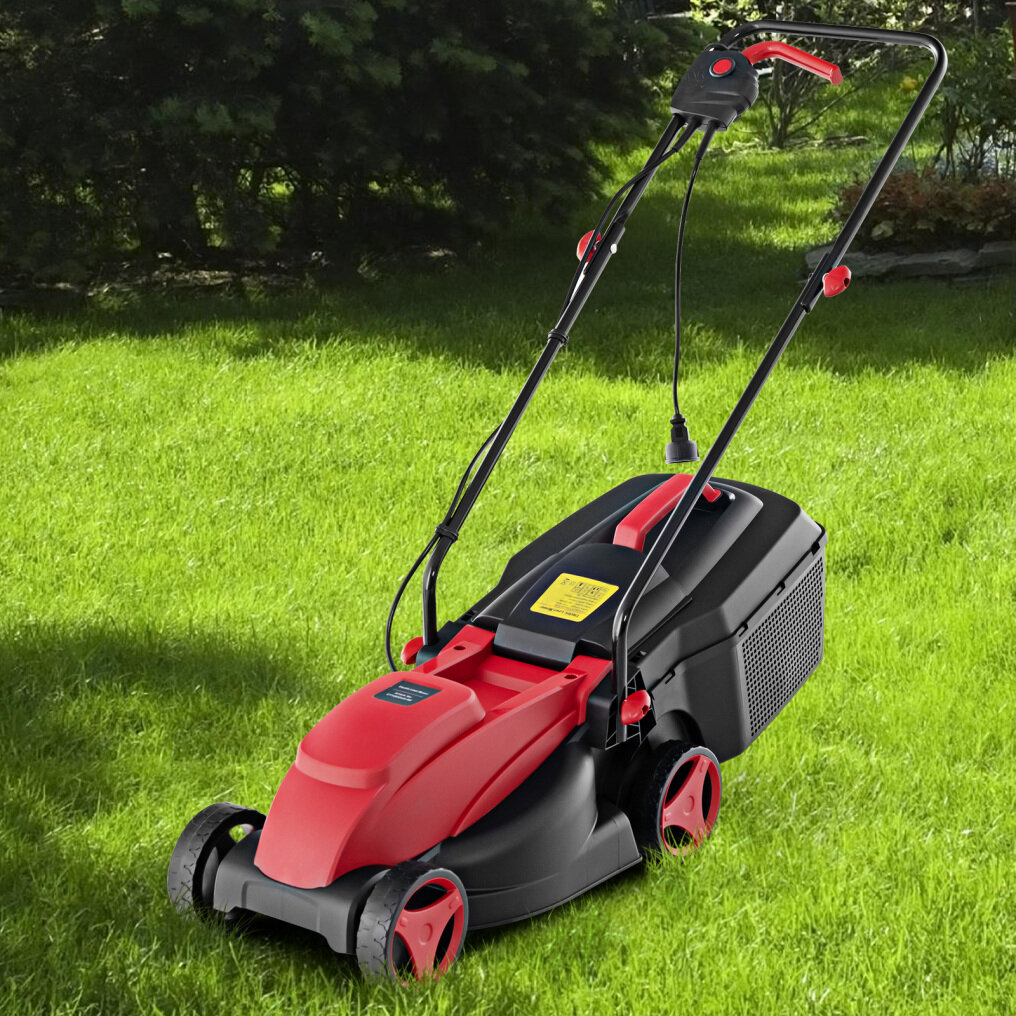
A 15-amp corded mower can be worth the money for a small or medium yard with thick grass, as long as an outlet is nearby and cord handling is acceptable. It may provide more power reserve than a lower-amp model.
It may not be worth it for a small, flat lawn that is cut often. A lighter 8- or 10-amp mower may be easier to carry and store. A battery mower may cost more at first but can remove the need for an extension cord.
Benefits and drawbacks of higher amp ratings
| Pros | Cons |
|---|---|
| More power reserve for heavy grass | May weigh more |
| Can handle a wider deck | May cost more |
| Less likely to bog in normal thick turf | Still needs a suitable circuit |
| Useful for damp-prone, fast-growing lawns when conditions are safe | Cord can limit reach |
A higher amp mower is most useful when the yard creates real resistance. It is less useful when the mower is already powerful enough for the grass and the main issue is poor mowing technique.
Which mower fits your yard and user?
The right mower depends on the lawn and the person using it. A gift buyer should not choose only by amp number. Think about storage, strength, noise tolerance, charging habits, slope, and gate width.

Best fit for a small, flat yard
A compact corded or battery push mower often suits a small yard. A 16- to 20-inch deck is easier to store and turn around tight beds. A reel mower can also work when the lawn is level and mowed often.
A first-time homeowner or renter may prefer a light electric mower with simple controls. A senior user may value low weight, easy handle adjustment, a push-button start, and a grass catcher that is not hard to lift.
Best fit for a medium yard
A 20- to 22-inch battery or gas mower can reduce mowing passes. A self-propelled mower may help on a moderate slope, but it adds weight, cost, and maintenance.
Experienced DIY users may prefer a battery platform shared with a string trimmer, edger, or leaf blower. Confirm that the battery works across the exact product family. Similar-looking packs are not always compatible.
Best fit for hills
A self-propelled mower can help on a gentle slope, but it does not make steep mowing safe. Never mow wet grass on a hill. Walk-behind mowers should be used across a slope rather than straight up and down when the manual allows it.
A riding mower may be unsafe on slopes beyond its stated limit. A zero-turn mower can be hard to control on uneven or steep ground. Check the manufacturer’s slope guidance before purchase.
Best fit for large, open lawns
A riding mower or zero-turn mower may save time on a large, open property. These machines need a shed or garage with enough door width and floor space. They also need routine service, tire checks, blade work, and fuel or battery planning.
A robotic mower may suit a level yard with clear boundaries. It is less suitable where children, pets, steep areas, loose debris, or complex lawn edges make setup difficult.
| Yard and user | Suitable mower direction | Who should skip it |
|---|---|---|
| Small flat yard, renter | Light corded or battery push mower | Anyone without safe cord access |
| Small yard, senior user | Lightweight battery push mower | Users unable to lift or steer it |
| Medium yard, DIY owner | Battery or gas self-propelled mower | People who dislike routine service |
| Large open lawn | Riding or zero-turn mower | Homes without secure storage |
| Level enclosed lawn, tech-friendly user | Robotic mower | Yards with steep slopes or complex edges |
Measure the yard before shopping. Check gate width, deck width, storage height, charger location, and the distance to an outlet. For a gift, ask about these details rather than guessing.
🎁 Gift-Buyer Note: A mower is easier to give when you confirm the recipient’s yard size, slope, gate width, storage space, and preferred power system first. A smaller, simple mower may be more useful than a large model with features they will not use.
How long does a lawn mower last?
A well-maintained lawn mower can last for many years, but service life depends on use, storage, climate, and parts support. Blades, belts, spark plugs, air filters, wheels, batteries, and cables may wear out before the main machine.
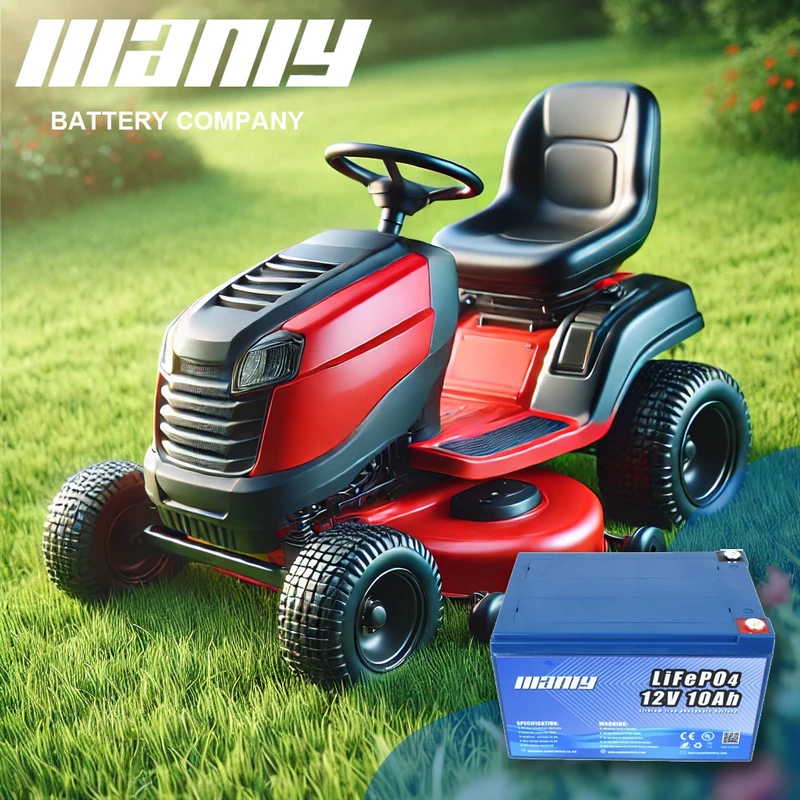
Gas engines often need more routine care but can remain serviceable for a long time when oil, fuel, and air filters are managed. Battery mowers have fewer engine parts, but their battery packs eventually lose capacity.
Wet climates can increase rust. Hot climates can stress batteries and dry fuel systems. Cold storage can make gasoline harder to start and can reduce battery performance until the pack warms.
Parts that wear first
- Mower blades become dull or bent.
- Battery packs lose runtime over repeated charge cycles.
- Spark plugs foul or wear.
- Air filters collect dust and grass.
- Drive belts stretch or crack.
- Plastic wheels and height levers may break.
- Extension cords can suffer cuts or worn plugs.
- Grass catcher bags can tear.
Check replacement part numbers before buying. A low purchase price does not help if blades, batteries, belts, or chargers are hard to find.
How much electricity does a corded mower use?
A 10-amp mower on a 120-volt circuit uses about 1,200 watts while drawing its full rated current. If it runs for one hour at that load, it uses about 1.2 kilowatt-hours, or kWh.
Actual use is often lower because the mower does not pull full current every second. Your local electric rate determines the operating cost. Use the formula below:
Estimated kWh = watts ÷ 1,000 × hours of use
| Example mower load | One-hour energy estimate | What changes the result |
|---|---|---|
| 960 watts | 0.96 kWh | Light grass and short use |
| 1,200 watts | 1.20 kWh | Mid-range rated load |
| 1,440 watts | 1.44 kWh | Heavy load or higher rating |
These are estimates, not utility bills. Battery charging also has some energy loss between the wall outlet and the battery pack.
Gas costs are harder to compare because use depends on engine size, mowing speed, grass load, fuel price, and maintenance. A gas mower may be cheaper to buy but cost more in fuel and service over time.
Noise, climate, and local rules
Electric mowers are often quieter than gas mowers, but they are not silent. Blade noise, wheel noise, and motor sound still reach neighbors. A corded or battery mower may be a better choice for early morning or close neighborhood use, subject to local rules.
Wet grass raises both safety and performance concerns. It can clog the deck, increase resistance, leave clumps, and make slopes slippery. Drought-stressed grass may need a higher mowing height to reduce stress.
Cold weather can cause gas engines to start poorly if fuel is old or the engine needs service. Cold batteries may show less available power. Store batteries according to the maker’s instructions and avoid charging a battery that is too hot, too cold, damaged, swollen, or wet.
📜 Check Local Rules: HOA policies, city noise ordinances, gas-equipment restrictions, and fuel-storage laws vary. Confirm the rules with your city, county, or HOA before buying or operating a mower.
Safety rules for every mower
Safe mowing starts before the motor runs. Wear safety glasses, hearing protection, closed-toe shoes, and work gloves when appropriate. Clear stones, sticks, wire, toys, and other debris from the lawn.

Keep children and pets away from the mowing area. Do not mow while distracted. Never mow wet grass on slopes, and do not carry passengers on riding equipment unless the manual allows it.
Before servicing:
- Turn off the mower.
- Unplug a corded model.
- Remove the battery from a battery model.
- Disconnect the spark plug wire on a gas mower.
- Wait for all moving parts to stop.
- Follow the owner’s manual.
Never refuel a hot gas engine. Let it cool first, and refuel outdoors away from flames and sparks. Store gasoline only as local law and the fuel container label allow.
Never defeat a safety switch. Do not use a damaged cord, cracked battery, bent blade, or leaking fuel system.
Common mower mistakes that raise amp use
Many power problems come from setup or mowing habits rather than a weak motor. Small changes can reduce strain and help the mower run more smoothly.
Common mistakes include:
- Cutting more than one-third of the grass height at once.
- Mowing wet turf.
- Using a dull blade.
- Letting clippings pack under the deck.
- Pulling a cord across the mower’s path.
- Running other heavy tools on the same circuit.
- Using the wrong battery or charger.
- Ignoring unusual vibration or burning smells.
- Leaving gas untreated during long storage.
- Storing a battery mower with the pack in extreme heat.
A string trimmer, edger, or leaf blower can handle areas the mower cannot reach. Do not force the mower into beds, roots, stones, or brush. Use the right tool for the job.
Maintenance that keeps current use in check
Routine maintenance can help a mower cut with less strain. It cannot turn an underpowered model into a heavy-duty machine, but it can prevent avoidable load.

| Maintenance task | Corded or battery mower | Gas mower |
|---|---|---|
| Inspect blade | Before use | Before use |
| Clean deck | After mowing as needed | After mowing as needed |
| Check power system | Cord, plug, battery, charger | Fuel, plug wire, starter |
| Service air filter | If equipped | At manual interval |
| Replace spark plug | Not used | At manual interval |
| Sharpen or replace blade | As needed | As needed |
Clean grass from vents and the deck only after disconnecting power. Keep battery contacts dry. Use only the charger specified for the battery.
For gas equipment, use fresh fuel and fuel stabilizer when the manual recommends it. Change oil at the stated interval. Dispose of old gas and oil at a hazardous-waste site, not down a drain or on the soil.
Storage in a shed or garage
Store a mower on a dry, level surface. Keep it away from sprinklers, rain, fertilizer, and corrosive chemicals. Fold the handle only if the manual permits it.
Keep lithium-ion batteries in a suitable, dry location away from direct sun and heat. Do not store damaged or swollen batteries indoors. Recycle lithium-ion batteries at a designated drop-off.
🌿 Eco and Disposal Note: Donate or recycle a usable old mower. Recycle lithium-ion batteries through an approved battery program. Take old gasoline and oil to a local hazardous-waste site.
Corded versus battery versus gas: the practical choice
The main difference between corded, battery, and gas mowers is how each supplies power. That difference affects noise, maintenance, reach, runtime, storage, and operating cost.
| Power source | Strong point | Tradeoff |
|---|---|---|
| Corded electric | Continuous power and low engine care | Cord limits movement |
| Battery electric | Quiet operation and easy starting | Battery and charger cost |
| Gas | Long use away from outlets | Fuel, noise, fumes, and service |
A corded mower suits a small yard near a safe outlet. A battery mower suits users who want simple starting and fewer engine tasks. A gas mower suits larger or remote yards where continuous use matters.
No option suits every yard. The best choice is the one that matches your grass, terrain, storage, budget, and comfort with maintenance.
Frequently asked questions
Q: How many amps does a 12-amp lawn mower use?
A: A 12-amp corded mower is rated to draw up to about 12 amps under its stated operating conditions. At 120 volts, that equals about 1,440 watts. Actual current changes with grass height, moisture, blade sharpness, and motor load.
Q: Can I run a lawn mower on a 15-amp breaker?
A: Many 120-volt corded mowers are designed for household circuits, but check the mower manual and the circuit load first. Do not run several high-load tools on the same circuit. A breaker that trips repeatedly may signal an overload, damaged cord, clogged deck, or mower fault.
Q: Does a battery mower have an amp rating?
A: It may, but shoppers usually compare voltage and amp-hours. Amp-hours describe battery capacity, not the mower’s exact running current. For a fair comparison, look at battery voltage, Ah, claimed runtime, deck width, mower weight, and the maker’s test conditions.
Q: Is a 40-volt mower stronger than a 20-volt mower?
A: Voltage alone does not prove cutting power. A 40-volt system may have more power potential, but motor design, blade speed, deck airflow, battery capacity, and cutting width also matter. Compare complete mower specifications.
Q: How many amps does a gas lawn mower use?
A: A standard gas mower does not use electrical amps to power the blade. The engine burns fuel. An electric-start gas mower may use battery current for starting, but that is different from continuous blade power.
Q: Are higher amps better for thick grass?
A: Higher amps can provide more electrical input in a corded mower, which may help in thick grass. They do not guarantee a better cut. A sharp blade, correct mowing height, clean deck, and slow pace also matter.
Q: What extension cord should I use with a corded mower?
A: Use an outdoor-rated, grounded extension cord that matches the mower maker’s length and wire-size instructions. Longer cords often need heavier wire to limit voltage drop. Inspect the cord every time and keep it away from the blade.
Q: Why does my electric mower keep shutting off?
A: Possible causes include tall grass, a clogged deck, a dull blade, low battery charge, overheating, a damaged cord, or a protection system activating. Disconnect power before inspection. If the issue continues, use the manual or contact an authorized repair center.
Q: Can I mow wet grass with an electric mower?
A: It is best to wait until the grass is dry. Wet grass can clog the deck, increase motor load, create slippery footing, and raise electrical risk with corded equipment. Never mow wet grass on a slope.
Q: How often should I sharpen a mower blade?
A: Many homeowners check the blade several times during the mowing season and sharpen it when the edge is dull, damaged, or leaving torn tips. The correct schedule depends on mowing frequency, soil contact, grass type, and debris.
Q: Is a self-propelled mower worth the extra cost?
A: It can be worth it for a medium yard, a gentle slope, or a user who finds pushing tiring. It may not be worth it for a small, flat lawn because it adds weight, cost, moving parts, and battery use.
Q: What is the best mower for a senior?
A: A lightweight battery push mower with easy starting, simple controls, adjustable handle height, and manageable bag weight may suit many seniors. The right choice depends on strength, yard size, slope, and storage. Test the handle and lift weight when possible.
Q: How many amps does a riding mower use?
A: A gas riding mower does not use amps for cutting. A battery riding mower uses current from its battery system, but the manufacturer may list voltage and kilowatt-hours instead. Check the exact model’s electrical specifications.
Q: How long does a lawn mower last?
A: Service life varies with build quality, care, storage, climate, and use. Blades, belts, batteries, spark plugs, wheels, and filters usually wear before the main frame or motor. Parts availability is important when comparing models.
Q: Can I use a larger battery on my mower?
A: Use only batteries approved for that mower and battery platform. A larger Ah pack may increase runtime if the maker supports it, but it can add weight and cost. Never force a battery that does not fit or use an unapproved charger.
Final advice
For most corded electric lawn mowers, expect roughly 5 to 15 amps, with many household models near the middle of that range. Battery mowers are better compared by volts and amp-hours, while gas mowers are compared by engine size, deck width, fuel needs, and maintenance.
Choose the mower for the yard, not just the biggest number on the label. Measure the lawn, check slopes and gates, plan storage, and consider who will use it. A light corded or battery push mower can suit a small flat yard, while a self-propelled, gas, riding, or zero-turn model may fit larger or more demanding properties.
Confirm the deck size, battery compatibility, voltage, blade type, replacement parts, and manual instructions before purchase. Clear debris, wear eye and hearing protection, keep children and pets away, disconnect power before service, and follow local rules for noise, gas equipment, and fuel storage.

One Comment