How Do Self Propelled Lawn Mowers Work: Drive System Guide
Self-propelled lawn mowers move themselves across the grass while you guide them with the handle. A drive system connects the engine or electric motor to one or more wheels. When you press the drive control, power travels through a belt, gearbox, or similar parts and turns the wheels.
That simple idea can save a lot of effort. It matters most on medium-size yards, sloped lawns, thick turf, and lawns where a push mower feels tiring. Still, a self-propelled mower is not always the right choice. A small, flat yard may cost less to mow with a basic push mower, while a very large property may call for a riding mower or zero-turn mower.
This guide explains how self-propelled lawn mowers work, how their drive systems differ, what parts wear out, and how to choose the right design for your yard. It also covers gas and battery models, hills, wet grass, storage, repairs, noise, safety, and common buying mistakes.
Affiliate disclosure: This article may contain affiliate links. If you buy through one, we may earn a commission at no extra cost to you. Always confirm current specifications, compatibility, price, and warranty terms on the manufacturer’s product page and in the owner’s manual.
Quick answer: How does a self-propelled lawn mower work?
A self-propelled lawn mower uses engine or motor power to turn its drive wheels. A control bar or lever engages the drive system. Power then moves through a belt, pulley, gearbox, or transmission to an axle. The mower rolls forward while you steer and control the cutting speed. Front-wheel drive suits flat yards, rear-wheel drive gives better hill traction, and all-wheel drive helps on uneven or steep ground.
The drive wheels do not usually spin the mower at the same speed as the cutting blade. Separate parts transfer power to the blade and wheels. This allows the mower to cut grass and move forward at the same time.
The basic parts inside the drive system
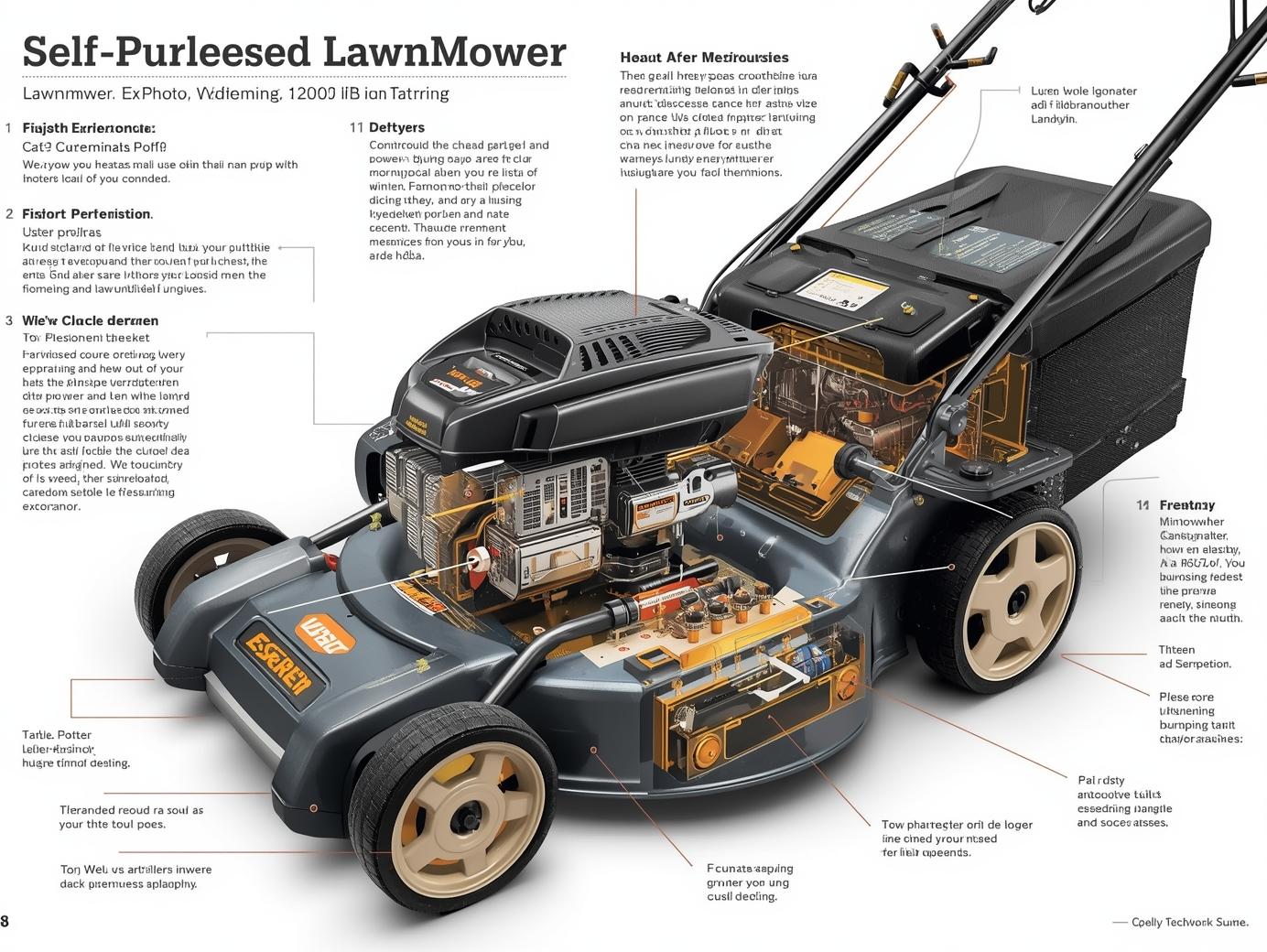
The main parts are the power source, drive control, transmission, belt or gear set, axle, and drive wheels. Each part has a clear job. If one part slips, breaks, or wears down, the mower may start slowly, lose power, or stop moving.

Engine or electric motor
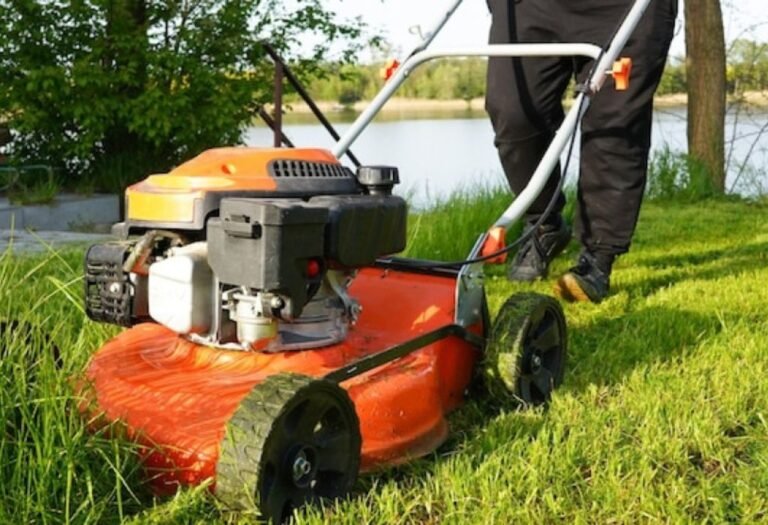
Gas self-propelled mowers use a small four-stroke engine. Engine size is often listed in cubic centimeters, or cc. A higher cc number can indicate more power, but it does not tell the whole story. Deck size, gearing, blade design, grass height, and mower weight also affect performance.
Battery mowers use an electric motor powered by a rechargeable lithium-ion battery. Battery capacity is shown in amp-hours, or Ah. Voltage describes the electrical system, while Ah gives a rough idea of stored energy within that system. A 60-volt battery and a 40-volt battery are not interchangeable unless the maker says they are compatible.
Many newer electric mowers use a brushless motor. This motor has electronic controls instead of traditional brushes that wear against the motor. Brushless designs can be quiet and efficient, but the mower still depends on a battery, control board, and compatible charger.
Drive control
The drive control is often a bar, lever, or paddle on the handle. You squeeze or press it to engage the wheels. Releasing it normally stops the self-propel function, though the blade may continue to run on some models.
Some mowers use one control for the blade and another for the drive. Others combine several controls into a single handle system. Read the manual before use. A mower that can move without the blade running may be useful for repositioning, but the control layout differs by model.
Belt and pulleys
Many self-propelled gas mowers use a drive belt. The engine turns a pulley. That pulley turns the belt, and the belt transfers power to another pulley connected to the transmission or axle.
Belts can stretch, crack, glaze, or break. Grass, dust, oil, and heat can shorten belt life. A loose belt may cause slow movement or slipping. A broken belt can leave the engine running while the mower no longer propels itself.
Transmission or gearbox
The transmission controls how power reaches the wheels. It may use gears, a friction disc, a variable-speed mechanism, or another design. The transmission also affects travel speed.
Some models offer a speed lever. Others let you change speed by moving the drive bar closer to or farther from the handle. A variable-speed drive can help when you mow around trees, garden beds, and tight corners.
Axles and drive wheels
The axle carries turning force to the wheels. On some designs, both wheels on one axle receive power. On others, a differential or separate mechanism allows the wheels to turn at different speeds during a turn.
Large rear wheels can roll over roots and rough turf more easily than small wheels. However, wheel size alone does not create strong hill traction. Tire tread, weight balance, drive-wheel location, and slope angle all matter.
Blade system and deck
The deck is the housing around the blade. The blade cuts grass, while the drive system moves the mower. These systems work together but serve different purposes.
A mulching mower cuts clippings into smaller pieces and returns them to the lawn. Side discharge throws clippings from the deck. A grass catcher collects them. A mower may support one, two, or all three methods, depending on its deck and included parts.
| Part | Main job | Common problem |
|---|---|---|
| Engine or motor | Creates power | Hard starting, overheating, or electrical faults |
| Belt and pulleys | Transfers power | Slipping, cracking, or breakage |
| Transmission | Controls wheel speed | Loss of drive or noisy operation |
| Axle and wheels | Move the mower | Worn gears, damaged bushings, or poor traction |
| Blade and deck | Cut and manage grass | Dull blade, clogging, or poor discharge |
The key takeaway is that a self-propelled mower has two related systems: the cutting system and the drive system. A mower can cut well but fail to move, or move well while producing a poor cut.
How power travels from the engine to the wheels
The drive path usually follows a simple chain: power source, pulley or motor output, belt or gear, transmission, axle, and wheels. When you engage the drive control, a cable or electronic switch tells the system to connect.
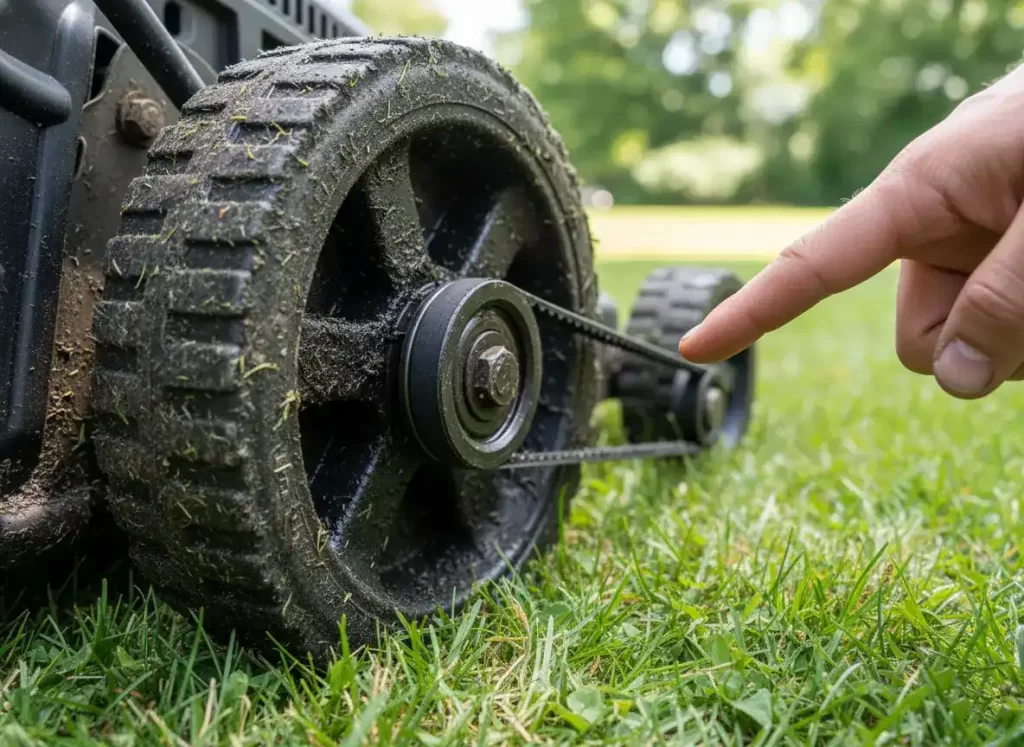
Gas mower drive path
On a gas mower, the engine crankshaft spins when the engine runs. One end drives the blade. Another pulley or gear arrangement sends power to the wheel drive.
In many designs, the drive belt stays loose or disconnected until you engage the drive lever. The lever may move an idler pulley. This pulley tightens the belt and transfers power to the transmission.
The transmission then reduces engine speed and increases turning force. This matters because the engine spins much faster than the wheels should turn. The gearbox changes fast engine rotation into slower wheel rotation with more usable pulling force.
Battery mower drive path
A battery mower sends electricity from the battery to an electronic controller and then to the motor. The motor turns the blade and may also power the drive wheels.
Some battery mowers use a separate drive motor. Others use a shared motor and mechanical transmission. The exact layout varies. Check the product manual before replacing a drive belt, wheel gear, battery, or control part.
Battery power can drop in tall, wet, or dense grass. Cold storage can also affect battery behavior. Follow the maker’s guidance for charging and temperature. Never charge a damaged or swollen battery.
What happens when you release the drive bar?
When you release the drive control, the drive system should stop pulling the wheels. The mower may slow at once or coast briefly. This depends on the design and terrain.
If the mower keeps moving strongly after you release the control, stop using it. Turn off the engine or remove the battery, then check the manual. A stuck cable, damaged control, or faulty electronic switch can create a safety risk.
💡 Pro Tip: Test the drive control in an open, clear area before your first full mowing session. Learn how quickly the mower starts, slows, and stops before working near fences, slopes, or garden borders.
Front-wheel, rear-wheel, and all-wheel drive
The main difference between front-wheel drive and rear-wheel drive is which wheels receive power. That choice changes how the mower turns, climbs, and behaves when the grass catcher is full.

Front-wheel drive
Front-wheel-drive mowers power the front wheels. They can be easy to turn because lifting or easing the front end helps the mower pivot around the rear wheels.
This design suits flat or gently sloped yards with many trees, beds, and obstacles. It may be less effective when climbing hills. If you lift the front wheels to turn, the mower temporarily loses drive traction.
Rear-wheel drive
Rear-wheel-drive mowers power the rear wheels. They often feel more planted when moving uphill. A full grass catcher can also add weight over the rear wheels.
Rear-wheel drive can suit medium yards, long straight runs, and rolling lawns. It may take more effort to turn in tight spaces. You should avoid forcing the mower around sharp corners.
All-wheel drive
All-wheel-drive mowers send power to both front and rear wheels. They can provide better traction on uneven ground and slopes. They also tend to cost more and may have more parts to maintain.
All-wheel drive does not make a steep or wet hill safe. Never mow across a slope if the manual warns against it. In many cases, walking straight up and down a manageable slope is safer than mowing side to side.
| Drive layout | Best fit | Main limitation |
|---|---|---|
| Front-wheel drive | Flat yards with many turns | Less hill traction |
| Rear-wheel drive | Rolling lawns and long runs | Can be harder to turn |
| All-wheel drive | Uneven or sloped lawns | Higher cost and added complexity |
For a small, flat yard, front-wheel drive may be enough. For a hilly lawn, rear-wheel or all-wheel drive may be a better match. A senior user may value smooth controls and easy turning more than maximum traction.
What makes a self-propelled mower move at different speeds?
A speed control changes how much power reaches the wheels or changes the gear ratio. It does not always change engine speed. On a gas mower, the engine may continue to run at a set speed while the transmission varies wheel speed.

Some models use a lever with several speed settings. Others use a squeeze bar that gives more speed as you pull it farther. Electric models may use electronic speed control.
A slower setting helps around trees, slopes, and tight borders. A faster setting may save time on a level lawn, but moving too fast can reduce cut quality. The blade needs time to lift and cut grass. If you rush through tall turf, the mower may leave uneven patches or clog.
A mower that moves too fast for the operator can be a poor choice, even if its drive system is powerful. This matters for seniors, new homeowners, and anyone with limited strength. A smooth, predictable drive is often more useful than the highest top speed.
Gas versus battery self-propelled mowers
Both types can use a wheel drive system, but their ownership needs differ. Gas mowers need fuel, oil, air filters, spark plugs, and seasonal care. Battery mowers need charged batteries, clean vents, and proper battery storage.

Gas models
Gas self-propelled mowers can run for as long as you have fresh fuel. They are often useful for larger lawns, thick grass, and work far from an outlet. A gas engine may also handle heavy loads well when the blade is sharp and the deck is clear.
The drawbacks include noise, exhaust, vibration, fuel storage, and more routine service. Cold starts can be difficult if fuel is old or the carburetor is dirty. Never refuel a hot engine. Store gasoline only as local laws and the fuel container instructions allow.
Battery models
Battery self-propelled mowers start with a switch or button. They produce no direct exhaust while operating and are often quieter than gas models. Noise can still bother neighbors, especially early in the morning.
Battery models suit small and medium yards, homes with limited fuel storage, and users who want less engine maintenance. Their limits include charge time, battery cost, heat, cold, and reduced runtime in dense grass. A second battery may add cost but can help users with larger lawns.
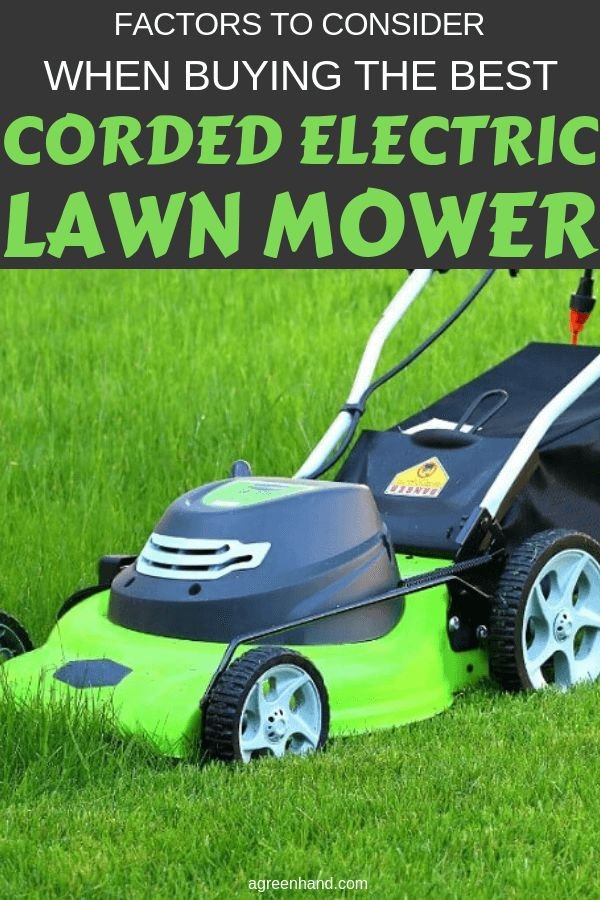
Corded electric models
Corded mowers can work well on small, flat lawns near a safe outdoor outlet. They are light and avoid gas storage. The cord is also a major limitation. It can snag, cut, or become a trip hazard.
Most corded mowers are push models rather than self-propelled models. If you are considering one, check the extension cord rating, outdoor safety requirements, and the mower manual.
| Power type | Strong point | Who should skip it |
|---|---|---|
| Gas | Long work sessions and heavy grass | Users with strict noise or gas limits |
| Battery | Easy starting and lower routine service | Owners of large lawns without spare batteries |
| Corded electric | Low fuel cost for small yards | Anyone with distant or complex mowing areas |
Check HOA rules, city noise ordinances, and local gas-equipment restrictions before buying. Some areas limit when gas equipment can run. Rules can change by city or neighborhood.
📜 Check Local Rules: Confirm mower hours, noise limits, fuel storage rules, and battery disposal options with your city, county, and HOA. A mower that fits the yard may still break a local rule if used at the wrong time.
Choosing a self-propelled mower for your yard
The best mower depends on yard size, terrain, grass type, storage, and the person who will use it. Measure before shopping. Check the narrowest gate, shed door, garage space, slope, and path from storage to lawn.

Small, flat yards
A small yard may not need self-propulsion. A push mower, reel mower, or compact battery mower can cost less and take less storage space.
A self-propelled mower may still help a user with back pain, low stamina, or a yard with thick turf. Choose a narrow deck if the yard has tight gates and many obstacles. A 20-inch deck is common, but smaller and wider designs exist.
Medium yards
Self-propelled mowers make the most sense for many medium yards. A 20- to 22-inch deck can cover ground at a reasonable pace without becoming too hard to store.
Battery models suit users who mow regularly and can charge the battery indoors or in a dry garage. Gas models suit owners who need long sessions and do not mind routine service.
Hilly lawns
Traction matters more than deck width on a hill. Rear-wheel drive or all-wheel drive may give better control than front-wheel drive. Large wheels and deep tread can also help.
Do not judge a hill by appearance alone. Wet grass, loose soil, and leaves can make a mild slope slippery. If the slope feels unsafe to walk on, a self-propelled mower is not a safe fix.
Thick or fast-growing turf
Warm-season grasses such as some types of zoysia, Bermuda, and St. Augustine can become dense. Cool-season grasses can also become heavy when wet or overgrown.
Use the correct mowing height for your turfgrass and climate. Cutting too much at once strains the blade, drive system, and motor. The “one-third rule” is a useful guide: avoid removing more than about one-third of the grass blade at one mowing.
| Yard type | Drive and power to consider | Better alternative in some cases |
|---|---|---|
| Small and flat | Compact battery or front-wheel drive | Push or reel mower |
| Medium and open | Rear-wheel battery or gas | Riding mower for much larger areas |
| Sloped and uneven | Rear-wheel or all-wheel drive | Professional service for unsafe slopes |
| Many beds and trees | Front-wheel drive with variable speed | Lightweight push mower |
The best mower for seniors often has easy-start controls, a manageable weight, a smooth drive lever, and a simple speed setting. A heavy all-wheel-drive mower may be too tiring to turn or store, even if it offers strong traction.
🎁 Gift-Buyer Note: Do not buy only by engine size or battery voltage. Ask about gate width, slope, storage space, lifting strength, charging access, and whether the recipient wants to bag, mulch, or side-discharge clippings.
Advantages and drawbacks of self-propelled drive
Self-propulsion can reduce pushing effort, but it adds weight, cost, and mechanical parts. Think of it as power steering for the mower, not as a fully automatic machine.

| Advantages | Drawbacks |
|---|---|
| Reduces pushing effort | Costs more than a similar push mower |
| Helps on long runs | Adds weight |
| Can aid hill control | Belts, gears, and cables can wear |
| Useful for some seniors | May be harder to turn in tight areas |
| Variable speed improves control | Needs more service than a basic push mower |
Self-propelled drive is usually worth considering when the lawn is medium-size, sloped, thick, or tiring to mow. It may not be worth the extra cost for a small, flat lawn that takes only a few minutes.
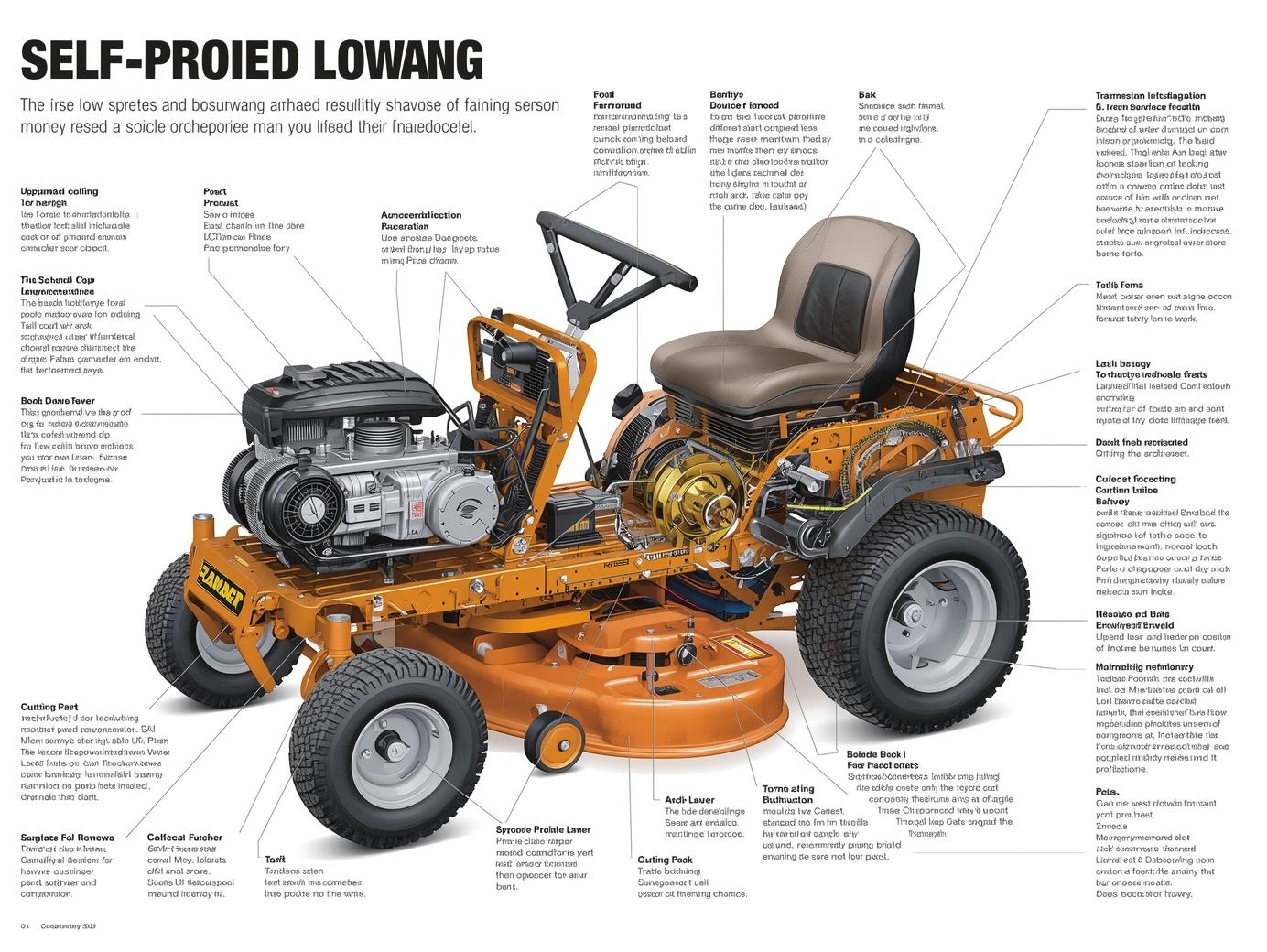
A riding mower becomes more practical when the property is large enough that walking takes too long. A zero-turn mower suits broad open areas with many obstacles but needs more storage and a higher budget. Robotic mowers offer a different approach, but they require boundary planning, charging space, and a yard layout that matches the model’s limits.
What wears out first?
Blades, drive belts, wheel gears, cables, batteries, spark plugs, and air filters are common wear points. Actual life depends on grass, dust, moisture, storage, cleaning, and mowing frequency.

Mower blades
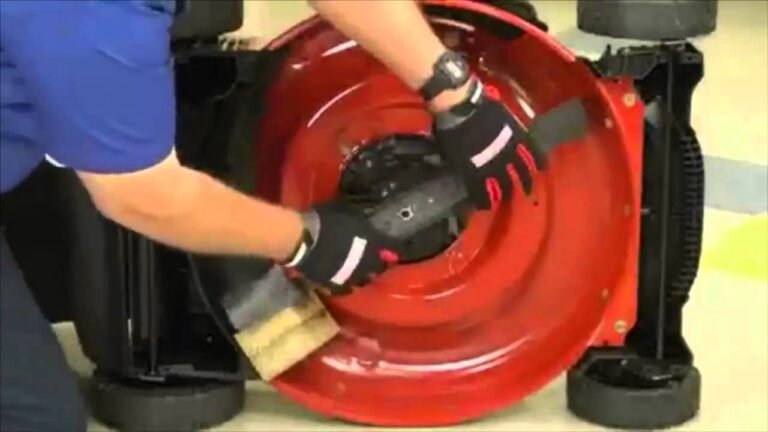
A dull blade tears grass instead of making a clean cut. Torn tips may look pale or ragged. Sharpen or replace the blade according to the manual. Always remove the battery or disconnect the spark plug before working under the deck.
Do not install a blade that does not match the mower. Confirm the blade type, length, center hole, mounting hardware, and part number.
Drive belts
A drive belt may slip when it becomes loose, worn, oily, or damaged. Signs include slow movement, a burning rubber smell, squealing, or a mower that stops pulling under load.
Replace a belt with the correct part. A belt that looks similar may have a different length or profile. Keep oil and fuel away from belts and pulleys.
Wheel gears and axles
Plastic wheel gears can wear if the mower is used on rough ground or forced around turns. Packed grass and dirt can also block wheel movement. Clean the wheel area and inspect for missing teeth or loose hardware.
Battery packs
Lithium-ion batteries lose capacity over time. Heat, deep discharge, freezing conditions, and poor storage can shorten life. Use only the charger and battery system approved for the mower.
Recycle old batteries through a designated battery drop-off. Do not place lithium-ion batteries in household trash or curbside recycling unless local instructions specifically allow it.
Spark plugs and air filters
Gas mowers may need spark plug and air filter service. A dirty air filter can limit airflow. A worn spark plug can cause hard starting or rough running.
Follow the service schedule in the manual. Some engines use foam filters that can be cleaned. Others use paper filters that should be replaced.
Maintenance that protects the drive system
Basic care can prevent many drive problems. Clean the deck after mowing, keep the wheel area free of grass, inspect the belt, and store the mower in a dry place.

Use a stiff brush or plastic scraper to remove dry buildup after the engine cools. Do not spray water directly into electrical parts, bearings, controls, or the battery compartment. For battery models, remove the battery before cleaning.
| Service task | Gas mower | Battery mower |
|---|---|---|
| Clean deck and wheels | After use when safe | After use with battery removed |
| Check blade | Before mowing | Before mowing |
| Inspect drive belt | Regularly | If the model uses one |
| Check air filter | As listed in manual | Usually not needed |
| Check spark plug | As listed in manual | Not applicable |
| Store power source | Stabilized fuel and dry storage | Battery at maker’s storage level |
Do not tip a mower in a way that lets fuel or oil reach the air filter or carburetor. The correct tilt direction varies by model. Follow the owner’s manual.
Storage in a garage or shed
Keep the mower dry and protected from rain. Avoid storing a gas mower near a furnace, water heater, or other ignition source. Store fuel only in an approved container and follow local rules.
For a battery mower, remove the battery if the manual recommends it. Keep the battery away from extreme heat and moisture. Do not cover a hot battery or charge it in a sealed space.
Winter storage
For gas equipment, the manual may recommend draining fuel or using fuel stabilizer. Old fuel can cause starting problems in spring. Change oil when the schedule calls for it, clean the mower, and inspect the blade and belt.
For battery equipment, clean the mower, inspect the charger, and store the battery in the temperature range listed by the maker. Do not leave a battery connected for months unless the manufacturer allows that practice.
🌿 Eco or Disposal Note: Take old gasoline and oil to a household hazardous-waste site. Recycle lithium-ion batteries at a designated drop-off. If the mower still works, donation or reuse is often better than disposal.
Common problems and what they mean
A mower that will not self-propel may have a simple control or belt problem. Stop first, then inspect only after the engine is off and the battery or spark-plug wire is disconnected.
| Symptom | Likely causes | First safe check |
|---|---|---|
| Mower will not move | Drive control, belt, cable, or transmission | Confirm the control engages and inspect the manual |
| Moves slowly | Slipping belt, worn gear, low power, or heavy grass | Check belt area and mowing load |
| Drive squeals | Belt slip or pulley issue | Stop and inspect for debris or wear |
| One wheel drags | Damaged gear, axle, or packed grass | Clean and compare wheel movement |
| Stops on hills | Low traction or overload | Mow only within safe slope limits |
| Battery drains fast | Tall grass, cold, old battery, or dull blade | Charge correctly and reduce mowing load |
Never reach into a moving deck or wheel area. If a belt is damaged, replace it only with the correct part. If the transmission is sealed or the repair requires special tools, use a qualified repair shop.
🔧 Quick Fix: If the mower suddenly loses drive, check whether the drive lever is fully engaging and whether grass is packed around the wheels. Do not pull on a cable or force a gear before checking the manual.
Safety rules for self-propelled mowers
A self-propelled mower can move without a strong push from you, so it deserves careful handling. Wear eye protection, hearing protection, closed-toe shoes, and work gloves when appropriate.

Clear stones, sticks, wire, toys, and pet waste before mowing. Keep children and pets away from the mowing area. Watch for hidden objects near shrubs and fences.
Never mow wet grass on slopes. Wet turf can reduce traction and increase the chance of a slip. Do not bypass a safety switch or hold a control in place with tape.
Turn off the engine and disconnect the spark plug wire, or remove the battery, before clearing clippings, checking the blade, or servicing the drive system. Never refuel a hot engine. Follow every safety step in the owner’s manual.
Slope safety
Walk the slope before mowing if conditions are safe. Look for holes, roots, loose soil, and wet patches. Keep both hands on the handle when operating.
A self-propelled mower may pull away from you on a downhill slope. It may also slide sideways on a cross-slope. If the mower manual gives a slope limit, follow it. If you cannot control the machine, stop and choose another method.
Noise and neighbors
Gas mowers often produce more noise than battery mowers, but all powered mowers create sound. Use hearing protection and choose reasonable mowing hours.
HOA rules and city ordinances may limit noise or gas equipment. Check before operating early in the morning or late in the evening.
Is a self-propelled mower worth the money?
A self-propelled mower is worth considering when it reduces work without creating new storage, service, or control problems. It often suits a medium yard, gentle hill, dense turf, or user who finds pushing tiring.
For a flat yard under a small area, a push mower may offer better value. For a very large yard, a riding mower may save more time. For a small city lawn, a compact battery mower may be easier to carry and store.
Do not pay for all-wheel drive if the yard is flat and easy to turn. Do not choose the cheapest front-wheel-drive model for a steep, rough lawn. Match the drive design to the land and the person using it.
Price tiers and expected trade-offs
Prices change often, so compare current listings rather than relying on an old dollar figure. The table below describes typical feature groups, not fixed prices or a ranking.
| Price tier | Features often found | Trade-offs |
|---|---|---|
| Entry level | Smaller deck, basic drive, limited adjustments | Fewer comfort features and lighter-duty parts |
| Mid range | Variable speed, stronger wheels, better controls | Higher purchase cost |
| Premium | All-wheel drive, advanced battery system, sturdy deck | More weight and expensive replacement parts |
A gift buyer should also budget for a charger, spare battery, blade, fuel can, storage cover, or maintenance supplies if they are not included. Confirm what comes in the box.
How long does a self-propelled mower last?
A well-maintained mower can serve for many seasons, but no single service life fits every machine. Use, storage, repair quality, climate, and parts availability all matter.
A mower used weekly on a flat, dry lawn may face less strain than one used on wet, thick grass or rough ground. Cleaning the deck, sharpening the blade, changing oil when required, and storing the machine indoors can help reduce wear.
The drive belt, wheels, cables, blade, and battery may need replacement before the frame or engine. A mower may still be worth repairing if parts are available and the repair cost makes sense.
Signs it may be time to replace the mower include a cracked deck, repeated transmission failure, unsafe controls, severe corrosion, unavailable parts, or repair costs close to a suitable replacement.
What to check before buying
Start with measurements and use conditions. Then compare drive design, power source, deck size, controls, service access, and warranty terms.
Use this checklist:
- Measure the narrowest gate and storage door.
- Estimate the lawn area and mowing time.
- Note slopes, rough ground, roots, and wet areas.
- Check whether front-wheel, rear-wheel, or all-wheel drive fits the terrain.
- Compare deck width with your storage space.
- Confirm the cutting height range.
- Check whether the mower mulches, bags, and side-discharges.
- Confirm battery voltage, Ah rating, charger, and tool-platform compatibility.
- Check blade type and replacement part number.
- Look for belt, wheel, air filter, and spark plug access.
- Review weight and handle-folding features.
- Confirm noise, fuel, HOA, and local equipment rules.
Do not assume that batteries from the same brand fit every product. Confirm compatibility by model number. The same advice applies to blades, chargers, belts, grass catchers, and mulching kits.
Alternatives to self-propelled mowers
Self-propelled mowers are only one part of lawn care equipment. Your yard may suit another tool better.
Push mowers
Push mowers are simple, often lighter, and usually less expensive. They suit small, flat yards and users who are comfortable providing the pushing force.
Reel mowers
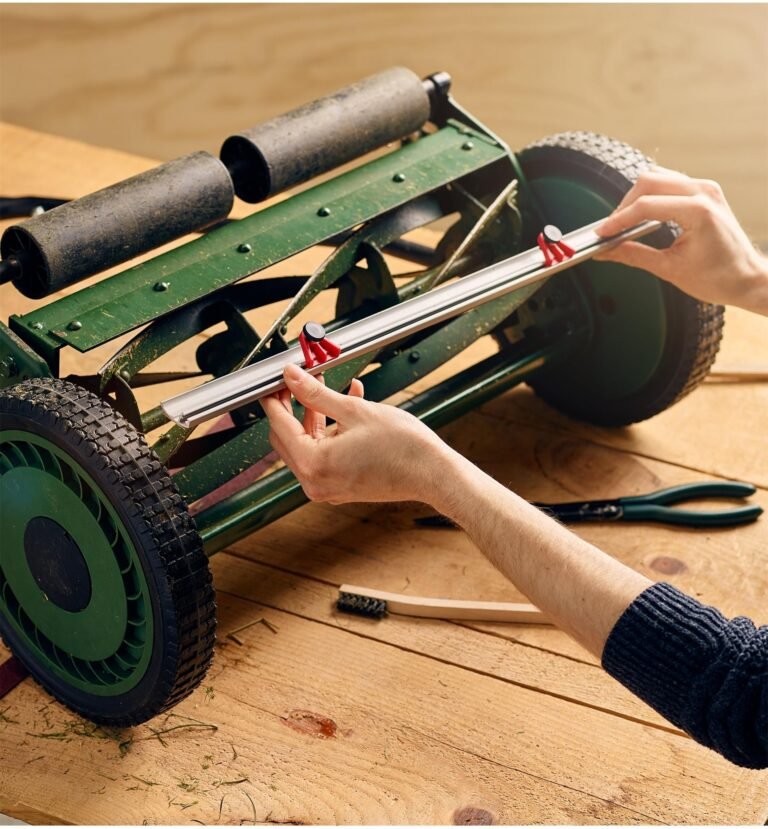
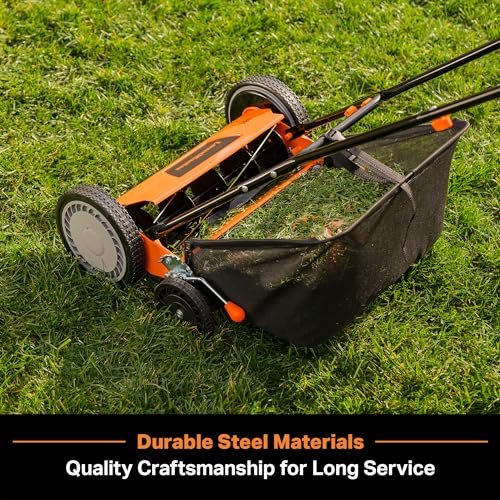
Reel mowers use spinning blades that work like scissors. They can suit small, level lawns with suitable grass and frequent mowing. They need correct blade adjustment and may struggle with tall or rough turf.
Riding mowers and zero-turn mowers
Riding mowers suit larger properties where walking takes too long. Zero-turn mowers can turn quickly and work well in broad, open spaces with obstacles. They cost more, need more storage, and require careful operation.
Robotic mowers
Robotic mowers follow programmed boundaries and return to a charging station. They can suit certain lawns with clear layouts. They need setup, charging space, boundary planning, and regular checks for debris and blade wear.
Hiring lawn care help
Professional service may make sense for very steep slopes, large lots, limited mobility, or users who cannot safely control powered equipment. Safety should matter more than saving a few minutes.
FAQs
Q: Do self-propelled mowers still need to be pushed?
A: Yes, you still guide the mower and control its direction. The drive system provides forward force, but it does not steer around trees, stop hazards, or manage slopes for you.
Q: Are self-propelled mowers good for hills?
A: Some are suitable for gentle, manageable slopes. Rear-wheel drive and all-wheel drive may provide more traction than front-wheel drive. Never mow wet grass on a slope, and follow the slope limits in the manual.
Q: Which is better, front-wheel or rear-wheel drive?
A: Front-wheel drive usually turns easily and suits flat yards with many obstacles. Rear-wheel drive often gives better hill traction. The right choice depends on your terrain and how often you need to turn.
Q: Are battery self-propelled mowers powerful enough?
A: Many battery models can handle normal residential grass when used at the correct mowing height. Tall, wet, or dense grass uses more energy. Check the maker’s stated voltage, battery capacity, deck size, and recommended conditions.
Q: How long does a mower battery last?
A: Battery life has two meanings. One is mowing time per charge, which depends on grass, speed, terrain, and blade condition. The other is total battery service life, which depends on charging, heat, storage, and use. Check the manufacturer’s current information.
Q: Why does my self-propelled mower move slowly?
A: Common causes include a worn or loose belt, packed grass, a damaged wheel gear, low battery power, heavy grass, or a drive cable that is not engaging fully. Stop the mower and inspect it according to the manual.
Q: Can I use a self-propelled mower as a push mower?
A: Many models can be pushed with the drive control released. However, the added transmission and weight may make them harder to push than a basic push mower. Confirm the proper procedure in the manual.
Q: Can I mow backward with a self-propelled mower?
A: Most self-propelled mowers are designed to move forward. Do not pull the mower backward while the drive is engaged unless the manual specifically permits it. Turn off the blade before repositioning when required.
Q: Do self-propelled mowers use more fuel or battery power?
A: The drive system adds load, so it can use more energy than pushing the same mower. Tall grass, hills, wet turf, a dull blade, and high speed can increase fuel or battery use.
Q: How often should I sharpen the mower blade?
A: The correct schedule depends on use and conditions. Inspect the blade often. Sharpen it when the edge is dull or the grass tips look torn. Replace it if it is cracked, bent, or badly worn.
Q: Is all-wheel drive necessary for a small yard?
A: Usually not if the yard is flat and easy to turn. All-wheel drive can add cost, weight, and service needs. It makes more sense when traction is a real issue on uneven ground.
Q: Can I store a gas mower in my garage?
A: You may be able to, but follow local fuel-storage rules and keep the mower away from ignition sources. Use an approved fuel container, avoid leaks, and never store a hot mower near flammable items.
Q: What safety gear should I wear?
A: Wear safety glasses, hearing protection, closed-toe shoes, and suitable work gloves. Clear debris first, keep children and pets away, and follow the owner’s manual.
Q: When should I call a repair shop?
A: Call a qualified repair shop for fuel leaks, electrical faults, damaged safety controls, internal transmission problems, severe vibration, or repairs that require special tools. Stop using the mower if it behaves in an unsafe way.
Final thoughts
A self-propelled lawn mower works by sending power from an engine or electric motor through a belt, gear system, transmission, axle, and drive wheels. The drive layout shapes how the mower handles turns, hills, rough turf, and full grass catchers.
For a small, flat lawn, a push mower or compact battery mower may be the better value. For a medium or sloped yard, self-propulsion can reduce effort and make regular lawn care easier. Choose front-wheel drive for easy turning, rear-wheel drive for stronger hill control, or all-wheel drive when uneven ground demands extra traction.
Measure your yard, gate, slope, and storage space first. Confirm battery, blade, belt, and replacement-part compatibility. Then choose the simplest drive system that safely matches the person, property, climate, and mowing routine.