Best Self Watering Planters For Indoor Plants: Smart Picks
The best self-watering planters for indoor plants balance drainage, water control, size, and simple care.
Have you ever watered a houseplant on Sunday, then found dry soil a few days later? Or watered too much and watched the leaves turn yellow? Self-watering planters help solve both problems by storing water below the potting mix and moving it upward through a wick or inner system. I reviewed these planters for indoor use, focusing on drainage, reservoir design, size, ease of use, and value. These picks suit small herbs, succulents, pothos, African violets, and larger floor plants.
See the differences between my top picks at a glance.
YNNICO Black Self-Watering Planter Set

The YNNICO black set gives indoor gardeners several pot sizes in one coordinated style. The listed sizes range from 5 to 8.7 inches, so the set can cover small plants and some medium houseplants. Its drainage holes help excess water leave the root area. Matching saucers also make it easier to protect shelves, desks, and windowsills.
I like this set for plant owners who want a simple look without buying each pot one at a time. The black finish works well with green foliage and most home decor. Still, a self-watering pot does not mean a plant can sit in wet soil forever. Check the soil before adding water, especially for succulents and cactus plants.
Pros:
- Several useful sizes in one set
- Black finish hides marks and soil stains
- Drainage holes support healthier roots
- Saucers help protect indoor surfaces
- Works for many common houseplants
Cons:
- Plastic may feel less premium than ceramic
- Black pots can show dust more than light colors
- Buyers must confirm the exact size for each plant
What Amazon Buyers Are Saying
Buyer feedback for this type of YNNICO set tends to focus on the useful size range, light weight, and clean black look. Shoppers also commonly value having drainage and saucers together. As with many multi-size sets, some buyers pay close attention to the smaller pot dimensions, so checking the listing measurements before purchase remains important.
My Recommendation
I recommend this set for a mixed collection of indoor plants and for anyone who wants a consistent black display. It offers practical value, but it is best for normal houseplant care rather than plants that need a very large root zone.
YNNICO White Self-Watering Planter Set

This white YNNICO set uses the same useful size range as the black version, from 5 to 8.7 inches. The light finish gives rooms a bright, neat feel and pairs well with colorful leaves. Drainage holes help reduce standing water around the roots. Included saucers add a useful layer of protection on indoor furniture.
White planters can make a small room look more open, but they need more frequent wiping than dark pots. I would use this set for pothos, spider plants, herbs, small palms, and other plants that fit the listed sizes. Before planting, I would also check that each root ball leaves a little room for fresh potting mix. A pot that is too large can hold more moisture than a young plant needs.
Pros:
- Bright white color suits modern rooms
- Multiple sizes support a growing collection
- Drainage holes help limit excess moisture
- Saucers are useful for desks and shelves
- Lightweight and easy to move
Cons:
- White surfaces can show dirt quickly
- Plastic lacks the weight of a ceramic pot
- Small sizes may not suit mature plants
What Amazon Buyers Are Saying
Common buyer comments for this style of set highlight the clean white finish, low weight, and range of sizes. Buyers who use indoor shelves often like the matching saucers. The main point to check is size, since product photos can make pots look larger than they are. Reading the listed dimensions helps set accurate expectations.
My Recommendation
This is a strong pick when appearance matters and your room needs a lighter color. I prefer it over the black version for bright, simple spaces, while the black set may hide soil marks better.
Fielda Large White Self-Watering Pots

The Fielda large planter targets bigger indoor and outdoor plants. It comes in 8-, 10-, and 12-inch options, giving shoppers a choice based on the plant’s root ball. The design includes drainage holes, a deep reservoir, and a water-level indicator. Those features make it easier to manage moisture than a basic pot with no reservoir.
This planter makes sense for plants that have outgrown small nursery pots. The water-level indicator can reduce guesswork, but it does not replace a soil check. I would let the top layer dry as the plant requires before refilling the reservoir. A large reservoir can be useful during busy weeks, yet it should not stay full for plants that prefer dry soil.
Pros:
- Large sizes suit bigger houseplants
- Deep reservoir can reduce refill frequency
- Water-level indicator supports simple monitoring
- Drainage holes help manage excess water
- White finish fits many indoor spaces
Cons:
- Large filled pots can be heavy to move
- May be too large for young plants
- Plastic construction may not feel like a luxury planter
What Amazon Buyers Are Saying
Buyer discussion around large self-watering pots often centers on the reservoir, size choices, and water indicator. Shoppers who have large foliage plants tend to value the reduced need to water by hand. The most important caution is weight: once filled with soil and a plant, a large pot becomes harder to move, so its final location should be planned first.
My Recommendation
I recommend the Fielda large white planter for established plants that need more room. It is one of the more useful choices here for buyers who want a visible water check and a larger reservoir.
MIXC Clear 18-Pack Self-Watering Pots

The MIXC 18-pack is built for gardeners who need many small pots. It includes 4-, 5-, and 6.5-inch sizes, plus drainage holes, deep reservoirs, and wicking rope. The clear plastic lets you see the root area and water level more easily than an opaque pot. The listing also states that the pots can provide up to a seven-day water supply, though actual timing depends on the plant, room, soil, and weather.
This set is useful for seedlings, herbs, small flowers, African violets, and plant propagation. Clear walls make root checks simple, but they can also expose roots to light, so I would use an outer cover when a plant needs darker conditions. Eighteen pots may be more than a casual plant owner needs. For serious indoor gardeners, however, the quantity can offer excellent value.
Pros:
- Large 18-pot quantity for plant collections
- Three listed sizes cover small growing stages
- Clear walls improve root and water visibility
- Wicking rope supports steady moisture access
- Deep reservoirs can reduce daily watering
Cons:
- Clear plastic may not suit every decor style
- Many pots need storage when not in use
- Actual watering time varies by plant and room
What Amazon Buyers Are Saying
Buyers who choose large pot sets commonly praise the quantity and the ability to see roots or water. The clear design also appeals to people who start cuttings and seedlings. The main practical concern with any large set is that the pots are small, so buyers need to match them with plants that have modest root systems.
My Recommendation
This is my value pick for propagation, herbs, and anyone with many small indoor plants. I would not buy it for one large plant, but it is a practical growing kit for a busy plant shelf.
Fielda 10-Inch Self-Watering Planter Two-Pack
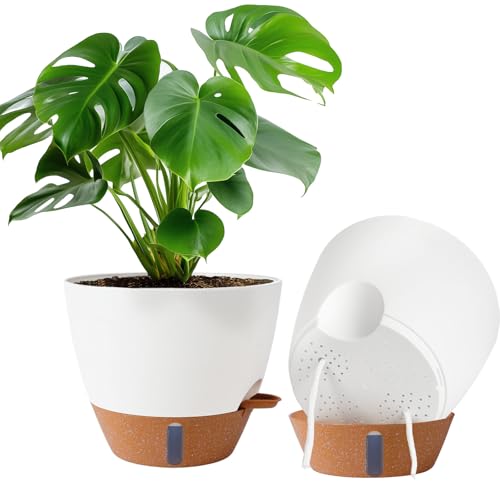
This Fielda option gives you two 10-inch white planters. The size fits a useful middle ground between small shelf pots and very large floor planters. Each planter includes drainage holes, a deep reservoir, and a water-level indicator. The matching pair works well when you want two plants to share one visual style.
I see this set as a practical choice for medium houseplants, such as pothos, peace lilies, and smaller rubber plants, when their root balls fit the pot. Two pots also make repotting or room updates easier. Keep in mind that a 10-inch pot may still become heavy after planting. Place it near its final spot before filling it.
Pros:
- Two matching pots offer good display value
- 10-inch size suits many medium plants
- Deep reservoir supports less frequent refilling
- Water indicator makes checks easier
- White color works in many rooms
Cons:
- Only one size is included
- Filled pots may be difficult to lift
- May hold too much moisture for desert plants
What Amazon Buyers Are Saying
Buyers of two-pack planters often like the matched look and the convenience of having a spare or a second plant pot. Comments about large self-watering pots usually also mention the value of a water indicator. As always, exact plant fit and final weight matter more than the pot’s empty size.
My Recommendation
I recommend this two-pack for shoppers who want two medium planters without mixing colors or designs. It gives better value than buying two unrelated pots, especially when both plants have similar care needs.
Fielda Turquoise Self-Watering Planter

The turquoise Fielda planter offers the same large size choices as the white model, but adds a stronger color accent. You can choose from 8-, 10-, or 12-inch versions. Drainage holes, a deep reservoir, and a water-level indicator support easier plant care. The bold finish can make a green plant stand out on a plain shelf or patio.
I would choose this version when the planter itself should become part of the display. The care rules remain the same as with any reservoir planter: match the pot to the root ball and avoid keeping moisture-loving and dry-loving plants on the same schedule. Turquoise may show mineral marks or dust over time. A soft damp cloth should handle normal cleaning.
Pros:
- Distinctive turquoise color adds visual interest
- Three size options support different plants
- Deep reservoir can extend time between refills
- Water-level indicator reduces guesswork
- Drainage holes support indoor plant care
Cons:
- Bright color may not match every room
- Large sizes can become heavy when full
- Plastic may not feel as solid as stone or ceramic
What Amazon Buyers Are Saying
Shoppers who select colorful planters usually care about the finish as much as the function. The size range and visible water indicator are also common reasons to consider this Fielda model. Buyers should note that color can look different under different room lights, so the turquoise finish is best for people who welcome a noticeable accent.
My Recommendation
This is a good functional planter with more personality than a plain white pot. I recommend it for medium and large plants when you want a bold accent and a water-level feature in the same product.
Melphoe Two-Pack Self-Watering Pots
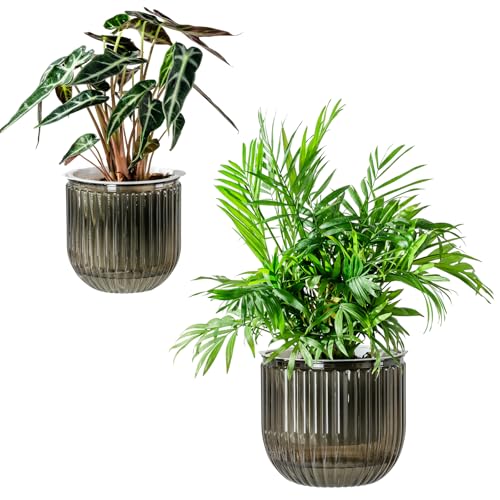
The Melphoe set includes two pots in 6.5- and 5.3-inch sizes. These compact dimensions suit small flowers, houseplants, succulents, African violets, and cactus when the plant’s needs match the potting mix. The design includes drainage, which is important for indoor plants that cannot tolerate trapped water. The two sizes also let you create a small tiered display.
I like this set for desks, kitchen windows, and narrow shelves. The smaller footprint is easier to place than a large floor pot. Still, cactus and succulents need careful watering because a reservoir can keep the mix damp longer than they prefer. Use a fast-draining mix and let the plant’s soil needs guide your schedule.
Pros:
- Two compact sizes for small plants
- Fits desks, shelves, and windowsills
- Useful for flowers and small houseplants
- Drainage helps protect the root zone
- Good option for a small matched display
Cons:
- Not suitable for large mature plants
- Succulents still need careful watering
- Smaller reservoirs may need more frequent checks
What Amazon Buyers Are Saying
Buyers who choose compact two-packs often like the size difference and the ease of placing the pots in small areas. The set also attracts shoppers who want pots for violets, small flowers, and starter plants. The most useful buying check is the top diameter and depth, since small plants can become crowded if the root ball already fills the pot.
My Recommendation
I recommend Melphoe for small indoor plants and limited spaces. It is not the best choice for a large plant, but it offers a practical two-pot solution for beginners and apartment gardeners.
White Hanging Self-Watering Planters, 2-Pack

This two-pack combines hanging pots with a self-watering design. Each pot measures 10 inches, so the set suits trailing plants that need room to spread. The listing includes hanging pots, drainage, and two types of hangers. The white finish keeps the display light and works well with vines near a window or porch.
Hanging planters save shelf and floor space, but they need more planning than a standard pot. Before installation, I would check the hook, ceiling, bracket, and final weight of each filled basket. Watering also deserves care because spills can reach walls or floors. These planters are most useful for pothos, spider plants, and other trailing plants that match the light in the chosen spot.
Pros:
- Uses vertical space instead of shelf space
- Two planters create a balanced display
- 10-inch size suits many trailing plants
- Includes hanging hardware options
- White finish suits indoor and outdoor areas
Cons:
- Installation needs a strong support point
- Filled planters may be heavy overhead
- Watering can cause drips if handled too quickly
What Amazon Buyers Are Saying
Buyers of hanging planters commonly value the space-saving design and the complete two-pot setup. Shoppers also tend to consider the included hanger options helpful. The most repeated practical concern with any hanging pot is support and weight. A buyer should confirm the mounting point before adding wet soil and a mature plant.
My Recommendation
I recommend this set for trailing plants and rooms with safe mounting points. It creates a strong visual display, but it is not the easiest option for people who want a planter they can lift and inspect often.
KUGAZ Three-Pack Self-Watering Planters

The KUGAZ set includes three large planters in 12-, 10-, and 8-inch sizes. That range makes it useful for a small group of plants with different root sizes. The pots include drainage holes, a deep reservoir, and a water-level indicator. The black and brown color mix gives the set a warmer look than plain white plastic.
I see this as one of the most flexible choices for shoppers building a larger indoor plant display. The 12-inch pot can suit a larger plant, while the smaller pots can handle medium specimens. Size alone does not determine success, so compare the root ball and the plant’s water needs before planting. The largest pot will also need a firm, permanent location once filled.
Pros:
- Three useful sizes in one set
- Supports small, medium, and larger displays
- Deep reservoirs can reduce refill work
- Water-level indicators improve monitoring
- Black and brown colors hide some soil marks
Cons:
- Largest planter may be heavy when full
- Color mix may not fit every decor plan
- Reservoir care still matters for dry-loving plants
What Amazon Buyers Are Saying
Shoppers who buy multi-size planter sets often like the ability to use one purchase across several plants. The water indicators and deep reservoirs are also key points of interest. Buyers should plan for the weight of the 12-inch option and should not assume that every plant can share the same watering routine.
My Recommendation
I recommend KUGAZ for plant owners who want three larger pots in different sizes. It offers strong versatility and good display value, especially when you want one coordinated set for several rooms.
How to Choose Best Self-Watering Planters for Indoor Plants
Choosing the best self watering planters for indoor plants takes more than picking the nicest color. A good planter must fit the root ball, manage extra water, and suit the plant’s care needs. I also check how easy it is to inspect the soil, refill the reservoir, and move the pot after planting. The advice below follows basic indoor plant care rules used by horticulture experts: roots need air, water needs a way out, and each plant has its own moisture needs.
1. Match the Pot Size to the Root Ball
Start with the plant, not the pot. A new pot should give the roots room to grow, but it should not be much larger than the current root ball. Excess empty soil can stay wet for too long. That can lead to weak roots and stress.
Measure the nursery pot and compare its width with the planter listing. For a small plant, the MIXC or Melphoe options may work well. For a mature plant, consider Fielda or KUGAZ. A 10- or 12-inch planter can hold much more soil and water, so use it only when the plant can fill that space.
2. Check Drainage, Wicks, and the Water Reservoir
Drainage is one of the most important features in an indoor planter. Drainage holes let extra water leave the root area. A reservoir stores water below the soil, while a wick or similar system moves some moisture upward. This setup can help reduce dry spells, but it does not make overwatering impossible.
A water-level indicator adds convenience. It lets you see when the reservoir needs attention without guessing. Clear pots, such as the MIXC set, let you watch the water and roots, but clear plastic may not suit every plant or room. Always read the care needs of your plant before keeping water in the reservoir.
3. Compare Placement, Material, and Long-Term Value
Think about where the planter will sit. A hanging pot needs a safe support point and careful watering. A large floor pot needs a stable place because wet soil and a mature plant can become heavy. A small pot may fit a desk but may need more frequent checks.
Plastic planters are often light and easy to move. They can also cost less than ceramic or stone. In return, they may feel less heavy or decorative. Choose a color that fits your room, then compare the number of pots, included saucers, water indicators, and size range. The best self watering planters for indoor plants offer useful care features without forcing you to pay for a size or design you do not need.
Final Verdict: Which Should You Buy?
For most buyers, I recommend the KUGAZ three-pack for its useful size range, deep reservoirs, and water indicators. Choose MIXC for many small plants, or Fielda for one larger plant.
The best self watering planters for indoor plants make watering easier, but they still need smart soil checks. Match the planter to your plant, room, and daily care routine.
FAQs Of best self watering planters for indoor plants
Are self-watering planters good for indoor plants?
Yes. They can help keep moisture more steady and reduce watering stress. You still need to match the planter to the plant and avoid keeping dry-loving plants too wet.
How often should I refill an indoor self-watering planter?
Refill it when the reservoir is low and the plant needs water. Timing varies with plant type, light, room temperature, soil, and pot size.
Do self-watering planters prevent overwatering?
No. They help manage water, but they cannot prevent overwatering by themselves. Check the soil and follow the plant’s normal care needs.
What are the best self-watering planters for small houseplants?
Compact options such as the Melphoe two-pack and MIXC 4- to 6.5-inch pots suit many small plants. Check the root ball and listed dimensions first.
Can I use self-watering pots for succulents and cactus?
You can, but use caution. Choose fast-draining soil, let the mix dry as needed, and avoid leaving the reservoir full for long periods.
Are hanging self-watering planters safe indoors?
They can be safe when attached to a strong support point. Account for the full weight of the pot, wet soil, water, and mature plant before installation.


2 Comments