
How Often Should You Replace Lawn Mower Blades: Best Timing
A sharp lawn mower blade does more than make the lawn look neat. It cuts grass cleanly, helps the mower run with less strain, and can reduce the ragged tips that turn brown after mowing. A dull, bent, or cracked blade can also cause vibration, poor bagging, and extra wear on the mower deck.
So, how often should you replace lawn mower blades? The short answer is: replace them when they are damaged, badly worn, or no longer hold a safe cutting edge. For many homeowners, that means about once each mowing season or every one to two years. Heavy use, sandy soil, hidden rocks, wet grass, and poor storage can shorten that time.
Your yard size matters, too. A small, flat lawn mowed every week may need only one blade replacement every few seasons. A large yard, hilly lawn, rental property, or commercial route can wear through blades much faster. The mower type matters as well. Push mowers, self-propelled mowers, riding mowers, zero-turn mowers, robotic mowers, and reel mowers all use different cutting systems and service needs.
This guide explains when to replace mower blades, when sharpening is enough, how to check blade wear, and how to choose the right replacement. It also covers safety, storage, blade types, costs, and simple maintenance for new homeowners, experienced DIY users, and anyone buying lawn equipment for a senior or first-time homeowner.
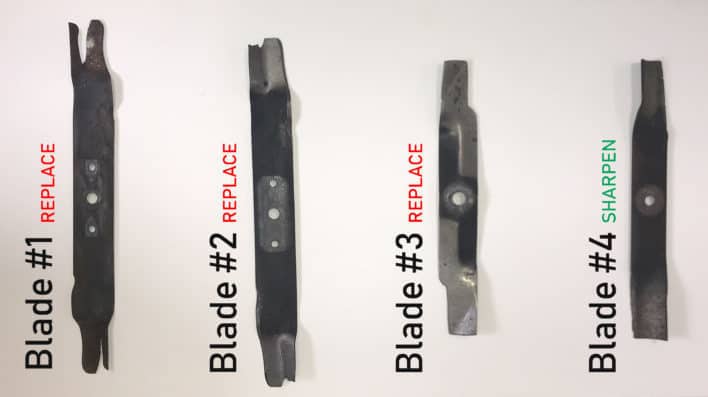
Quick answer: Replace mower blades when damage or wear makes sharpening unsafe
Most homeowners should inspect mower blades at least once each mowing month and after hitting a rock, root, sprinkler head, or other hard object. Replace a blade if it is cracked, bent, deeply nicked, badly rusted, thin at the cutting edge, or still dull after sharpening. A lightly dull blade can often be sharpened instead.
For average residential use, a blade may last one to two mowing seasons. Very small yards may stretch that period. Large yards, sandy soil, rough ground, and frequent mowing may require a new blade every season or sooner. Always match the blade part number, length, center-hole shape, and deck size to the mower manual.

How long do lawn mower blades usually last?
A mower blade does not have a fixed expiration date. Its life depends on how often you mow, what the blade hits, the type of grass, and how the mower is stored. A blade used on a smooth suburban lawn may last far longer than one used on rocky ground.
A sharp blade removes a small amount of grass with each pass. A dull blade may tear the grass. This creates more drag and can make the mower work harder. A blade that is bent or cracked is a safety concern, even if the mower still starts and runs.
| Mowing situation | Typical blade service pattern | Main wear factor |
|---|---|---|
| Small, flat lawn | Sharpen as needed; replace every 2–3 seasons if sound | Low hours and few impacts |
| Average home lawn | Sharpen once or twice yearly; replace about every 1–2 seasons | Normal wear and occasional debris |
| Large or rough lawn | Inspect often; replace yearly or sooner | Long run time, sand, rocks, and roots |
These are planning ranges, not promises. Check the blade itself rather than relying only on the calendar. A homeowner with a 20-inch push mower may use a blade less than a homeowner with a 54-inch zero-turn mower that cuts several acres each week.

What wears out first on a mower?
The blade is one of several wear parts. Spark plugs, air filters, belts, wheels, drive cables, batteries, and fuel systems also need care. On battery mowers, the battery may cost more than the blade and can lose capacity over several seasons.
A mower deck can collect wet grass and thatch. Thatch is a layer of old roots and stems near the soil surface. It is not the same as loose clippings, but both can hold moisture against metal parts. Clean the underside after the mower is safe and cool.
Electric mowers have fewer engine parts, but their blades still need service. Corded mowers may have a long motor life, yet the cord can limit access and create a trip hazard. Gas mowers need blade care plus oil, fuel, air-filter, and spark-plug service.
Does a blade need replacement after every season?
No. Annual replacement is a useful rule for heavy use, but it is not required for every lawn. If the blade remains straight, thick, secure, and easy to sharpen, it can continue in service.
Still, many homeowners replace blades at the start of the mowing season. A new blade can be a sensible choice when the old one has several deep nicks or has been sharpened many times. A replacement is also wise when you cannot confirm the blade’s history, such as with a used mower.
Signs it is time to replace a lawn mower blade
The clearest signs are visible damage, strong vibration, poor cutting, and a blade that will not hold an edge. Do not keep using a blade just because the mower still cuts. A damaged blade can affect the spindle, deck, fastener, or engine.
| Sign | What it may mean | Recommended action |
|---|---|---|
| Crack or split | Metal fatigue or impact damage | Replace immediately |
| Bent blade | Impact with a hard object | Replace; do not hammer it straight |
| Deep chips | Severe contact with rocks or metal | Replace if sharpening cannot restore a safe edge |
| Strong vibration | Bent blade, loose bolt, or spindle problem | Stop and inspect before mowing |
| Ragged grass tips | Dull or damaged cutting edge | Sharpen, then replace if it stays poor |
| Heavy rust or thin metal | Corrosion or repeated grinding | Replace the blade |
A small nick can sometimes be removed with a file or grinder. A deep gouge that removes a large amount of metal can change the blade’s balance. A blade that looks uneven after sharpening should not go back under the deck.
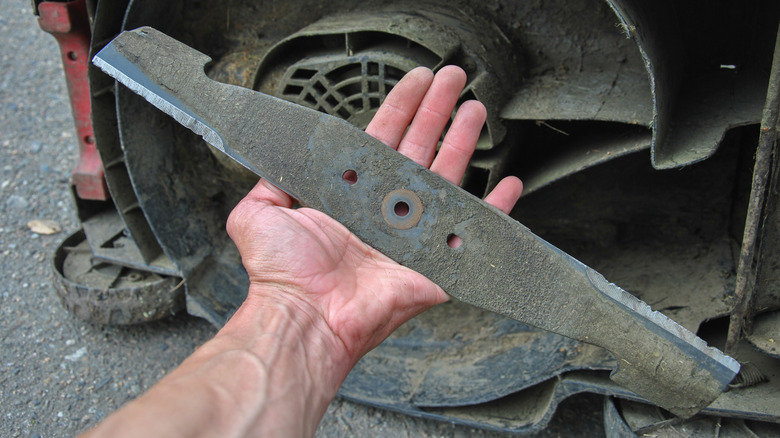
Grass turns brown after mowing
Brown or frayed grass tips often point to a dull blade. A clean cut usually leaves a more even surface, while a torn tip may dry out and look pale or brown.
Other causes are possible. Drought, mowing too low, disease, heat, and poor soil can also change grass color. Check the blade, but do not assume every brown lawn is a blade problem.

The mower vibrates or shakes
Stop mowing if the machine vibrates more than normal. A bent blade is a common cause, but a loose blade bolt, damaged spindle, worn bearing, or blocked deck can create similar symptoms.
Never reach under the deck while the blade could move. Disconnect the spark-plug wire on a gas mower or remove the battery on a battery mower. Follow the owner’s manual before turning the machine over or removing the blade.

The blade is hard to balance
A blade should remain balanced after sharpening. An unbalanced blade can cause vibration and may damage the spindle over time.
Use a blade-balancing tool, a nail, or the method listed in the manual. If one side drops, remove a small amount of metal from the heavy side. If balance requires a lot of grinding, replace the blade.

⚠️ Safety Warning: Wear safety glasses, work gloves, and closed-toe shoes. Clear the lawn before mowing, keep children and pets away, and never service a mower with the spark plug connected or the battery installed.
Sharpen or replace: Which option makes sense?
Sharpening is best when the blade is straight, solid, and only mildly dull. Replacement is best when the blade has structural damage or has lost too much metal. Sharpening is not a safe repair for a crack or major bend.
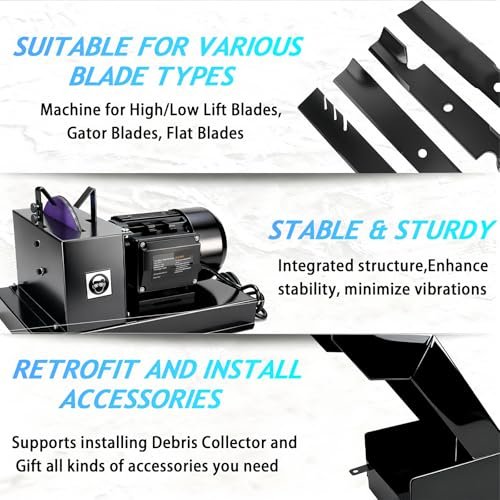
A professional repair shop can sharpen a blade with the correct angle and balance. Many hardware stores and outdoor power equipment shops offer this service. DIY sharpening can work well if you use a file, bench grinder, or angle grinder carefully.
| Blade condition | Sharpen it? | Replace it? |
|---|---|---|
| Slightly dull edge | Yes | Not usually |
| Small, shallow nick | Often | Only if damage remains |
| Deep chip or missing section | No | Yes |
| Visible crack | No | Yes |
| Bent blade | No | Yes |
| Heavy rust or thin edge | No | Yes |
| Straight blade that will not stay sharp | Maybe once | Usually |
The key difference is strength. Sharpening removes metal from the cutting edge. It cannot restore a safe shape to cracked or bent steel. Do not use a blade that has been welded, hammered flat, or heavily ground unless a qualified professional confirms it is safe.

How often should you sharpen mower blades?
Many mower makers and repair shops suggest checking or sharpening a blade after about 20 to 25 hours of mowing. For a small home lawn, that may mean once or twice during the season. Sandy soil may call for more frequent service because sand acts like an abrasive.
A new blade may need sharpening after several weeks if you mow often. A blade can also become dull after one hard impact. Inspect it after hitting a rock, edging block, tree root, or metal object.

What angle should a mower blade have?
Many rotary mower blades use a cutting bevel near 30 degrees, but the correct angle varies by blade design. Match the existing bevel and follow the mower manual.
Do not make the edge razor-thin. A very thin edge can roll over or chip sooner. The goal is a firm, clean edge that is sharp enough to cut grass but strong enough for normal yard debris.

Inspect the mower blade before you buy a replacement
The correct replacement blade must fit both the deck and the spindle. Blade length alone is not enough. You also need the center-hole shape, mounting holes, lift design, rotation direction, and safe operating range.
Measure the old blade only after removing it safely. The manual or manufacturer parts diagram is usually the better source. Confirm the mower model and deck size on the product page before ordering.
| Check before ordering | Why it matters |
|---|---|
| Mower model number | Similar models may use different blades |
| Deck width | A 21-inch deck and a 22-inch deck may need different lengths |
| Blade length and width | The blade must fit inside the deck |
| Center-hole shape | Common shapes include round, star, and multi-point designs |
| Mounting holes | Some blades use extra holes or special adapters |
| Lift and rotation | Mulching and discharge blades may have different profiles |
Never install a blade that is too long. It may hit the deck or another blade. Never substitute a blade that lacks the correct center opening or mounting hardware.

Standard, mulching, and high-lift blades
A standard blade cuts and sends grass through the side discharge or into a catcher. A high-lift blade has a taller rear fin that creates more airflow. It can help move clippings into a grass catcher, but it may require more engine power.
A mulching blade has a shape designed to keep clippings under the deck longer. Mulching cuts grass into smaller pieces that can fall back into the lawn. The mower may also need a mulching plug or deck design made for that use.
The right blade depends on your mowing method. For a small yard where you want to leave clippings, a mulching setup may fit. For tall grass or frequent bagging, a standard or high-lift blade may be more suitable.

Multi-blade decks need more care
Riding mowers and zero-turn mowers may use two or three blades. Replace any damaged blade, but inspect the full set at the same time. A mixed set with different wear levels can create uneven cutting.
Some owners replace all blades together so the set has similar weight and sharpness. This costs more, but it may help maintain a more even cut. Check the manual for blade timing and deck installation.

Tools and supplies for safe blade service
You do not need a large workshop to inspect or replace a blade. You do need the right tools and a stable work area. A socket set, block of wood, gloves, and safety glasses cover most basic jobs.
| Tool or supply | Use |
|---|---|
| Safety glasses and work gloves | Protect eyes and hands from metal and debris |
| Socket or wrench | Remove and tighten the blade bolt |
| Wood block or blade holder | Stop the blade from turning |
| Torque wrench | Tighten the bolt to the manual’s setting |
| File or grinder | Sharpen a sound blade |
| Blade balancer | Check that the blade has even weight |
| Replacement blade | Restore a damaged or worn cutting edge |
Avoid guessing the bolt torque. Too loose can let the blade move. Too tight can damage the bolt, spindle, or blade. The owner’s manual should provide the correct setting.

Safe removal steps
- Park the mower on a flat surface.
- Turn off the engine and let hot parts cool.
- Disconnect the spark-plug wire on a gas mower.
- Remove the battery on a battery mower.
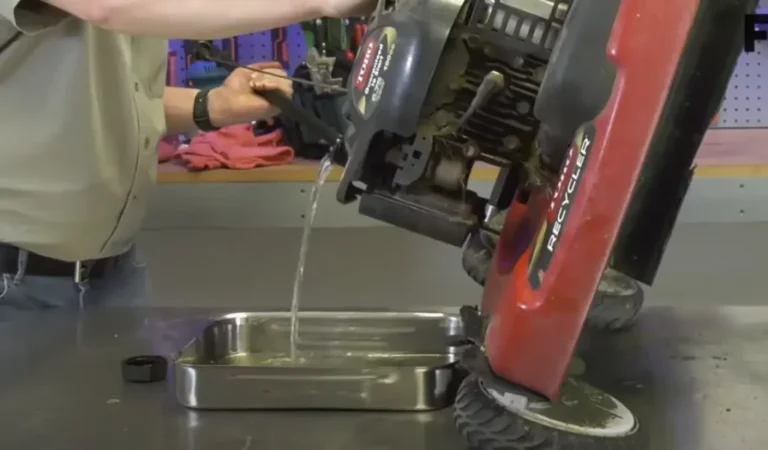
- Prevent fuel leakage before tipping a gas mower.
- Block the blade with a wood block or approved holder.
- Remove the blade bolt with the correct socket.
- Note the blade’s orientation before removing it.
- Inspect the bolt, washer, adapter, and spindle.
- Install the correct blade with the cutting edge facing the proper direction.
Never place your hand near the blade to test whether it is secure. Turn the blade by hand only when the power source is disconnected and the manual allows that check.
Install the new blade correctly
The sharp edge normally faces the direction of rotation. The raised lift wing usually faces the mower deck, but designs differ. Use the old blade’s position only as a clue and confirm with the manual.
Clean grass and rust from the mounting area. Do not paint, grind, or modify the new blade. Tighten the fastener to the manufacturer’s specification, then check that the blade does not touch the deck.
Test the mower after installation
Reconnect the spark plug or install the battery only after all tools are clear. Start the mower outdoors, away from people and loose objects. Listen for unusual noise and watch for strong vibration.
Do not test a mower with the deck raised or the blade exposed. If the machine shakes, rattles, or sounds different, shut it down. Disconnect the power source again and inspect the blade, bolt, adapter, and spindle.
Blade replacement by mower type
The best service interval changes with the mower. A push mower used on a small flat yard has a different workload from a zero-turn mower used on several acres.
| Mower type | Blade replacement concern | Good fit for |
|---|---|---|
| Push mower | Simple single-blade service; impacts are common | Small to medium flat yards |
| Self-propelled mower | Blade wear plus drive-system care | Medium yards or mild slopes |
| Riding mower | Multiple blades and larger deck | Large lawns with storage space |
| Zero-turn mower | High blade hours and multi-deck service | Large open yards |
| Robotic mower | Frequent light cuts; small blades or special parts | Maintained lawns with clear boundaries |
| Reel mower | Reel and bed-knife adjustment, not a typical rotary blade | Small, flat lawns and quiet mowing |
A self-propelled mower can help on a larger yard or gentle slope, but it does not remove the need for safe footing. Riding mowers and zero-turn mowers need more storage room and may be a poor fit for narrow gates or steep terrain.
Robotic mower blades are often small and may need more frequent changes based on the maker’s schedule. Their cutting system is not interchangeable with a standard push-mower blade. A reel mower uses a cylinder of blades and a bed knife, so it needs a different service method.
Best approach for small yards
For a small, flat lawn, a 20- to 21-inch push mower may be enough. A battery mower can reduce fuel storage and engine maintenance, while a corded mower may suit a yard close to an outdoor outlet. A reel mower can fit a very small, level lawn if you can mow often.
Small yards still need blade checks. A compact mower can hit edging stones and roots more easily because the operator works close to borders. Measure gate width and storage space before buying a replacement mower or spare blade.
Best approach for hilly lawns
Hilly lawns need traction, control, and a mower that fits the slope. A self-propelled mower may reduce pushing effort, but it can still slide on wet grass. Do not mow across a slope with a riding mower unless the manual specifically permits that use.
A dull blade is even less helpful on a hill because the mower may need more passes. Inspect the blade often, keep the mowing height suitable for the grass, and avoid cutting wet turf. A string trimmer may be safer for steep areas that a mower cannot handle.
Best approach for seniors and gift buyers
For a senior or new homeowner, a replacement blade is useful only when you know the mower model. Take a clear photo of the model label and old blade, or ask the local outdoor power equipment store to confirm the part.
A battery mower may reduce fuel handling and cold-start problems, but battery weight and charging needs matter. A self-propelled model can help with a medium lawn, while a lightweight push mower may be easier to lift and store. The best choice depends on strength, slope, gate access, and storage.
🎁 Gift-Buyer Note: Do not guess a blade by deck width alone. Include the mower model number, blade part number, and a receipt. That makes an exchange much easier if the fit is wrong.
A simple mower blade maintenance schedule
Regular inspection costs little and can catch a problem before it damages the mower. Add blade checks to other tasks, such as cleaning the deck, changing the air filter, checking the spark plug, and inspecting the drive belt.
| Task | Suggested timing | What to check |
|---|---|---|
| Visual blade inspection | Monthly during mowing season | Cracks, bends, rust, and nicks |
| Blade sharpening | About every 20–25 mowing hours or as needed | Edge condition and balance |
| Blade replacement | When damaged or badly worn | Fit, mounting, and safe thickness |
| Deck cleaning | After mowing when safe | Packed grass, rust, and blocked discharge |
| Spindle and bolt check | During blade service | Loose parts, noise, and wear |
| Storage inspection | Before winter and spring use | Rust, moisture, and battery condition |
The 20- to 25-hour figure is a useful service guide, not a rule for every mower. Wet grass can pack under the deck, while sand can dull an edge quickly. Keep a simple note on your phone if you mow several properties.
Seasonal care
At the start of spring, inspect the blade before the first long mowing session. Cold storage can leave steel damp, and rodents may damage wiring on electric or riding mowers.
During summer, watch for heat, dry soil, and dusty air. Dust can shorten air-filter life and make a blade edge wear faster. In fall, leaves and hidden sticks can cause impacts, so clear the lawn and avoid mowing piles of woody debris.
Before winter storage, clean and dry the deck. Store a battery in the temperature range listed by the maker, and keep it away from moisture. For gas mowers, follow the manual about draining fuel or using fuel stabilizer.
Climate and grass effects
Wet grass sticks to the deck and can block airflow. It also makes slopes more slippery. Wait for the lawn to dry when possible, and never mow wet grass on a slope.
Drought can make soil hard and expose rocks. Cold weather can cause hard starts in gas engines, while heat can stress batteries and operators. Grass type also matters. Fast-growing turf may require more mowing hours and more blade maintenance than slow-growing grass.
Common mistakes that shorten blade life
Many blade problems start with simple habits. Mowing over hard objects, storing a wet mower, and using the wrong blade can lead to poor cutting and costly repairs.
| Mistake | Result | Better choice |
|---|---|---|
| Mowing over rocks | Chips, bends, and vibration | Walk the lawn first |
| Cutting too low | More deck contact and stress | Use the grass type’s proper height |
| Sharpening unevenly | Imbalance and vibration | Remove equal metal and check balance |
| Using the wrong blade | Poor fit or unsafe operation | Match the model and part number |
| Leaving wet clippings under deck | Rust and blocked airflow | Clean and dry the deck |
| Tightening by guesswork | Loose or damaged hardware | Use the manual’s torque setting |
Do not mow through tree roots, landscape edging, wire, or construction debris. Use a string trimmer for places that are too tight or rough for the mower. An edger can create a clean border without forcing the mower against concrete.
Do not hammer a bent blade straight
A bent blade may look repairable, but hammering can create hidden cracks and change the metal’s strength. It can also leave the blade out of balance.
Replacement is usually the safer and simpler choice. If the blade bent after a major impact, have the spindle and deck checked as well.
Do not install a sharper-than-needed blade
A blade does not need to feel like a kitchen knife. A thin, fragile edge may chip when it meets normal yard debris.
Follow the original bevel. Keep the cutting edge even, and check the balance before installation. The correct blade shape matters more than making the edge extremely sharp.
Cost, value, and alternatives
A standard push-mower blade is often one of the least expensive mower parts. Specialty blades for riding mowers, zero-turn decks, robotic mowers, or branded systems can cost more. Professional sharpening may cost less than replacement, but replacement saves time when a blade is damaged.
The value depends on the mower and yard. Buying a spare blade can make sense for a homeowner with a large yard or a busy mowing schedule. It may not make sense for a renter who uses a basic mower only a few times each month.
A new blade cannot fix every cutting problem. A worn spindle, damaged deck, weak engine, clogged air filter, dull spark plug, low battery, or incorrect mowing height can also cause poor results. Diagnose the mower before buying several parts.
Blade replacement versus a new mower
Replacing a blade is usually worthwhile when the mower starts easily, runs smoothly, and has a sound deck. It can also extend the useful life of an older mower when other parts remain in good condition.
A new mower may be worth considering when repair costs add up or the machine no longer suits the yard. A small battery push mower may fit a compact lot. A self-propelled mower may fit a medium yard with mild slopes. A riding mower or zero-turn mower may suit a large, open property, but both need more storage and care.
Before upgrading, measure the lawn, gate width, slope, and storage area. Compare cutting width, mower weight, battery voltage and amp-hours, engine displacement in cubic centimeters, bag capacity, and noise. Amp-hours, or Ah, describe battery capacity; they do not by themselves guarantee a certain runtime.
Affiliate disclosure
Some links in lawn care content may be affiliate links. If you buy through one, the publisher may earn a commission at no extra cost to you. Always confirm the current price, mower compatibility, blade part number, warranty, and return policy on the seller’s page and in the owner’s manual.
Safety and disposal notes
Blade service can cause serious injury if the power source is still connected. Wear eye protection, hearing protection when the mower runs, work gloves, and closed-toe shoes. Clear debris before mowing, keep children and pets away, and never refuel a hot gas engine.
Disconnect the spark plug or remove the battery before servicing. Never mow wet grass on slopes. Follow the owner’s manual, especially when tipping a gas mower, checking blade torque, or working on a riding mower deck.
Old blades can often go into a local scrap-metal program after they are wrapped and handled safely. Do not leave a sharp blade loose in household trash. Recycle lithium-ion batteries at designated drop-off sites. Take old gasoline and oil to a hazardous-waste collection site, and donate or recycle a usable mower when possible.
🌿 Eco or Disposal Note: Do not pour fuel, oil, or battery fluids onto soil or down a drain. Local recycling centers and household hazardous-waste programs can tell you how to handle them safely.
Local rules and storage
Some cities and homeowners associations limit gas-powered equipment by time of day or season. A few areas restrict new gas equipment or set noise rules. Confirm local requirements before buying a gas mower, leaf blower, or other outdoor power equipment.
Store blades and fuel away from children, sparks, and moisture. Keep a replacement blade in its package or wrapped securely, with the cutting edge protected. Do not store loose blades in a shed where someone may grab them without seeing the edge.
📜 Check Local Rules: Confirm HOA rules, local noise ordinances, gas-equipment restrictions, and fuel-storage laws with your city or HOA. Rules can vary by neighborhood and may change.
When to call a repair professional
Call a mower repair shop if the blade keeps vibrating after replacement, the spindle feels loose, or the deck is cracked. A professional should also inspect the machine after a strong impact with a rock, metal object, or buried root.
Get help if you cannot safely lift or secure the mower. Riding mower decks are heavy, and a fall can cause injury. A shop can check blade balance, spindle bearings, deck alignment, belt condition, and engine or motor problems.
Professional service also makes sense when a blade has an unusual mounting system. Robotic mower blades, commercial decks, and some riding mower assemblies may require special tools or procedures.
Frequently asked questions
Q: How often should I replace lawn mower blades?
A: Many homeowners replace blades every one to two mowing seasons. Replace sooner if the blade is cracked, bent, deeply chipped, badly rusted, thin, or unable to hold a safe edge. Yard size, mowing hours, soil, grass, and impacts all affect blade life.
Q: Can a lawn mower blade last five years?
A: It can, especially on a small, smooth lawn with light use and regular sharpening. Age alone does not require replacement. Inspect the blade for metal loss, cracks, rust, balance, and overall strength before each season.
Q: How do I know if my mower blade is dull?
A: Look for ragged grass tips, uneven cutting, extra passes, and clippings that do not spread well. A dull blade may also make the engine sound strained. Remove and inspect it safely before deciding whether to sharpen or replace it.
Q: Is it better to sharpen or replace a mower blade?
A: Sharpen a straight blade with a mild dull edge. Replace one that is cracked, bent, deeply chipped, badly rusted, too thin, or hard to balance. Sharpening cannot restore damaged metal.
Q: How many times can you sharpen a mower blade?
A: There is no exact number. Sharpen only enough to restore the original bevel and remove small damage. Replace the blade when the cutting edge becomes thin, the shape changes, or balance cannot be maintained.
Q: Should both blades be replaced on a riding mower?
A: Inspect all blades together. Replace every damaged blade. Some owners replace the full set at the same time so the blades have similar weight and wear, but follow the mower manual.
Q: Can I use any 21-inch mower blade on my mower?
A: No. The length may match while the center hole, mounting holes, lift, rotation, or deck clearance does not. Confirm the mower model, deck size, blade part number, and mounting design before buying.
Q: How tight should a mower blade bolt be?
A: Use the torque value in the owner’s manual. Do not guess. The correct setting helps prevent a loose blade and avoids damage from over-tightening.
Q: Can I mow with a slightly bent blade?
A: No. A bent blade can cause vibration and may damage the spindle or deck. Replace it rather than hammering it straight.
Q: Do electric mower blades need replacement less often?
A: Not always. Electric mowers have fewer engine parts, but the blade still hits grass, sand, and debris. Battery mowers may also need a battery replacement after its capacity falls, depending on use and care.
Q: Are mulching blades better than standard blades?
A: Neither is better for every yard. Mulching blades suit users who leave fine clippings on the lawn and have a compatible deck. Standard or high-lift blades may suit side discharge or bagging. Match the blade to the mower and mowing method.
Q: How often should I check a mower blade?
A: Check it at least once a month during mowing season and after any hard impact. Frequent users should inspect it more often. A quick check can reveal cracks, bends, rust, or loose mounting parts.
Q: Can I sharpen a mower blade with an angle grinder?
A: Yes, if you know how to control the tool and keep the original bevel. Wear eye and hearing protection, secure the blade, remove equal metal from both sides, and check balance. A file is slower but easier for many beginners.
Q: Is a new mower blade worth the money?
A: It is usually worthwhile when the mower is otherwise sound. A new blade may restore safe cutting without the cost of a new machine. If the deck, spindle, battery, engine, and controls also need work, compare repair costs with a mower that fits your yard.
Final advice
The best time to replace a lawn mower blade is when the blade’s condition says it is no longer safe or useful, not when a calendar date says it should be changed. Inspect the blade often, sharpen only sound metal, and replace anything cracked, bent, badly worn, or impossible to balance.
For a small, flat yard, one good blade may last several seasons. For a large, rough, sandy, or frequently mowed lawn, plan on more frequent inspection and possible yearly replacement. Match every replacement to the mower model, deck, spindle, and blade system.
A clean deck, correct mowing height, clear lawn, and safe storage will help protect the blade you buy. When vibration, unusual noise, or spindle damage appears, stop mowing and call a qualified repair shop rather than risking a serious failure.



2 Comments